Hotel PMS & CRM Saudi Arabia 2027: 9 Essential Features
Discover 9 essential hotel PMS and CRM features in Saudi Arabia for 2027. Improve guest experience, direct bookings, automation and ZATCA compliance....
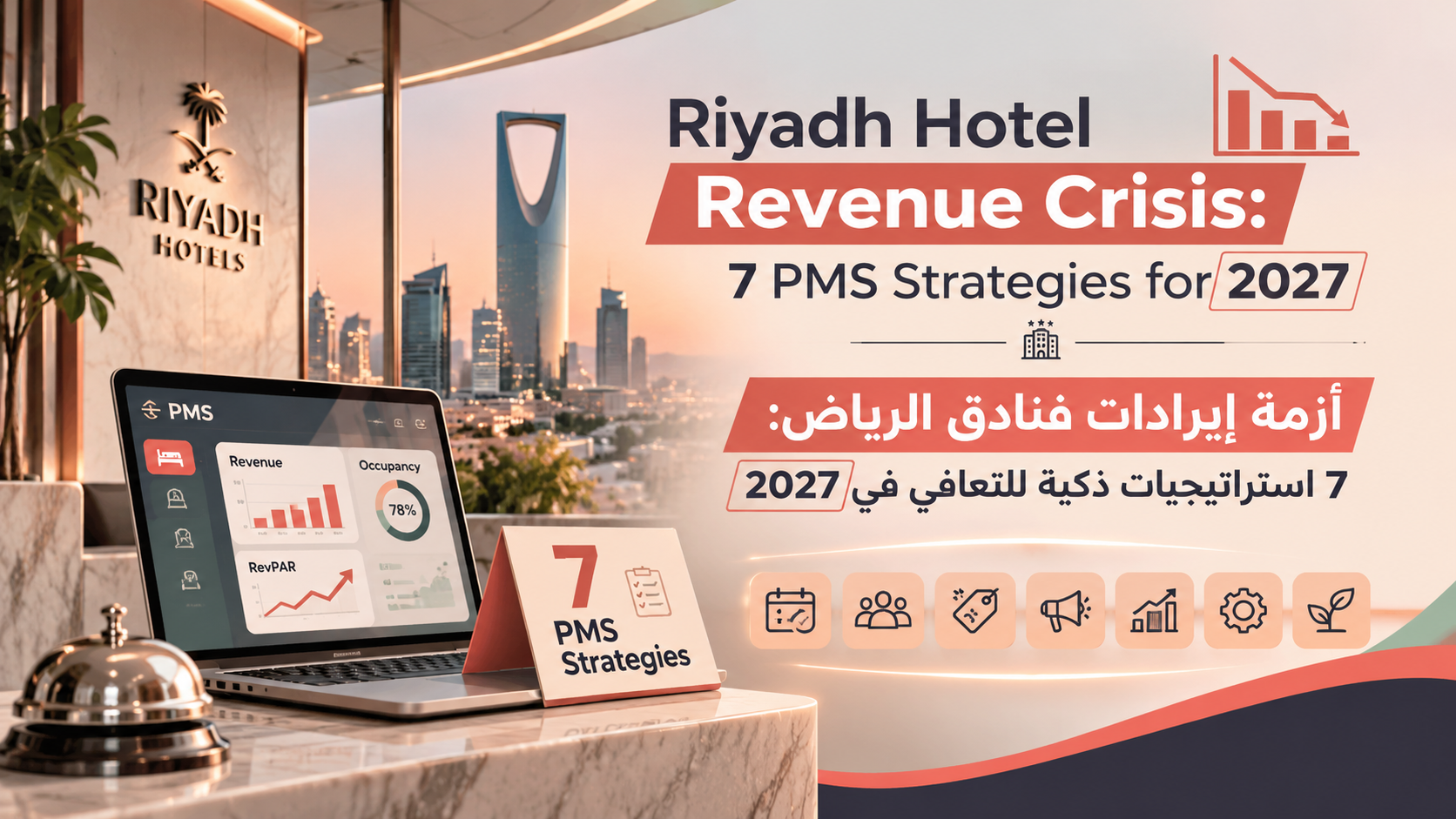
Updated 25 November 2026 for hotel owners, general managers and revenue teams in Saudi Arabia.
Quick answer: The Riyadh hotel revenue crisis of 2026 comes from three pressures hitting at once: a fast-growing supply of new rooms, softer corporate demand, and two security shocks: the regional conflict from late February and the October closure of King Khalid International Airport. Hotels that recover fastest in 2027 will use a smart cloud PMS to price dynamically, rebalance distribution, grow direct bookings, win long-stay and domestic guests, forecast around a re-dated events calendar, automate costs and protect their reputation.
For years, a Riyadh hotel felt like a safe bet: visitor numbers climbed, Riyadh Season filled rooms and business travel kept weekdays busy. 2026 broke that pattern. According to CoStar's STR data reported by Skift, Riyadh hotel occupancy fell to 34.3% in October 2026, down from 69% a year earlier, while RevPAR dropped 65.1%. That collapse came on top of a weak first half: JLL's KSA Hotels Market Dynamics Q2 2026 report shows Riyadh RevPAR down 23.2% in the year to June.
This is the Riyadh hotel revenue crisis. It will not fix itself simply by waiting for flights to return. Knight Frank expects Riyadh's quality hotel stock to grow by about 19% to roughly 30,300 rooms by 2027, so competition for every guest will be tighter than before the shocks.
The good news is that hotels combining disciplined hotel revenue management with a modern hotel PMS in Saudi Arabia can recover faster than the market. This guide explains the causes, then sets out seven practical PMS strategies, Saudi use cases and Vision 2030 trends.
Riyadh hotel performance in 2026 at a glance
| Indicator | Figure | Source |
|---|---|---|
| Riyadh occupancy, October 2026 | 34.3% (69% in Oct 2025) | CoStar's STR, via Skift |
| Riyadh ADR and RevPAR, October 2026 | ADR US$190 (−29.9%), RevPAR US$65 (−65.1%) | CoStar's STR, via Skift |
| Riyadh occupancy, year to June 2026 | 47.6% (−9.2 pts), RevPAR −23.2% | JLL, Q2 2026 |
| Riyadh quality-hotel occupancy, Jan–Apr 2026 | 49.3%, RevPAR −18.3% | Knight Frank |
| National hotel ADR, Q1 2026 | SAR 423 (−11.4%) | GASTAT |
| Riyadh quality rooms expected by 2027 | ~30,300 (+19%) | Knight Frank, Feb 2026 |
Note: Figures differ between STR, JLL, Knight Frank and GASTAT because each uses a different sample, period and currency, but every dataset points the same way.
No single event explains the downturn. Riyadh's hotels faced one structural problem and two external shocks, all arriving within the same twelve months.
Riyadh has the Middle East's largest city hotel pipeline by project count, with 105 projects and 20,927 rooms (Lodging Econometrics, Q1 2026). Hotels also compete with short-term rentals: AirDNA counted 21,812 active Riyadh listings in July 2026. More rooms chasing the same guests pushes rates down.
JLL cites weaker corporate demand as a key reason Riyadh underperformed Jeddah and the Holy Cities. Business travel anchors the capital's weekday occupancy, so those nights empty first.
The regional conflict that began on 28 February 2026 disrupted Gulf aviation during Ramadan, and STR recorded Riyadh occupancy of just 28.3% in March. Then came the 10 October attack on King Khalid International Airport, first and foremost a human tragedy in which Saudi authorities reported 13 people killed and more than 300 injured. The airport reopened with limited operations on 18 October, but Cirium data shows 86% of scheduled Riyadh departures were cancelled through late October. Several foreign carriers have extended suspensions into 2027, and events such as the Six Kings Slam and the Asian Indoor and Martial Arts Games were rescheduled.
Warning for revenue teams: In a falling market, the instinct is to cut rates across every channel. Riyadh's October ADR had already dropped almost 30%. Blanket discounting teaches guests and OTAs to expect low prices long after demand returns, and rebuilding rate integrity is far harder than losing it.
A PMS used to be a front-desk ledger. Today it is where every revenue signal meets: bookings by channel, pickup pace, cancellations, length of stay and cost per occupied room. A cloud PMS turns that data into daily decisions instead of month-end surprises.
Fandaqah, a Saudi cloud PMS trusted by more than 800 hotels, serviced apartments and resorts, combines the PMS with a real-time channel manager, website and booking engine, reporting dashboards and built-in integration with ZATCA, Shomoos and the Ministry of Tourism's national tourism monitoring platform. Every strategy below depends on that connected data.
“The daily reports the system produces helped us make smart pricing decisions based on actual demand.”Mohammed Al-Bitar, Hotel Manager and Fandaqah customer (translated from Arabic)
Each strategy covers what to do, how a smart PMS helps and which KPI to track. Start with the first three; they protect cash fastest.
A sound dynamic pricing strategy for low occupancy in Riyadh sets a protected rate floor for each segment, then moves prices date by date based on pickup pace, competitor rates and local events. Soft nights get targeted offers; event weekends keep full rate with minimum stays. Fandaqah's AI-powered dynamic pricing add-on adjusts rates in real time using demand data and competitor benchmarking, and its predictive analytics help revenue teams spot soft dates weeks in advance.
Illustrative example: a 120-room Riyadh hotel over 30 days
| Scenario | Occupancy | ADR (SAR) | RevPAR (SAR) |
|---|---|---|---|
| Current baseline | 45% | 700 | 315 |
| Blanket 25% discount | 52% | 525 | 273 |
| Dynamic pricing (targeted 5% average cut) | 50% | 665 | 332.5 |
Across 3,600 available room-nights, the targeted approach earns about SAR 1,197,000 against SAR 982,800 for the blanket discount, roughly SAR 214,000 more, while cleaning fewer rooms. Occupancy bought with deep discounts is often unprofitable.
KPI to watch: RevPAR index against your competitive set, ADR by segment and the share of nights sold below your rate floor.
With carriers such as British Airways and Cathay Pacific suspending Riyadh flights into January 2027, according to Skift, your channel mix must follow the guests who can still reach you: domestic, GCC and Saudi-airline markets. A real-time channel manager lets you open regional channels fast and close costly ones on peak dates. Fandaqah's channel manager syncs rates and availability instantly and updates promotions in one click, while its booking-source reports show which channels earn the most after commission.
KPI to watch: Net ADR after commission, channel mix and cancellation rate by channel.
Pro tip: Build a disruption playbook inside your PMS now. Prepare ready-made rate plans, flexible cancellation terms and guest message templates you can switch on within minutes if flights are disrupted again. In a crisis, speed is revenue.
OTA commissions often range from 15% to 25% of the room rate, which hurts more when ADR is falling. If a hotel shifts 1,000 room-nights a year from OTAs to direct bookings at an average rate of SAR 600, an 18% commission saving is worth about SAR 108,000 annually. Fandaqah gives each property an SEO-optimized, multilingual website with a built-in booking engine and payment gateways supporting Apple Pay, Google Pay and Samsung Pay. Automated guest messages keep past guests close so they rebook directly.
KPI to watch: Direct booking share, website conversion rate and repeat-guest ratio.
Pro tip: Instead of undercutting OTA prices, which can breach rate-parity agreements, add value for direct guests: free late checkout, breakfast, airport transfer coordination or more flexible cancellation.
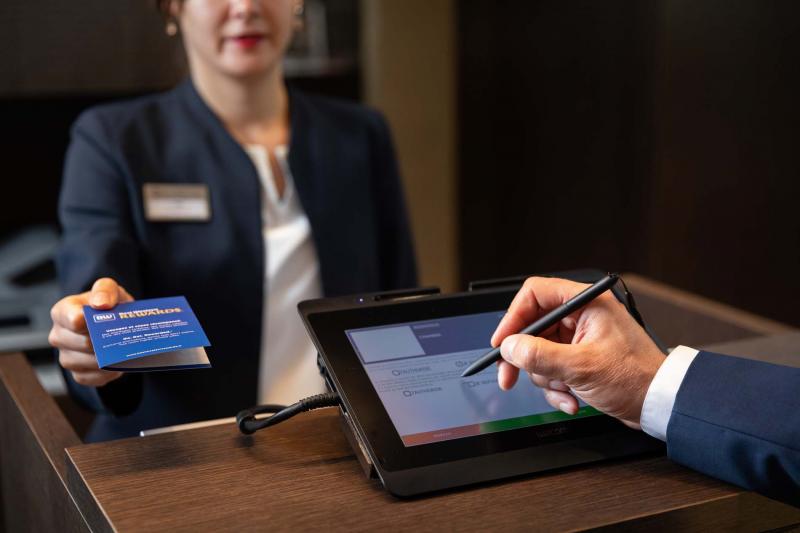
Domestic tourism rose about 16% year on year in Q1 2026, according to figures compiled by Wego. Riyadh also has long-stay demand that depends far less on airports, including project teams, relocating families, trainees and medical visitors. Package weekly and monthly rates, sign corporate agreements with local companies and create weekday offers for business guests. Fandaqah runs hotels and serviced apartments on one platform and lets guests e-sign rental agreements on a tablet, which suits monthly stays and remote corporate bookings.
KPI to watch: Average length of stay, weekday occupancy and revenue from contracted accounts.
Riyadh demand is event-driven, and 2026 rewrote the calendar. The Six Kings Slam moved to 27–30 December 2026, the TOURISE summit is planned for 23–25 March 2027, and the Asian Indoor and Martial Arts Games now run from 28 March to 8 April 2027, which makes late March a likely compression window. Ramadan 2027 is expected to begin around 8 February, subject to moon sighting. Load these dates into your forecast, build slow, base and fast recovery scenarios, and review pickup daily. Fandaqah's real-time dashboard shows occupancy, revenue and guest ratings at a glance, including on owners' phones.
KPI to watch: Pickup pace against last year, forecast accuracy and on-the-books revenue for the next 90 days.
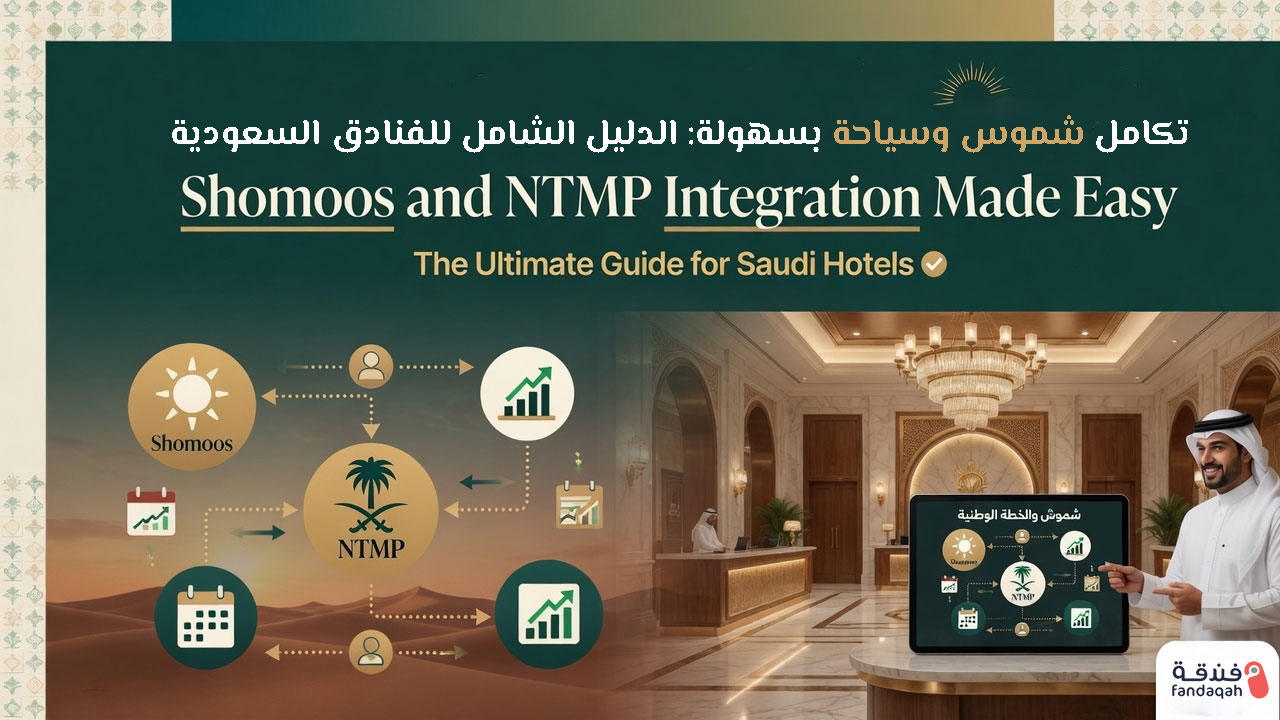
When occupancy sits near 50%, every riyal of operating cost matters, and automation lowers your break-even point. Fandaqah schedules housekeeping, maintenance and inspection tasks automatically, sends temporary smart-lock codes to guests and processes payments without manual work. Its document scanner reads Saudi IDs, residency permits and passports in under two seconds and fills in guest data automatically. A ZATCA and Shomoos compliant hotel management system also removes double entry: Fandaqah sends data to Shomoos, ZATCA Phase 2 e-invoicing and the Ministry of Tourism directly, while accounting links with QuickBooks, Xero and Zoho cut reconciliation time.
KPI to watch: Cost per occupied room (CPOR), labor hours per occupied room and gross operating profit per available room (GOPPAR).
After a security shock, travelers want reassurance before booking. Use pre-arrival messages to confirm flight and transport options, send review requests after checkout and respond to every review. Fandaqah's communication hub brings email, WhatsApp and SMS into one inbox, its multilingual AI chatbot answers common questions around the clock, and post-stay review forms help you fix issues before they reach public platforms.
KPI to watch: Average review score, response time to guest messages and booking conversion rate.
The scenarios below are illustrative and based on common property types in the Kingdom.
Weekday corporate demand has thinned. The hotel sets rate floors for corporate accounts, offers length-of-stay pricing to project teams, opens GCC-focused channels and tracks Sunday-to-Wednesday pickup daily.
Facing short-term rental competition, the operator promotes monthly packages on its own website, signs contracts electronically and highlights licensed stays and on-site service that informal rentals cannot easily match.
The hotel loads Riyadh Season dates, the Six Kings Slam and late-March 2027 events into its forecast, applies minimum stays on peak nights and keeps rates flexible on quiet weekdays.
Performance diverged sharply in 2026: JLL reports Makkah RevPAR up 8.7% and Madinah occupancy at 75.1%, while Riyadh fell. One cloud PMS across all properties lets a group compare cities daily and shift marketing budgets fast.
If you are searching for the best cloud PMS for hotels in Saudi Arabia, compare systems on the capabilities that drive recovery, not just front-desk features.
| Capability | Legacy or on-premise PMS | Smart cloud PMS like Fandaqah |
|---|---|---|
| Rate updates | Manual, channel by channel | Real-time, one click across all channels |
| Revenue visibility | Month-end reports | Live dashboard on desktop and mobile |
| Saudi compliance | Separate tools or manual uploads | Built-in ZATCA, Shomoos and Tourism links |
| Direct bookings | Often no native booking engine | Integrated website and booking engine |
| Check-in | Manual data entry | ID scanner and tablet e-signature |
| Crisis response | Requires on-site staff or IT | Change rates and policies from anywhere |
| Cost model | Servers, licenses and maintenance | Monthly or annual subscription |
The long-term story for Saudi Vision 2030 hospitality remains strong. Saudi Arabia welcomed around 122 million visitors in 2025 and is now targeting 150 million a year by 2030. The Ministry of Tourism aims to exceed 550,000 hotel rooms by 2030, and HVS counts about 110,000 Saudi rooms under development. Riyadh Air began restoring its Riyadh network on 22 November 2026, and the capital is preparing for Expo 2030 and the FIFA World Cup 2034. Five trends will shape 2027 to 2030:
Good to know: JLL estimates that overall Saudi tourism fell by about 5–7% in the first five months of 2026, yet still sees a positive long-term outlook backed by Vision 2030 investment.
It is the sharp fall in Riyadh hotel occupancy, rates and RevPAR during 2026. JLL reported RevPAR down 23.2% in the year to June, and STR data showed October RevPAR down 65.1% after the airport closure, driven by new supply, softer corporate demand and regional security shocks.
Focus on seven levers: dynamic pricing with rate floors, a real-time channel manager, more direct bookings, domestic and long-stay segments, event-based forecasting, automation to cut costs, and active reputation management, all run from one connected cloud PMS.
Not across the board. Targeted, date-specific offers protect RevPAR far better than blanket discounts, which often add occupancy but reduce total room revenue and make it harder to raise rates when demand returns.
Invest in an SEO-friendly website with an integrated booking engine, offer value-added perks to direct guests, use local payment options, and stay in touch with past guests through automated messages so they rebook directly.
The best choice depends on your property type and size, but shortlist systems with built-in ZATCA, Shomoos and Ministry of Tourism integration, a native channel manager and booking engine, real-time dashboards and Arabic support. Fandaqah offers all of these and is used by more than 800 properties.
Accommodation providers must register guest data through Shomoos and issue e-invoices that meet ZATCA requirements once their integration phase applies. A PMS that connects to both automatically saves time and lowers compliance risk. Confirm your specific obligations with ZATCA and the Ministry of Tourism.
No one can give an exact date. Recovery depends on airline schedules, with some foreign carriers suspended into early 2027, on the security situation and on the events calendar. Track airline restarts and your own pickup pace weekly.
The Riyadh hotel revenue crisis is a painful combination of new supply, softer corporate travel and security shocks that hit at peak season. Yet Saudi Arabia's tourism fundamentals and Vision 2030 pipeline remain intact. The winners will not be those who wait or discount hardest, but those who make faster, better-informed decisions every day.
See how Fandaqah helps Saudi hotels and serviced apartments price smarter, sell direct and cut manual work on one cloud platform.
Book your demo at Fandaqah.com
Call 920066456 or message us on WhatsApp at +966 55 594 7522
Sources: CoStar's STR and Cirium via Skift (Nov 2026); JLL KSA Hotels Market Dynamics Q2 2026; Knight Frank (2026); GASTAT Q1 2026; HVS (Sep 2026); Lodging Econometrics (Q1 2026); AirDNA (Jul 2026); Wego; Fandaqah.com.
Tags
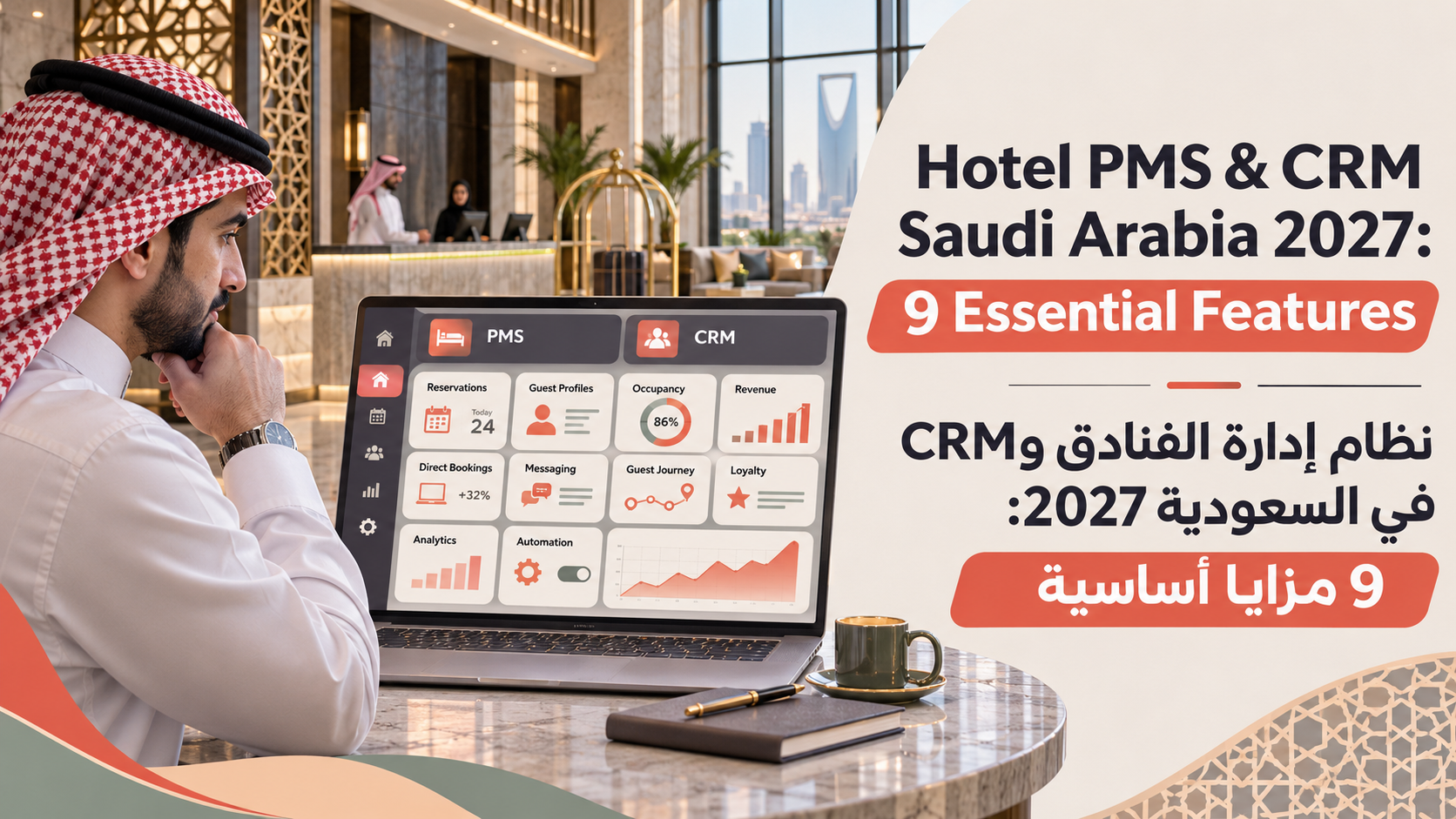
Discover 9 essential hotel PMS and CRM features in Saudi Arabia for 2027. Improve guest experience, direct bookings, automation and ZATCA compliance....
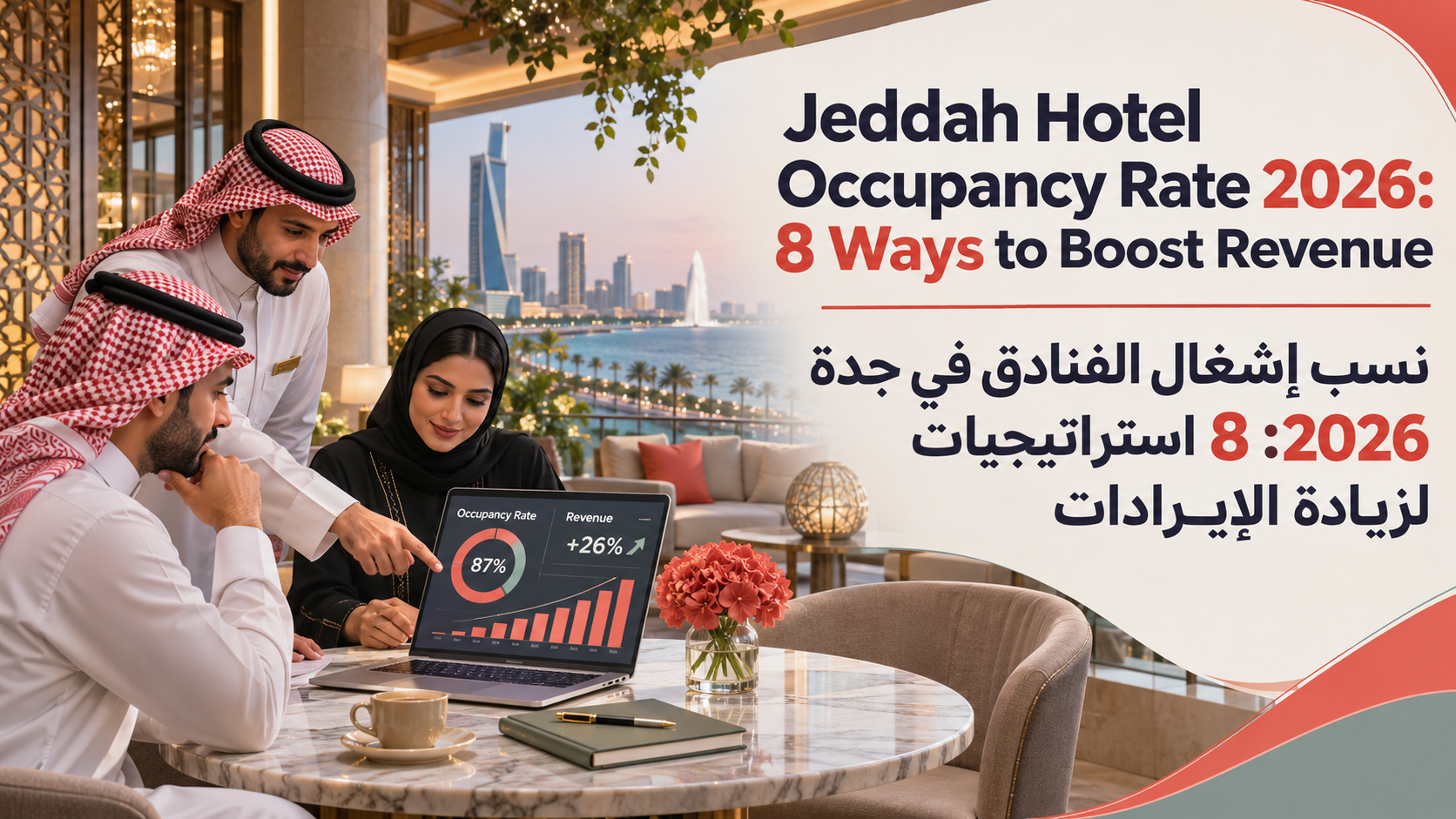
Explore Jeddah hotel occupancy rates in 2026 and 8 strategies to increase bookings, optimize room pricing, improve RevPAR and grow revenue with Fandaqah PMS....

Discover who can build a Red Sea resort dining strategy, increase F&B revenue, improve guest experiences and streamline operations with Fandaqah PMS....
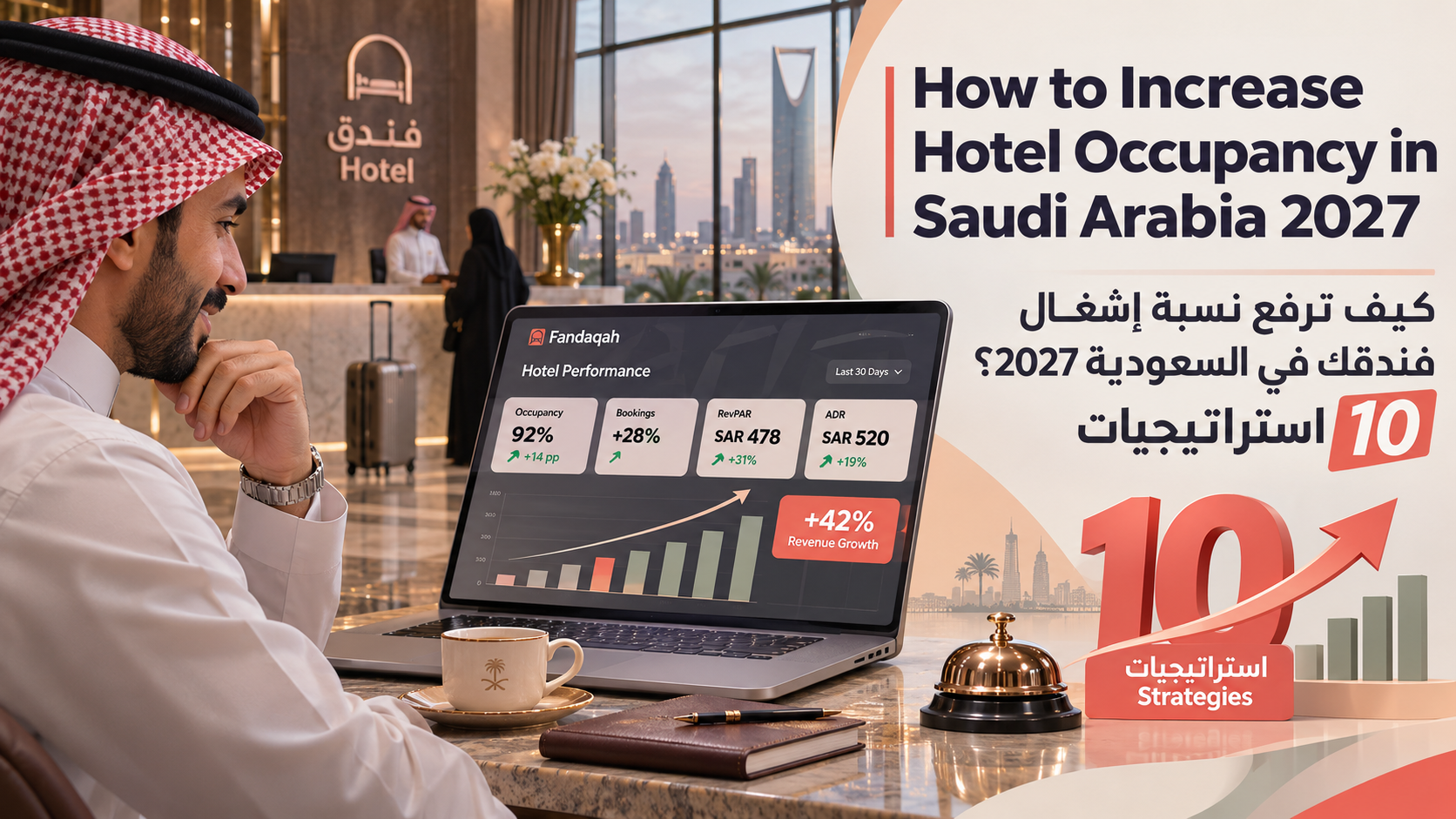
Discover 10 ways to increase hotel occupancy in Saudi Arabia in 2027. Use dynamic pricing, direct bookings and smart hotel PMS tools to fill more rooms....
Discover 10 hotel revenue management strategies for Saudi Arabia in 2027. Improve RevPAR, optimize room pricing, boost direct bookings and grow profits....
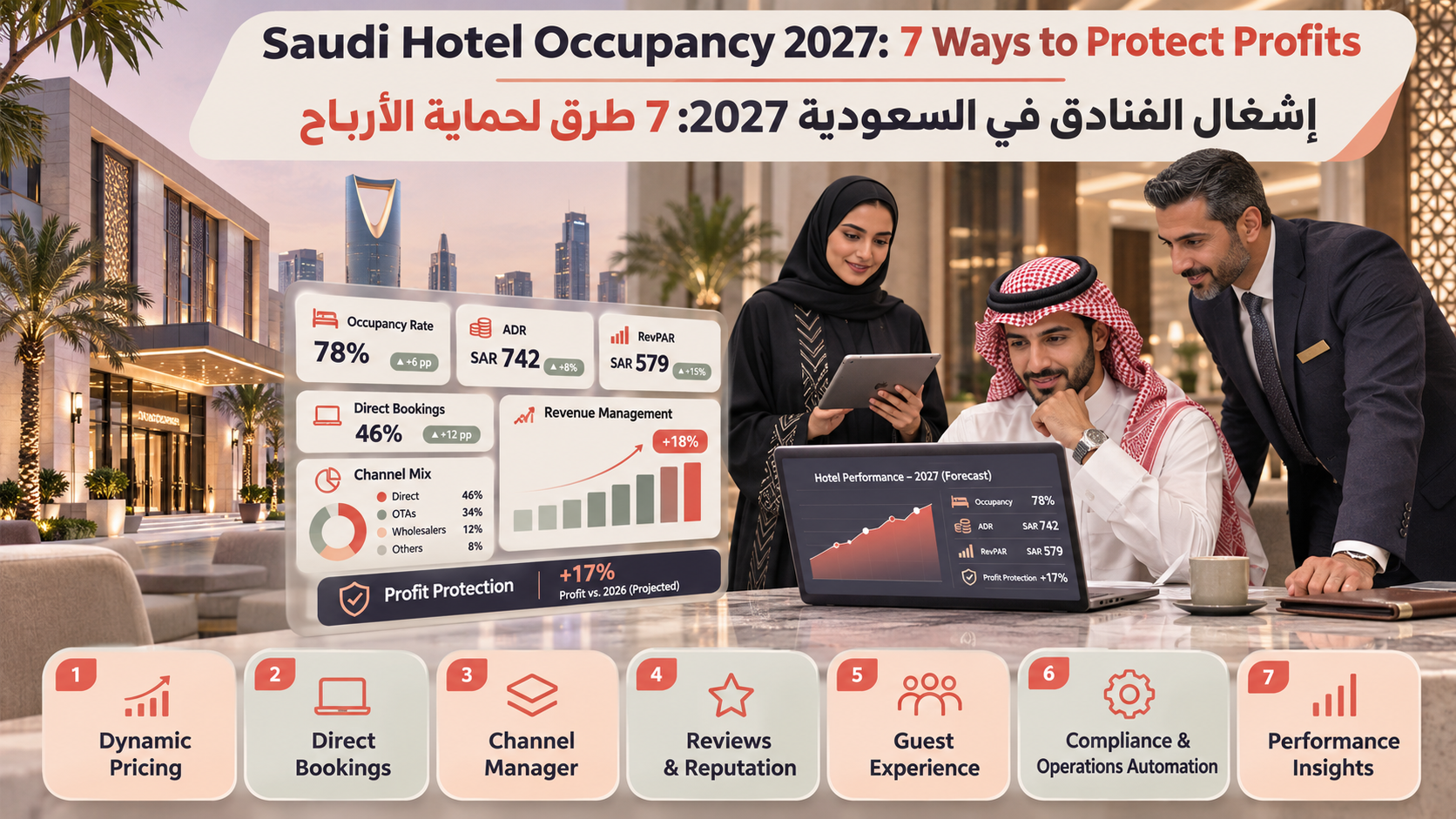
Hotel supply is rising faster than demand in Saudi Arabia. Discover 7 practical strategies to protect occupancy, RevPAR and hotel profits in 2027....
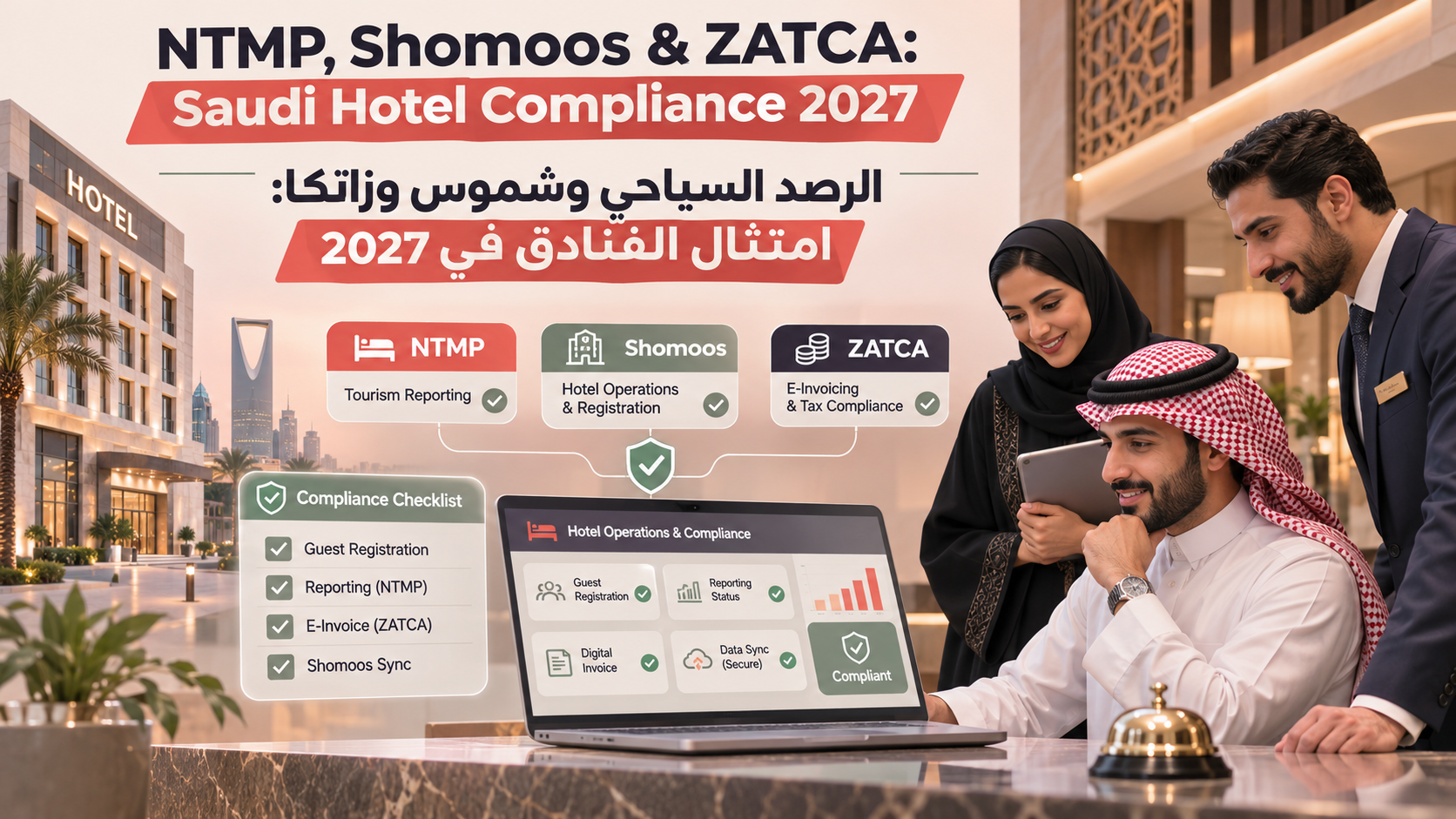
Connect NTMP, Shomoos and ZATCA Phase 2 with one hotel PMS. Learn how Saudi hotels can simplify guest reporting, e-invoicing and 2027 compliance....
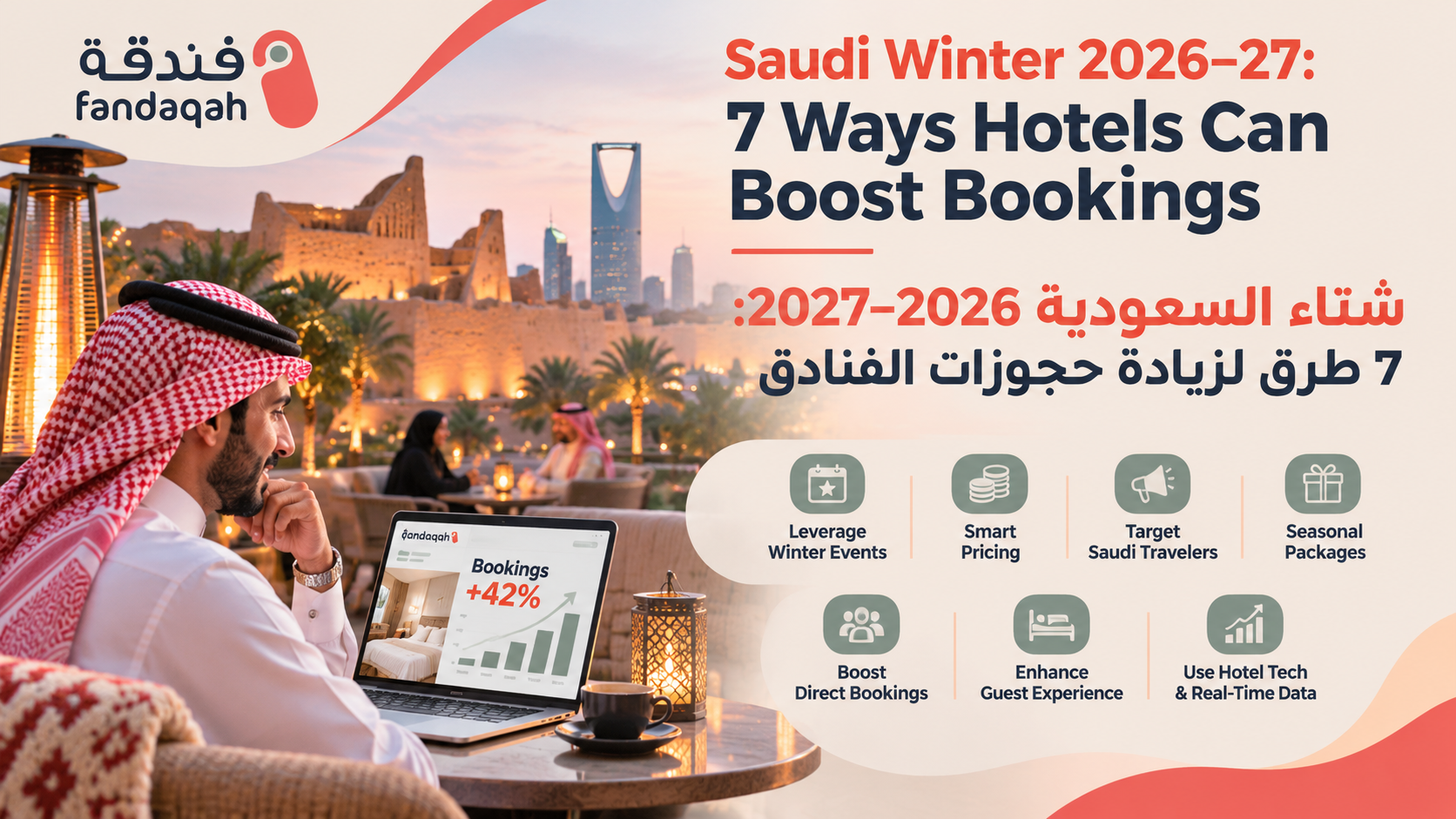
Turn Saudi Winter 2026–27 events into more hotel bookings. Explore 7 strategies for dynamic pricing, direct bookings, channel management and faster check-in....
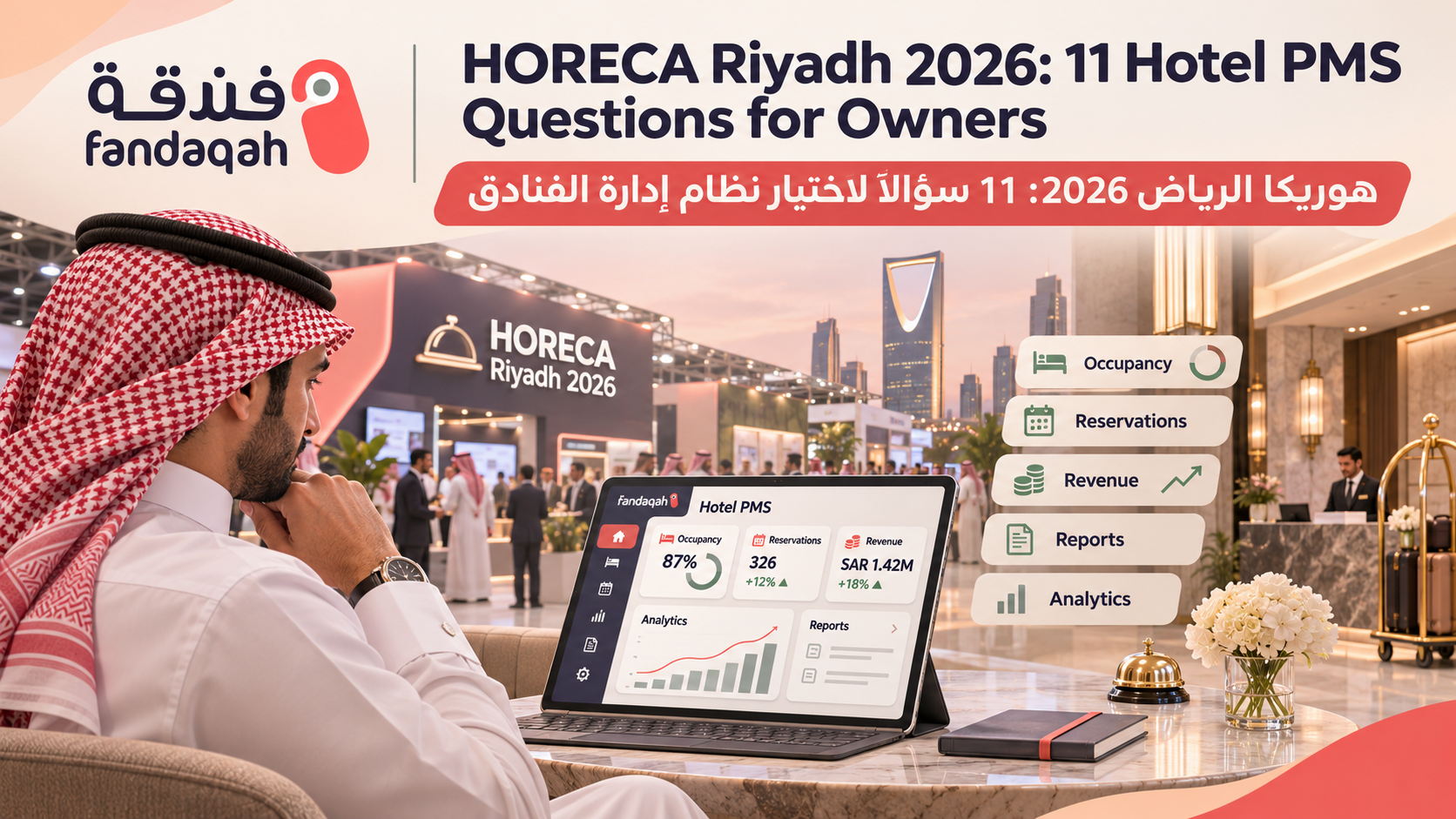
Choosing a hotel PMS in Saudi Arabia? Discover 11 questions to ask at HORECA Riyadh 2026 about ZATCA, Shomoos, NTMP, pricing, support and integrations....

Compare Saudi hotel group booking platforms in 2026: room limits, OTA commissions, corporate stays and Umrah requirements. See when direct booking wins....
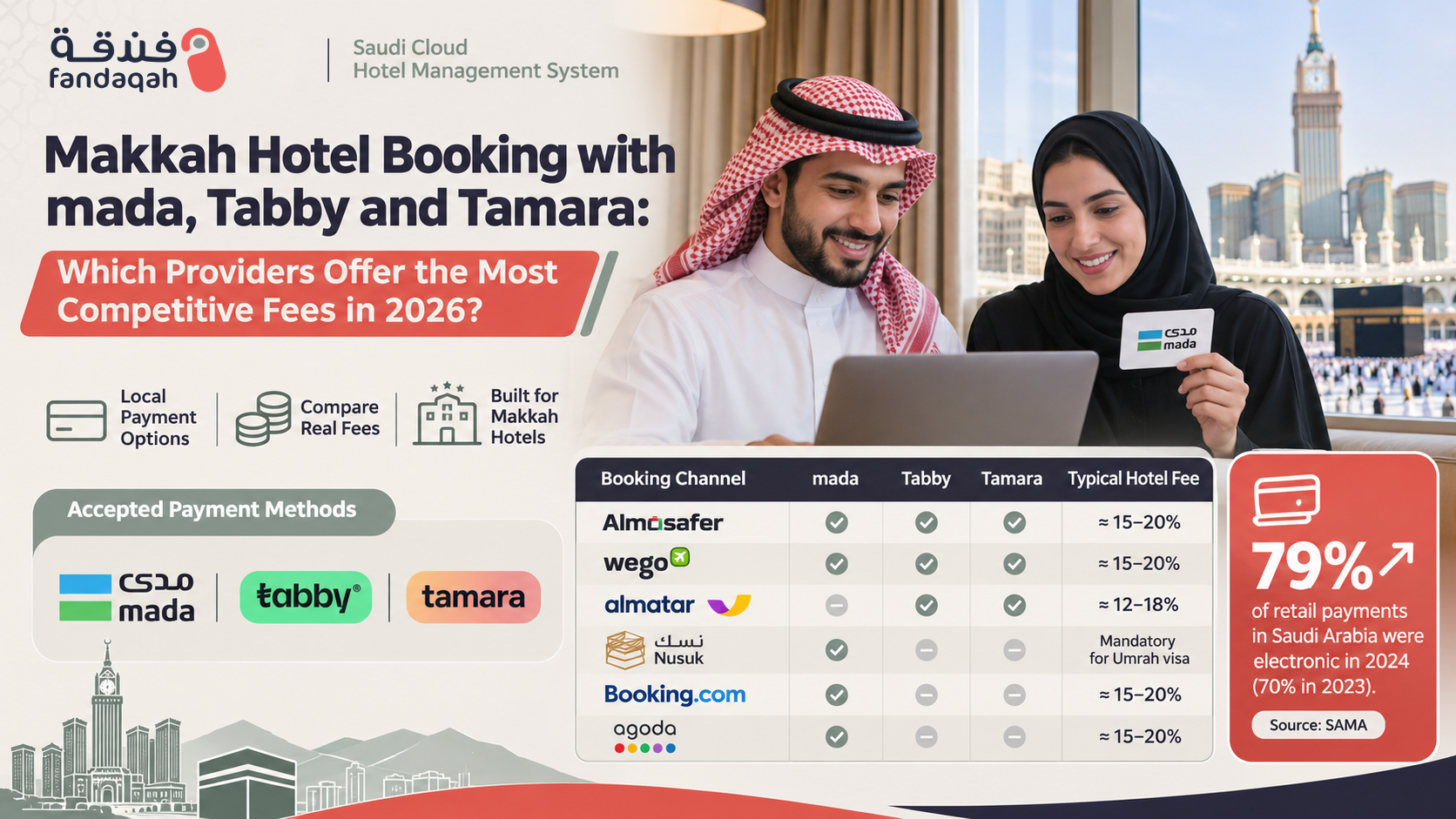
Compare Makkah hotel bookings with mada, Tabby and Tamara in 2026. See supported platforms, payment fees and ways hotels can save with direct bookings....
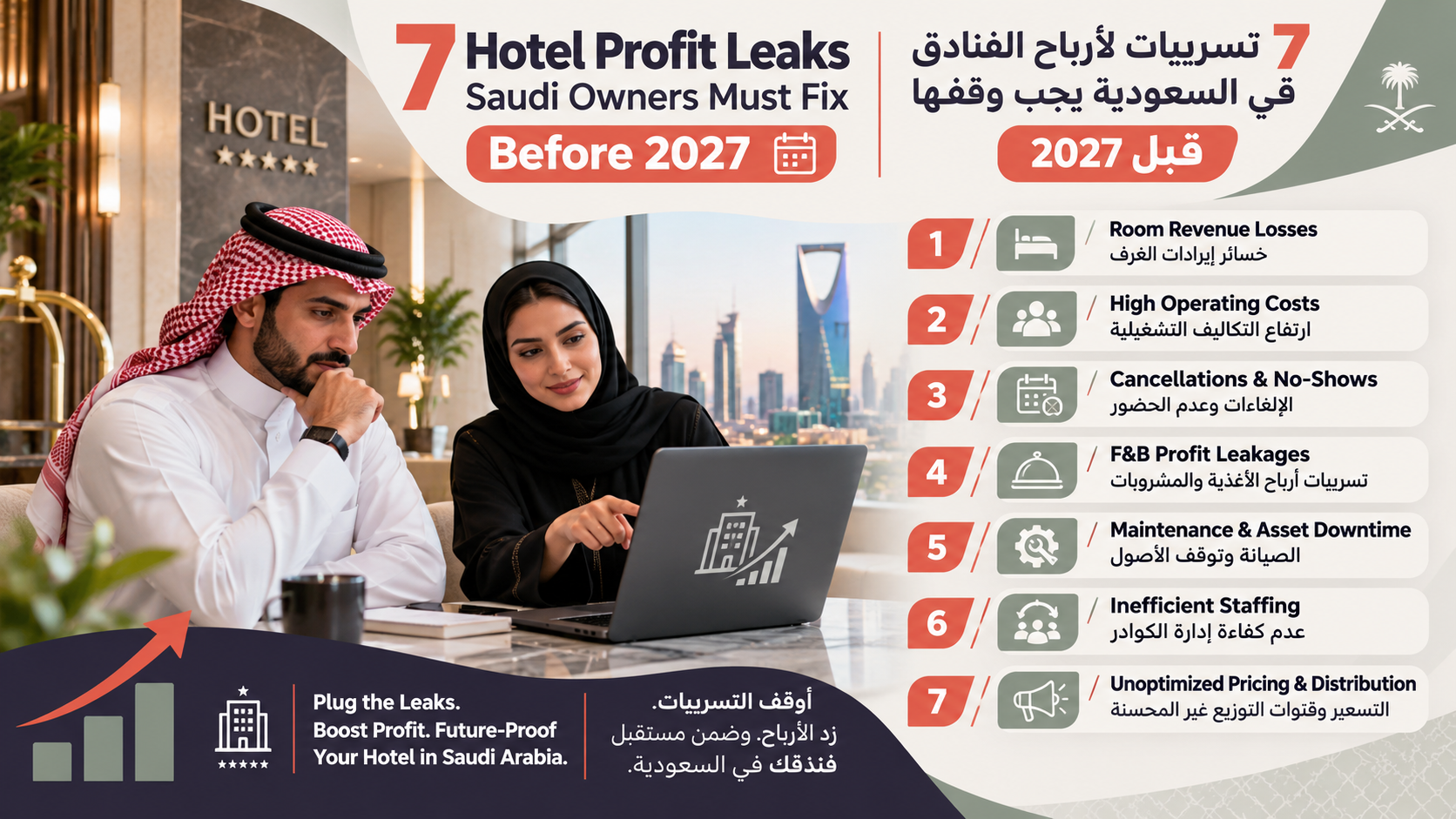
High occupancy but low profit? Discover 7 hotel profit leaks in Saudi Arabia, from OTA commissions to payment gaps. See how to fix them before 2027....
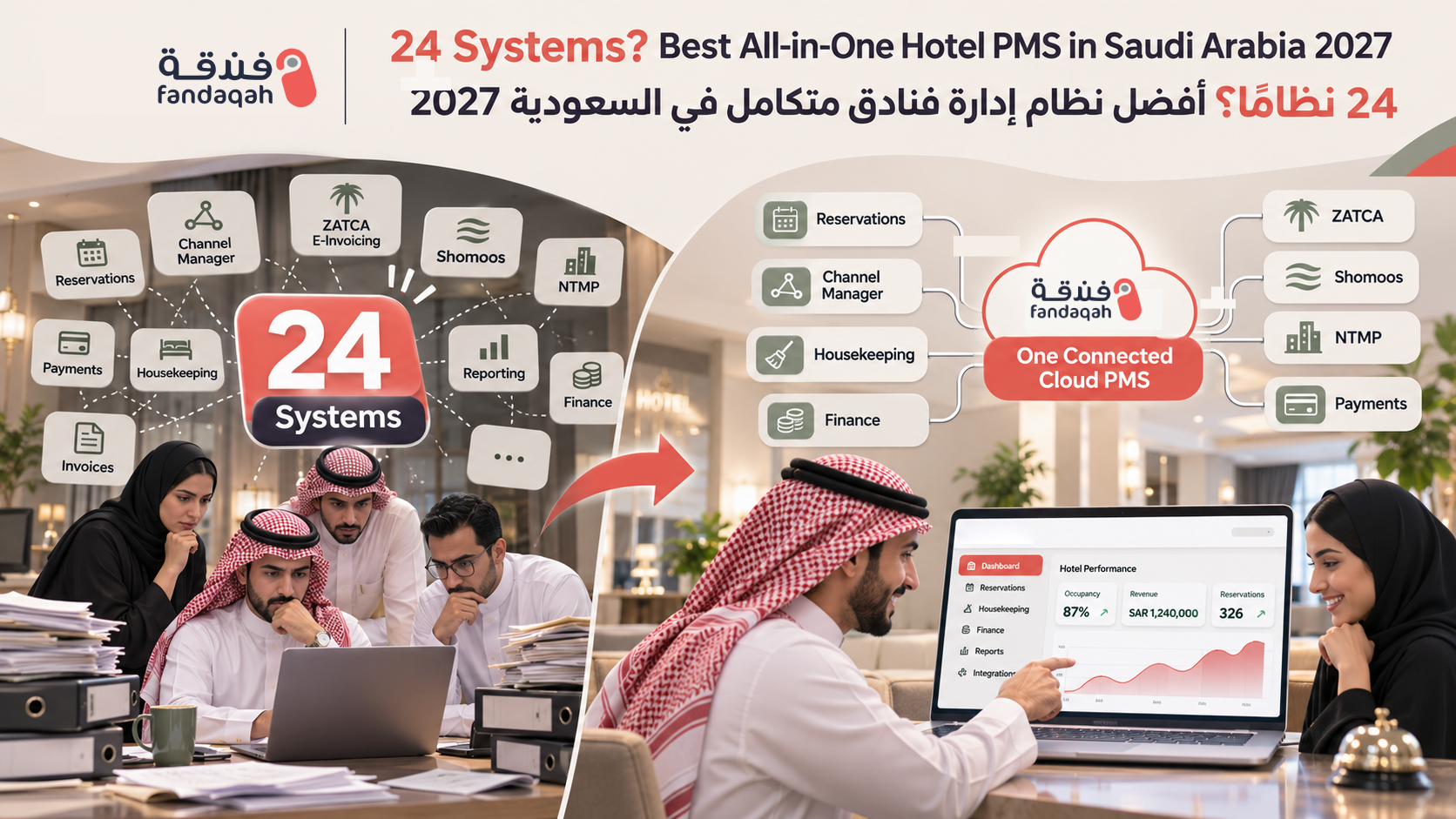
One hotel, 24 systems? Compare costs and learn how to choose an all-in-one hotel PMS in Saudi Arabia for 2027 with ZATCA, Shomoos and NTMP....
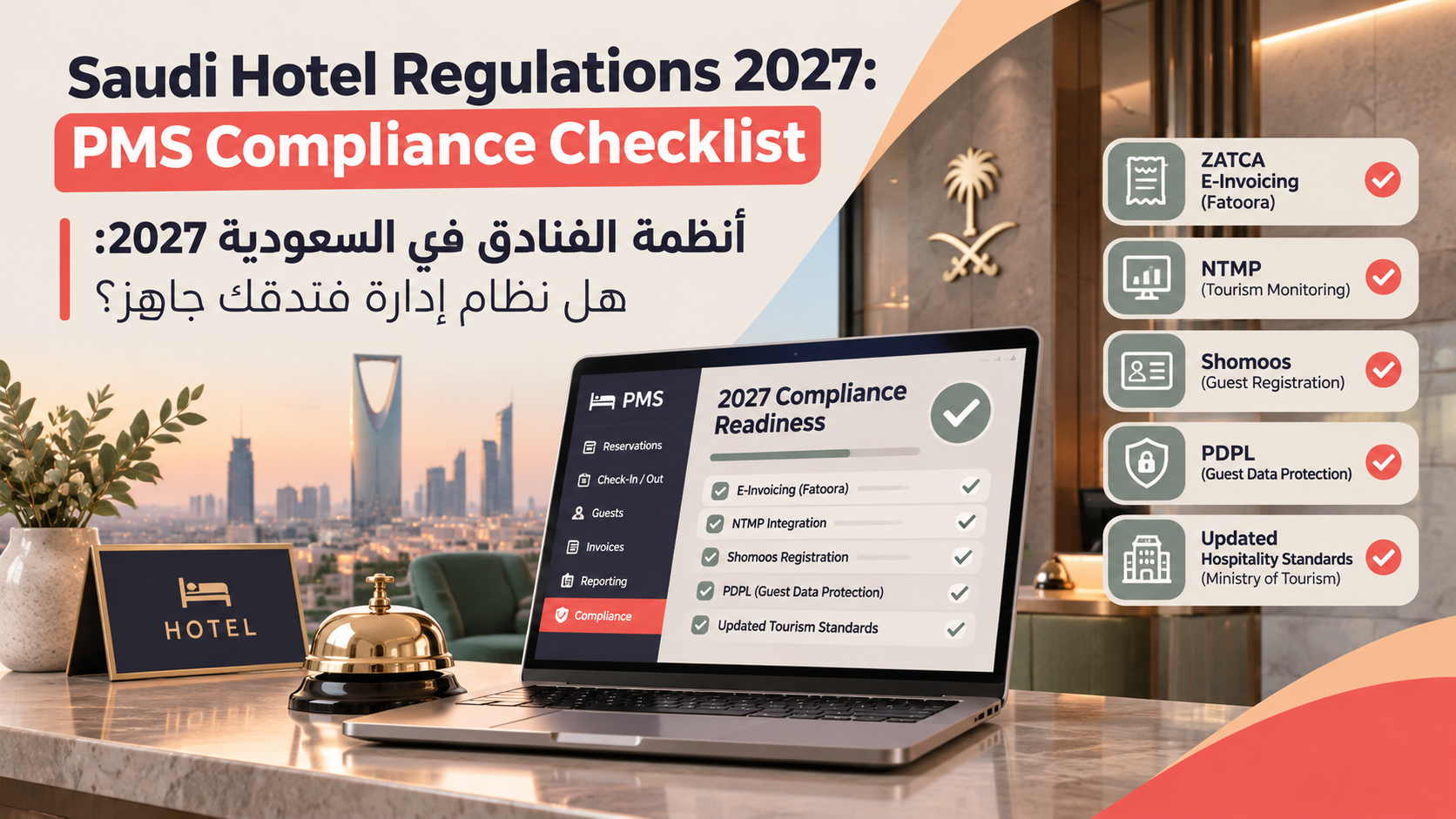
Is your hotel PMS ready for Saudi regulations in 2027? Check ZATCA Wave 25, NTMP, Shomoos, PDPL, draft staffing rules, and essential compliance steps....
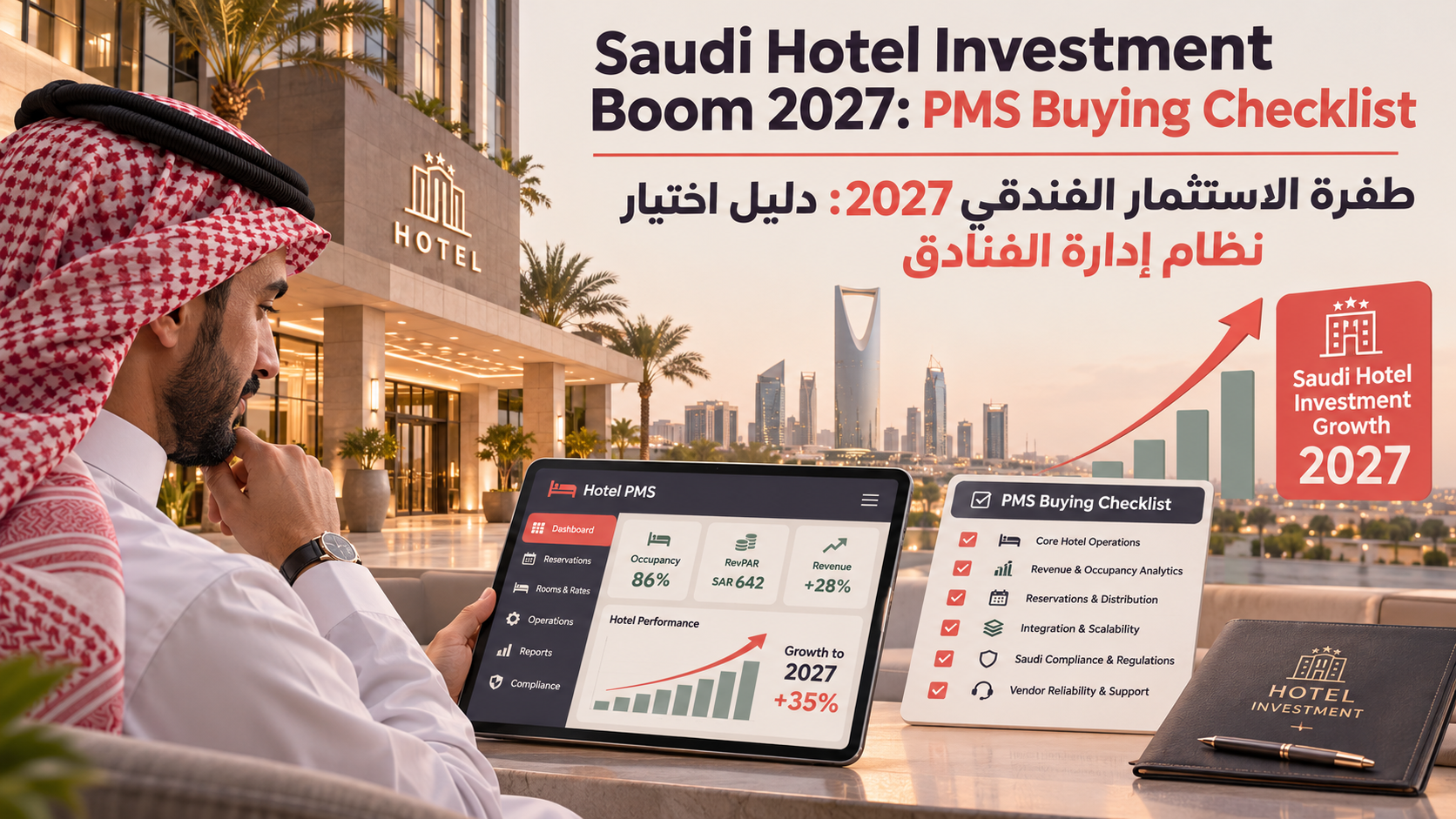
Planning a hotel in Saudi Arabia? Use our 2027 PMS buying checklist covering ZATCA, Shomoos, NTMP, direct bookings, revenue reports, and cloud security....
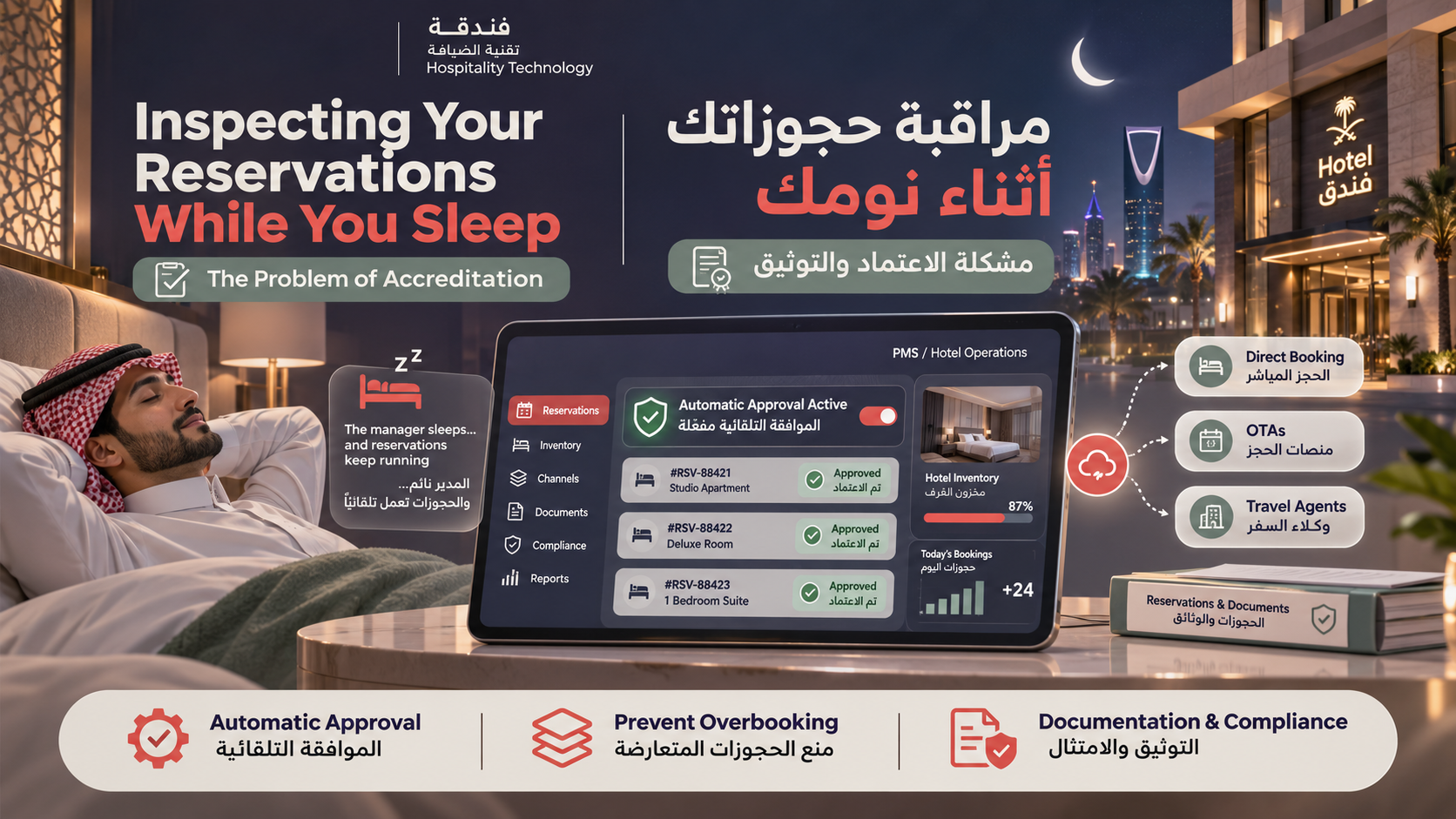
Automate hotel reservation approvals in Saudi Arabia, confirm bookings 24/7, prevent overbooking, and streamline guest records with Shomoos and ZATCA....
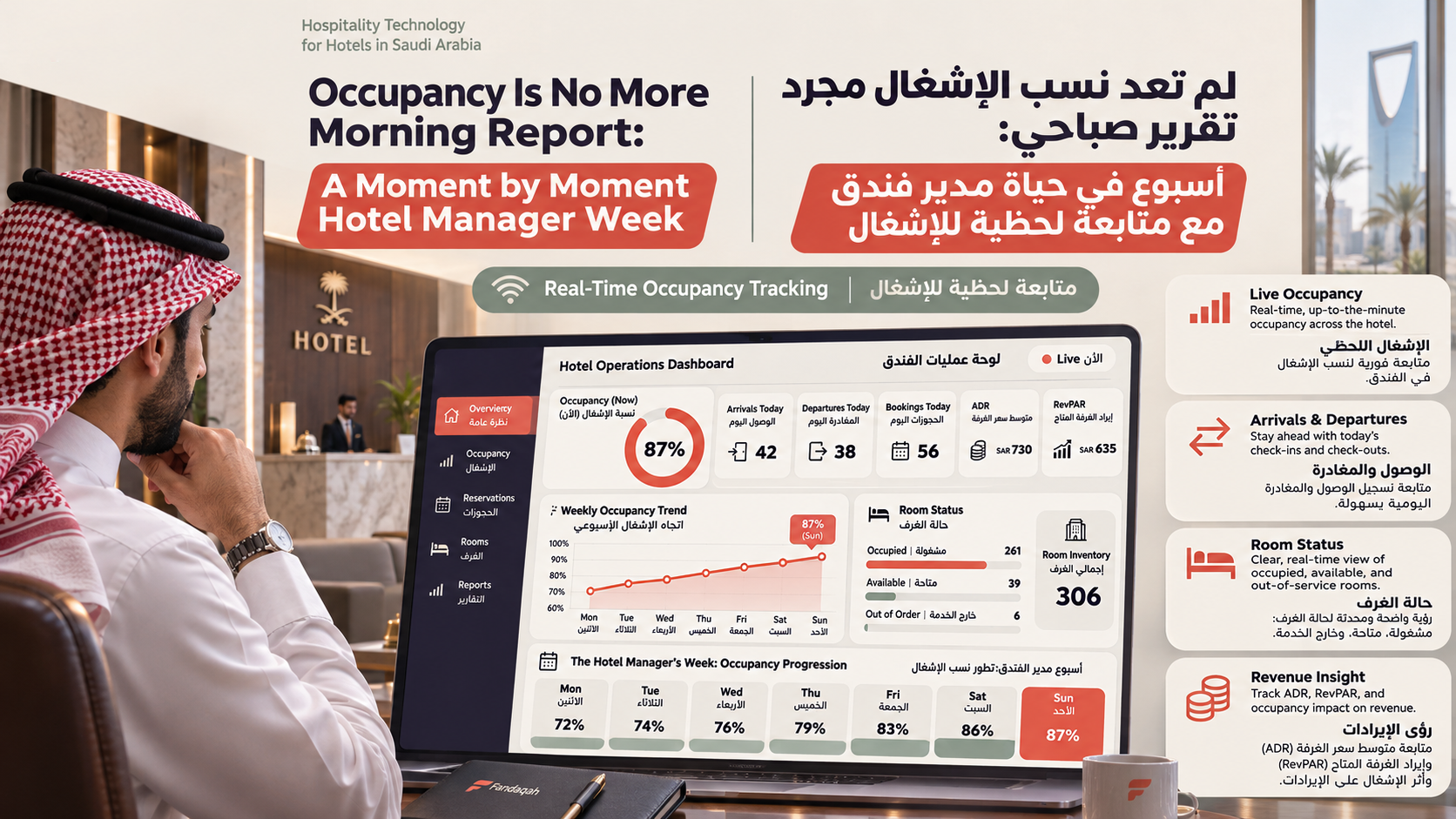
Discover how real-time occupancy tracking helps Saudi hotel managers monitor bookings, room status, ADR and RevPAR to make faster, smarter decisions....
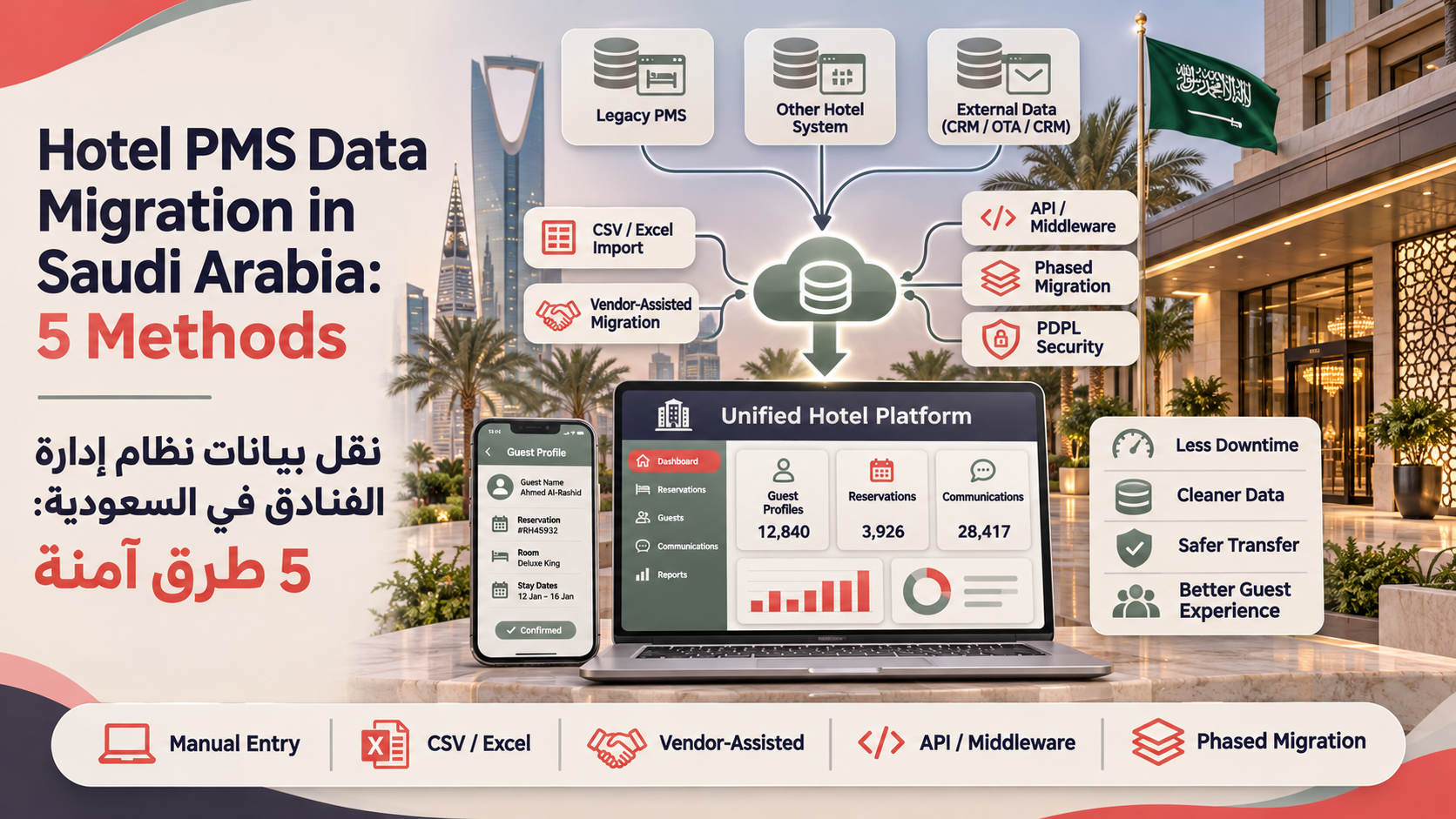
Discover 5 hotel PMS migration methods in Saudi Arabia. Move guest profiles, reservations and messages safely with a practical checklist and compliance tips....
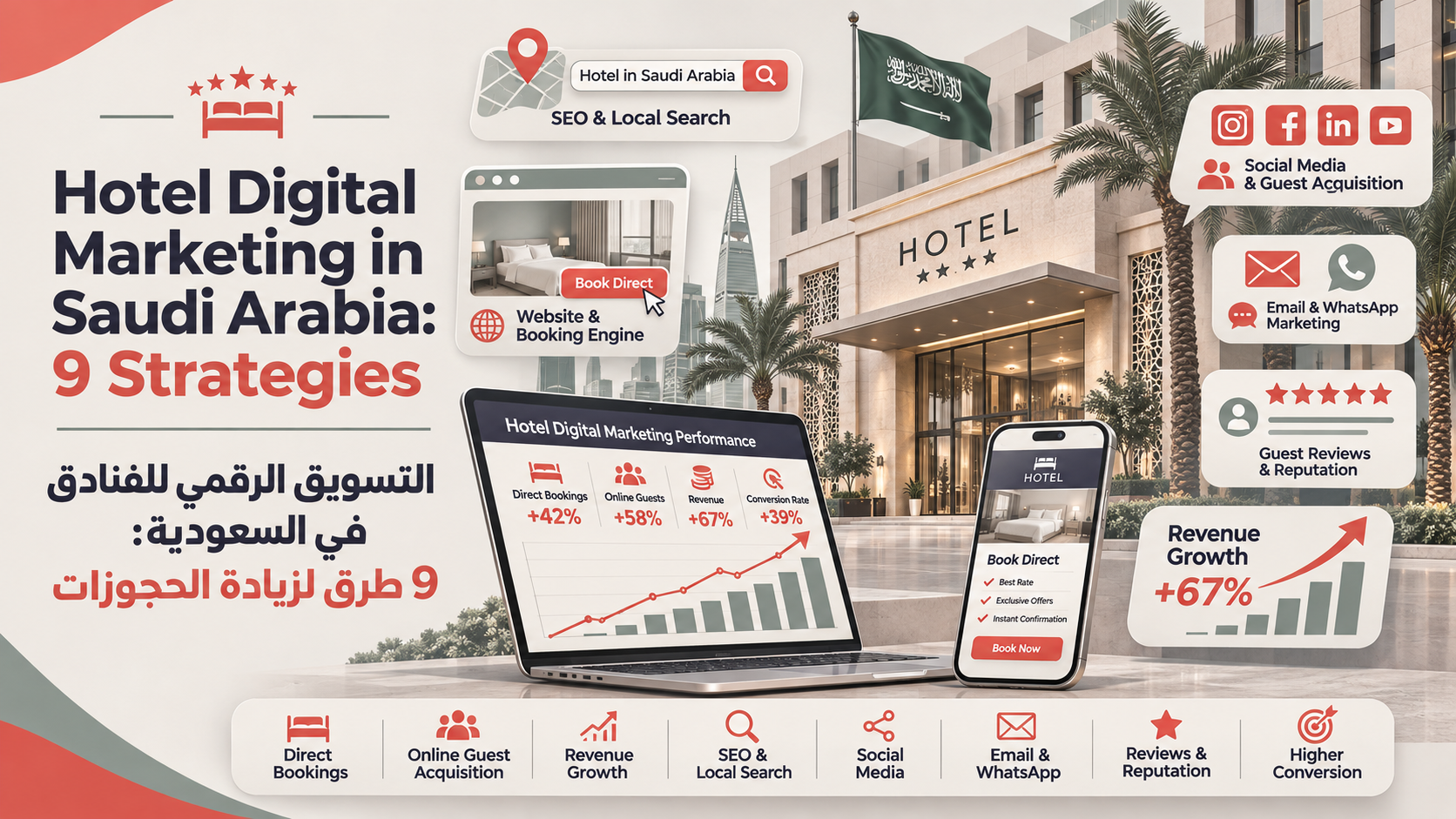
Discover 9 hotel digital marketing strategies for Saudi Arabia to attract more guests online, increase direct bookings, reduce OTA fees, and boost revenue....
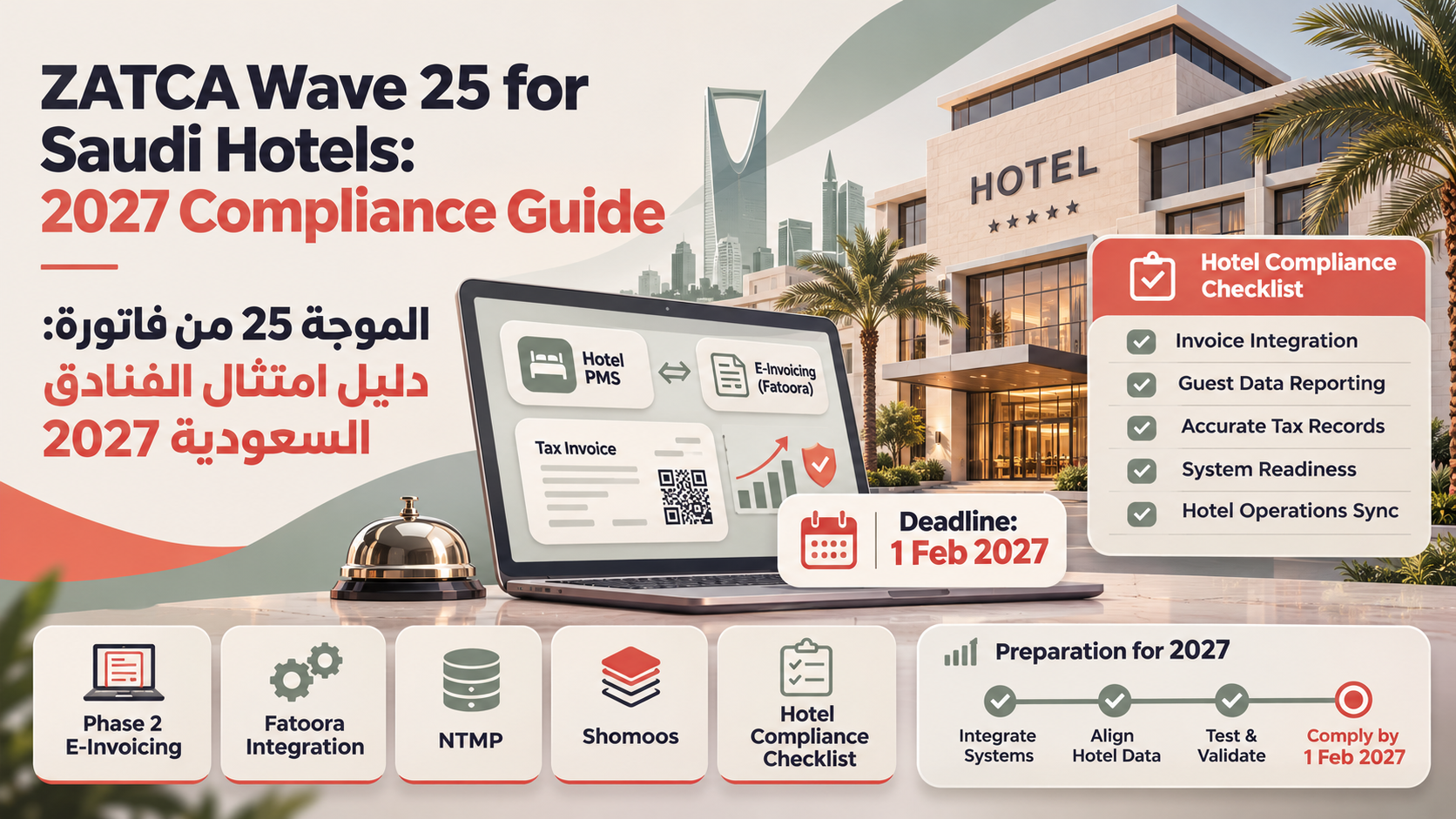
Prepare your Saudi hotel for ZATCA Wave 25 before February 1, 2027. See Phase 2 e-invoicing, Fatoora, NTMP and Shomoos requirements with Fandaqah....
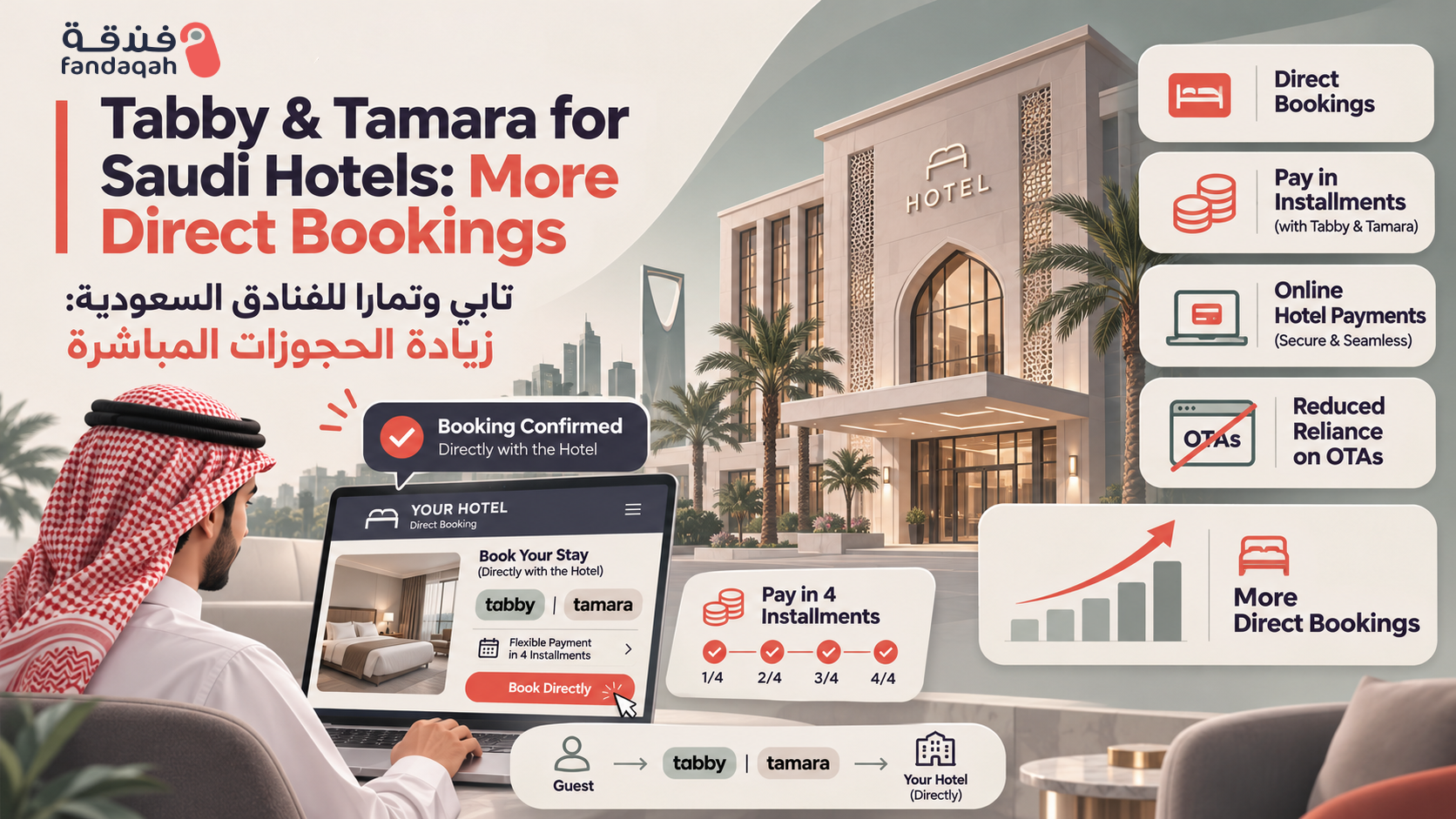
Discover how Saudi hotels use Tabby and Tamara pay-in-4 options to increase direct bookings, reduce OTA commissions and automate payments with Fandaqah PMS....
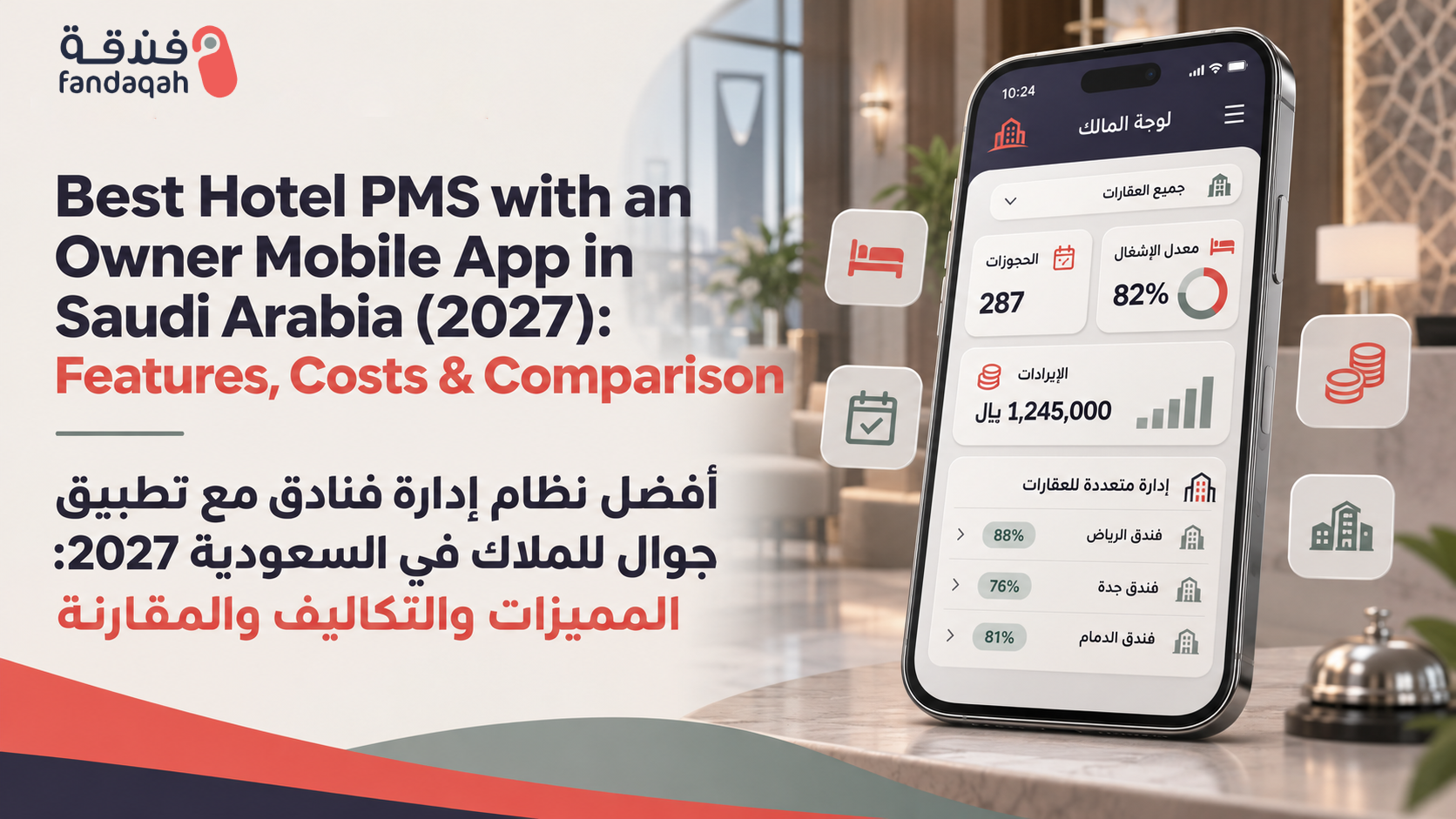
Compare hotel PMS systems with an owner mobile app in Saudi Arabia for 2027. Explore costs, live revenue reports, ZATCA, Shomoos, NTMP, and Fandaqah....
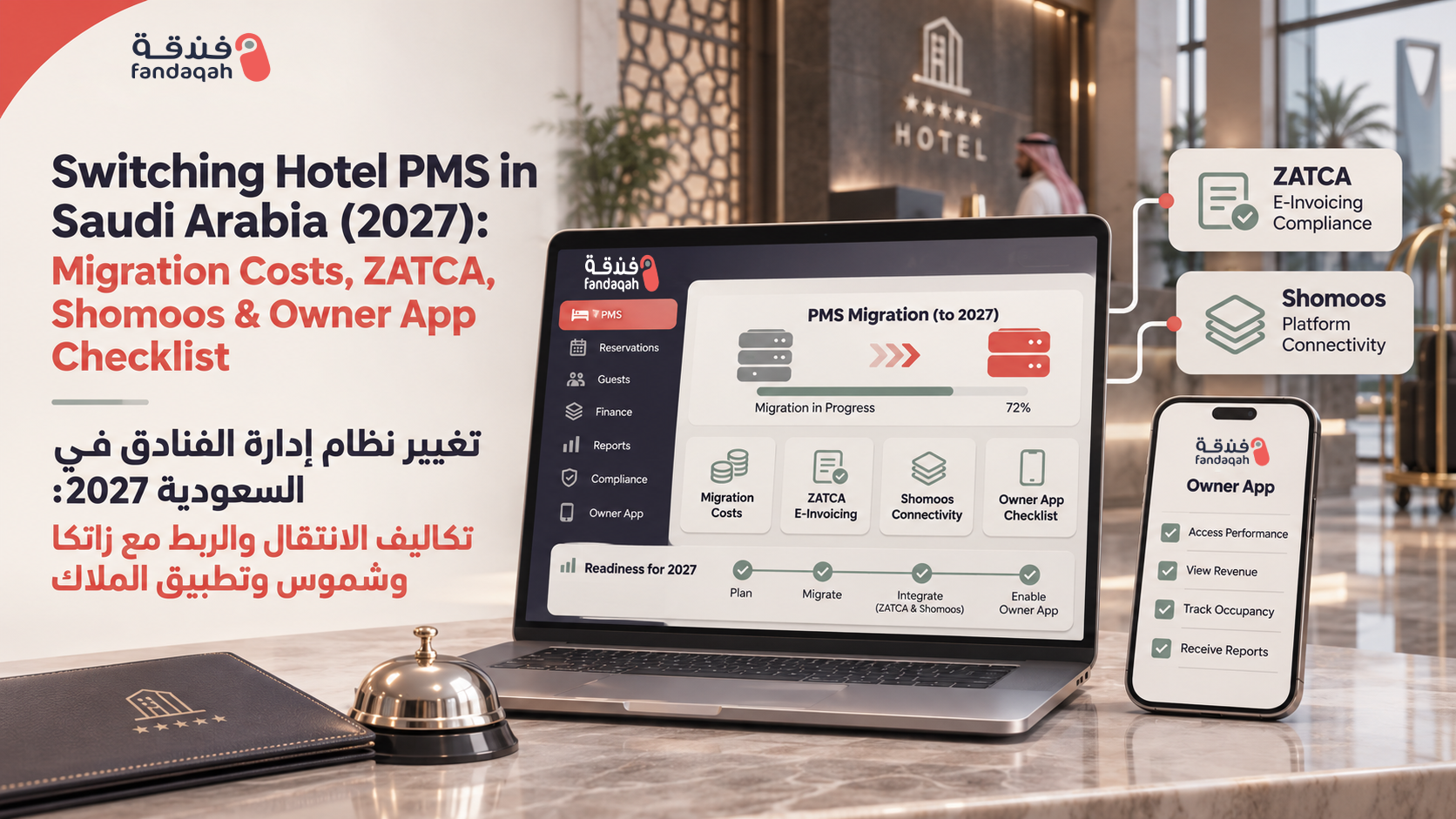
Switching hotel PMS in Saudi Arabia? Explore migration costs, data transfer, ZATCA, Shomoos, NTMP integrations, and owner app essentials for 2027....
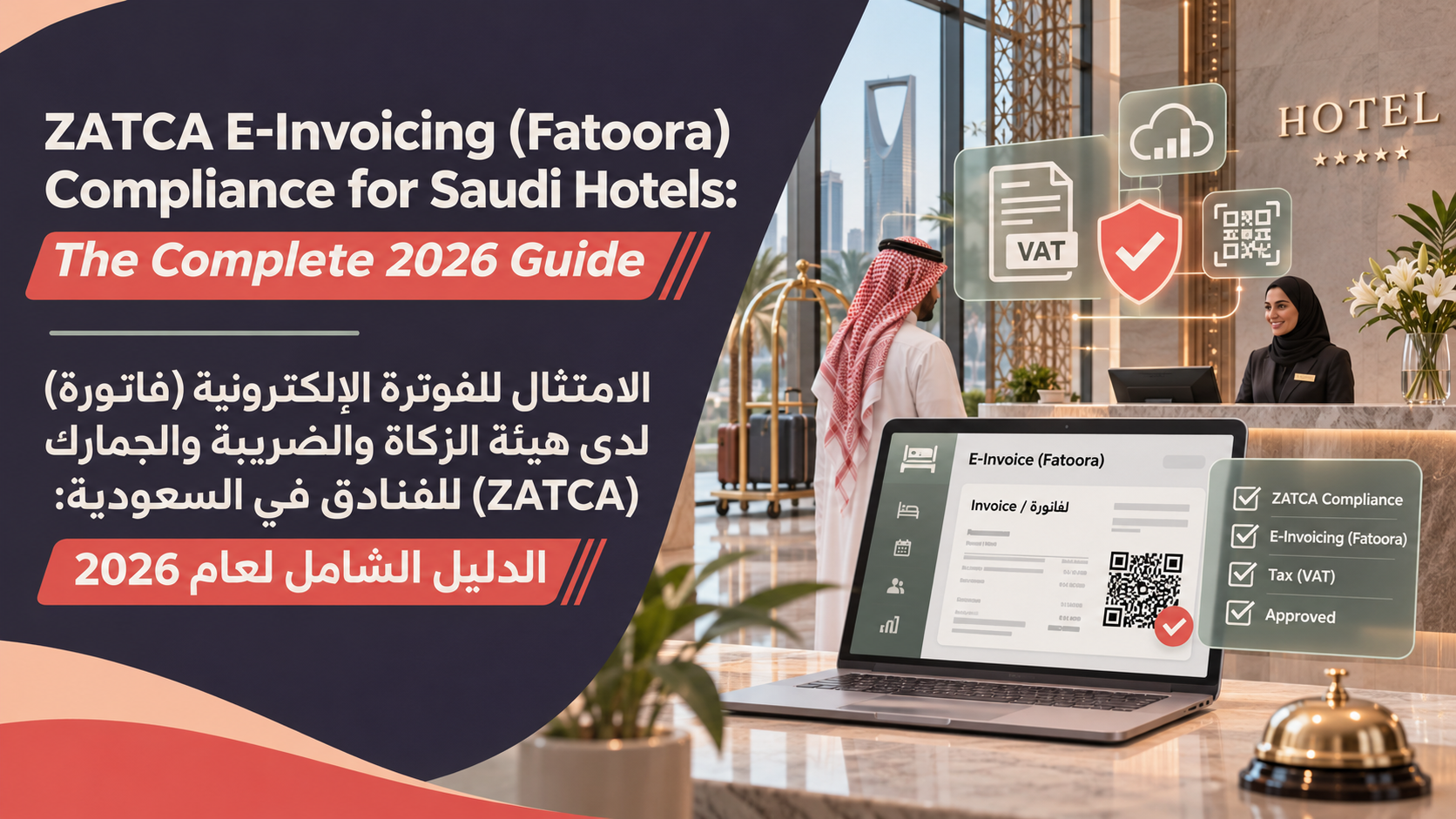
Learn ZATCA e-invoicing requirements for Saudi hotels in 2026, including Fatoora Phase 2, VAT compliance, invoice rules, and hotel PMS integration....
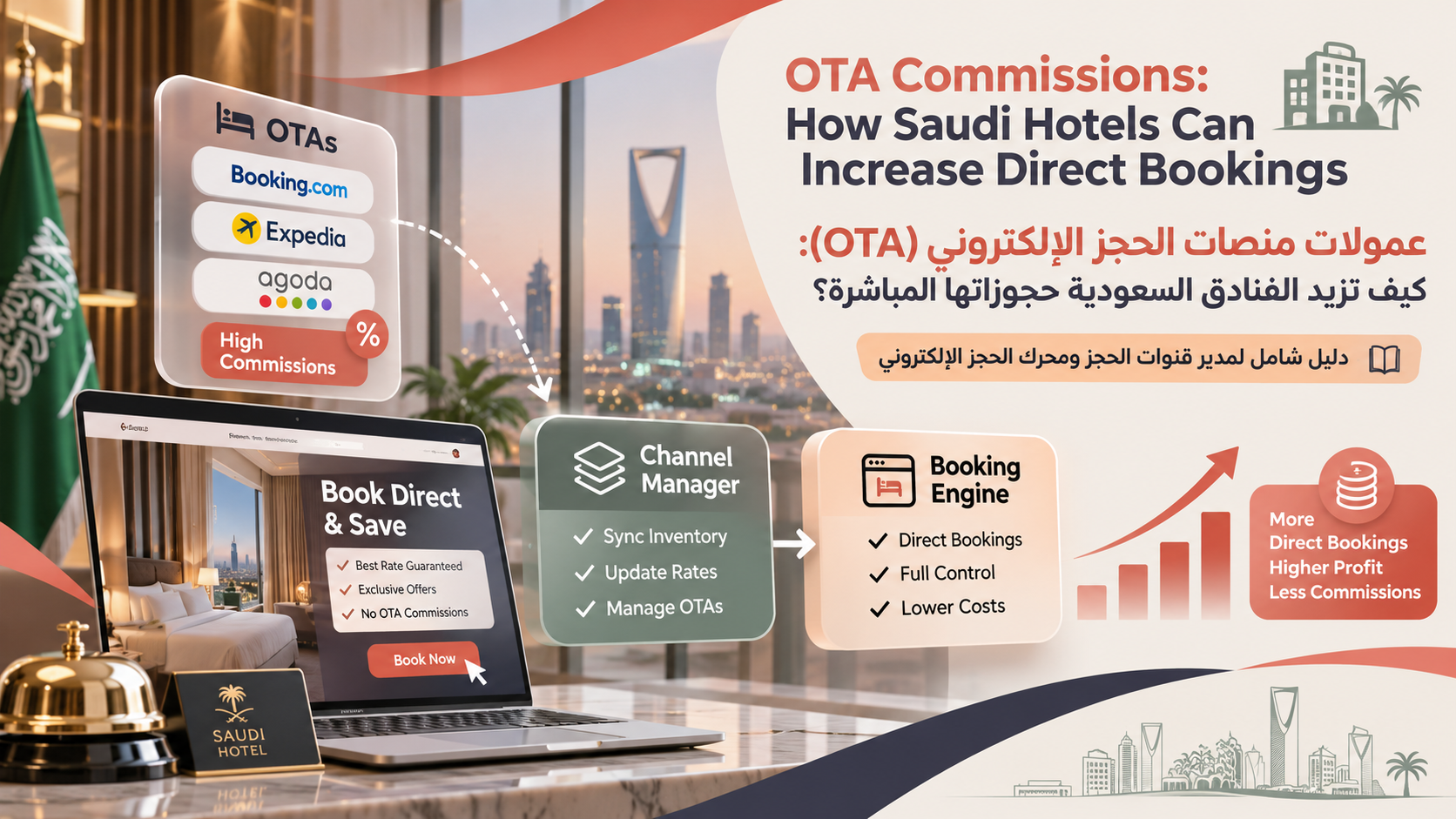
Learn how Saudi hotels can reduce OTA commissions, grow direct bookings, and increase revenue using a hotel channel manager and booking engine....
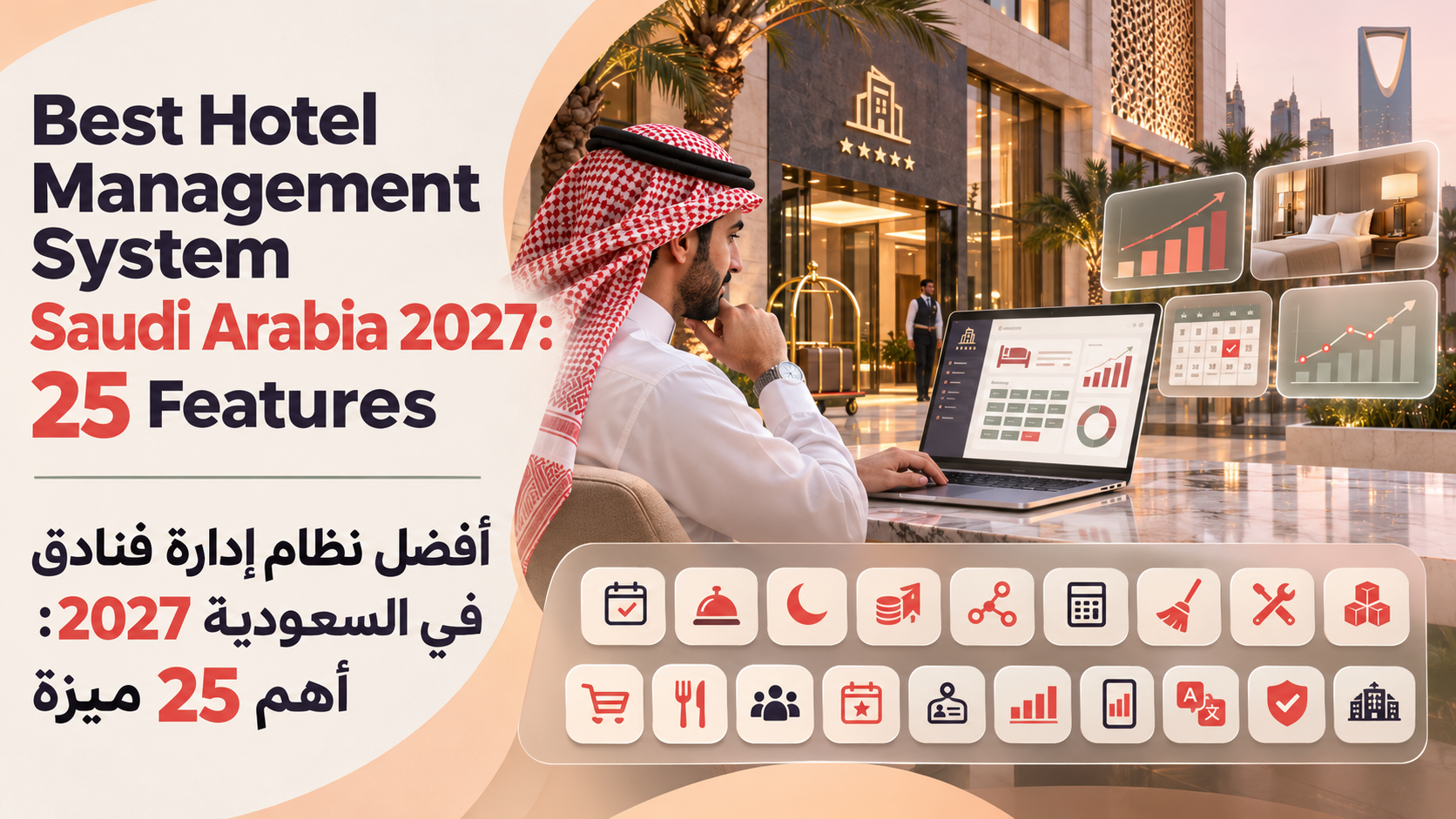
Compare 25 essential hotel PMS features in Saudi Arabia for 2027, including ZATCA, Shomoos, NTMP, accounting, automation and Fandaqah 360....
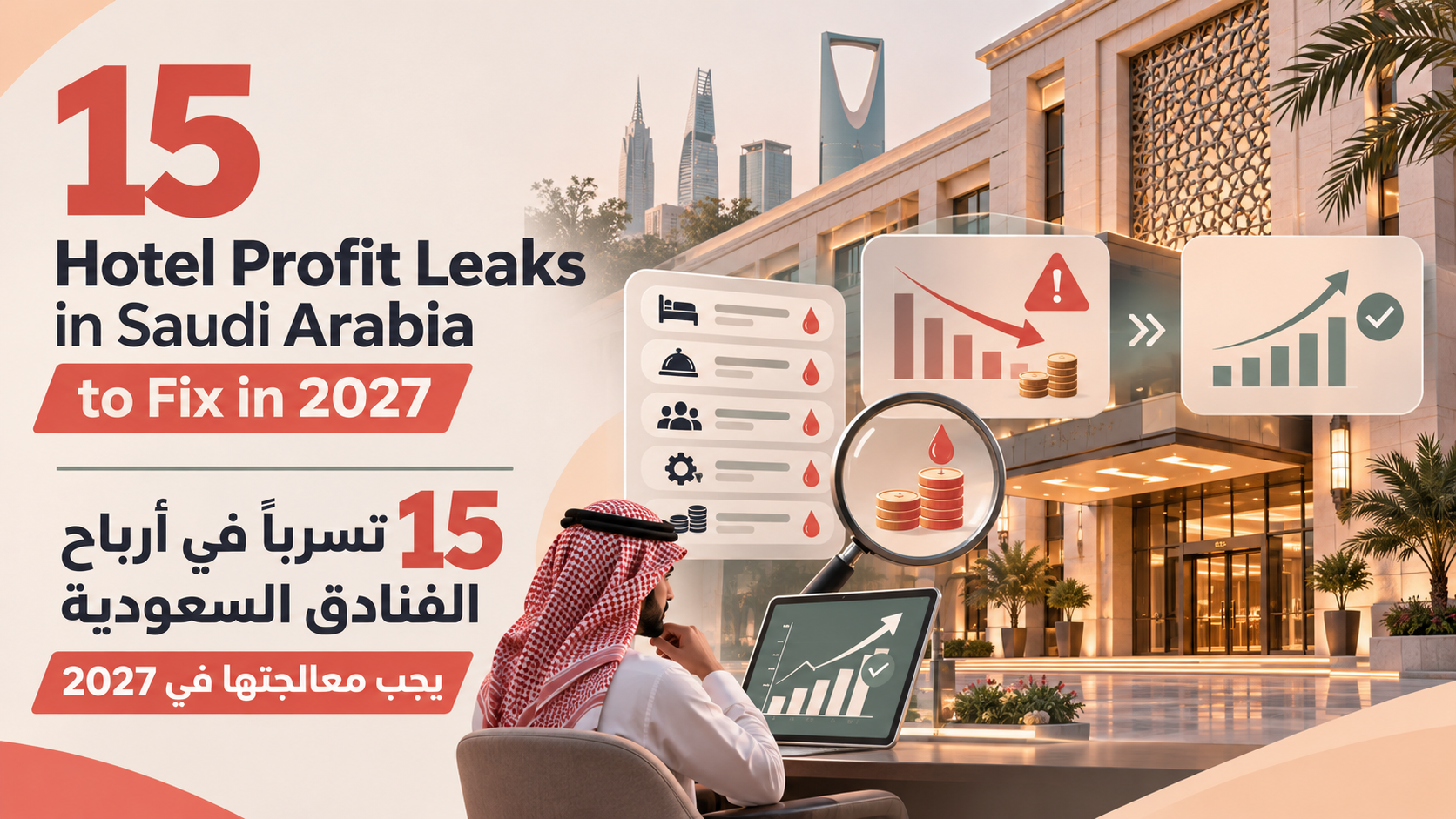
Discover 15 hidden hotel profit leaks in Saudi Arabia and learn how automation, cloud PMS, and smarter operations can reduce costs and protect revenue....
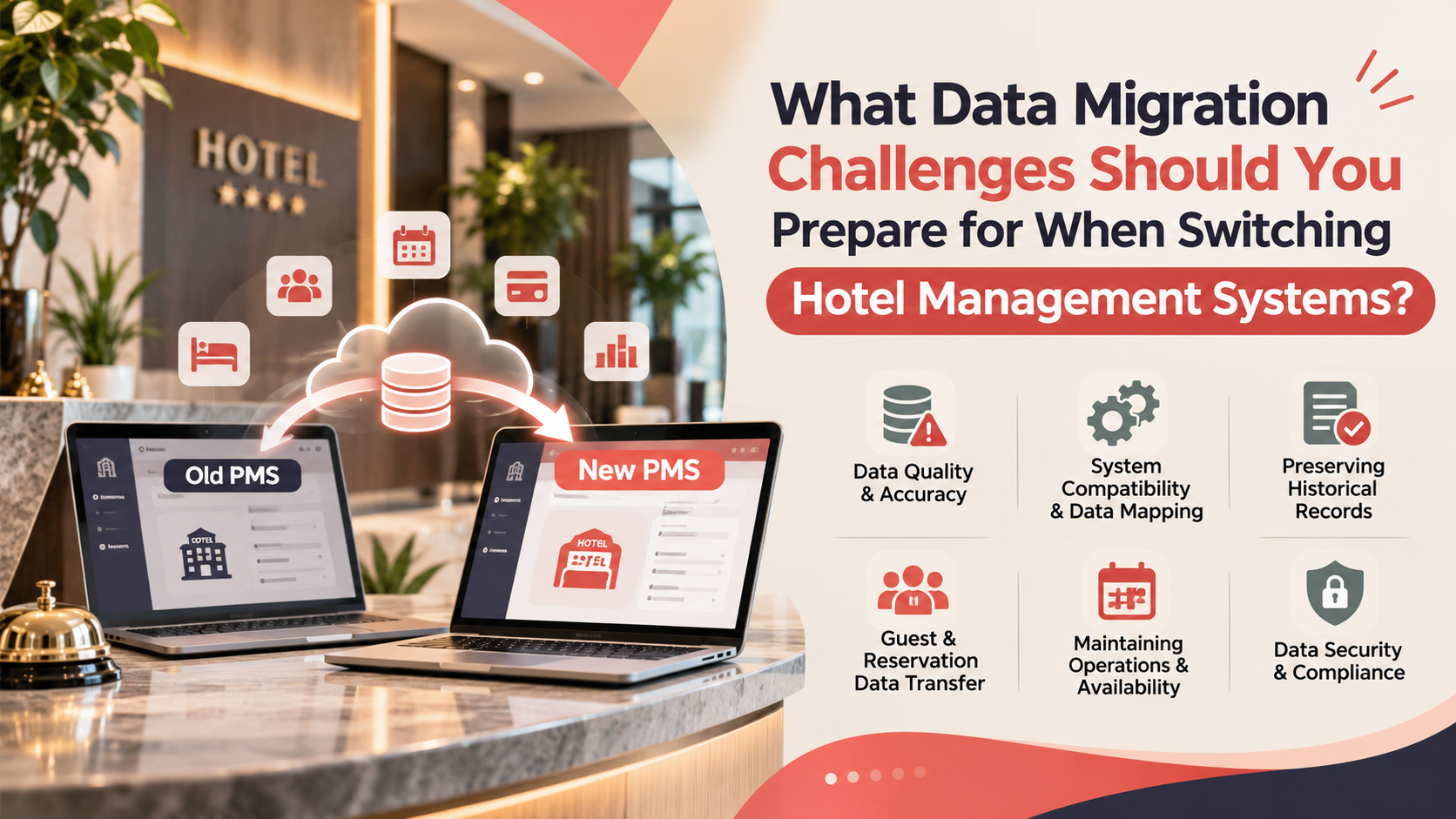
Prepare for hotel PMS migration in Saudi Arabia with 10 key challenges covering guest data, ZATCA, Shomoos, PDPL, rates, channels, and go-live....
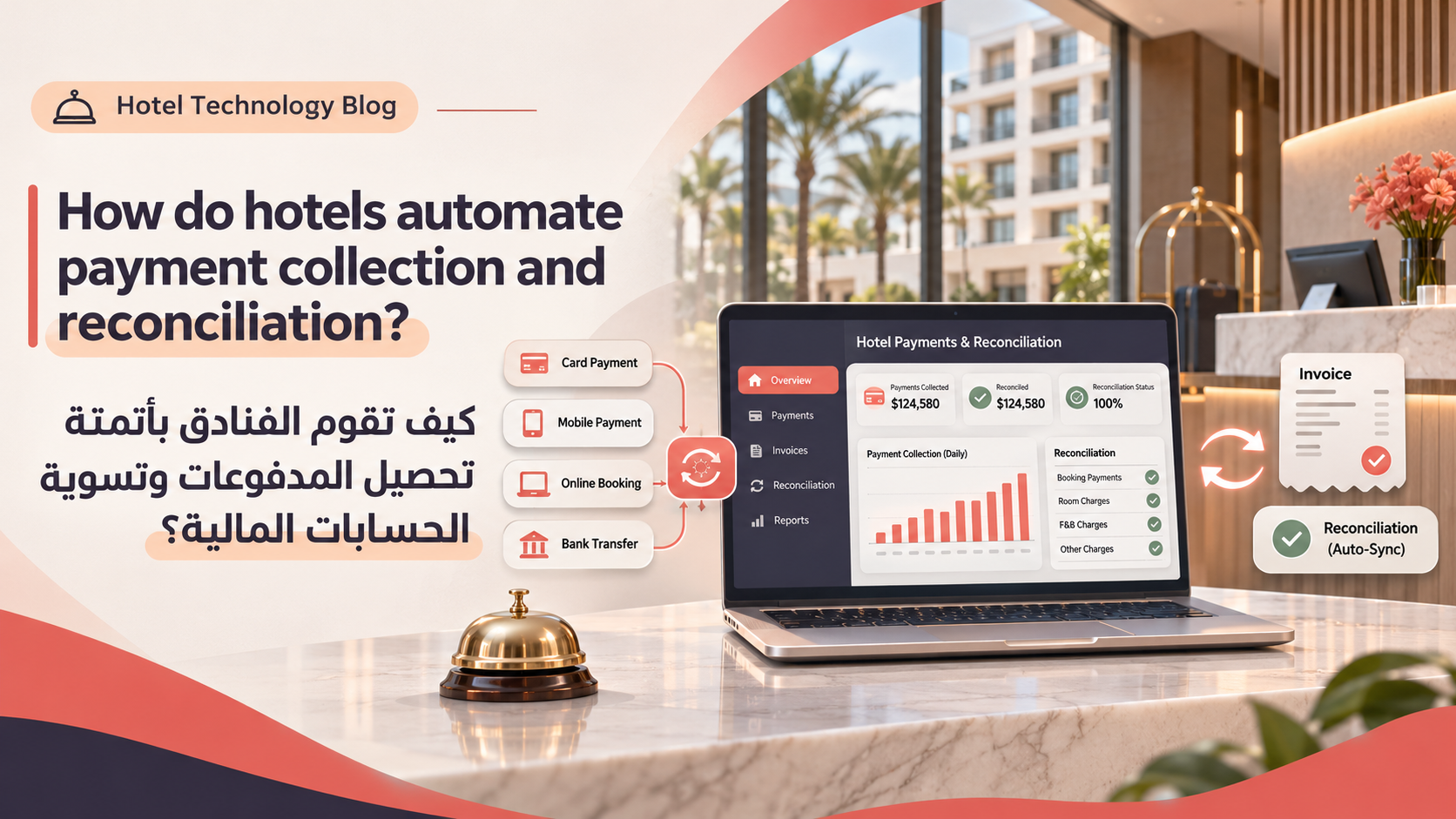
Learn how Saudi hotels automate payment collection and reconciliation using PMS integrations, payment gateways, ZATCA e-invoicing, and night audit....
Explore Saudi Arabia’s hospitality boom in 2026, including hotel investment, tourism growth, new hotel supply, Vision 2030 and key market opportunities....
Discover how Agentic AI will transform Saudi hotels in 2027 through smarter PMS, pricing, bookings, housekeeping, guest service and automation....
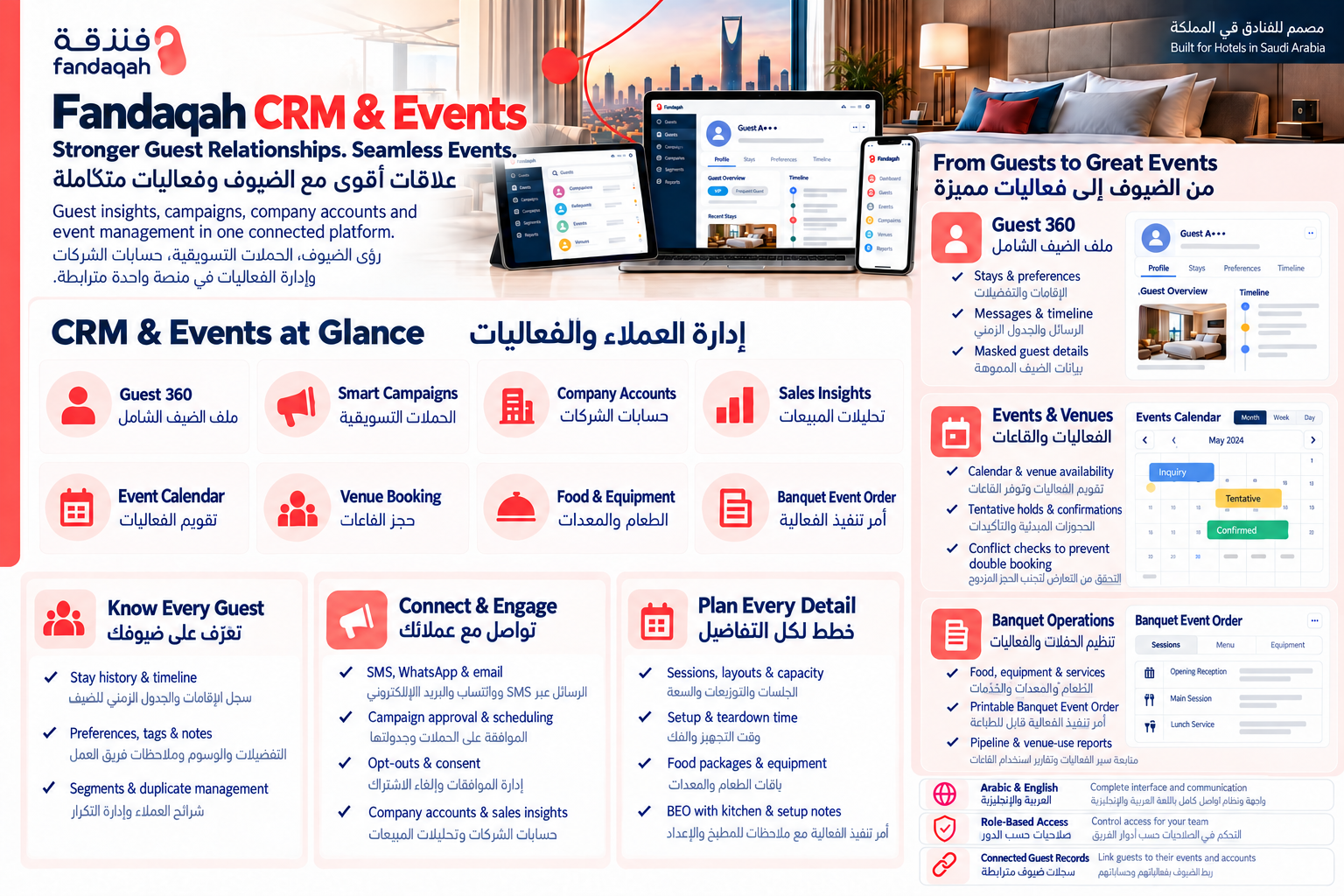
Compare hotel CRM and event management software for Saudi hotels in 2026: Guest 360 profiles, banquet management, venue booking and sales pipelines. Use cases, comparison table and FAQ....
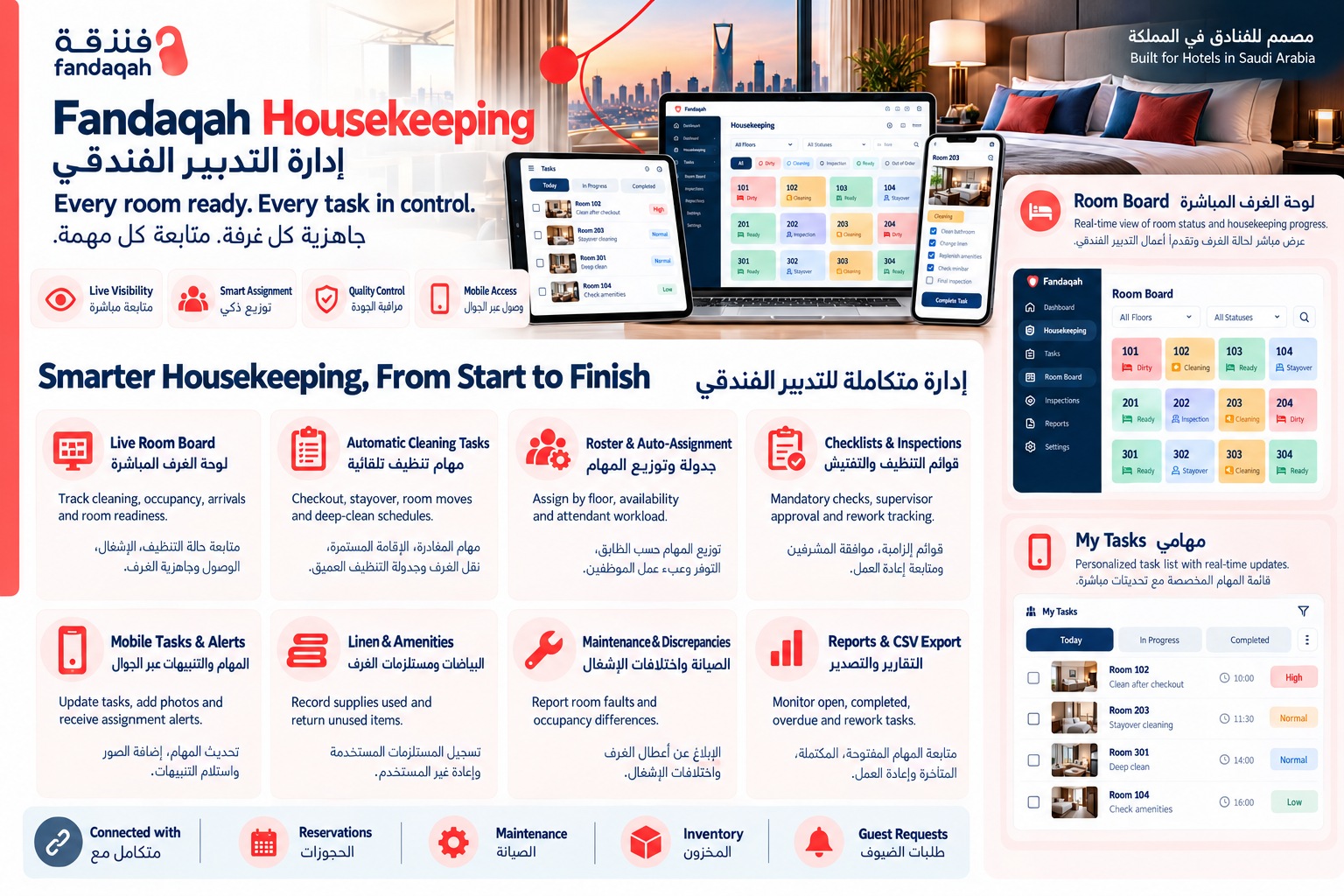
Automate room cleaning, task assignment and inspections with AI housekeeping software built for Saudi hotels. Benefits, use cases, comparison, FAQ and 2026 trends....
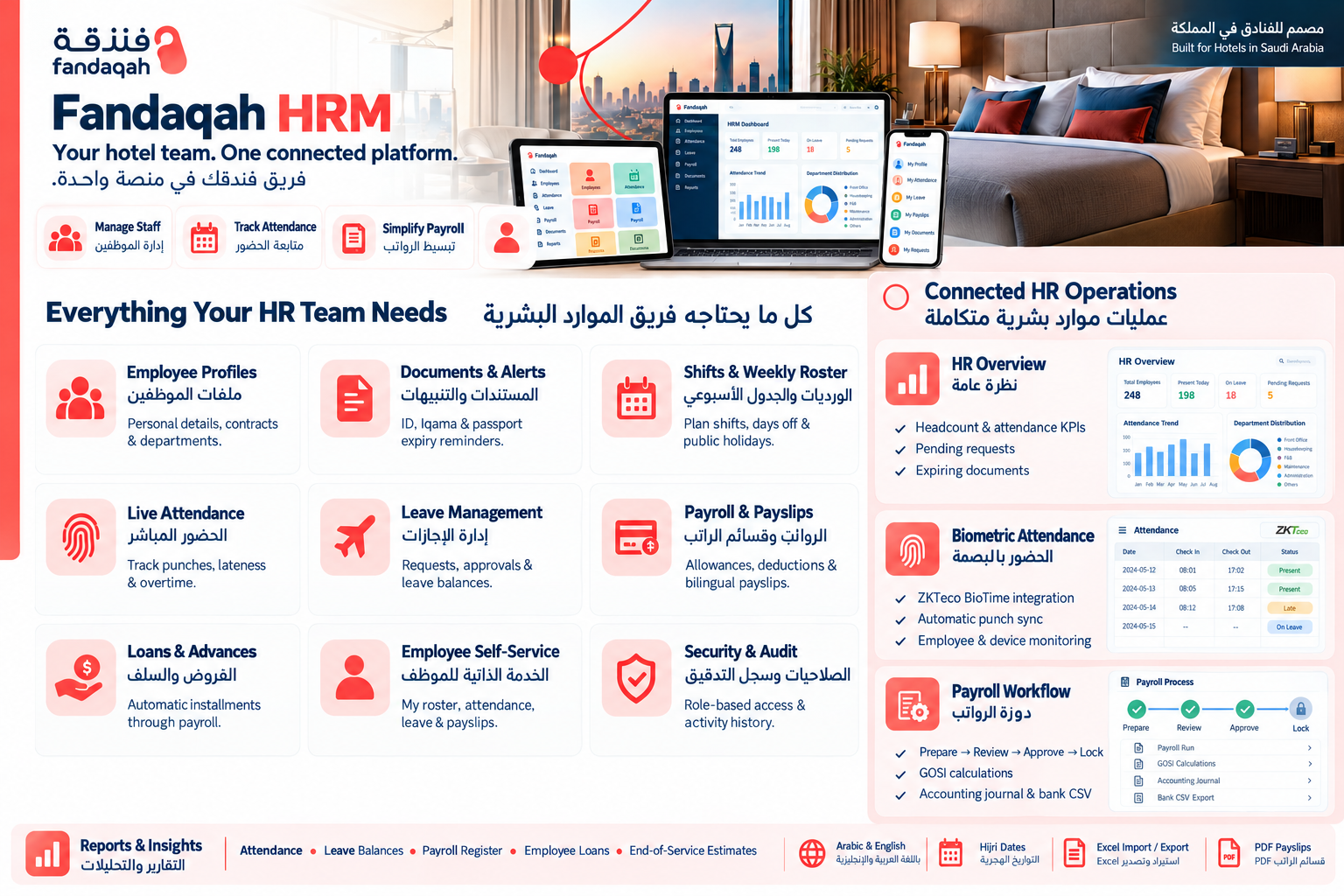
Discover how hotel HR software in Saudi Arabia handles payroll, attendance, Qiwa, GOSI, Mudad and employee management in 2026. See how Fandaqah simplifies hotel HR. Book a demo....
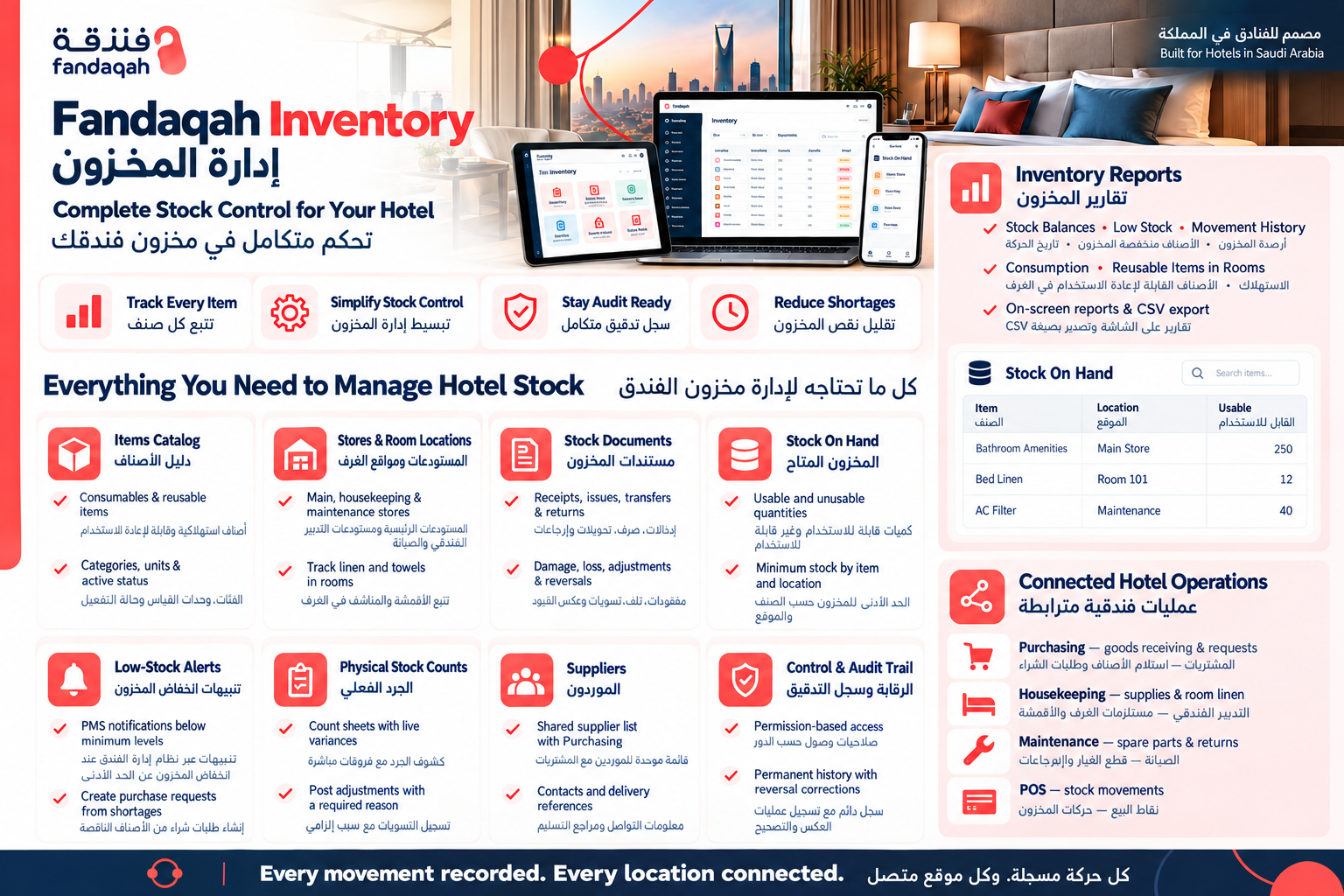
Learn how Saudi hotels reduce inventory waste, prevent stock shortages and lower purchasing costs in 2026 with smarter cost control and a PMS like Fandaqah. Start today....
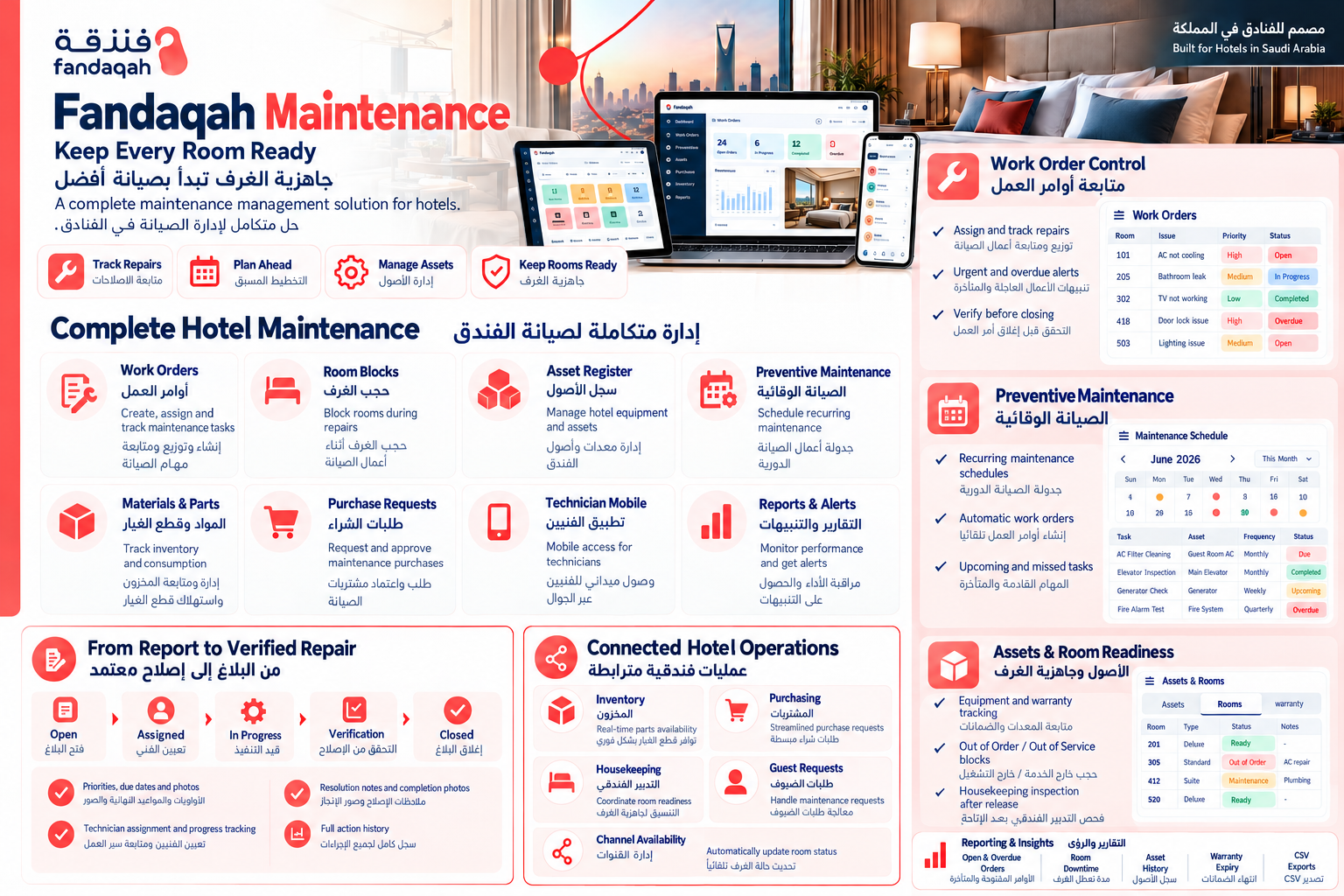
Discover hotel maintenance software in Saudi Arabia for preventive maintenance, work orders, asset tracking and room readiness with Fandaqah....
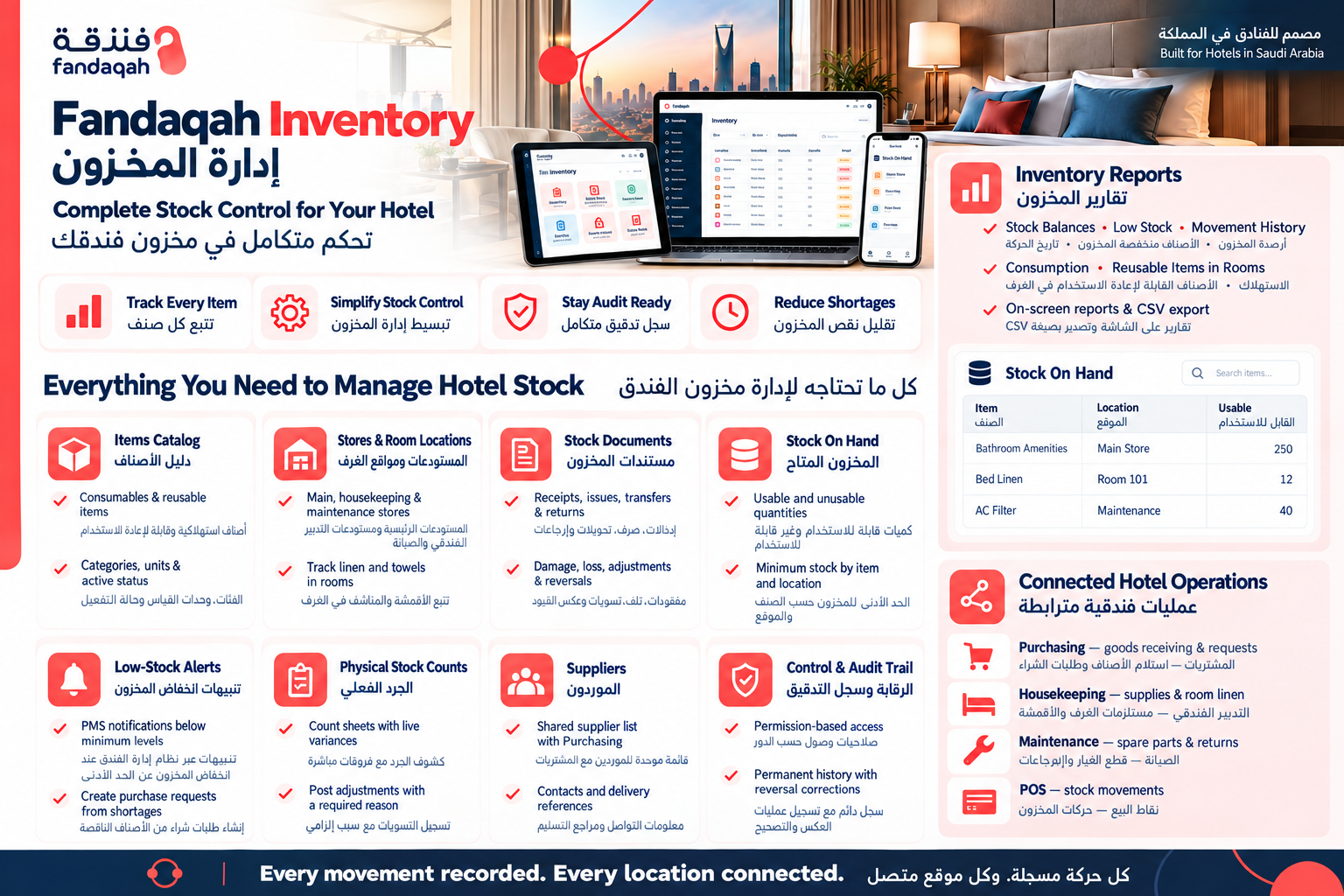
Discover hotel inventory software in Saudi Arabia to reduce waste, prevent stock shortages, control purchasing and manage hotel costs with Fandaqah....
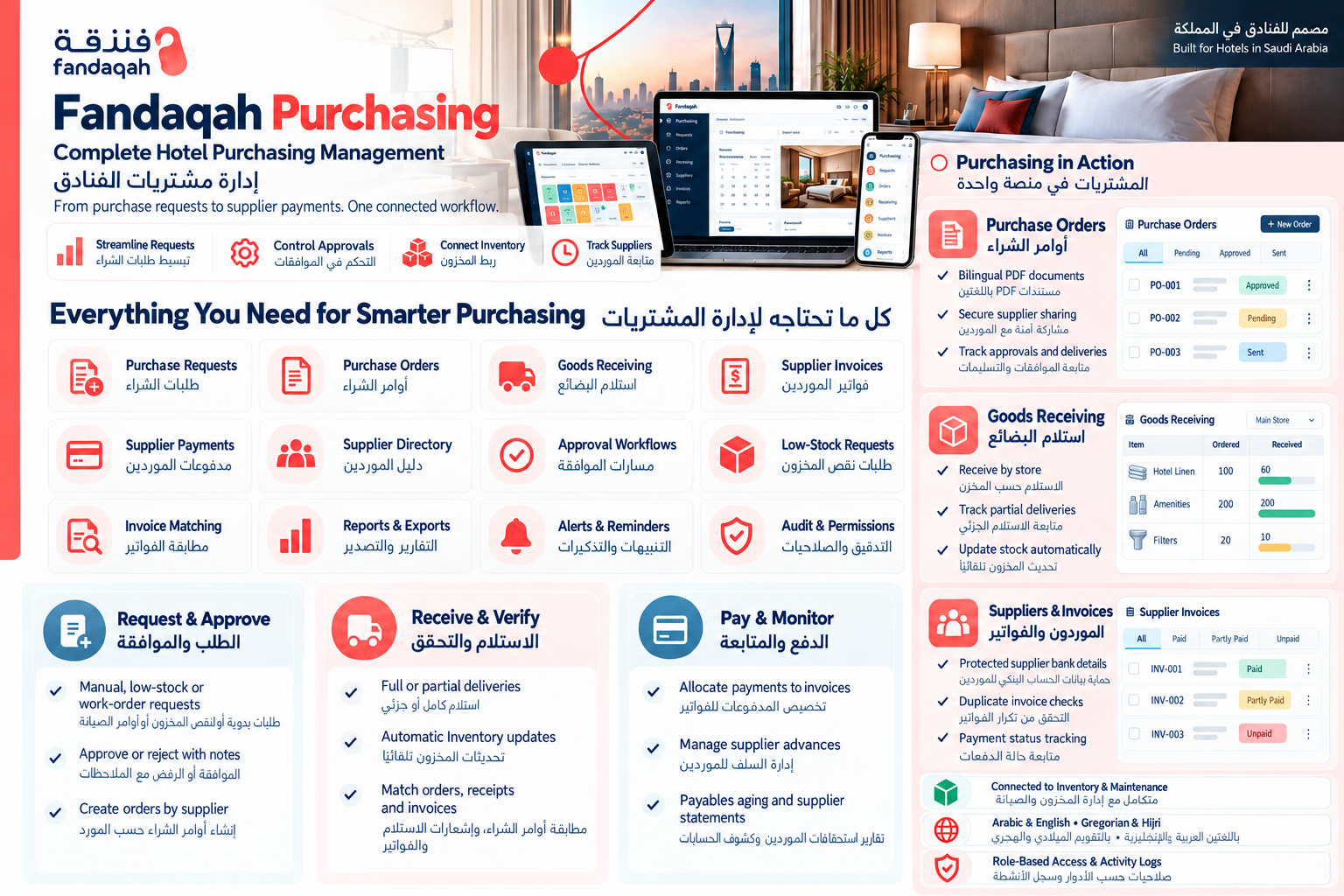
Discover hotel procurement software in Saudi Arabia for purchasing, supplier management, inventory, approvals and cost control with Fandaqah....
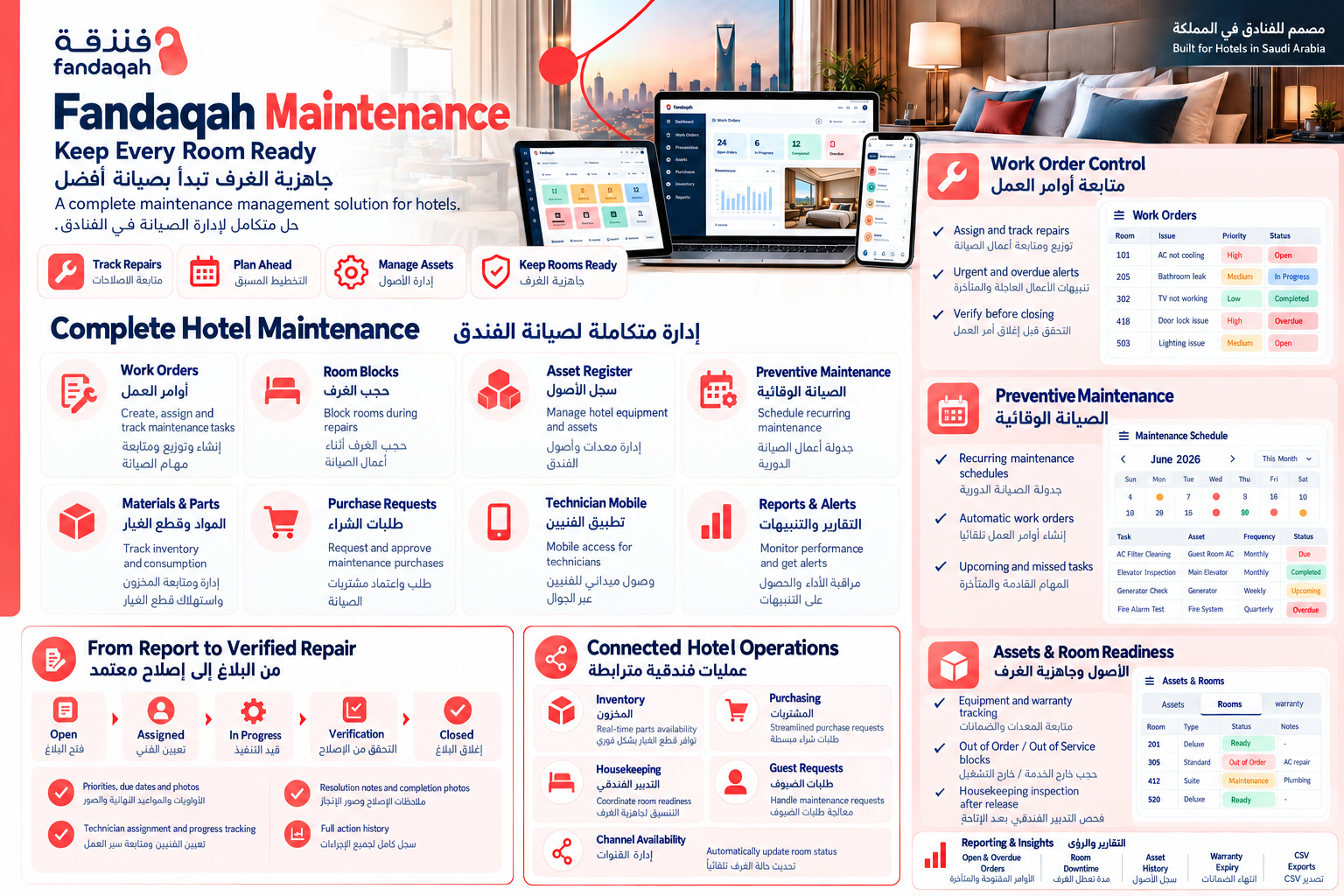
Discover hotel maintenance software in Saudi Arabia for work orders, preventive maintenance, asset tracking and room readiness with Fandaqah....
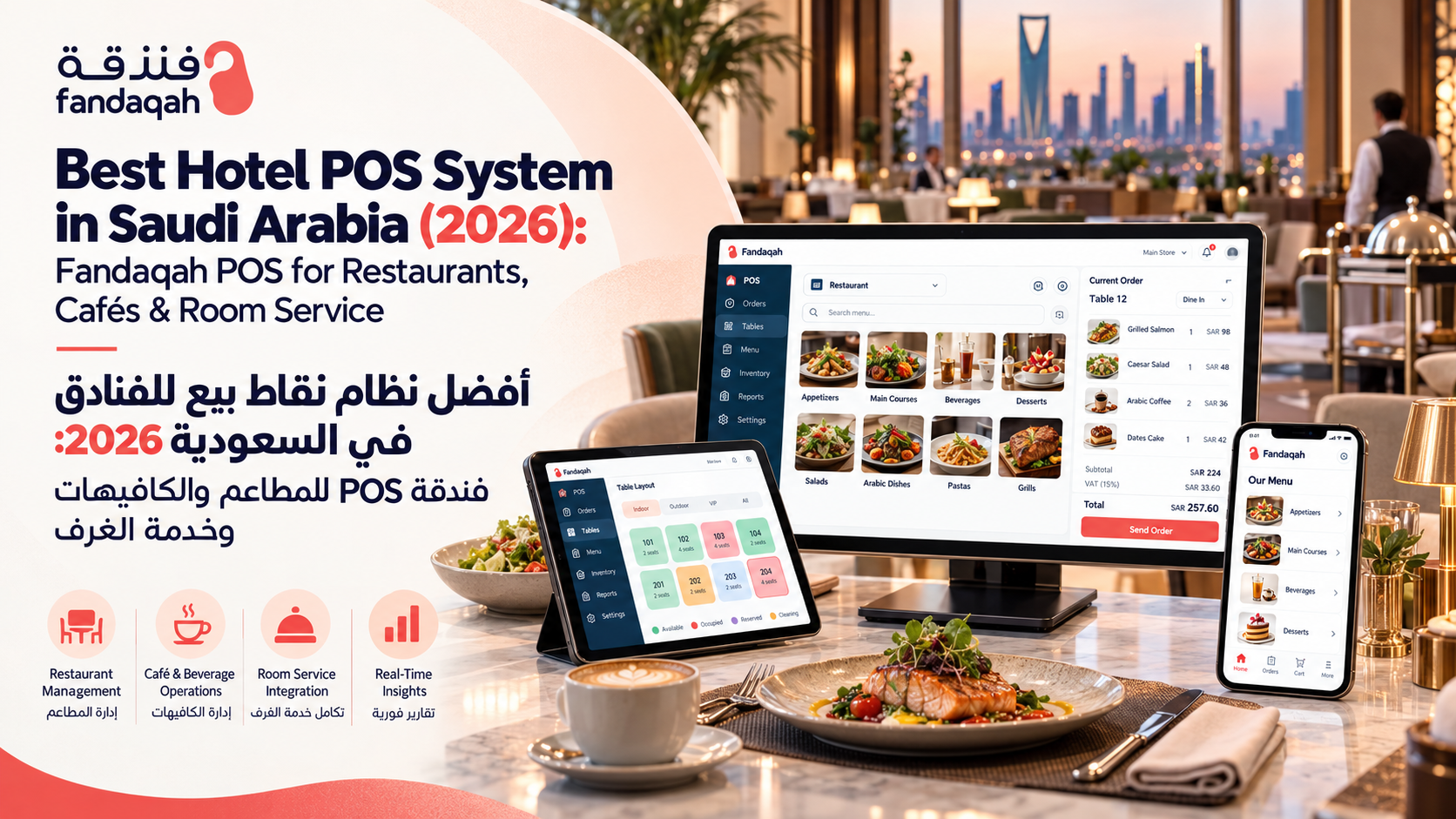
Discover Fandaqah POS, a hotel POS system for Saudi Arabia with PMS integration, ZATCA e-invoicing, room service, cafés, restaurants and local payments....
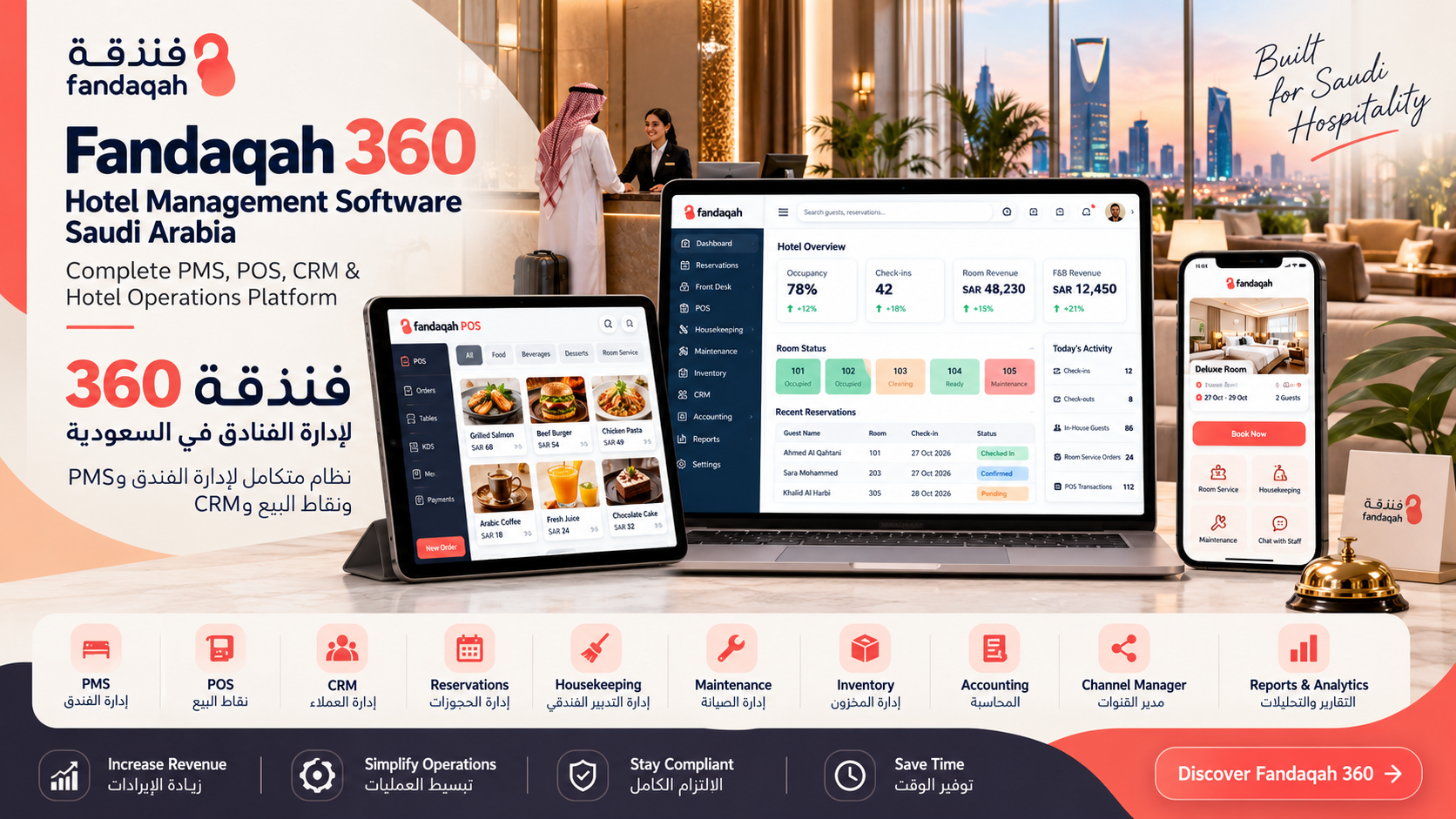
Discover Fandaqah 360, an all-in-one hotel management platform for Saudi Arabia with PMS, POS, CRM, channel manager, operations and ZATCA e-invoicing....

Upgrade to Fandaqah 360 with connected PMS, booking engine, channel manager, guest tools and real-time reporting for hotels across Saudi Arabia....
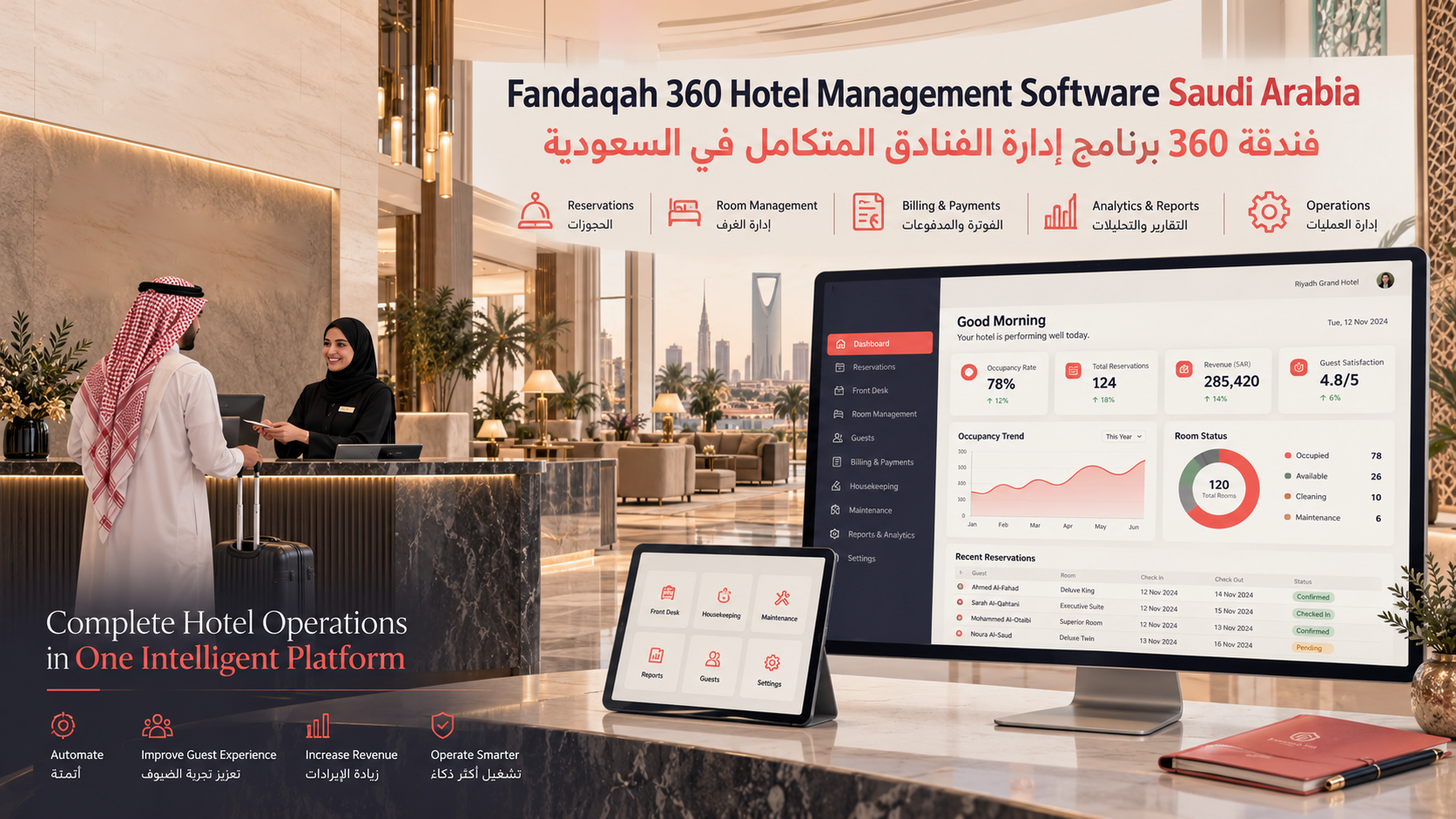
Discover Fandaqah 360, an all-in-one hotel management platform with cloud PMS, booking engine, channel manager and reporting for Saudi hotels....

Explore a 14-day Riyadh hotel occupancy playbook for King Abdulaziz Falconry Festival 2026, covering dynamic pricing, direct bookings and revenue growth....

Explore ELAF Group’s 2026 AI guest-service rollout and six practical lessons for Saudi hotels to improve guest messaging, direct bookings, and revenue....
Black Hat MEA 2026 puts hotel cybersecurity in focus. Learn how Saudi hotels can boost direct bookings with secure PMS, trusted payments and booking engines....
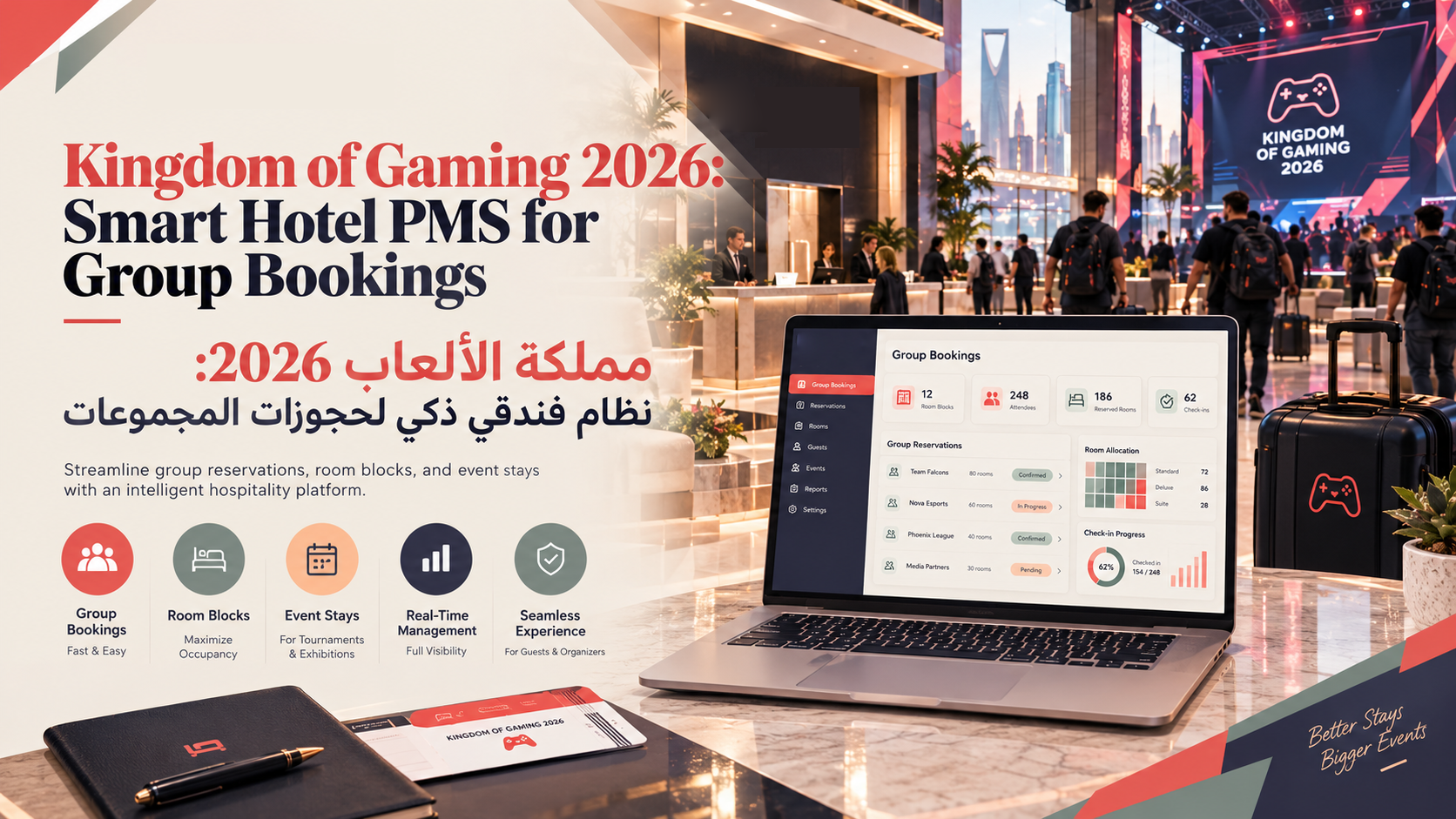
Prepare for Kingdom of Gaming 2026 with a smart hotel PMS. Manage esports group bookings, room blocks, rooming lists and billing across Saudi hotels....
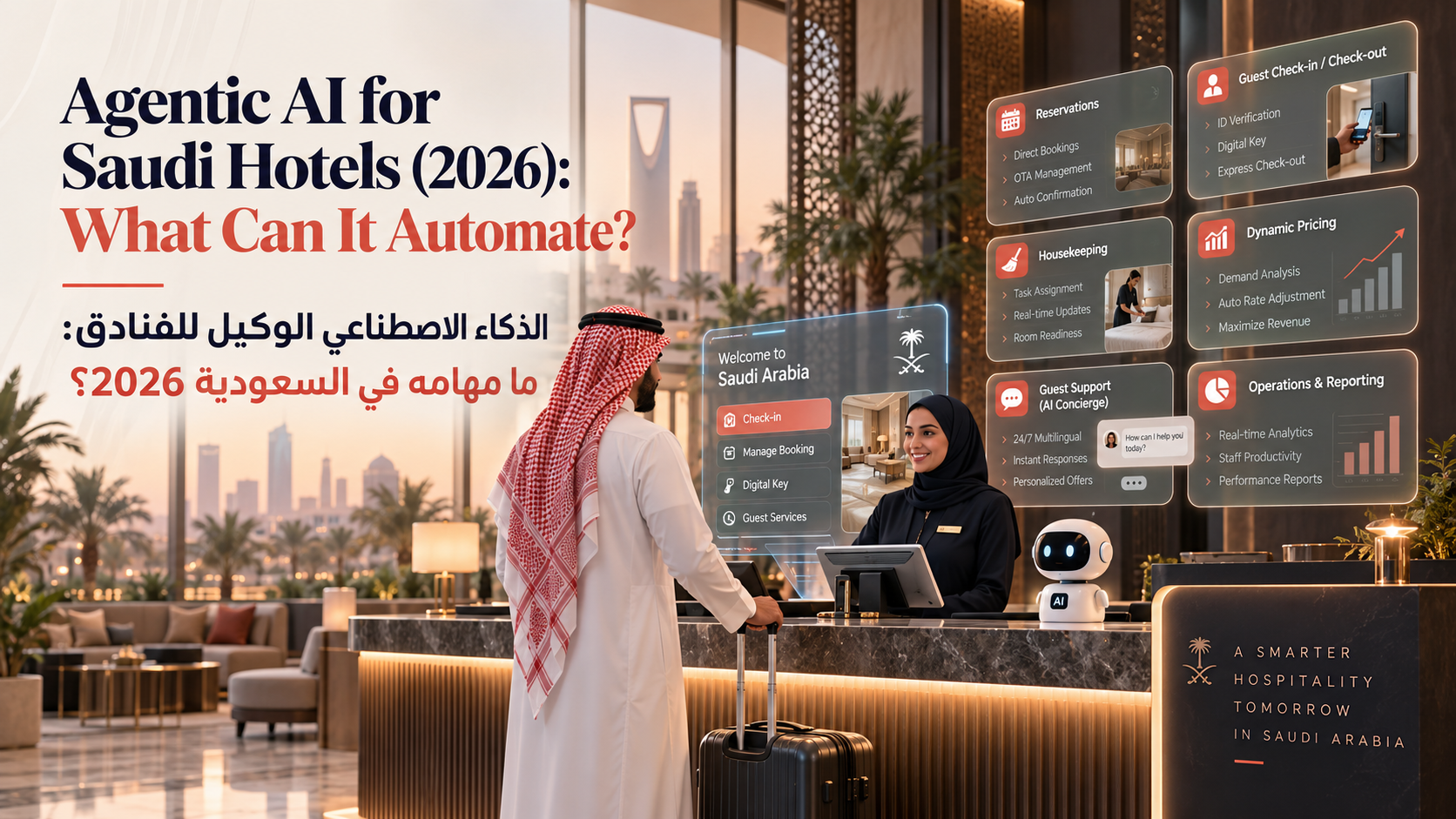
Discover what agentic AI can automate in Saudi hotels in 2026, from WhatsApp bookings and dynamic pricing to housekeeping, ZATCA invoicing and reports....
Can Saudi hotels accept mada on a phone? Discover how SoftPOS works in 2026, its security, SAMA requirements, fees, and hotel PMS integration....

Prepare Al Khobar hotels for Ithra Design Week, Nov 16–21, 2026, with a 6-day direct booking plan, smart hotel PMS, dynamic pricing, and lower OTA commissions....

Discover a 7-day revenue plan for Al Khobar and Dammam hotels around PFL MENA and CIDEX 2026, with dynamic pricing, group blocks and more direct bookings....
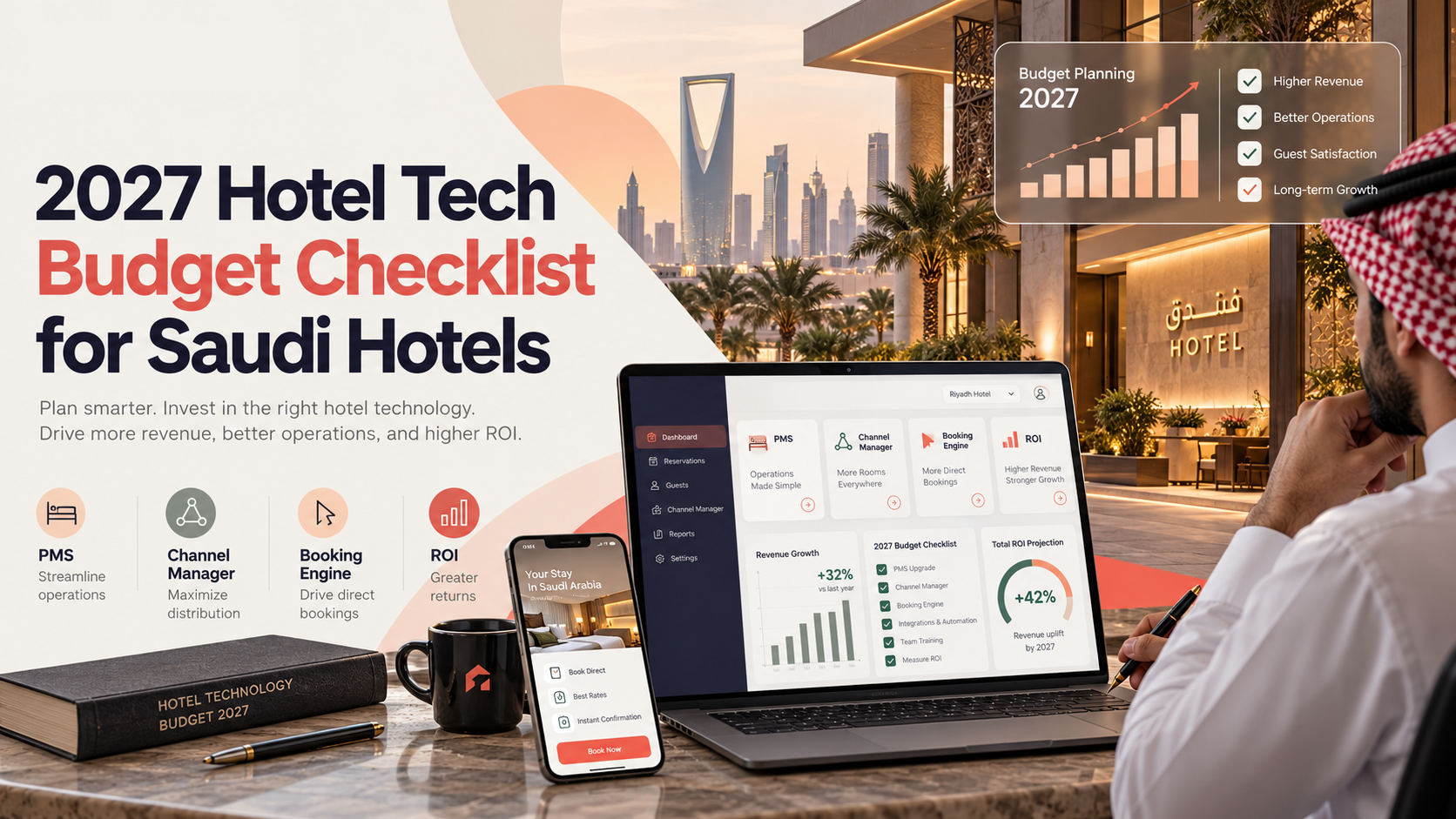
Plan your 2027 hotel technology budget with our Saudi hotel checklist. Compare PMS, channel manager and booking engine ROI, costs and Vision 2030 priorities....
Learn how Al Khobar hotels turn Bahrain weekend visitors into direct bookings using smart pricing, a fast booking engine, WhatsApp and guest loyalty offers....
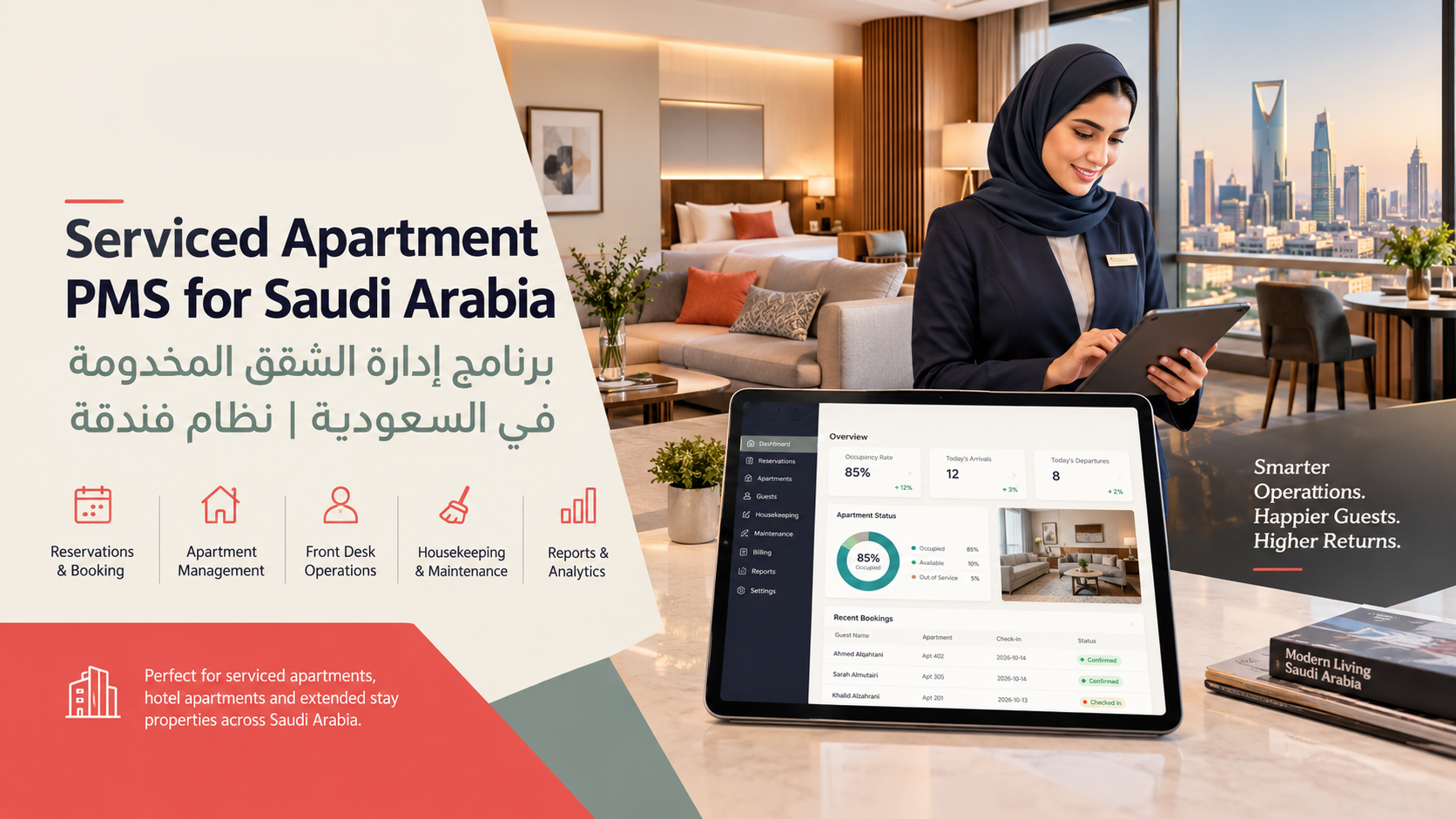
Manage monthly stays, security deposits and company bookings with Fandaqah PMS for Saudi serviced apartments, including ZATCA invoicing and Shomoos....
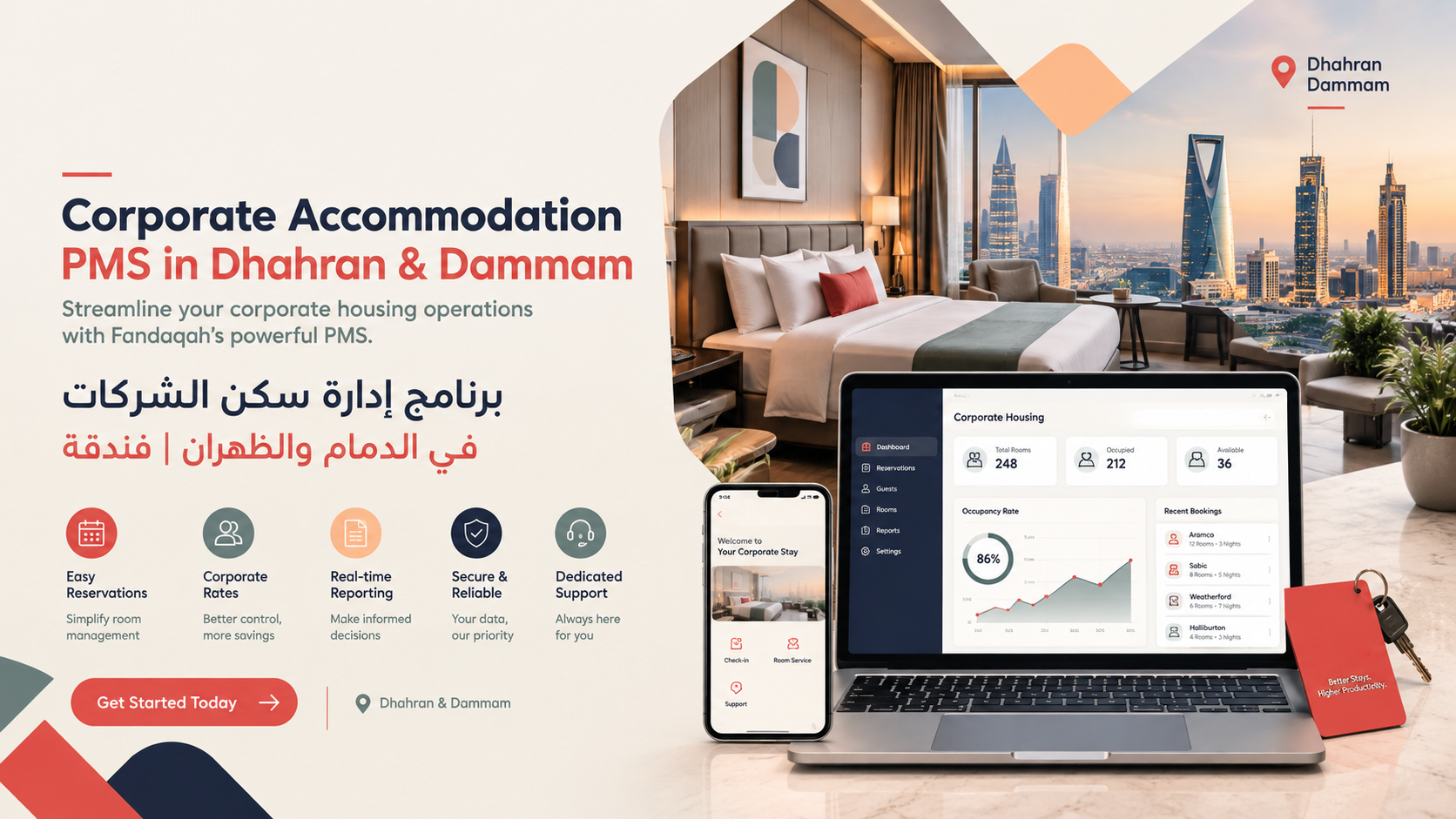
Manage corporate long stays, negotiated company rates, staff rotations and ZATCA-ready billing in Dhahran and Dammam with Fandaqah PMS....

Complete guide to Six Kings Slam Riyadh 2026: format, prize money, past champions, tickets, where to stay, and how Saudi hotels can maximize revenue during the event....
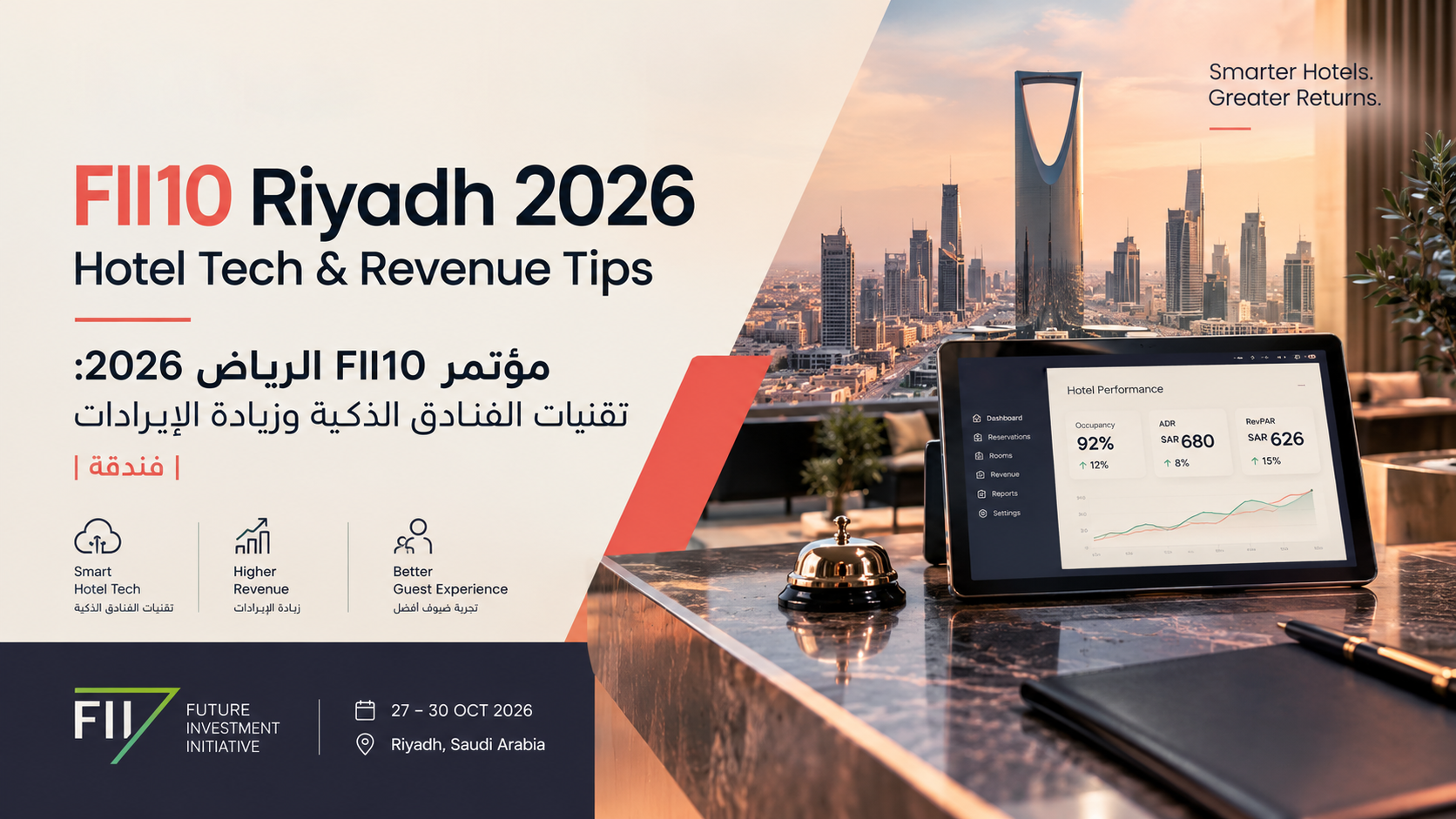
FII10 Riyadh 2026 hotelier guide: dates, attendees, smart hotel tech, booking strategies & pricing tips to maximize RevPAR during the Future Investment Initiative....
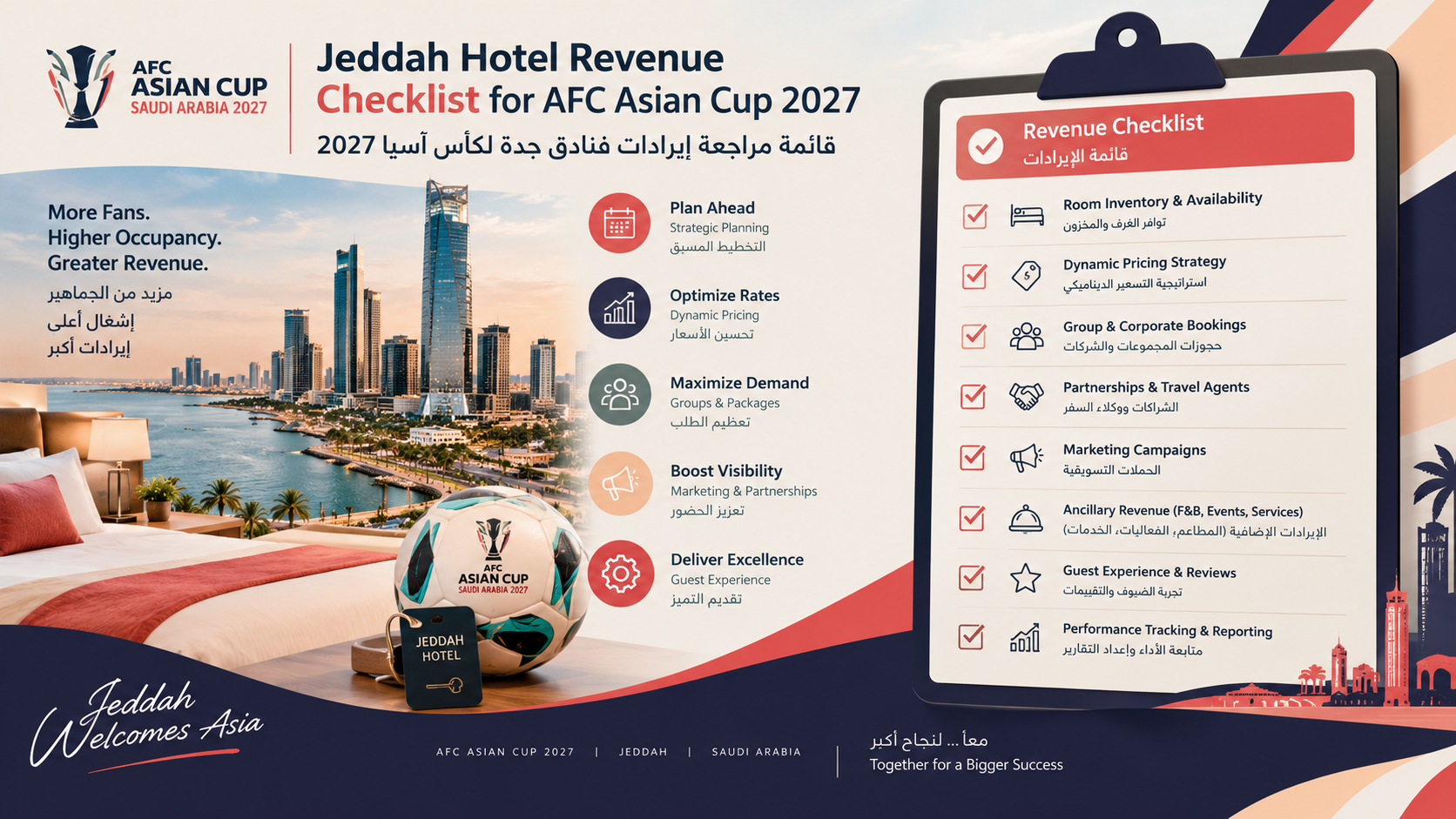
Step-by-step revenue management checklist for Jeddah hotels preparing for AFC Asian Cup 2027: demand forecasting, dynamic pricing, MLOS, channels and RevPAR....
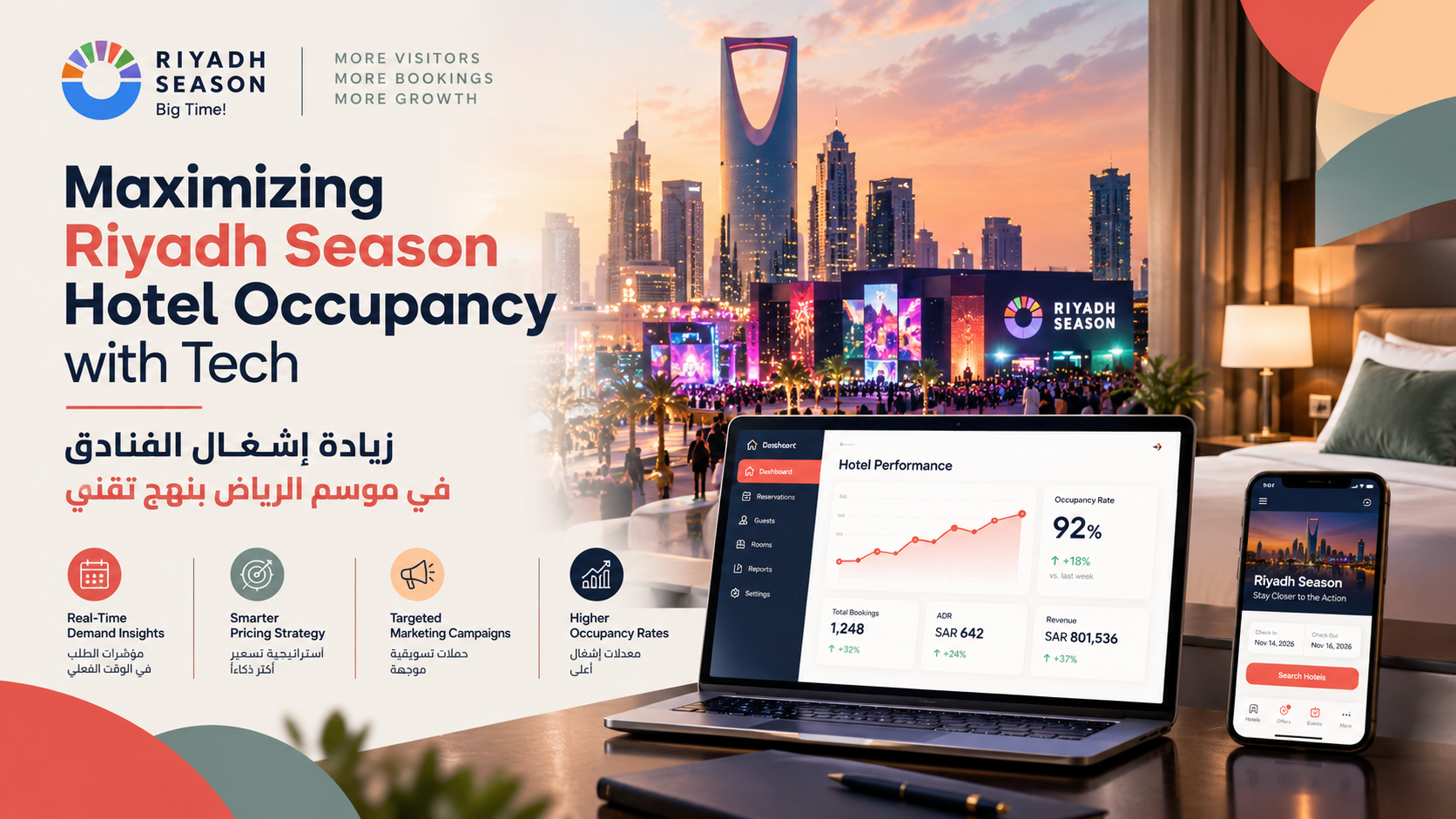
How Riyadh hotels can maximize occupancy and RevPAR during Riyadh Season using dynamic pricing, channel managers, direct bookings and cloud PMS like Fandaqah....

The Gulf Cup in Saudi Arabia draws thousands of football fans. Learn how hotels boost bookings with match-day pricing, fan packages & a smart cloud PMS....

Saudi Arabia winter vacation 2026 is peak domestic travel season. Learn how hotels attract students & families with packages, smart pricing & a cloud PMS....
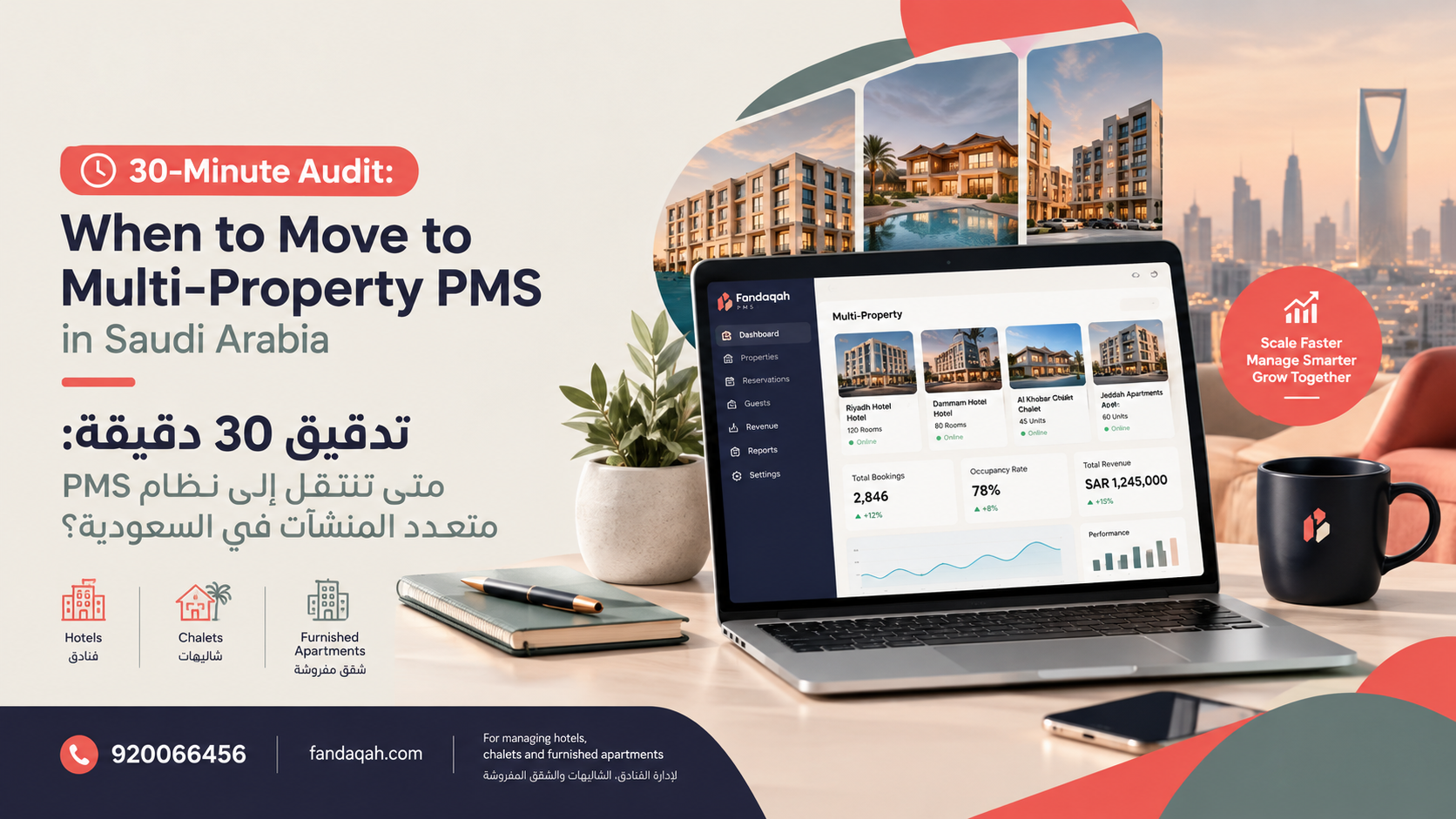
Run this 10-question, 30-minute audit to know if your hotel group needs a multi-property PMS. Compare single vs multi-property systems, Saudi use cases, ZATCA readiness & Vision 2030 tips....
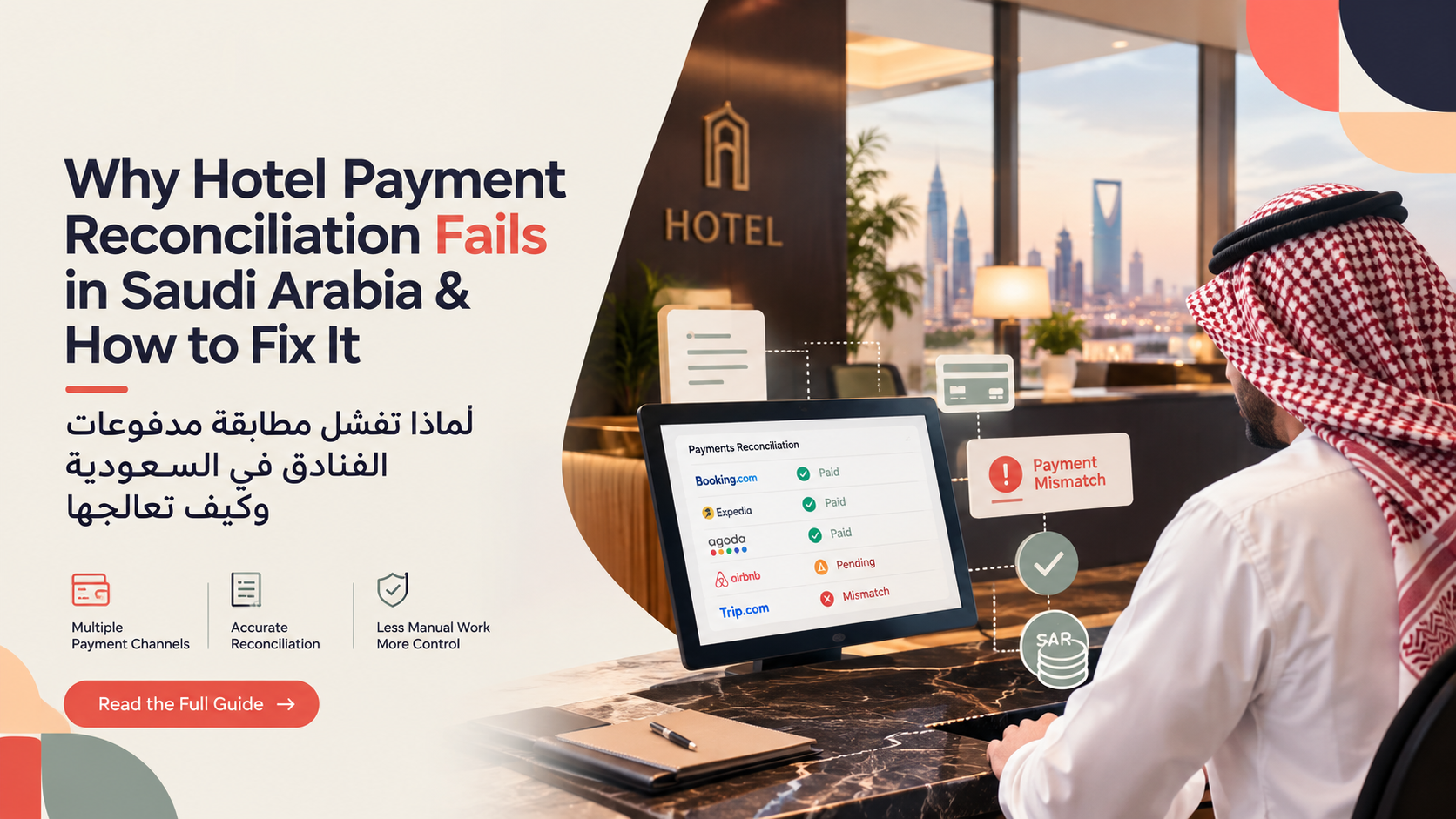
Hotel payment reconciliation fails in Saudi hotels due to mada, OTAs, ZATCA & timing gaps. Learn the 7 root causes, a step-by-step fix, checklist & how automation recovers lost revenue....
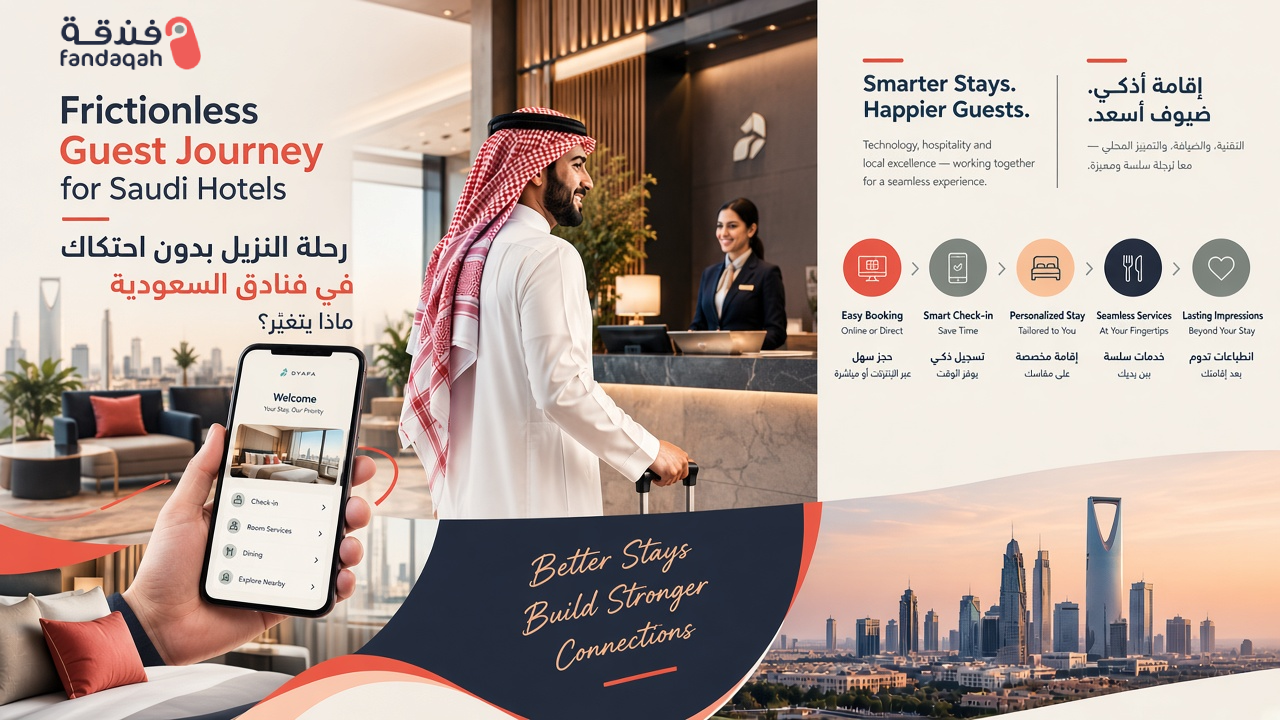
What really changes when Saudi hotel managers fix the frictionless guest journey. Faster check-in, higher direct bookings, better reviews, and full Shomoos & ZATCA compliance....
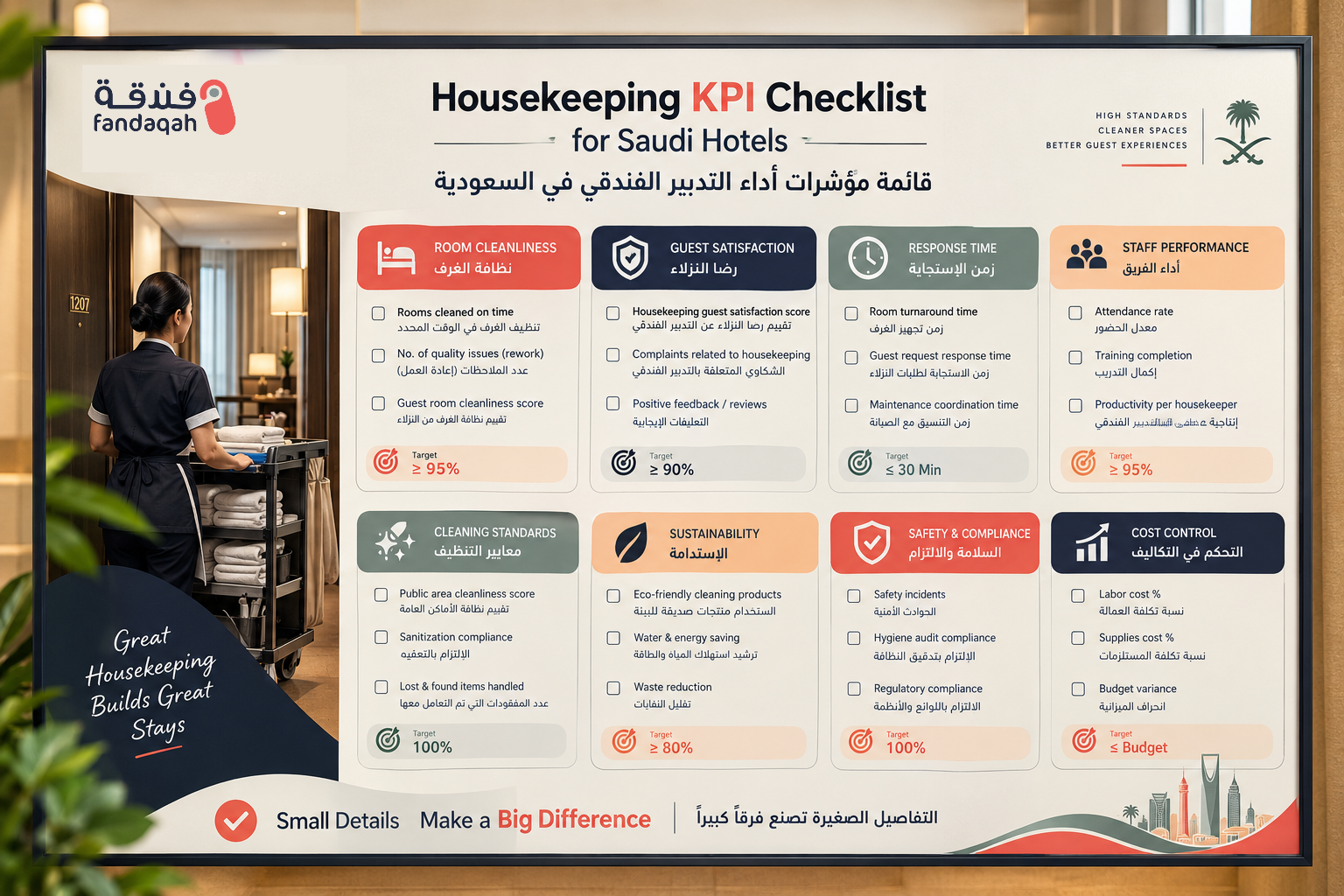
Complete housekeeping KPI checklist for Saudi hotels. Track room status, turnaround time, productivity & more. Design a digital board that drives performance under Vision 2030....
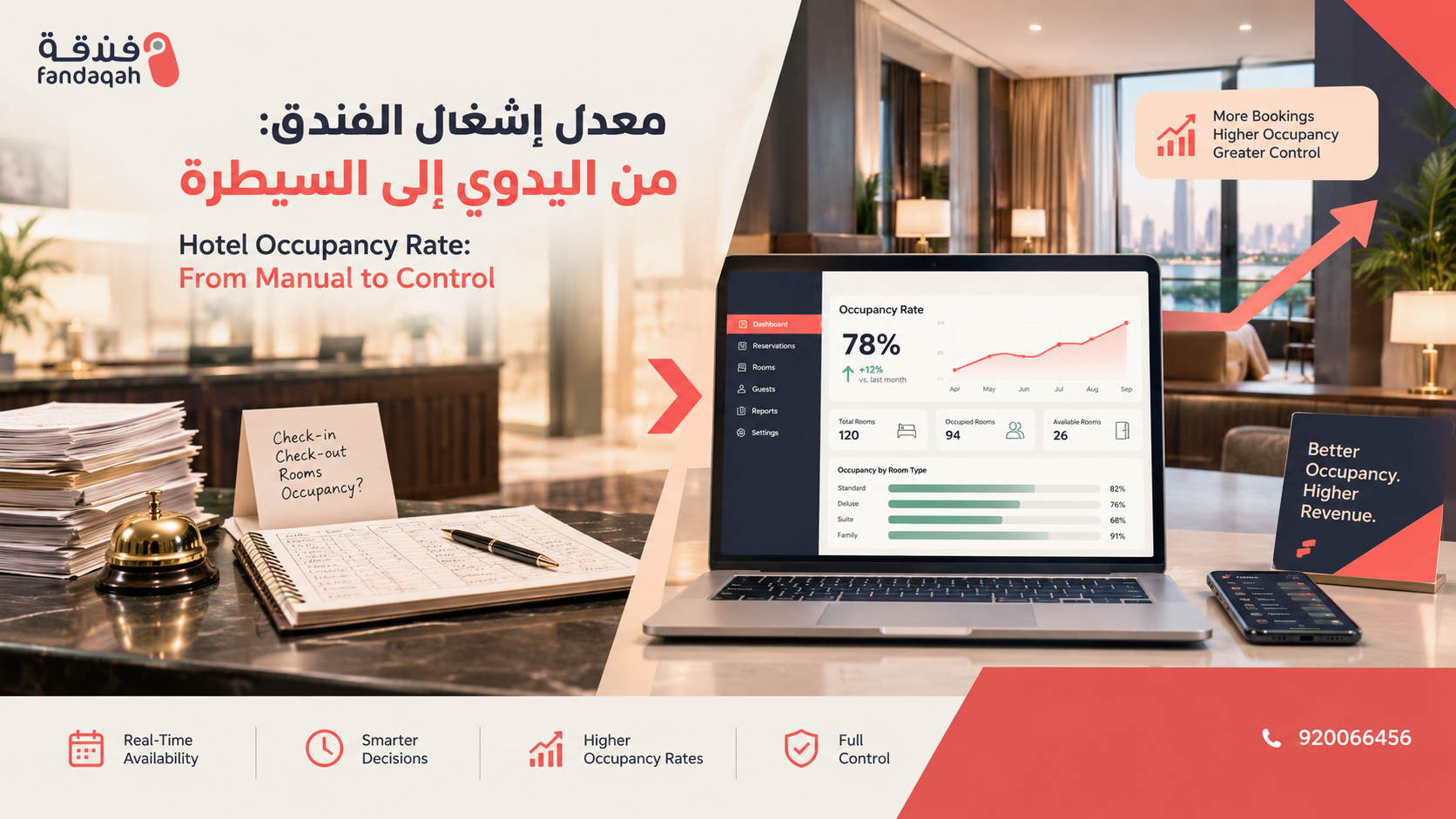
Learn how to calculate hotel occupancy rate, link it to ADR & RevPAR, fix manual errors, and grow revenue in Saudi Arabia with real-time PMS control....
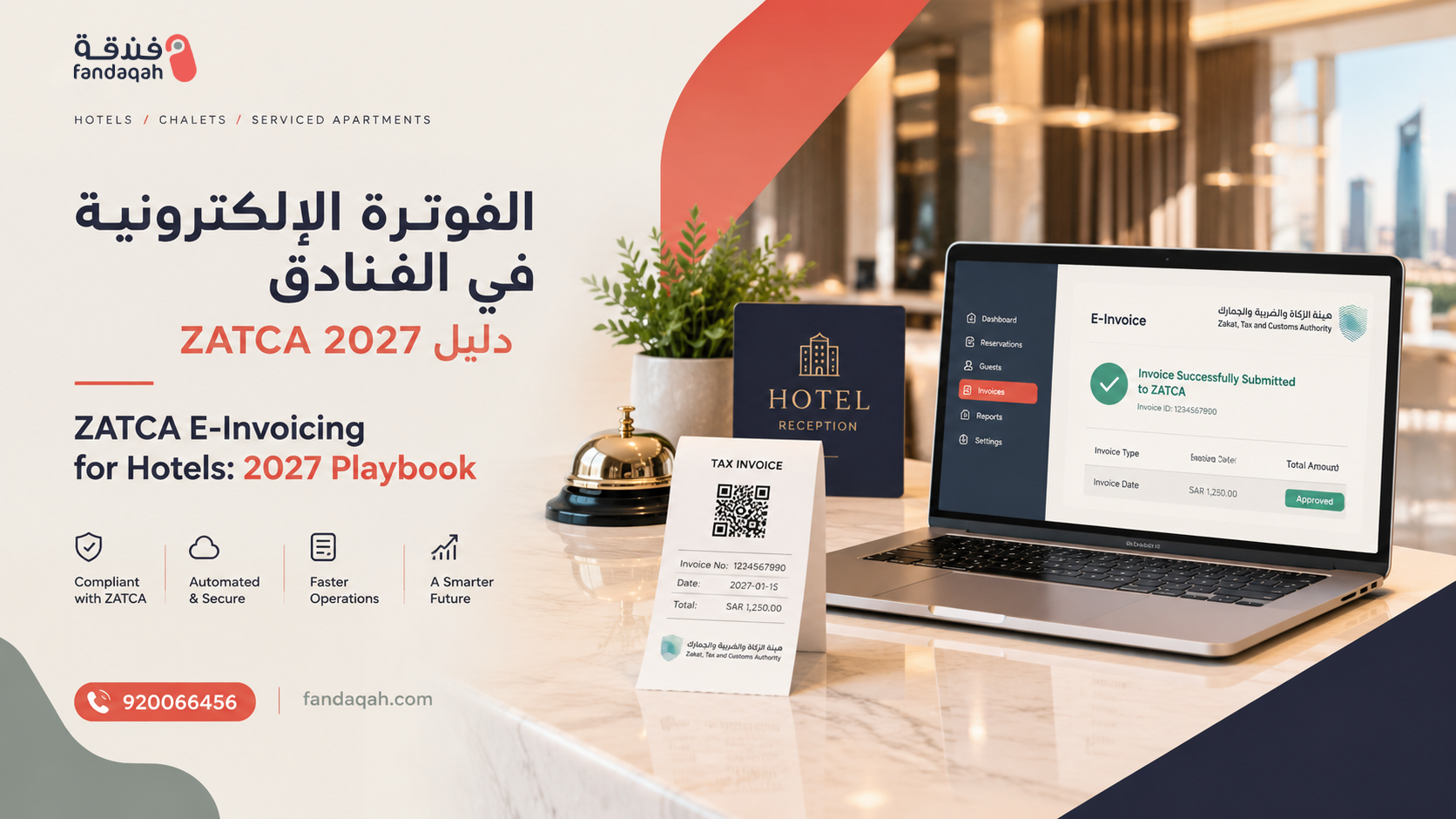
Practical 2027 guide to ZATCA e-invoicing for Saudi hotels: Phase 2, clearance vs reporting, deposits, credit notes, group/corporate billing & compliance steps....
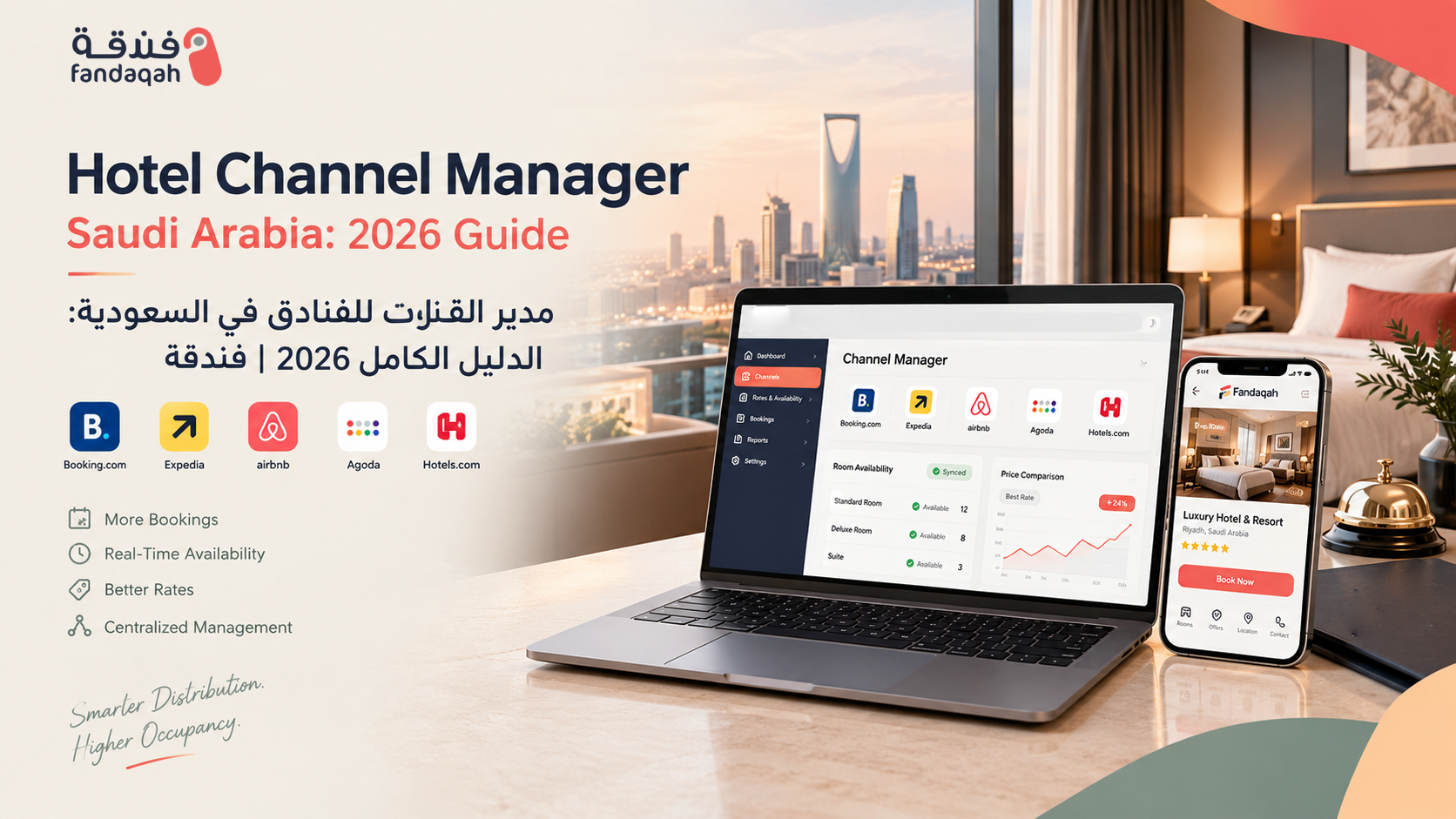
Learn how a hotel channel manager works in Saudi Arabia: prevent overbooking, protect rate parity, sync inventory in real time, and grow bookings for KSA hotels....
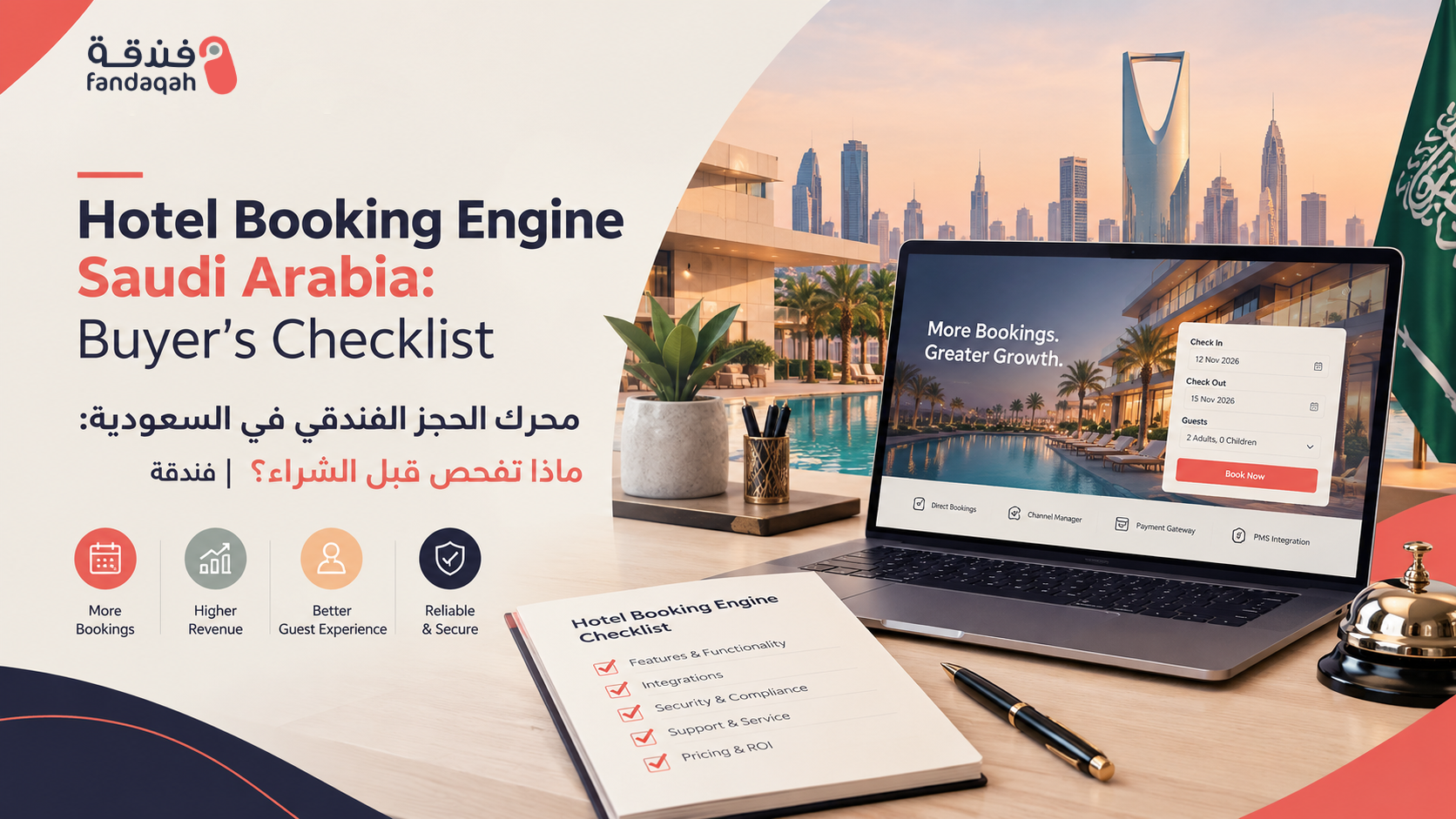
Before buying a hotel booking engine in Saudi Arabia, check mada & Apple Pay, Arabic RTL, mobile speed, real-time PMS sync, PDPL & ZATCA readiness....
Improve your hotel PMS selection criteria in Saudi Arabia: ZATCA, Shomoos, PDPL, Arabic support, integrations, scoring model, use cases and vendor proof checklist....
Improve your hotel front desk morning checklist with 7 proven ways for Saudi hotels: shift handover, Shomoos, ZATCA, housekeeping sync, arrivals and Ramadan tips....
Learn how Fandaqah’s hotel channel manager in Saudi Arabia stops overbookings with real-time inventory sync, cuts OTA commissions, and grows direct bookings from 0 to 100 a month....
Complete 2026 guide to ZATCA e-invoicing Phase 2 and Shomoos guest registration. See how Fandaqah’s Saudi hotel PMS automates both from a single check-in....
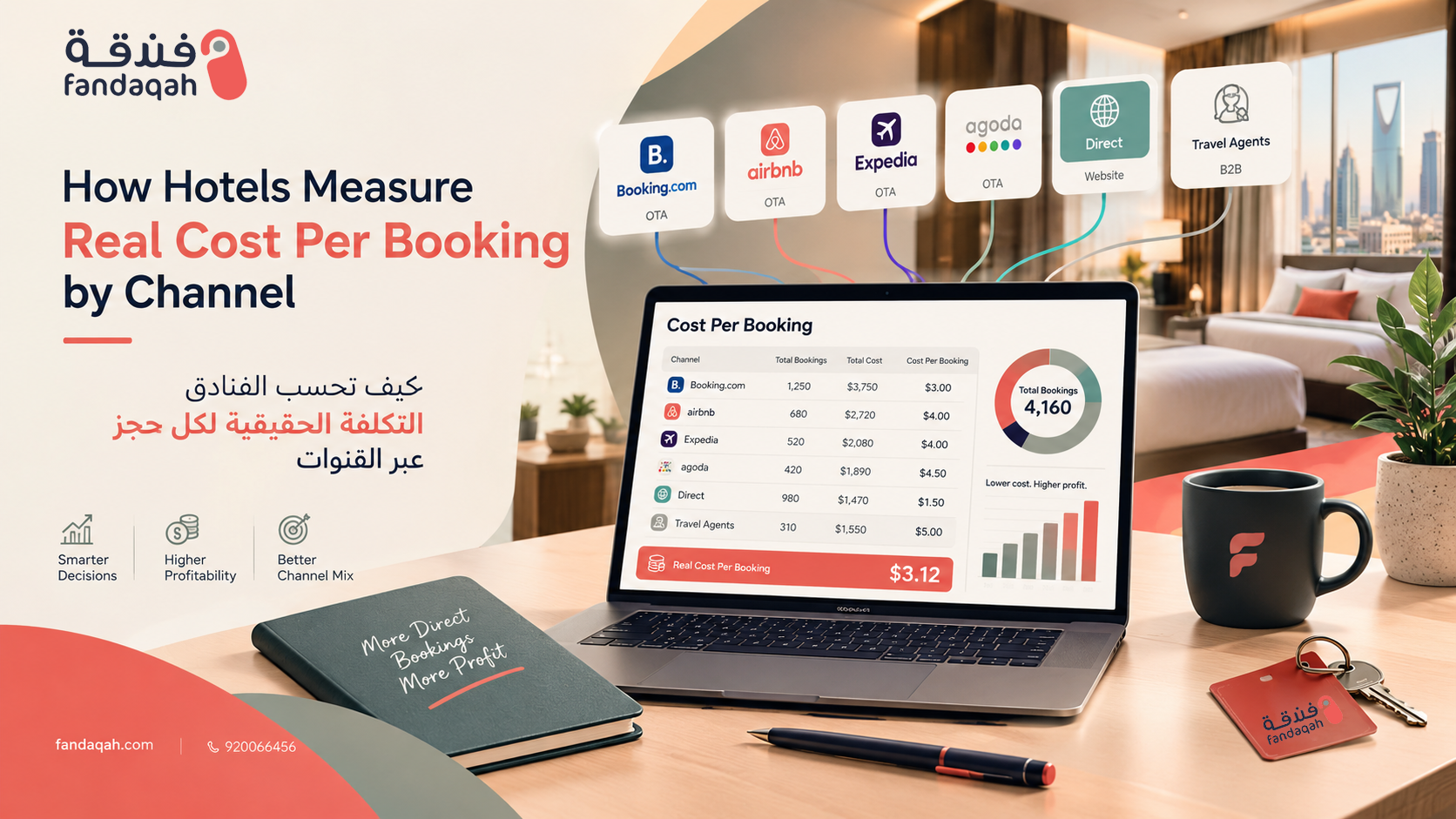
Calculate true hotel cost per booking across OTA, direct, GDS & WhatsApp. Step-by-step formula, Riyadh example & ways to cut distribution costs in Saudi Arabia....
How WhatsApp hotel booking, AI assistants & in-chat payments turn guest chats into direct reservations. Build a commission-free channel for Saudi hotels....

Learn how to calculate the true cost of a hotel stay in Saudi Arabia. Discover when breakfast and parking are worth it, how to get room upgrades, and when flexible rates save you money....
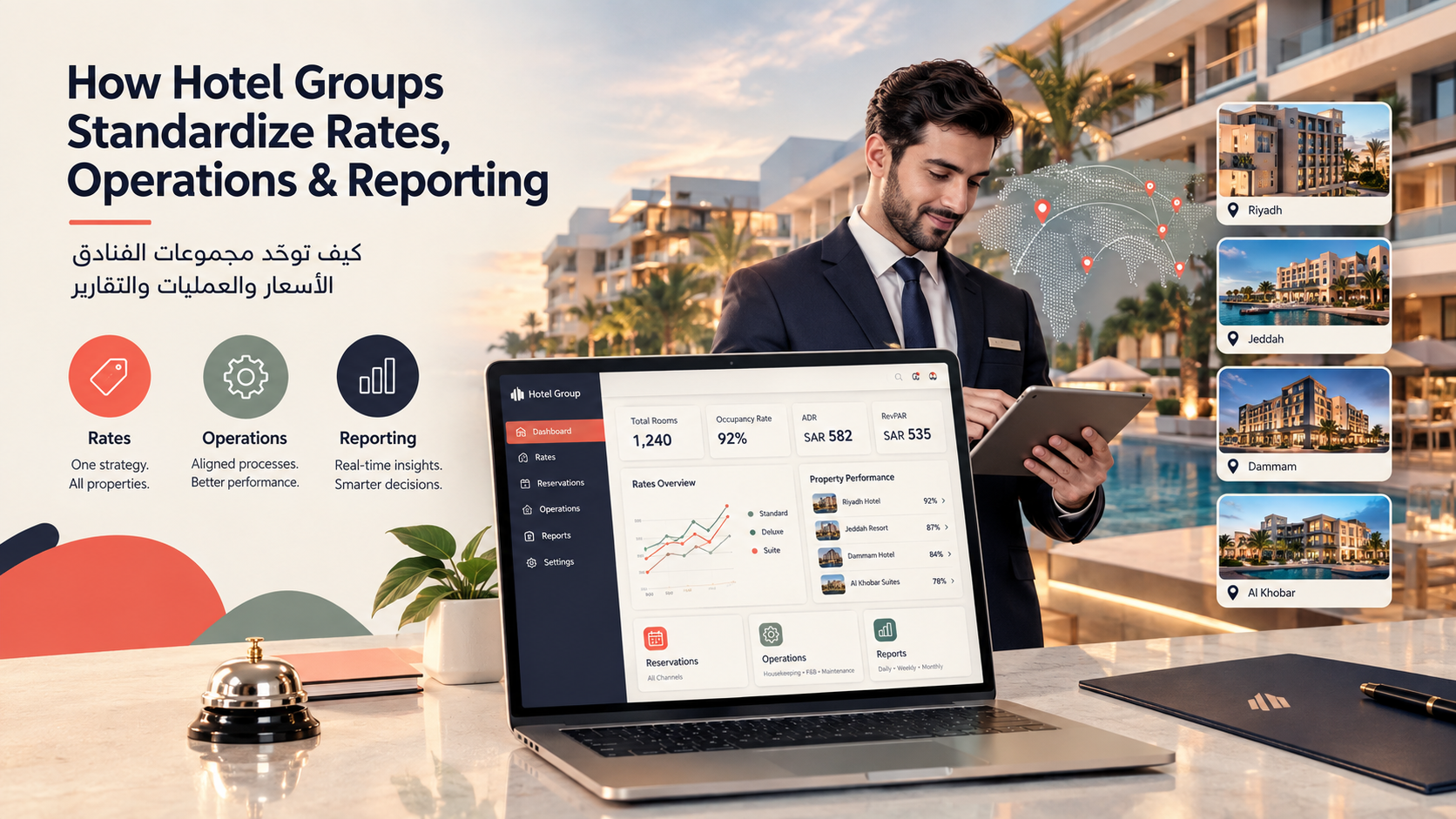
Learn how Saudi hotel groups standardize rates, operations and reporting across properties with a multi-property PMS, shared KPIs and scalable processes....
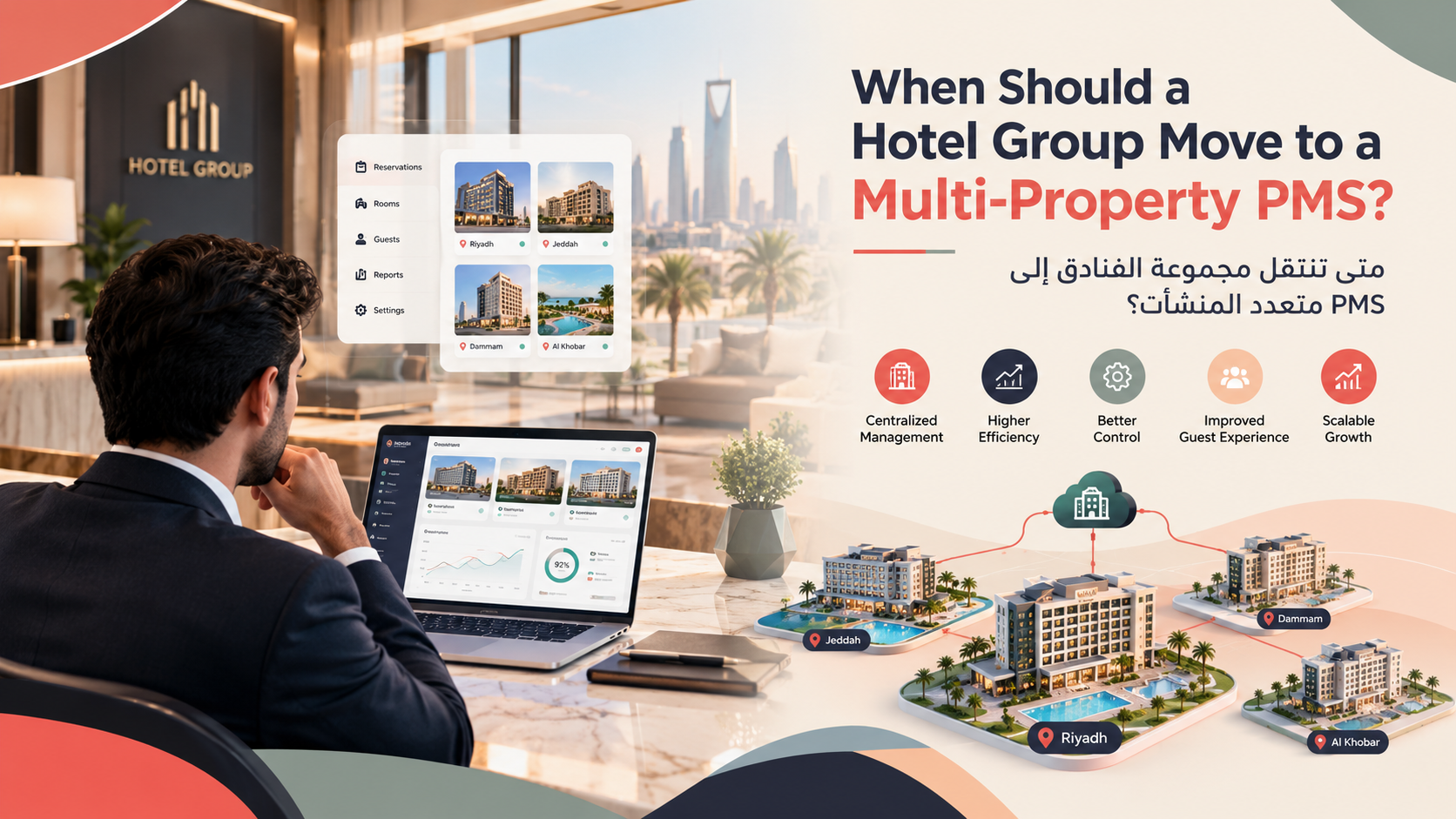
Discover the practical signs a growing hotel group has outgrown separate systems and should switch to a multi-property PMS for better control, reporting, and scale in Saudi Arabia....
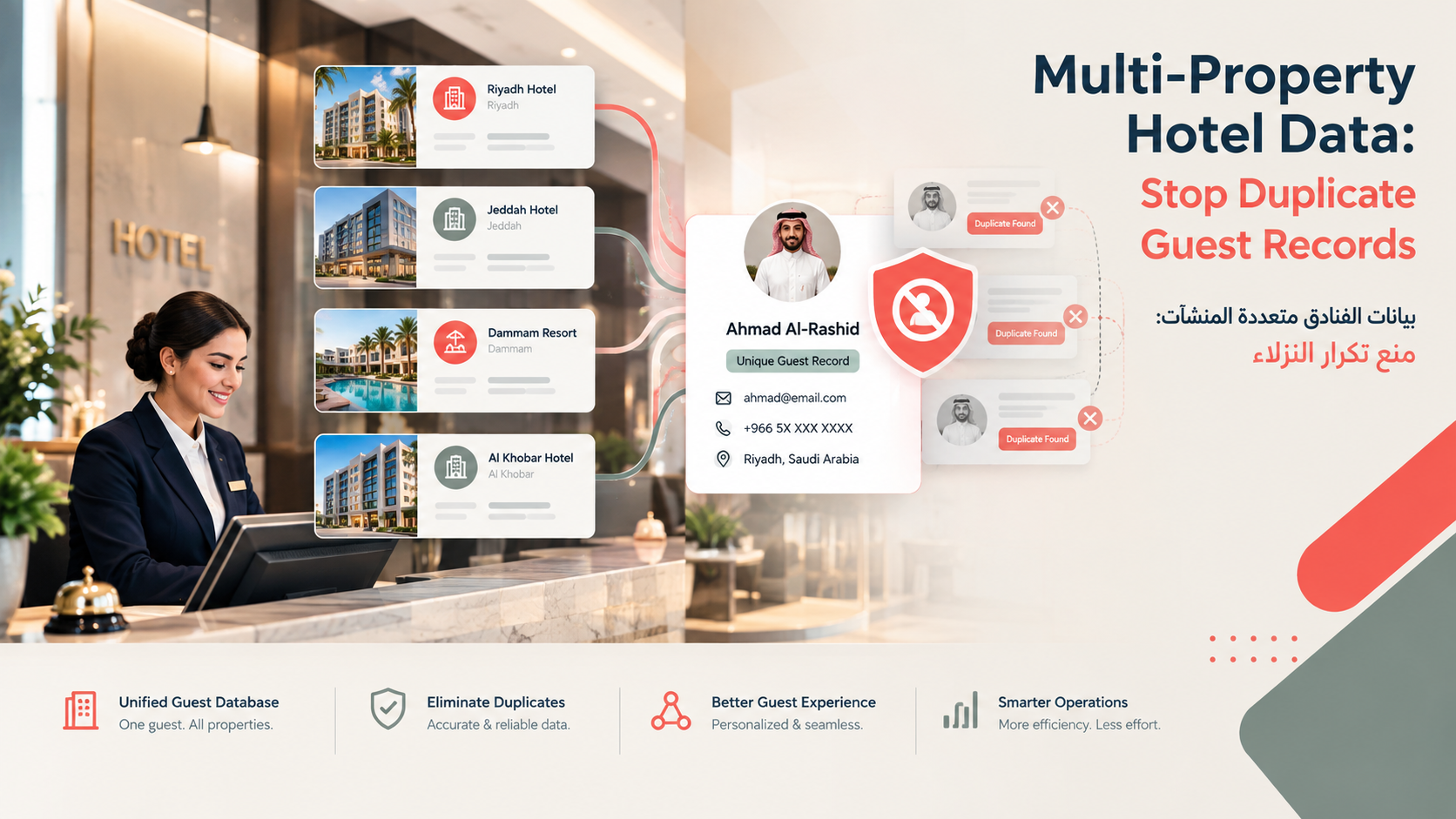
Learn how multi-property hotels in Saudi Arabia stop duplicate guest and reservation records with a centralized PMS, smart matching, channel sync, and data governance....
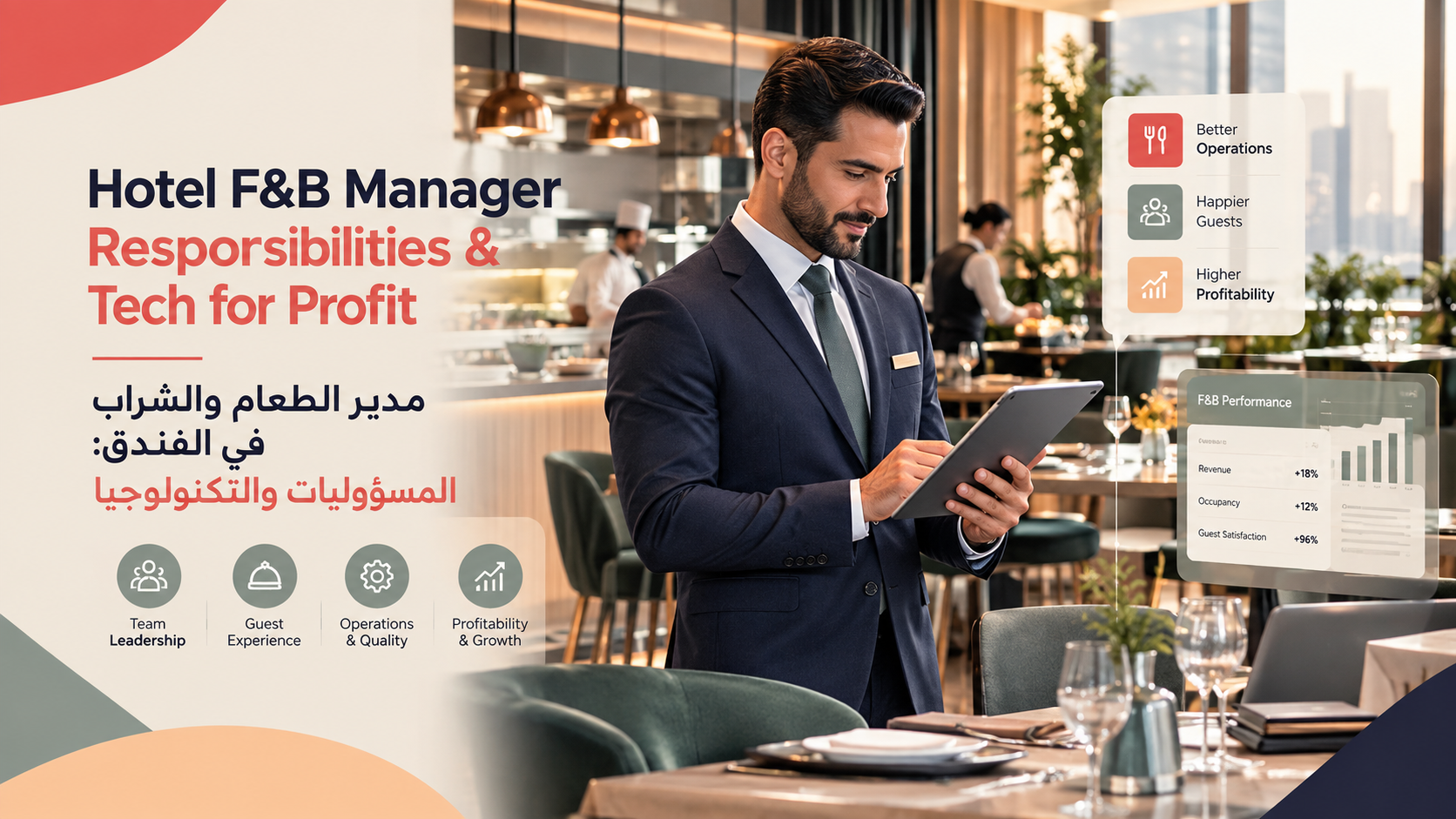
Complete guide to hotel food & beverage manager duties, food cost control, menu engineering, and how POS–PMS integration cuts waste and boosts profit in Saudi hotels....
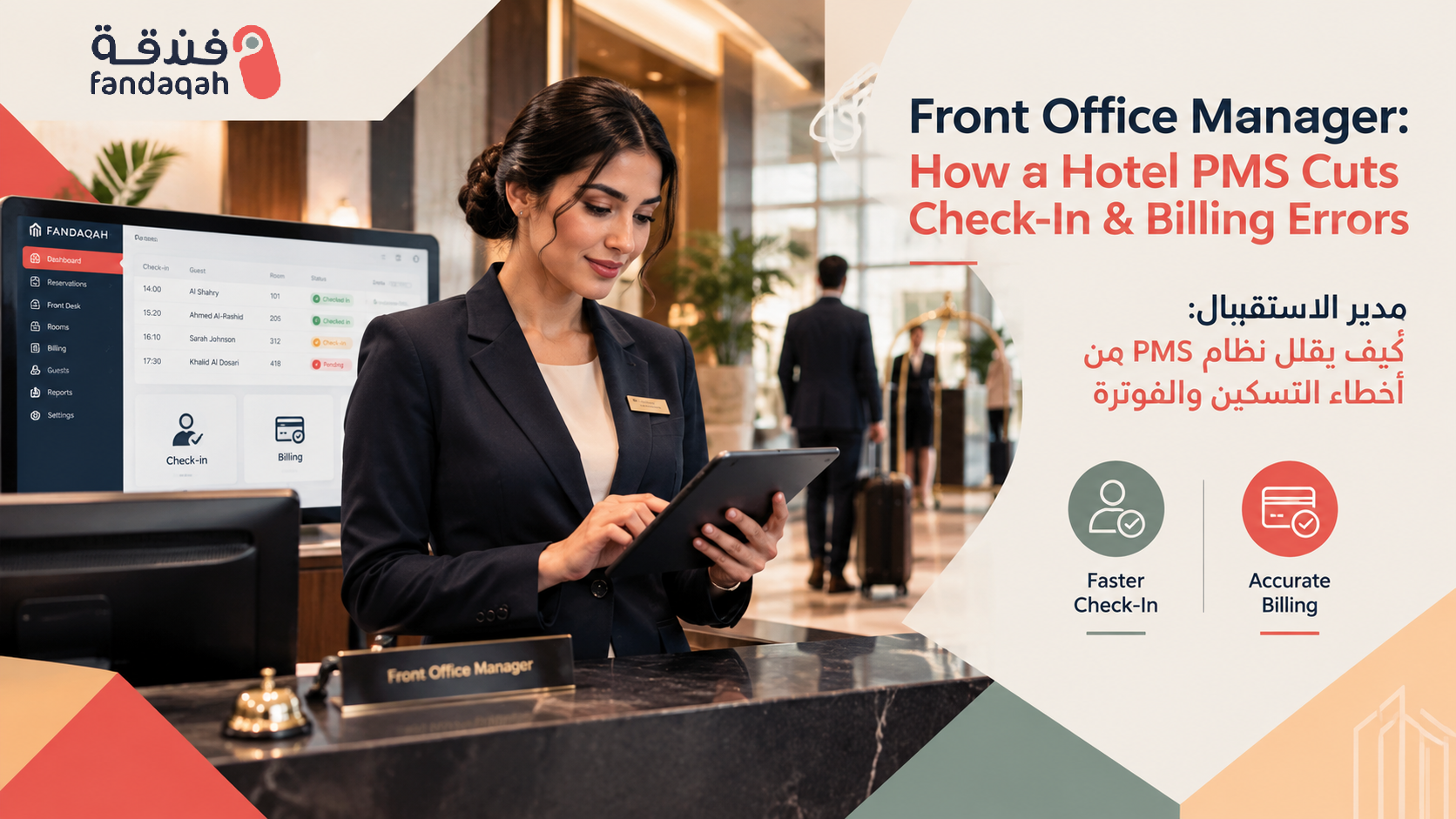
Discover how a hotel PMS eliminates double bookings, wrong room assignments, and billing mistakes in Saudi hotels. ZATCA-compliant, real-time, and built for Vision 2030....
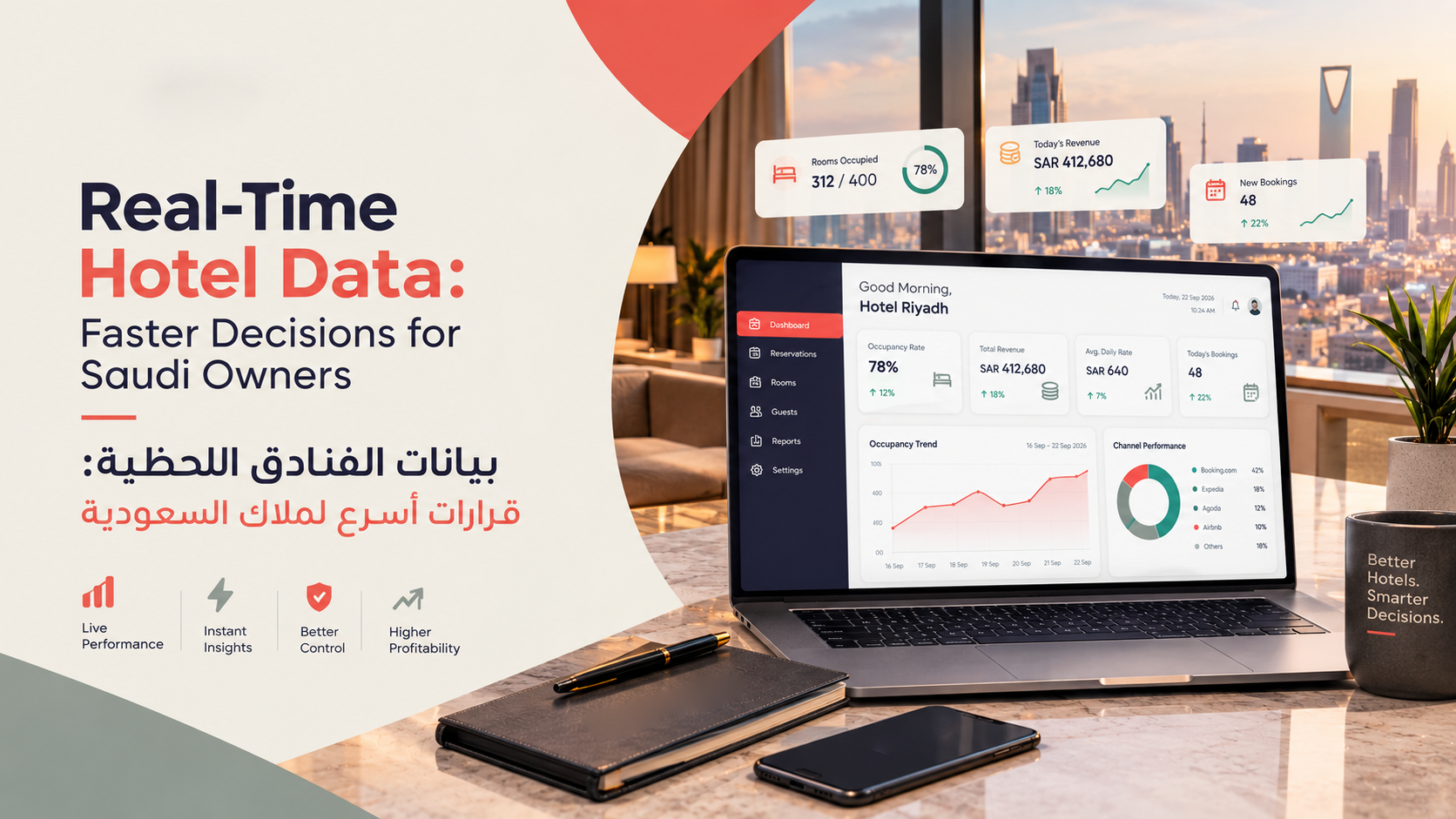
Discover how real-time hotel data helps owners boost RevPAR 5–15%, react to demand in minutes, and stay competitive in Saudi Arabia’s Vision 2030 tourism boom....
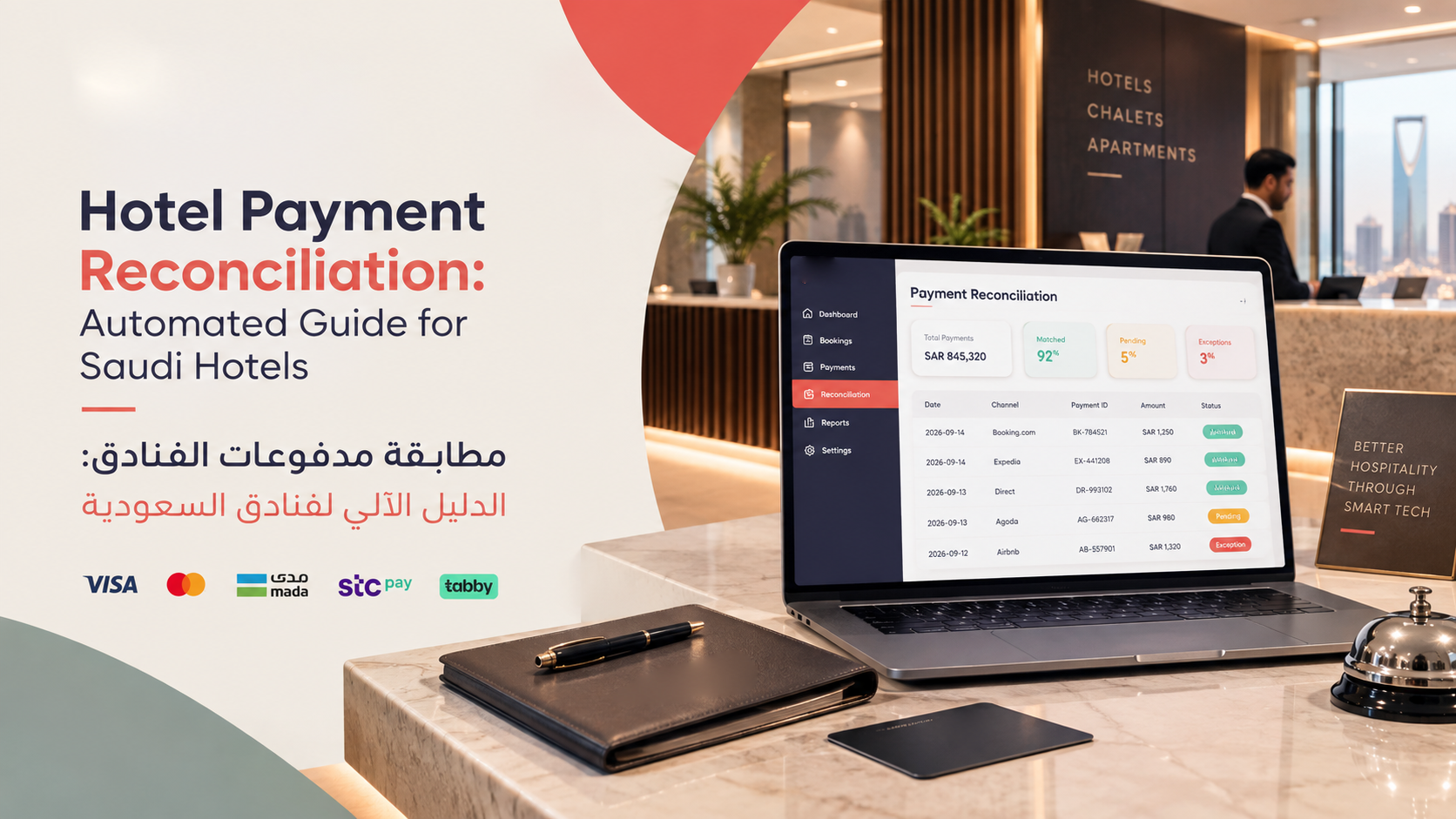
Learn how automated hotel payment reconciliation matches reservations, payments & invoices in real time. Recover revenue, cut time 80–90% & stay ZATCA-ready....
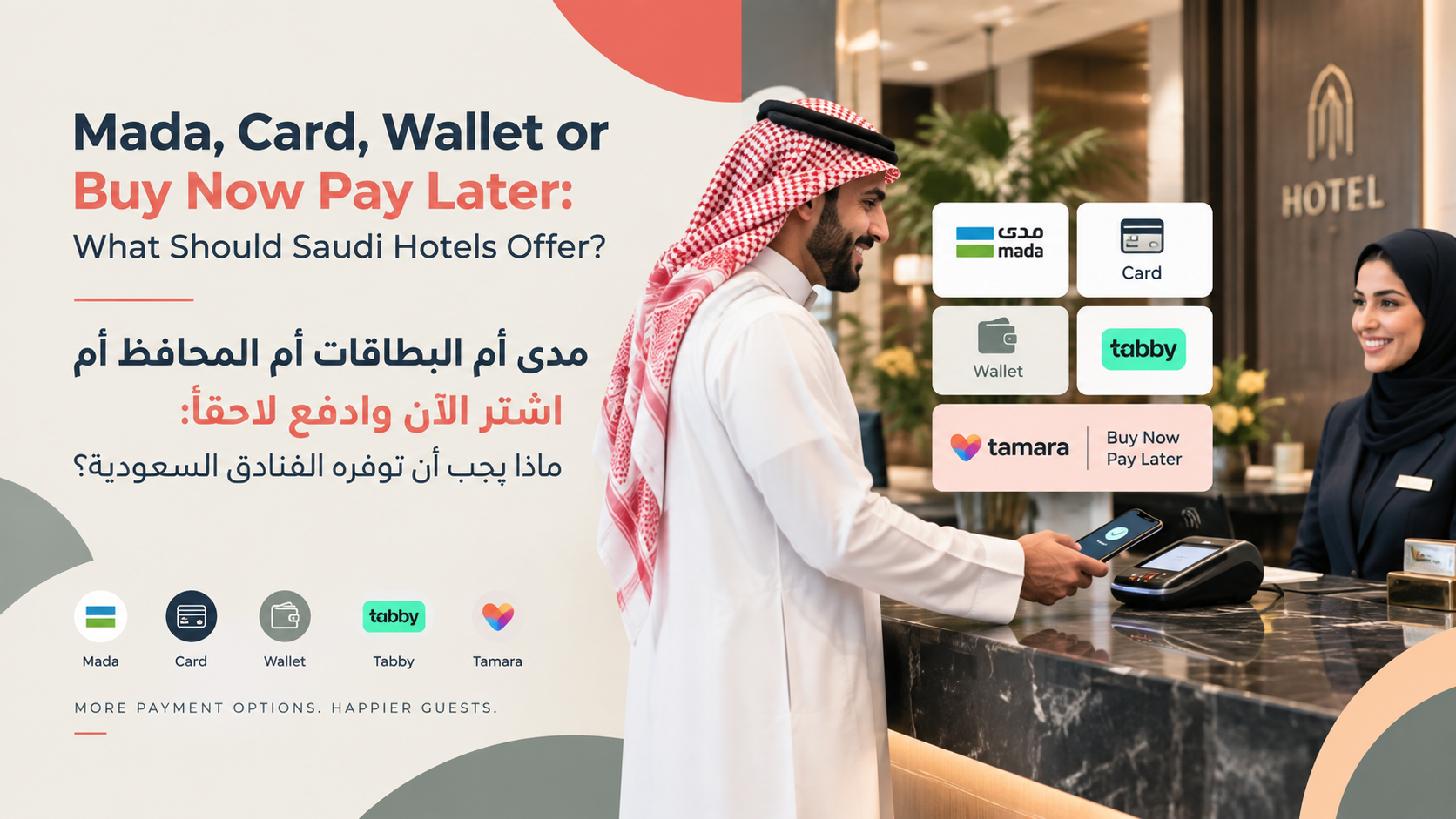
Complete 2026 guide: which payment methods Saudi hotels must offer — Mada, Visa/Mastercard, Apple Pay, Tabby & Tamara — to boost direct bookings and margins....
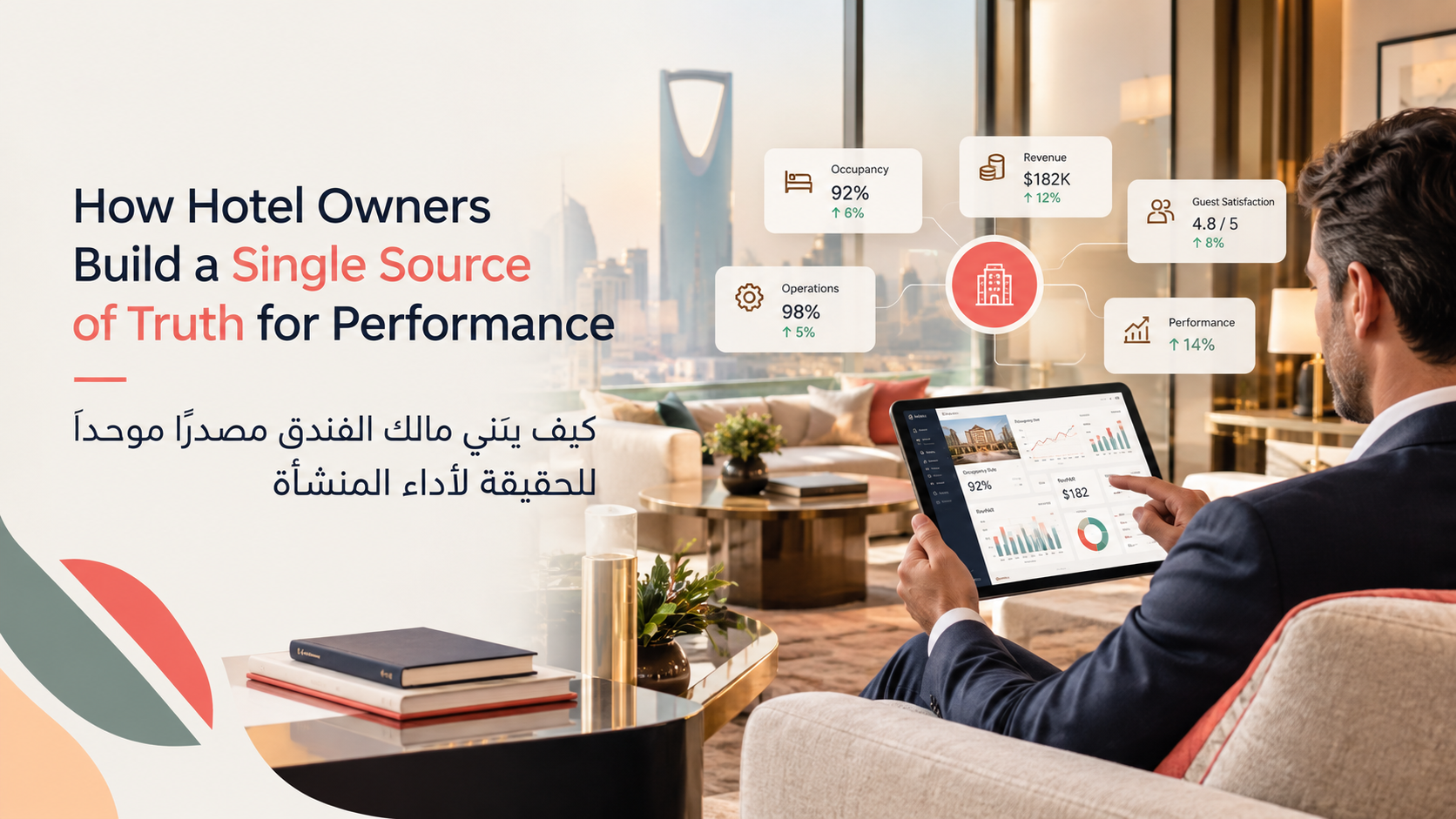
Learn how Saudi hotel owners can build a single source of truth for property performance. Cut reporting time 70–90%, track RevPAR, ADR & occupancy in real time....
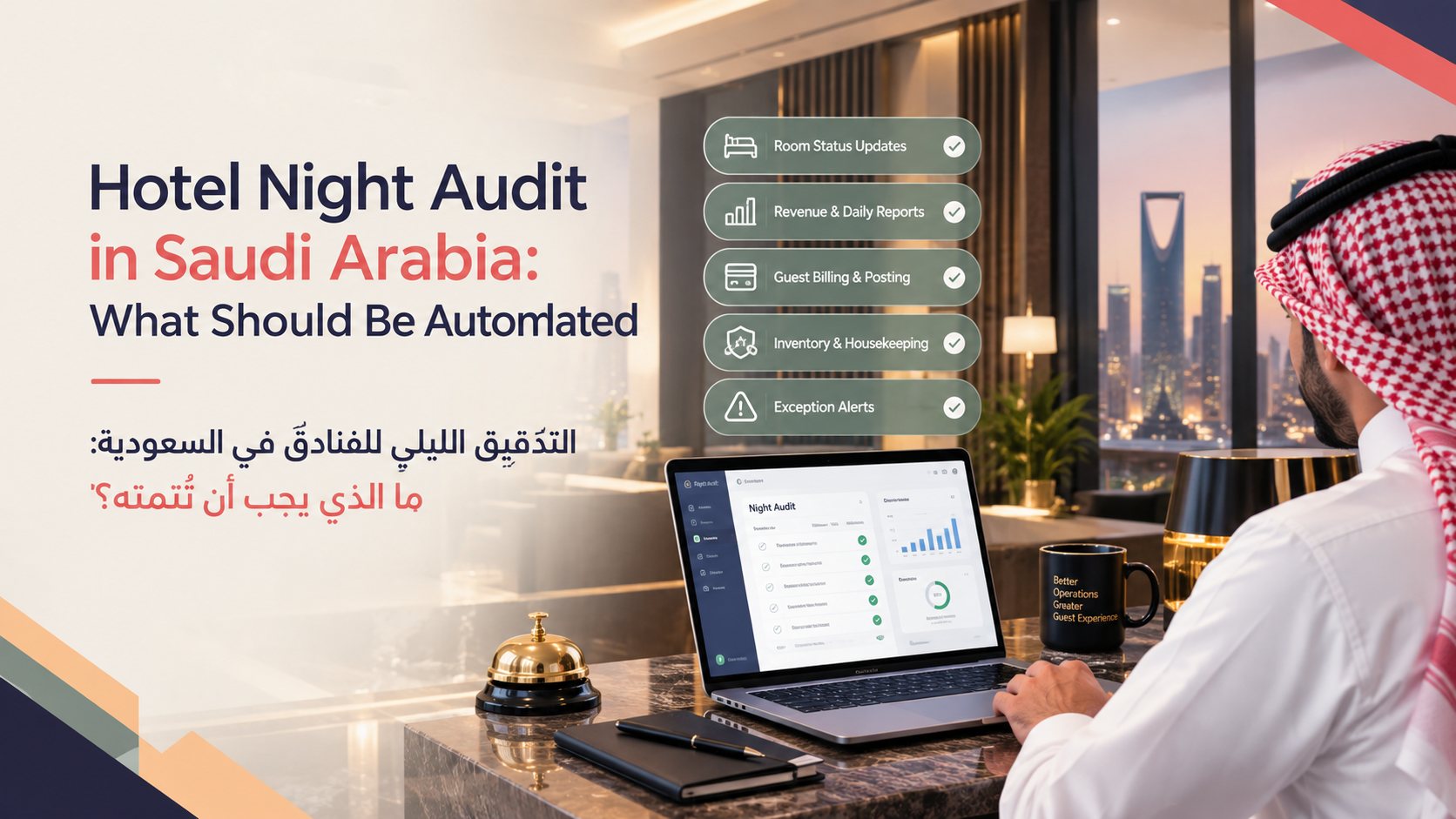
Complete guide to automating hotel night audit in Saudi Arabia: room & tax posting, no-shows, ZATCA Fatoora e-invoicing, payment reconciliation & continuous close....
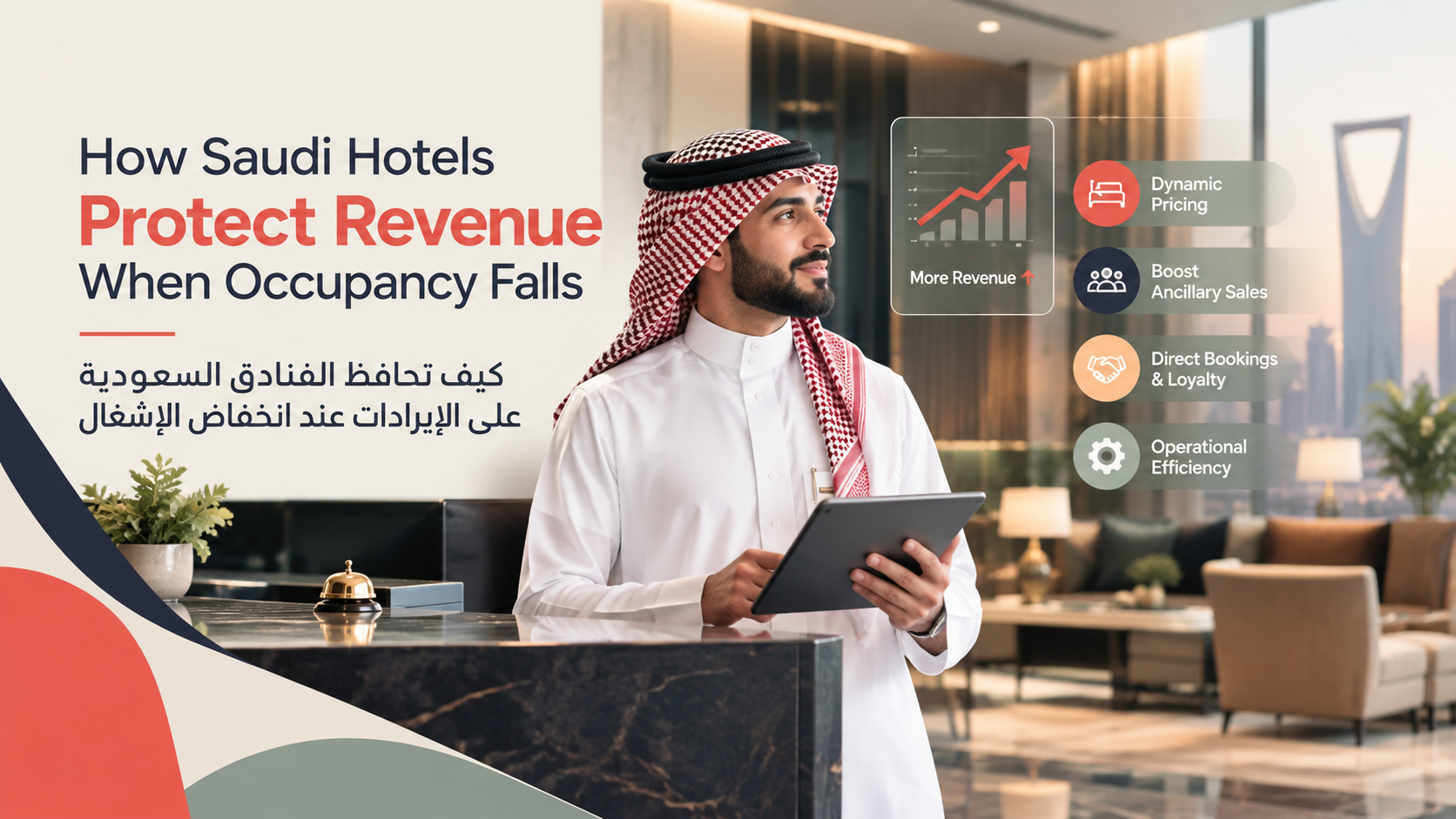
Discover proven strategies for Saudi hotels to protect revenue in low occupancy: dynamic pricing, RevPAR & TRevPAR focus, direct bookings, ancillary income, staycations & Vision 2030 insights....
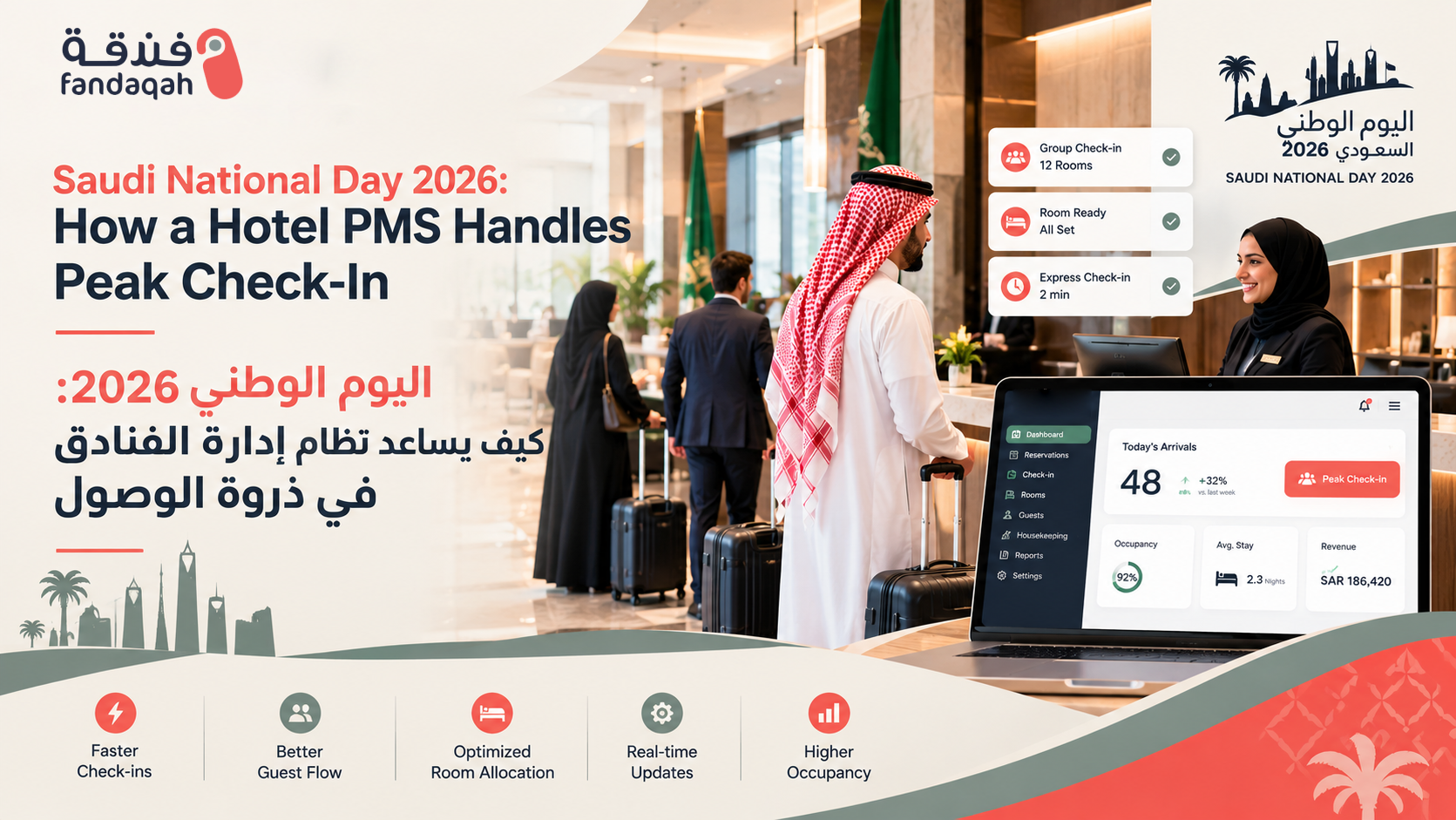
A hotel management system (PMS) cuts queues on Saudi National Day 2026 with pre-check-in, auto room assignment, live housekeeping, channel sync and instant e-invoices. Shorter waits, zero overbookings...
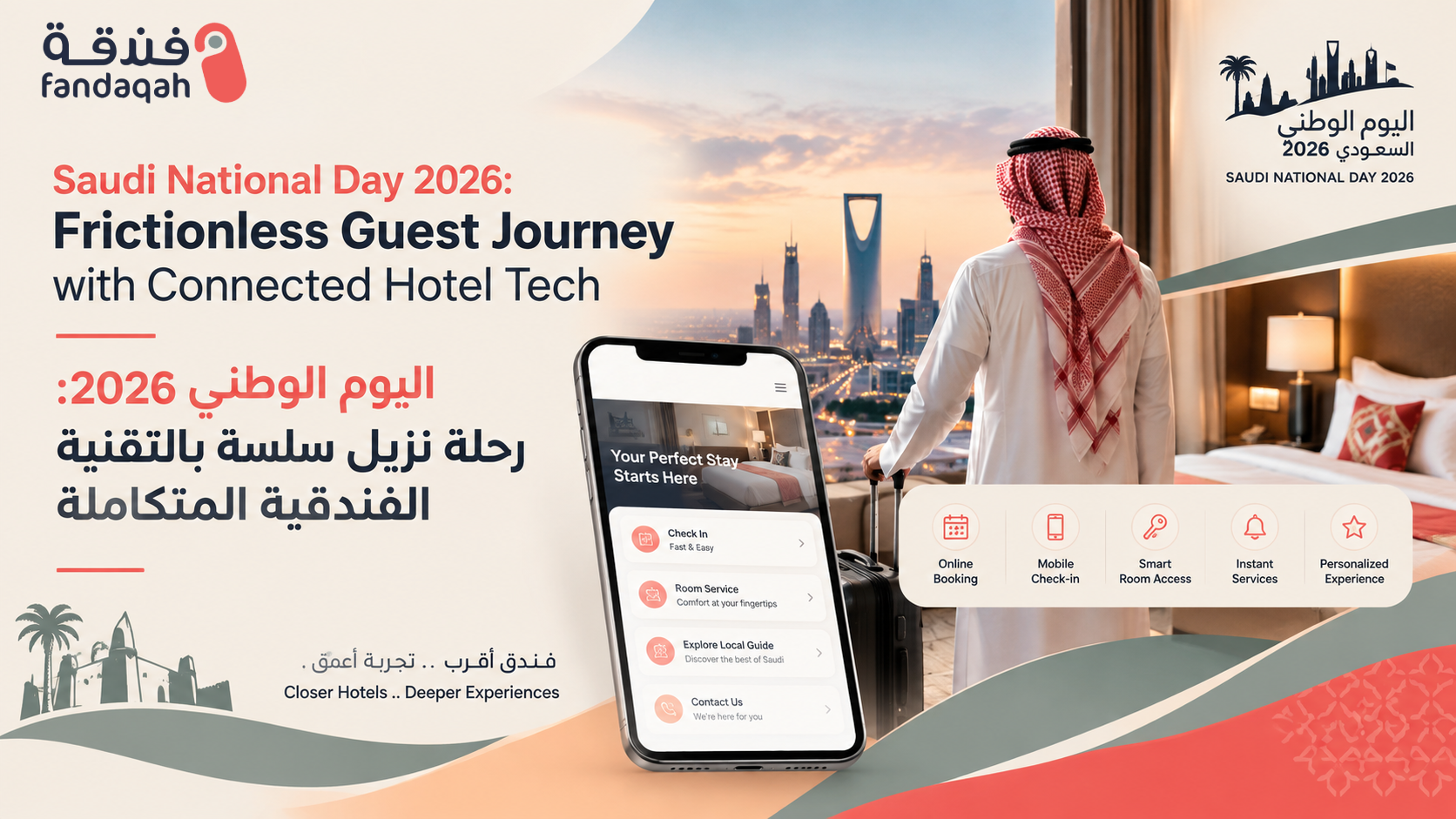
Connected hotel technology creates a seamless guest journey for Saudi National Day 2026. Link PMS, booking engine, POS, mobile keys & more—enter data once, zero friction from search to review....
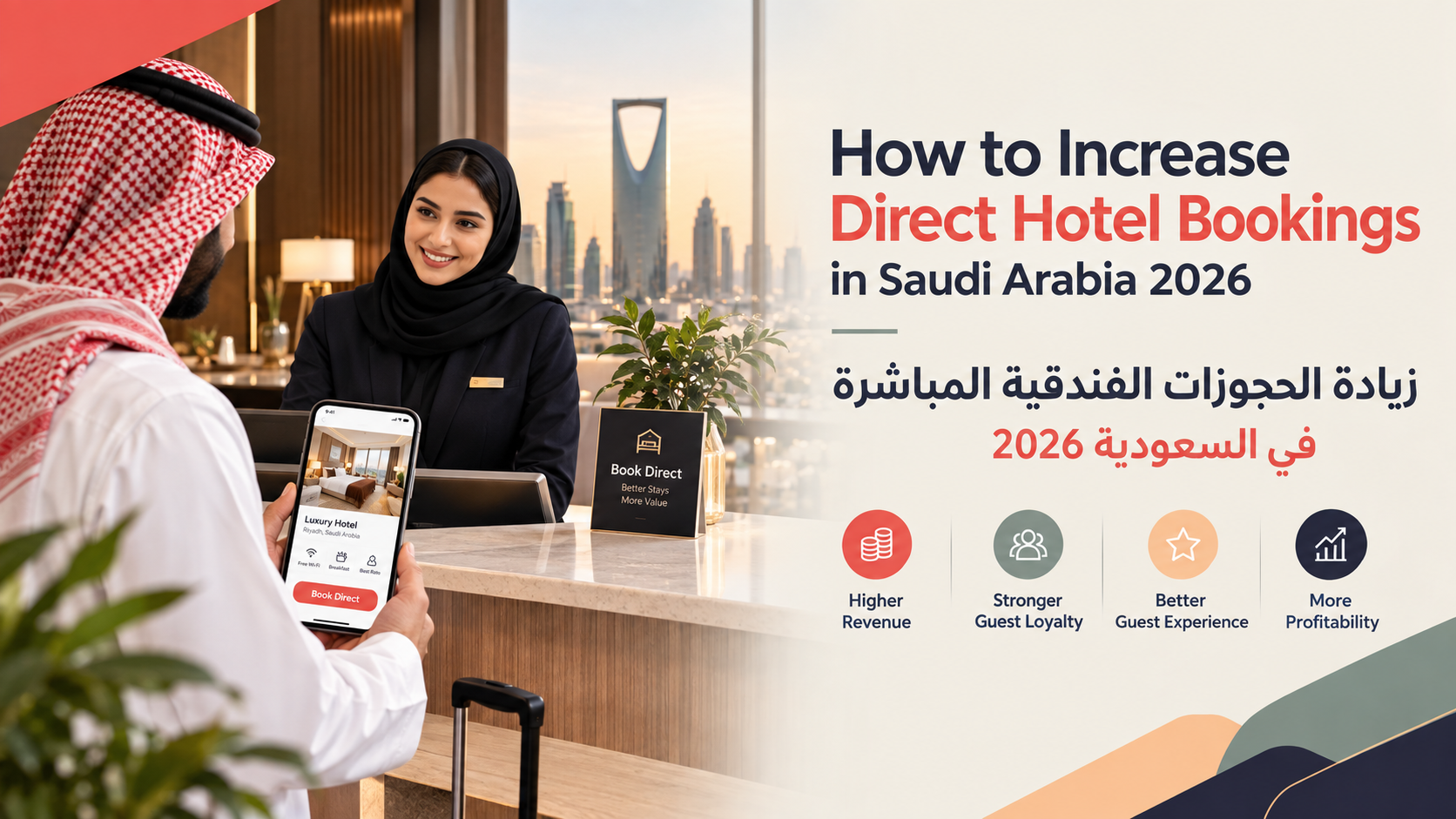
12 proven strategies to increase direct hotel bookings in Saudi Arabia. Grow commission-free revenue with booking engines, WhatsApp, Google Free Booking Links & more in 2026....
Learn proven strategies to reduce OTA commissions, boost direct bookings, and increase hotel profits in Saudi Arabia. Practical tips for Riyadh, Jeddah, Makkah & more in 2026....
How Fandaqah integrates HyperPay, mada, Visa, Apple Pay, Tamara and Tabby for secure direct hotel payments in Saudi Arabia — with ZATCA invoicing built in....
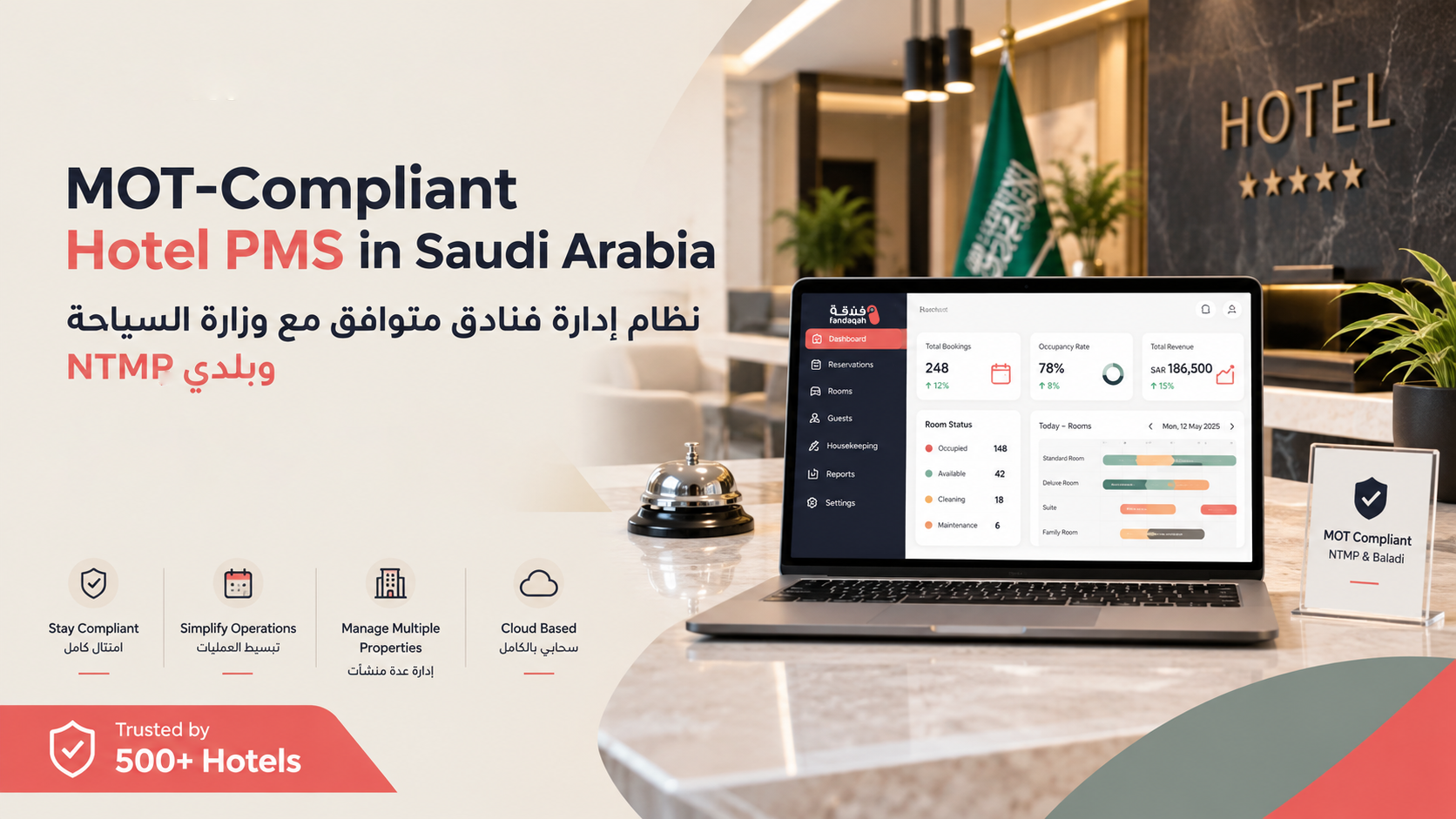
Practical guide to MOT-compliant hotel PMS in Saudi Arabia. Cover NTMP reporting, guest registration, Baladi licences, ZATCA invoicing and how Fandaqah helps....
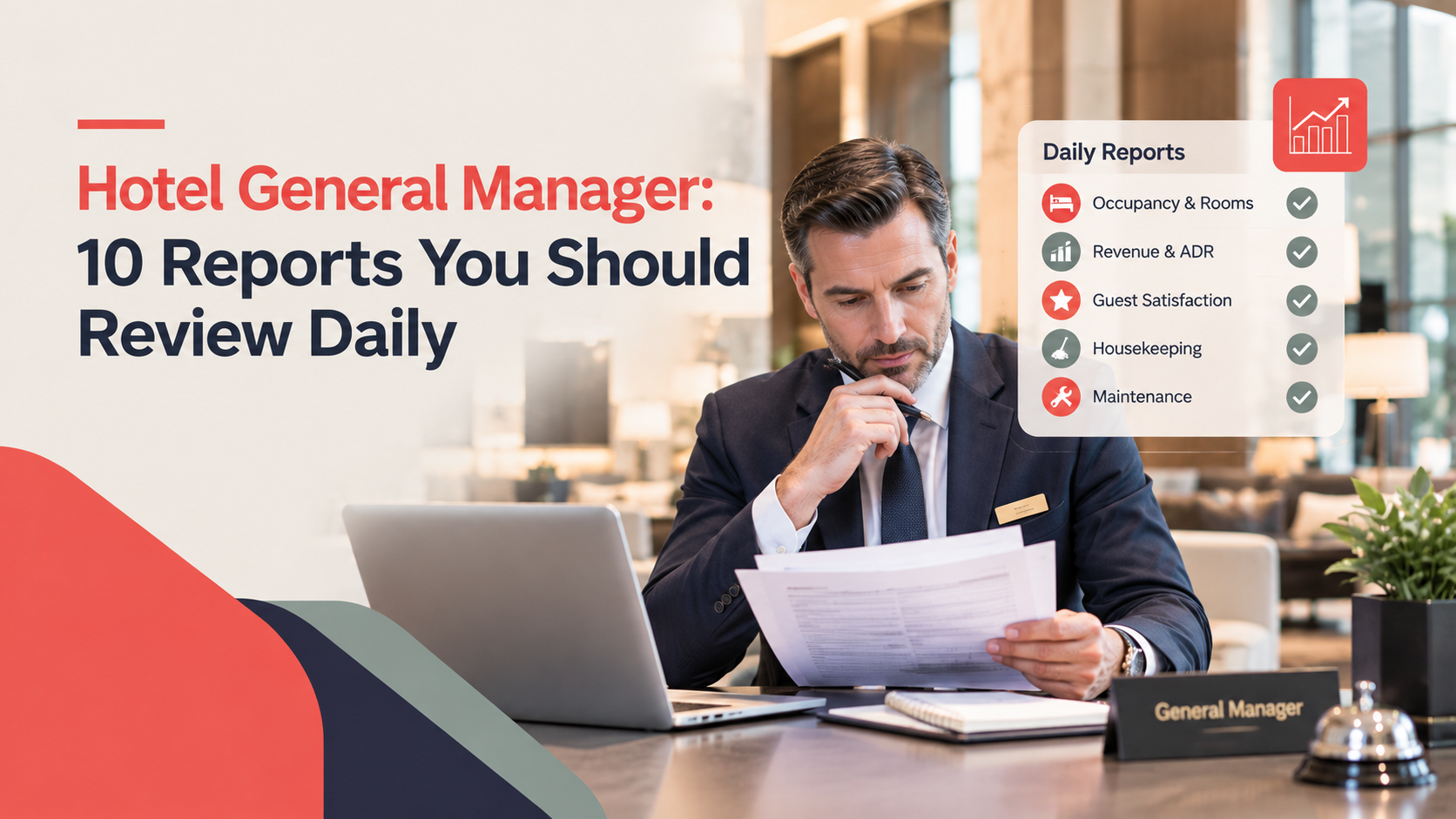
The 10 essential daily hotel reports every general manager should review before 10 a.m.: flash, night audit, ADR & RevPAR, pace, room status, and more — with red flags to watch....
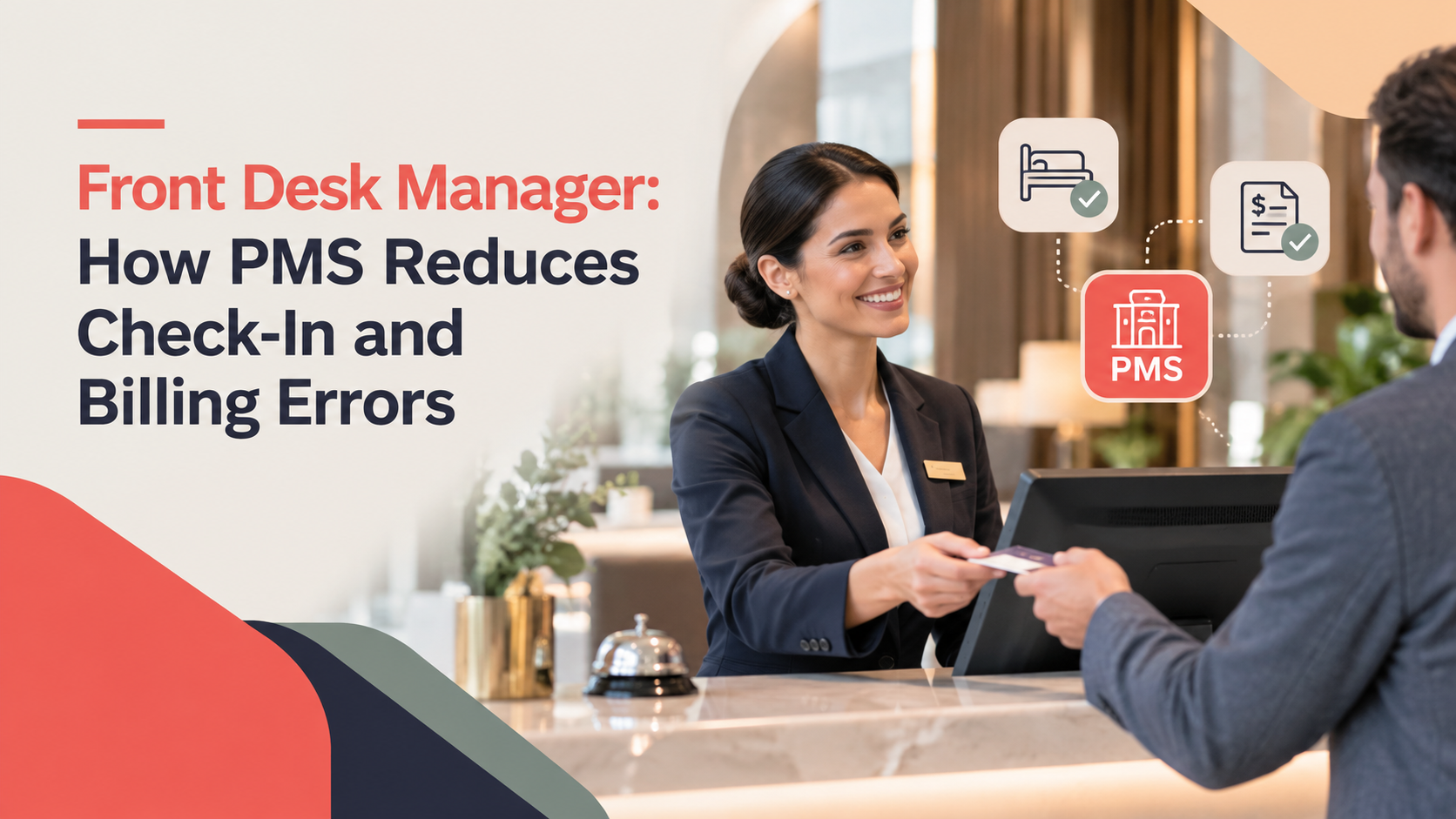
Discover how a hotel PMS cuts front-desk check-in and billing errors with live room status, channel sync, auto POS posting, and ZATCA e-invoicing for Saudi properties....

How hotel sales managers in Saudi Arabia win corporate rate agreements and MICE contracts. Practical RFP tips, smart pricing, account targeting and sales KPIs....
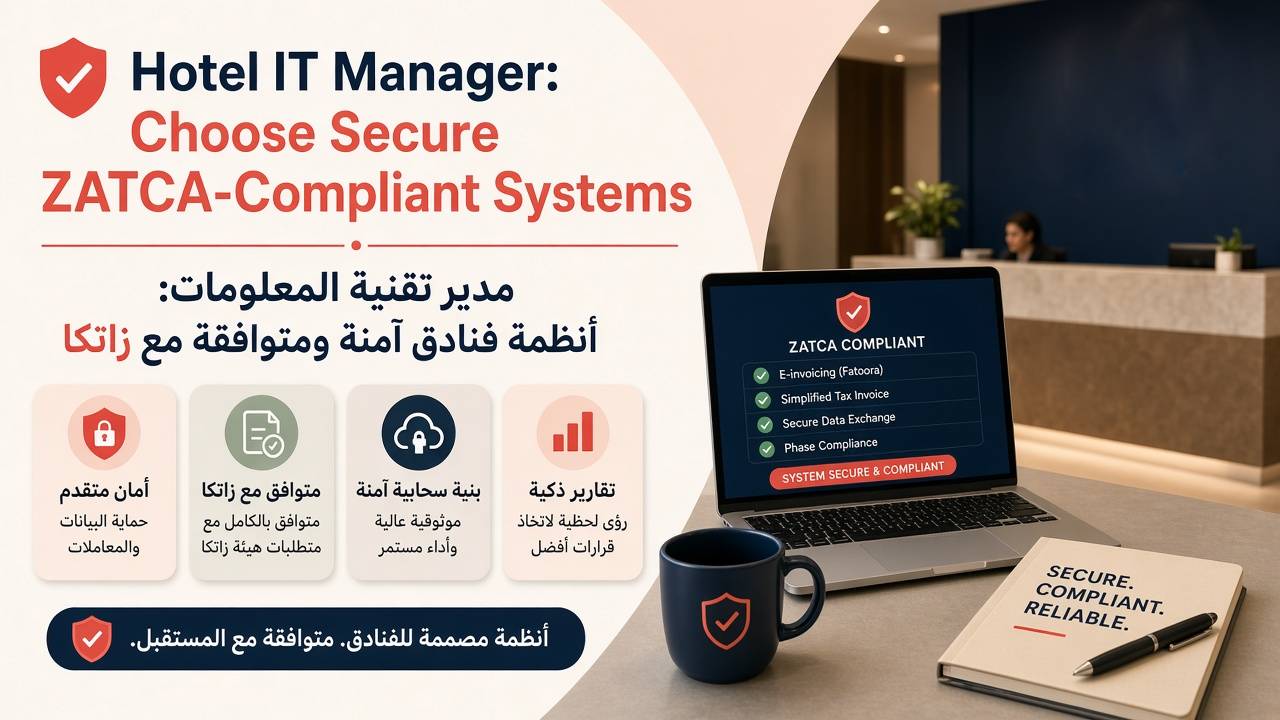
How hotel IT managers in Saudi Arabia select secure, ZATCA Phase 2-compliant PMS systems. Checklist for e-invoicing, Fatoora integration, PDPL & guest data protection....
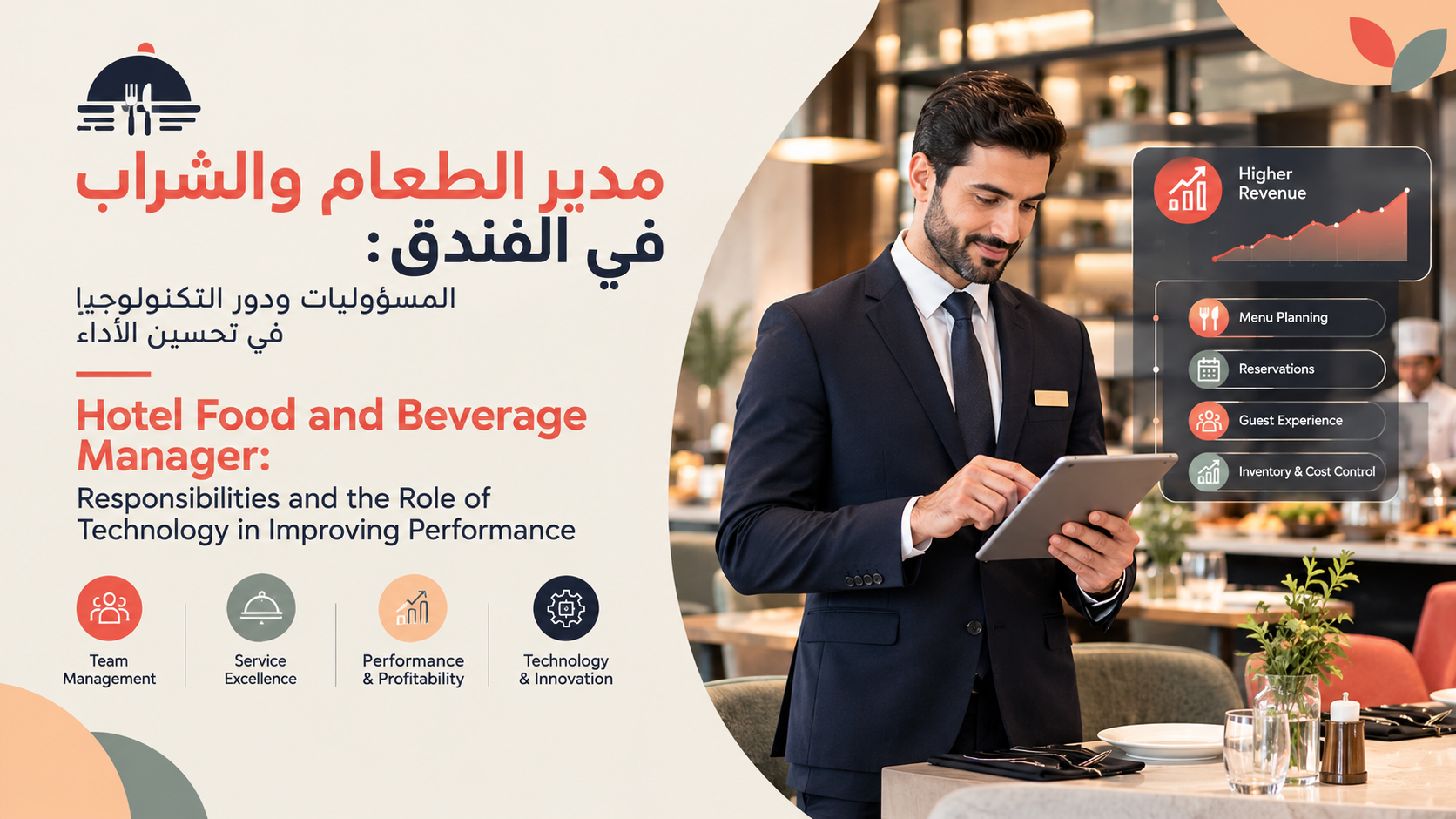
Discover the hotel food and beverage manager’s real duties, key KPIs (food cost %, average check, waste), and how POS-PMS integration cuts costs and raises profit in Saudi hotels....
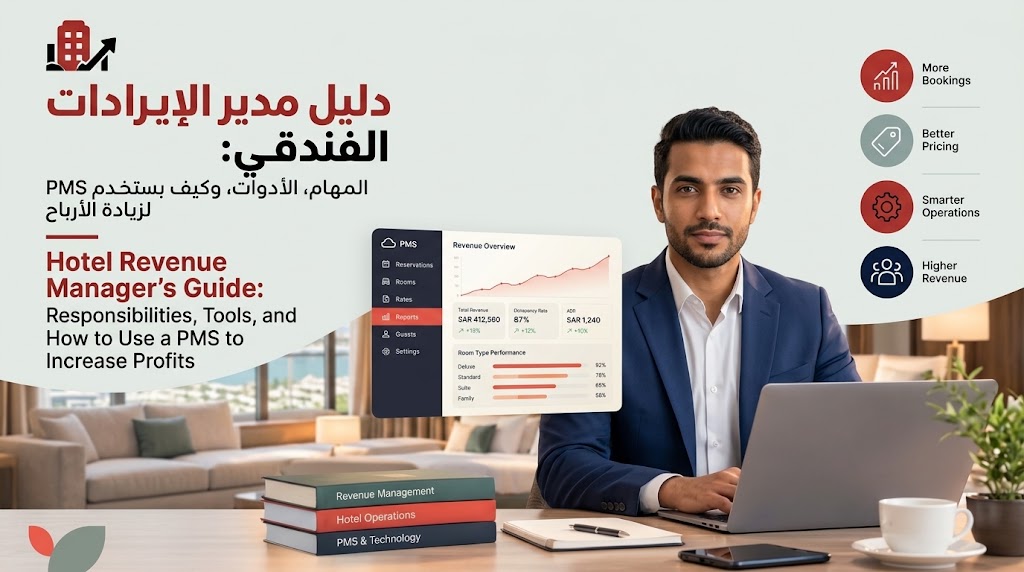
Learn what a hotel revenue manager does daily, the KPIs that matter (RevPAR, ADR, GOPPAR), and 8 practical ways to use a PMS to raise profits in the Saudi market....
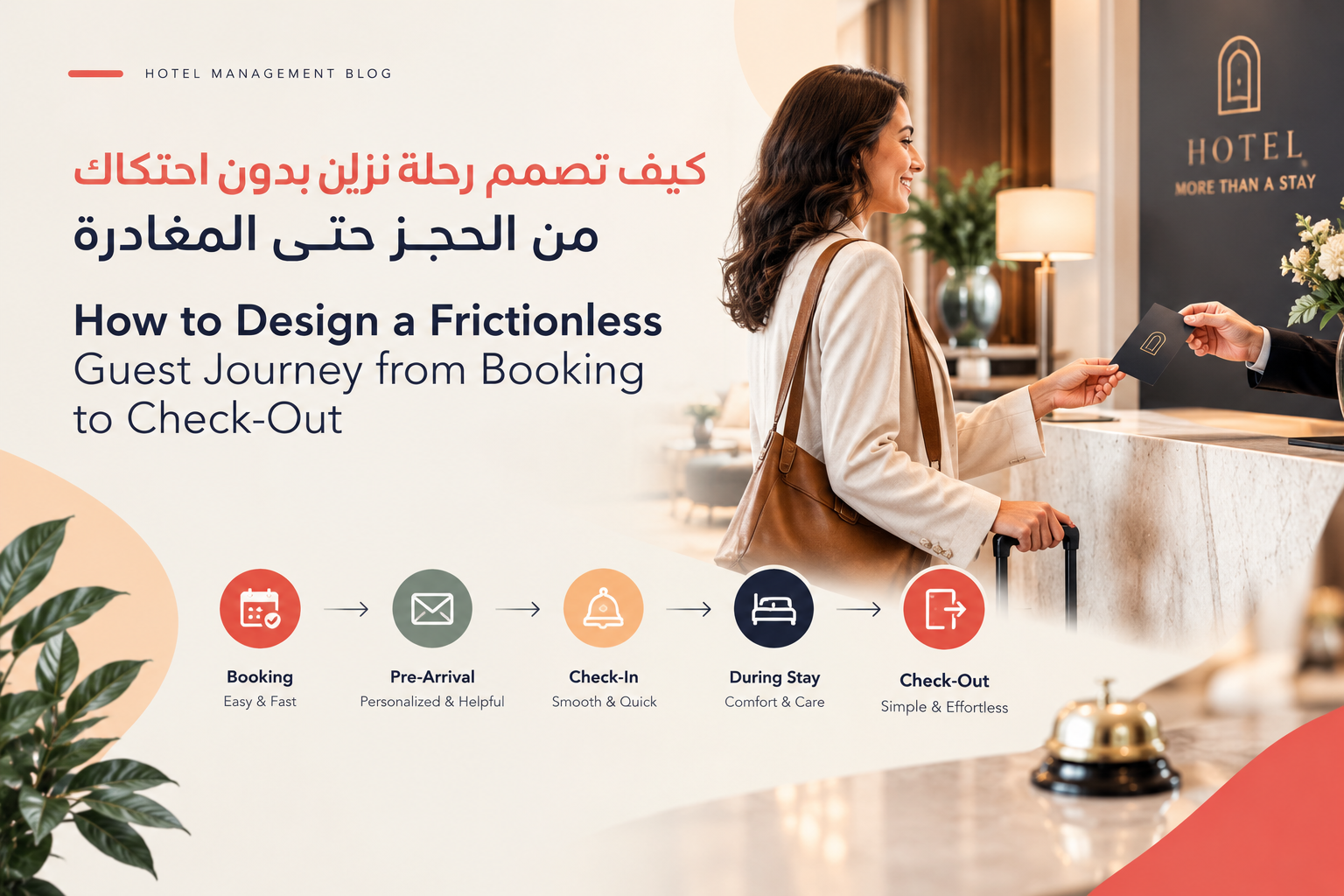
Design a frictionless guest journey in 7 stages. Map friction points, apply 5 principles, cut check-in time, and connect bookings to billing with one PMS. Practical guide for Saudi hotels and serviced...
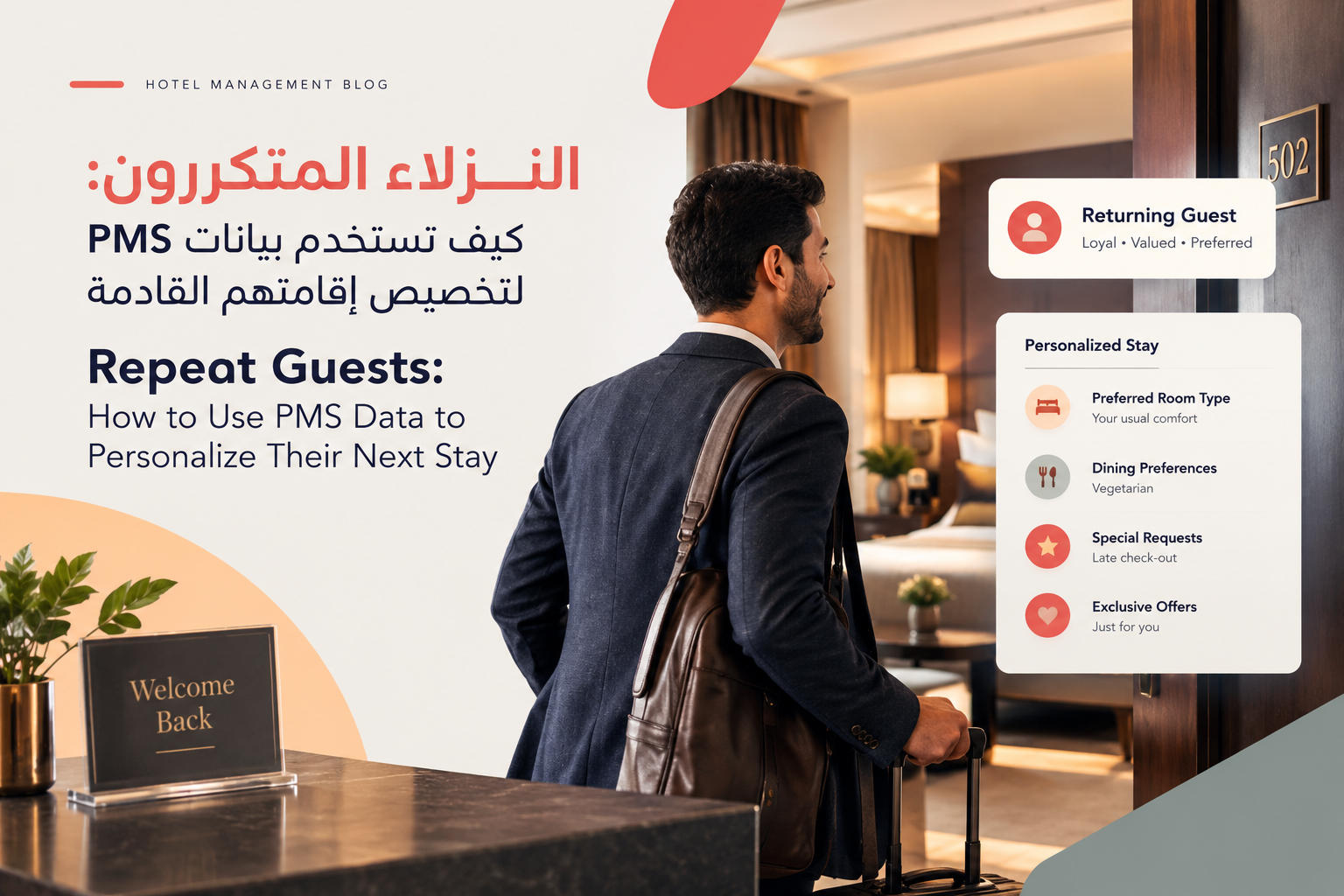
Turn PMS data into personalized stays for repeat guests. 5-step framework: unify profiles, segment, tag preferences, activate at 3 moments, and measure results. Built for Saudi hotels & serviced apart...
Is your hotel battling rising chargebacks? Discover why chargebacks are eating into hotel revenue and learn essential strategies to prevent, dispute, and protect your bottom line from fraudulent claim...
By 2030, hotel payment landscapes will be unrecognizable. Explore how biometrics, digital wallets, and blockchain are set to redefine the guest experience, moving beyond traditional cards and cash for...
Prevent payment collection errors and streamline your hotel's end-of-day operations. Discover expert strategies, technology solutions, and best practices to ensure accurate financial reconciliation an...
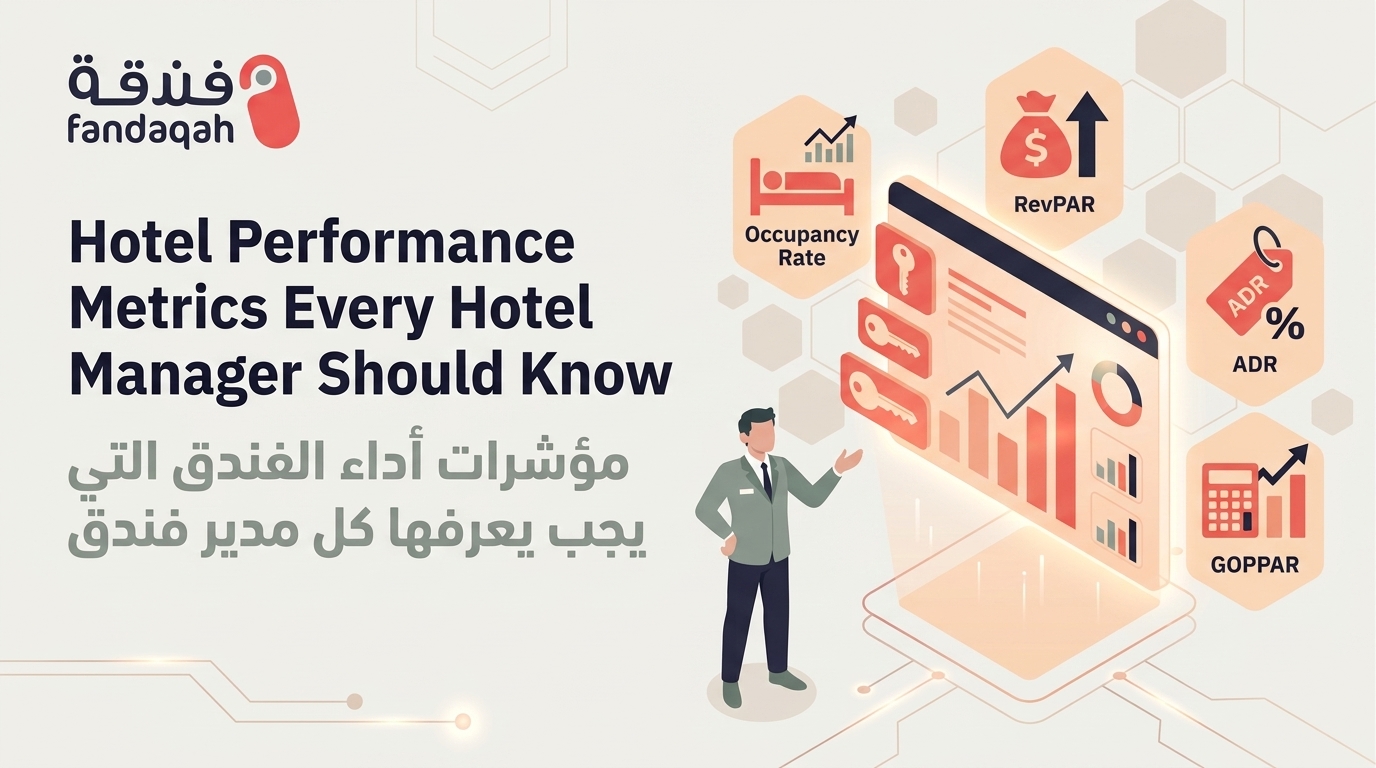
Unlock hotel success with key performance indicators. Learn the essential metrics like RevPAR, ADR, Occupancy, GOPPAR, and more that every hotel manager needs to master for profitability and growth....

Unlock the secrets to boosting your hotel's direct bookings. This expert guide provides actionable strategies, from enhancing your online presence to personalizing guest experiences, all without compr...
Unlock the secrets to transforming first-time hotel guests into lifelong advocates. Discover actionable strategies for exceptional service, personalized experiences, and powerful loyalty programs that...
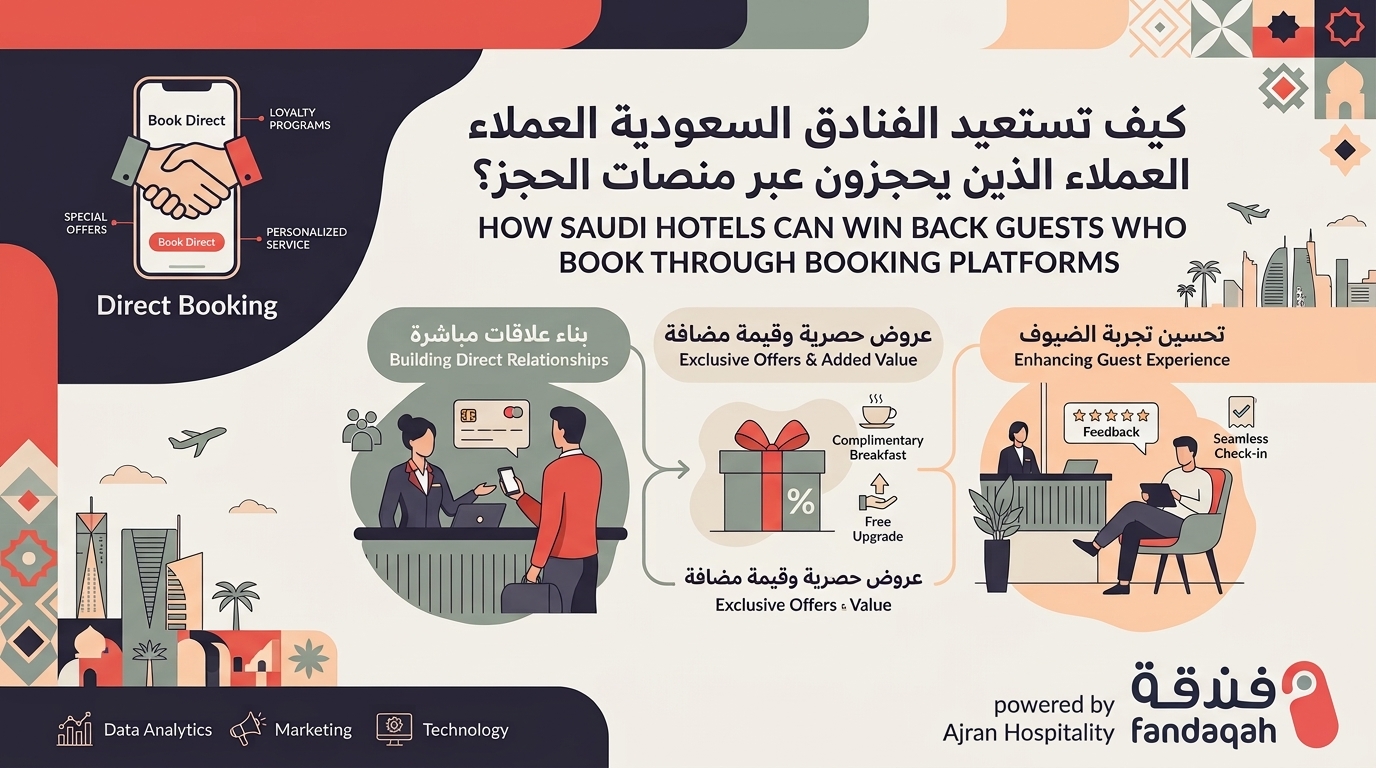
Saudi hotels can reclaim direct bookings from OTAs. Discover expert strategies to enhance guest loyalty, personalize experiences, optimize your online presence, and drive repeat business directly to y...
Discover why hotel guests will increasingly choose WhatsApp over traditional phone calls by 2026. Explore the convenience, efficiency, and personalized communication driving this digital shift in hosp...
Uncover the top reasons guests abandon hotel bookings before payment and learn expert strategies to reduce cart abandonment, boost conversions, and maximize revenue....
Prepare for the future of hospitality in Saudi Arabia. Discover the top 10 trends poised to shape hotel revenue in 2027, from AI integration to sustainable tourism, and learn how to optimize your stra...
Unlock the untapped revenue potential hidden within your hotel rooms. Discover expert strategies, from personalized upsells to smart technology, to maximize profitability and guest satisfaction withou...
Uncover the unique motivations behind Saudi guests' hotel reviews and the cultural nuances that drive virality. Learn how hospitality businesses can leverage these insights for unparalleled guest enga...
Explore the transformative impact of Instagrammable design on Saudi Arabia's burgeoning hospitality sector. Discover how aesthetics, technology, and cultural narratives are driving unprecedented growt...
Explore the future of hospitality in Saudi Arabia. Discover how AI, robotics, and hyper-personalization will transform Saudi hotels by 2030, offering unparalleled luxury and efficiency. ...
Maximize your hotel's profitability. Discover the strategic moments to raise your room rates and crucial times when lowering prices can be a costly mistake. Learn to optimize your pricing strategy fo...
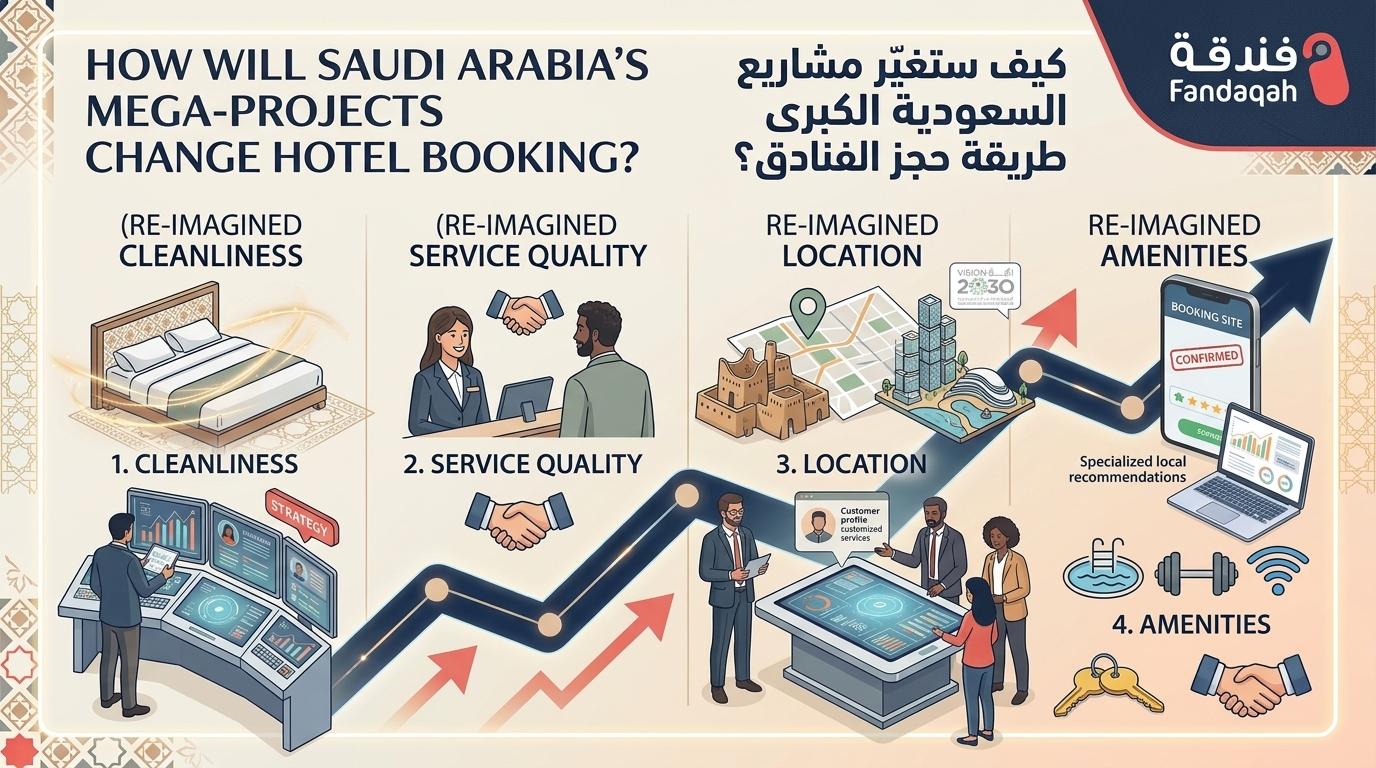
Saudi Arabia's ambitious mega-projects like NEOM, Red Sea Project, and Qiddiya are set to revolutionize global tourism and hotel booking. Discover how these futuristic developments will reshape travel...
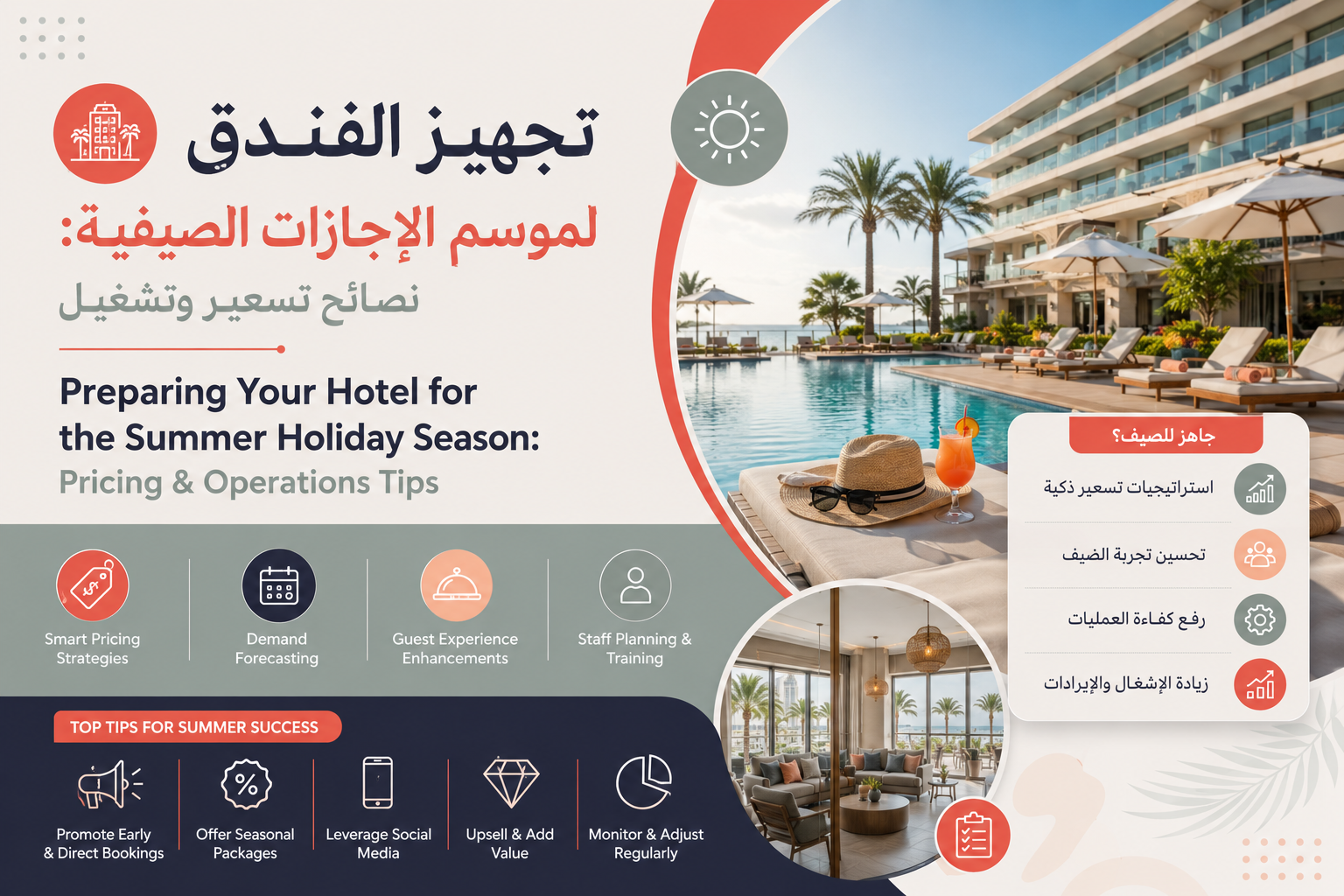
Maximize summer hotel revenue in Saudi Arabia with dynamic pricing, family packages, staffing tips & operations best practices. Align with Vision 2030 for higher RevPAR and guest satisfaction....
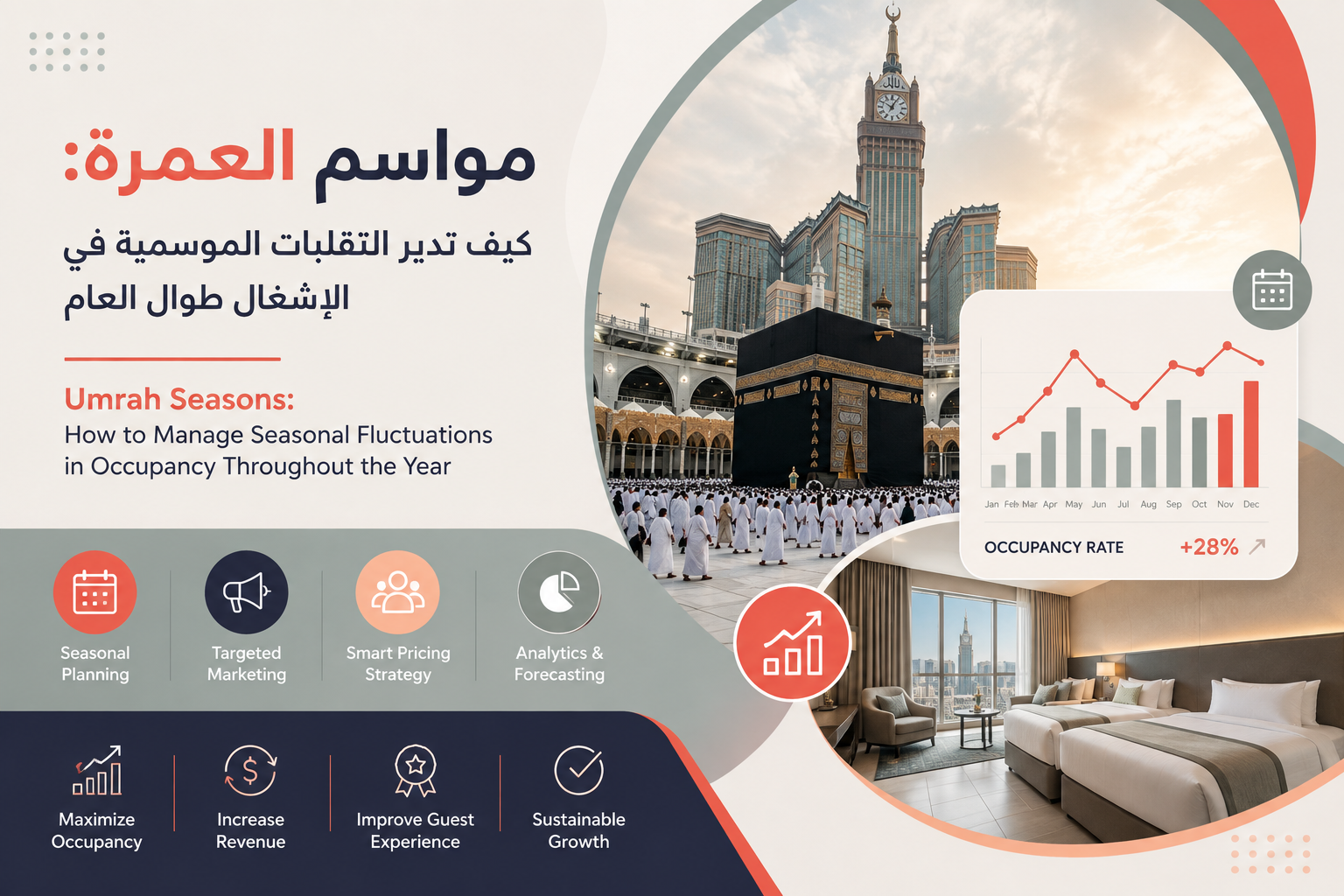
Master Umrah seasonal occupancy with dynamic pricing, packages, loyalty programs & Fandaqah.com. Strategies to boost RevPAR in Ramadan peaks and fill rooms in low seasons....
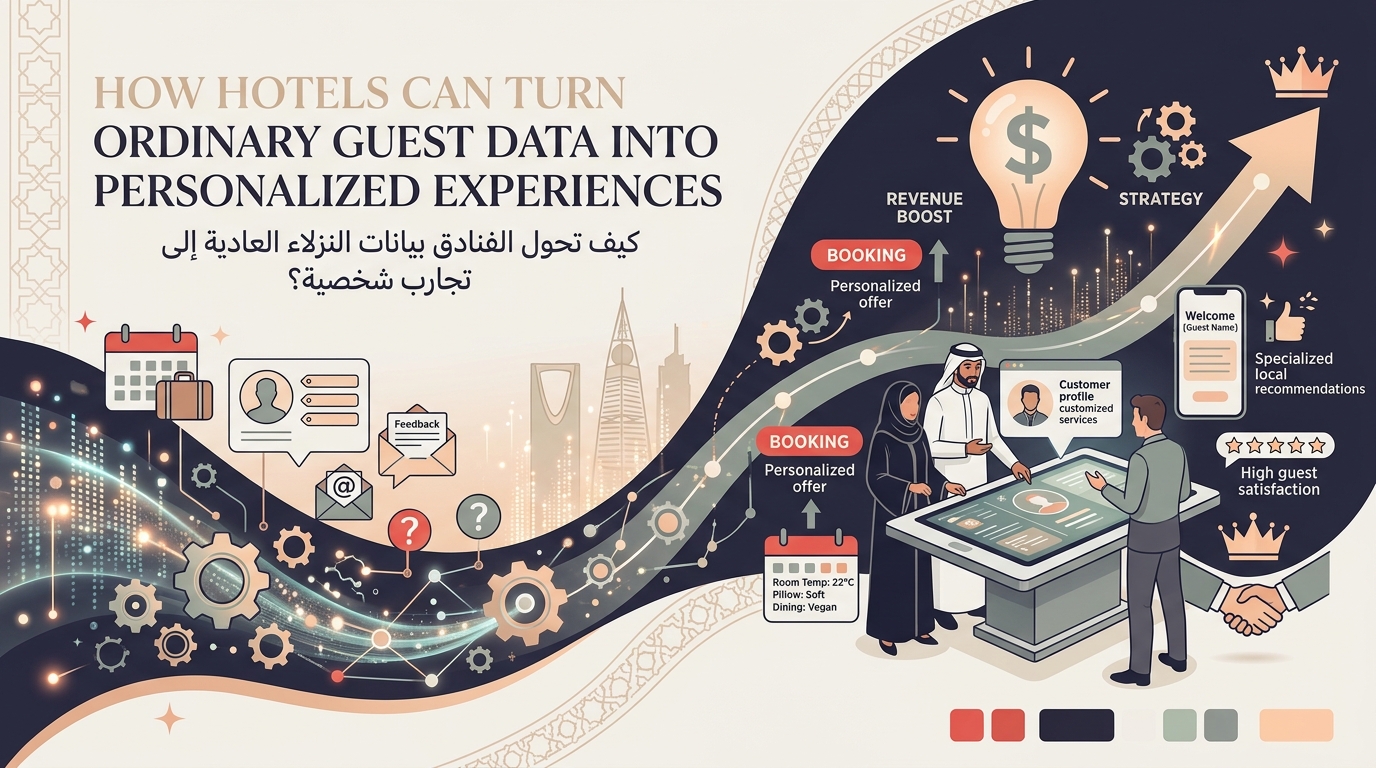
Unlock the power of guest data to craft unforgettable, personalized hotel experiences. Learn strategies to collect, analyze, and apply insights for enhanced loyalty and revenue. ...

Unlock the power of domestic tourism in Saudi Arabia. Discover expert strategies for hotels to transform local guests into loyal, repeat customers, driving sustainable growth in this dynamic market. ...
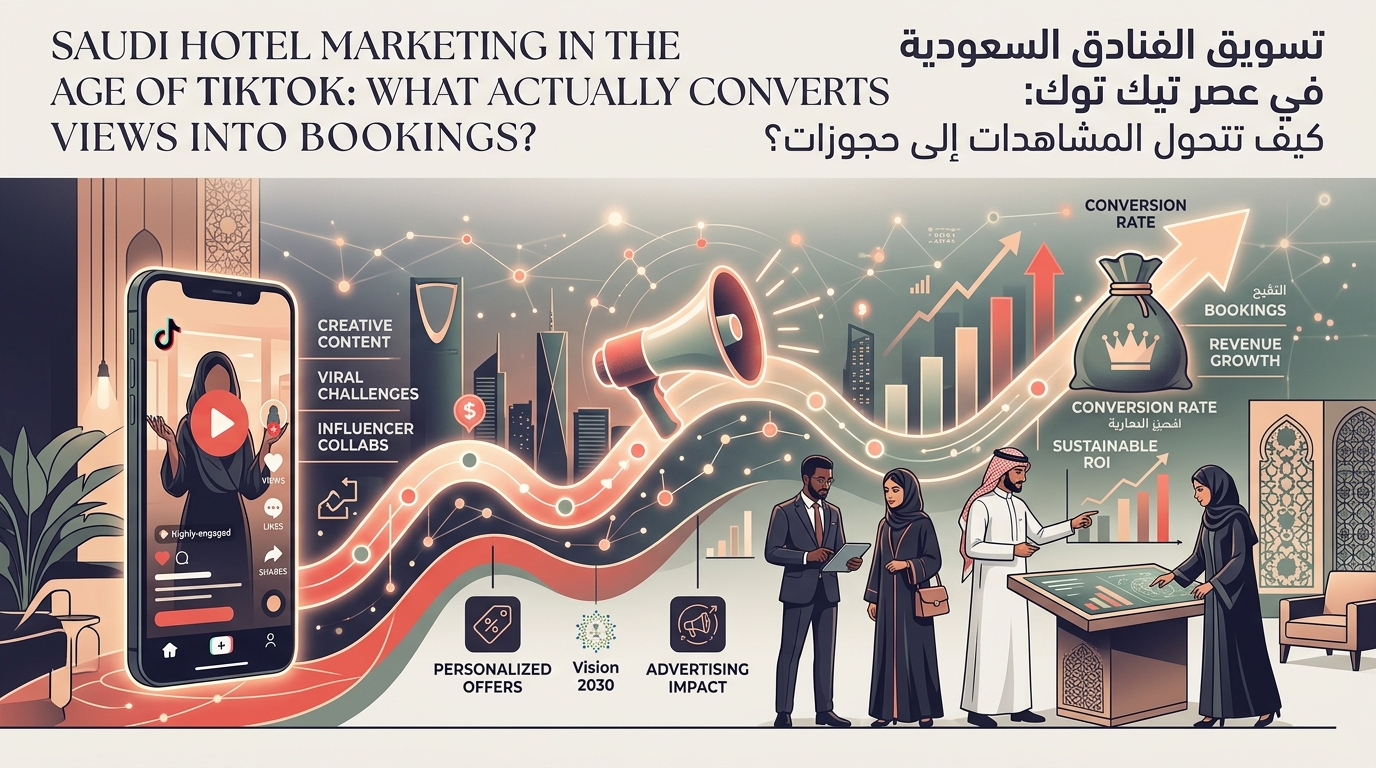
Unlock the secrets to converting TikTok views into bookings for Saudi hotels. Discover expert strategies, content types, and measurement techniques to maximize your social media ROI in the Kingdom's d...
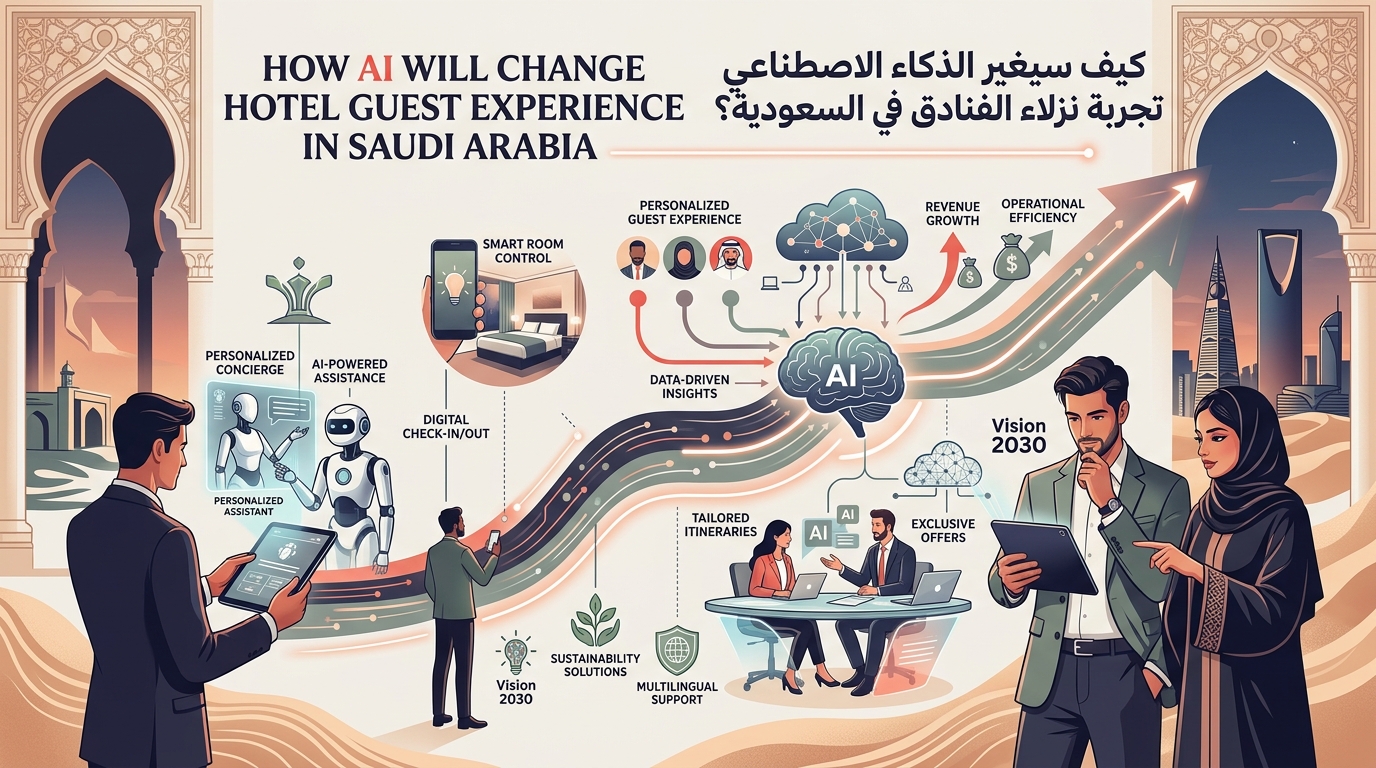
Explore how AI is revolutionizing hotel guest experiences in Saudi Arabia. From personalized service to smart rooms, discover the future of hospitality in the Kingdom. ...
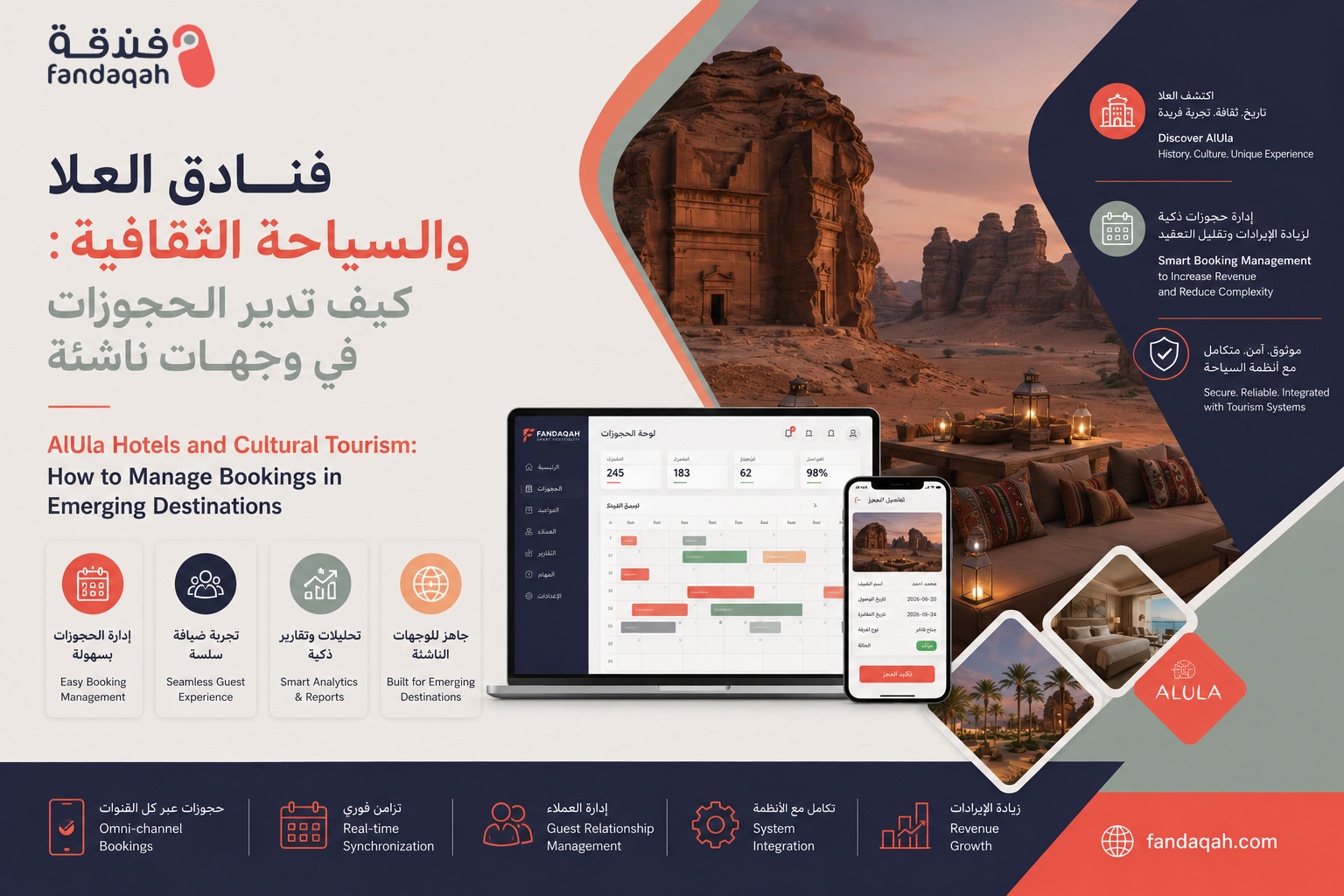
Learn how to manage AlUla hotel bookings in this emerging cultural destination. Best times, prices, accommodation types & tips for Hegra, Winter at Tantora. Compare on Fandaqah.com....
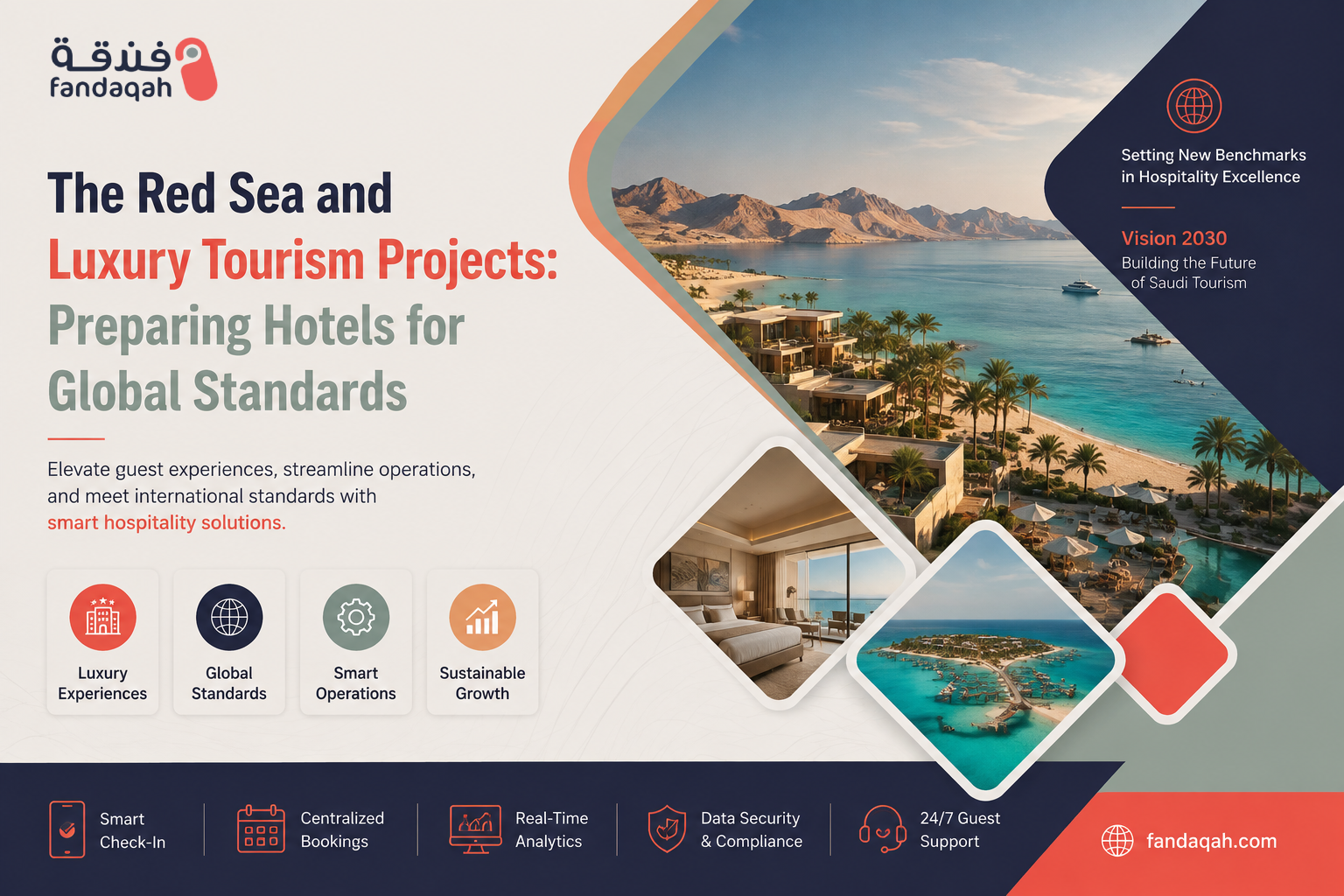
Discover how The Red Sea Project, AMAALA & Sindalah prepare Saudi hotels for global luxury standards. Sustainability, AI tech, Vision 2030 & top resorts reviewed on Fandaqah.com....
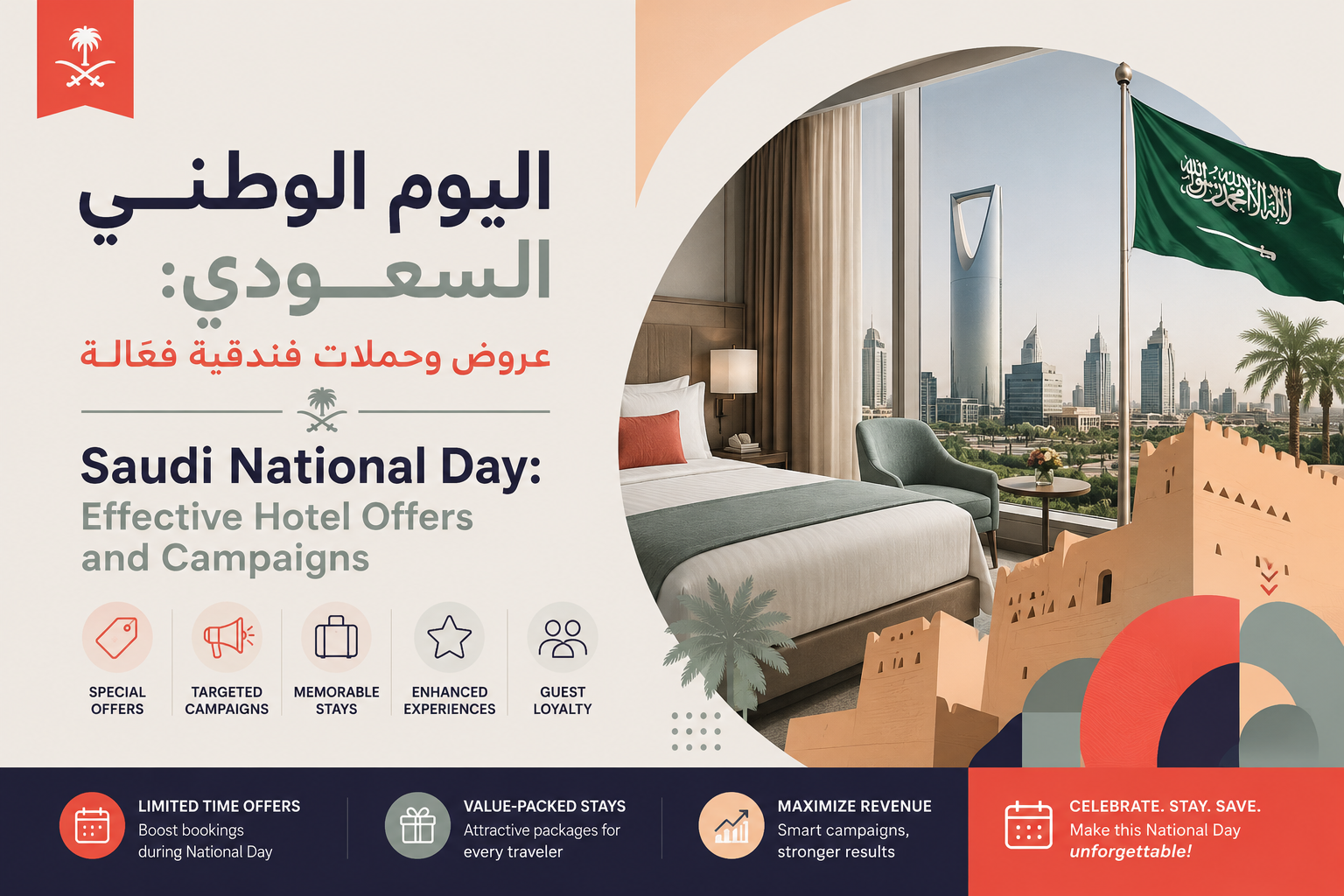
Discover effective Saudi National Day hotel offers, staycation packages, and campaigns. Boost occupancy with family deals, luxury experiences, and Vision 2030-aligned promotions across Riyadh, Jeddah ...

Proven strategies to boost weekend occupancy in Saudi secondary cities. Packages, social media, local partnerships & Vision 2030 tips for hotels in Abha, Taif, AlUla & more....
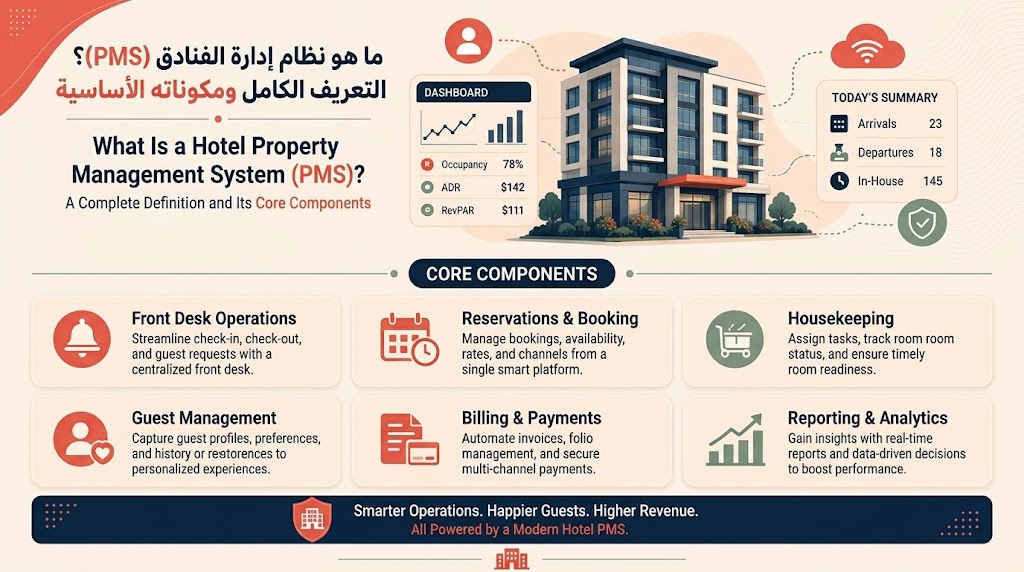
A Hotel PMS is the central software for managing reservations, rooms, guests, check-in/out, billing & reporting. Learn core components, benefits & how Saudi hotels can choose the right system....
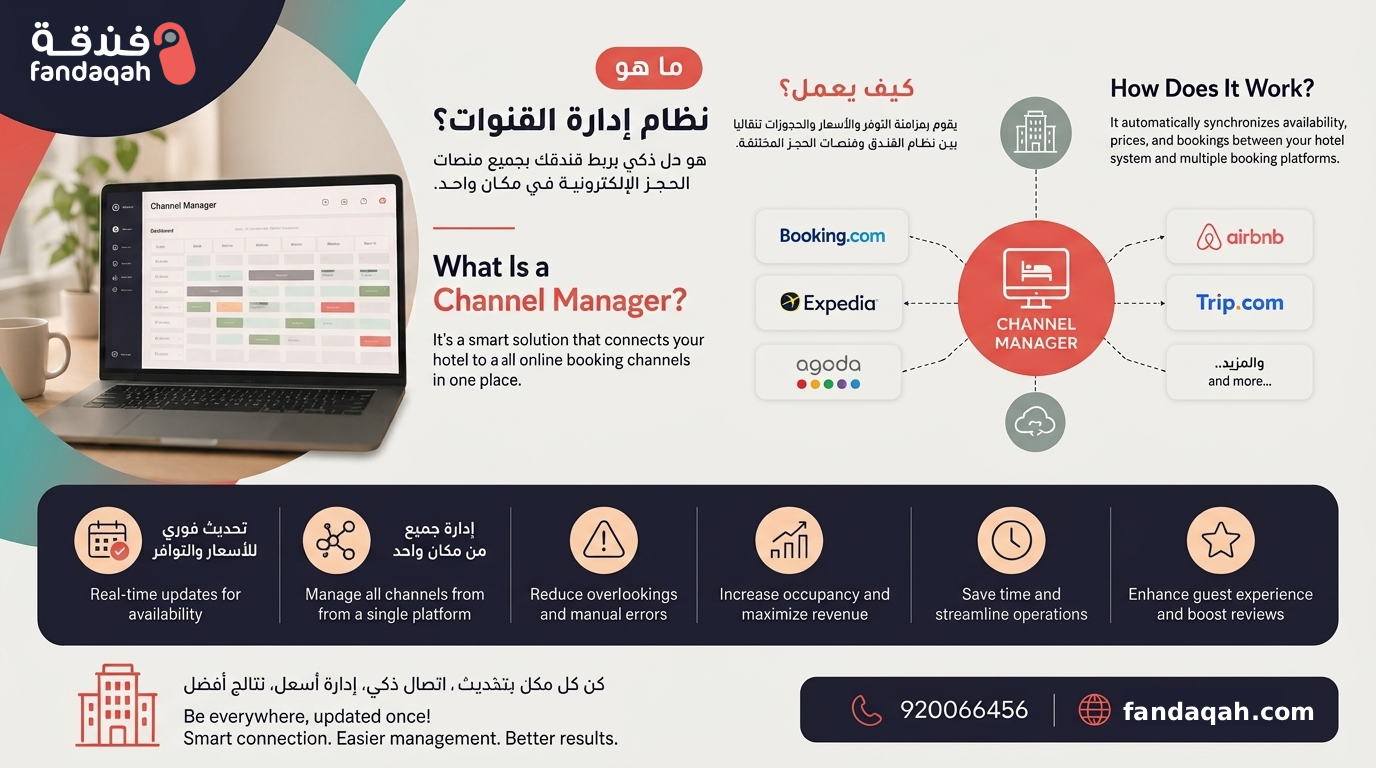
A hotel Channel Manager syncs rates, availability & reservations across OTAs from one place. Learn how it cuts overbooking risk, saves time & boosts distribution for Saudi hotels....
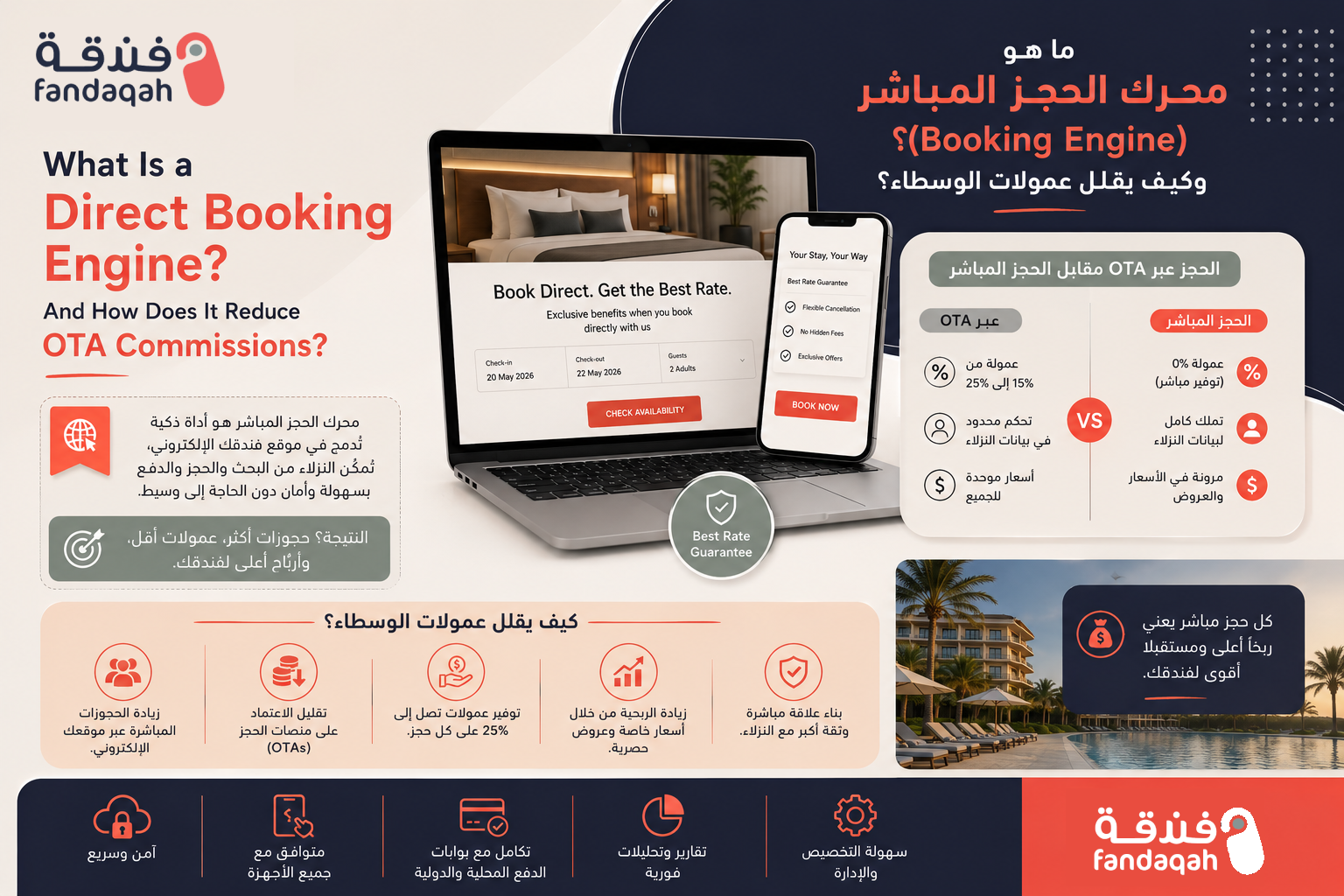
Learn what a direct booking engine is and how Saudi hotels can use it to cut OTA commissions by 15–25%, own guest data, boost direct revenue, and improve profitability under Vision 2030....
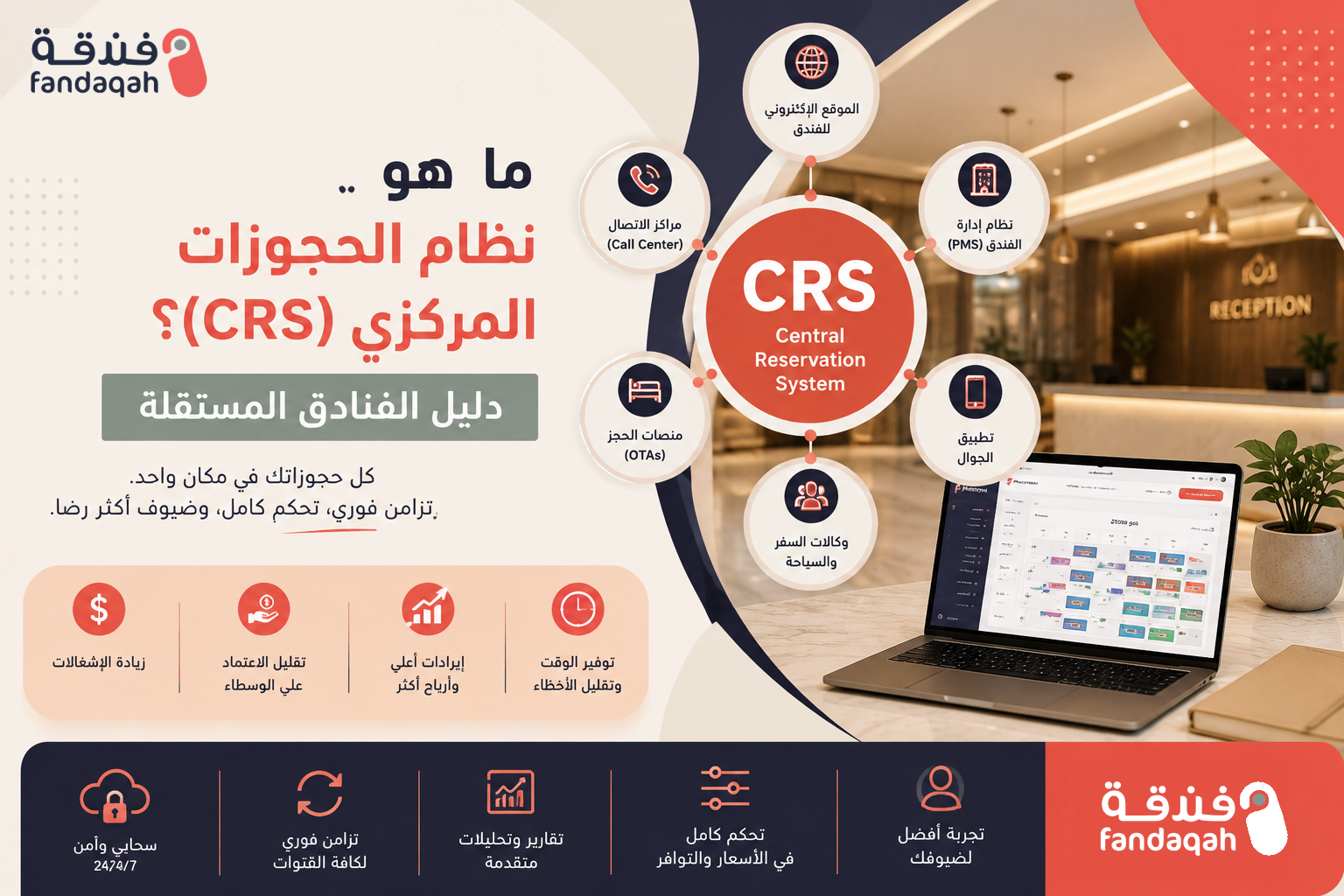
Discover what a Central Reservation System (CRS) is and how independent hotels in Saudi Arabia can use it to prevent overbookings, boost direct bookings, and maximize revenue under Vision 2030....
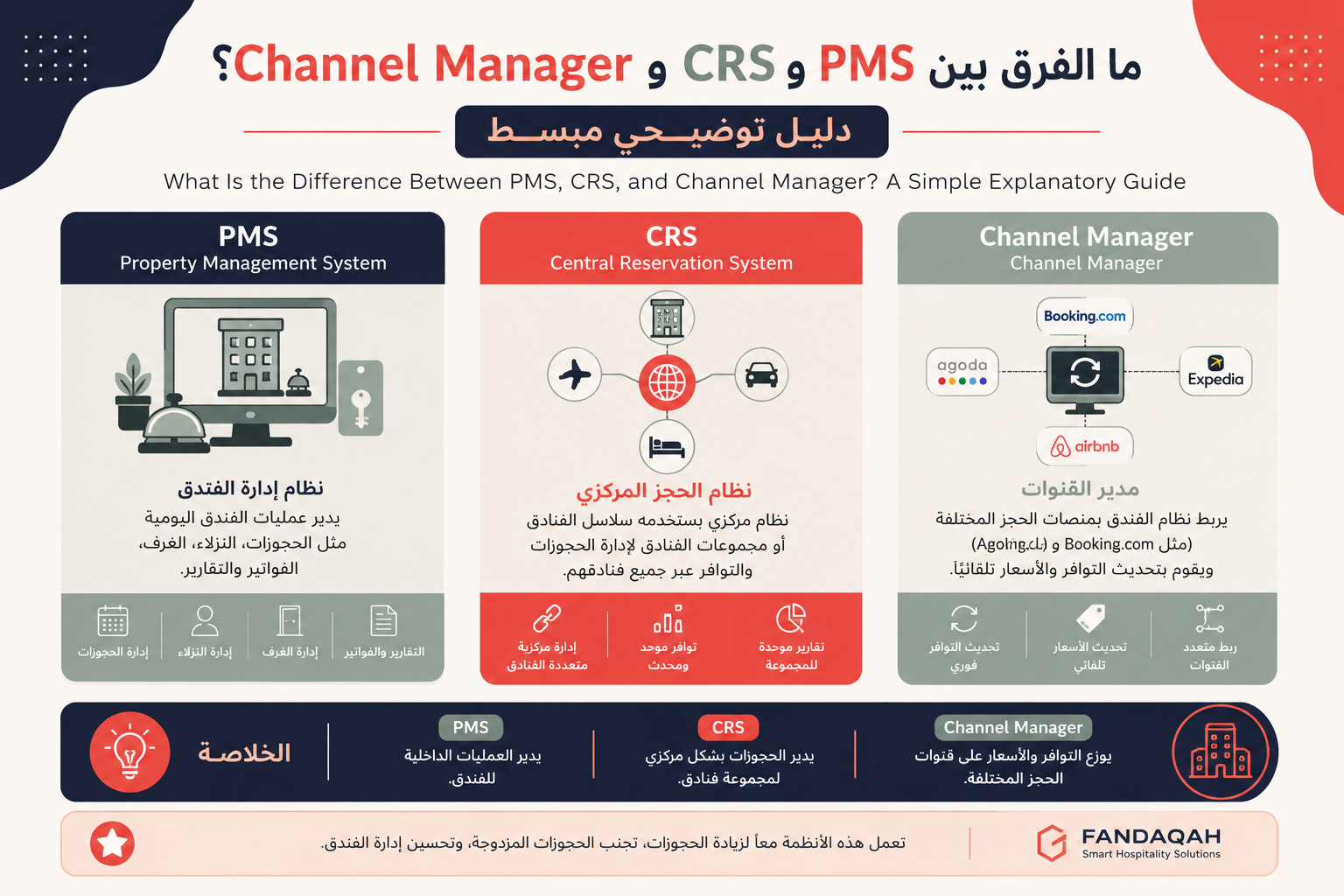
Clear differences between PMS, CRS, and Channel Manager explained. Learn which systems Saudi hotels need for operations, central bookings, and OTA distribution....
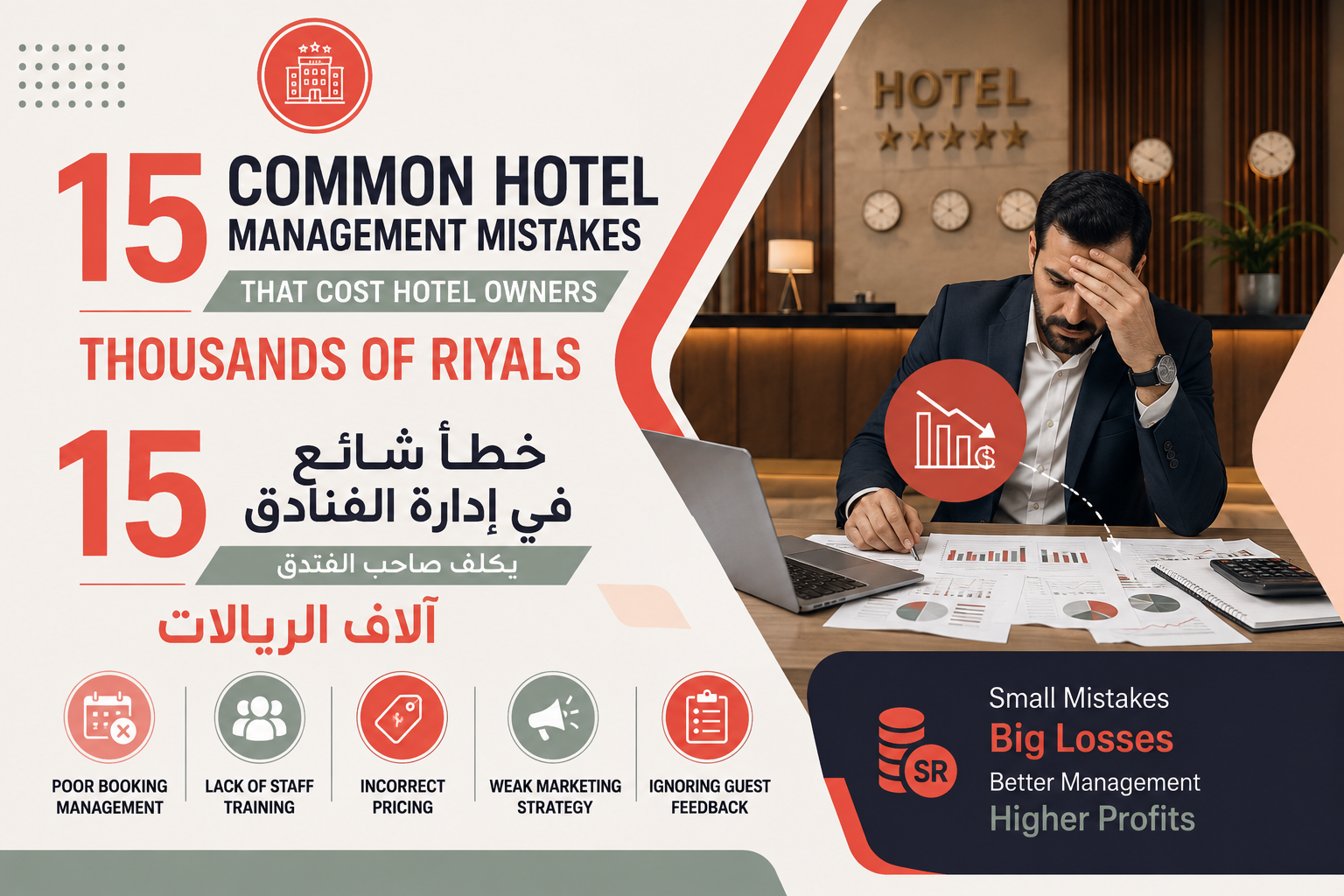
Discover the 15 most common hotel management mistakes draining Saudi hotel revenue. Practical fixes for booking systems, pricing, staff training, reviews & Vision 2030 alignment....
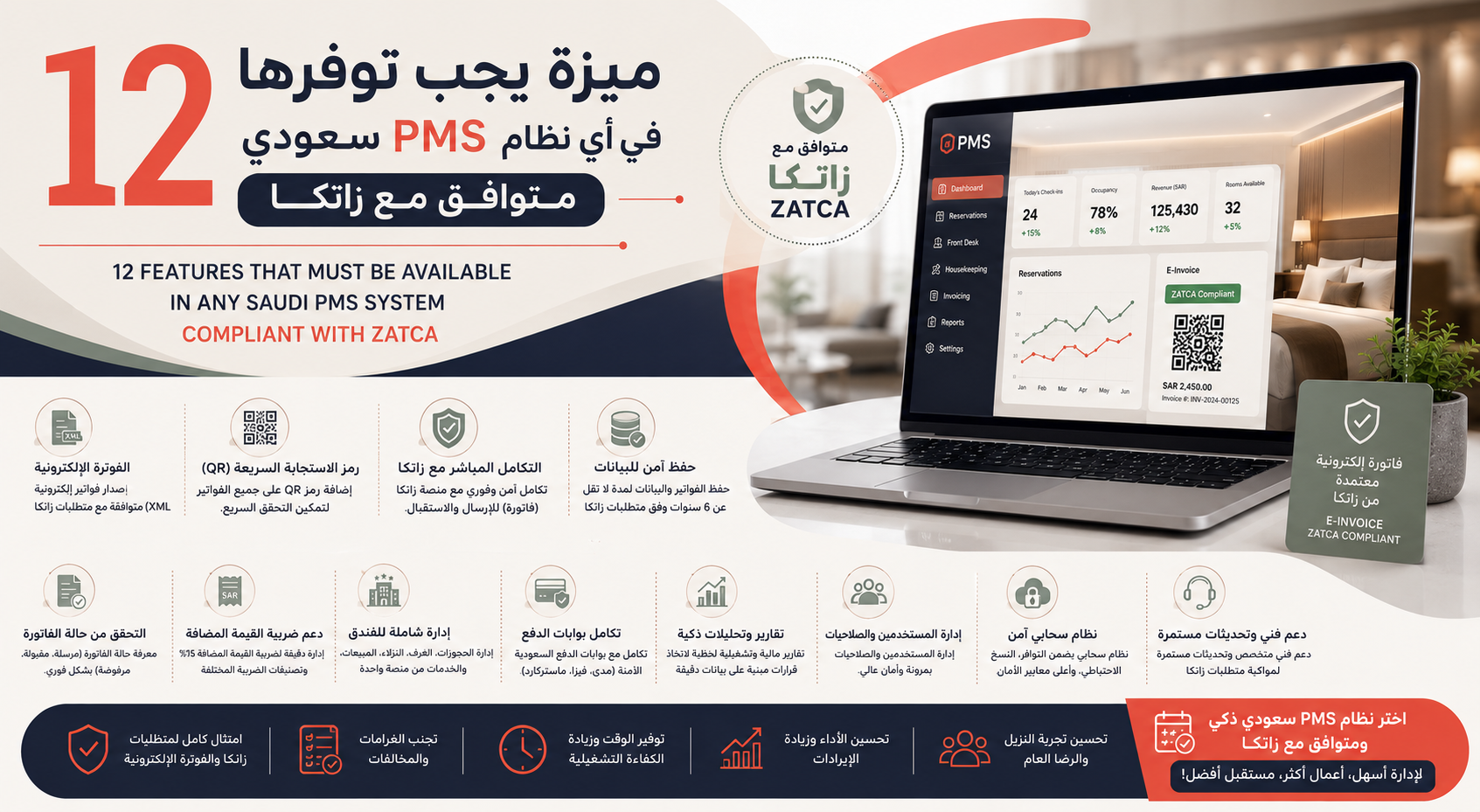
Discover the 12 essential features every Saudi property management system needs for full ZATCA e-invoicing compliance, Fatoora & Ejar integration, and seamless operations....
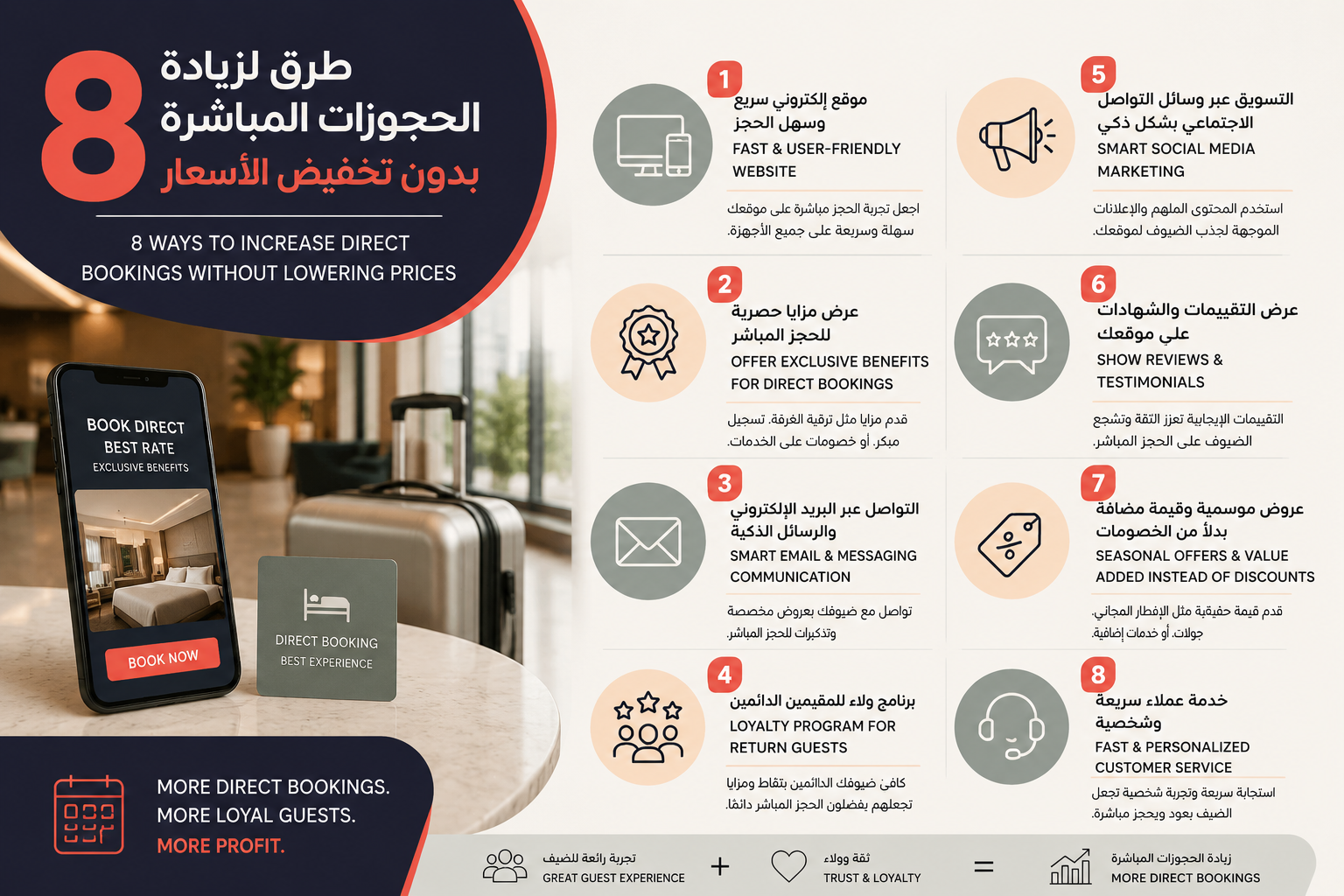
Discover 8 proven strategies for Saudi hotels to increase direct bookings without lowering prices. Optimize your booking engine, loyalty programs & more aligned with Vision 2030....
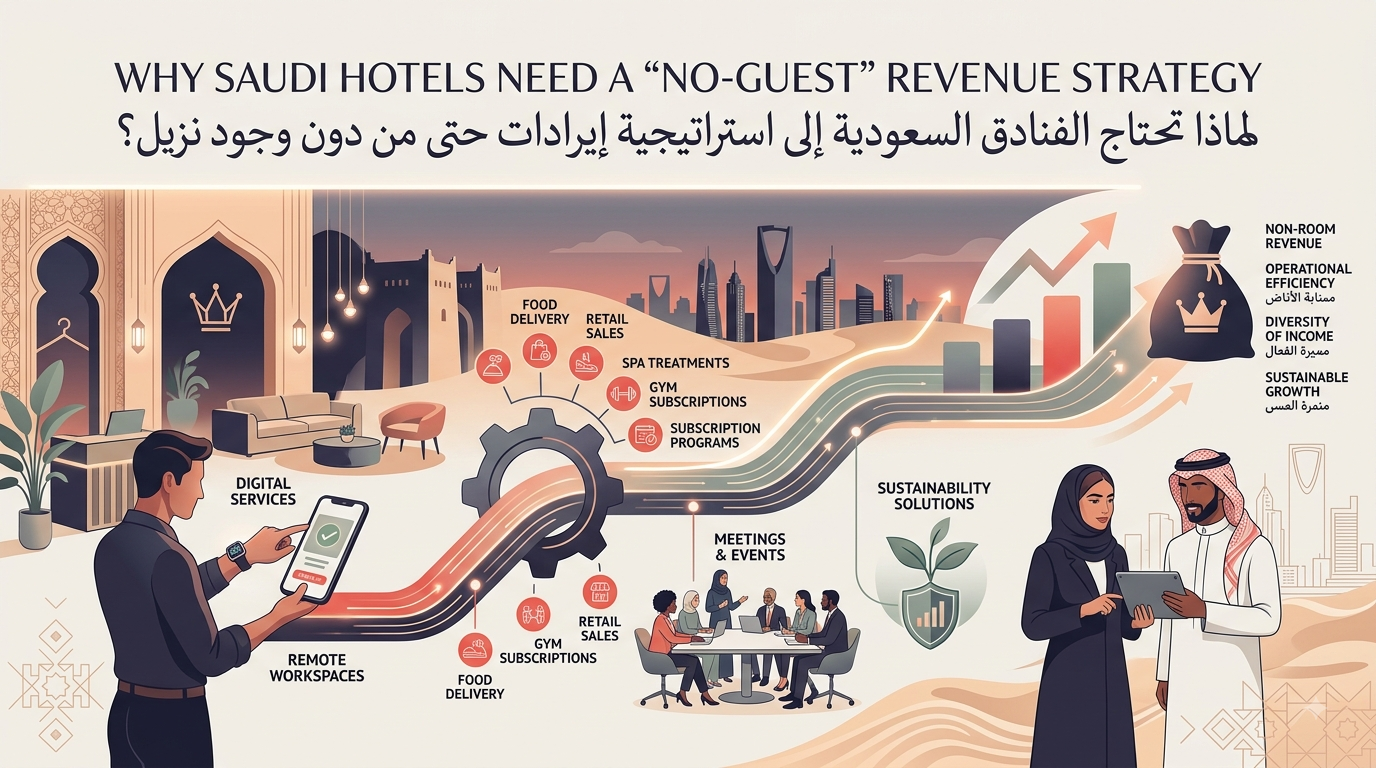
Unlock new profit streams beyond room nights. Discover why Saudi hotels must embrace "no-guest" revenue strategies to enhance profitability, diversify income, and boost guest loyalty in a competitive ...
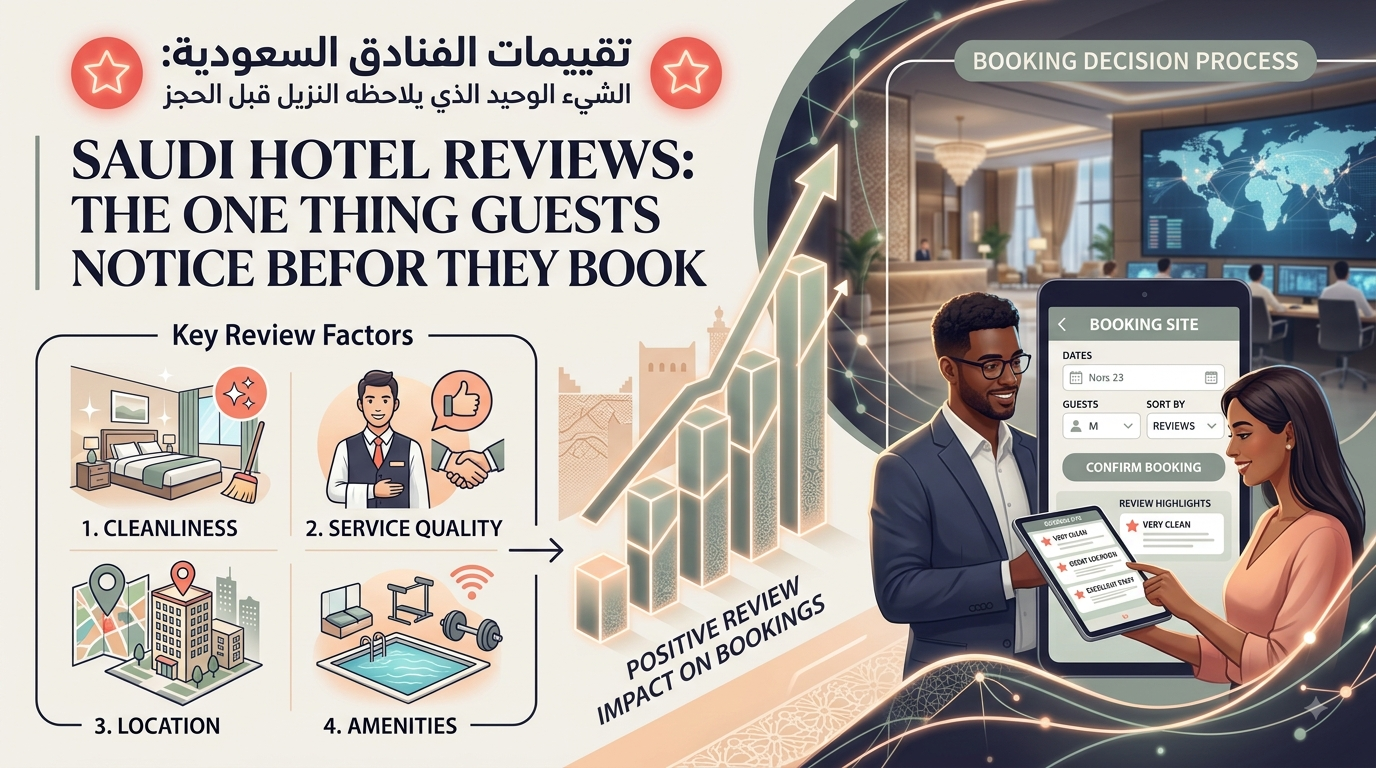
Discover the ultimate factor influencing Saudi hotel bookings. Learn how online reviews, especially around service and culture, shape guest decisions and why they're crucial for your next stay. ...
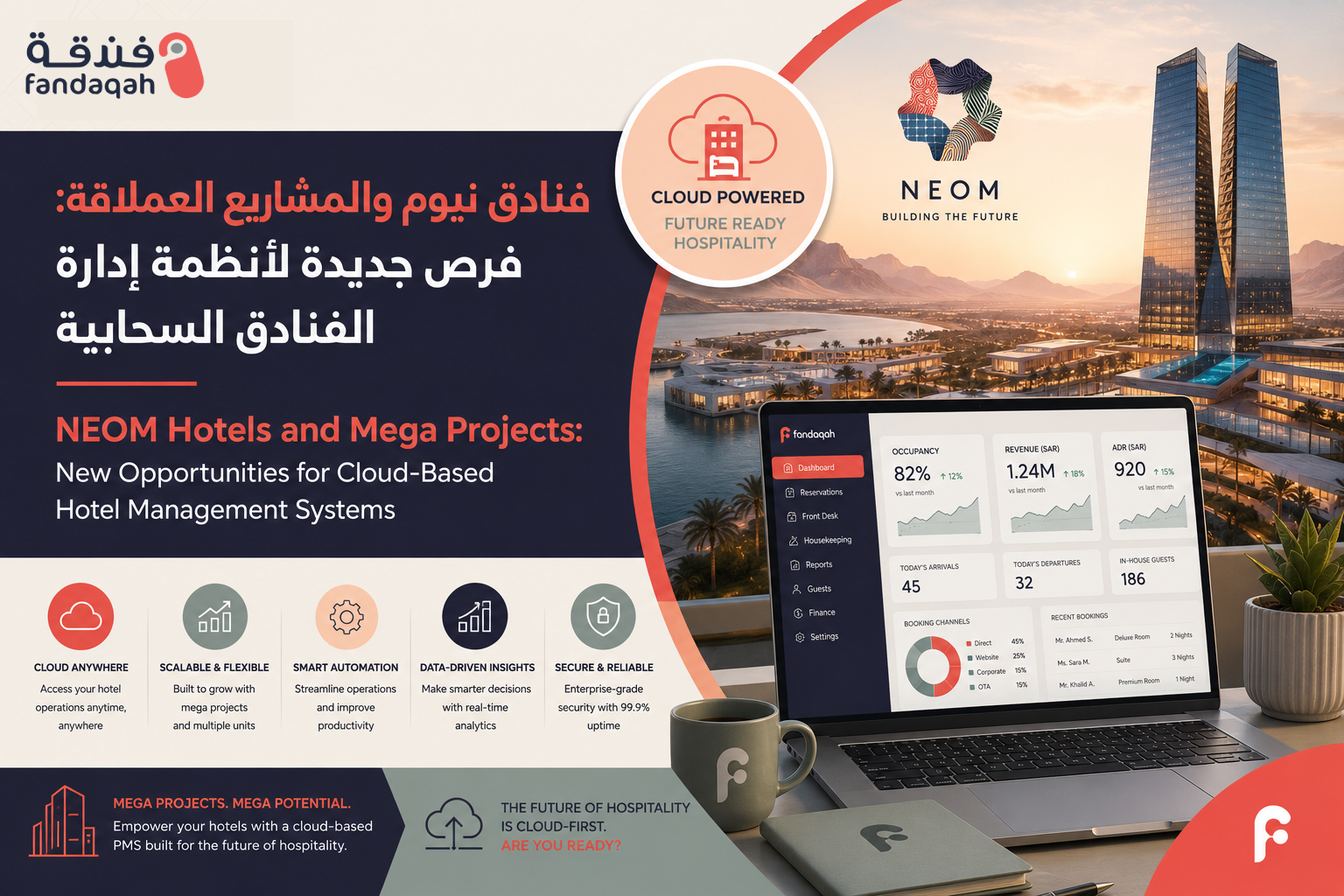
Discover how NEOM hotels and Saudi mega projects create huge opportunities for cloud-based hotel management systems. Boost efficiency, guest experience & Vision 2030 readiness....
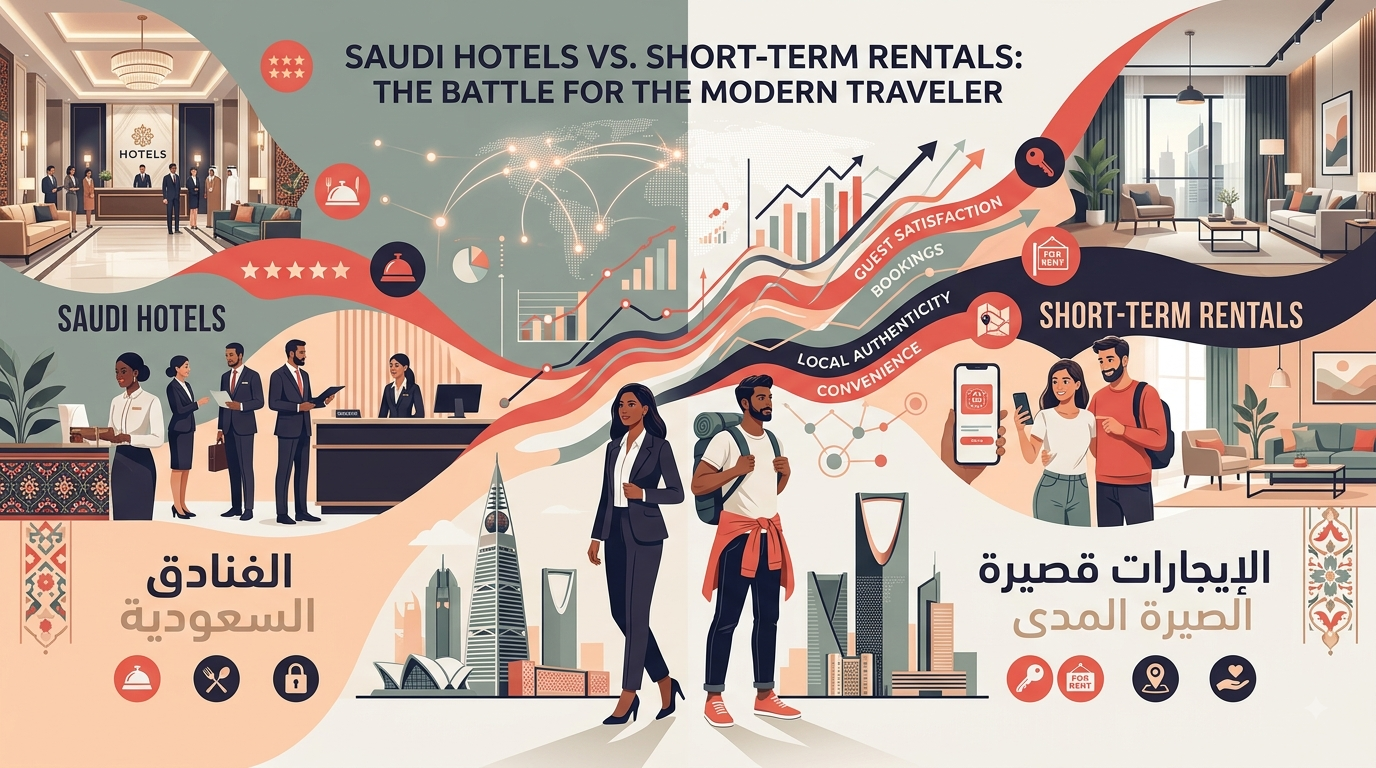
Explore the battle between Saudi hotels and short-term rentals for today's traveler. Discover which accommodation type offers the best experience, value, and authenticity for your next Saudi adventure...
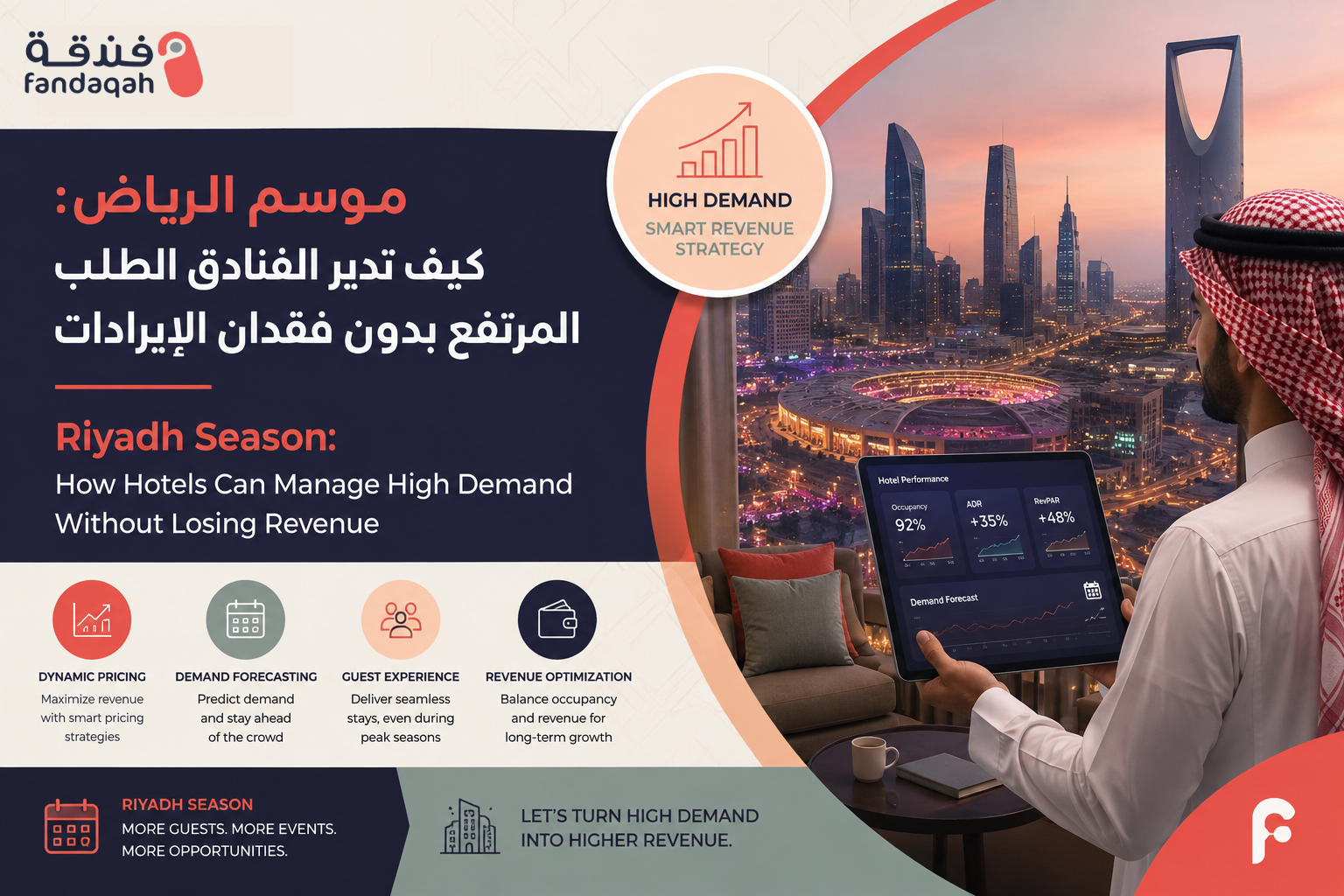
Learn how hotels manage high demand during Riyadh Season with dynamic pricing, demand forecasting & smart strategies to maximize revenue without losses....
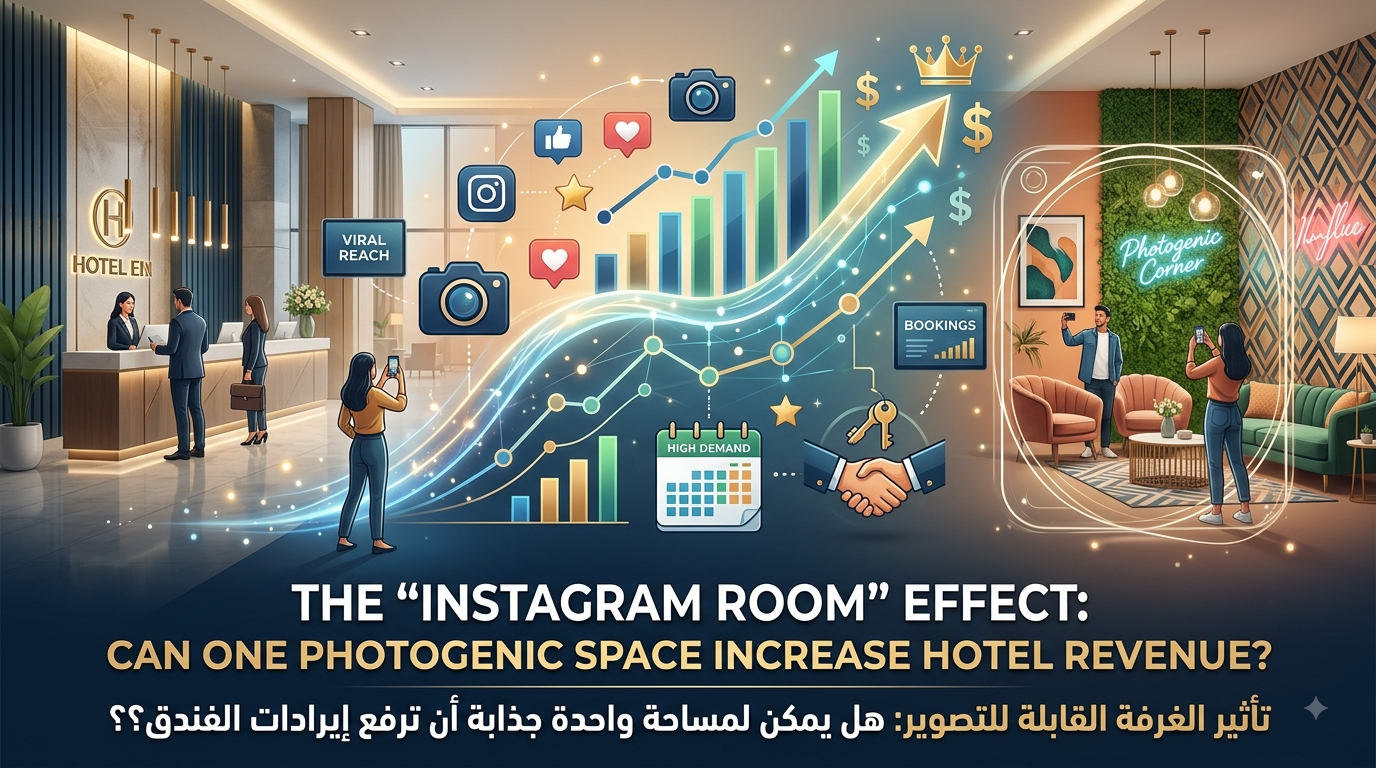
Discover how creating a single, highly photogenic "Instagram Room" can significantly boost hotel revenue through organic social media marketing, enhanced guest experience, and increased bookings. Lear...
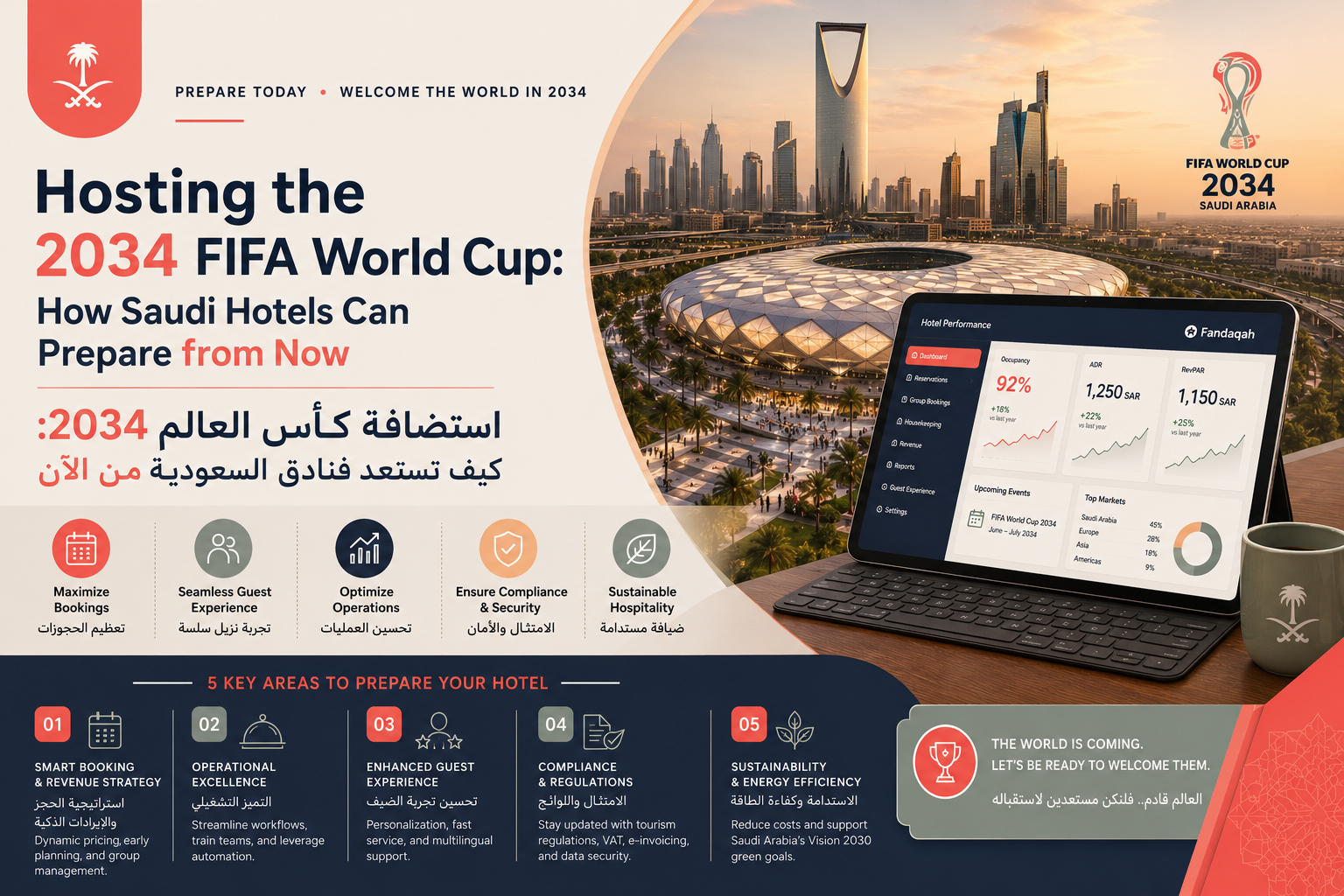
How Saudi hotels are gearing up for the 2034 FIFA World Cup: capacity expansion, smart tech, sustainability, and Vision 2030 strategies to deliver world-class hospitality for millions of fans....
Prepare your hotel for Hajj 2027 with modern PMS systems, full Ministry of Hajj & Umrah compliance, and smart capacity management. Boost efficiency, pilgrim experience, and seasonal revenue....
Unlock more bookings without spending more. Discover expert strategies to optimize your hotel's online presence, enhance guest experience, and leverage existing resources for maximum revenue growth. ...
Discover how AI is revolutionizing hotel management in Saudi Arabia by 2026. Explore key trends, applications, and the strategic advantages AI offers in enhancing guest experience, optimizing operatio...
Discover how Saudi hotels move from paper records to a cloud PMS. Boost efficiency, guest experience & align with Vision 2030. Real benefits, comparison & FAQ....
Exclusive interview with Khalid Al-Shahri, Jeddah hotel GM, on how Fandaqah PMS eliminated double bookings, cut check-in to 3 min, and boosted occupancy to 78%....
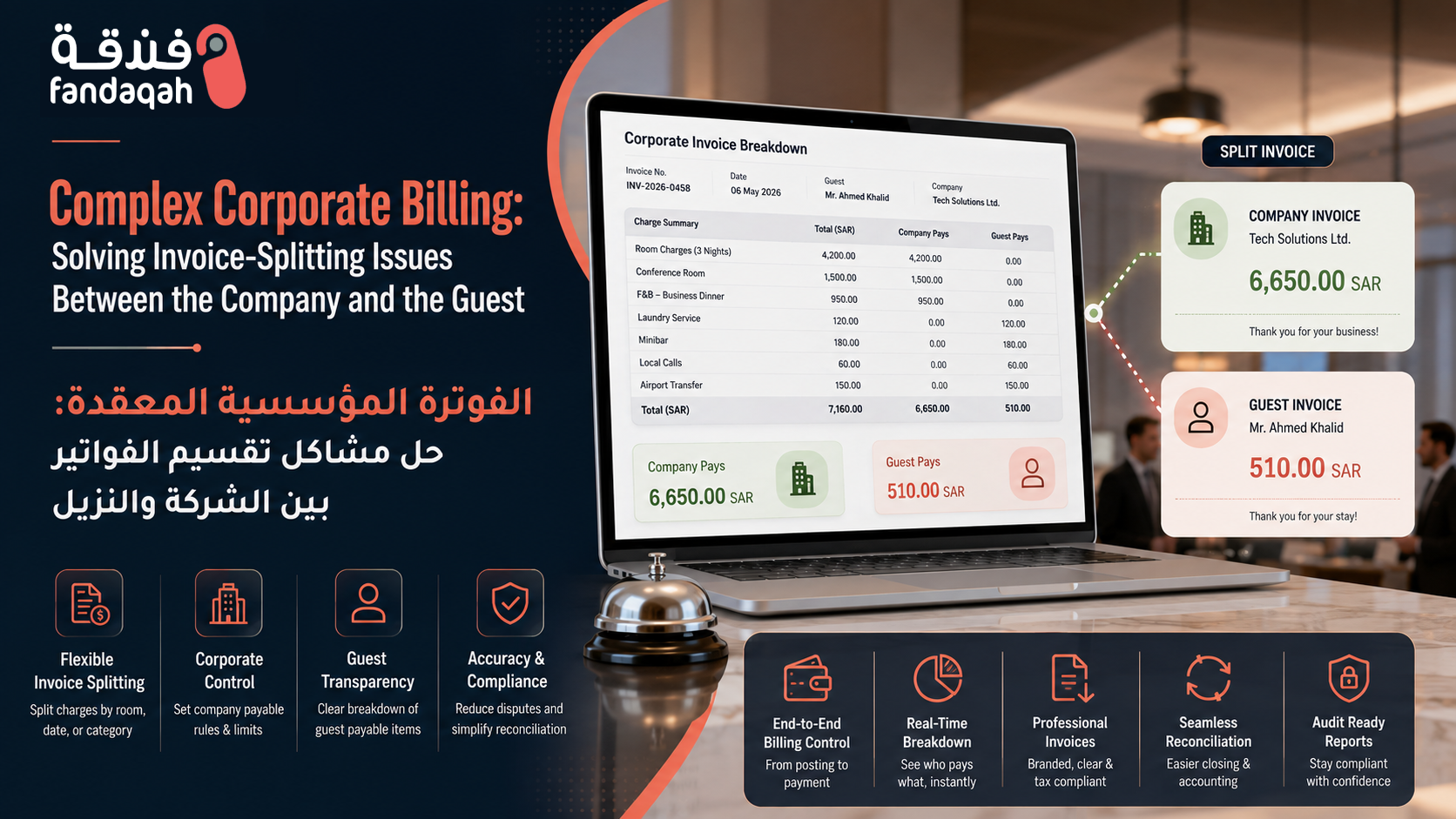
Master complex corporate billing & invoice splitting between company and guest. Automate ZATCA-compliant solutions for Saudi hotels & serviced apartments....
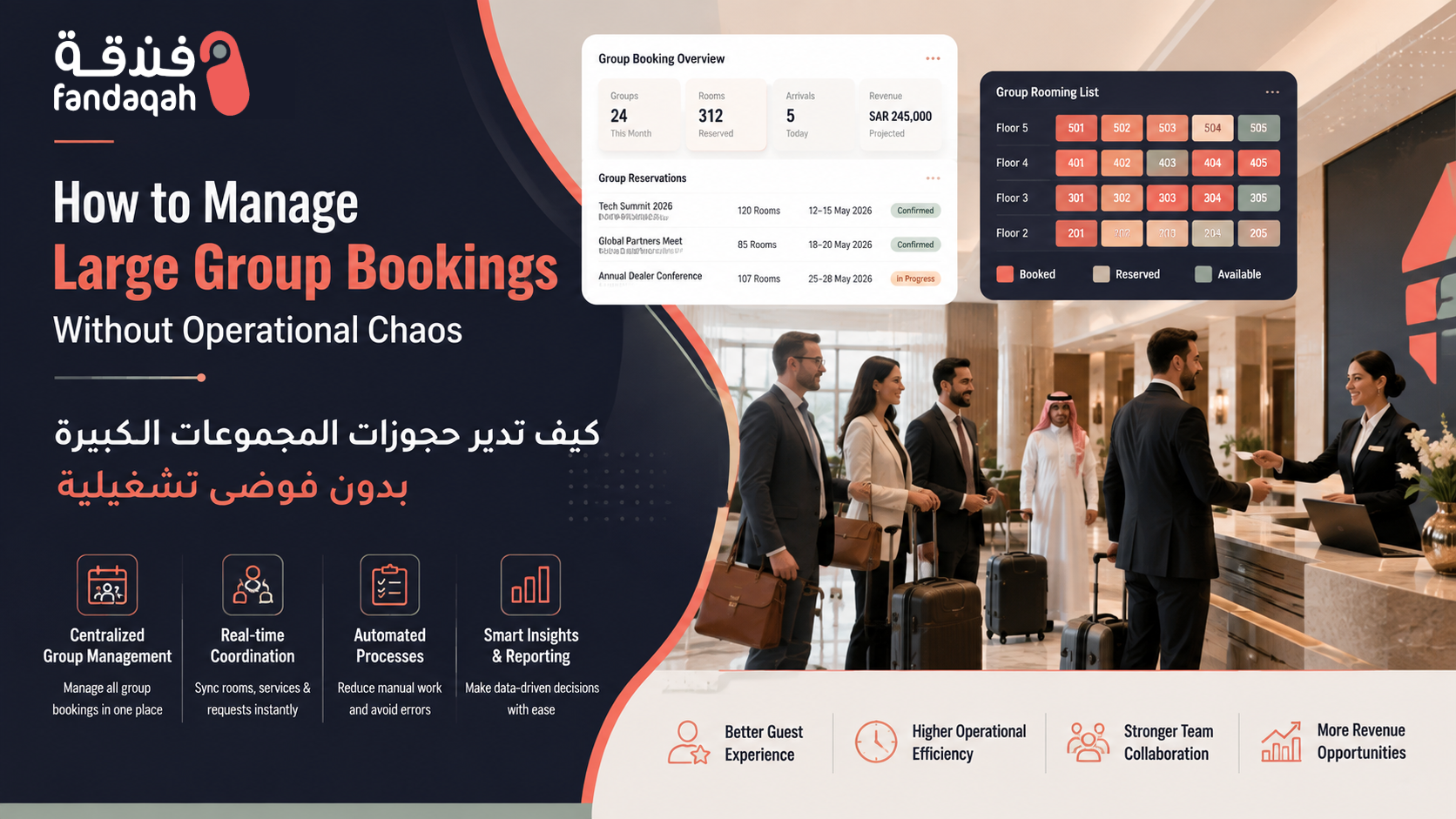
Master large group bookings in Saudi hospitality. Avoid operational chaos with proven strategies for hotels, restaurants & events during Hajj, Riyadh Season & Vision 2030....
Discover the best cloud-based elite hotel & luxury resort management software (PMS) for Saudi Arabia. Boost guest experience, automate operations & align with Vision 2030....
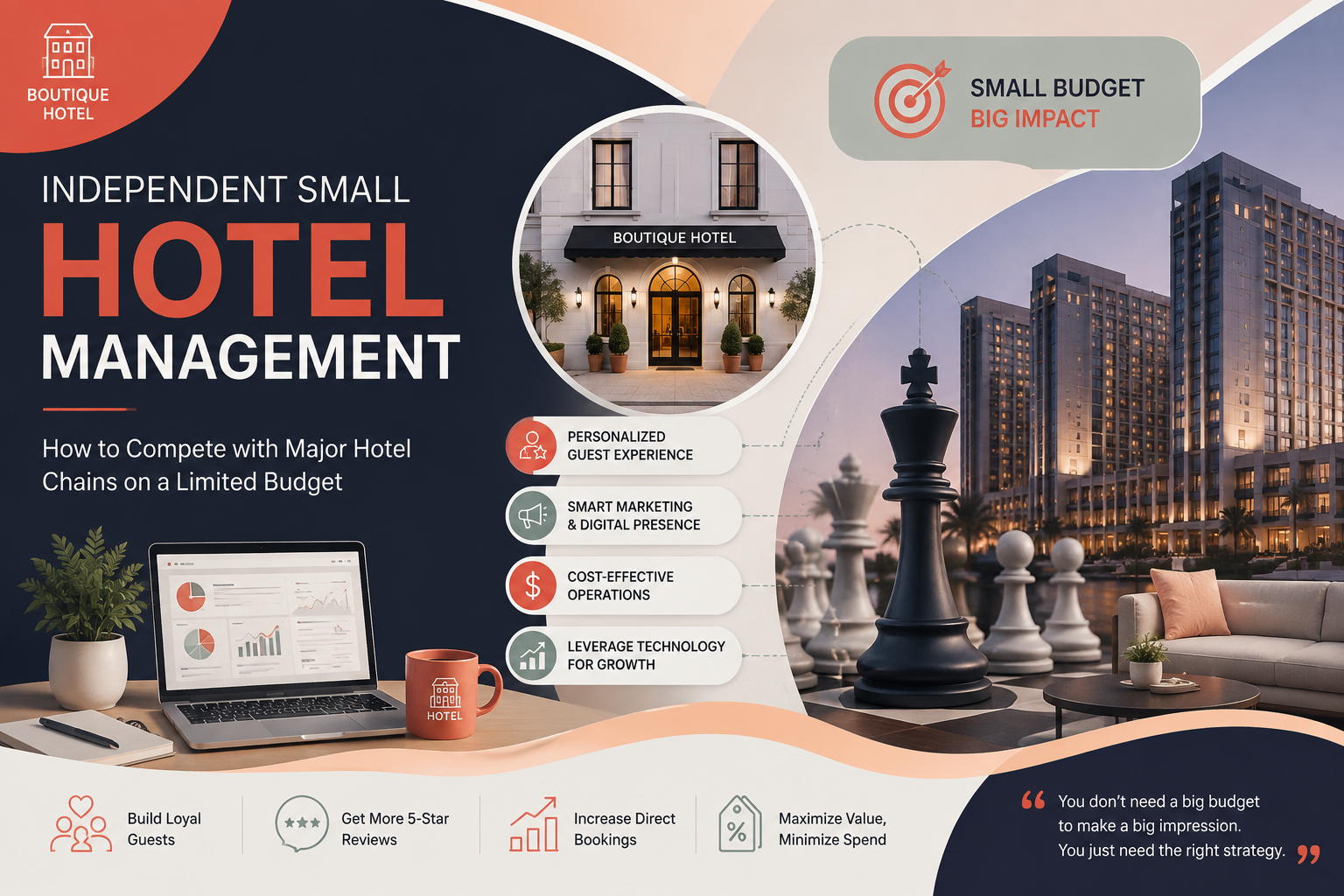
Practical guide for independent boutique hotels in Saudi Arabia to compete with major chains on a limited budget. Leverage local hospitality, organic SEO/GEO, Vision 2030 opportunities, and smart part...
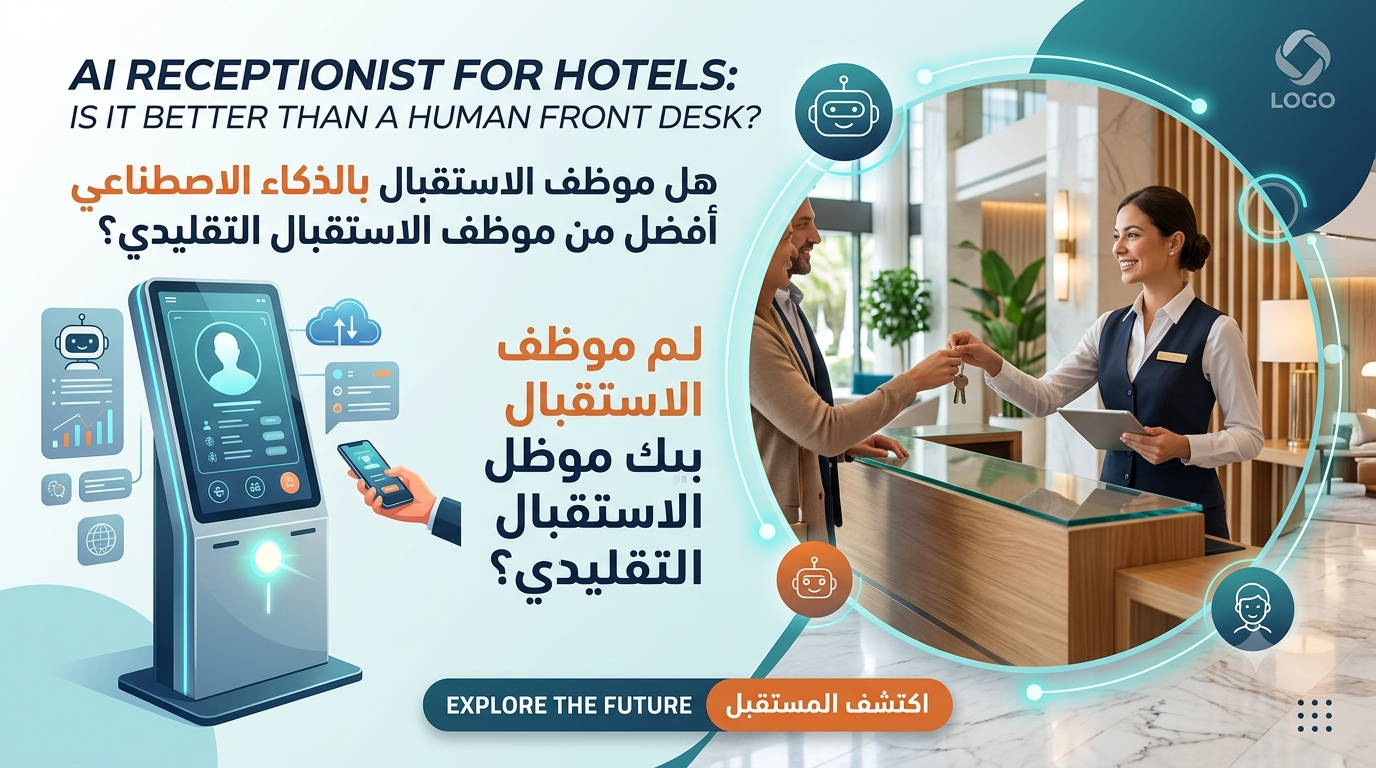
Explore the rise of AI receptionists in hotels. This expert analysis compares AI to human front desks, examining benefits, drawbacks, and the future of hospitality. Discover if AI is truly better for ...

Unlock the secrets to a fully booked hotel. Discover 50 actionable marketing ideas, from local SEO to immersive virtual tours, designed to skyrocket your bookings and boost revenue....
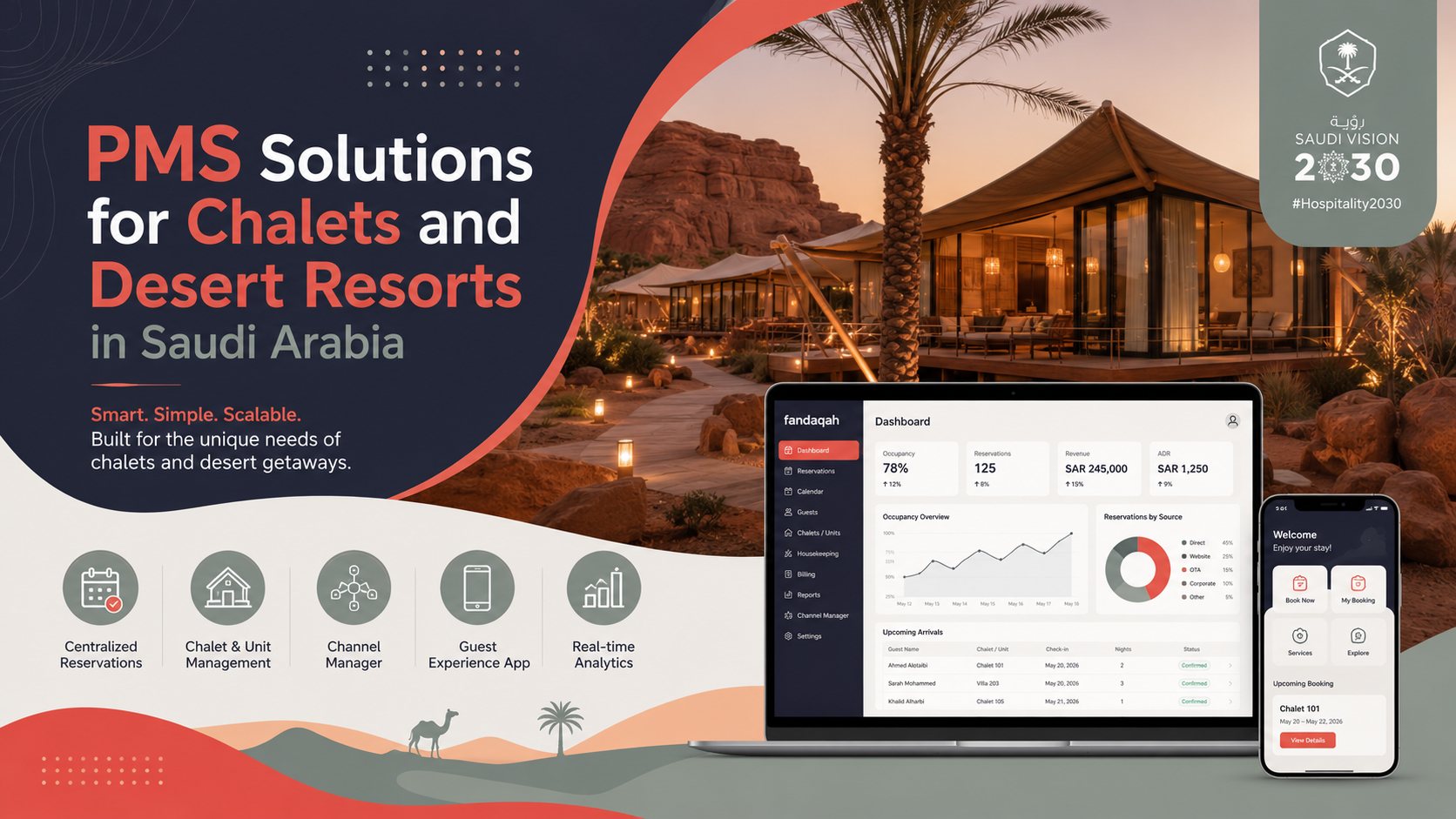
Discover how a modern PMS transforms chalet and desert resort management in Saudi Arabia. Boost bookings, automate operations, and align with Vision 2030 tourism goals....
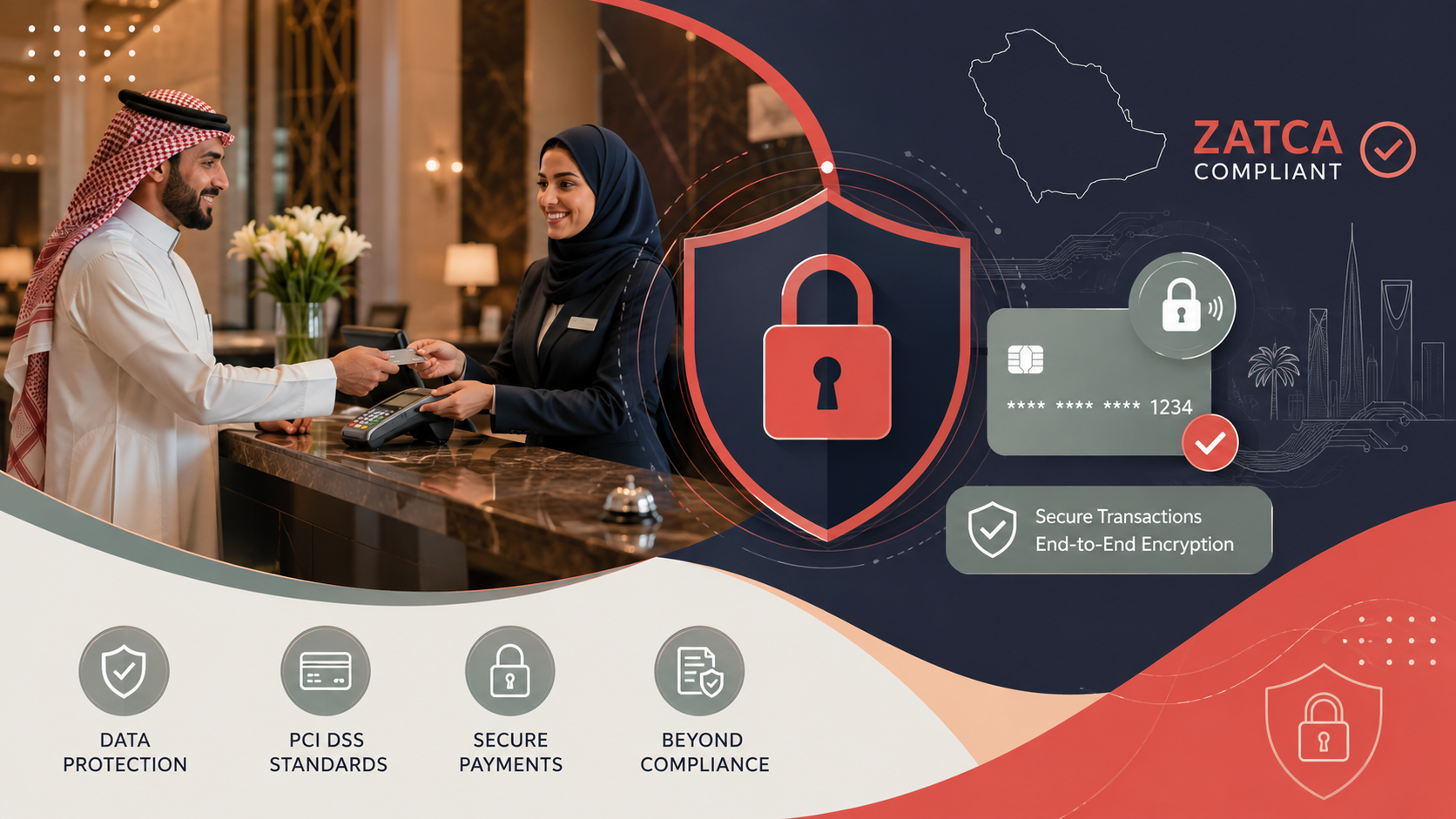
ZATCA e-invoicing alone isn’t enough. Learn how Saudi hotels can secure guest payment data with PCI DSS, NCA controls, and Vision 2030-aligned strategies to prevent breaches and build trust....
Where should Saudi hotels store guest data? A practical guide to data sovereignty, PDPL compliance, local cloud storage, and protecting privacy under Vision 2030....
Secure hotel PMS accounts with passkeys. A practical guide for Saudi hotel owners on passwordless, phishing-resistant authentication, implementation, and recovery....

Learn how Saudi hotels can cut energy, water, and food waste costs while aligning with Vision 2030. Practical steps, KPIs, and a clear sustainability plan for better profits and guest experience....
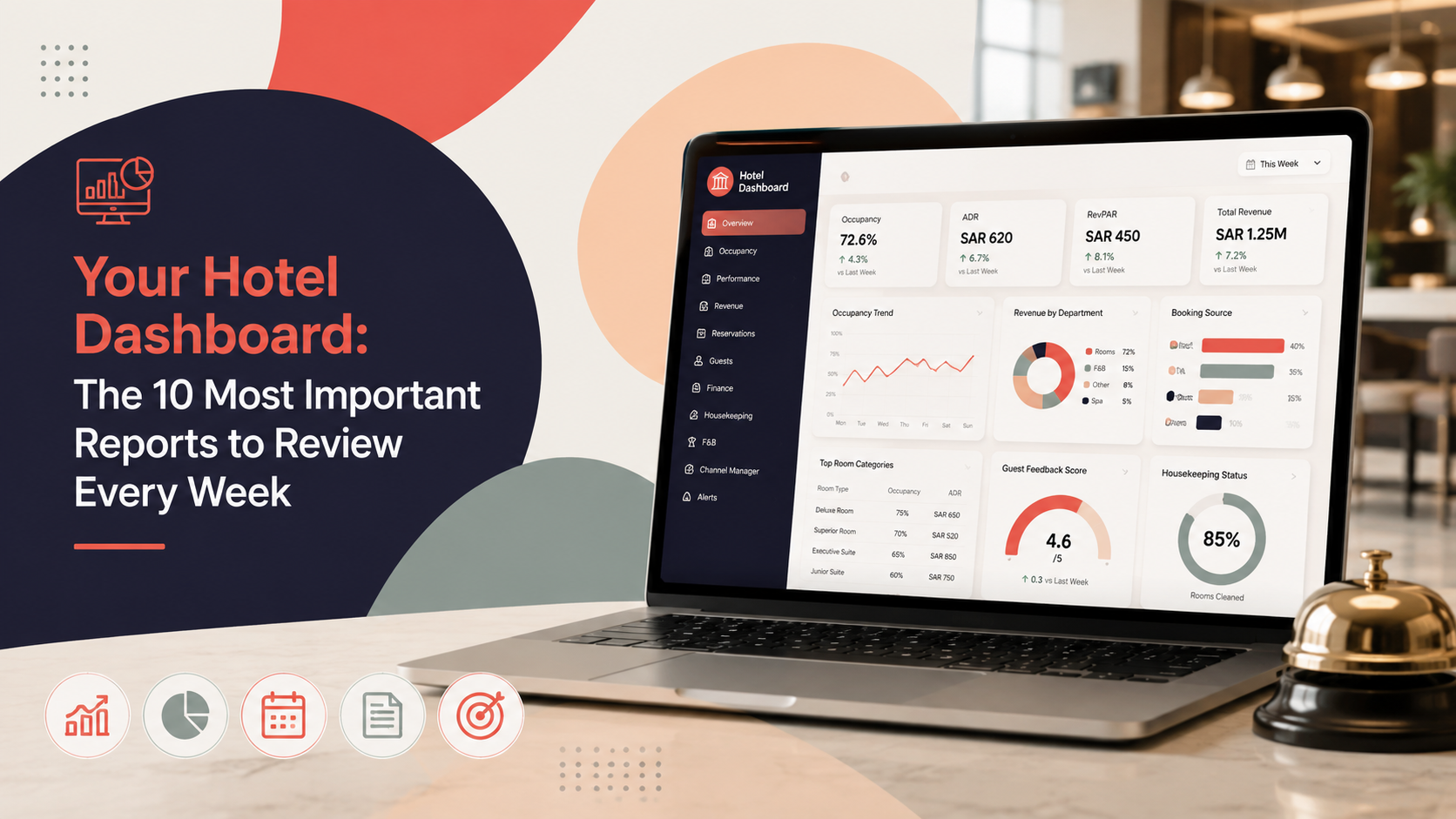
Discover the 10 essential hotel dashboard reports to review every week—occupancy, ADR, RevPAR, booking pace, channels, guest satisfaction & more—to boost revenue and performance in Saudi Arabia....
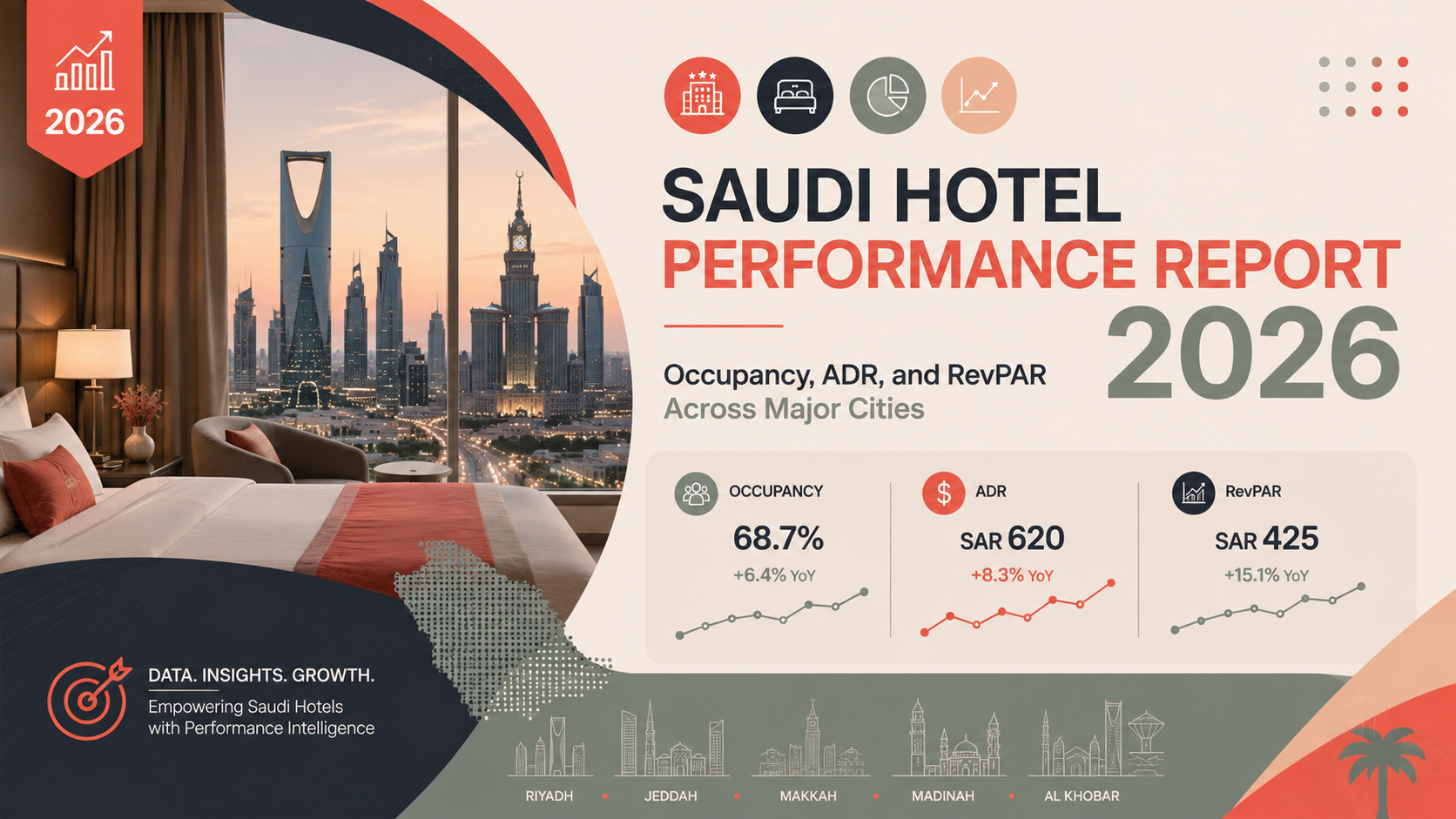
Discover the Saudi Hotel Performance Report 2026 with projected occupancy, ADR, and RevPAR for Riyadh, Jeddah, Makkah, Madinah, Dammam, and AlUla. Key insights for investors and operators aligned with...
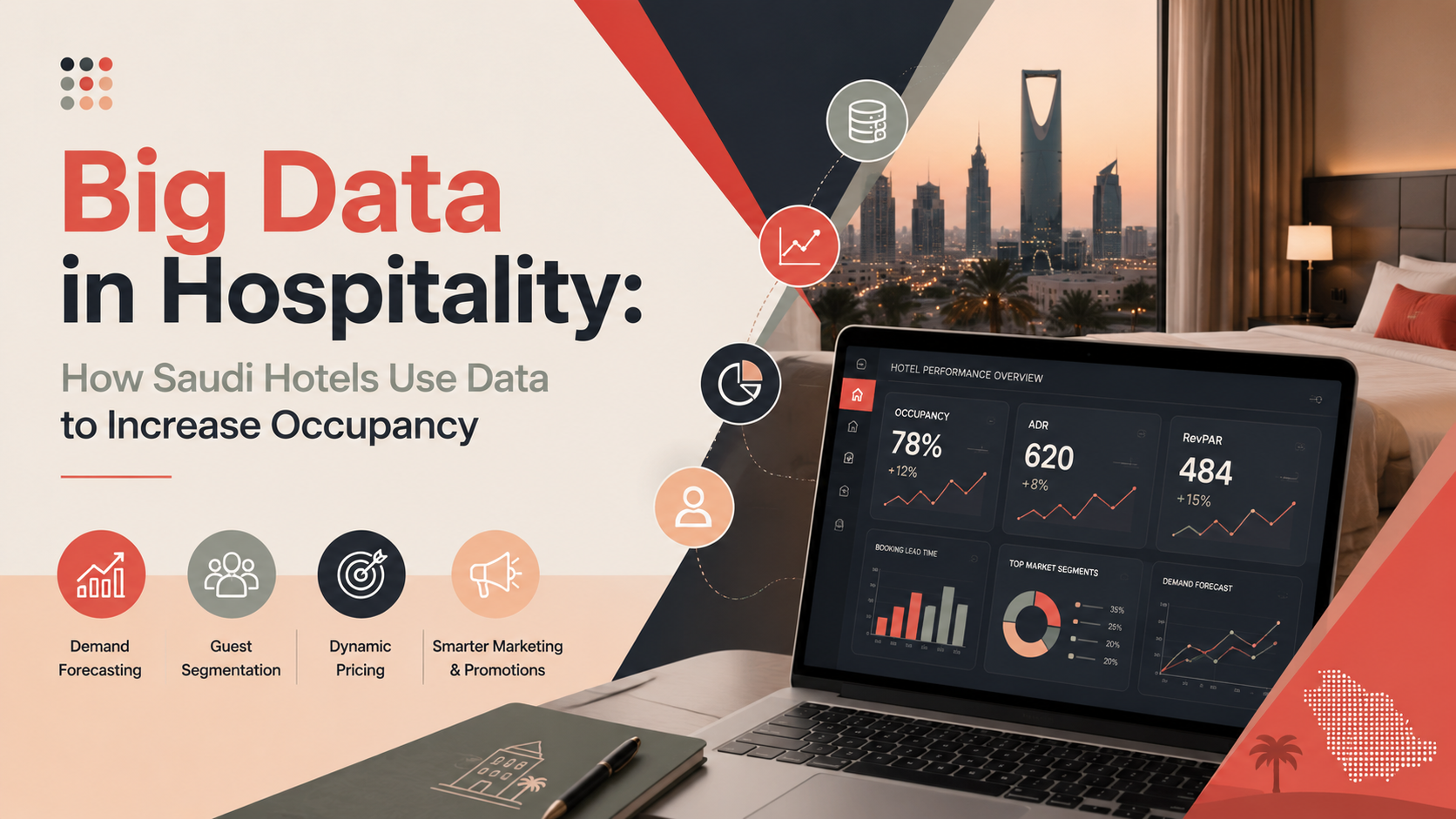
Discover how Saudi hotels use big data analytics, dynamic pricing, and predictive tools to increase occupancy, raise RevPAR, and support Vision 2030 tourism goals....
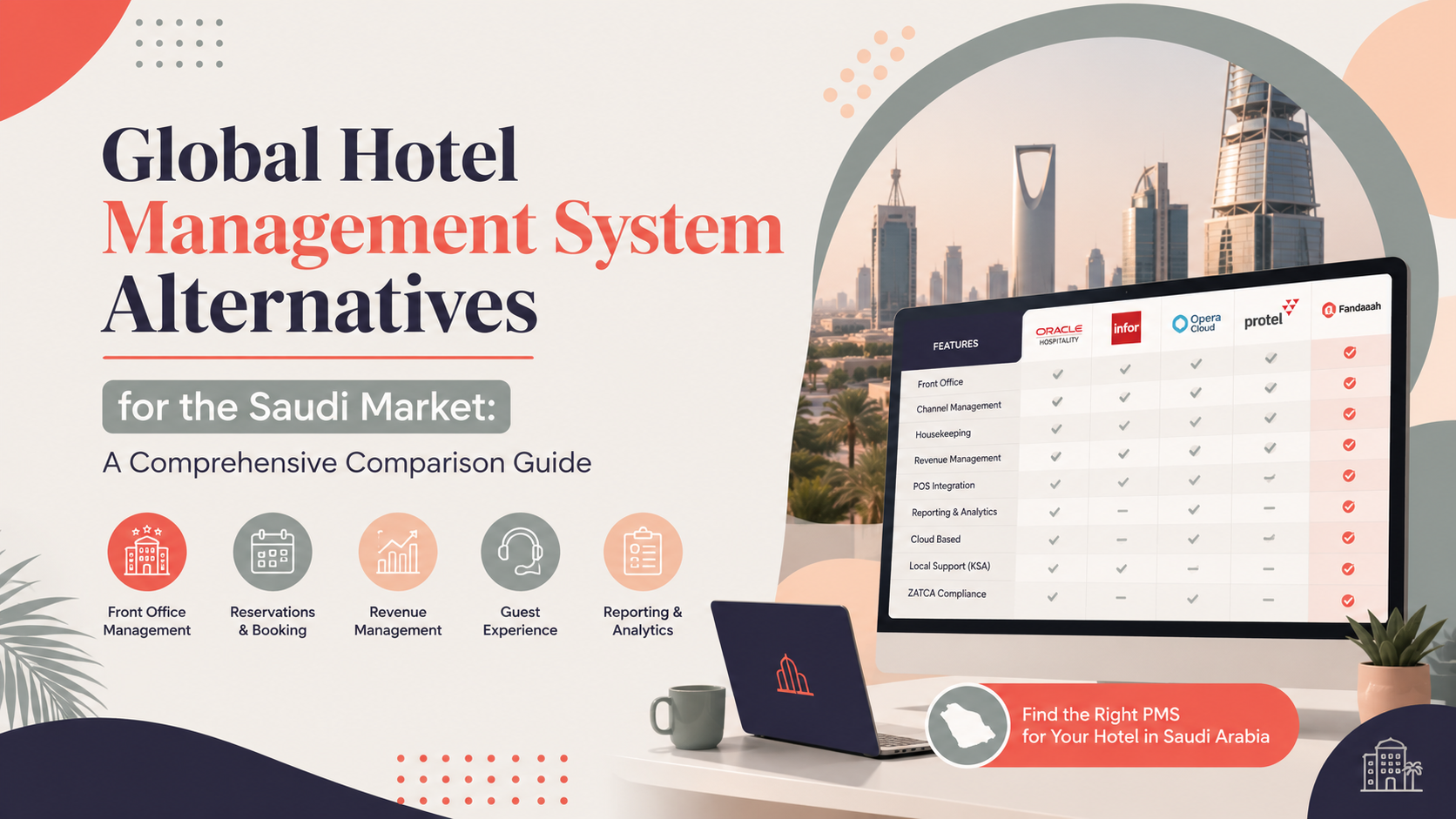
Compare the best hotel management system alternatives for Saudi hotels. Cloudbeds, Mews, Deyafa & more with full Fatoorah e-invoicing support, Arabic UI & Vision 2030 readiness....
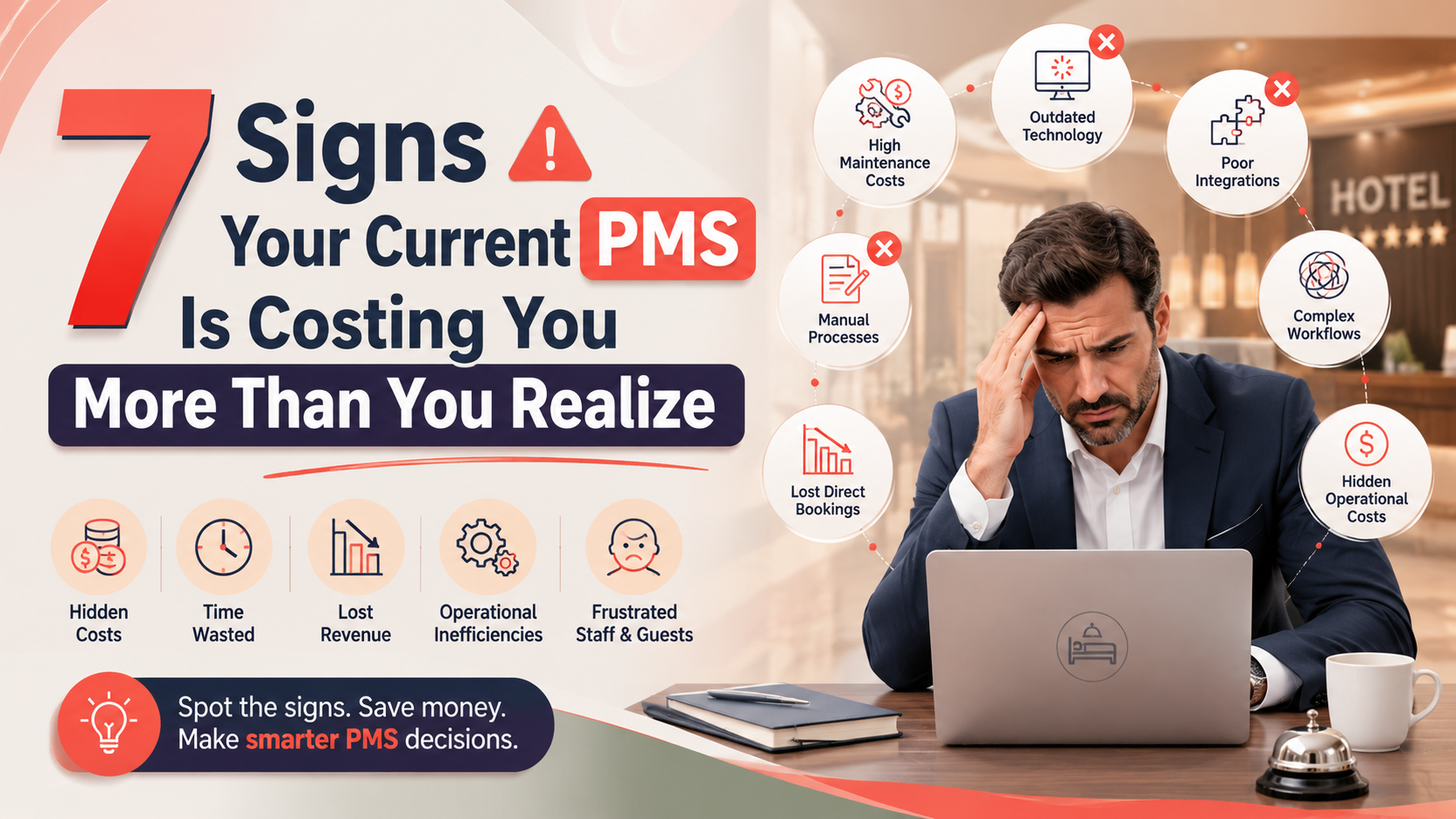
Discover 7 warning signs your current hotel PMS is silently draining profits. Learn how upgrading boosts revenue, cuts costs & ensures Dyafa compliance in Saudi Arabia....
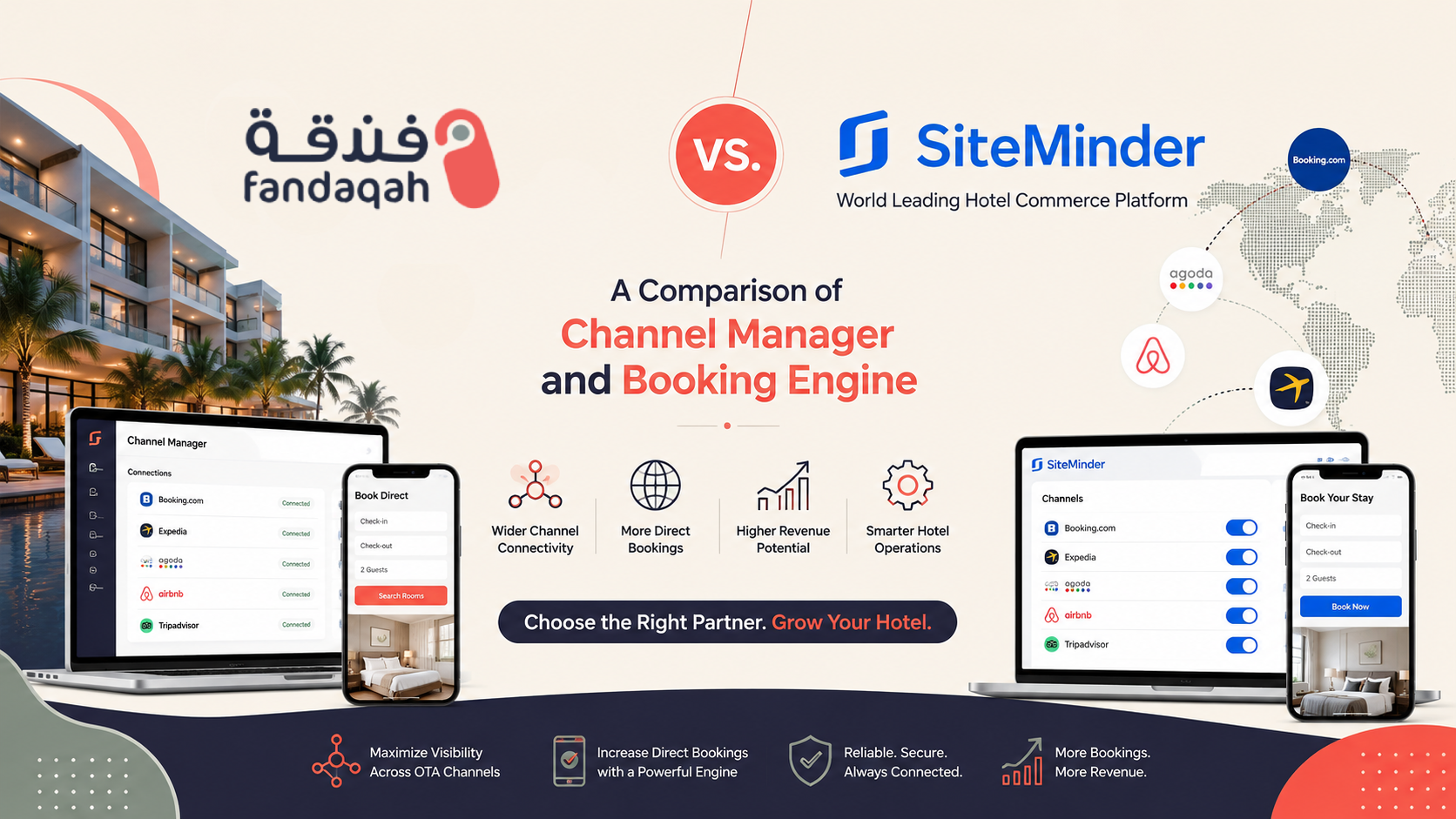
Compare Fandaqah vs SiteMinder for Saudi hotels. Discover which channel manager & booking engine wins on Arabic support, local OTAs, Mada payments, pricing & Vision 2030 fit....
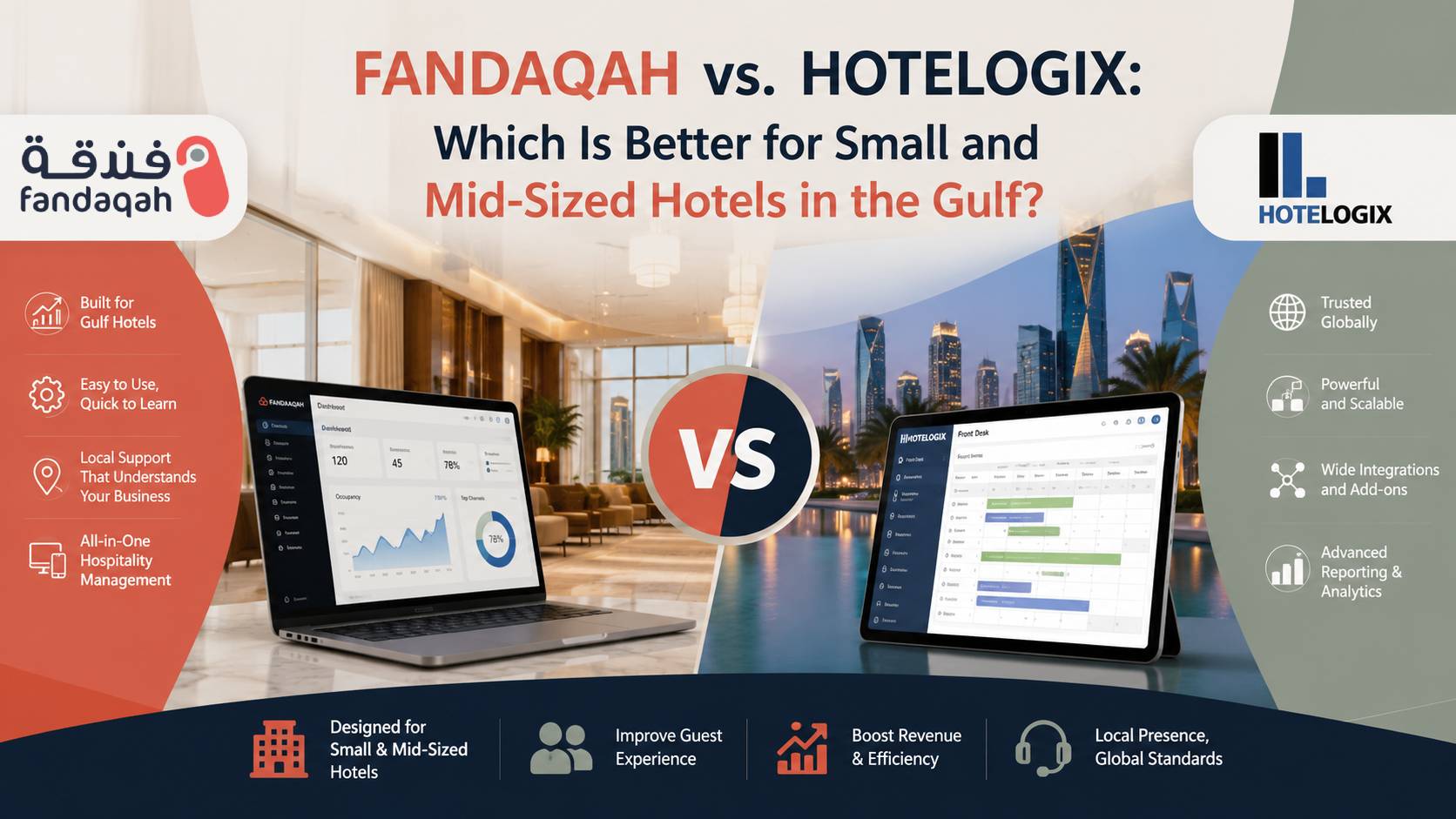
Compare Fandaqah and Hotelogix for small & mid-sized hotels in Saudi Arabia and the Gulf. Arabic-first PMS, ZATCA compliance, local payments & more....
Ready-to-use PMS Request for Proposal (RFP) template for Saudi hotels. Compare vendors, define requirements, integrations, security & implementation for smarter hotel software selection....
Learn how to migrate your hotel data to a new PMS without risk. Discover the 2026 step-by-step migration checklist for Saudi hotels, including testing, security, and successful go-live planning....
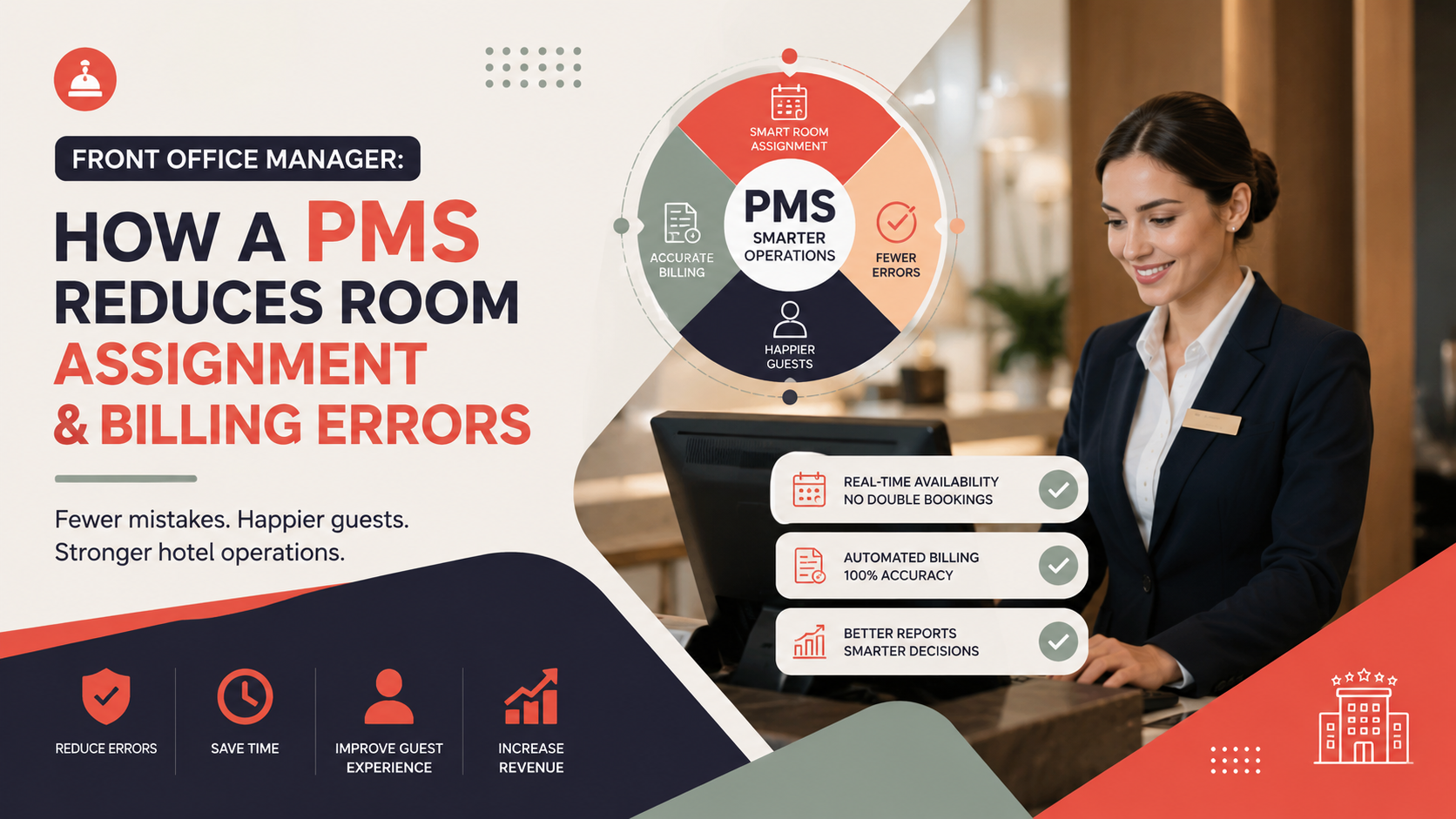
Learn how a hotel PMS helps front office managers prevent room assignment mistakes, reduce billing errors, and improve guest satisfaction in Saudi hotels....

Learn how hotel sales managers in Saudi Arabia win corporate contracts and conference business with smarter outreach, pricing, and partnerships....
Learn how hotel IT managers choose secure, ZATCA-compliant systems, protect guest data, and ensure seamless PMS, POS, and e-invoicing integration. ...
Discover the hotel food and beverage manager’s core responsibilities, technology tools, and how they improve performance in Saudi hospitality....
Learn the hotel revenue manager's role, key tools, KPIs, and how a PMS helps maximize hotel profitability with dynamic pricing and revenue management....
Learn how a unified omnichannel guest experience improves hotel operations, guest satisfaction, loyalty, and direct bookings with modern hospitality technology....

Learn how Saudi hotels can attract bleisure travelers through smart hospitality strategies, better guest experiences, and Vision 2030 tourism opportunities....
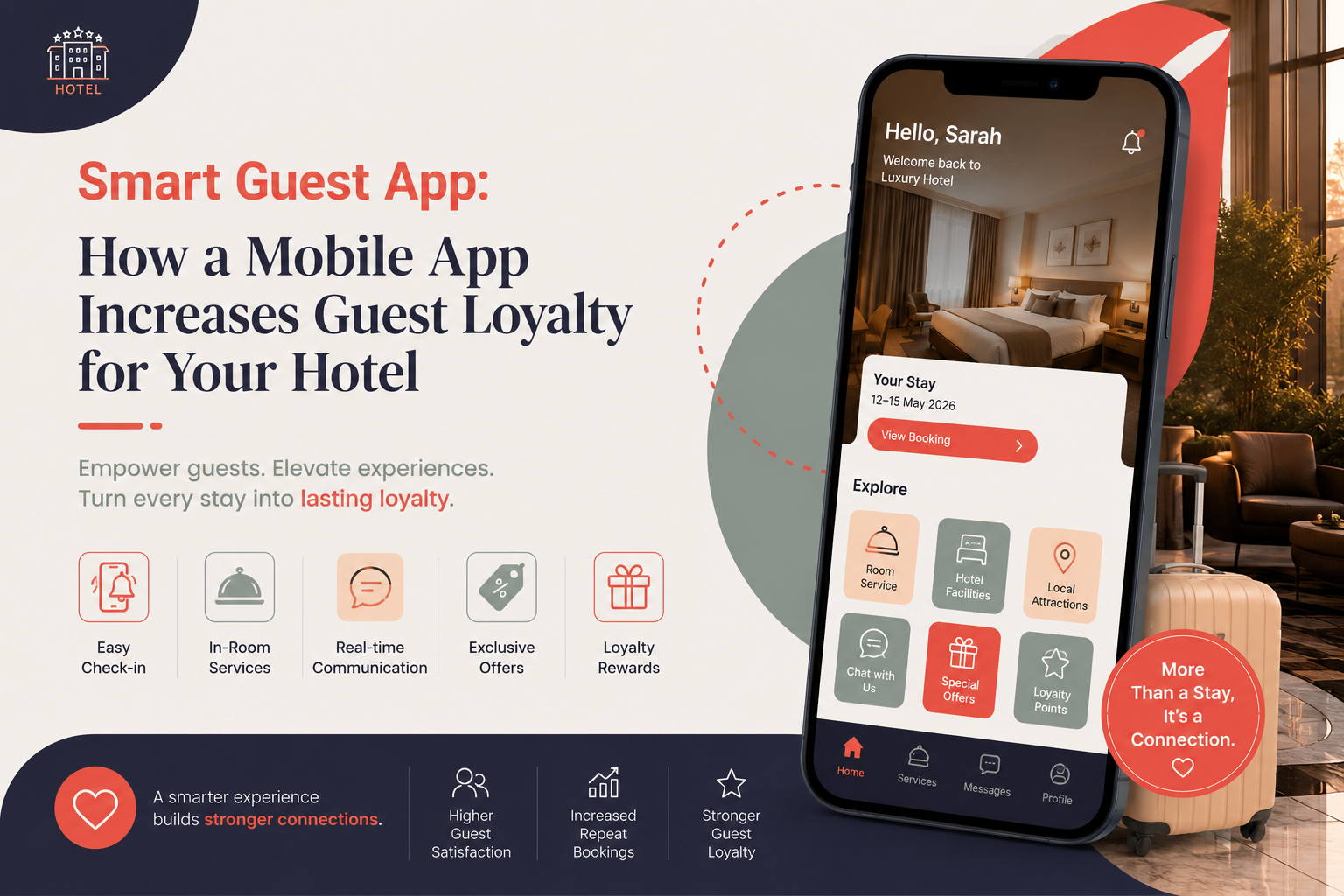
Discover how a smart guest app improves hotel guest loyalty, increases direct bookings, enhances the guest experience, and supports digital hospitality in Saudi Arabia....

Learn how hotel wholesalers work, their benefits and risks, and how Saudi hotels can improve occupancy, revenue, and global distribution....
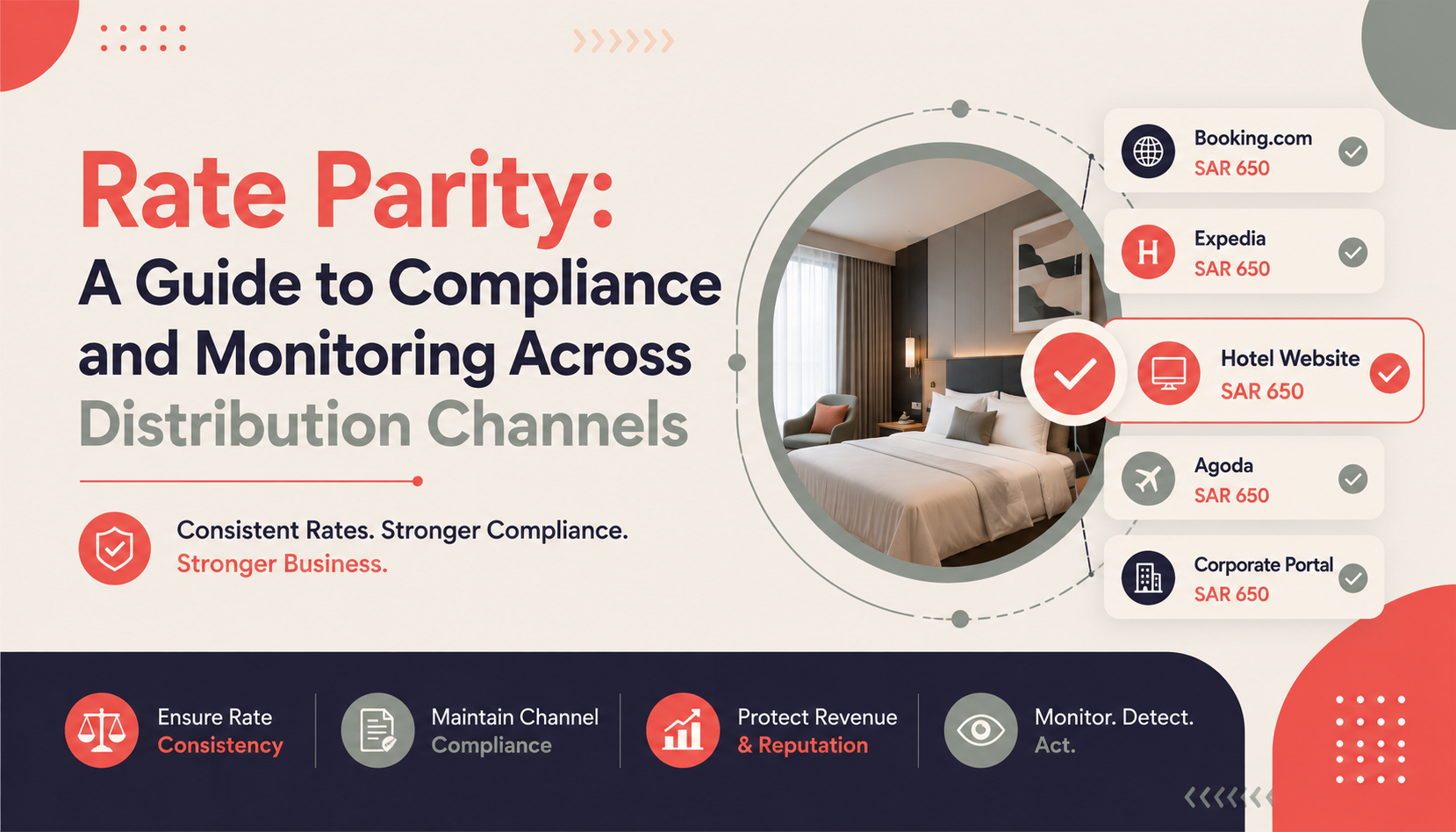
Learn how hotels in Saudi Arabia can maintain rate parity, monitor pricing across OTAs, protect revenue, and improve distribution strategy....

Learn how Saudi hotels can improve Google Hotel Ads visibility, price accuracy, direct bookings, and profitability without increasing ad costs....
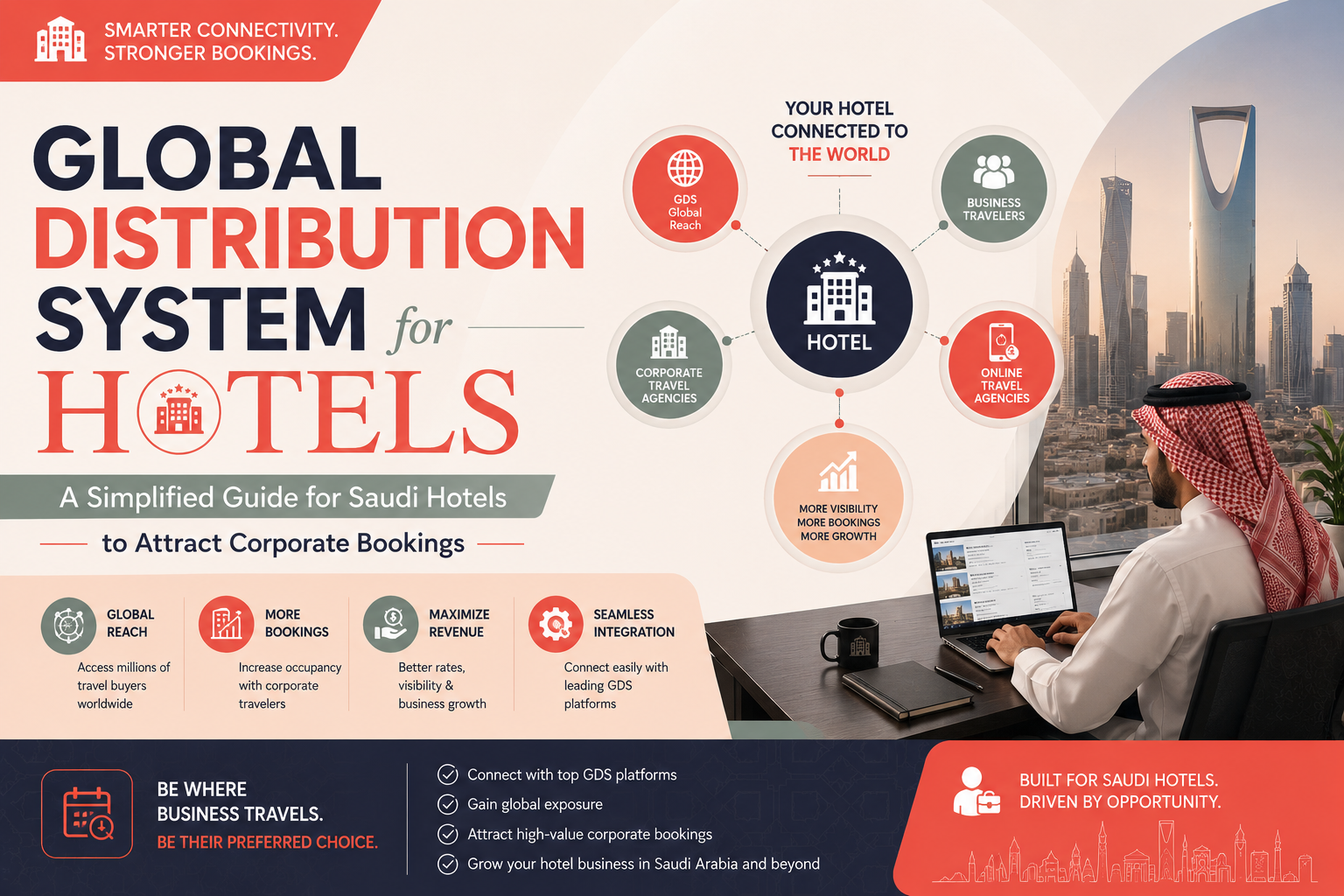
Discover how Saudi hotels in Riyadh, Jeddah, Dammam, and beyond can use a Global Distribution System (GDS) to attract corporate bookings, increase weekday occupancy, and balance distribution channels....
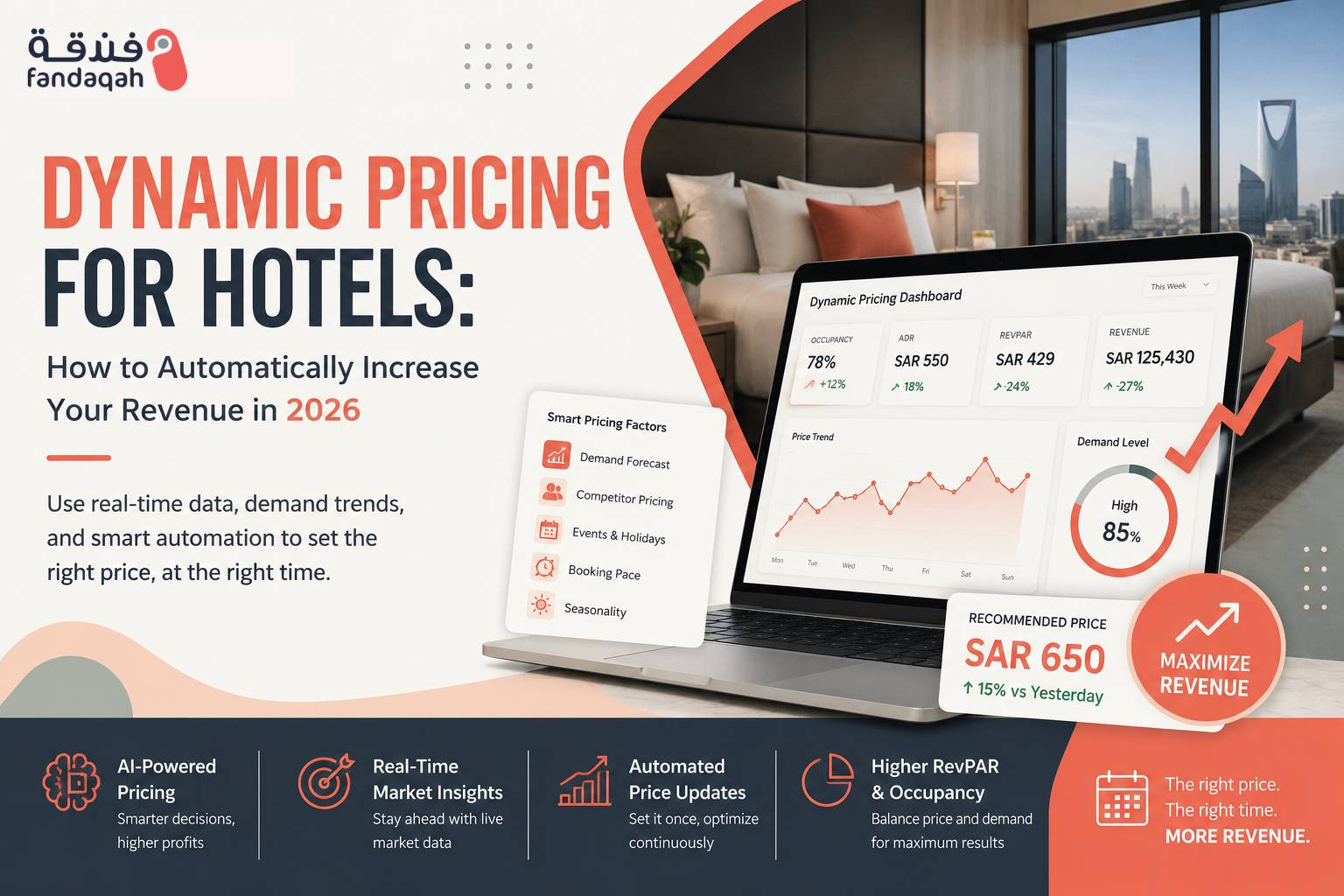
Learn how dynamic pricing uses AI to automatically adjust hotel room rates in real-time. Maximize RevPAR during Hajj, Riyadh Season & Vision 2030 projects with proven strategies for Saudi hotels....
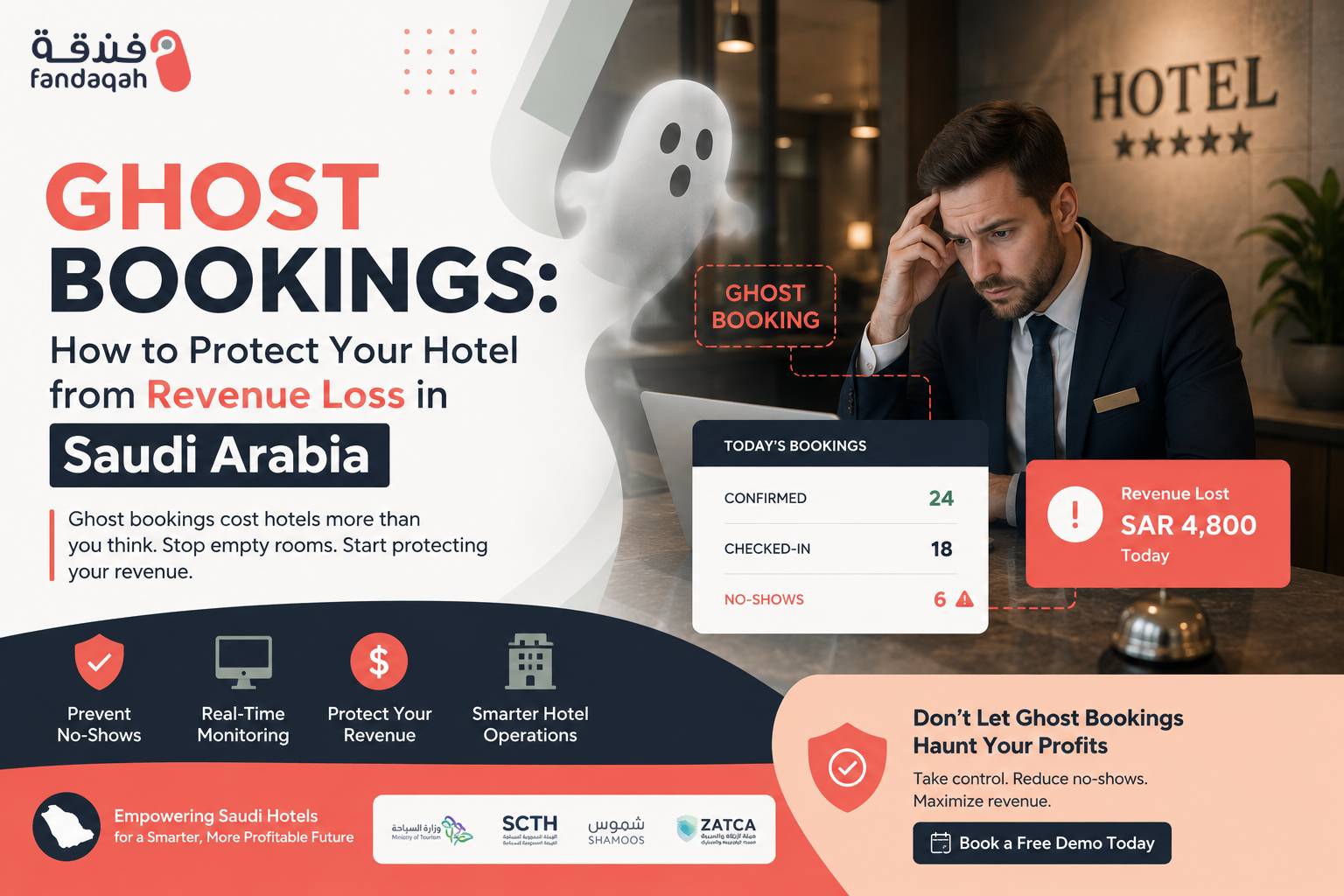
Discover what ghost bookings are, how they silently drain hotel revenue in Saudi Arabia, and practical strategies to prevent them — especially during Hajj, Umrah, and Riyadh Season — in line with ...
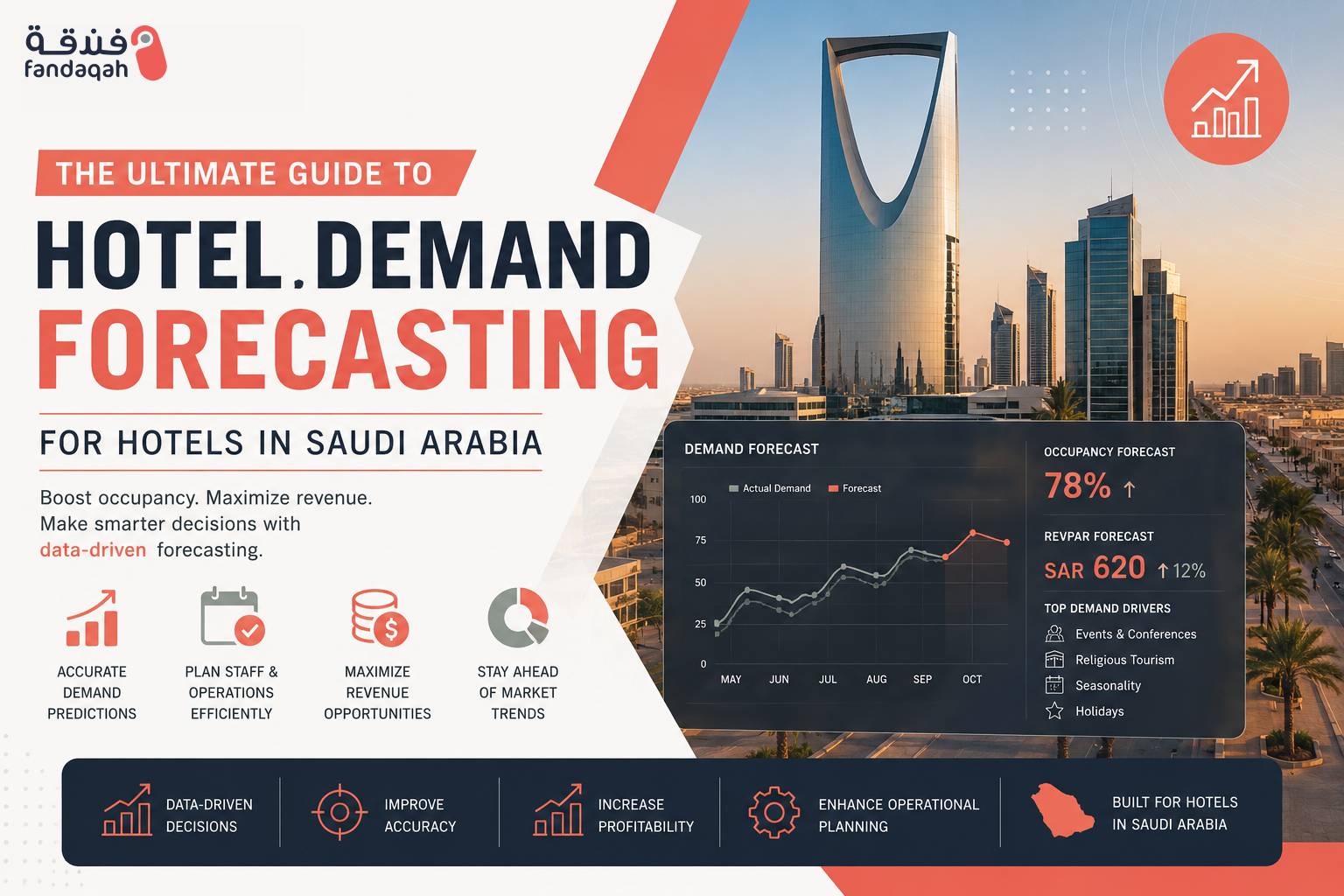
Discover the ultimate guide to hotel demand forecasting in Saudi Arabia. Learn smart strategies for dynamic pricing, revenue management, and maximizing occupancy during Hajj, Vision 2030 events, and p...
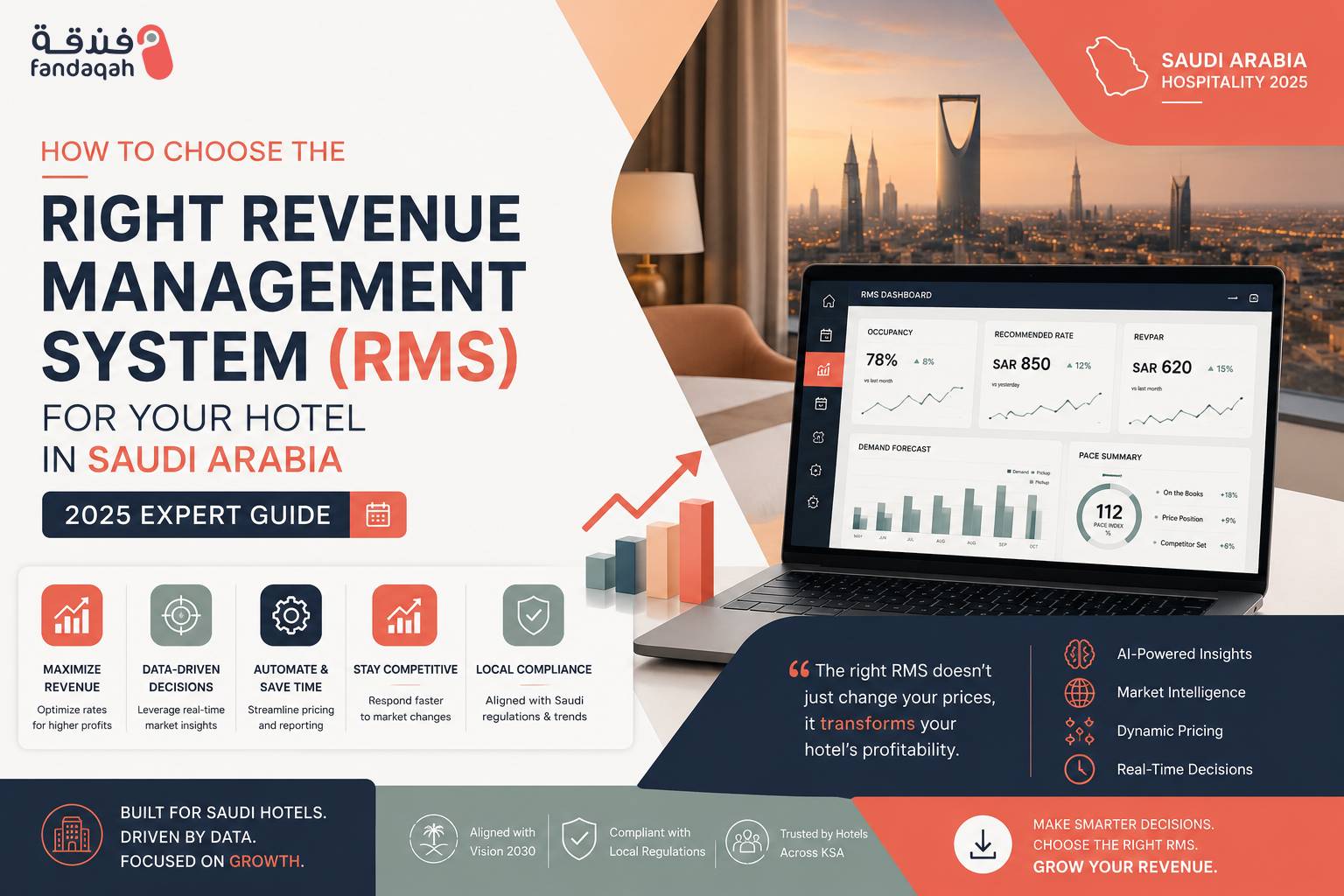
Discover how to choose the best Revenue Management System (RMS) for your Saudi hotel. Expert tips on dynamic pricing, forecasting, integrations, and maximizing RevPAR in line with Vision 2030....
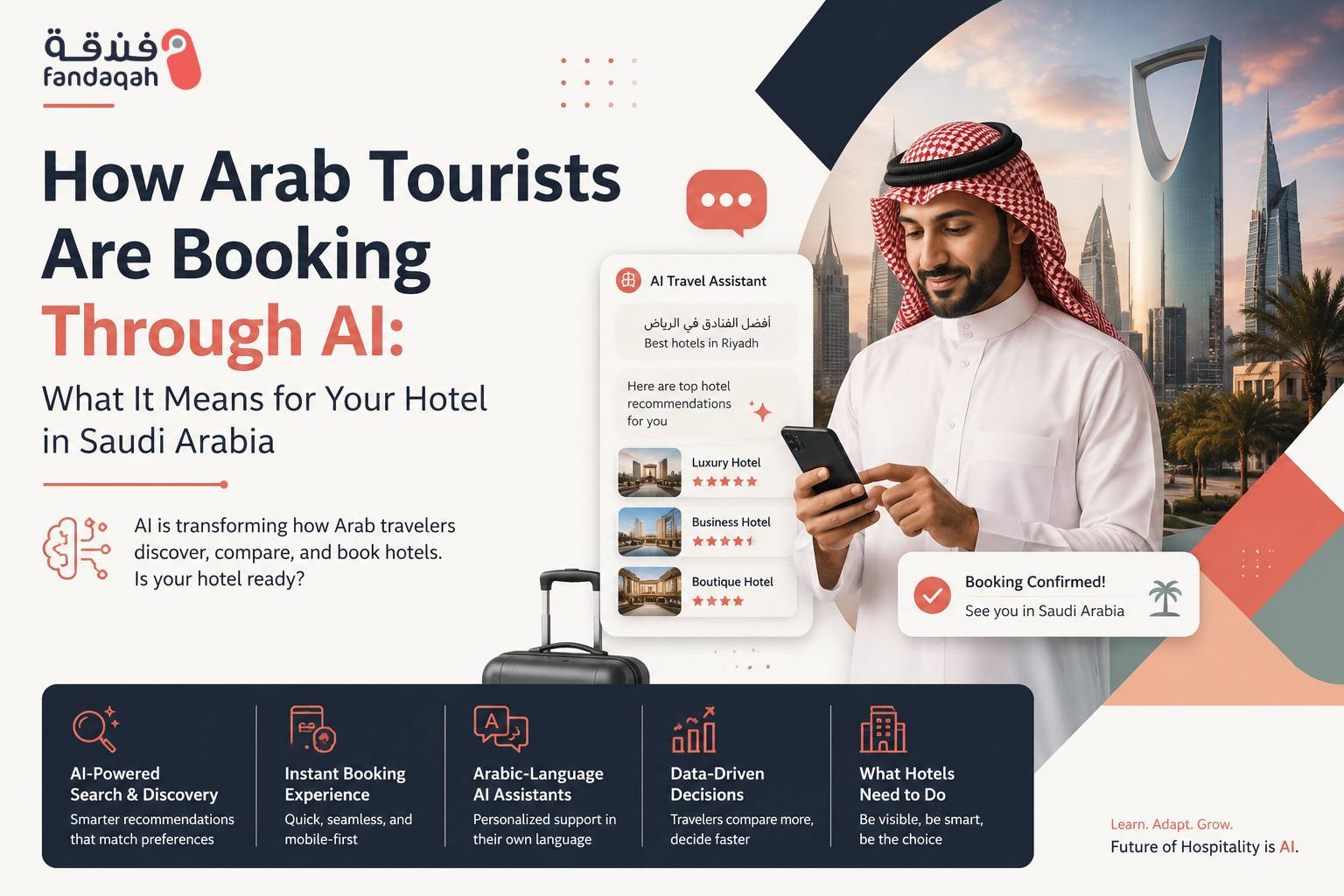
Discover how Arab tourists, especially Saudis, are using AI tools like ChatGPT and Gemini to book hotels. Essential strategies for Saudi hoteliers to optimize for AI discovery and thrive under Vision ...
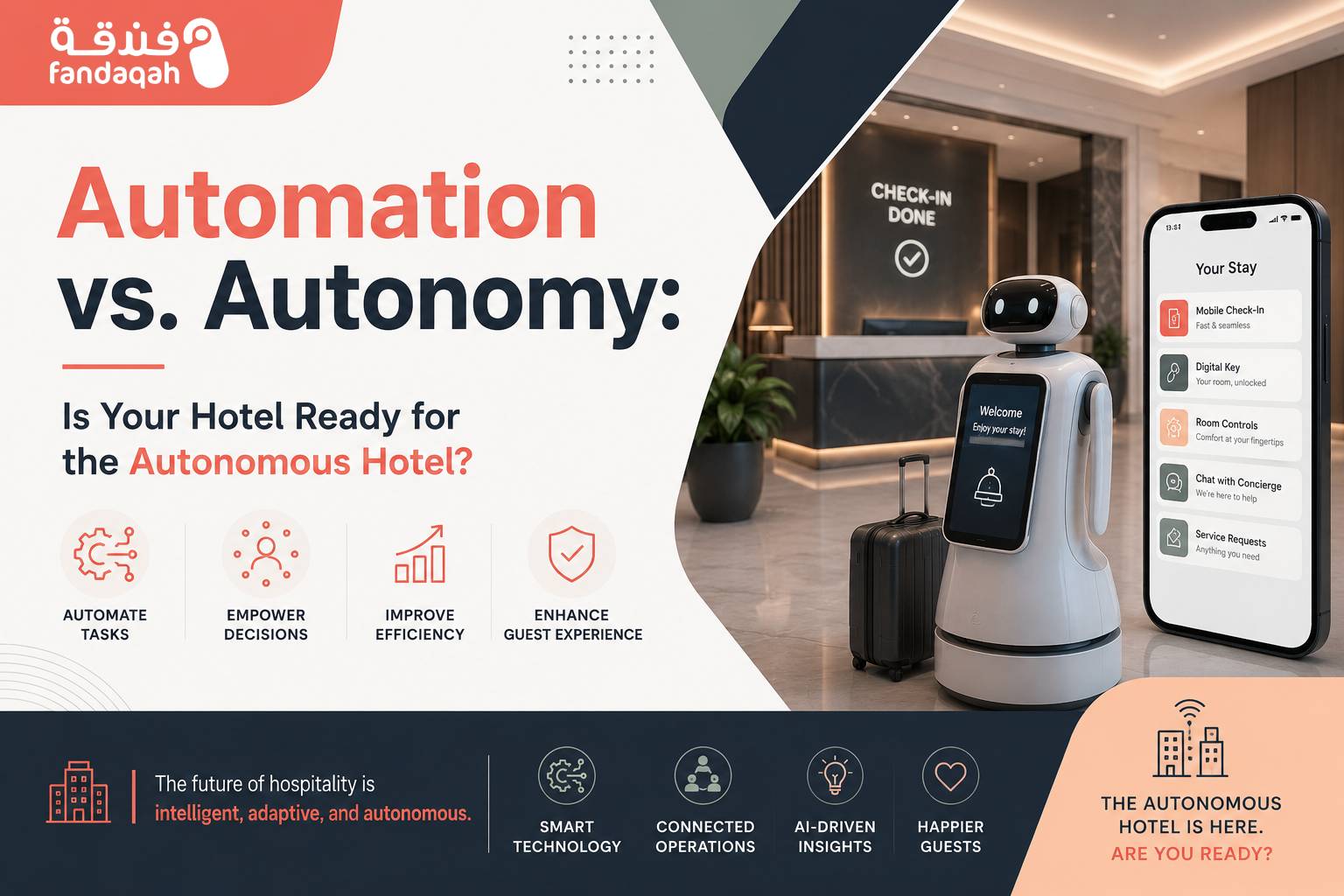
Discover the key difference between hotel automation and true autonomy. Learn how Saudi hotels can embrace AI-driven autonomous operations aligned with Vision 2030 for superior guest experiences and e...
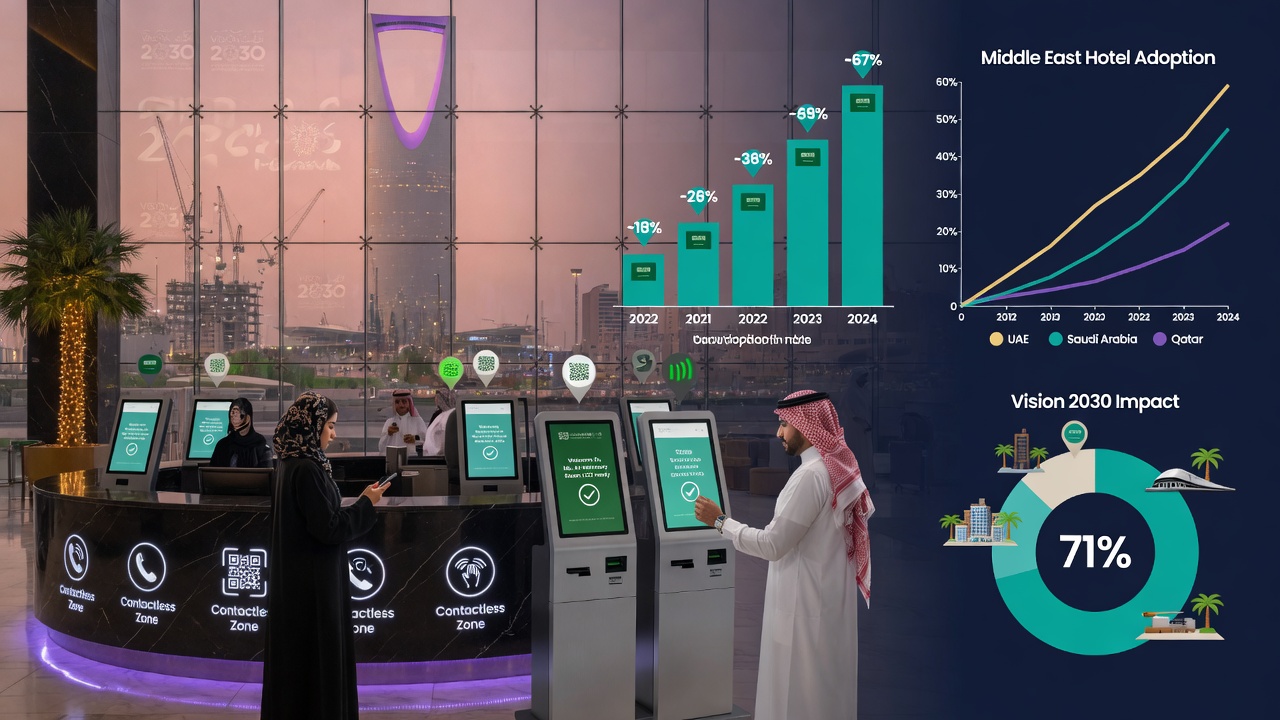
Fast-rising contactless check-in in Middle East hotels 2026. Saudi adoption at 68% thanks to Vision 2030. Benefits, cases & tips for hotel owners....

Discover the best free and affordable hotel PMS tools for 2026 in Saudi Arabia. Features ZATCA e-invoicing, channel manager, and Arabic support for budget hotels....

Complete guide to hotel distribution channels in the Arab world. Optimize OTAs, direct bookings, GDS & metasearch for Saudi hotels to grow revenue with Vision 2030 strategies....

Explore how modern unified payment platforms are simplifying cross-border hotel payments in the GCC. Saudi hotels can now achieve same-day settlements, multi-currency support, reduced fees, automated ...
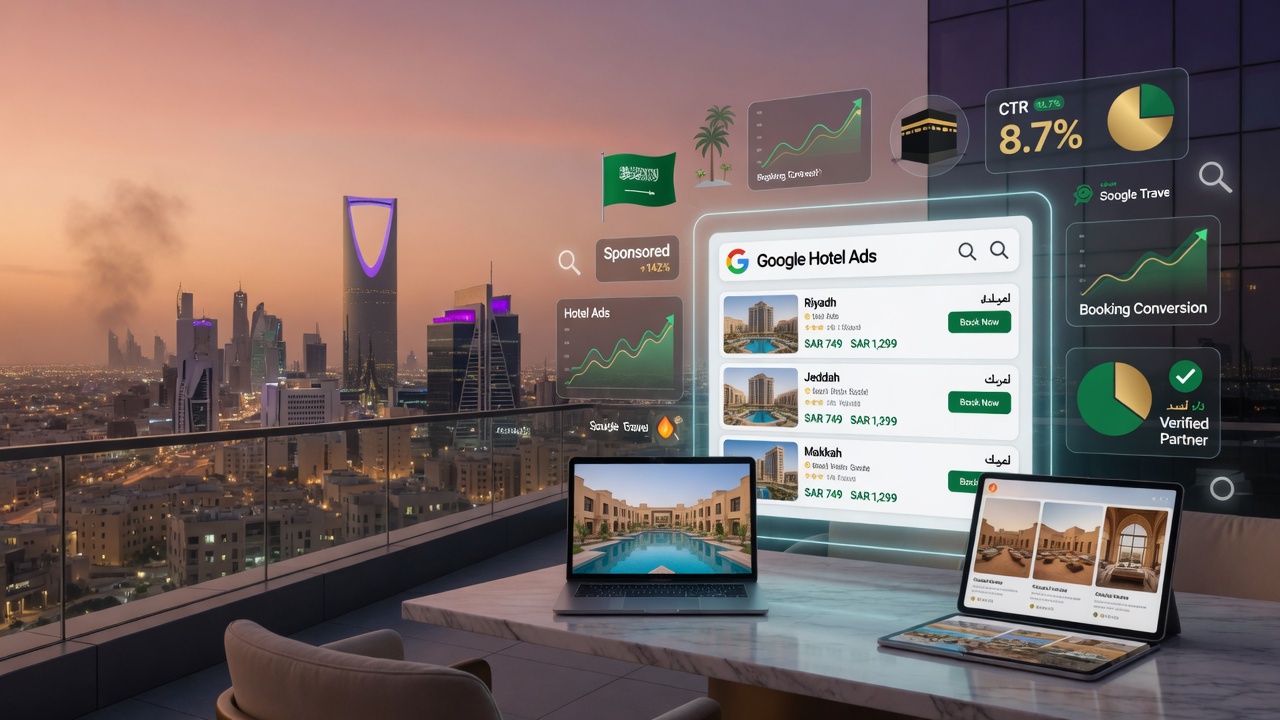
Master Google Hotel Ads for Saudi hotels in 2026. Optimize your metasearch strategy to drive direct bookings, reduce OTA commissions, and leverage Vision 2030 tourism growth....
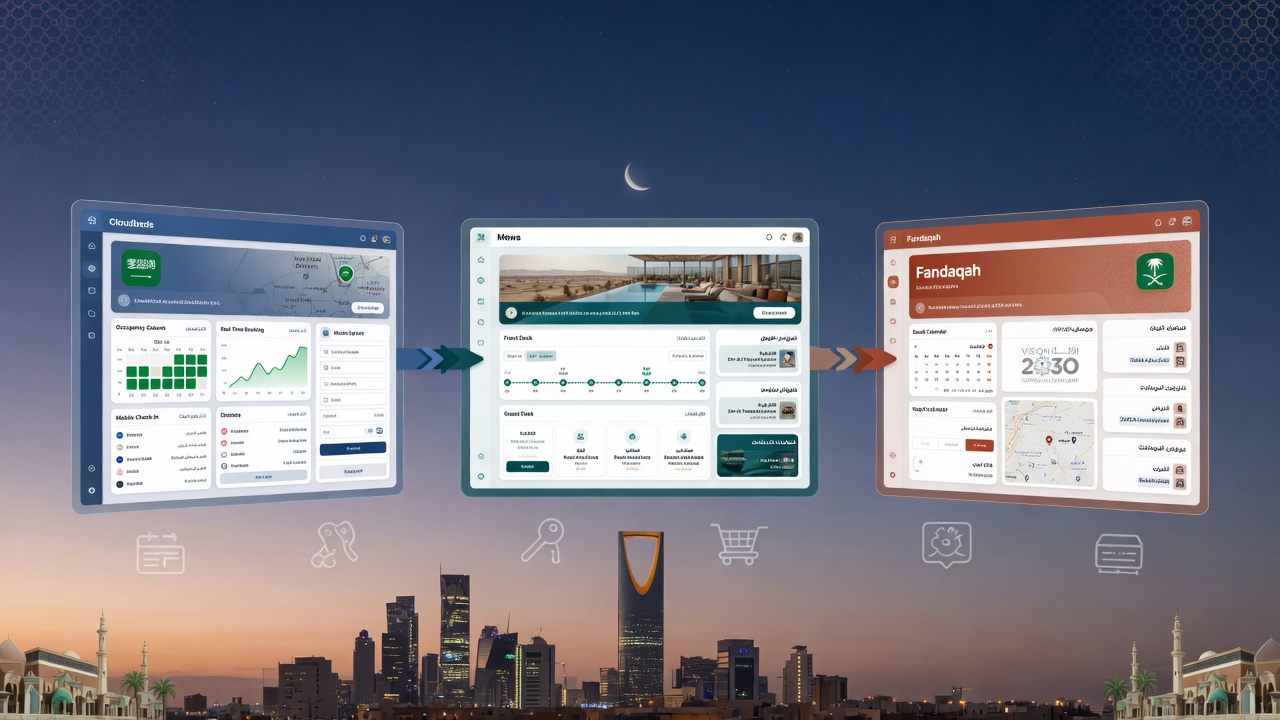
Compare Cloudbeds, Mews and Fandaqah PMS platforms for Saudi hotels in 2026. See which system wins on Arabic support, local payments (Mada/STC Pay), Hajj/Umrah peak handling, Vision 2030 readiness and...

Discover how to design a hotel loyalty program with reward points in Saudi Arabia. Boost guest retention, align with Vision 2030, and keep guests returning....
Discover the 12 essential questions Saudi hotels must ask before choosing a Hotel Management System (PMS), including ZATCA compliance, cloud PMS, and Hajj & Umrah operations....
Discover the best hotel management software for 2026 in Saudi Arabia. Compare features, pricing, ZATCA e-invoicing, and Vision 2030 readiness. Free consultation....
Discover how a serviced apartments operations program streamlines hospitality management in Saudi Arabia. Features, benefits & Vision 2030 insights inside....
Discover how hotel apartment software in Saudi Arabia automates accounting, boosts occupancy, ensures ZATCA compliance, and aligns with Vision 2030....
Discover how a hotel operating program (PMS) can streamline operations, boost revenue, and delight guests in Saudi Arabia's tourism sector....
Discover how serviced apartment management software streamlines Saudi hospitality, ensures Taskeen compliance, and boosts revenue. Complete guide....
Discover the best hotel software and PMS in Saudi Arabia. Our ultimate guide covers features, ZATCA compliance, Vision 2030 trends, and top picks for hotels of all sizes....
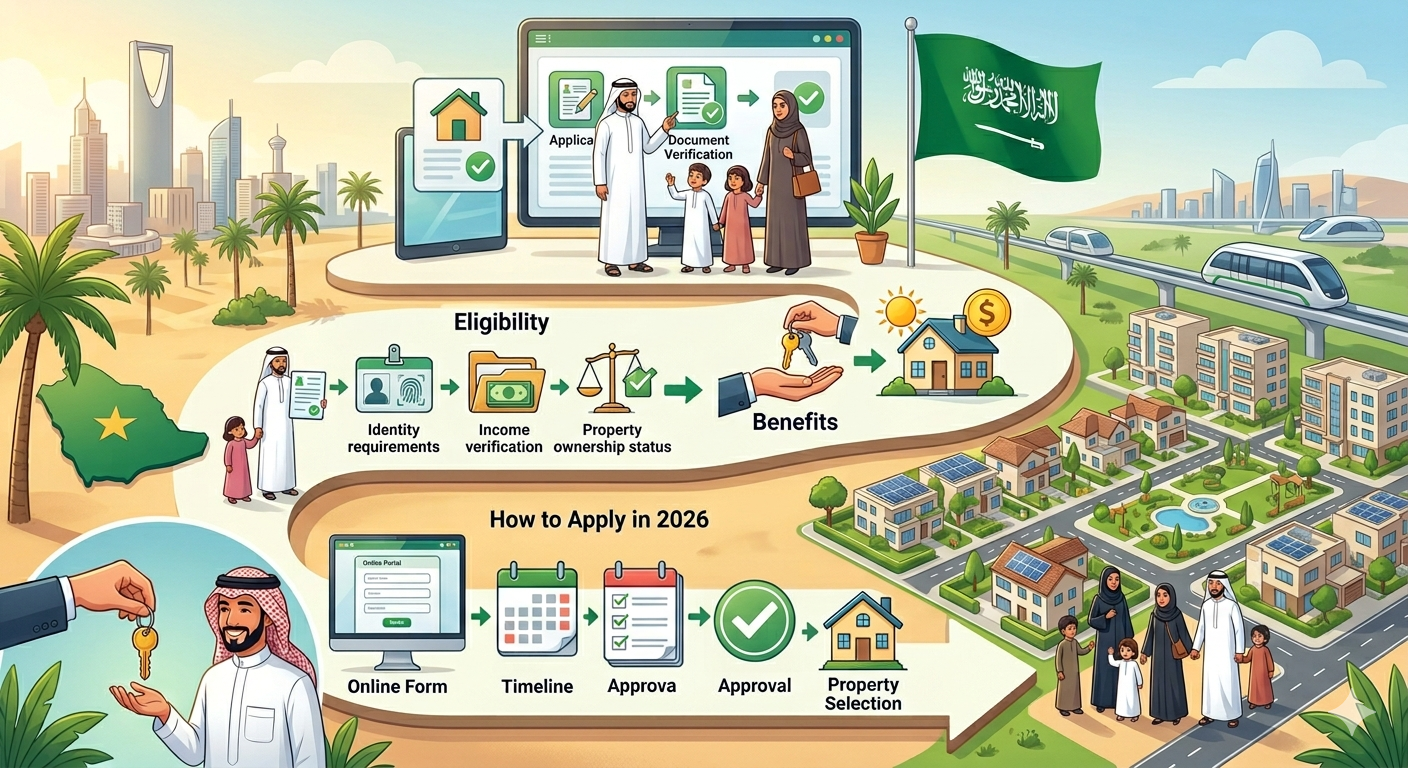
Discover Saudi Arabia’s Housing Allocation Program for government employees: eligibility, Sakani application process, and Vision 2030 homeownership goals in 2026....
Explore the best placement program for strategic talent deployment in KSA. Achieve Vision 2030 goals, enhance Saudization, streamline HR placement. Your guide....
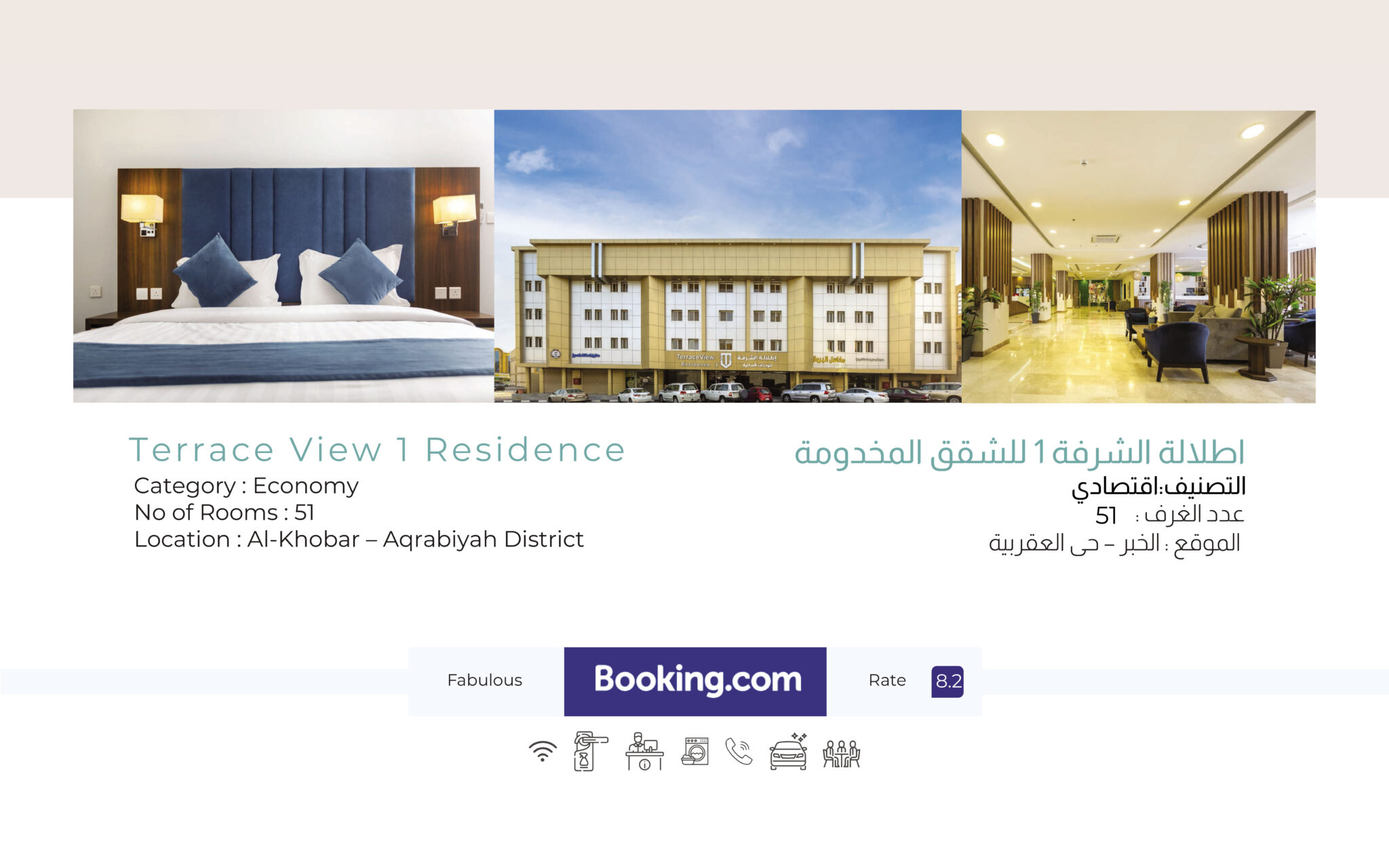
Terrace View 1 Residence, a cozy economy-class serviced apartment in Al-Khobar, faced operational hurdles that many growing hotels and apartments encounter: ...

Eco-Friendly Hotel in Saudi Arabia: Sustainability Guide for Vision 2030. Learn energy, water and waste savings to lower costs and attract eco guests with Fandaqah....

Learn how Saudi hotels can attract MICE tourism with event-ready facilities, smart marketing, group booking tools, and ZATCA-compliant operations....
Discover key principles of scalable hotel digital transformation for Saudi hotels, including cloud PMS, automation, ZATCA compliance, and guest experience....
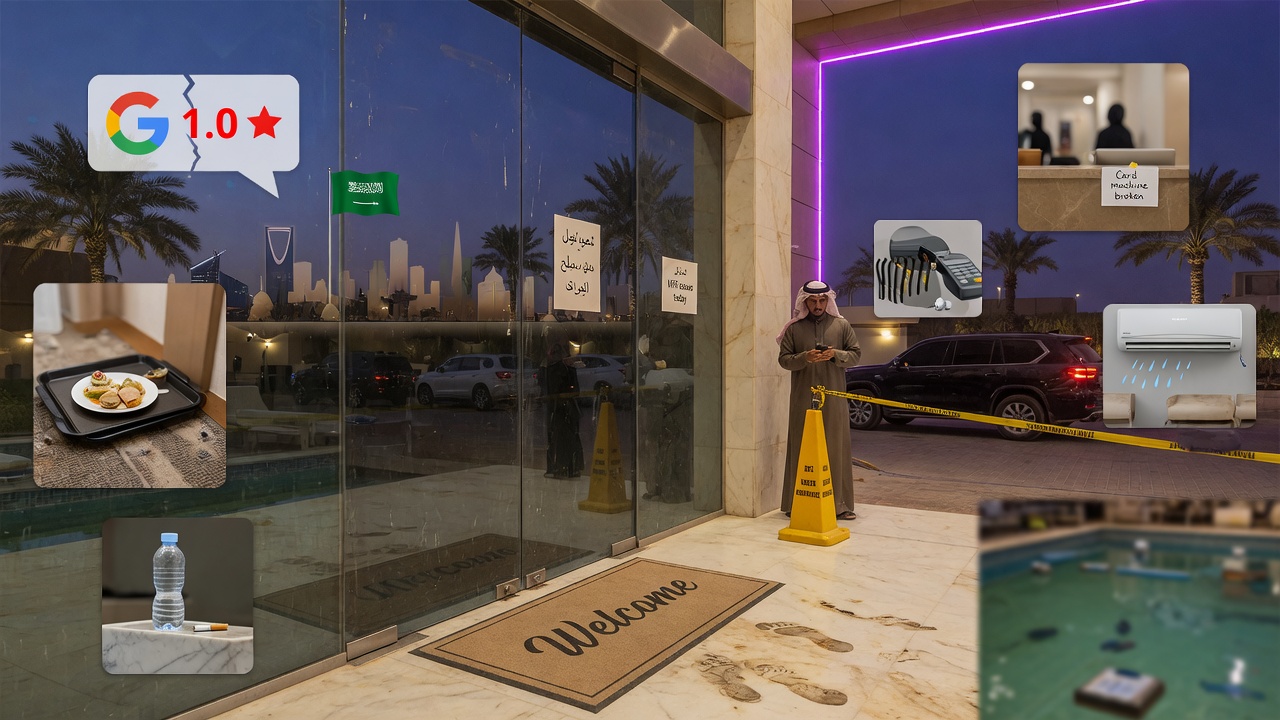
7 friction points killing hotel Google ratings in Riyadh & Jeddah. Fix check-in, cleanliness, communication, noise, fees & tech to boost ratings & bookings....
Discover how guest personalization turns Saudi hotel visitors into loyal advocates. Learn strategies for tailored experiences and loyalty programs....

Complete guide to Personal Data Protection Law compliance for Saudi hospitality. Practical steps to protect guest data, build trust, and meet SDAIA requirements under Vision 2030...
Discover how to stop revenue leakage in Saudi hotels from tax, VAT, and service charge errors. Cloud PMS ensures ZATCA compliance and protects profitability....

Discover how staycation marketing helps Saudi hotels attract local residents and fill empty weeks. Actionable strategies for year-round occupancy....
Learn how Saudi hotels can win corporate RFPs and secure business travel bookings. Strategies for rates, PMS billing, and contract negotiation....

Increase hotel bookings & iftar sales during Ramadan 2026 in Saudi Arabia with targeted marketing strategies, iftar packages, Ramadan tents, and PMS automation....
Learn how WhatsApp Business enhances guest communication and direct bookings for Saudi hotels. Discover strategies, automation & Vision 2030 alignment....
Discover how to choose the best hotel channel manager for Saudi Arabia's hospitality sector in 2026. Boost occupancy, sync rates, and maximize revenue with our complete guide....

Guide to hotel sales manager skills, tools & strategies for corporate and pilgrimage sales in Saudi Arabia. Win with Vision 2030....
Learn to implement self-service & digital check-in in Saudi hotels seamlessly. Align with Vision 2030, cut wait times by 70%, and enhance guest experience....
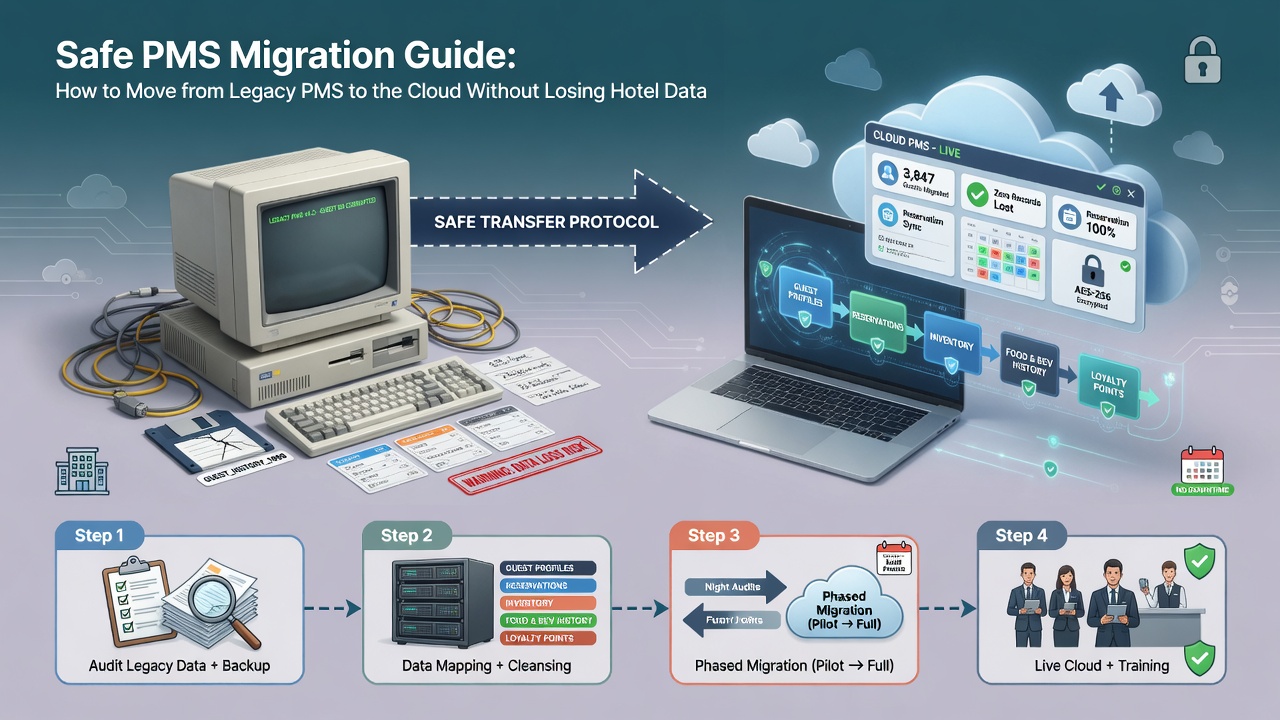
Step-by-step guide for Saudi hotels to safely migrate from legacy PMS to cloud. Protect guest data, reservations & finances. Learn best practices, avoid data loss...
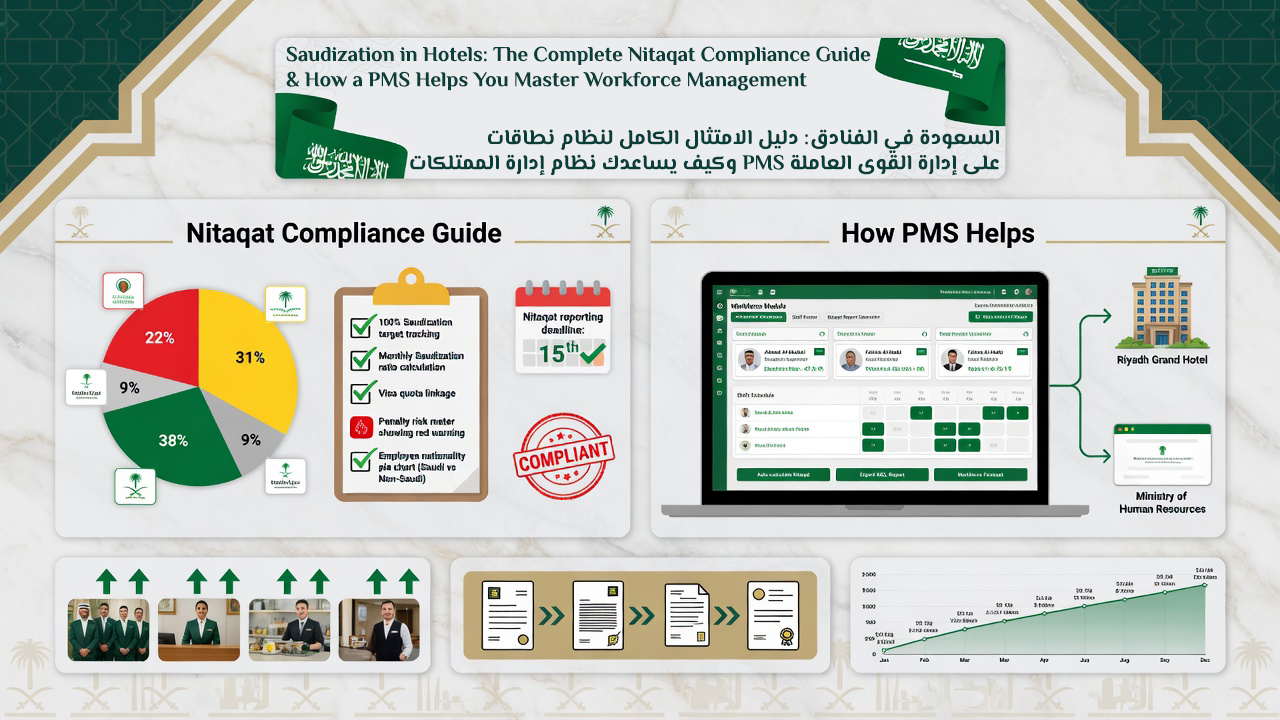
Complete guide to Saudization in hotels & Nitaqat compliance in KSA. Learn how a PMS helps manage workforce, achieve green band status, and avoid penalties. ...
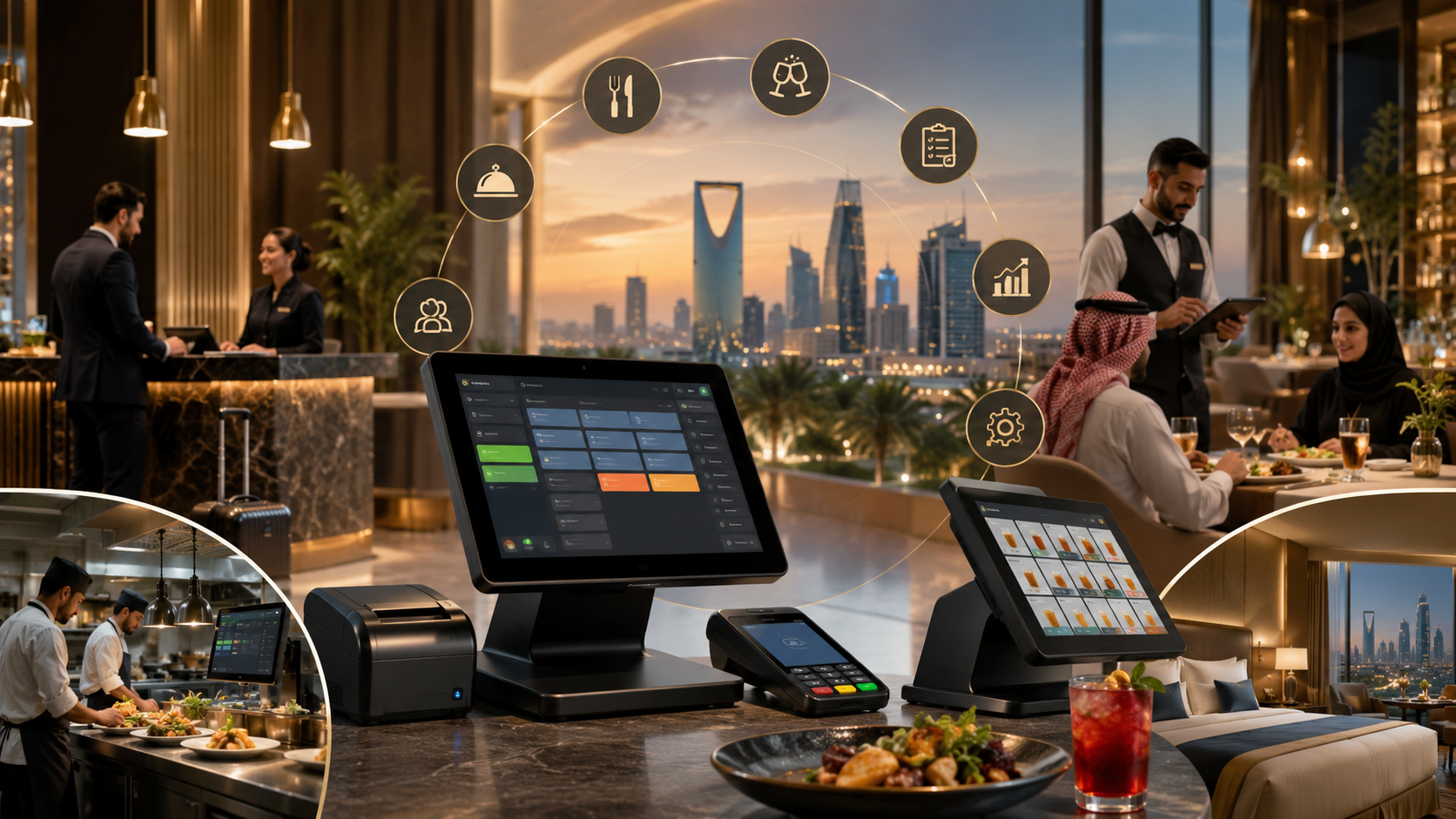
Master connecting hotel restaurant, café, and room service billing with your PMS — ZATCA-compliant, Mada, STC Pay ready. Guide for Saudi hotels Vision 2030....
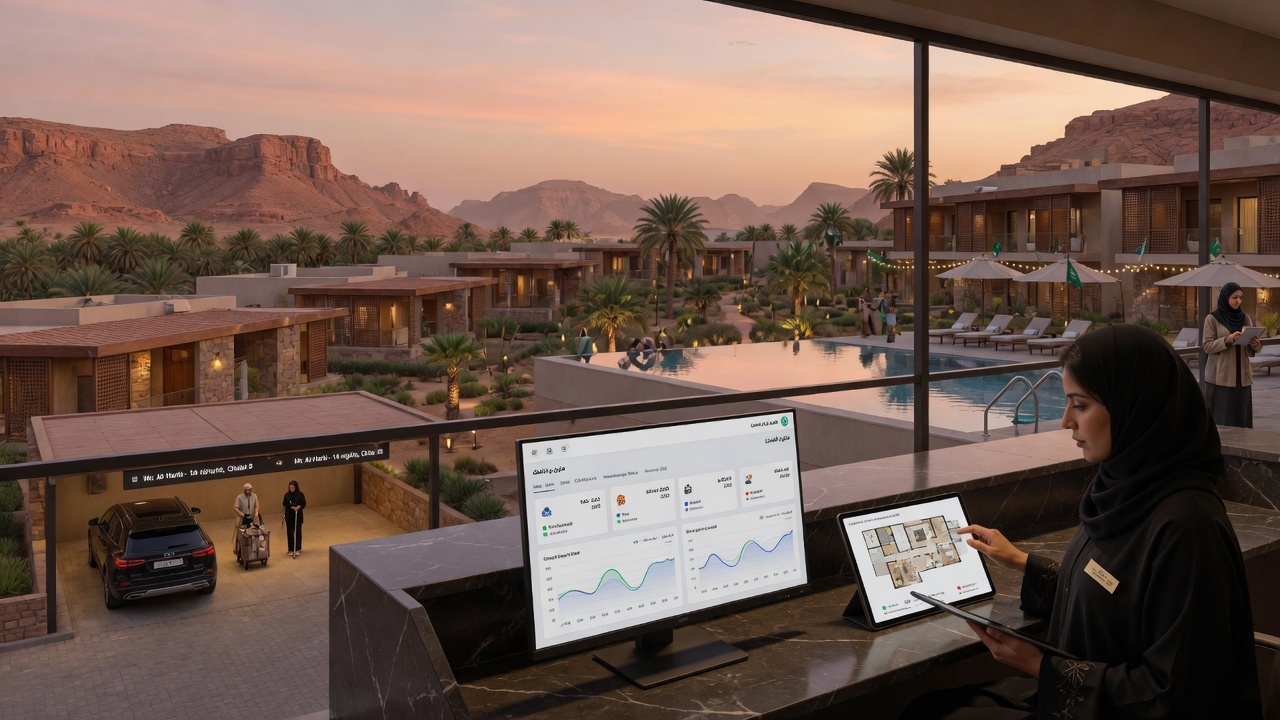
Discover the best hotel PMS for serviced apartments and chalets in Saudi Arabia. Streamline operations, boost direct bookings, and ensure Shomoos compliance in 2026....
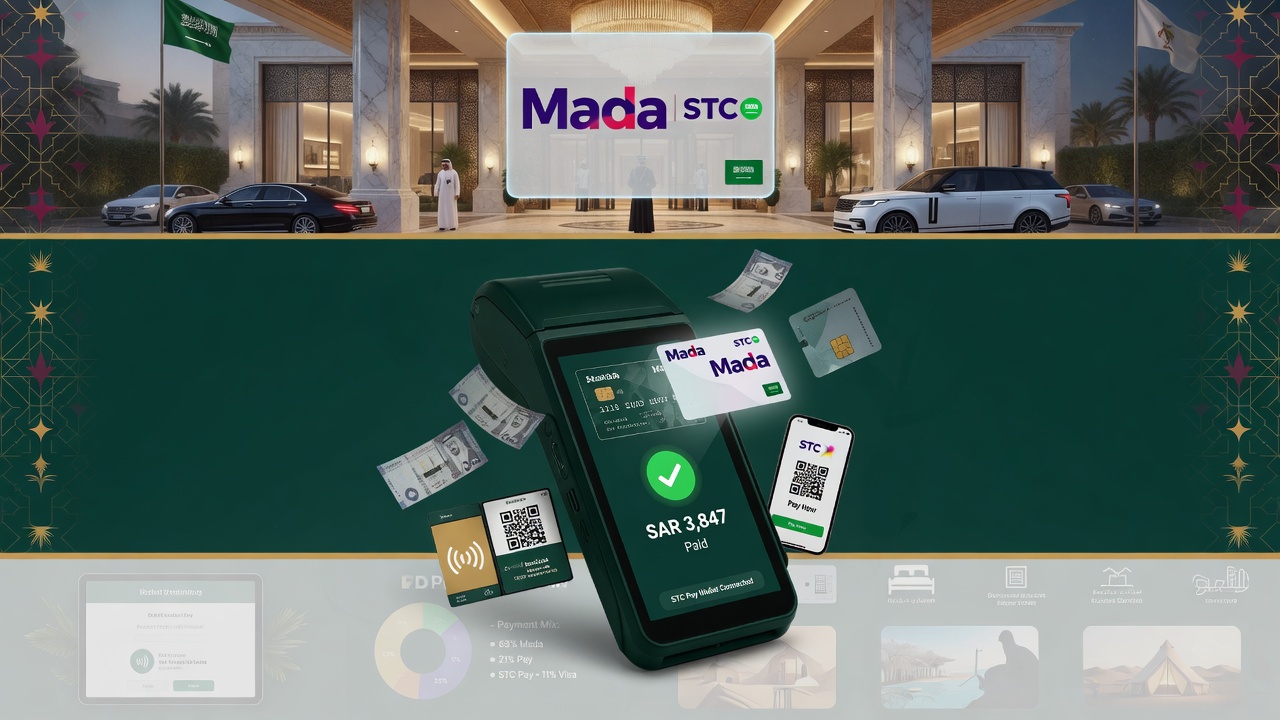
Compare top Saudi hotel payment gateways with Mada & STC Pay. Boost direct bookings with SAMA-compliant, ZATCA-ready solutions like HyperPay, PayTabs....
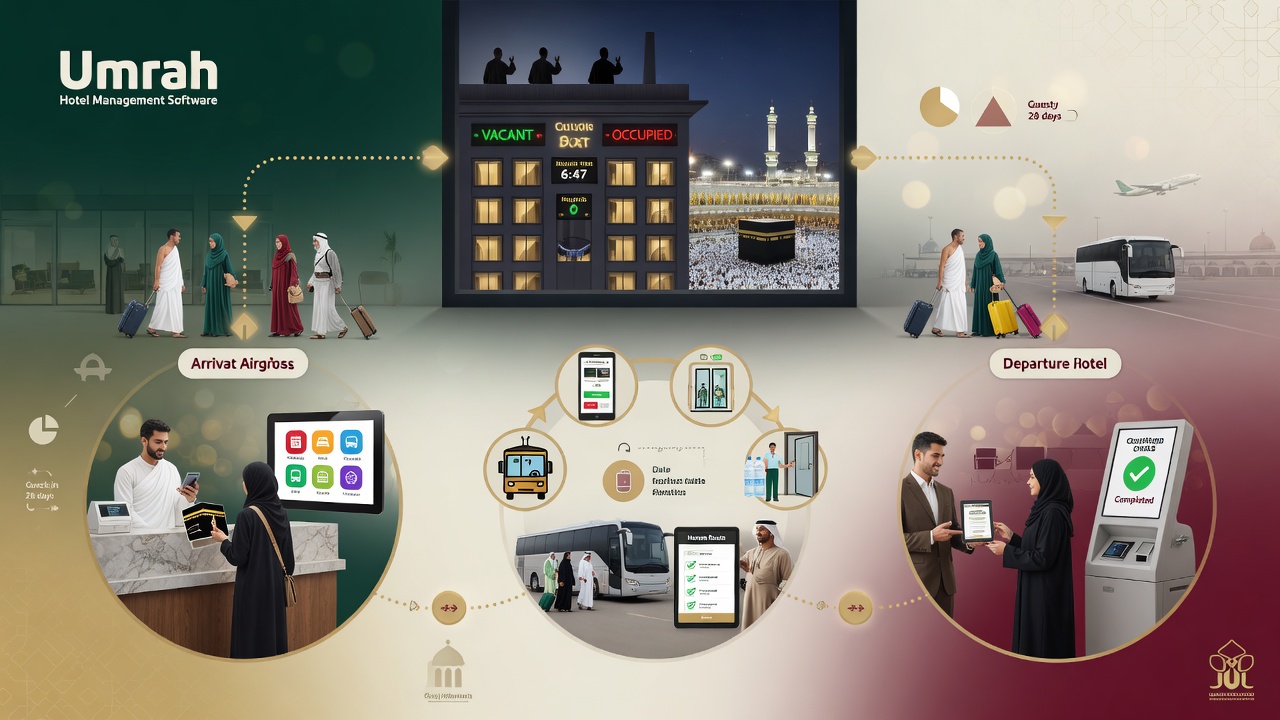
Streamline Umrah & Hajj pilgrim stays with automation. Bulk check‑ins, prayer‑aware services, Nusuk integration & Vision 2030 compliance for Saudi hotels....
Master cash flow management for small hotels in Saudi Arabia. Our 2026 guide covers seasonal planning, cost control, and profit optimization....
Safeguard guest data in Saudi hotels with our expert guide covering NCA, PDPL, PCI DSS compliance, ransomware prevention, and cybersecurity best practices....
Learn how to increase direct hotel bookings in Saudi Arabia, cut OTA commissions, and boost profit with direct booking engine, loyalty program & best-rate....
Discover how Cloud PMS technology accelerates Saudi Vision 2030 tourism goals. Improve hotel efficiency and guest experience with digital transformation in KSA....

Learn how AI in Saudi hotels boosts revenue through dynamic pricing, chatbots, and guest personalization. Start your smart hospitality transformation....
Master seasonal demand in Saudi Arabia. Learn how to optimize hotel revenue during Hajj and Umrah using automated PMS, dynamic pricing, and channel managers...
Discover essential daily KPIs every hotel owner in Saudi Arabia should track with a BI dashboard. Boost RevPAR, compliance, and profit with data-driven insights....
Centralize hotel operations in Saudi Arabia: multi-property management, unified reporting, revenue optimization, procurement, HR, and ZATCA compliance for Vision 2030 growth....
Compare what Saudi hotels need in 2026: cloud PMS, ZATCA e-invoicing, Shomoos, Ministry of Tourism, channel manager, booking engine, automation, and guest management....
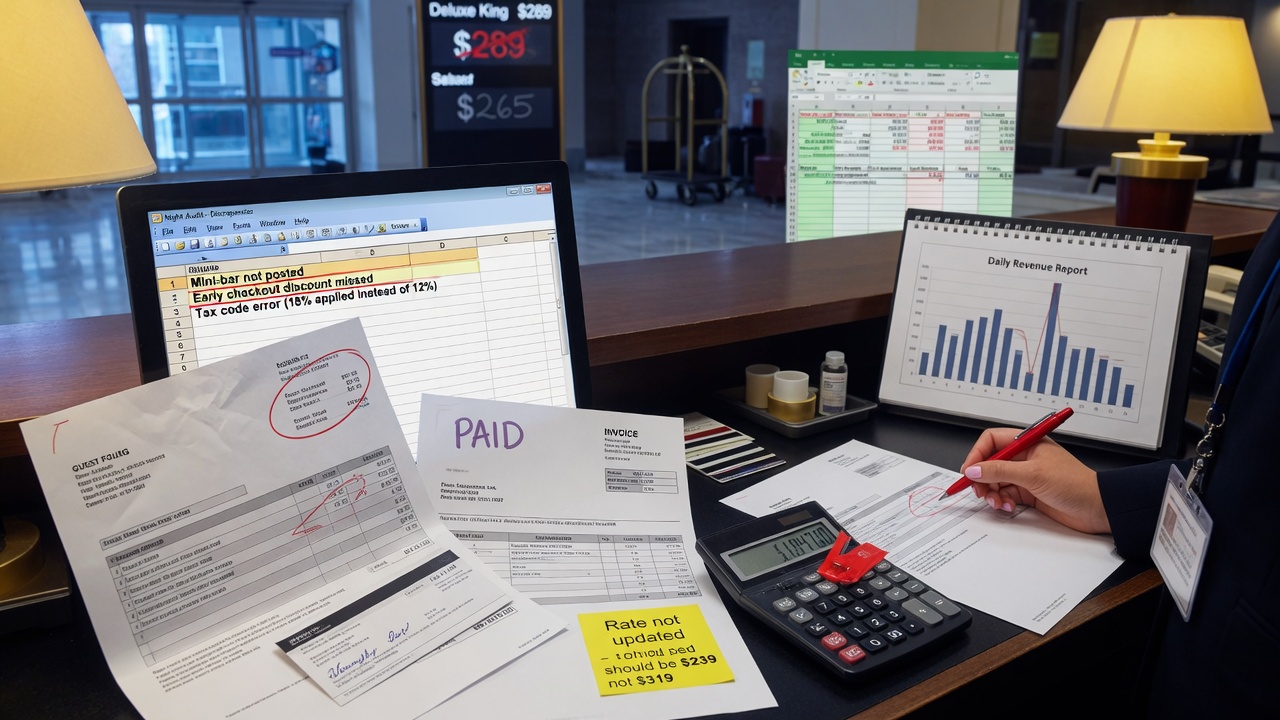
Top common hotel billing errors in Saudi hotels cost SAR 100K+ yearly via VAT & fee mistakes. Stop leakage with ZATCA PMS automation now....
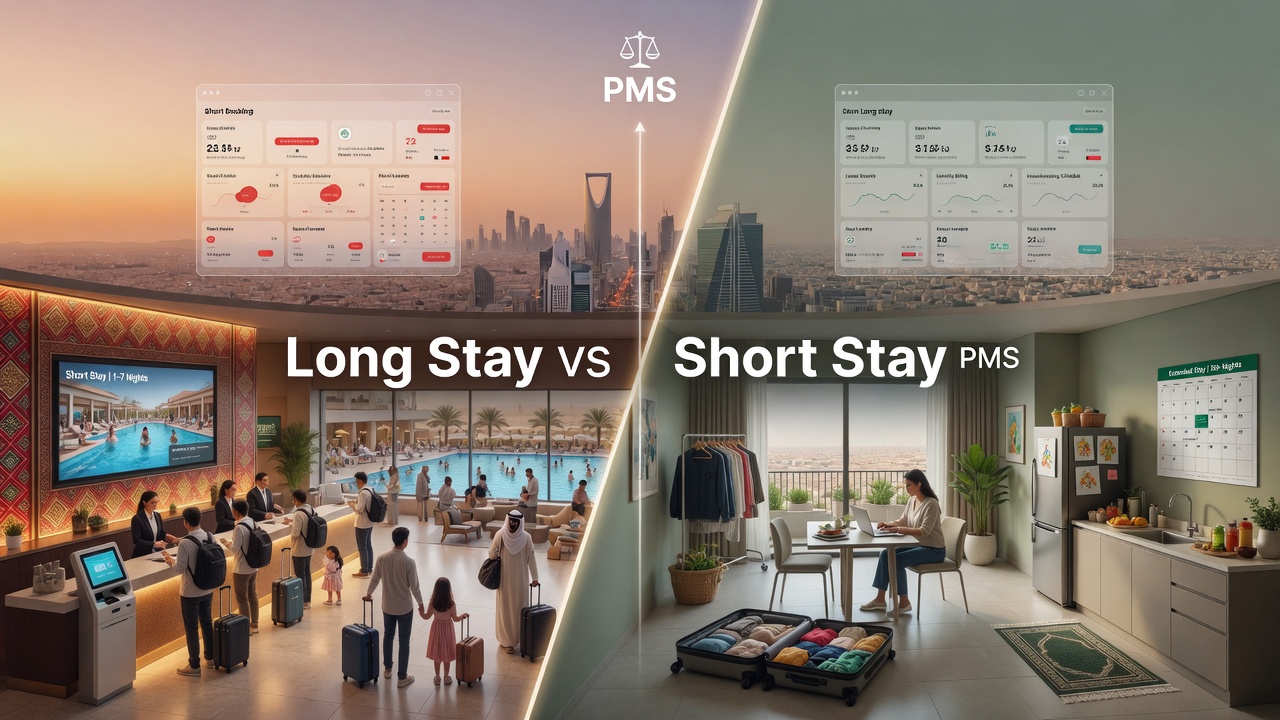
Compare long stay vs short stay PMS for Saudi hospitality. Learn key differences, must‑have features, Ejar compliance, and Vision 2030 insights...
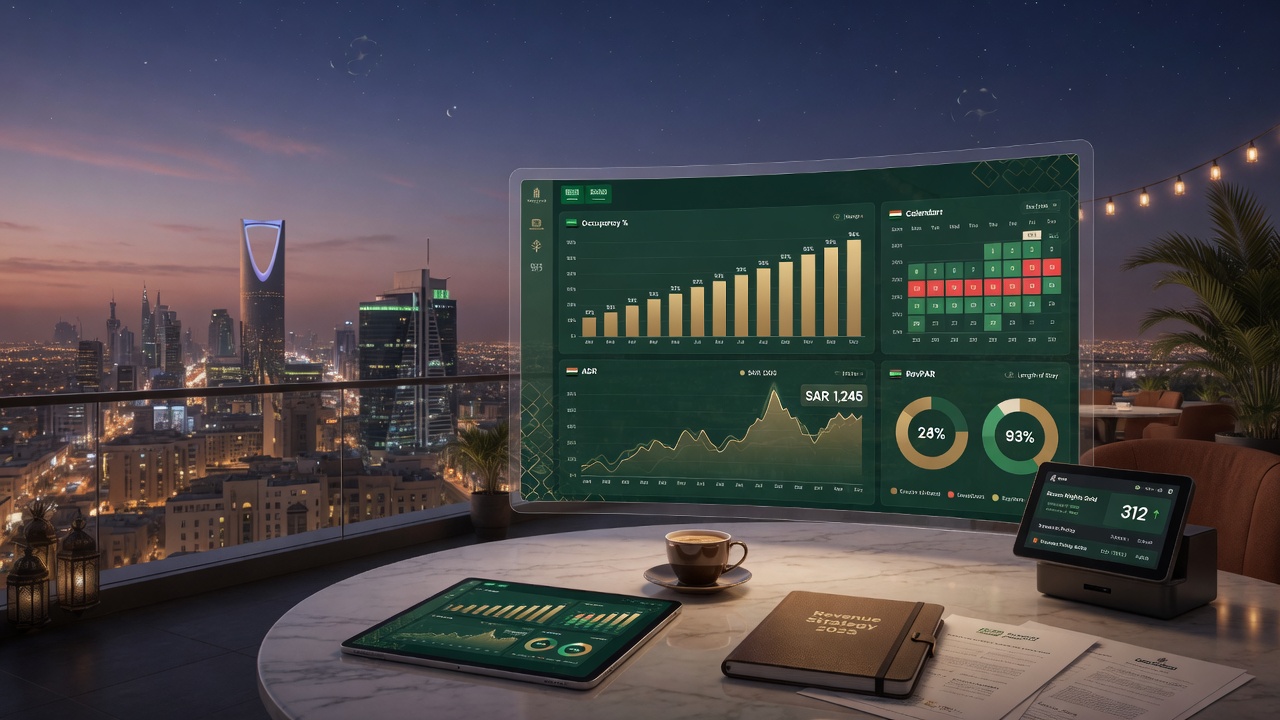
Compare what Saudi hotels need in 2026: cloud PMS, ZATCA e-invoicing, Shomoos, Ministry of Tourism, channel manager, booking engine, automation, and guest management....
Discover why hotel data management is essential for Saudi hotels. Learn how to leverage guest insights, ensure ZATCA & Shomoos compliance, and boost revenue with a modern PMS. Free demo from Fandaqah...

Vision 2030 is transforming vacation ownership in Saudi Arabia. Explore the hotel meets residential trend at Red Sea Global and NEOM for families and investors....
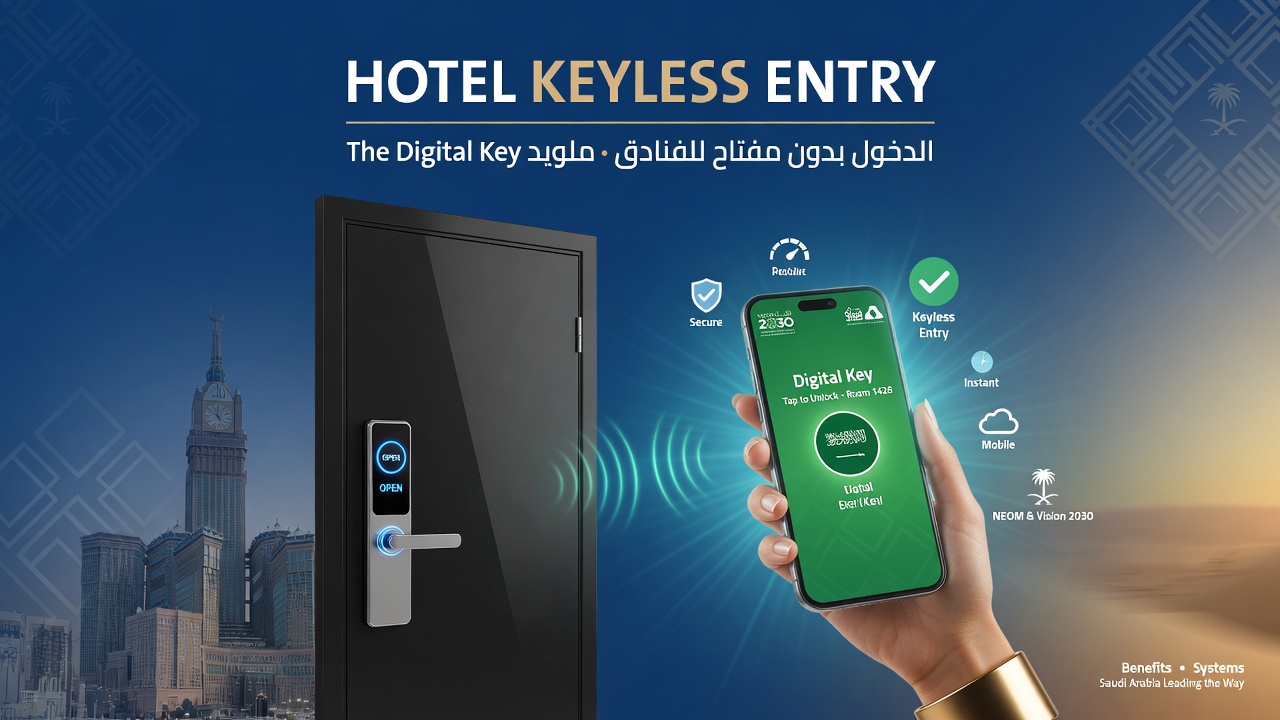
Saudi Arabia hotel keyless entry under Vision 2030: mobile keys, biometrics, guest benefits, hotel savings, Mövenpick Riyadh and Red Sea Global case studies....

Legacy PMS is silently costing Saudi hotels guests, direct bookings, and revenue through slow operations, poor personalization, and lost opportunities. Discover the true hidden costs of outdated hotel...
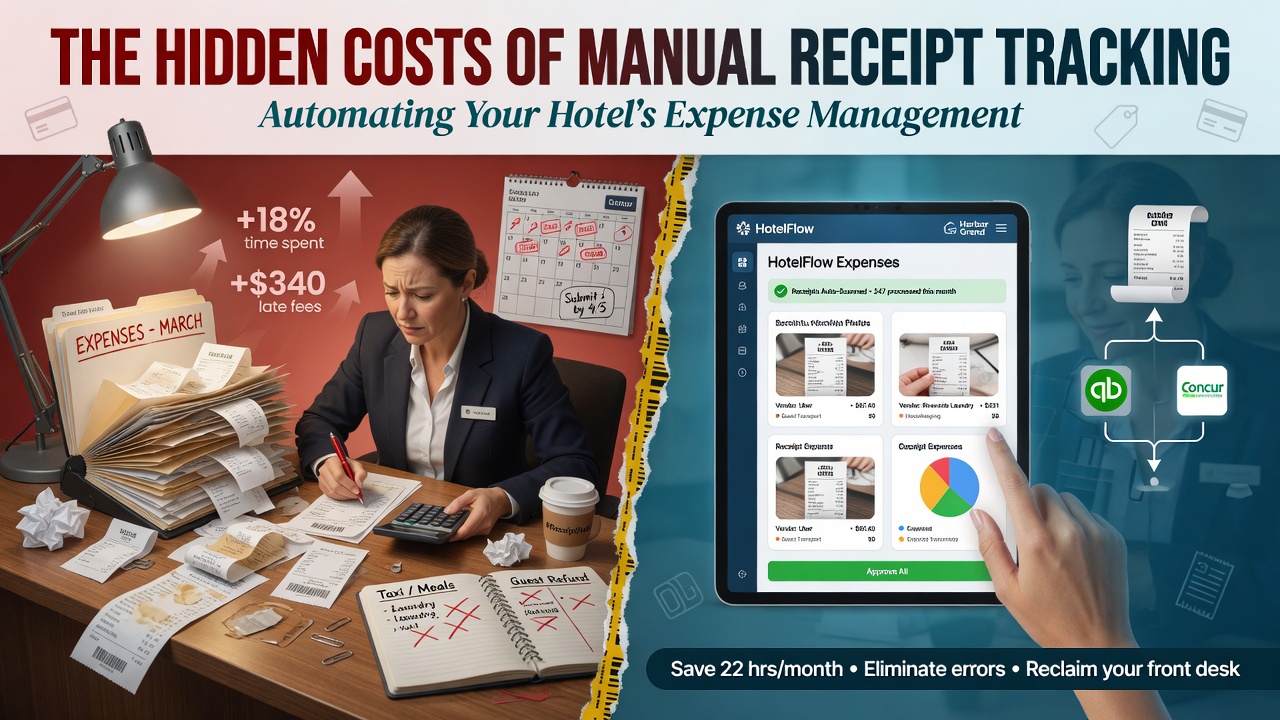
Saudi hotels lose tens of thousands of SAR yearly on manual receipt tracking. Discover hidden costs — wasted labor, VAT leakage, fraud & ZATCA risks — and how automated expense management software...
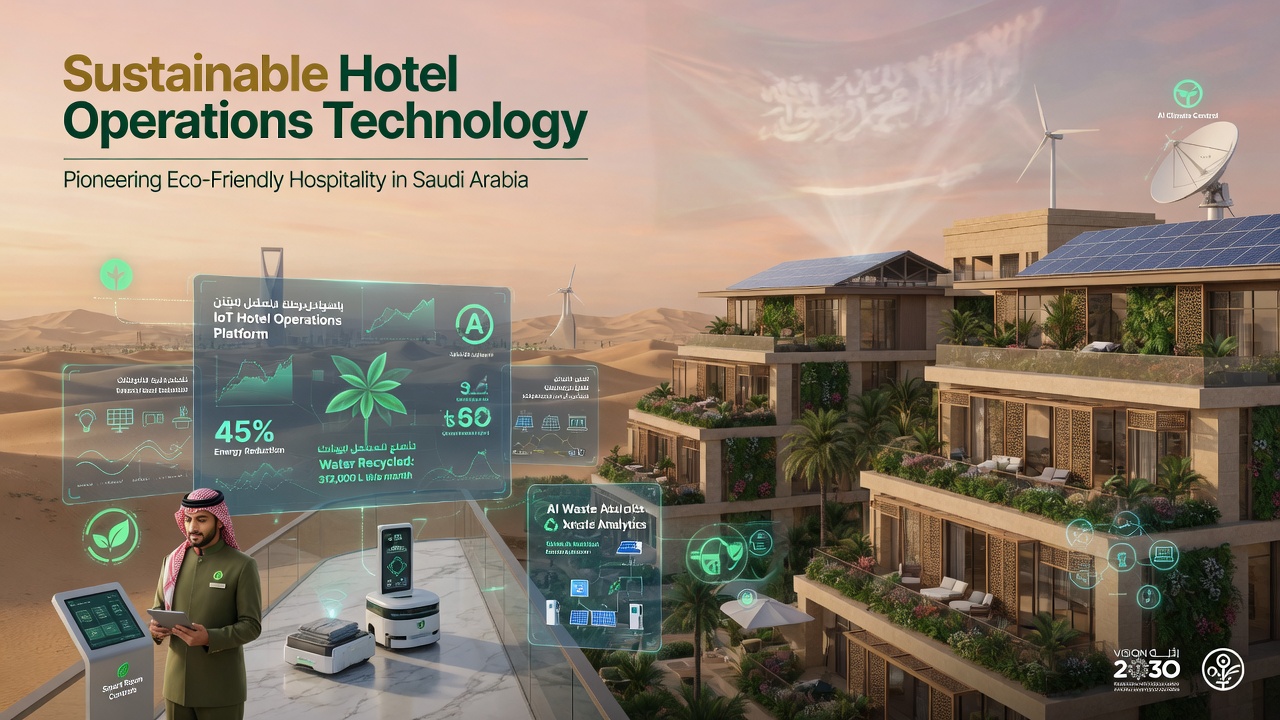
Discover how AI, IoT, and smart building tech are driving sustainable hotel operations in Saudi Arabia. Reduce costs, meet Vision 2030 goals, and enhance guest experience....
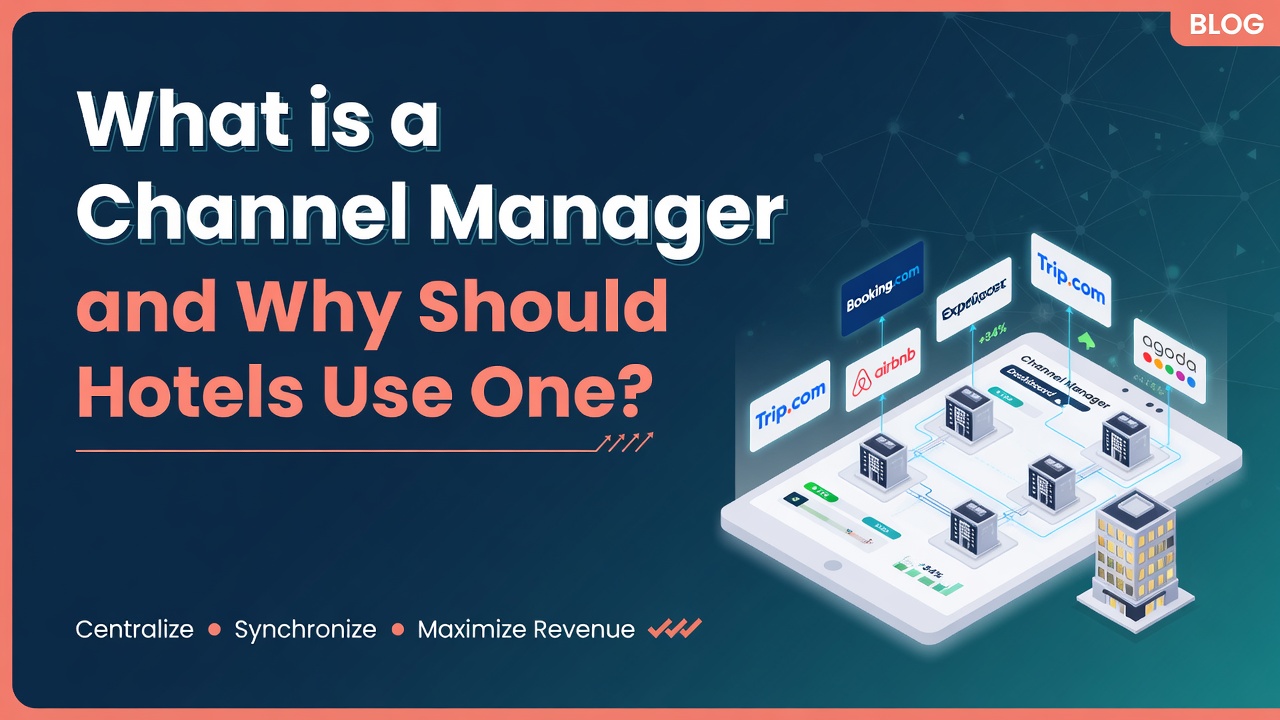
Discover what a channel manager is and why Saudi hotels need it. Automate OTA distribution, prevent overbookings, boost direct bookings, and stay compliant. Free demo from Fandaqah...

Reduce hotel check-in time from 15 minutes to under 3 minutes using automated Shomoos registration and passport scanning. Free demo for Saudi hotels...

Discover how smart room integration with hotel PMS in Saudi Arabia enhances guest experience, energy efficiency, and compliance with ZATCA & Shomoos. The future of Vision 2030 hospitality starts here....
Discover why Arabic interface and POS integration are essential for hotels in Saudi Arabia. Boost staff efficiency, guest satisfaction, and compliance with Fandaqah’s all-in-one PMS...
Try Fandaqah’s 30‑day free demo account for hotel PMS in Saudi Arabia. Experience ZATCA e‑invoicing, Shomoos integration, passport scanning, and check‑in automation – risk‑free. Start your...
Discover proven strategies to avoid empty rooms during low season in Saudi Arabia. Learn dynamic pricing, direct booking tactics, and how a hotel PMS Saudi Arabia can boost occupancy year‑round. Fre...
ZATCA Phase 2 deadline for hotels: March 31, 2026. Learn Wave 23 requirements, e-invoicing integration, penalties, and how a compliant hotel PMS ensures full compliance. Free demo from Fandaqah...
Complete guide to buying a hotel PMS in Saudi Arabia. Learn key features, compliance with ZATCA & Shomoos, ROI, and how to choose the best hotel management system KSA for your property...
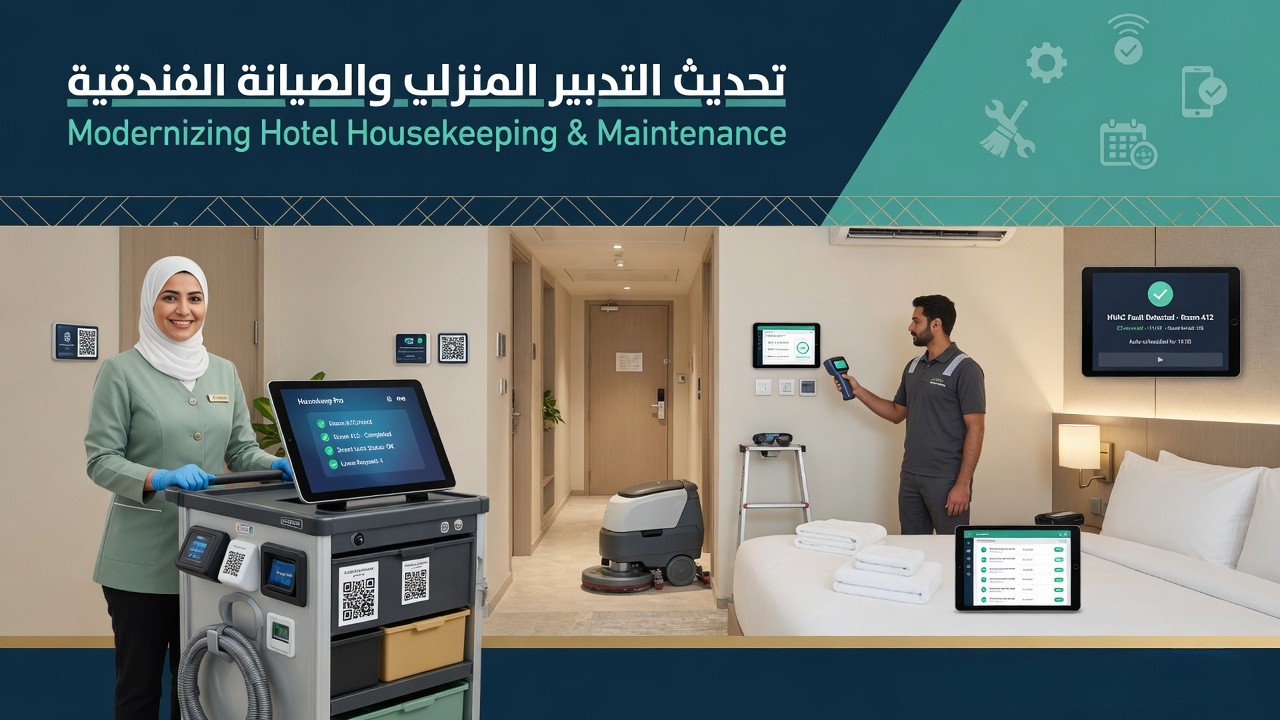
Go paperless with hotel housekeeping and maintenance. Learn how digital checklists, real‑time updates, and integrated PMS boost efficiency, guest satisfaction, and compliance in Saudi Arabia...
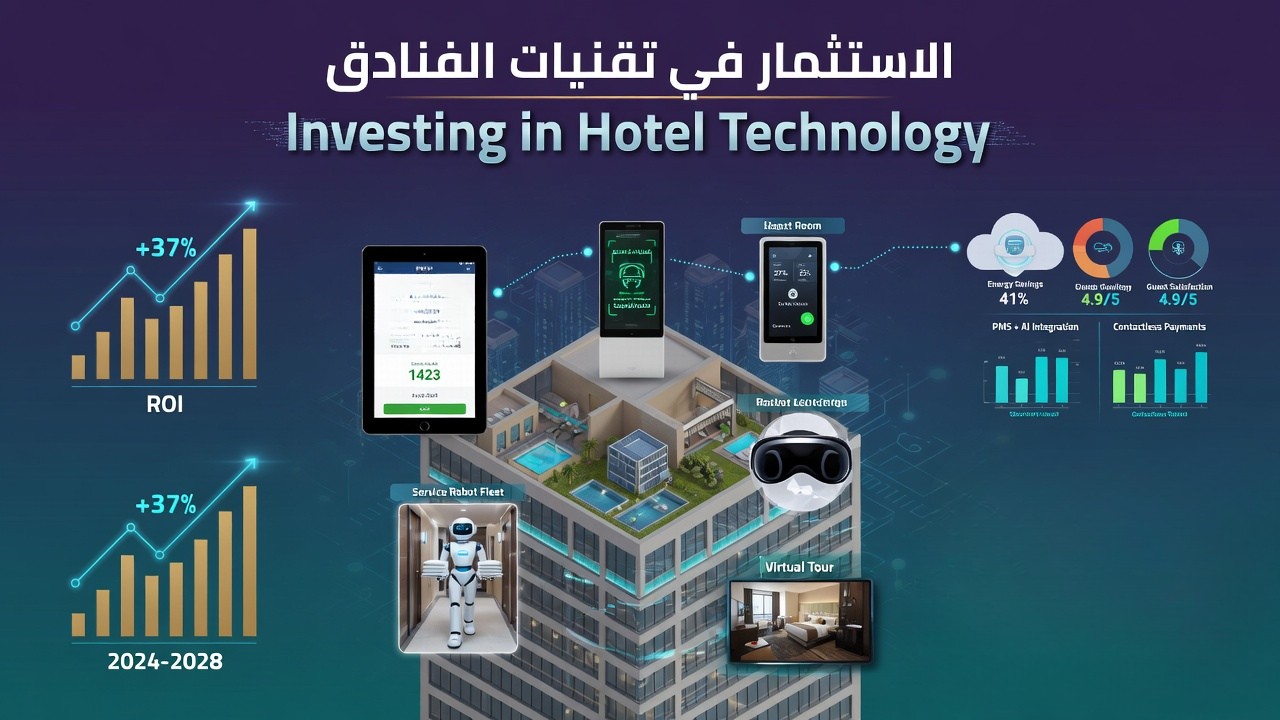
Learn how hoteliers can build a business case for new technology. Show ROI, improve guest satisfaction, and ensure ZATCA & Shomoos compliance. Free demo for Saudi hotels...
Discover how gift cards for hotels can boost occupancy, increase revenue, and attract new guests. Learn to integrate with your hotel PMS Saudi Arabia for seamless automation....

Discover proven destination marketing ideas for hotels in Saudi Arabia. Attract more guests, leverage Vision 2030, and boost direct bookings. Free consultation inside....
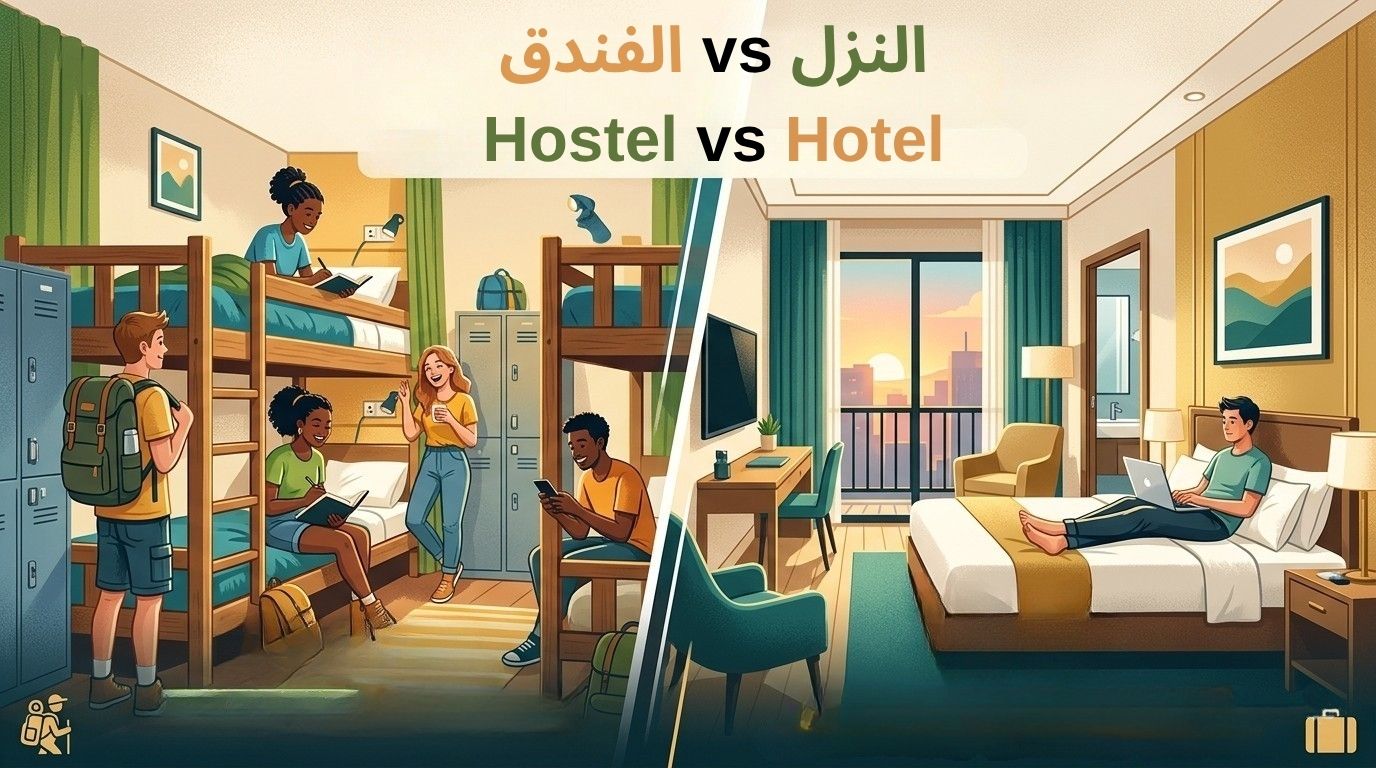
Hostel vs hotel – what's the difference? Compare cost, privacy, amenities, and social experience. Perfect for Saudi travelers and tourists under Vision 2030. Find your ideal stay....
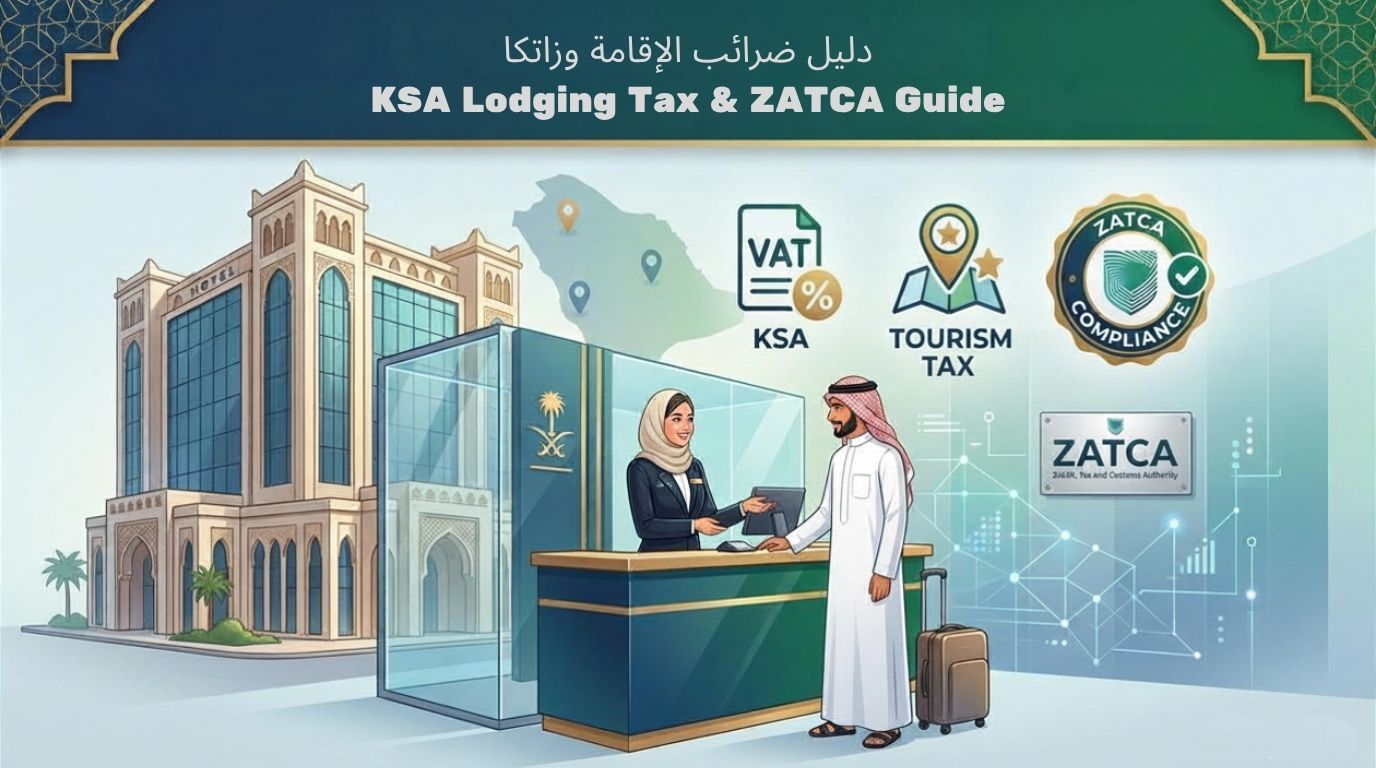
Complete guide to lodging taxes for hotels in Saudi Arabia: VAT (15%), municipality fees, tourism tax, ZATCA e-invoicing compliance, and how to automate tax management. Essential for hoteliers....
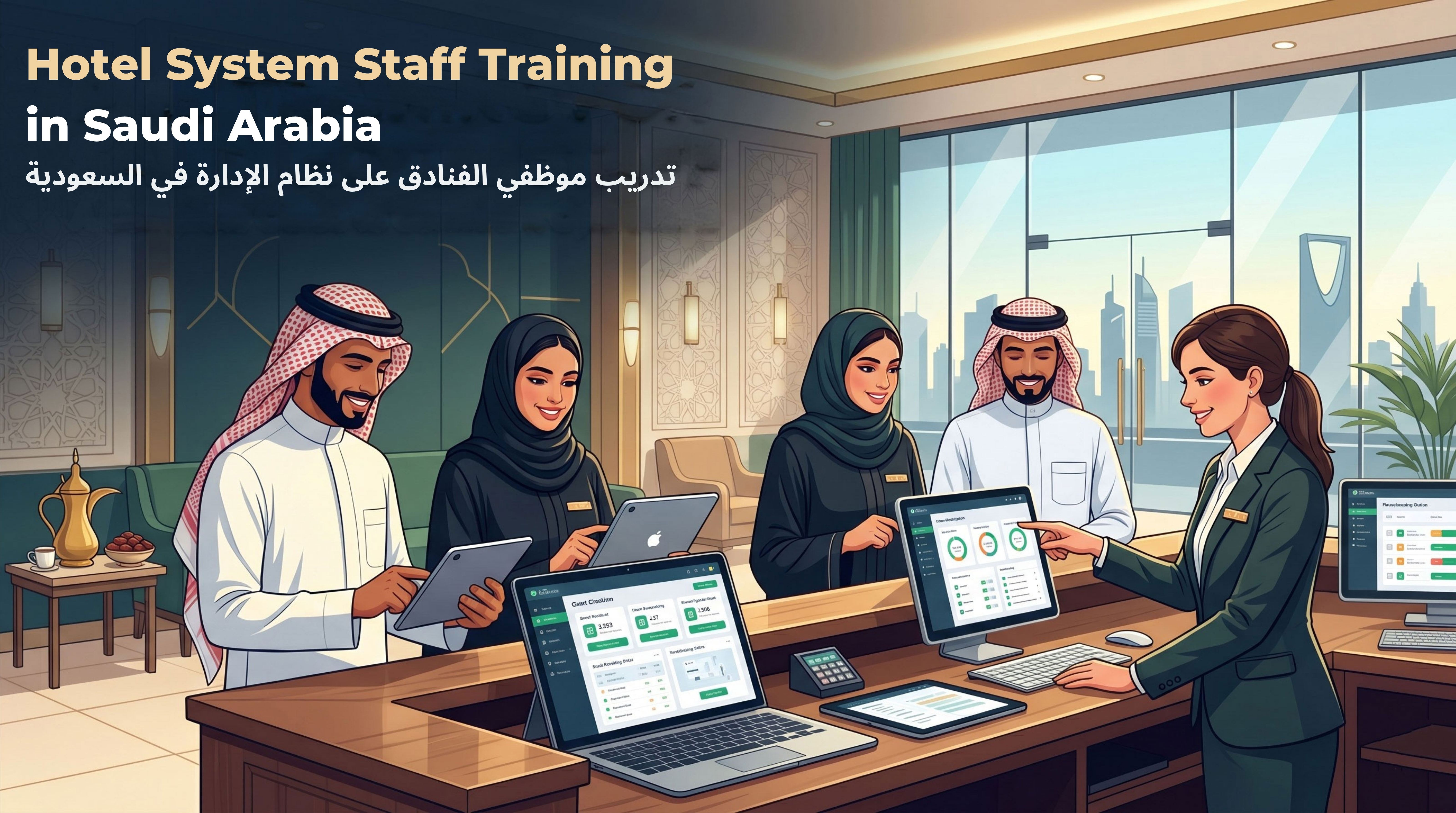
Complete guide to PMS training for hotel staff in Saudi Arabia. Learn how to train your team on ZATCA e‑invoicing, Shomoos integration, passport scanning, and check‑in automation. Free demo from F...
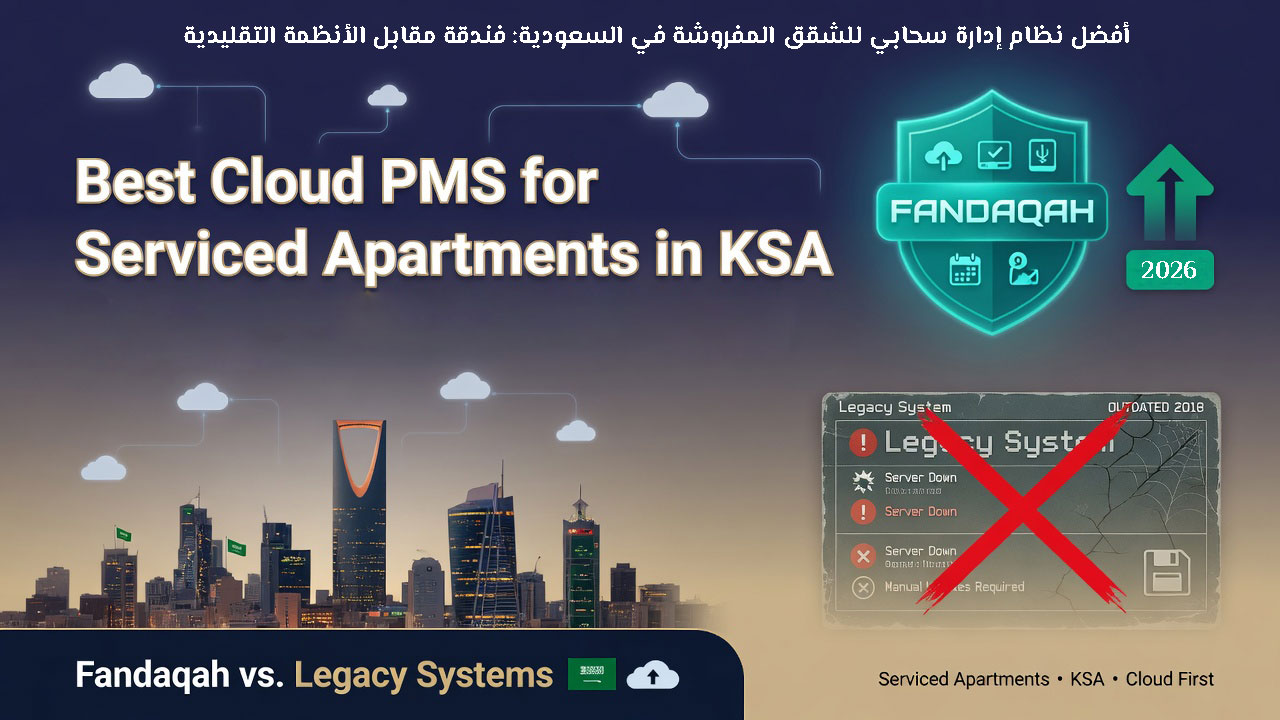
Compare the best cloud PMS for serviced apartments in KSA: Fandaqah vs. legacy systems. Discover automation, ZATCA & Shomoos compliance, and why modern cloud PMS wins. Free demo...
Saudi Arabia’s hospitality sector is experiencing unprecedented growth, driven by Vision 2030. Success now requires more than just a prime location—it demands the smart use of hotel management too...
As part of Saudi Arabia’s digital transformation, e-invoicing has become a cornerstone in regulating the relationship between businesses and the Zakat, Tax and Customs Authority (ZATCA). With the ro...

Discover the Kingdom’s transformation through Vision 2030, where ancient spirituality meets modern adventure tourism. The Future of Hospitality Summit is driving regional change. Explore spiritual j...
Property management software Saudi Arabia by Fandaqah: ZATCA & Shomoos compliant, passport scanner, 85% faster check-in. Trusted by 850+ hotels. Demo now....
Complete guide to Shomoos and Siyaha integration for Saudi hotels. Learn how to automate guest registration, avoid fines, and streamline operations with a modern hotel PMS. Free demo from Fandaqah...
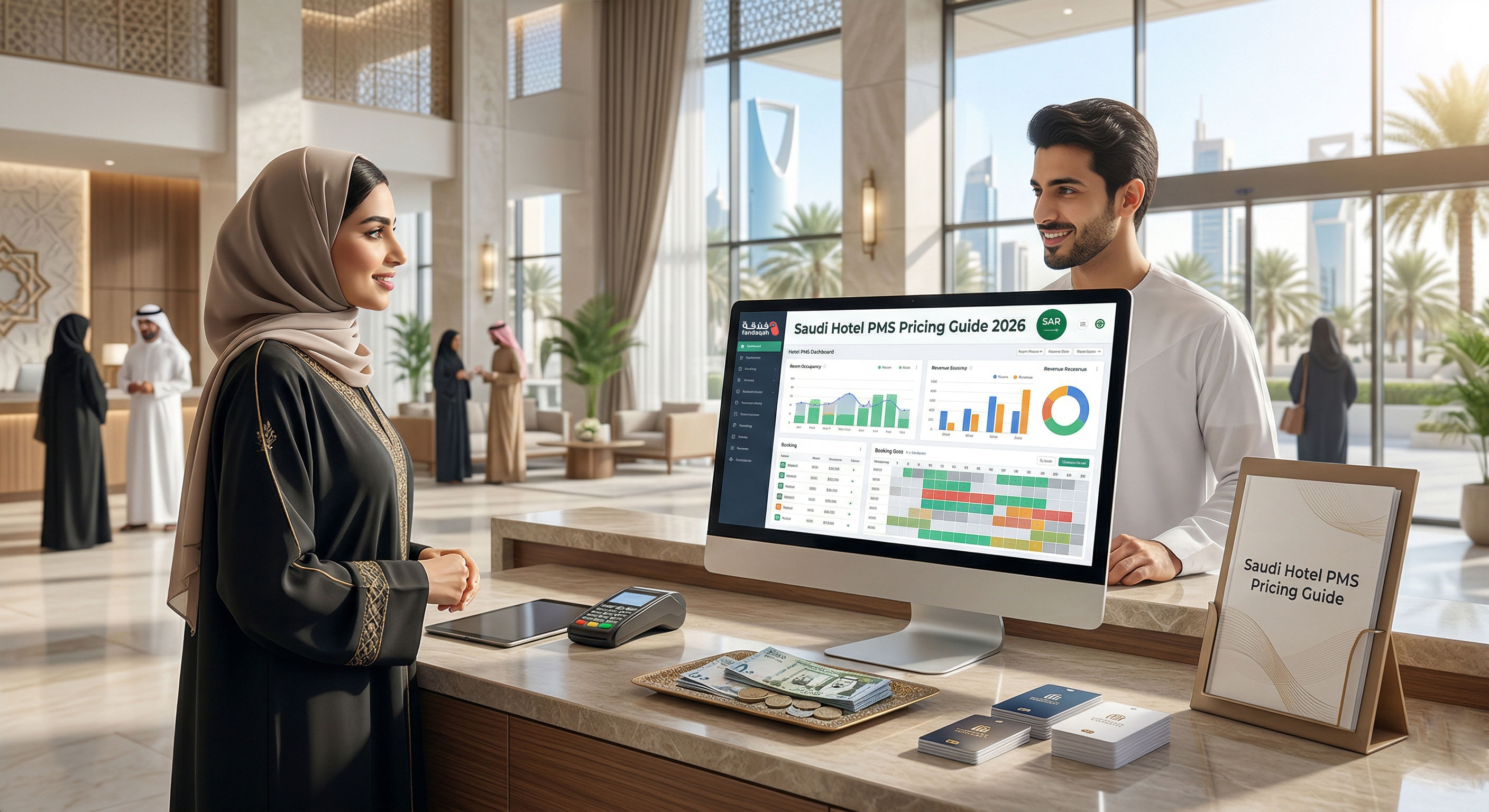
Complete guide to hotel PMS cost in Saudi Arabia. Understand pricing models, hidden fees, ZATCA & Shomoos compliance costs, and how to choose the right hotel management system KSA for your budget...
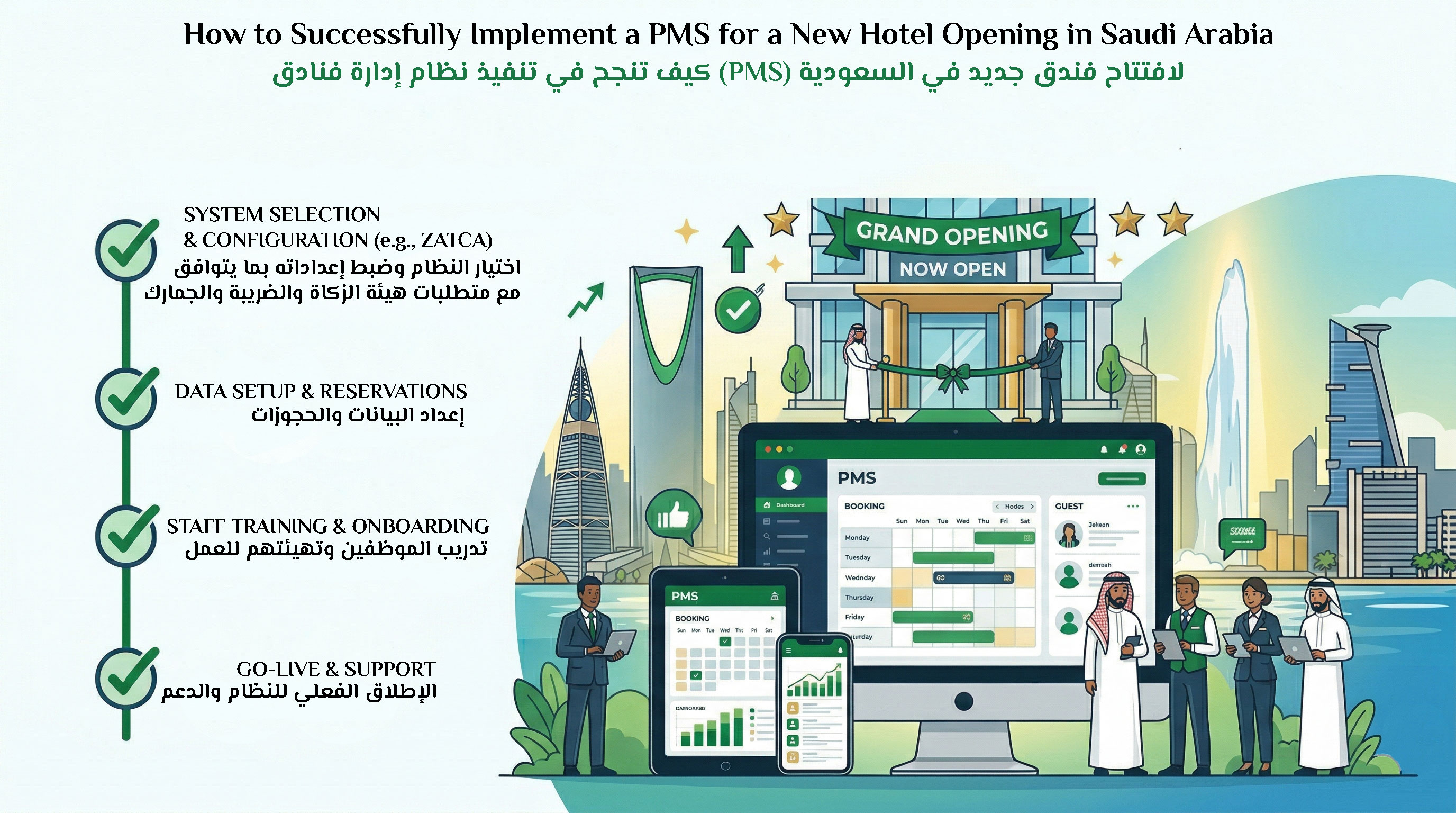
Step‑by‑step guide to implementing a PMS for a new hotel opening in Saudi Arabia. Covering ZATCA, Shomoos, check‑in automation, and best practices for a successful launch. Free demo from Fandaqa...

Discover why a local PMS vendor in Riyadh or Jeddah is the smart choice for your hotel. Faster support, ZATCA & Shomoos compliance, Arabic interface, and data residency. Free demo from Fandaqah...
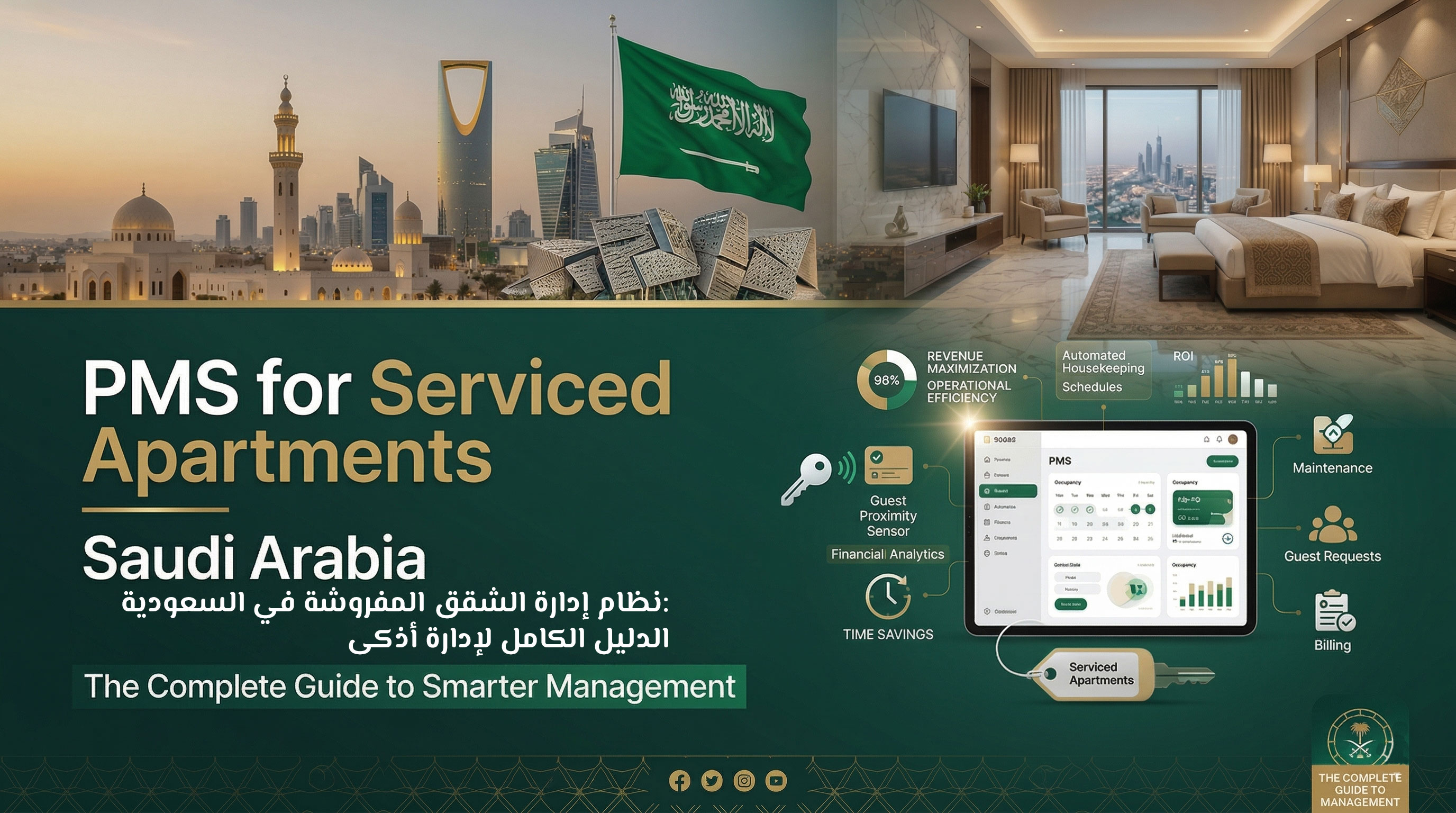
Discover the best PMS for serviced apartments in Saudi Arabia. Automate check-in, manage multiple units, ensure ZATCA & Shomoos compliance, and boost revenue. Free demo for property managers...
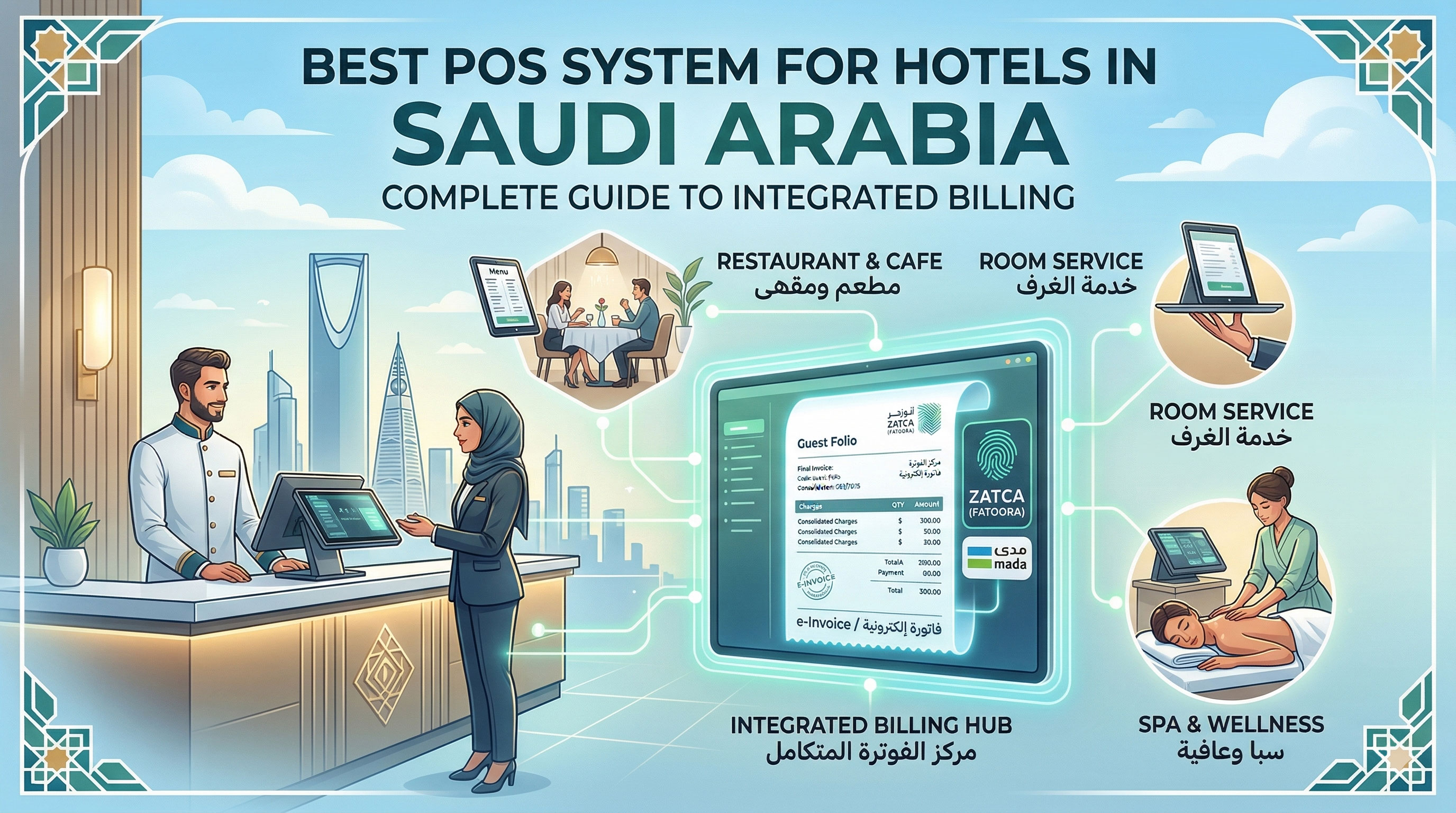
Discover the best POS system for hotels in Saudi Arabia. Integrate F&B, spa, and retail billing with your hotel PMS. ZATCA compliant, Shomoos ready. Free demo for hoteliers...
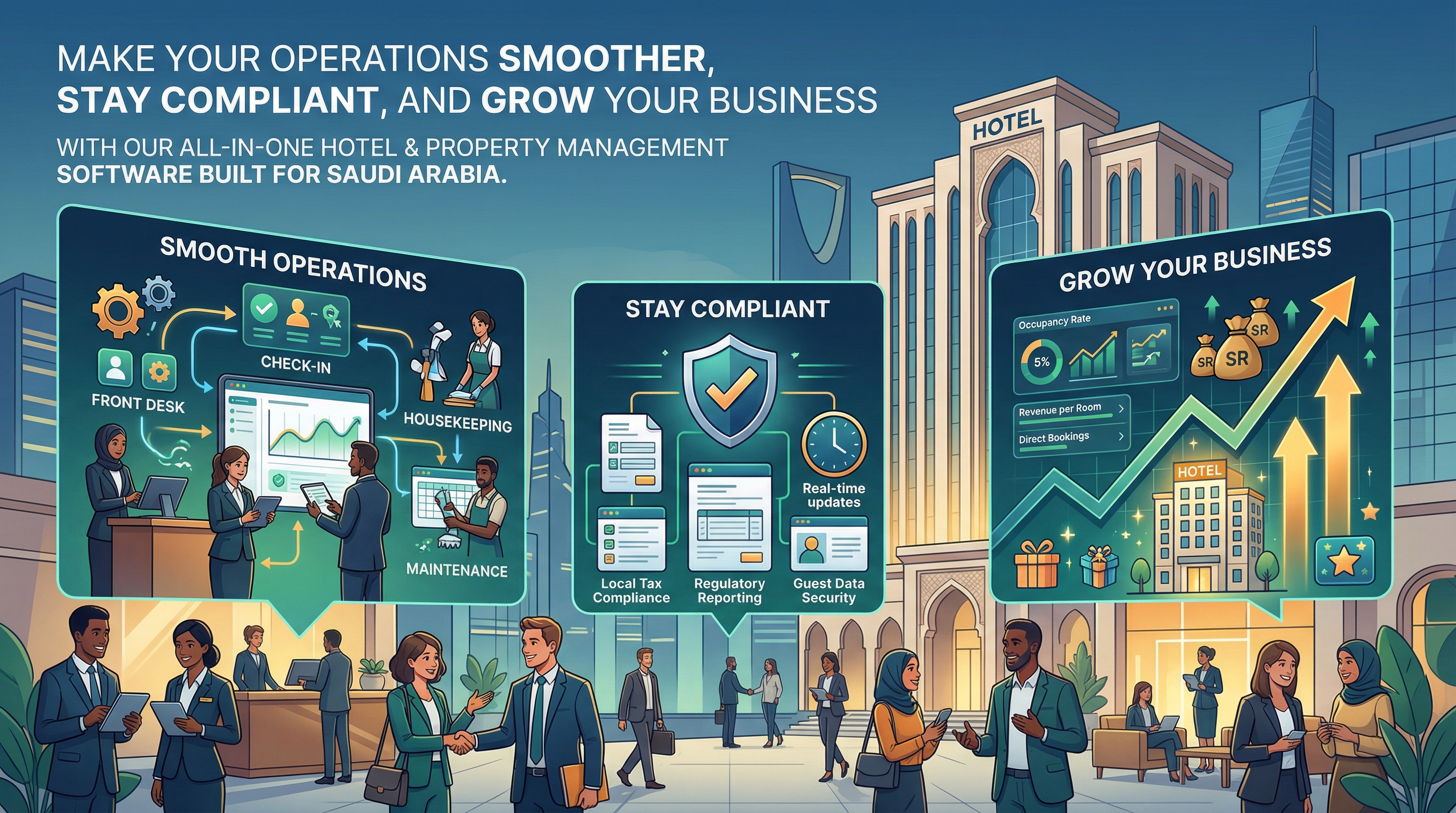
Fandaqah is Saudi Arabia's leading hotel management software. ZATCA, Shomoos & Ministry of Tourism compliant. PMS, booking engine & channel manager in one platform....
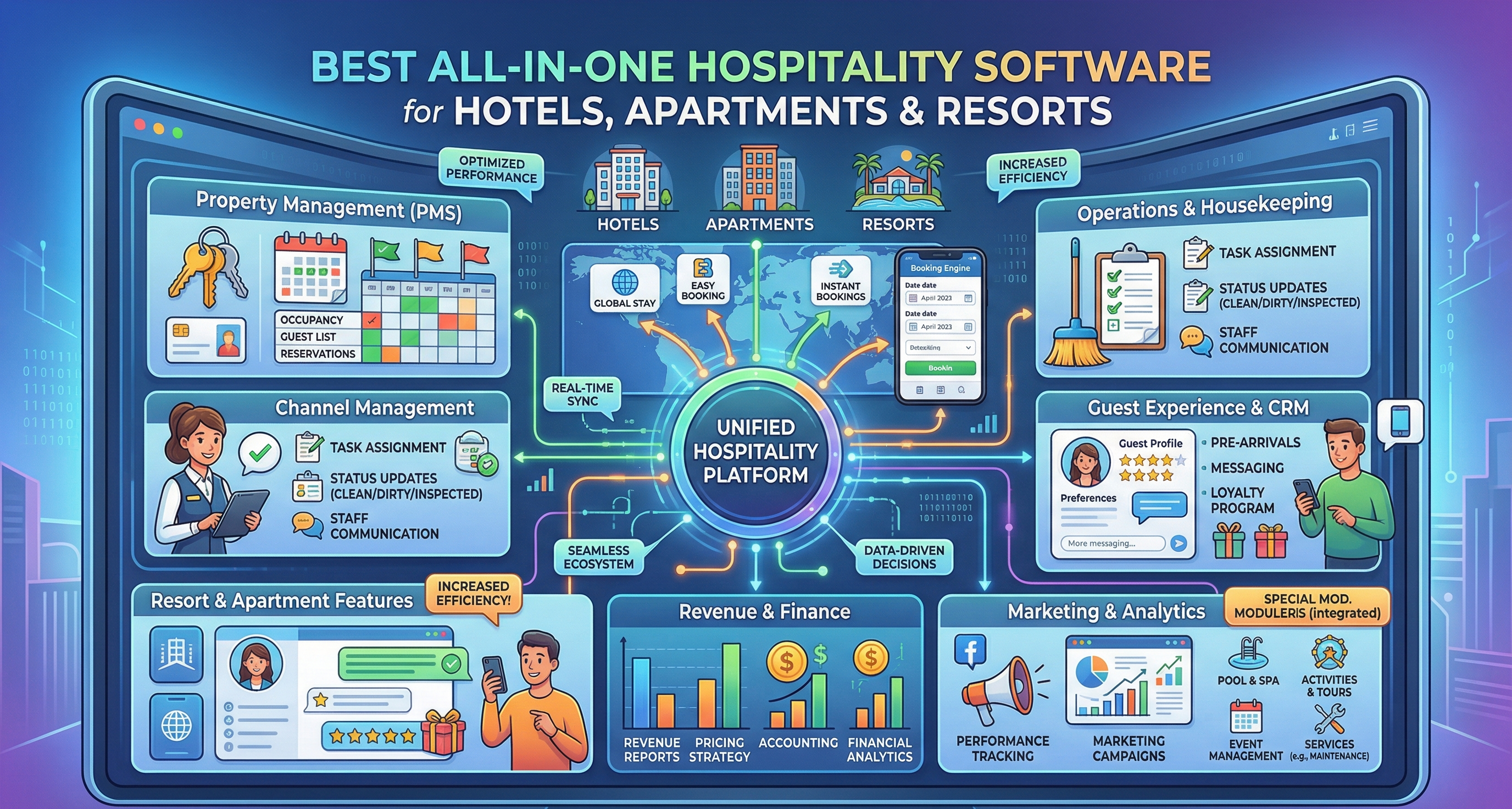
Discover Fandaqah trusted property management software for hotels, apartments & resorts. ZATCA, Shomoos & Tourism compliant. Request your free trial today!...
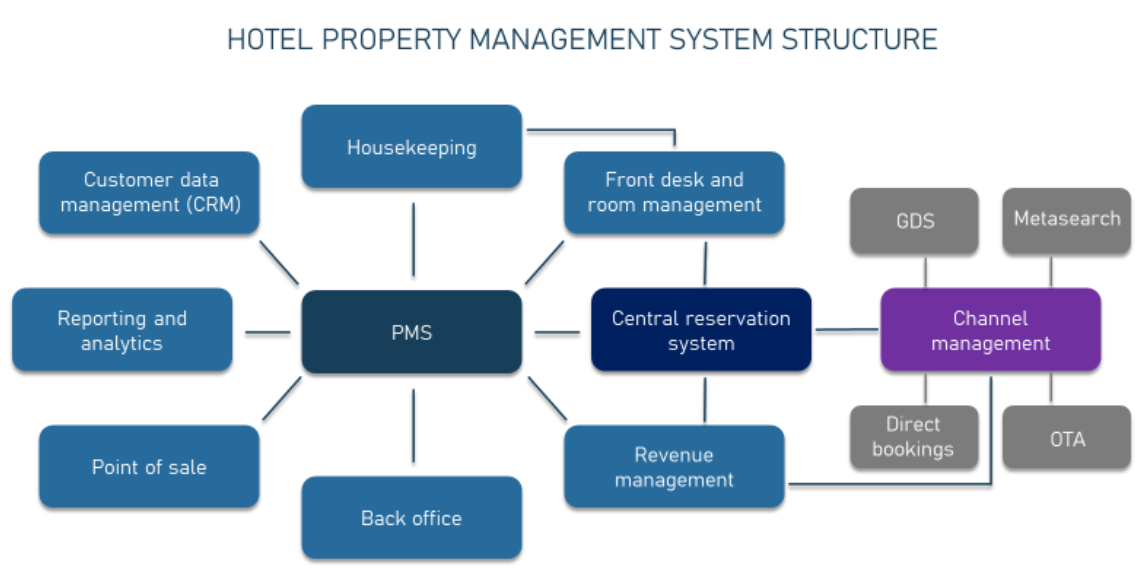
Fandaqah PMS automates hotel check‑in, ensures ZATCA Phase 2 e‑invoicing & Shomoos integration. 85% faster, trusted by 850+ Saudi properties. Start your free trial....
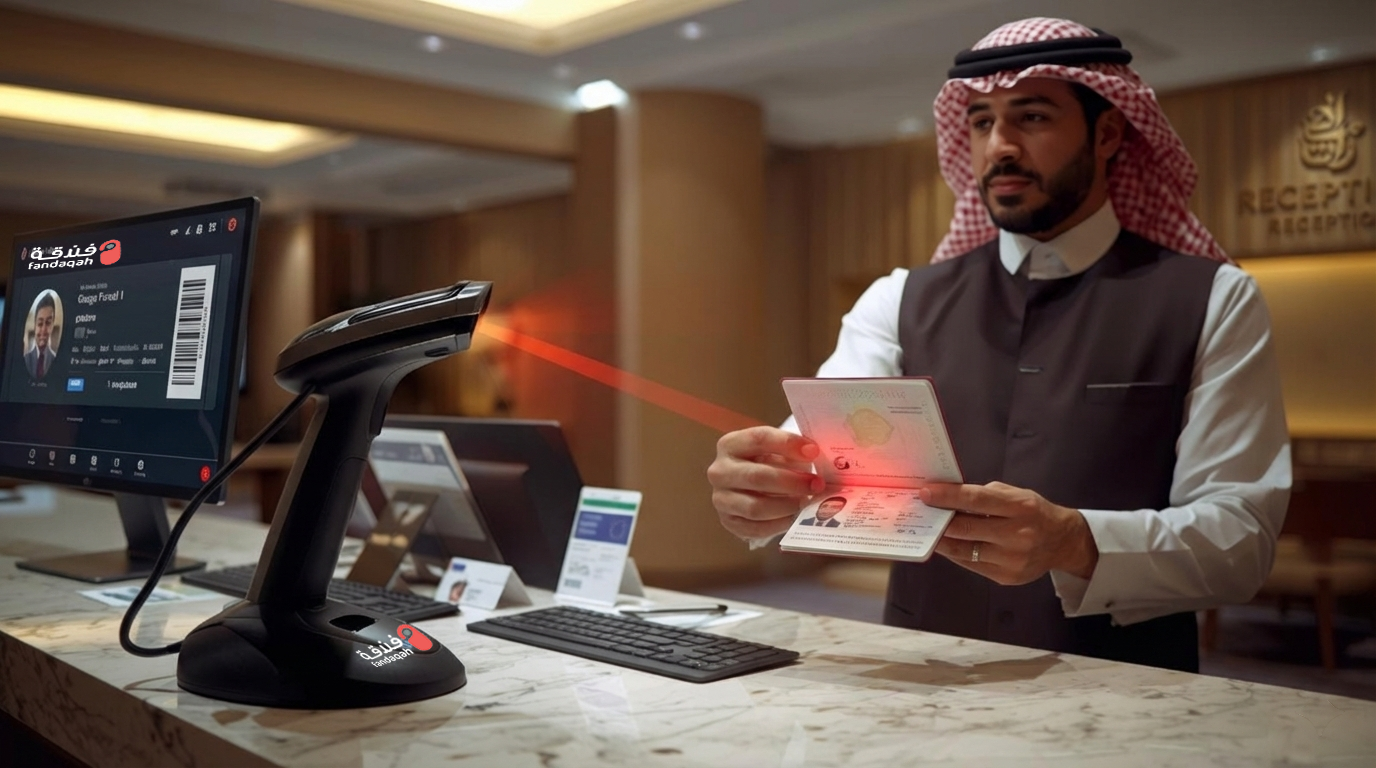
Automate hotel check-in Saudi Arabia with passport scanning. ZATCA compliant, Shomoos integrated. Reduce waiting time 70%. Free demo!...

Join Fandaqah's partner program for hotel management software Saudi Arabia. Earn 200 SAR per referral, ZATCA compliant. 800+ hotels trusted!...
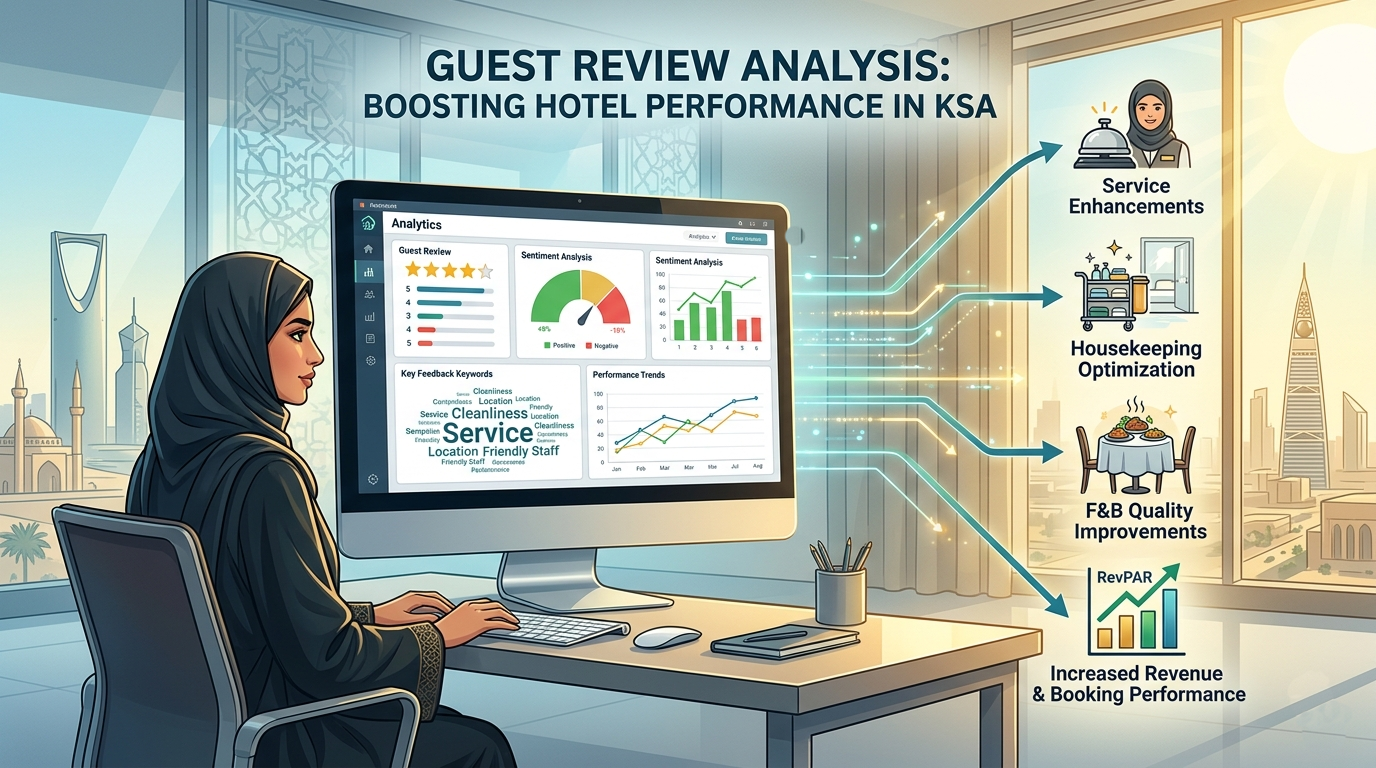
Complete guide to analyzing guest feedback and improving hotel performance in Saudi Arabia. Learn about KPIs, technology, ZATCA & Shomoos compliance, and strategies to increase revenue and guest satis...
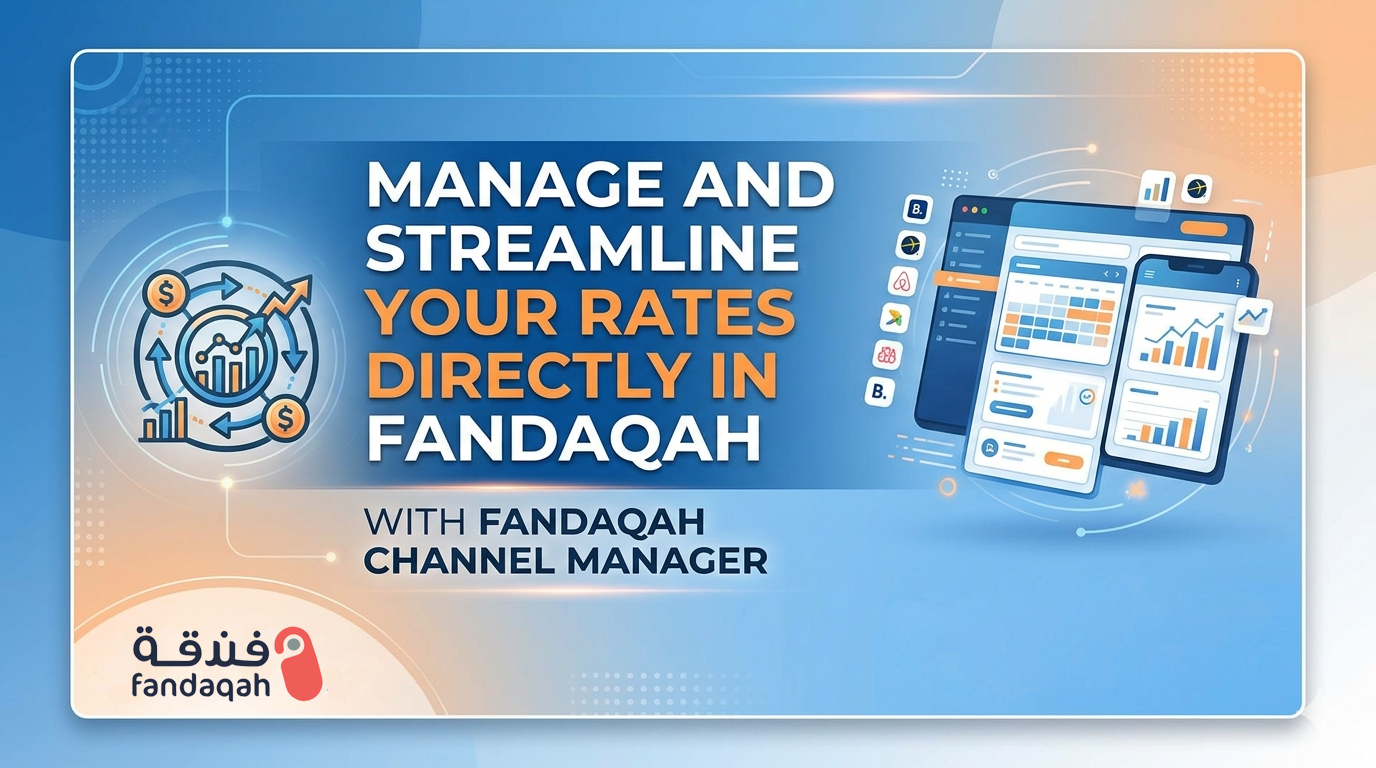
Discover how Fandaqah Channel Manager helps Saudi hotels manage and streamline rates across all OTA platforms. Increase direct bookings, automate distribution, ensure ZATCA & Shomoos compliance, and b...
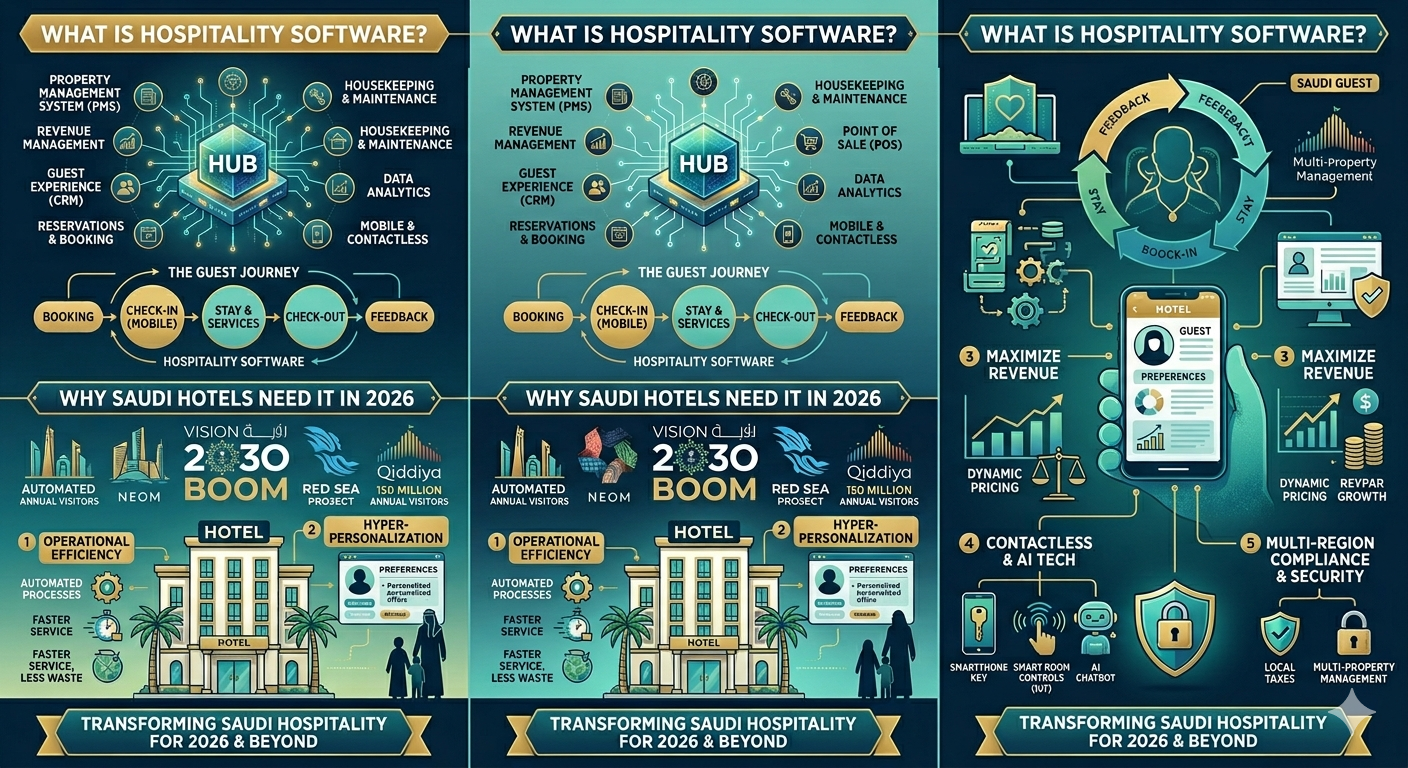
Discover what hospitality software is and why Saudi hotels need it in 2026. Complete guide to hotel management systems, check-in automation, ZATCA & Shomoos compliance, and guaranteed ROI. Fandaqah so...
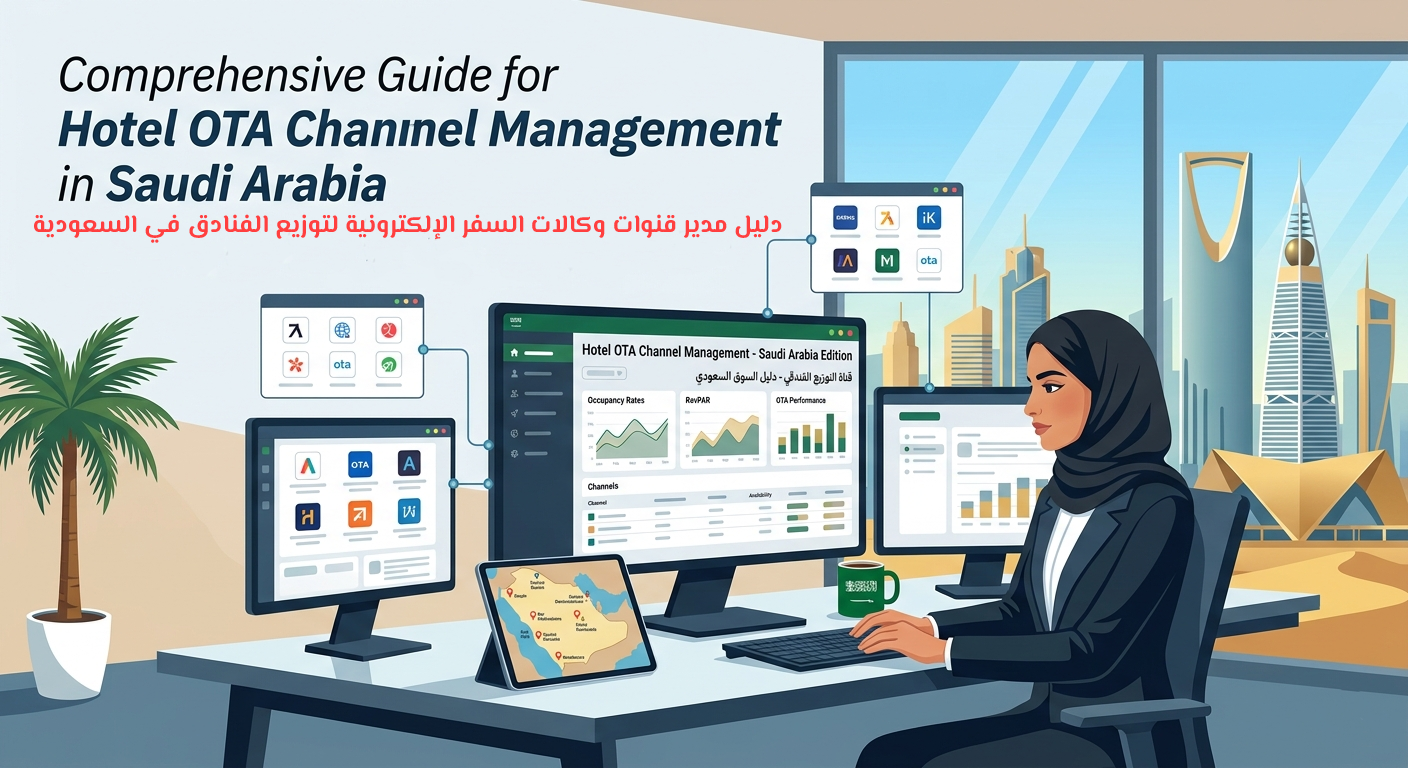
Complete guide to OTA channel manager for hotel distribution in Saudi Arabia. Learn how to increase bookings, automate distribution, comply with ZATCA & Shomoos, and boost revenue. Fandaqah solutions....

Complete hotel audit guide for 2026: learn about night audit procedures, financial reports, compliance with ZATCA & Shomoos, and how automated audits improve accuracy and efficiency for Saudi hotels....
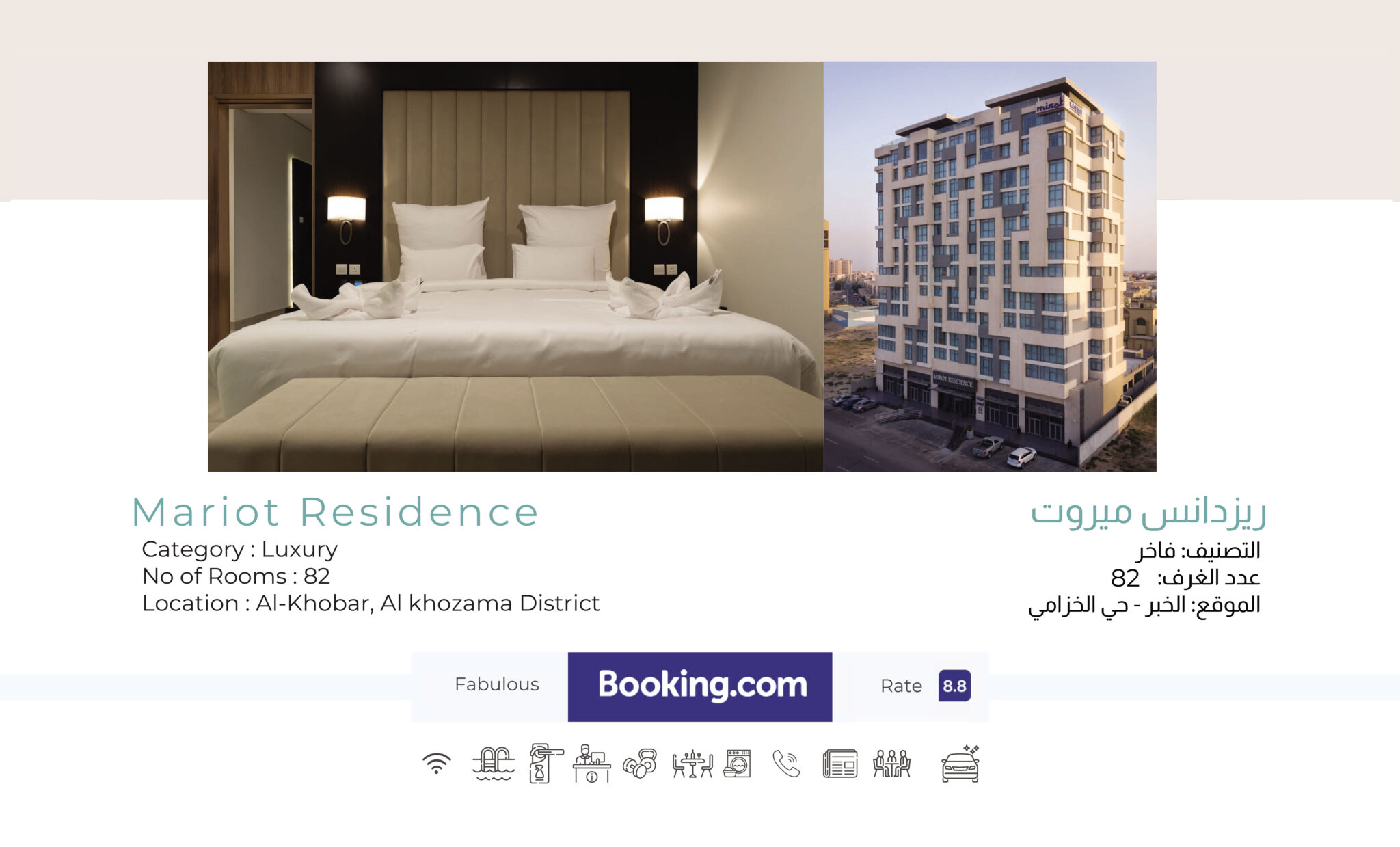
Mariot Residence began as a modest 1-star property with: Limited digital infrastructure Manual operations Basic amenities Difficulty attracting guests and maintaining service quality...

In the hospitality industry, room pricing isn’t just a number on a screen—it’s a strategic decision that directly impacts revenue, occupancy, and guest satisfaction....
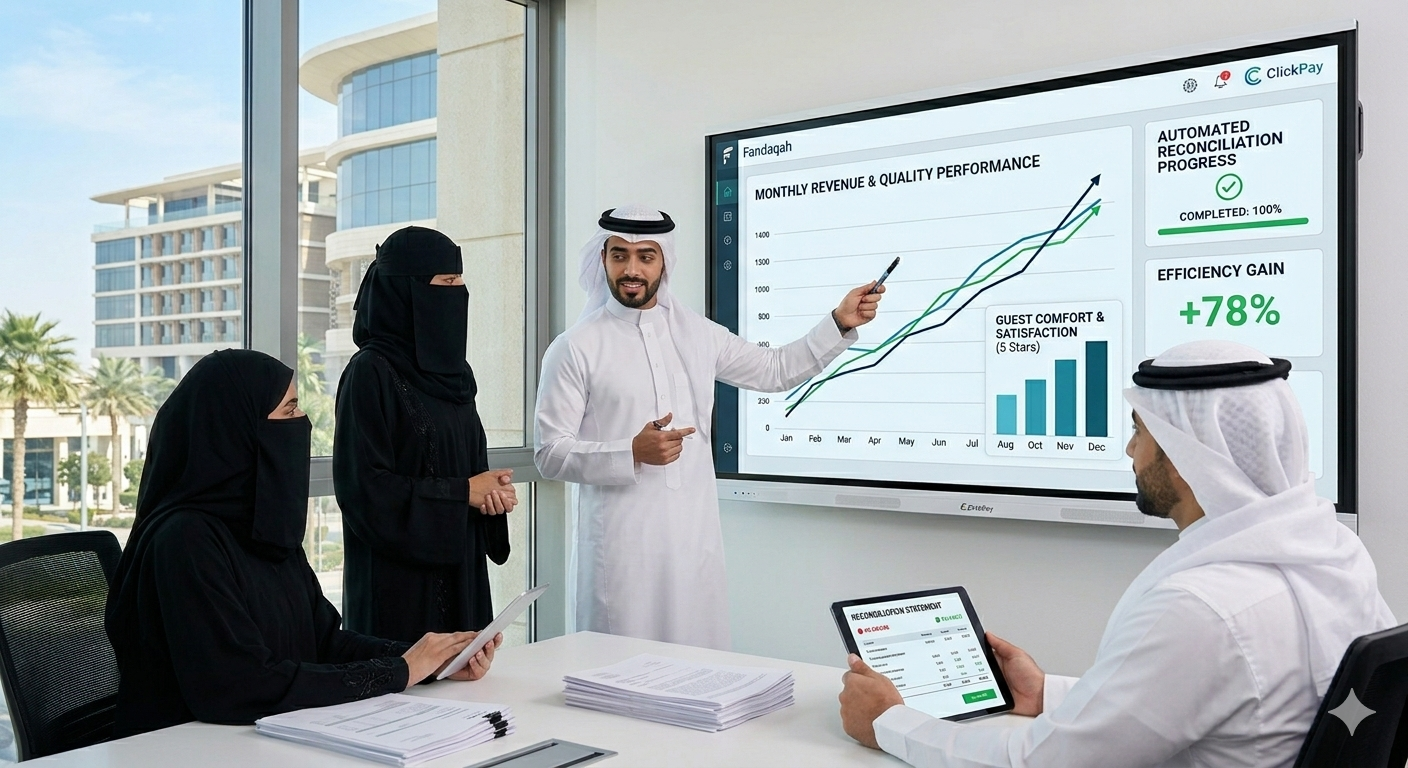
In hospitality, every moment matters. From the first greeting at the front desk to the final checkout, hotels strive to offer a seamless and comfortable experience for every guest. Yet, one aspect oft...
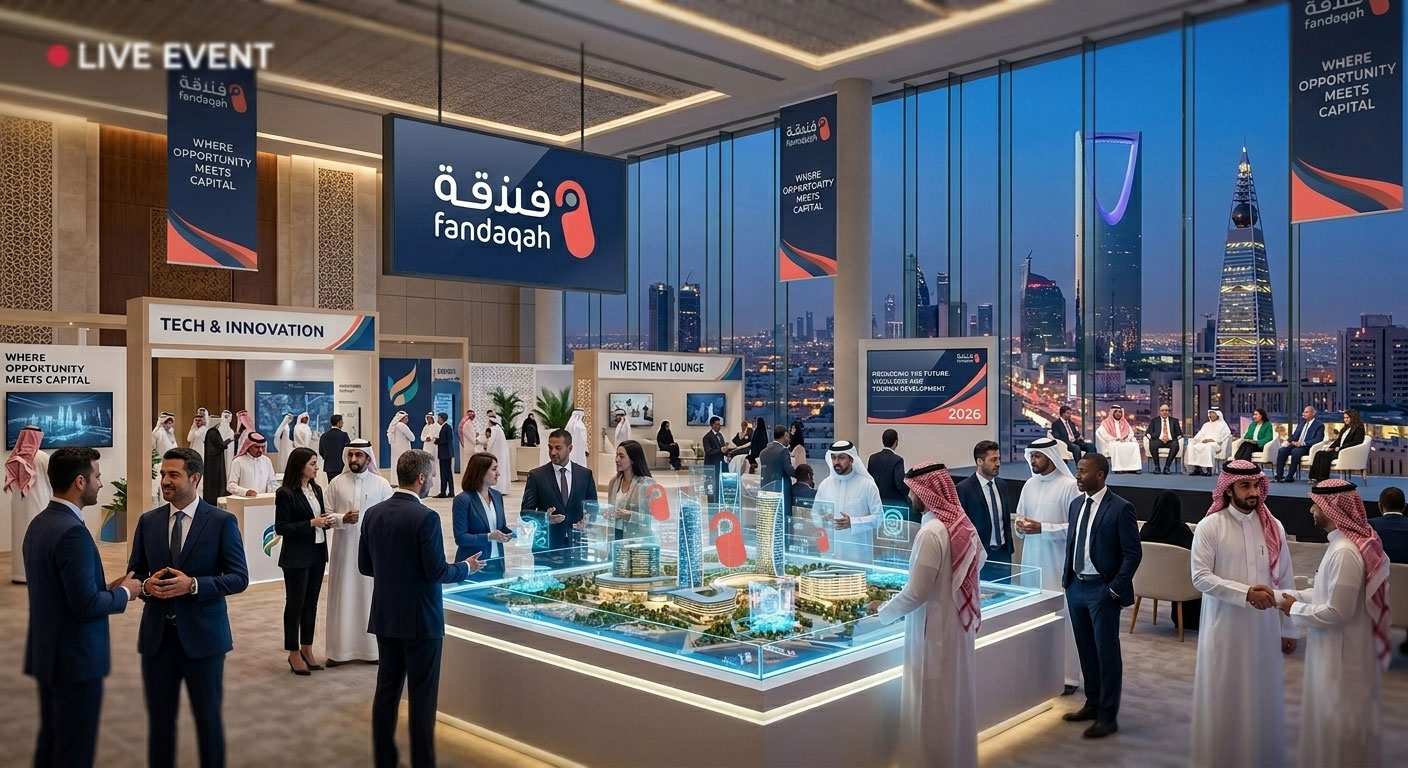
The complete guide to the Saudi Future Hospitality Summit 2026: dates, venue, speakers, investment opportunities, technology, and ZATCA & Shomoos compliance. Join 1,500+ industry leaders in Riyadh....
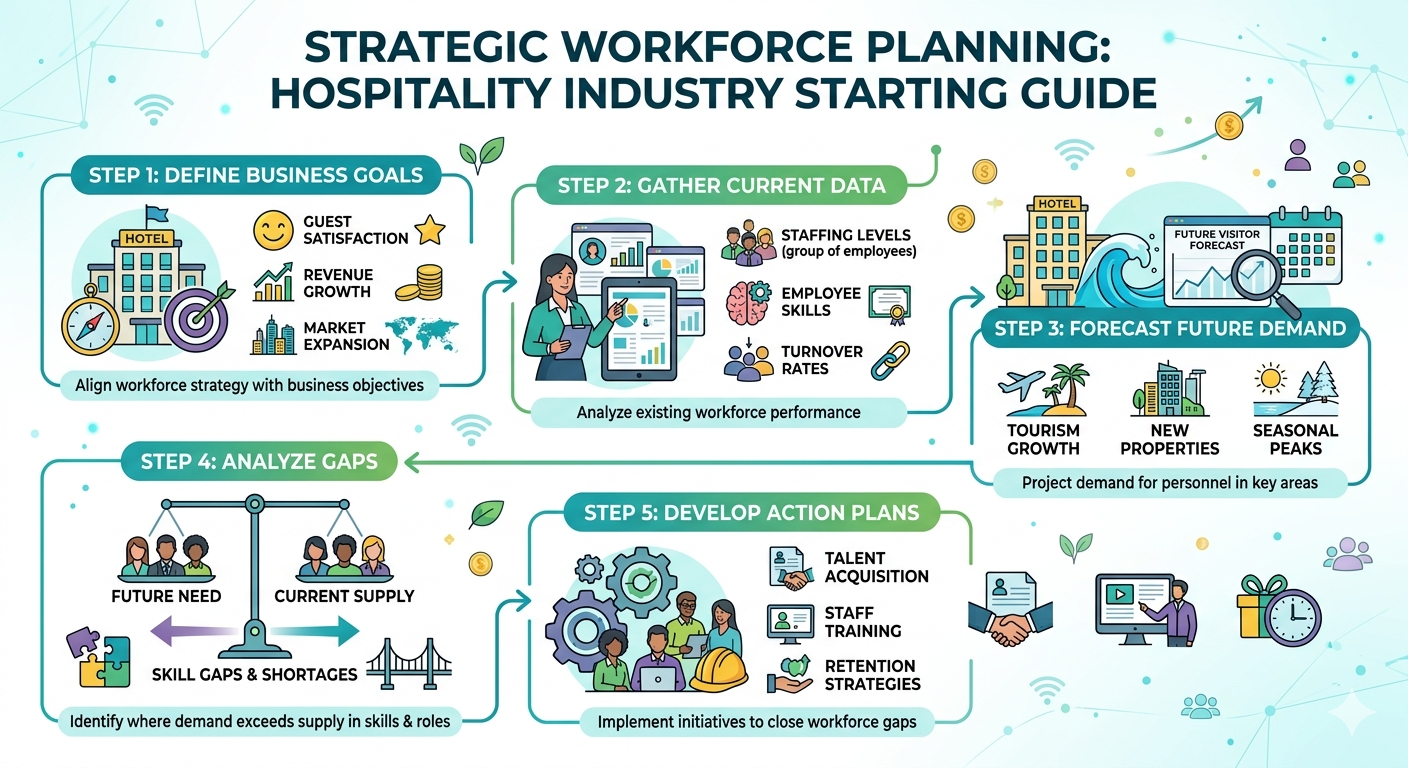
Master strategic workforce planning for Saudi hospitality. Achieve Nitaqat compliance, reduce turnover, and build Vision 2030-ready teams with expert strategies...

In line with Saudi Vision 2030, the tourism sector is undergoing an unprecedented digital transformation. One of the most impactful tools driving this change is the National Tourism Monitoring Platfor...
The management adopted Fandaqah PMS, a Saudi-built property management system designed for operational efficiency and government compliance. The result? A complete transformation across operations, gu...

In today’s hospitality landscape, competition is no longer just about location or star ratings. Success now hinges on how effectively a hotel leverages smart technologies to streamline operations an...