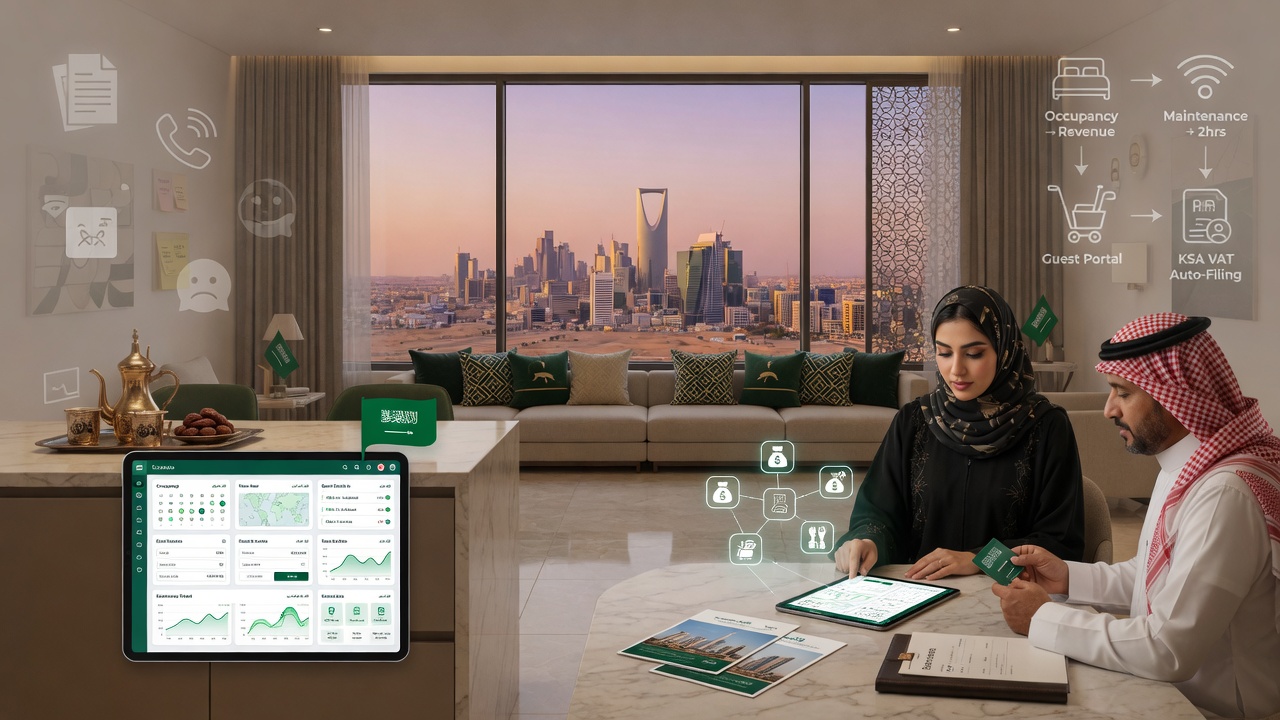
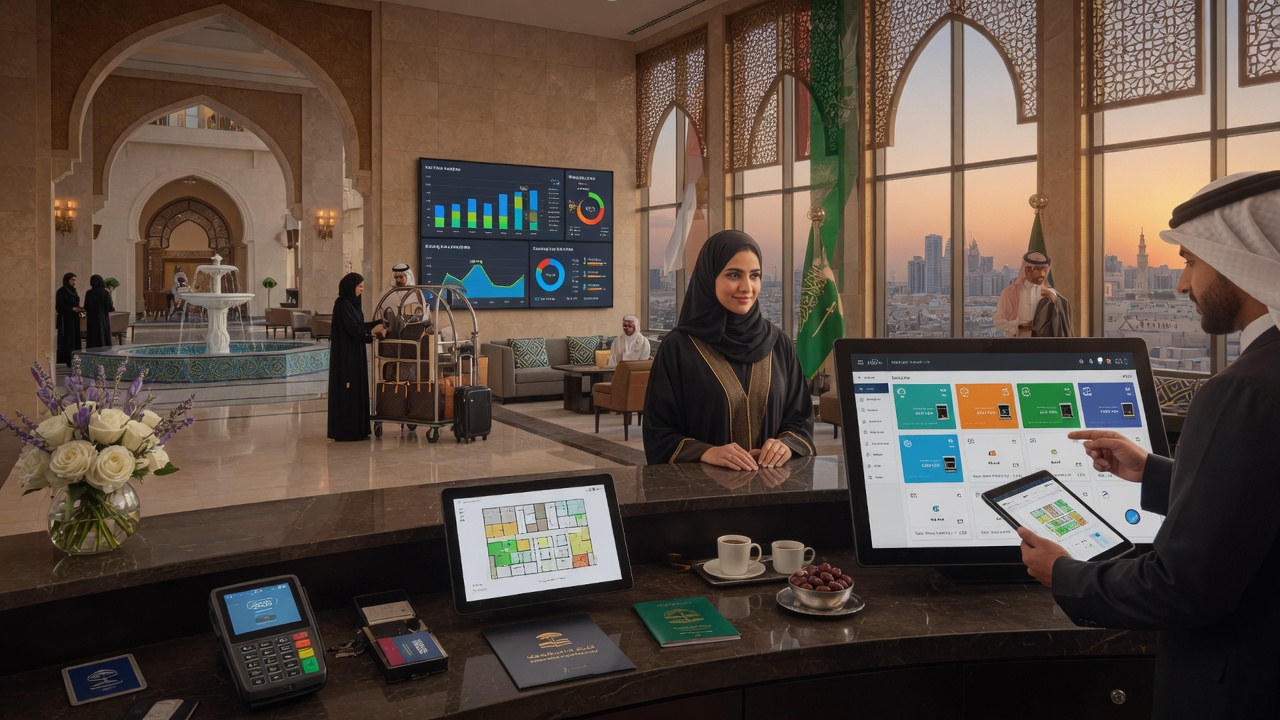
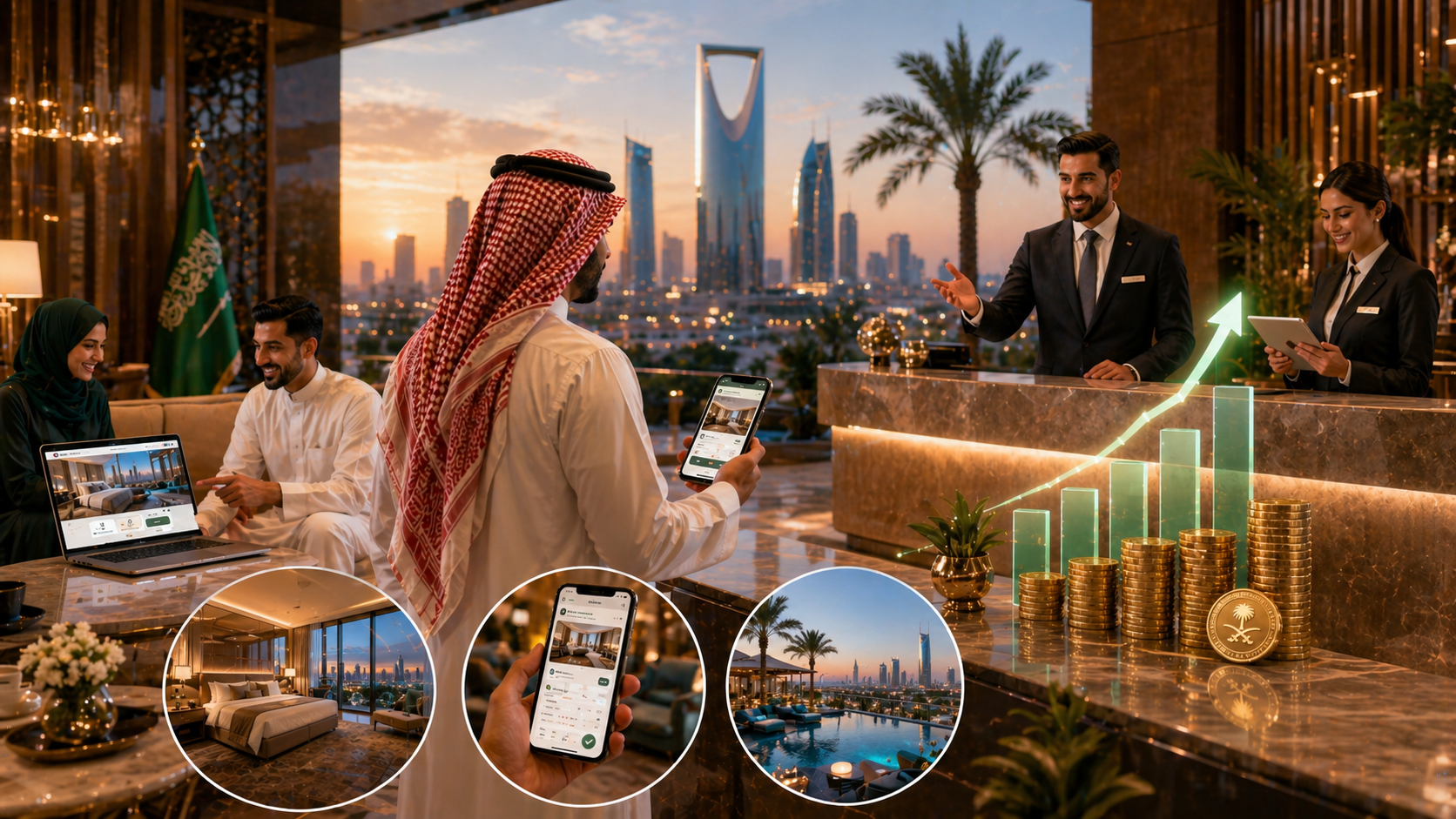
The hospitality landscape in Saudi Arabia is experiencing a paradigm shift. With the Kingdom’s ambitious Vision 2030 fueling an unprecedented tourism boom, AI in Saudi hotels has moved from a futuristic concept to an operational imperative. Integrating smart hospitality transformation strategies—such as AI-powered hotel management, dynamic pricing for hotel rooms, and guest experience optimization—is no longer optional; it’s the clearest path to higher profitability and operational excellence. In this comprehensive guide, you’ll discover exactly how to launch a successful AI journey in your property, whether you run a boutique hotel in AlUla or a luxury resort on the Red Sea coast. We’ll cover practical steps, real‑world Saudi use cases, and future trends that align with the nation’s digital-first vision.
What Is Smart Transformation in Saudi Hospitality?
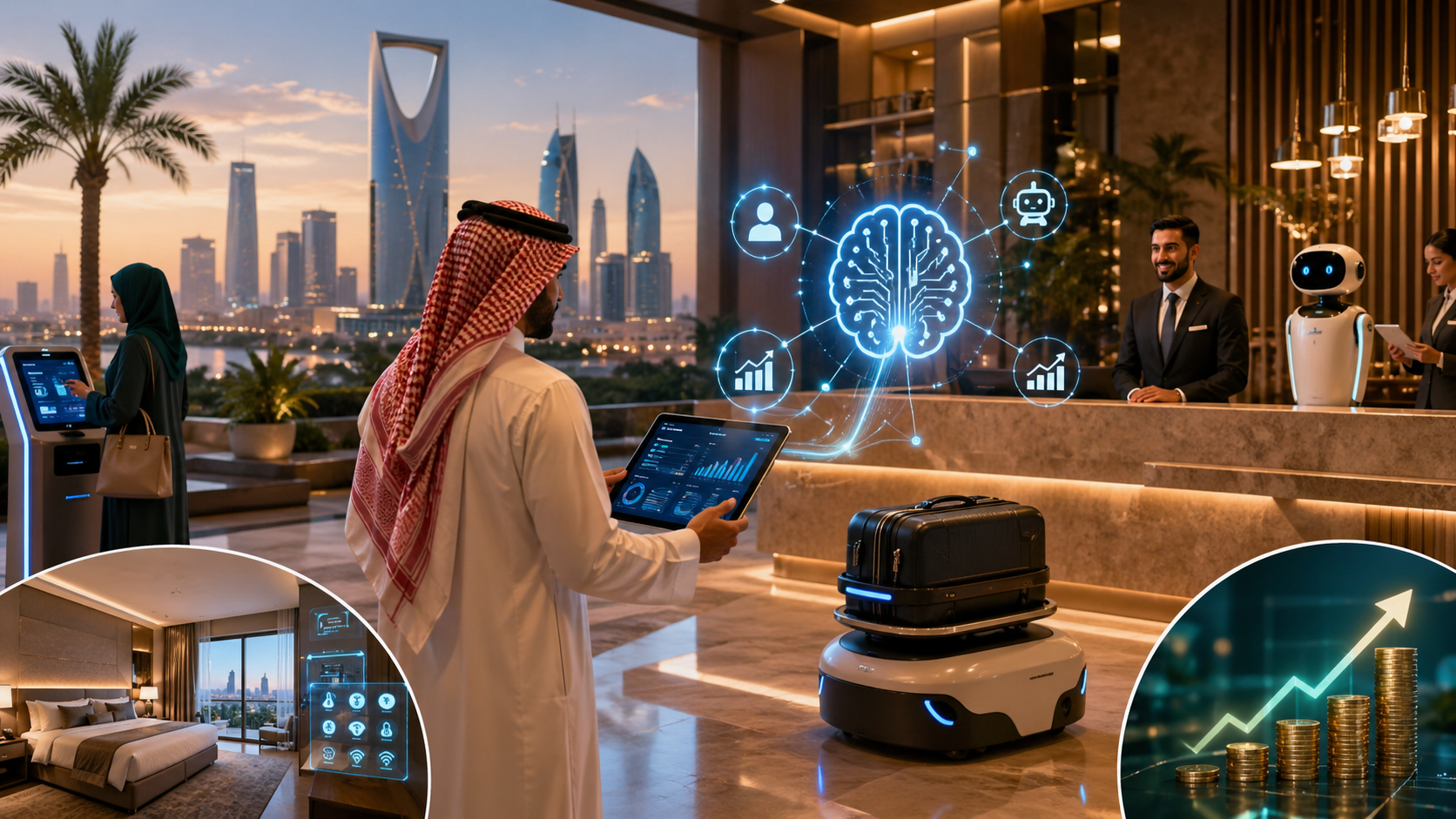
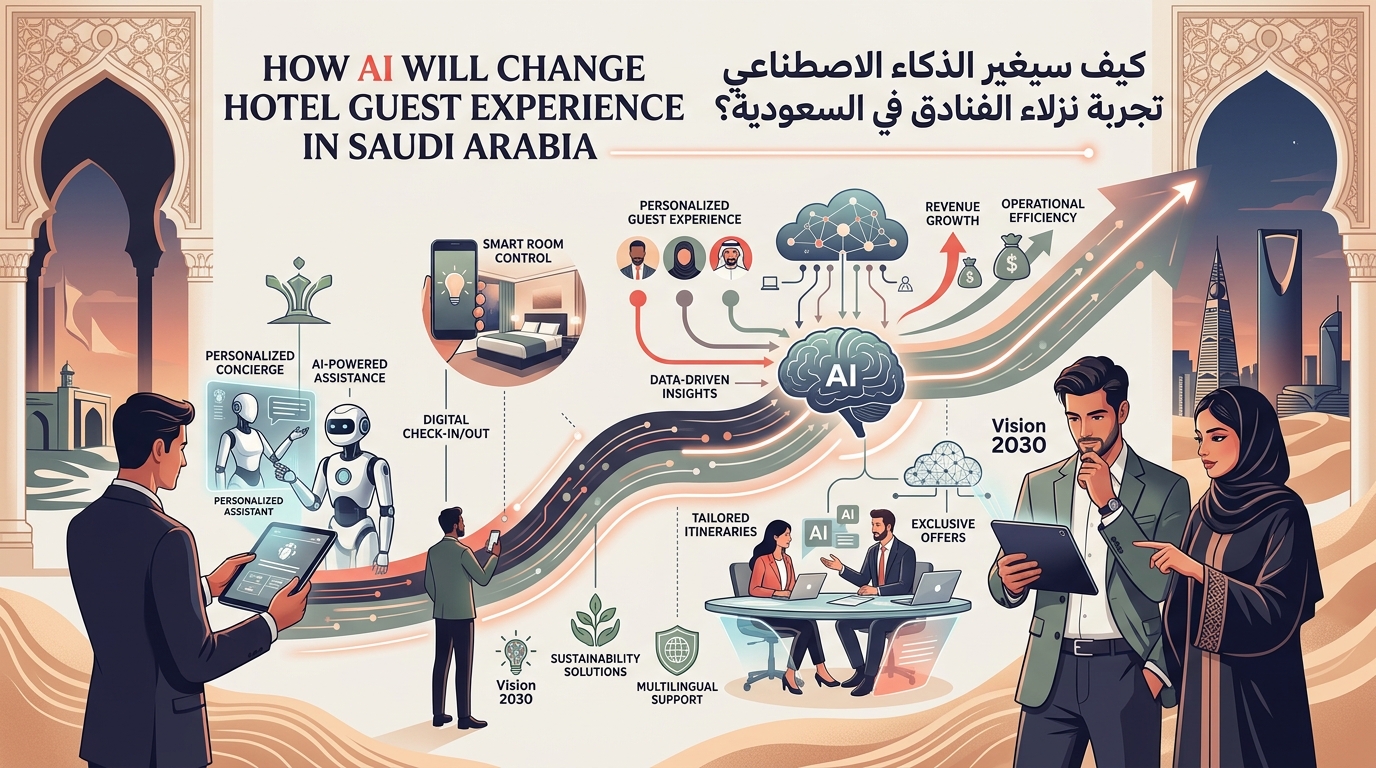
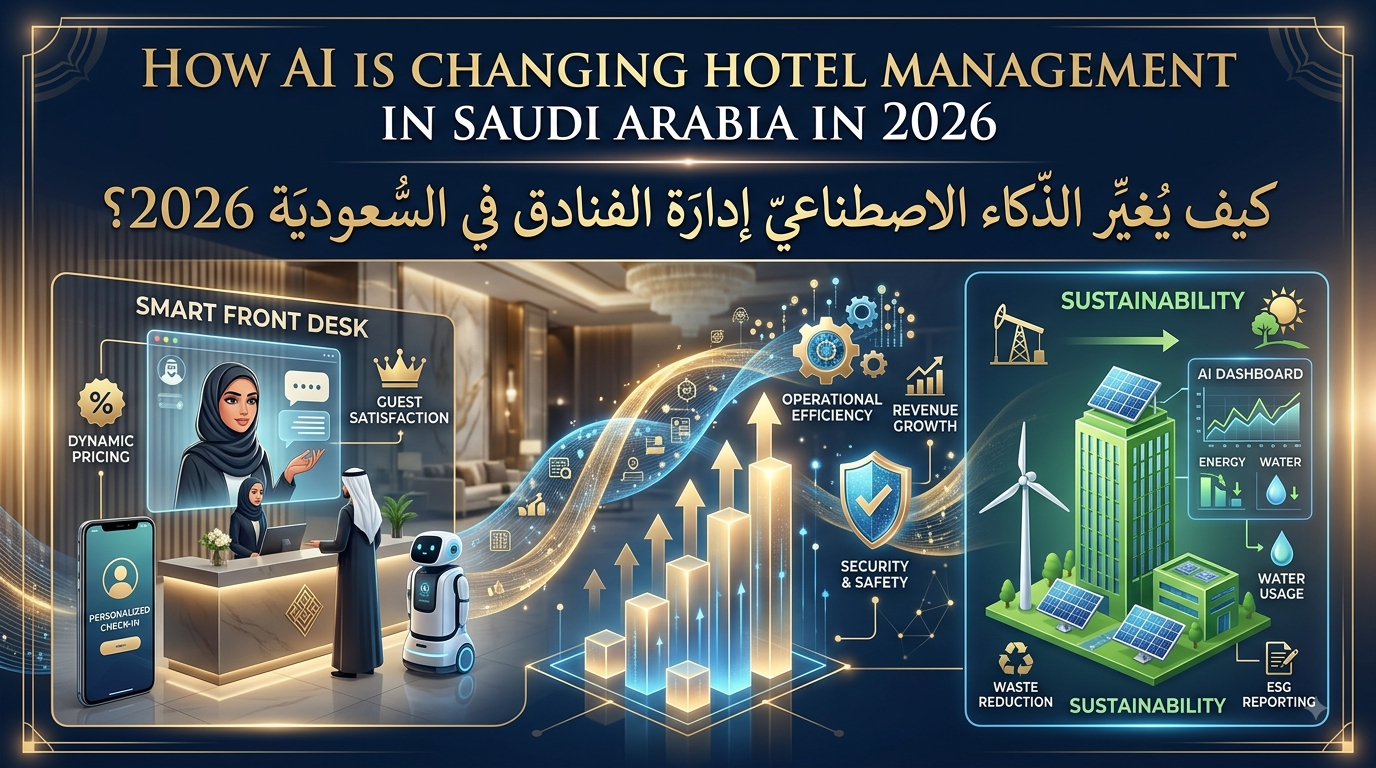
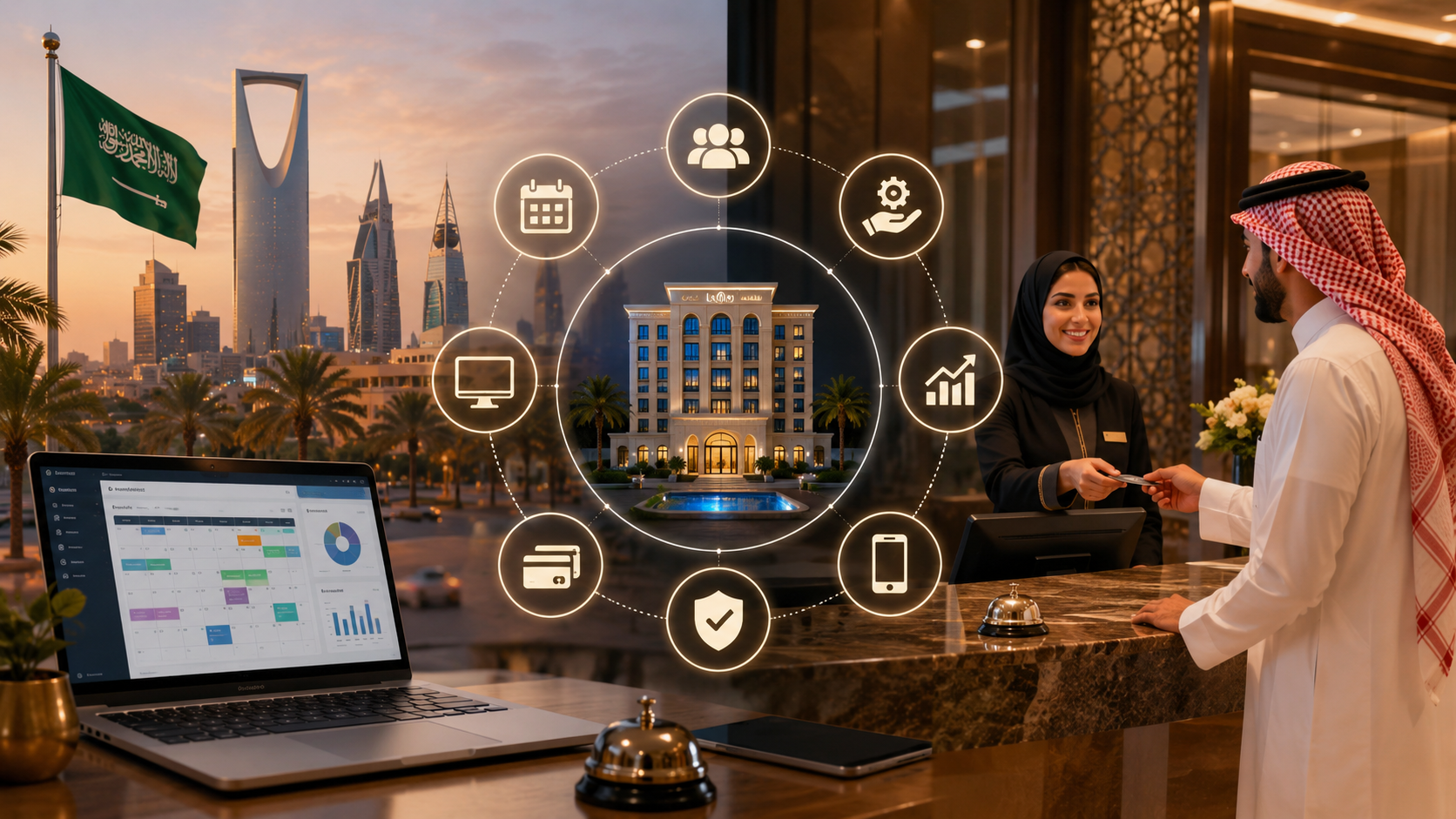
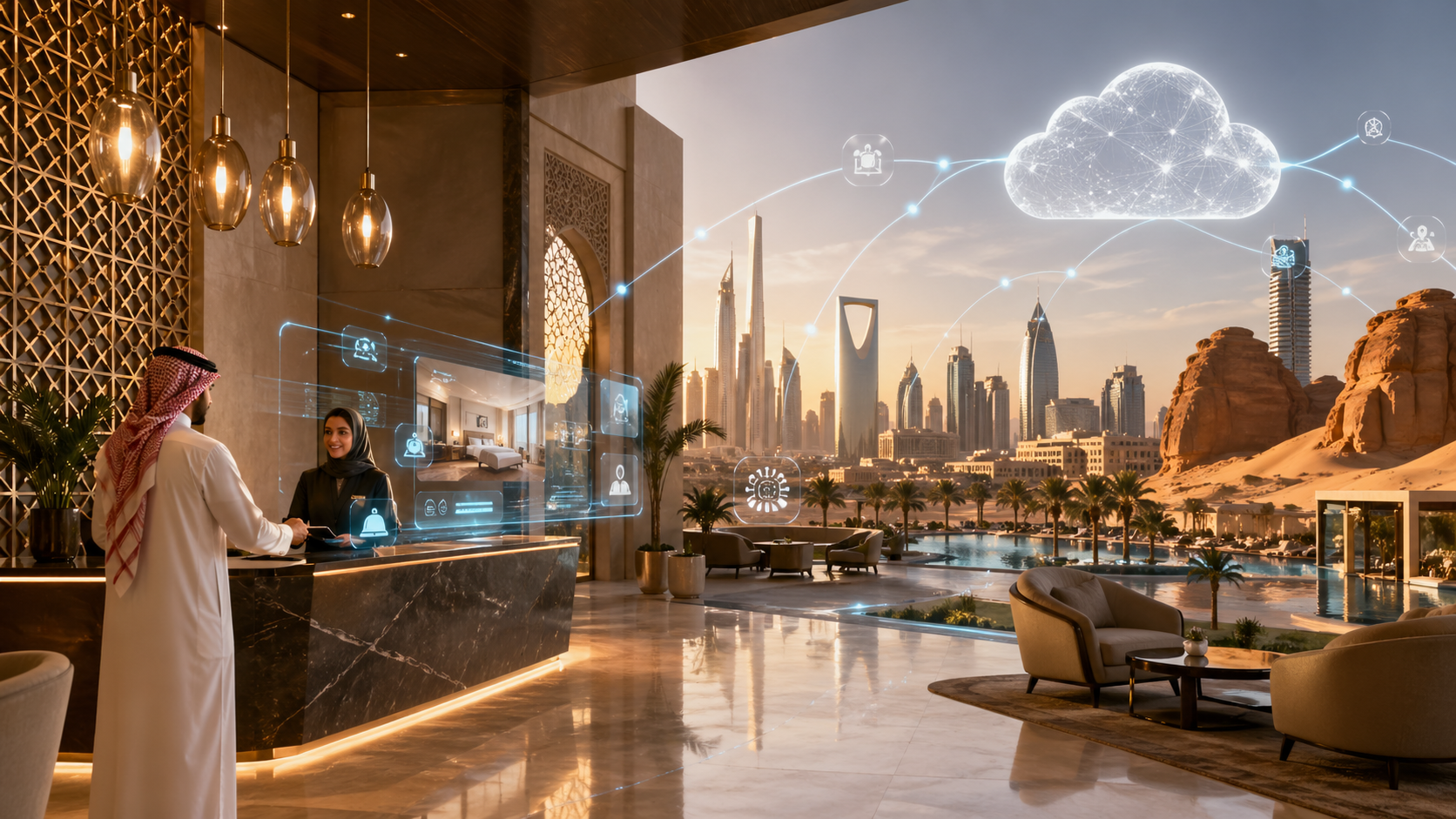
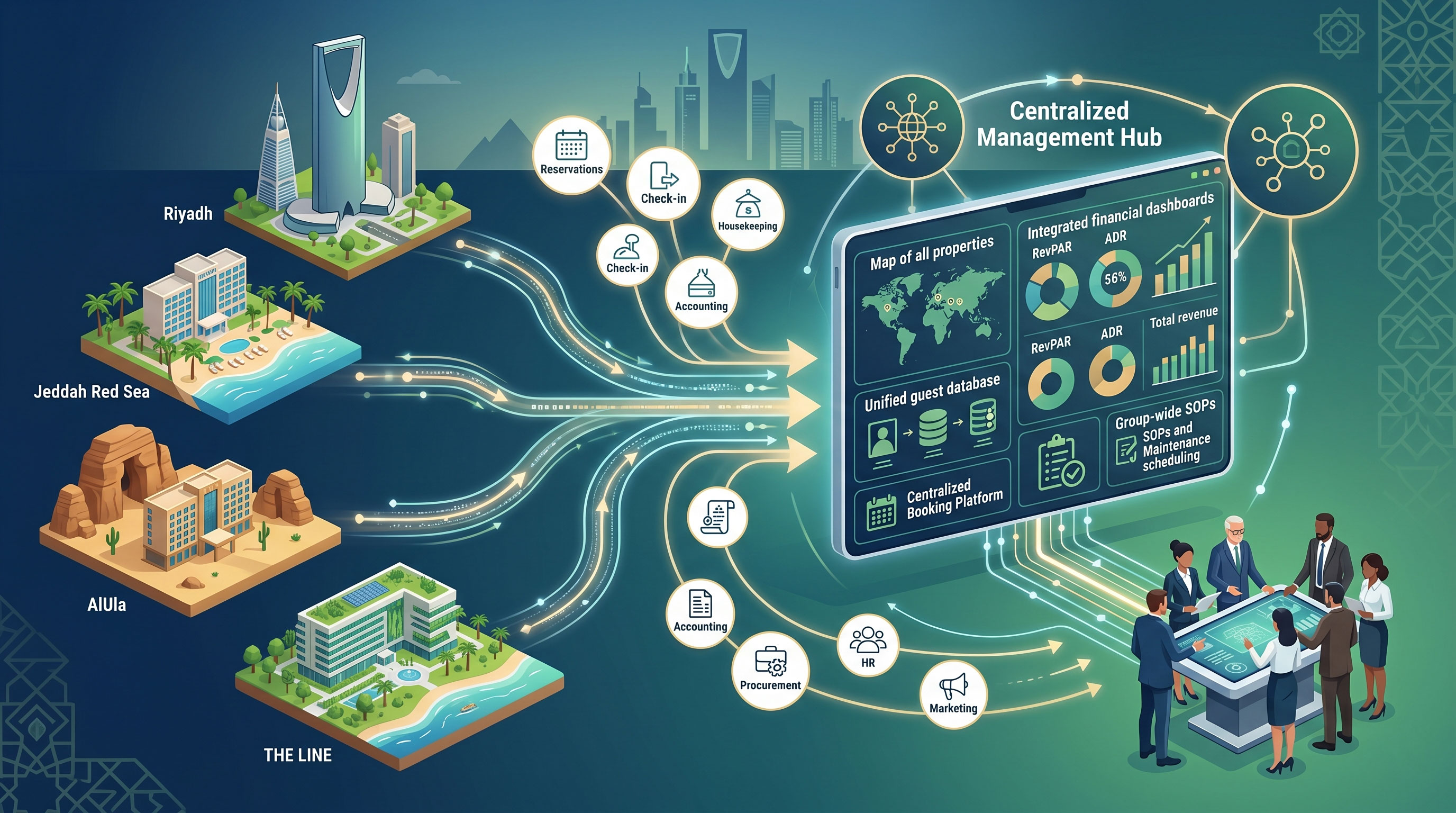
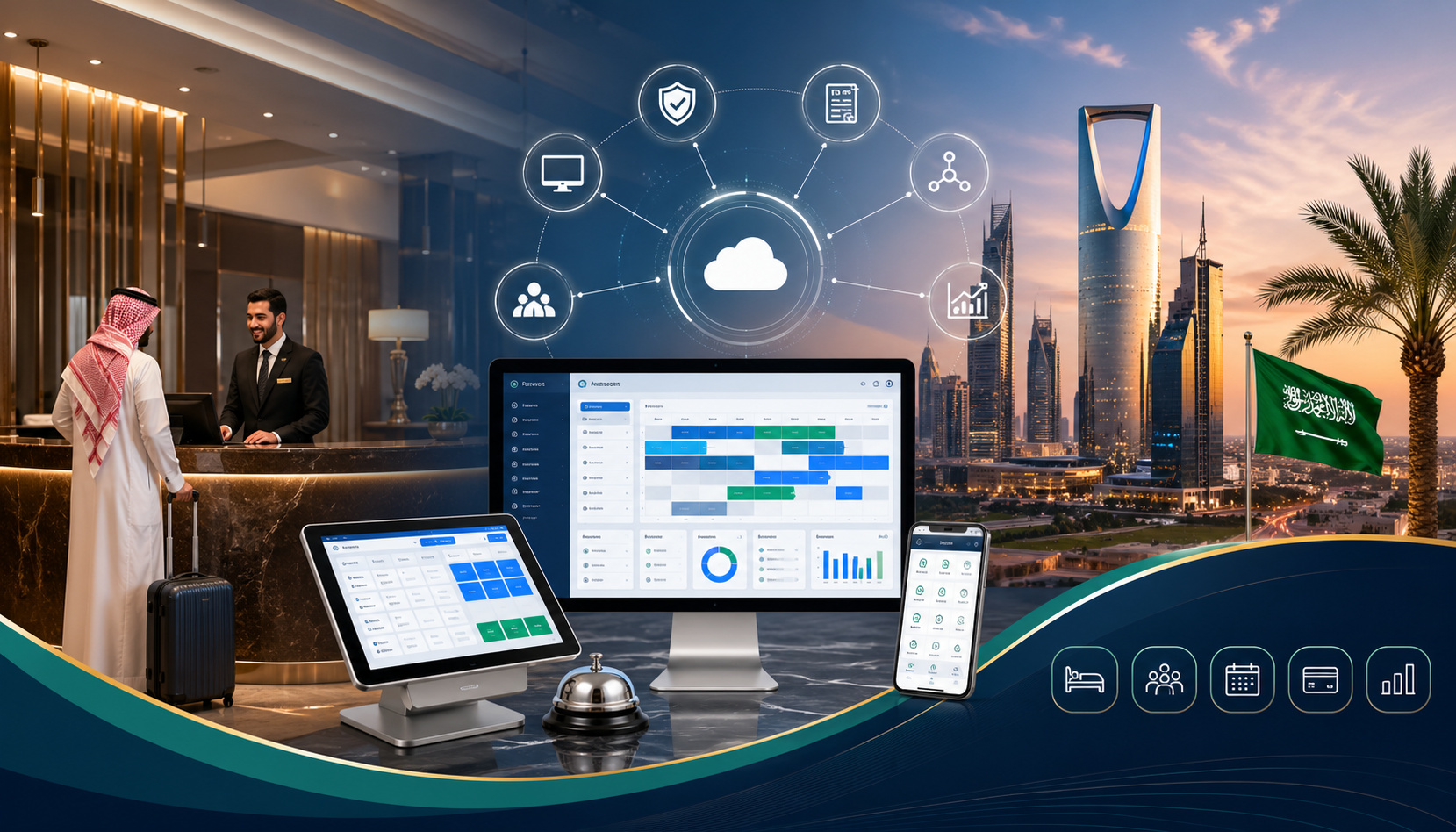
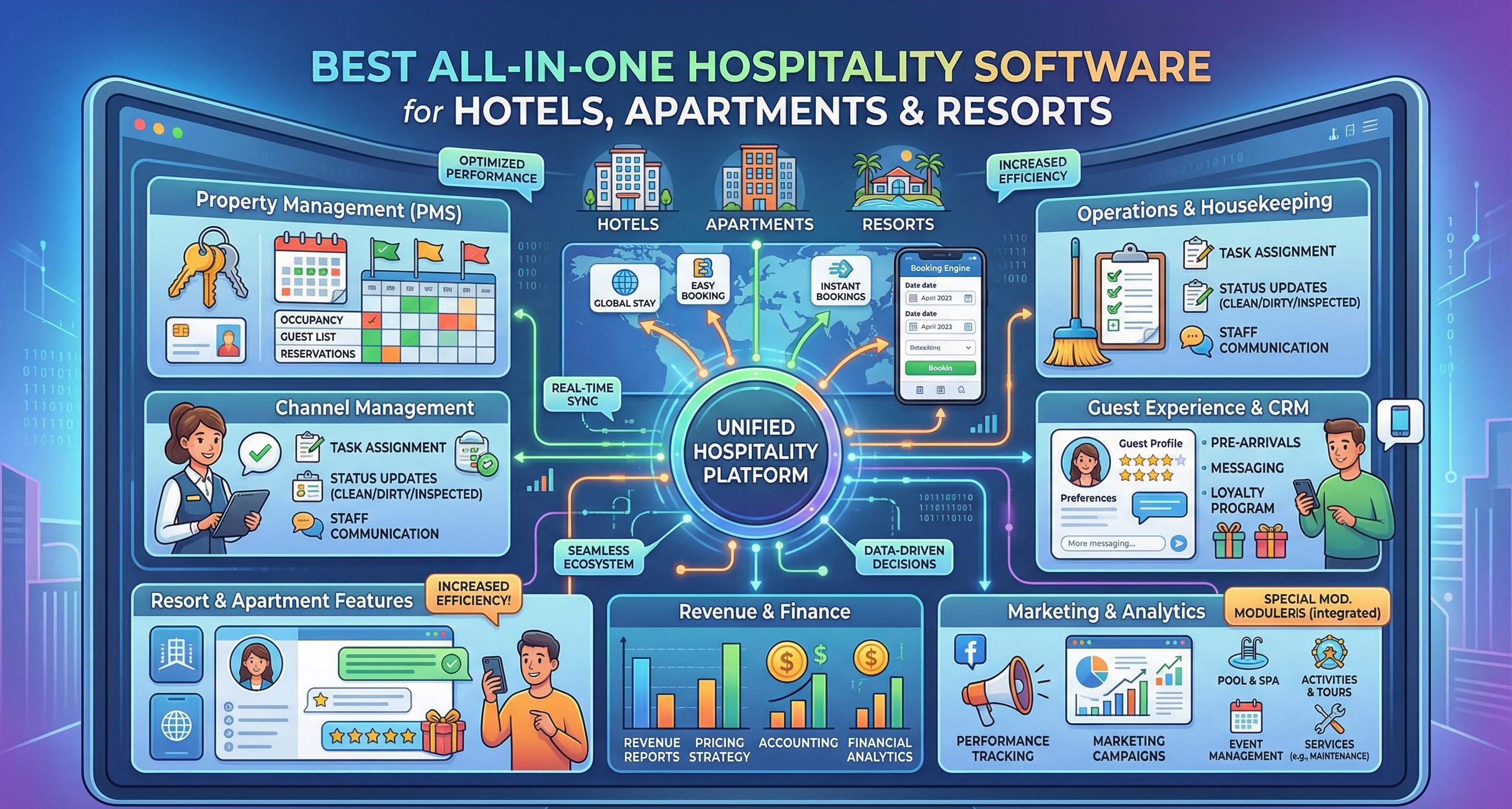
At its core, AI in Saudi hotels refers to the deployment of machine learning, natural language processing, and predictive analytics to automate operations, personalize guest services, and generate actionable insights. It’s about moving from static, manual processes to an intelligent ecosystem powered by AI-driven tourism technology. Imagine a hotel where your booking engine adjusts prices in real time based on local events, your maintenance team receives alerts before equipment fails, and a hotel chatbot converses fluently in both English and Arabic, handling check‑in requests at 2 a.m. This is the reality of digital transformation in Saudi hotels, and it’s built on three pillars: data integration, intelligent automation, and hyper‑personalization.
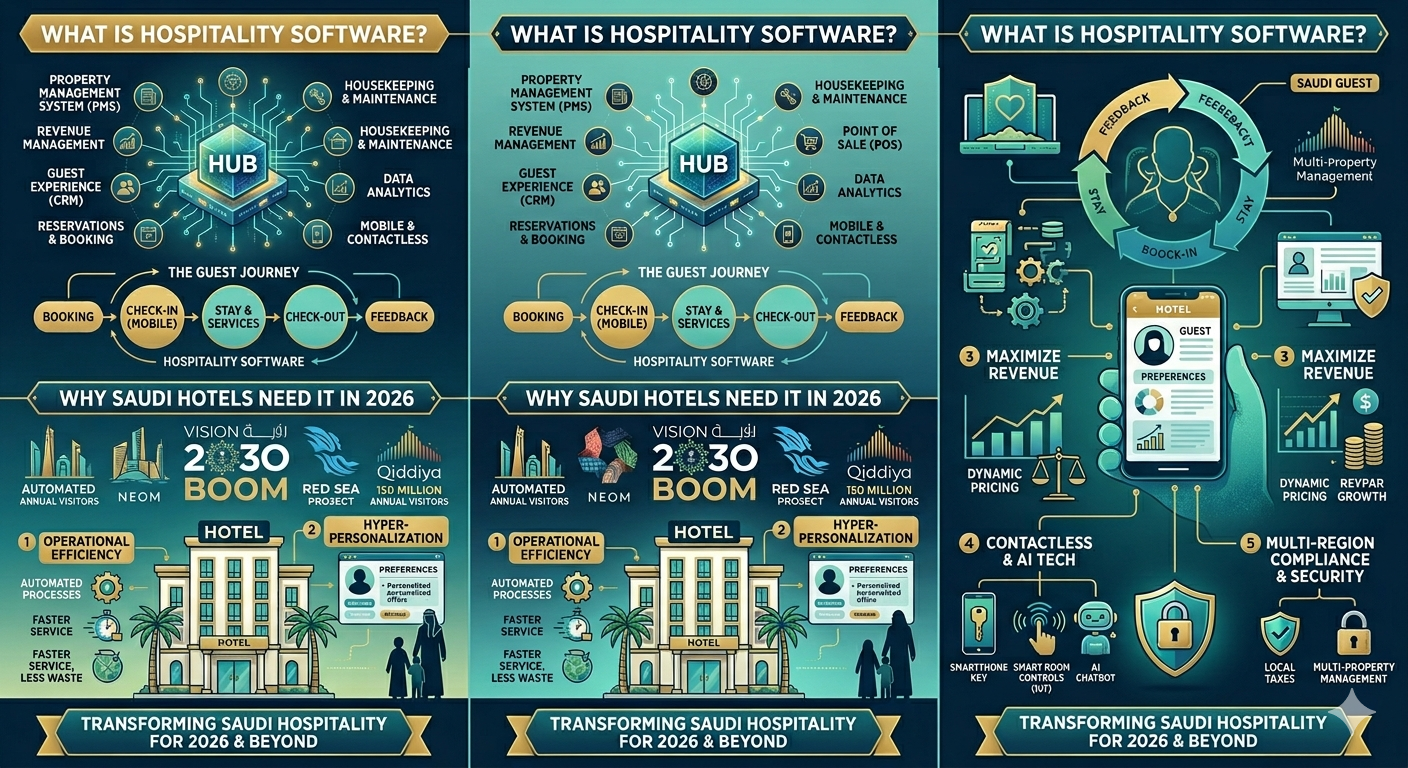
The Saudi market is uniquely positioned for this shift. With large‑scale projects like NEOM, the Red Sea Project, and Diriyah Gate, the government is actively incentivizing technology adoption. Moreover, the Saudi Data and Artificial Intelligence Authority (SDAIA) has established clear guidelines to ensure AI implementation respects privacy while encouraging innovation. For hoteliers, this means a supportive ecosystem where smart hotel technology in Saudi Arabia can thrive. From Jeddah to Riyadh, properties that embrace AI are already witnessing marked improvements in RevPAR (revenue per available room) and guest satisfaction scores.
Strategic Insight
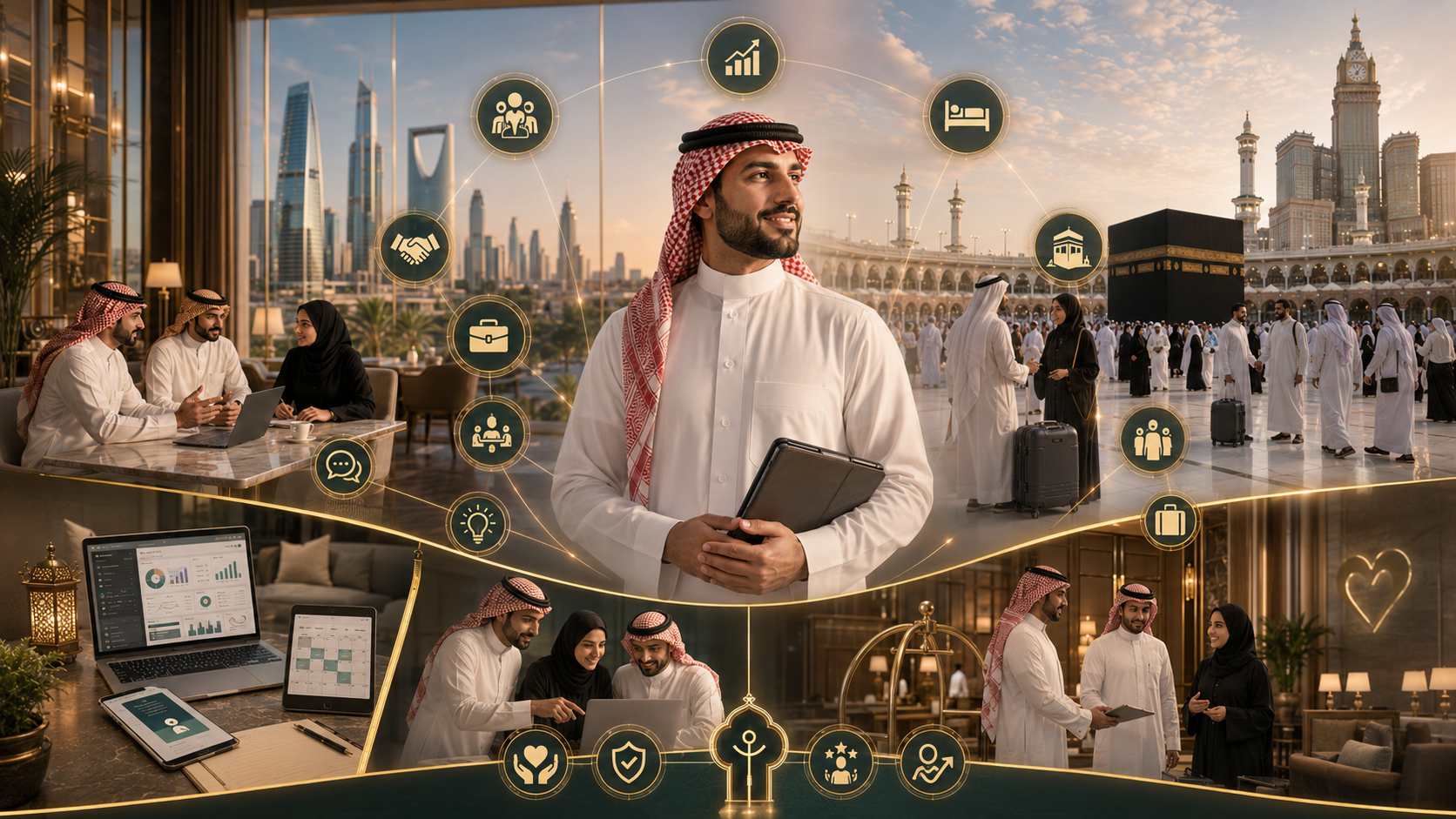
Adopting AI does not mean replacing your team’s warmth and hospitality. In Saudi culture, personal connection is paramount. Technology here acts as an enabler—freeing your staff from repetitive tasks so they can focus on delivering the genuine Arab hospitality that guests expect.
Key Benefits of AI-Powered Hotel Management
Implementing AI guest service automation yields tangible results across every department. Below are the most impactful advantages for Saudi hotel owners and operators:
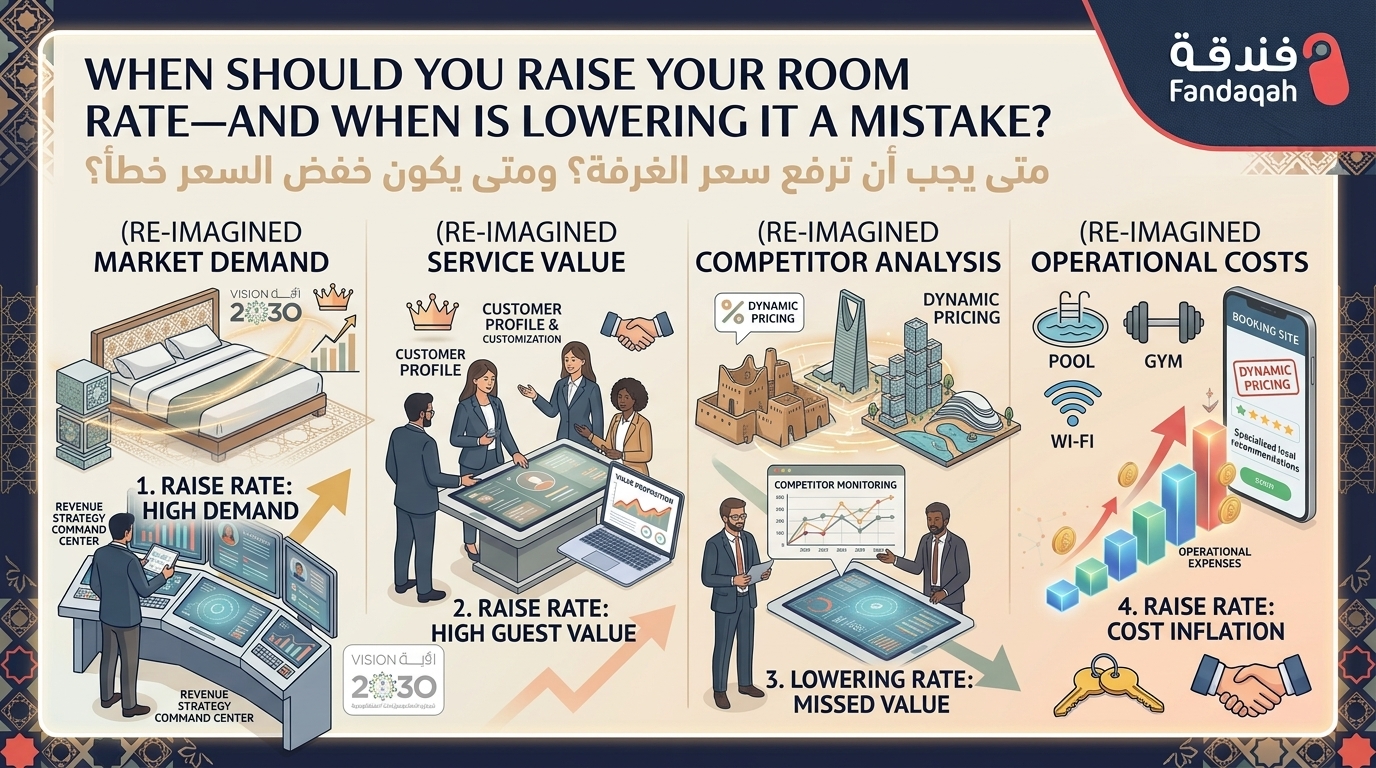
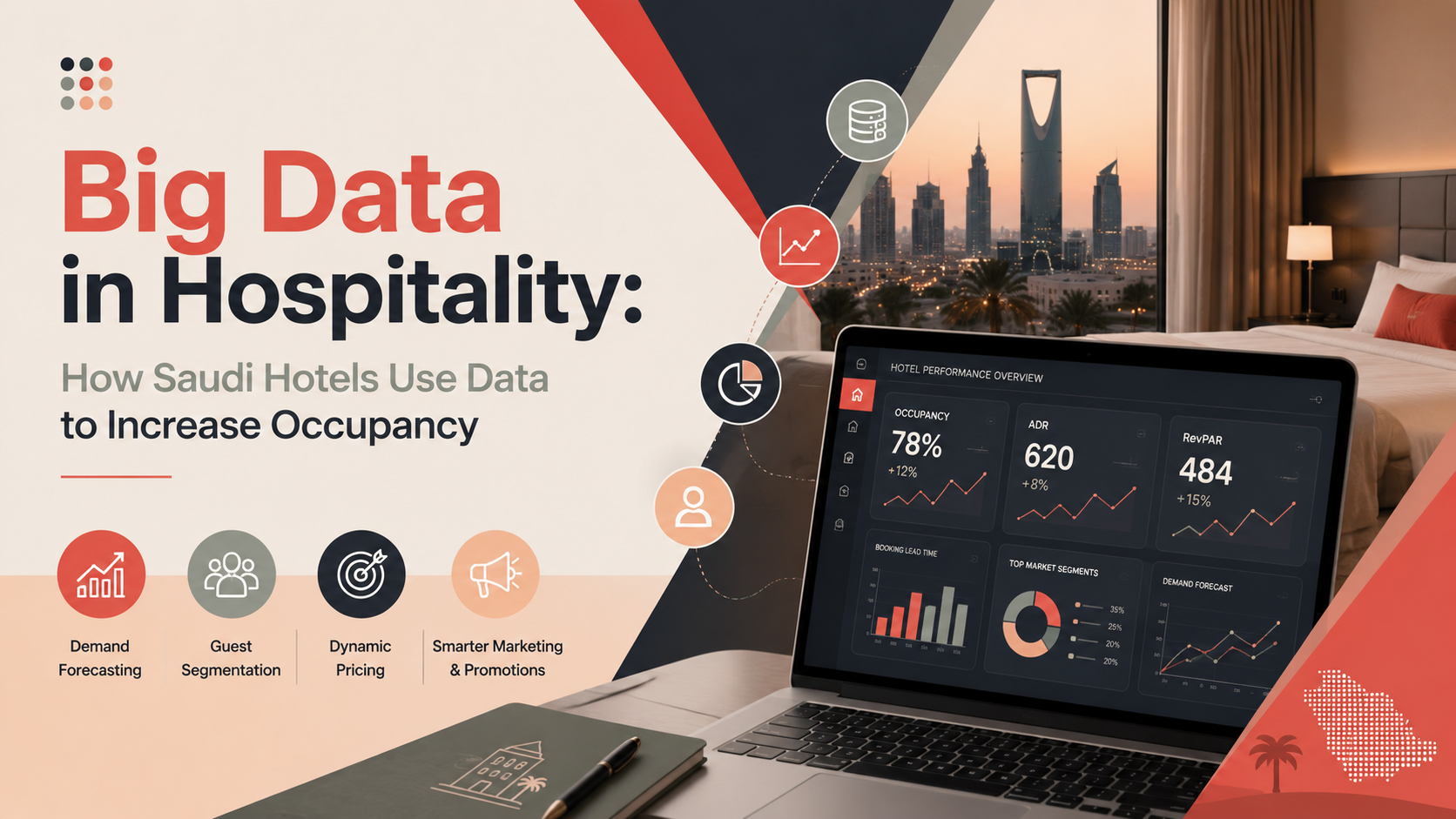
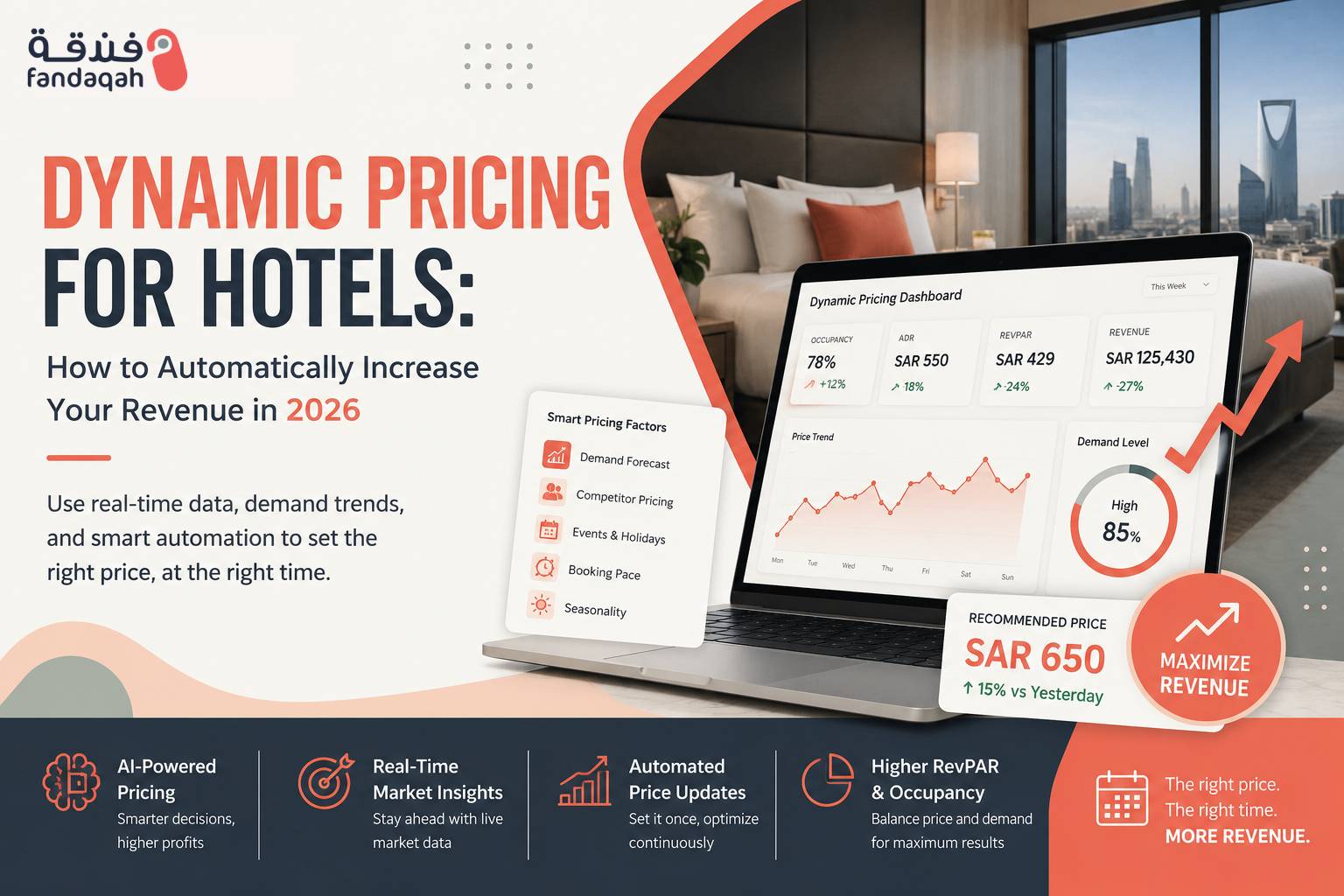
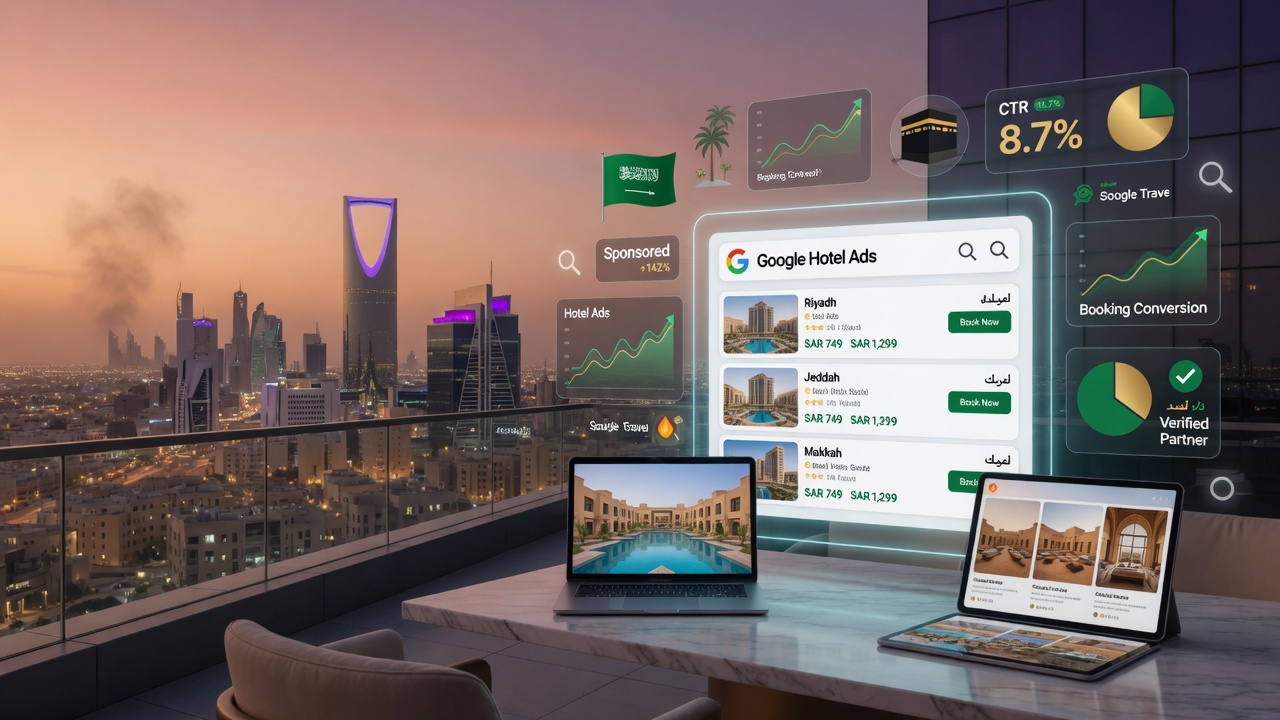
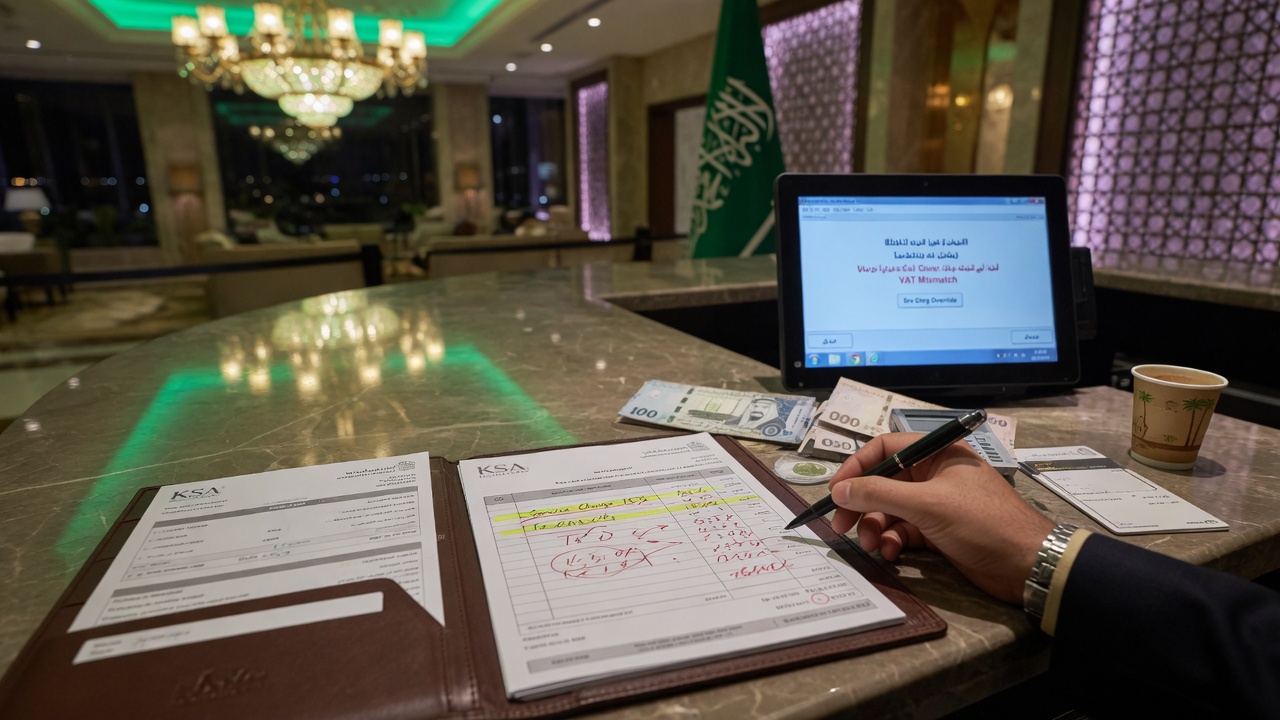
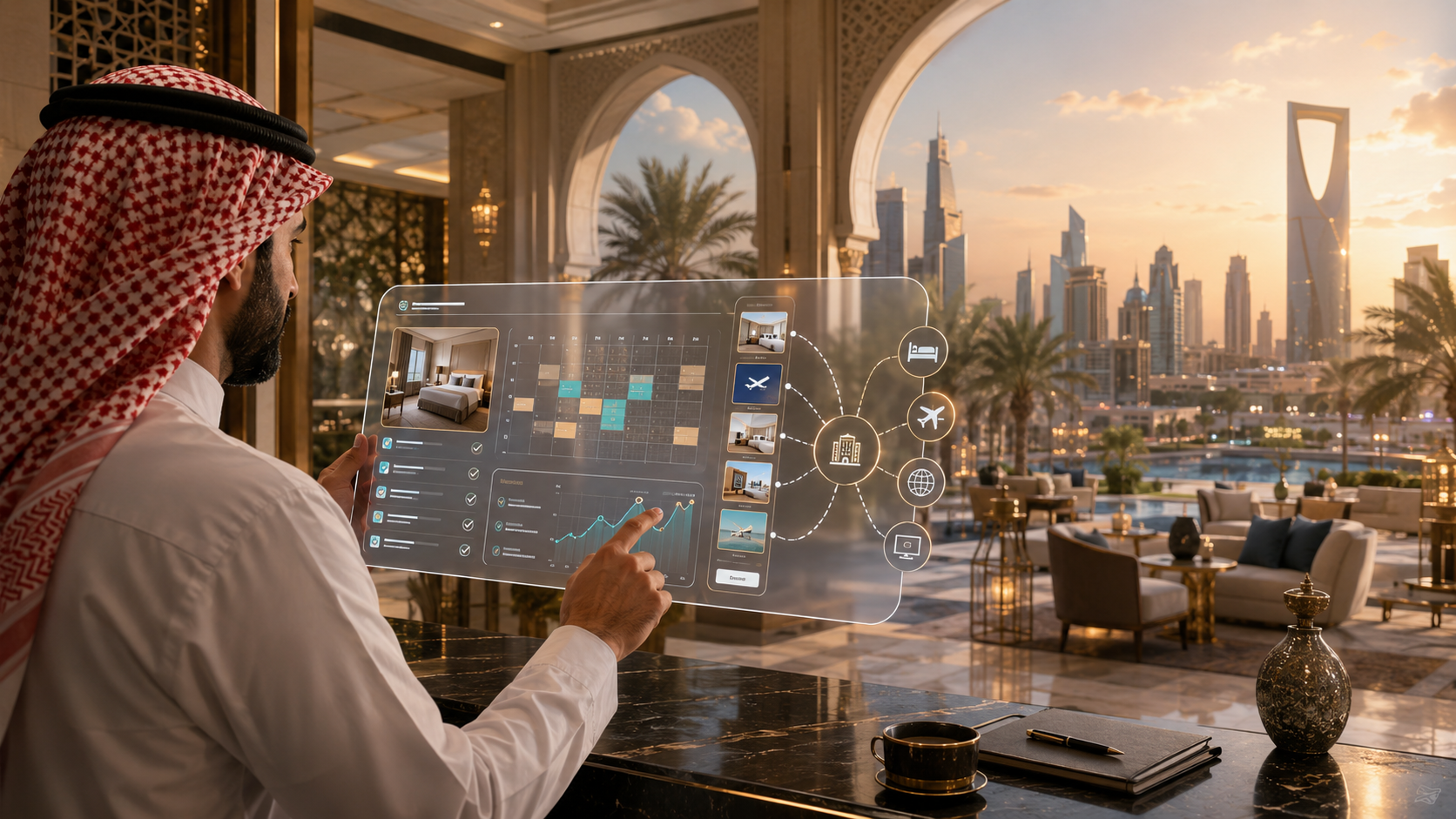
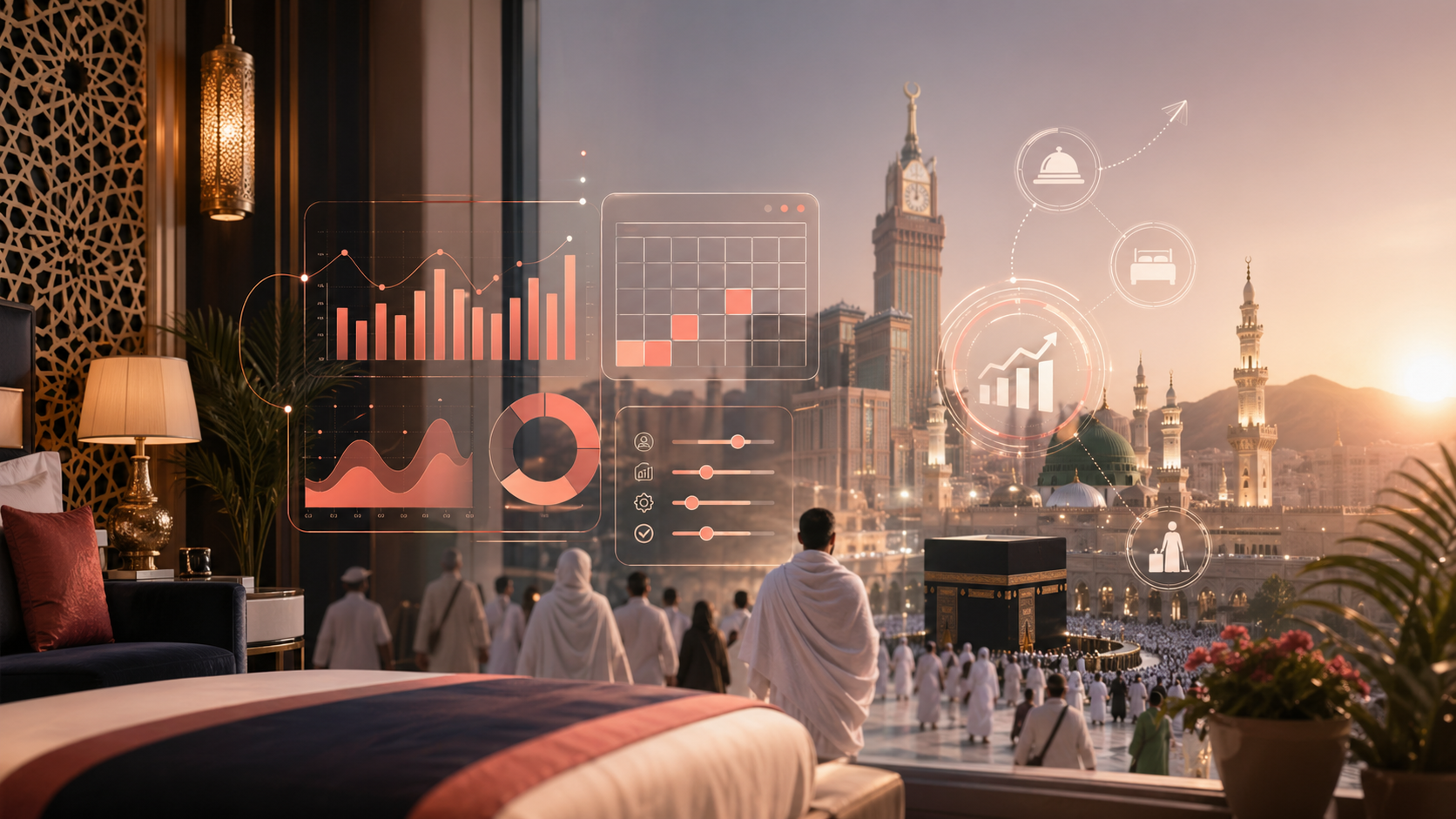
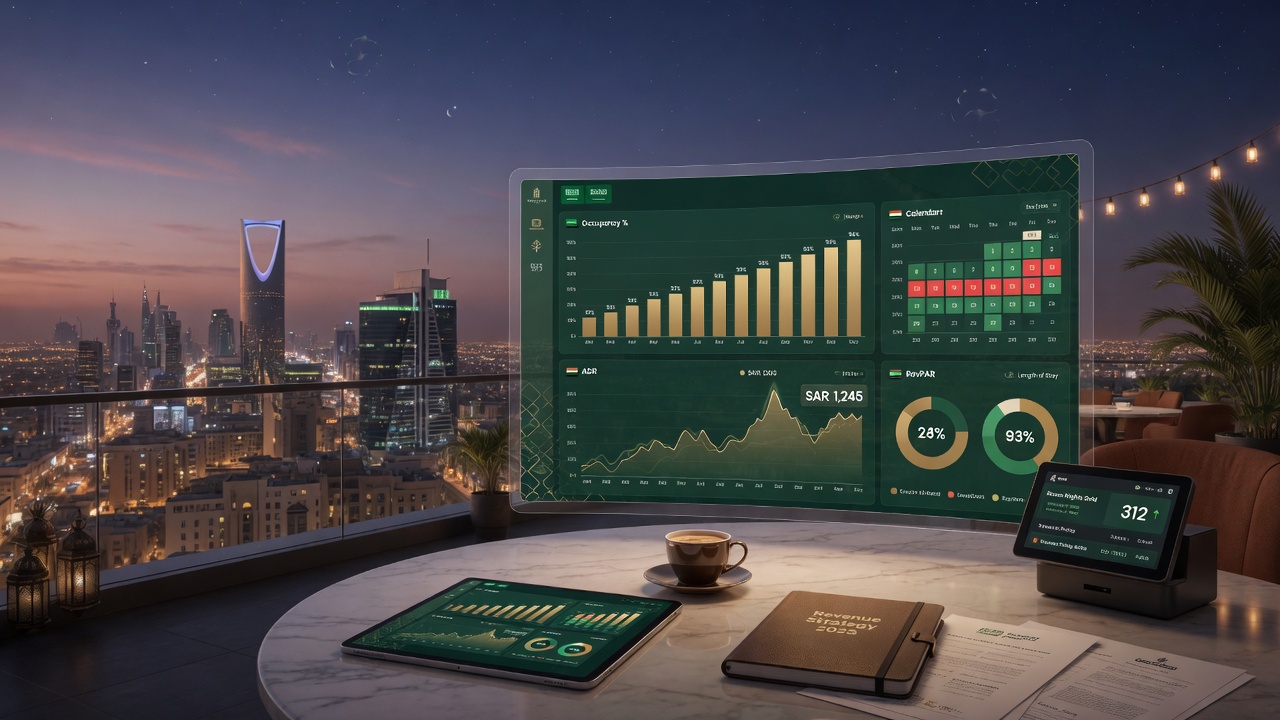
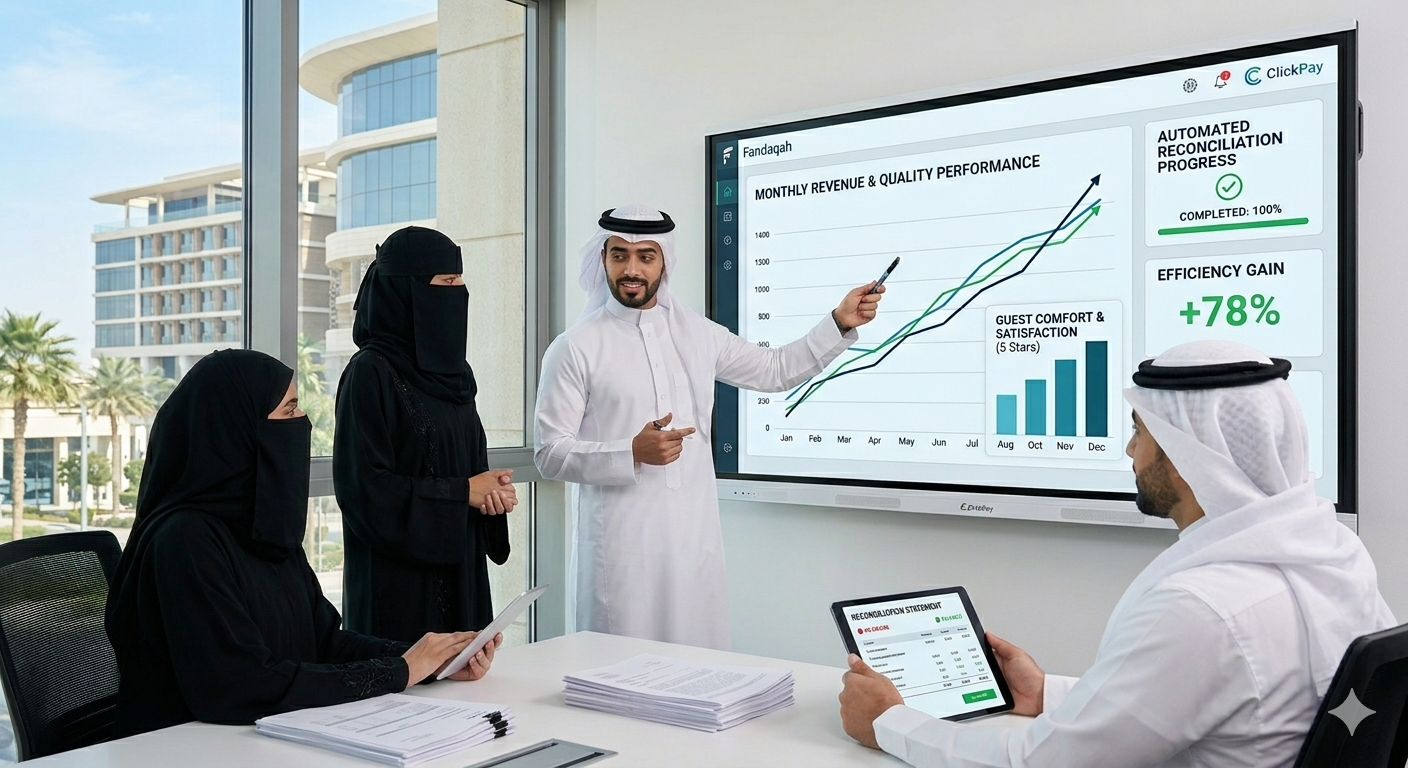
- Revenue uplift through dynamic pricing: Algorithms analyze local demand patterns, competitor rates, and even weather forecasts to set optimal room prices. A dynamic pricing for hotel rooms engine can lift your ADR by up to 15% during peak seasons like Riyadh Season or Hajj.
- Cost reduction via automation: A single AI concierge chatbot can handle thousands of simultaneous inquiries, cutting front‑desk workload by 40% and reducing the need for overnight staffing.
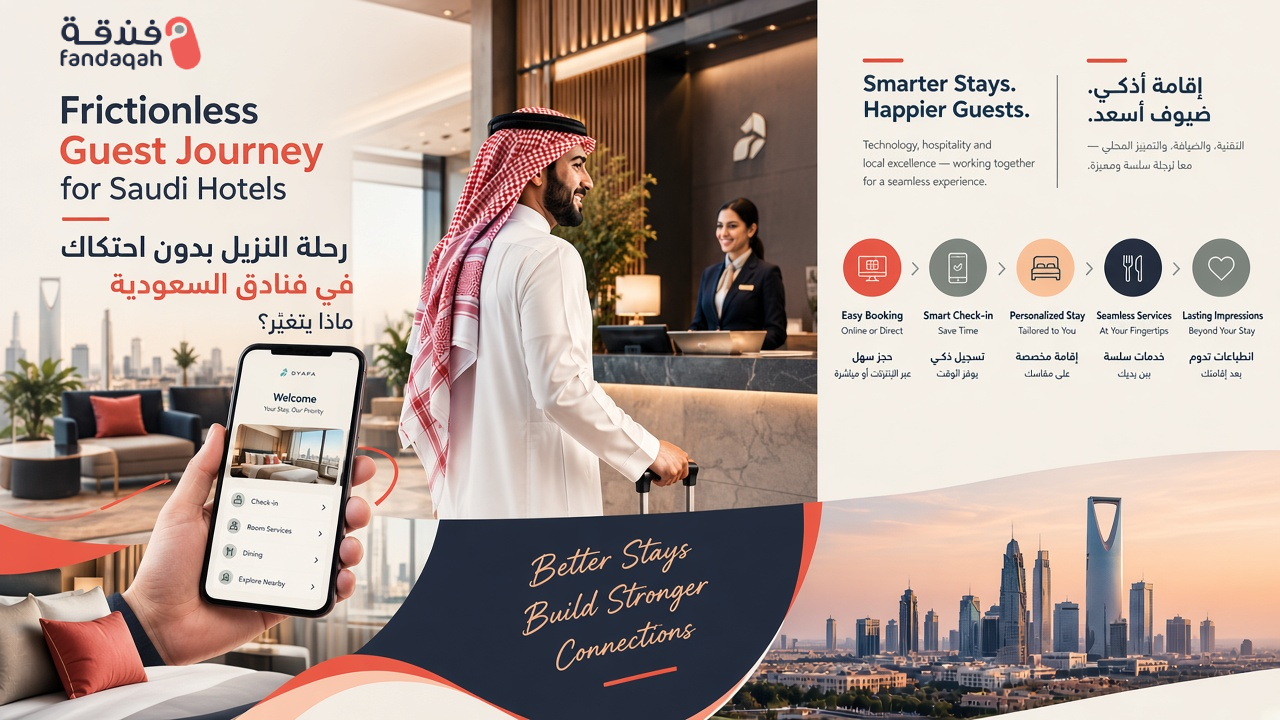
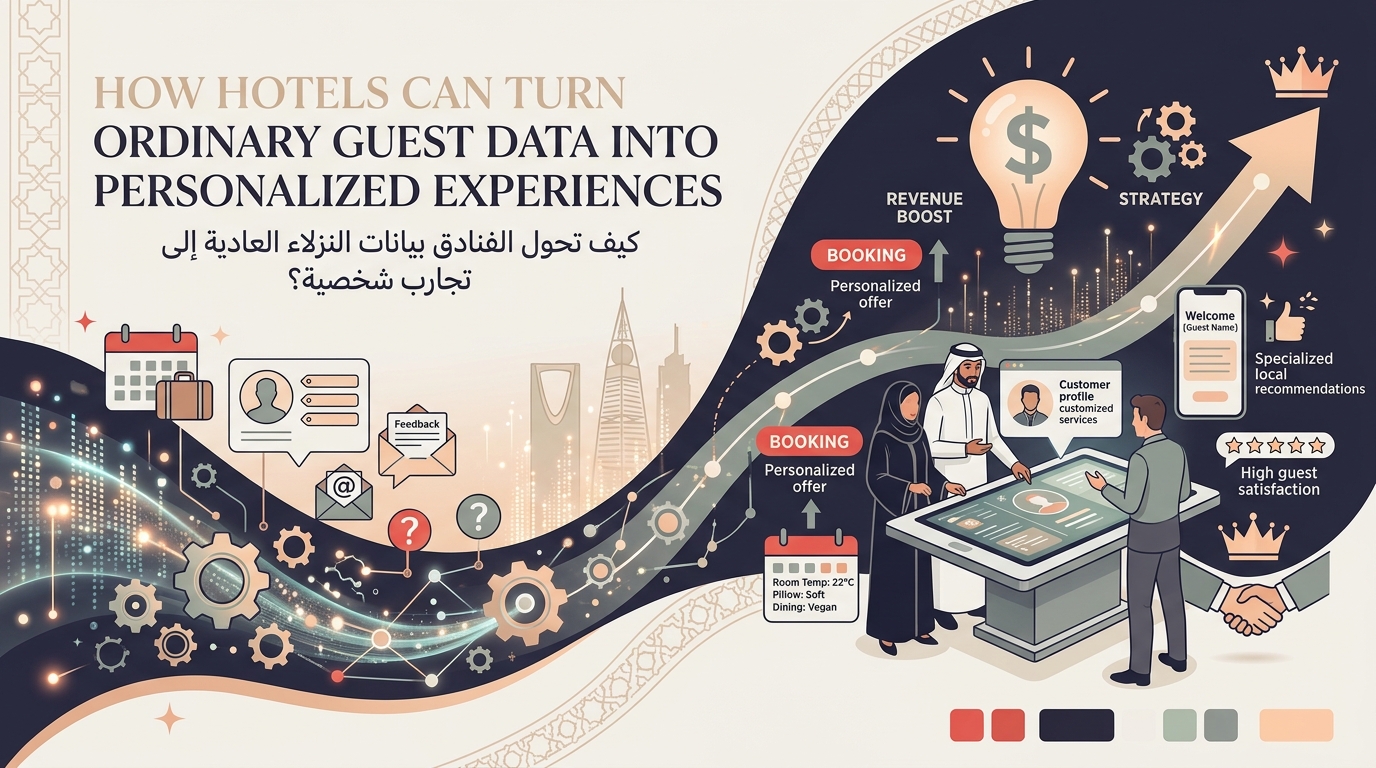
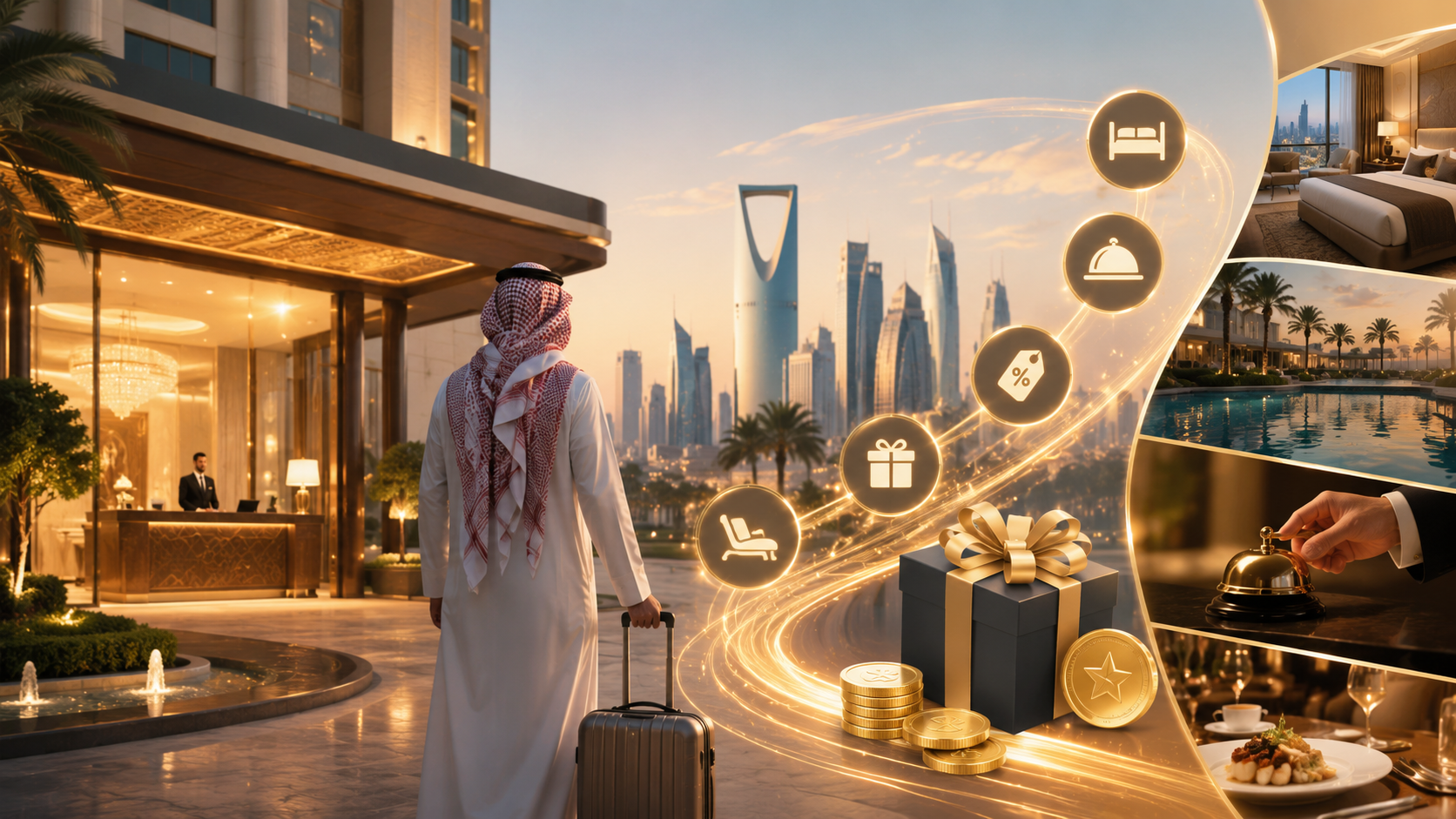
- Enhanced guest experience: Machine learning models build unique profiles for each guest, recommending spa treatments, dining reservations, or local tours based on past behavior—a true guest experience optimization engine.
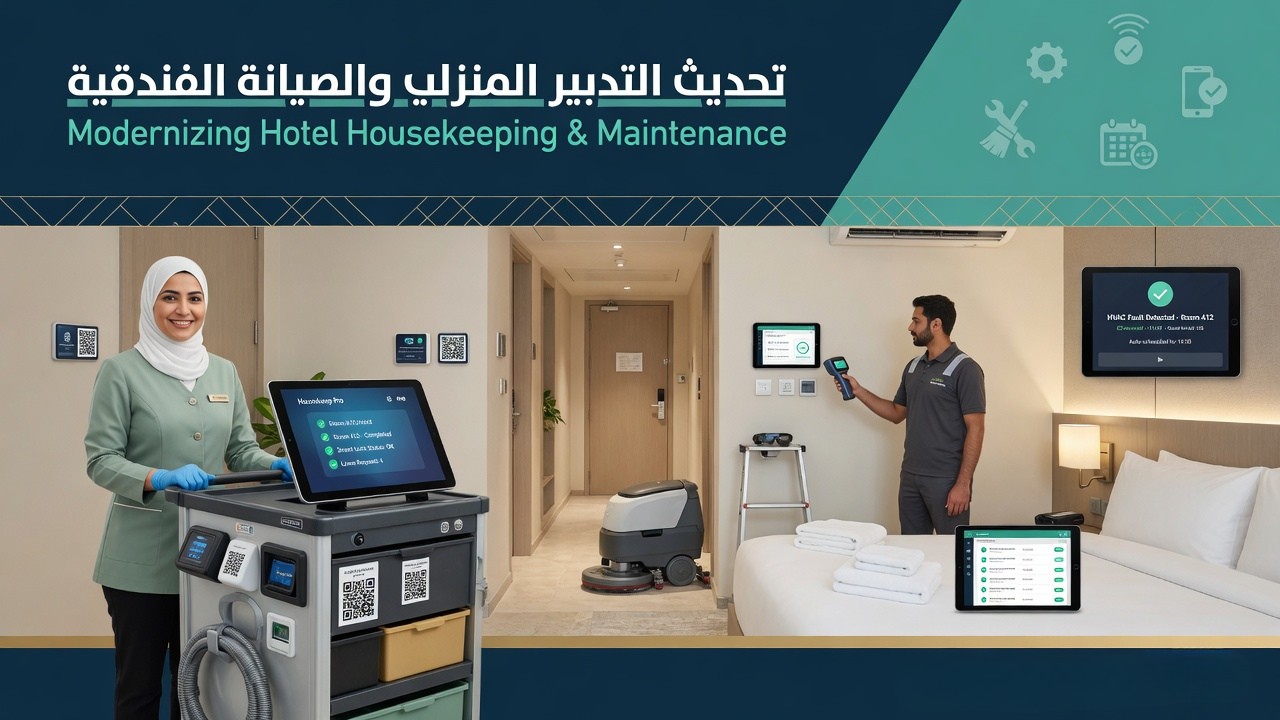
- Predictive maintenance: IoT sensors paired with AI detect anomalies in HVAC or plumbing systems before they cause guest discomfort, saving up to 25% in emergency repair costs.
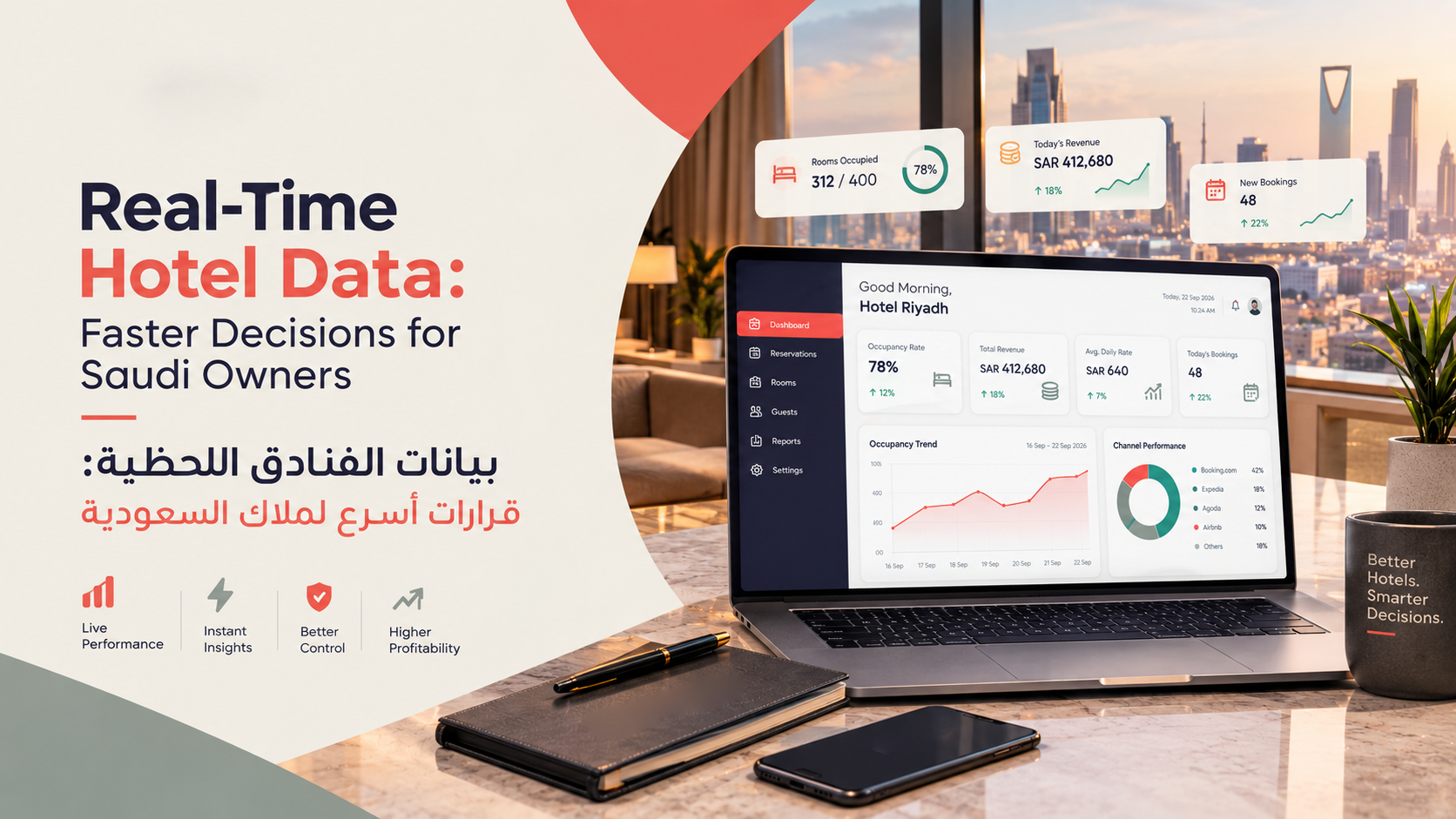
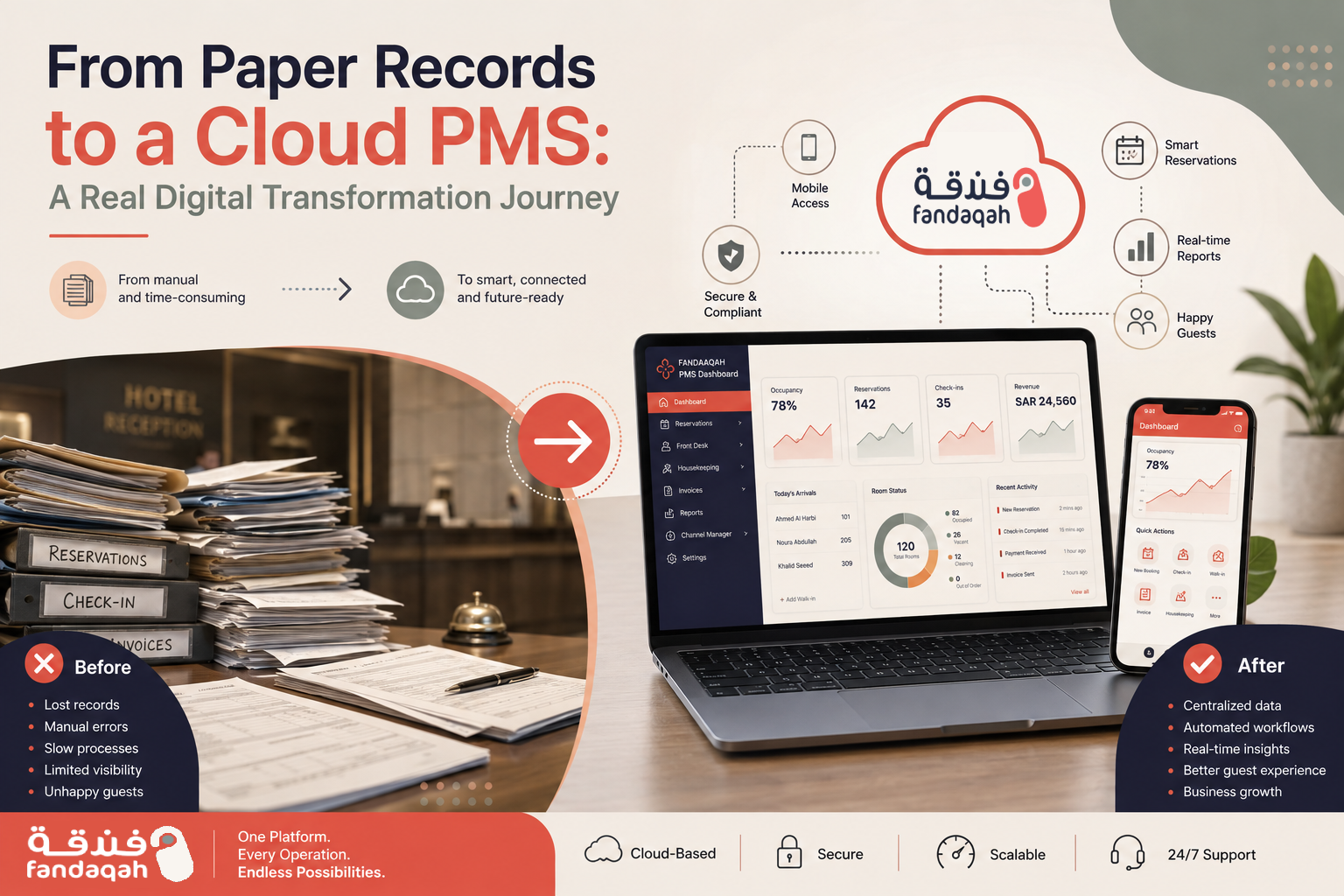
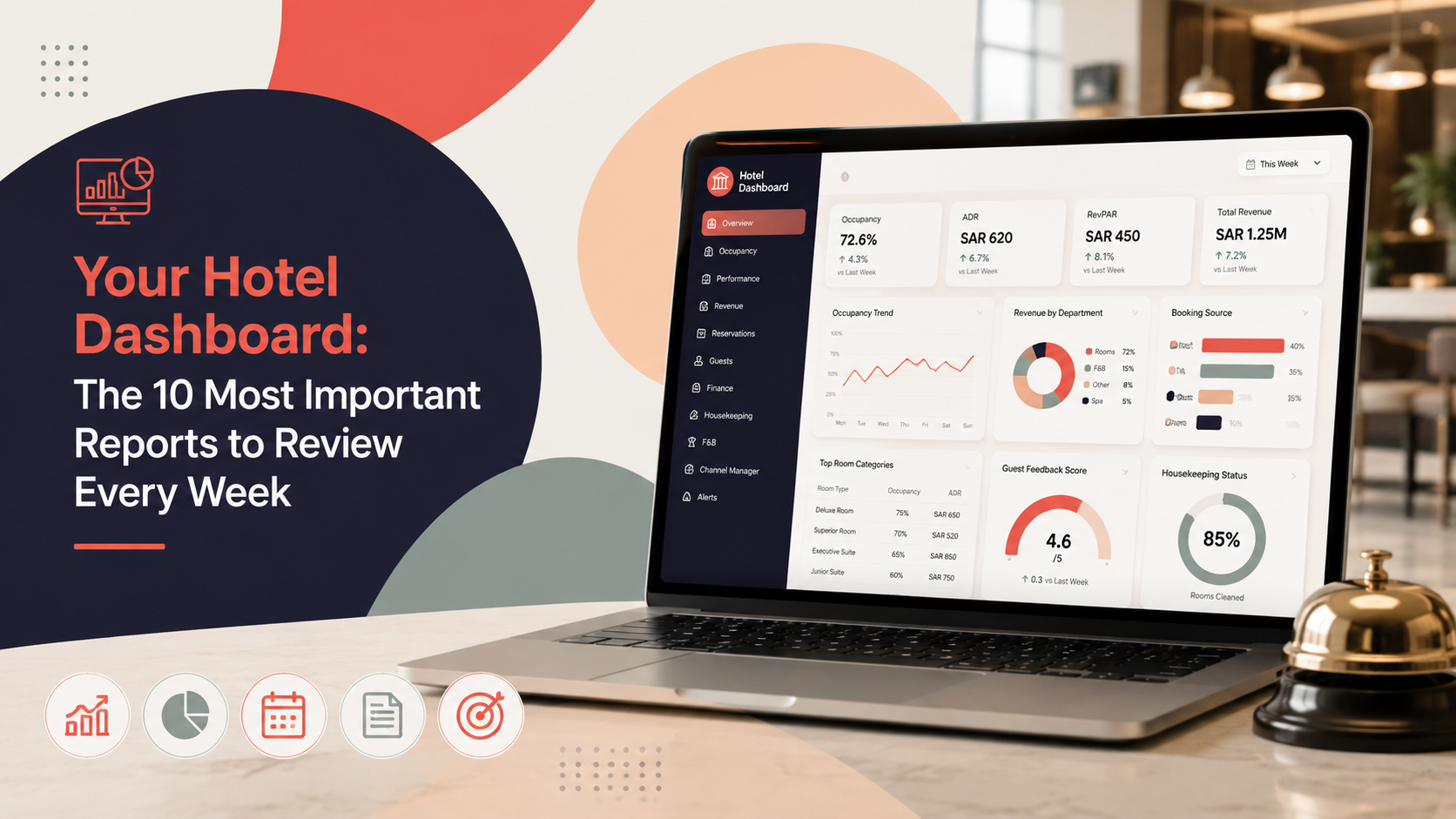
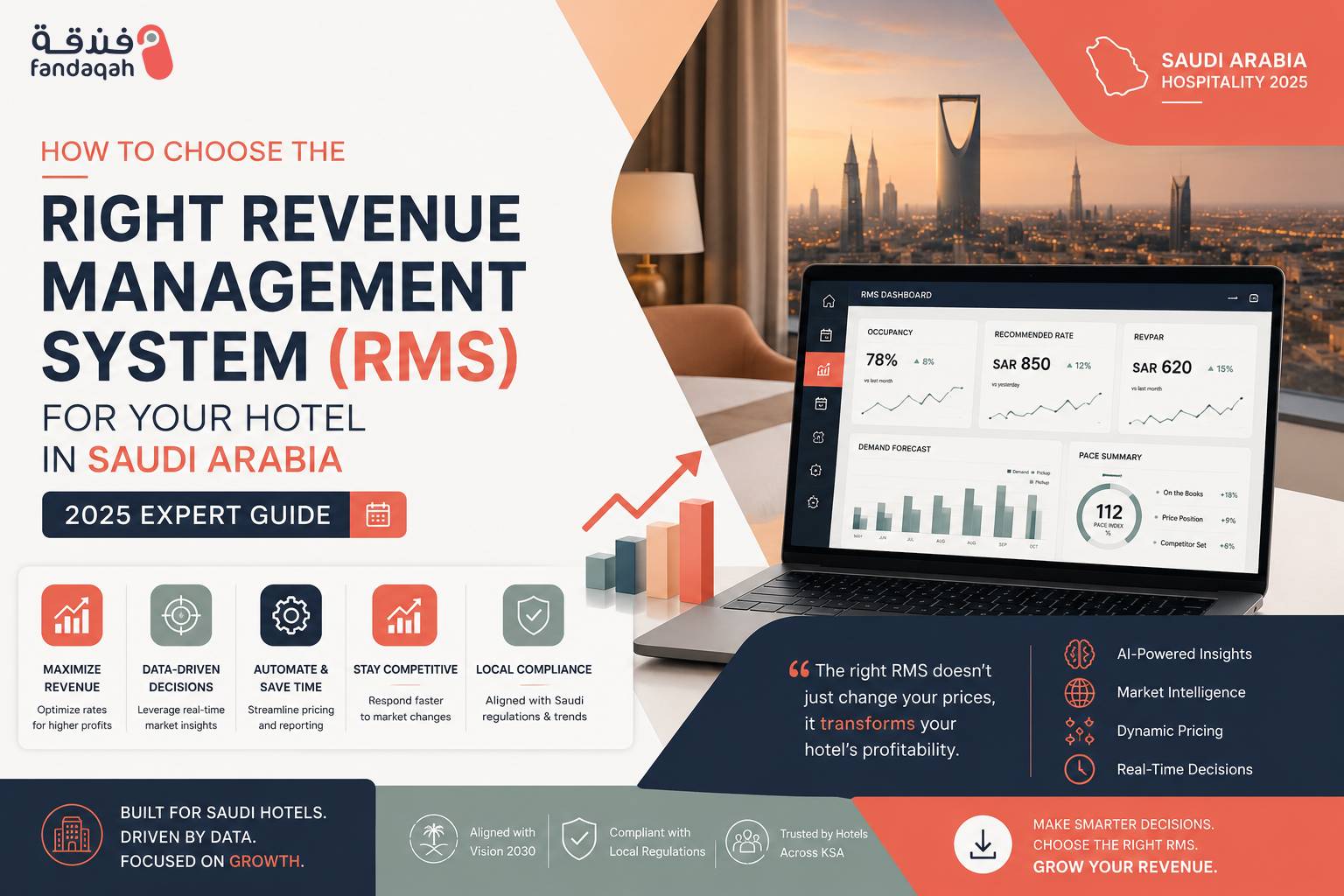
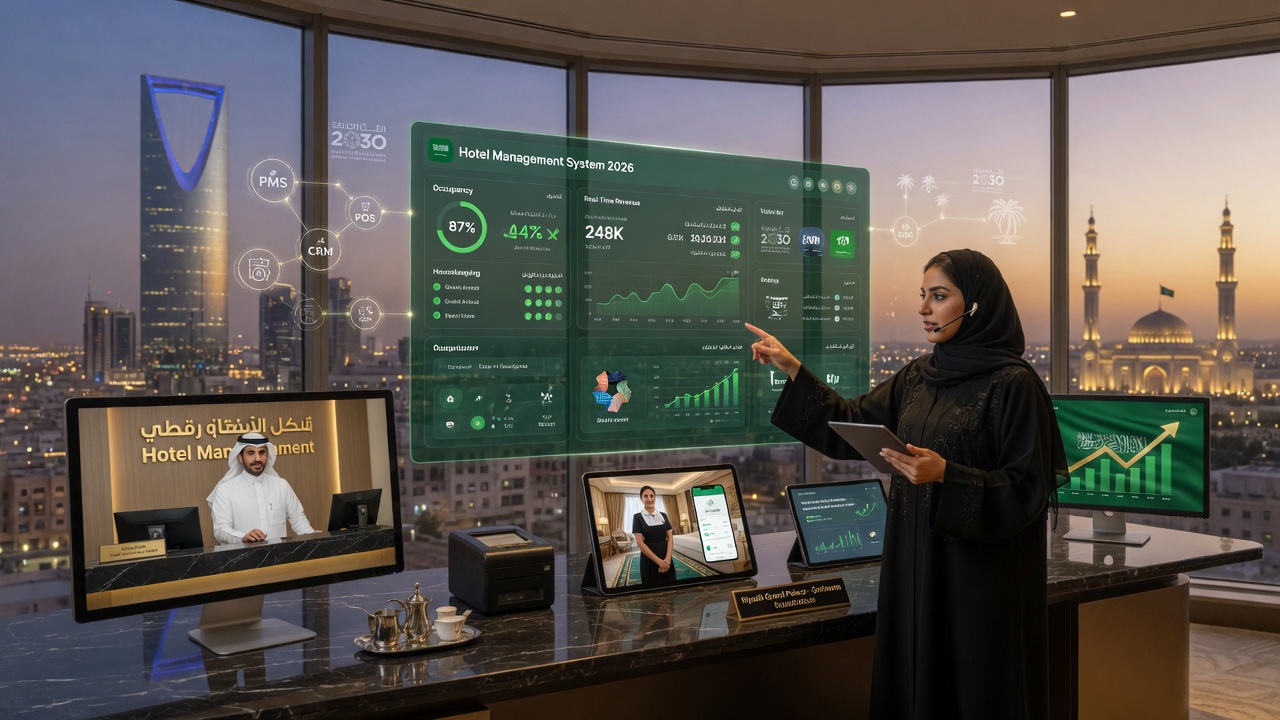
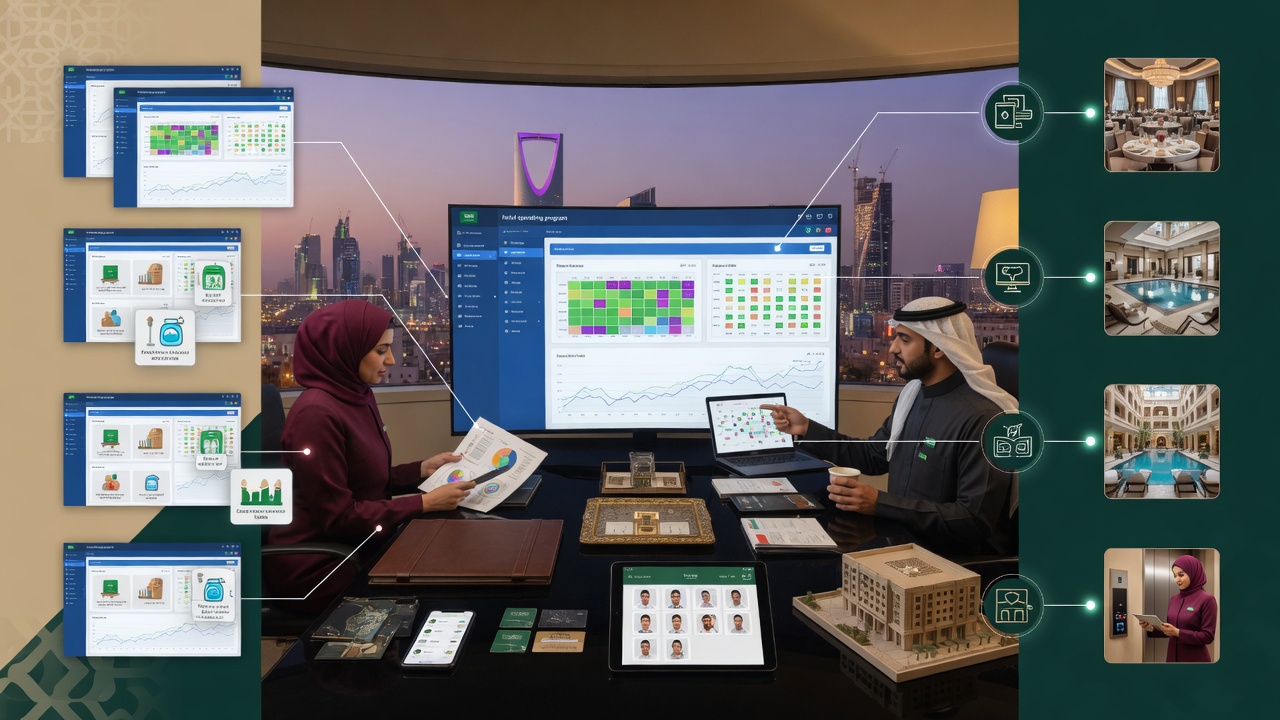
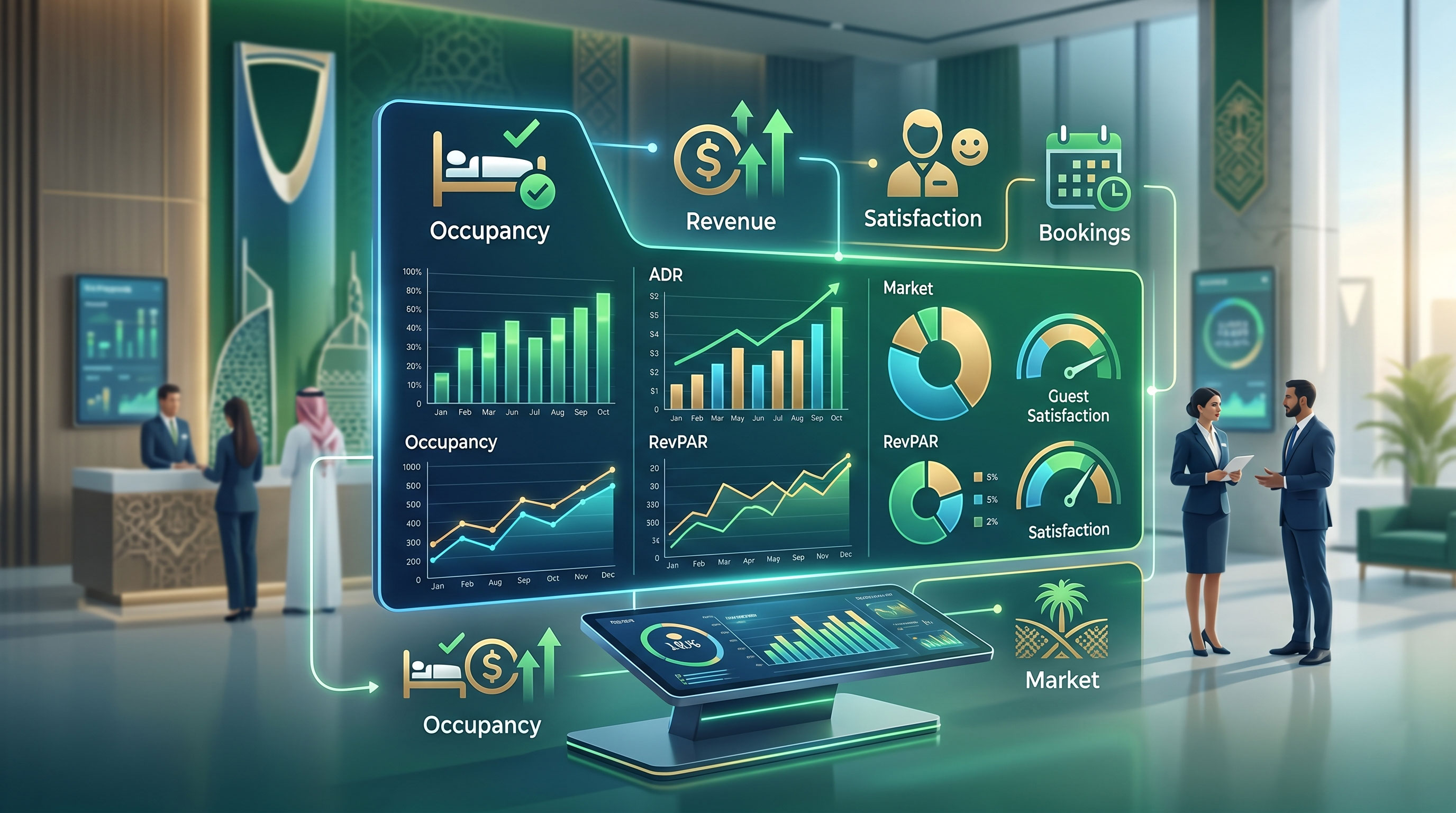
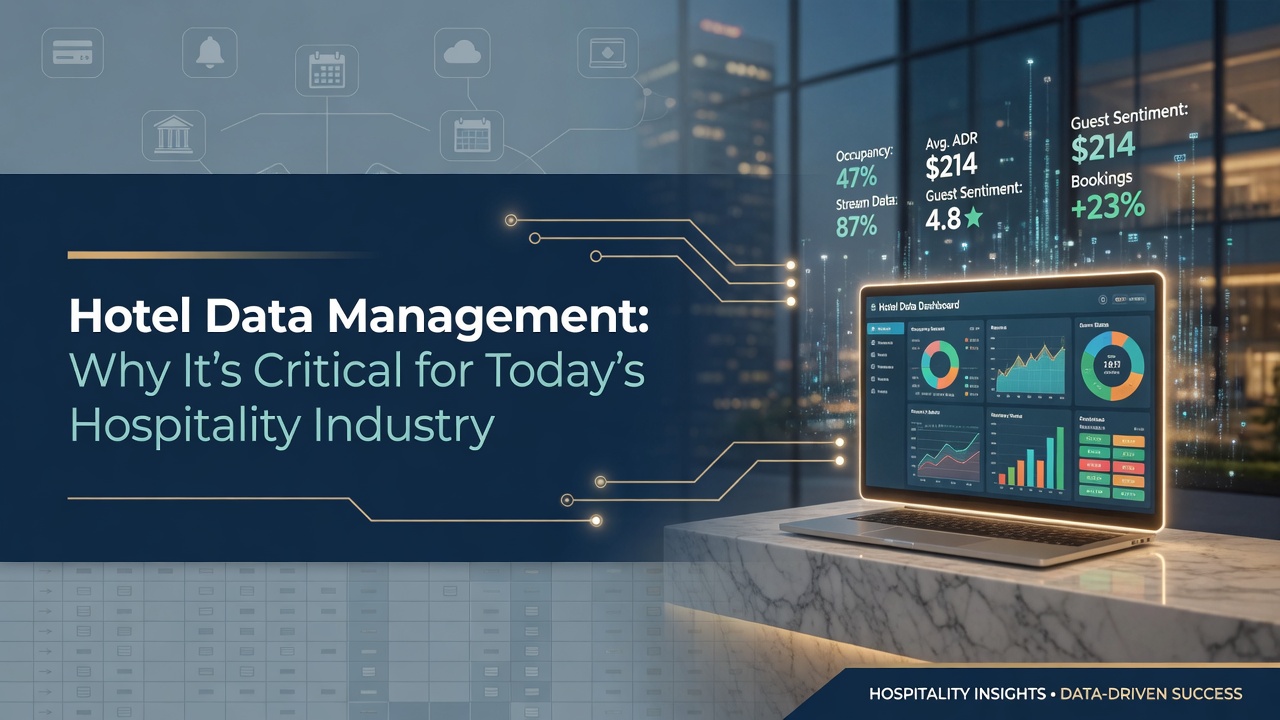
- Data‑driven decision making: Dashboards deliver real‑time insights on energy consumption, housekeeping efficiency, and F&B performance, fully aligning with the Saudi hospitality AI trends envisioned for 2030.
Hotels that integrated AI in Saudi Arabia saw a 30% leap in guest satisfaction scores—not because machines are faster, but because they enable human staff to be fully present in moments of true hospitality.
Real‑World Use Cases in the Saudi Market
As the Kingdom prepares to host world‑class events—from the Riyadh Expo 2030 to annual Formula 1 Grands Prix—AI applications are becoming highly visible:
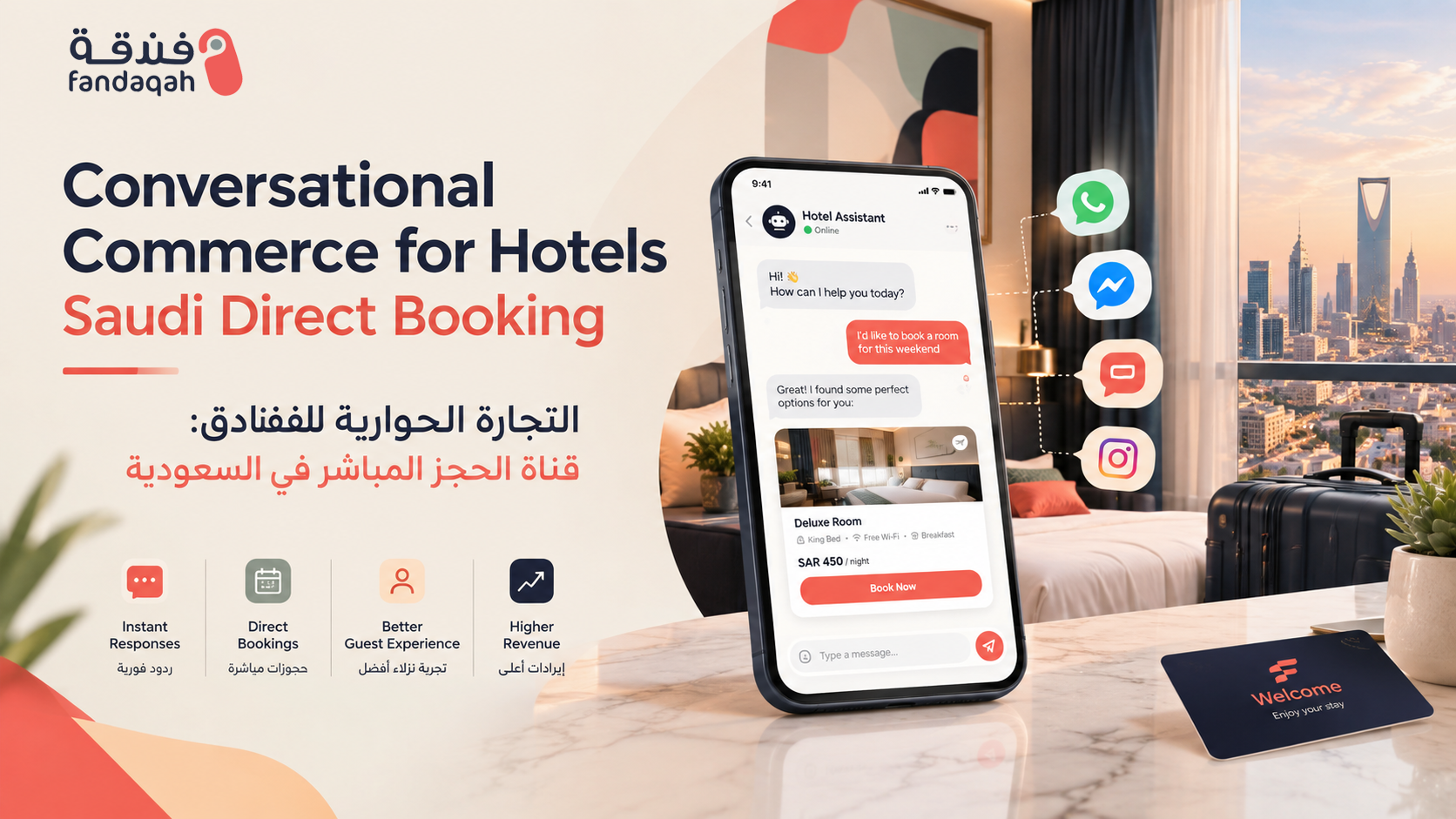
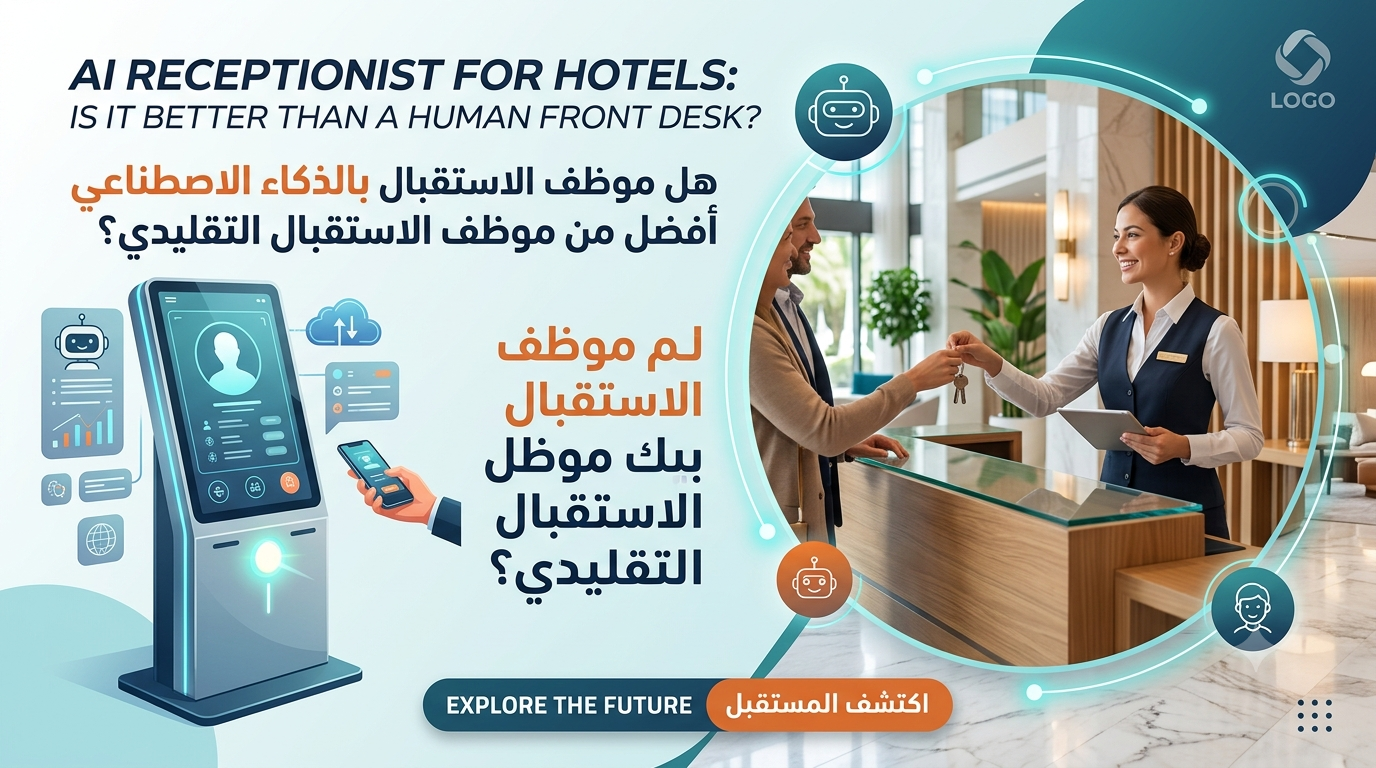
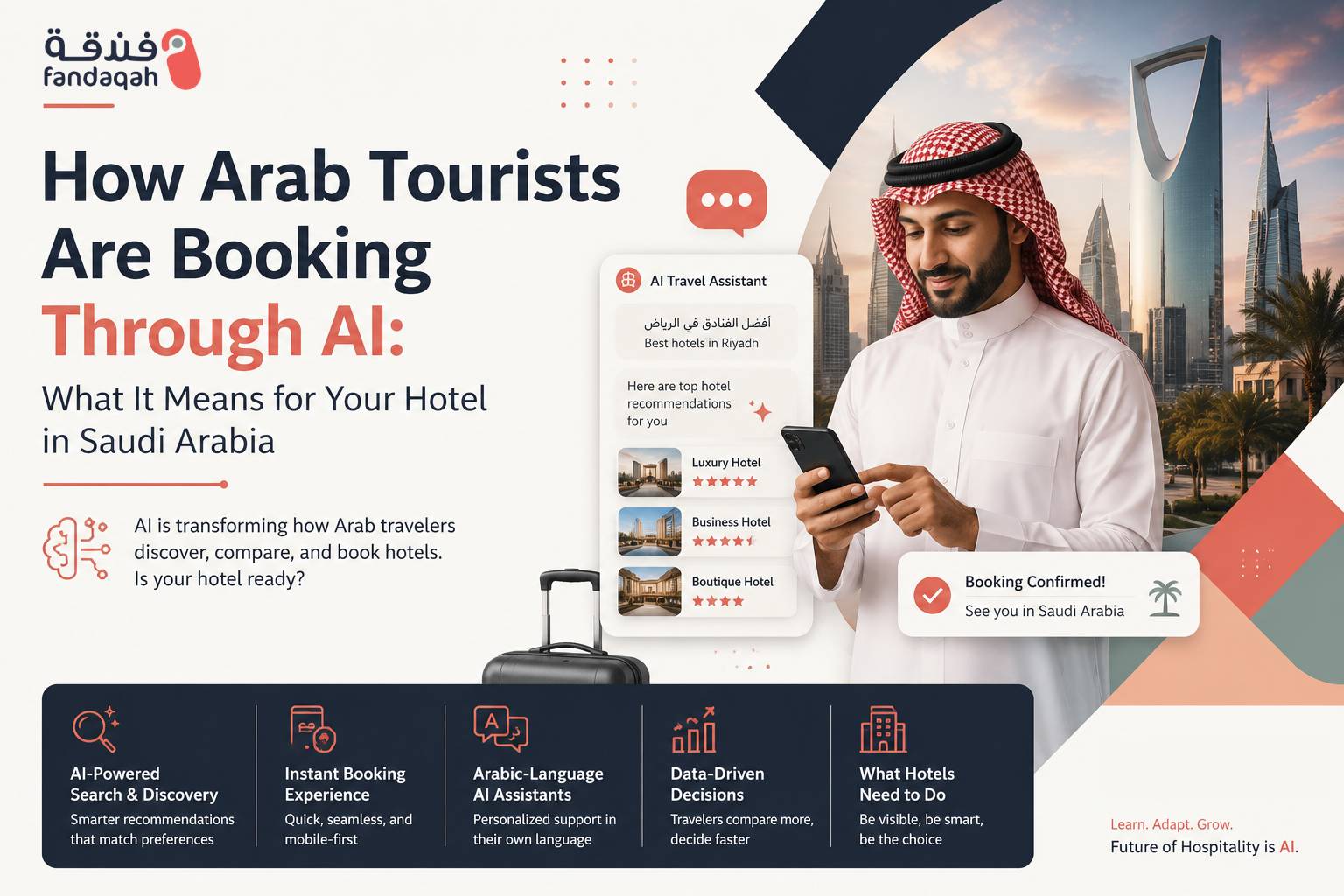
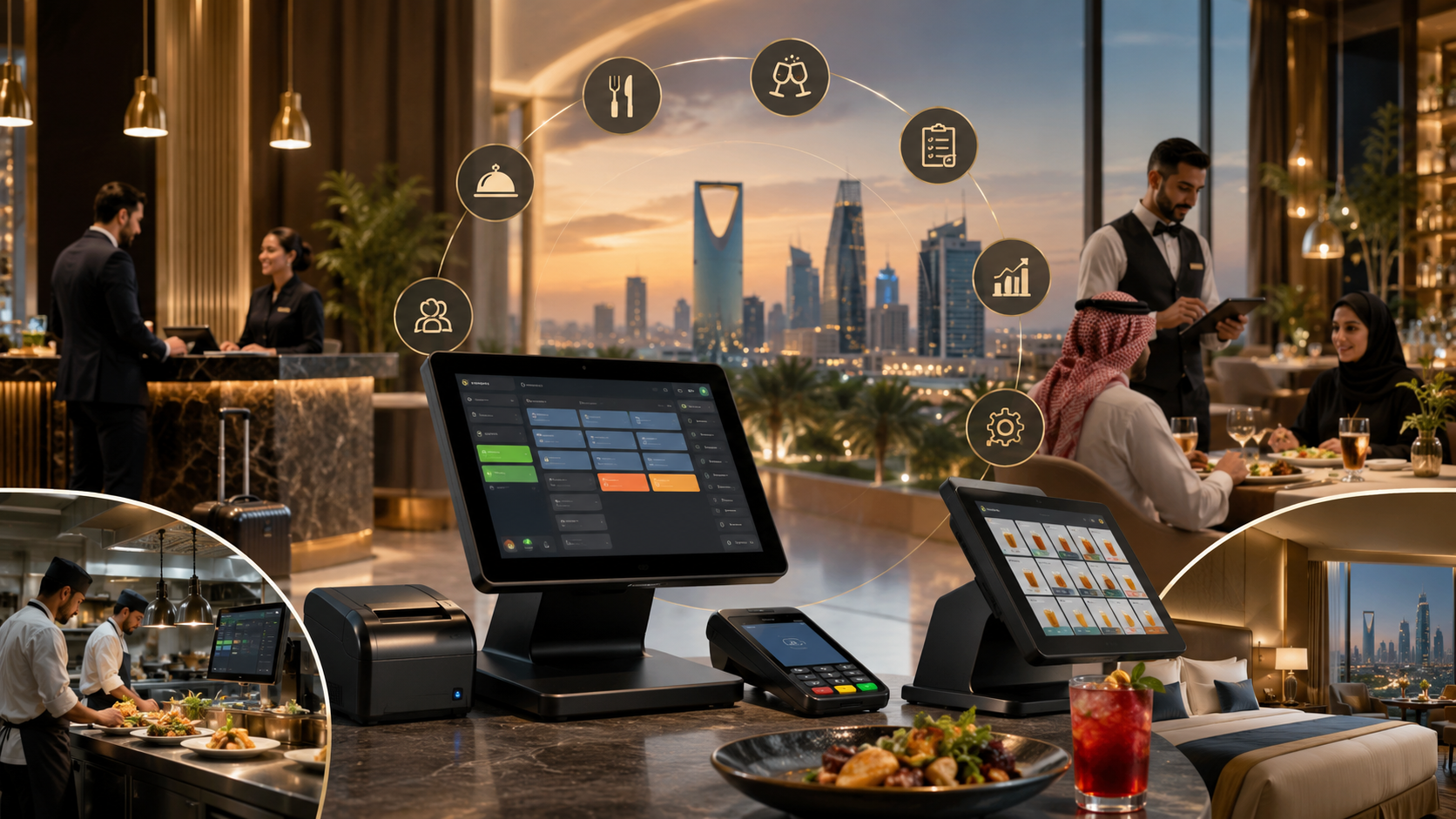
- Multilingual virtual concierge: An AI chatbot for Saudi hotels that understands Arabic dialects, switches seamlessly to English, and recommends nearby activities (like Edge of the World trips) based on individual preferences. This is already being piloted in several Riyadh five‑star properties.
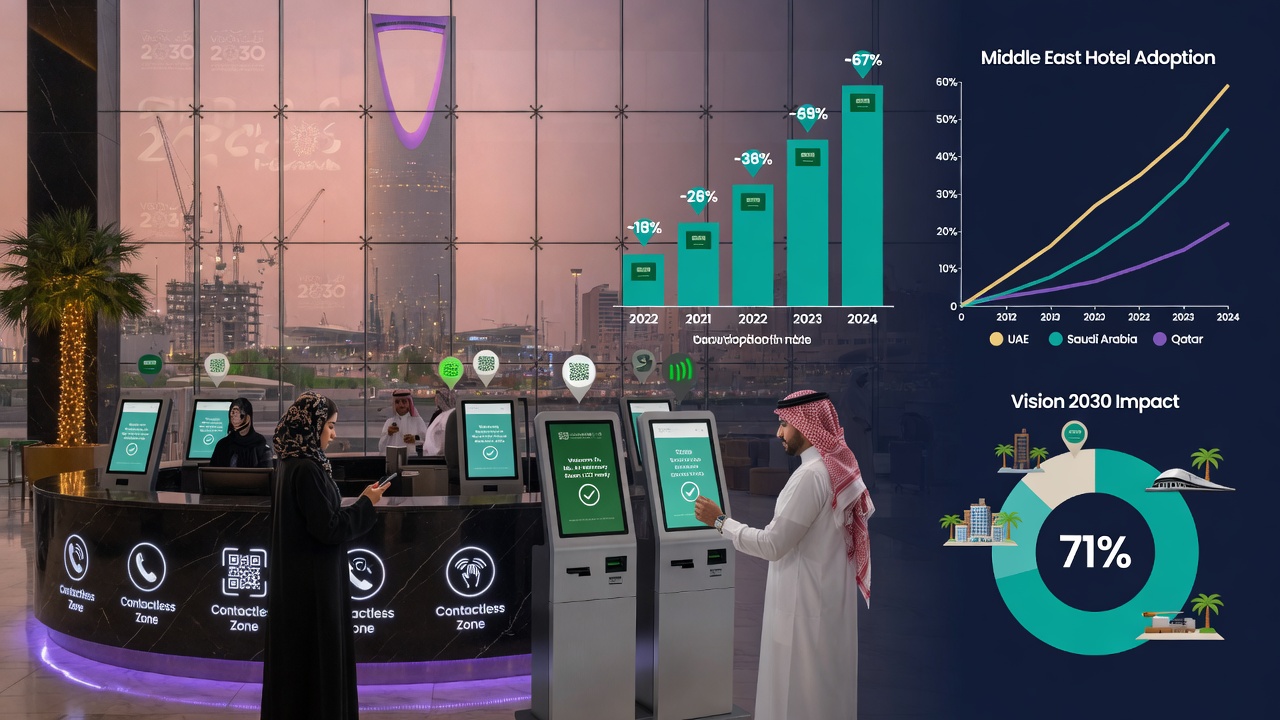
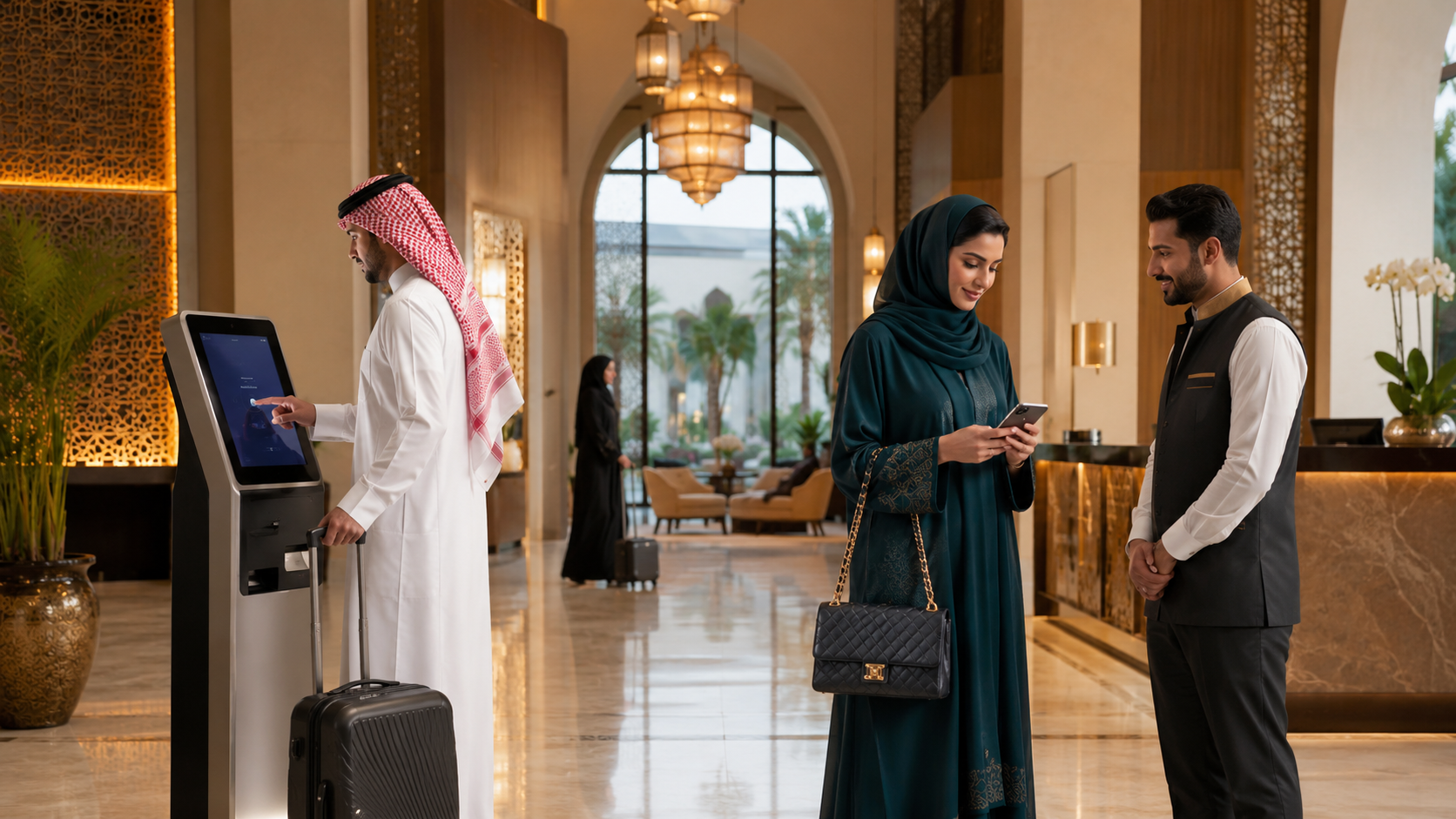
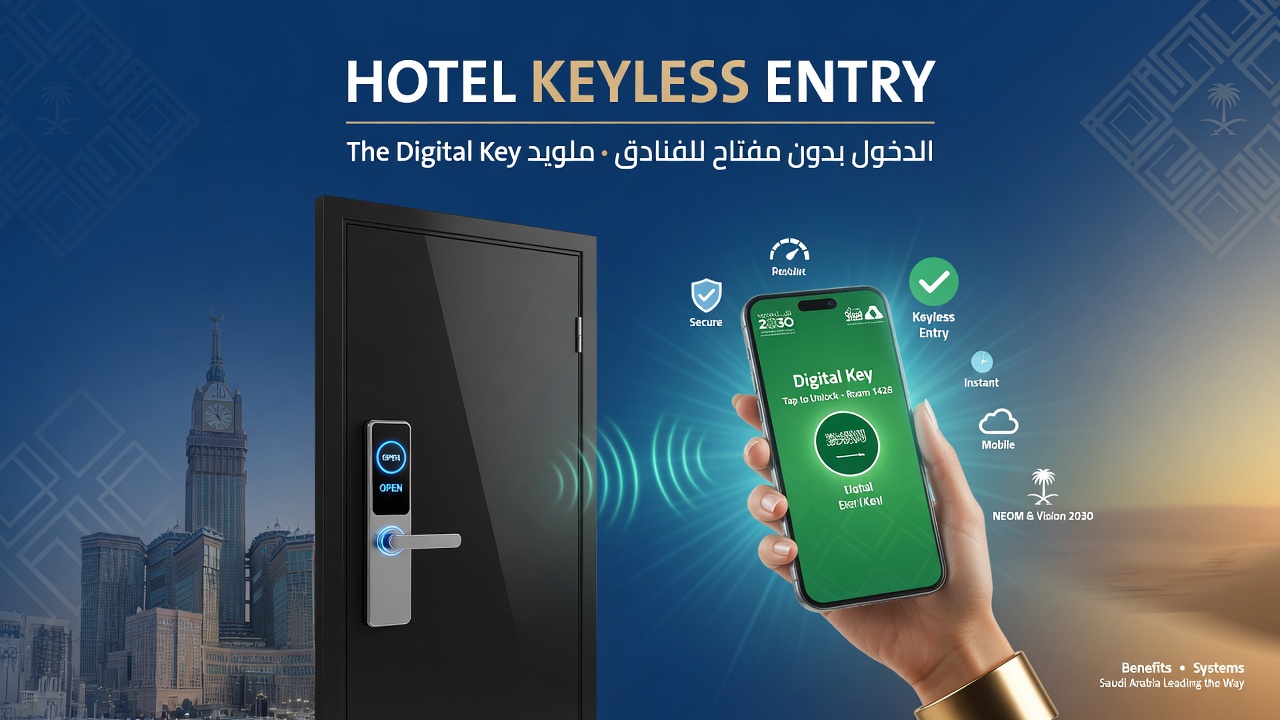
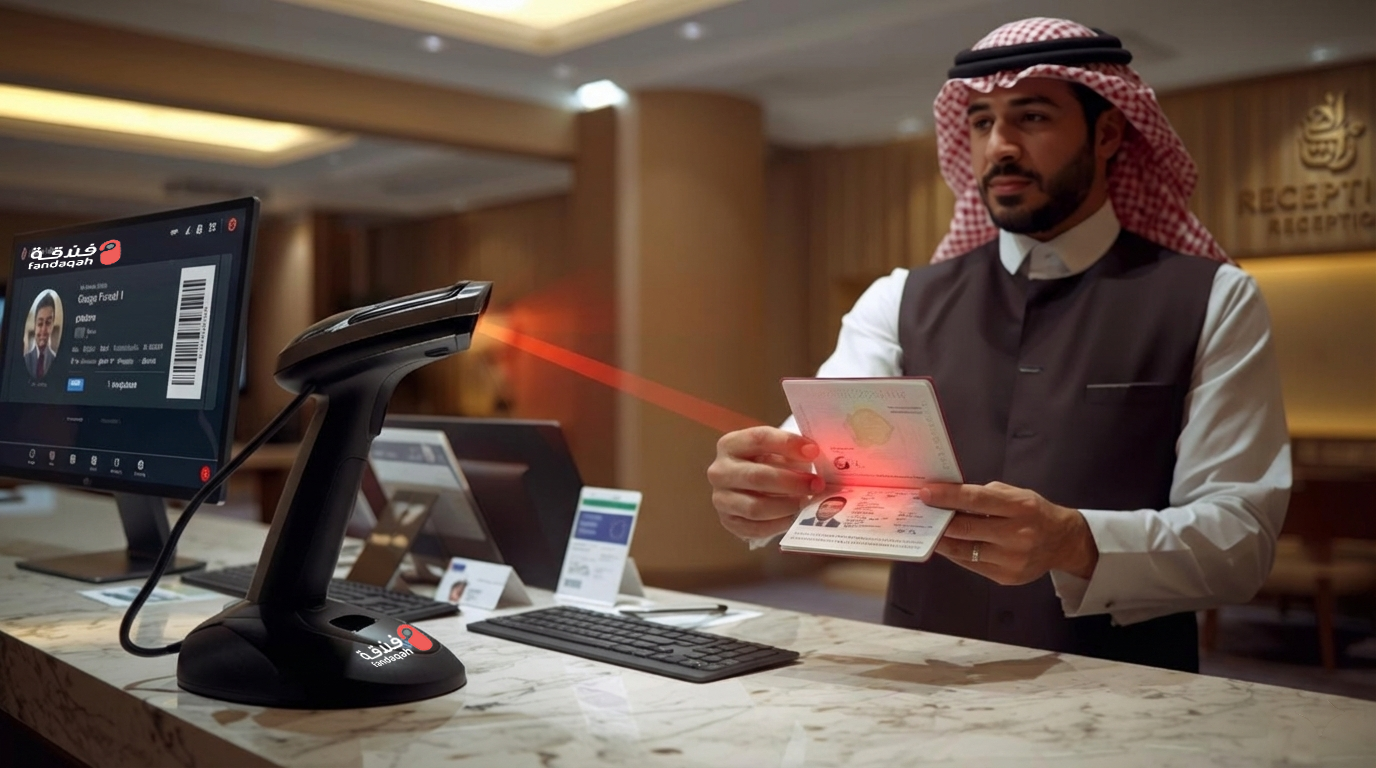
- Facial recognition check‑in: Top‑tier hotels in Dubai and Riyadh are introducing biometric lobby kiosks that scan guests’ faces to complete check‑in in under 20 seconds, linking directly to their loyalty profiles.
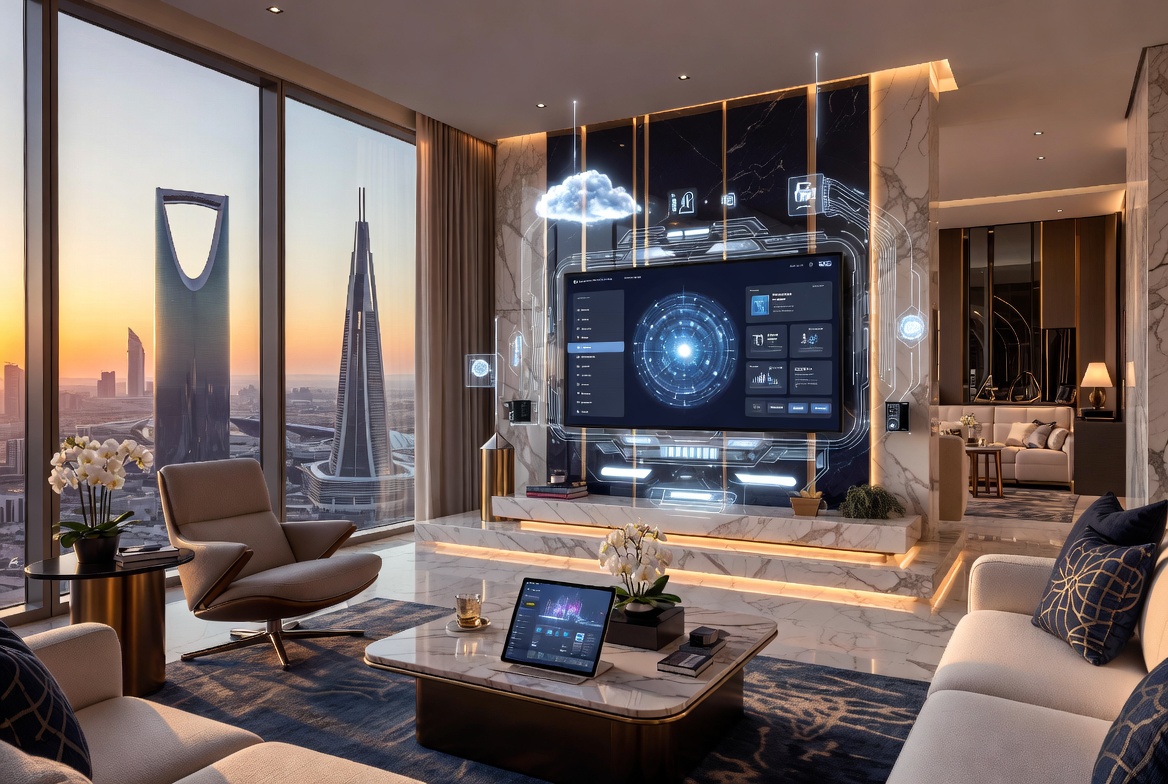
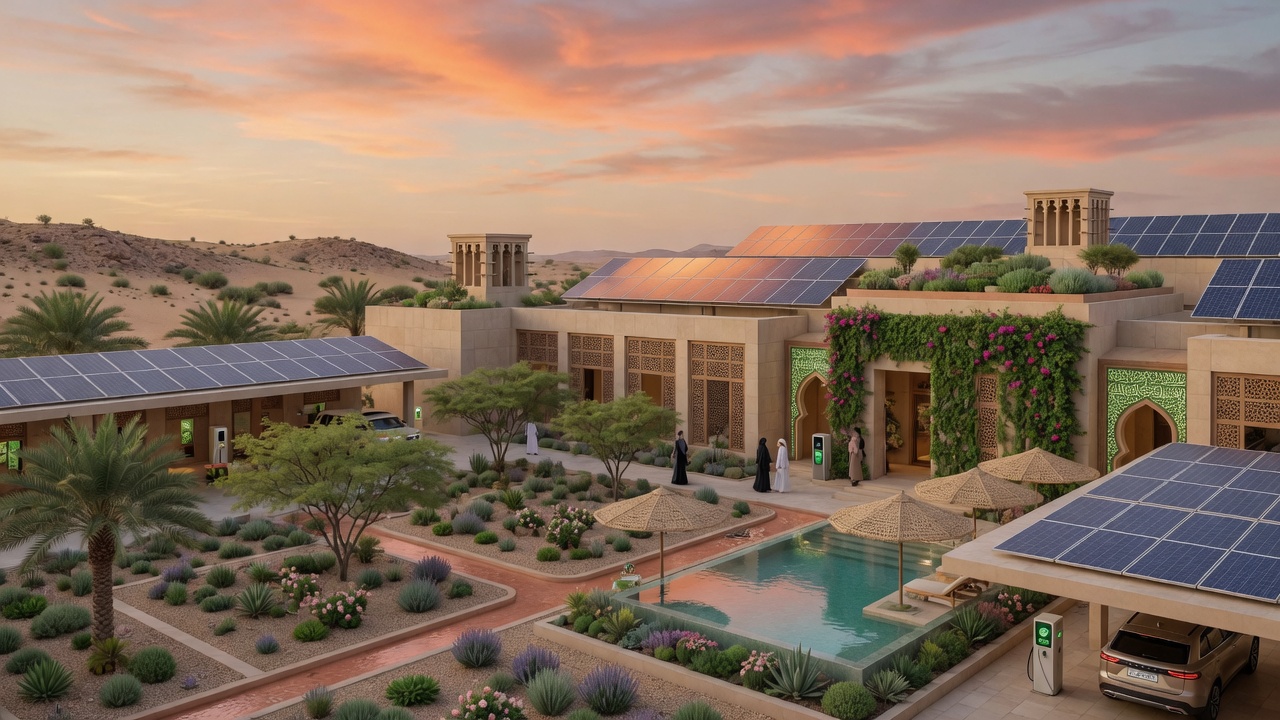
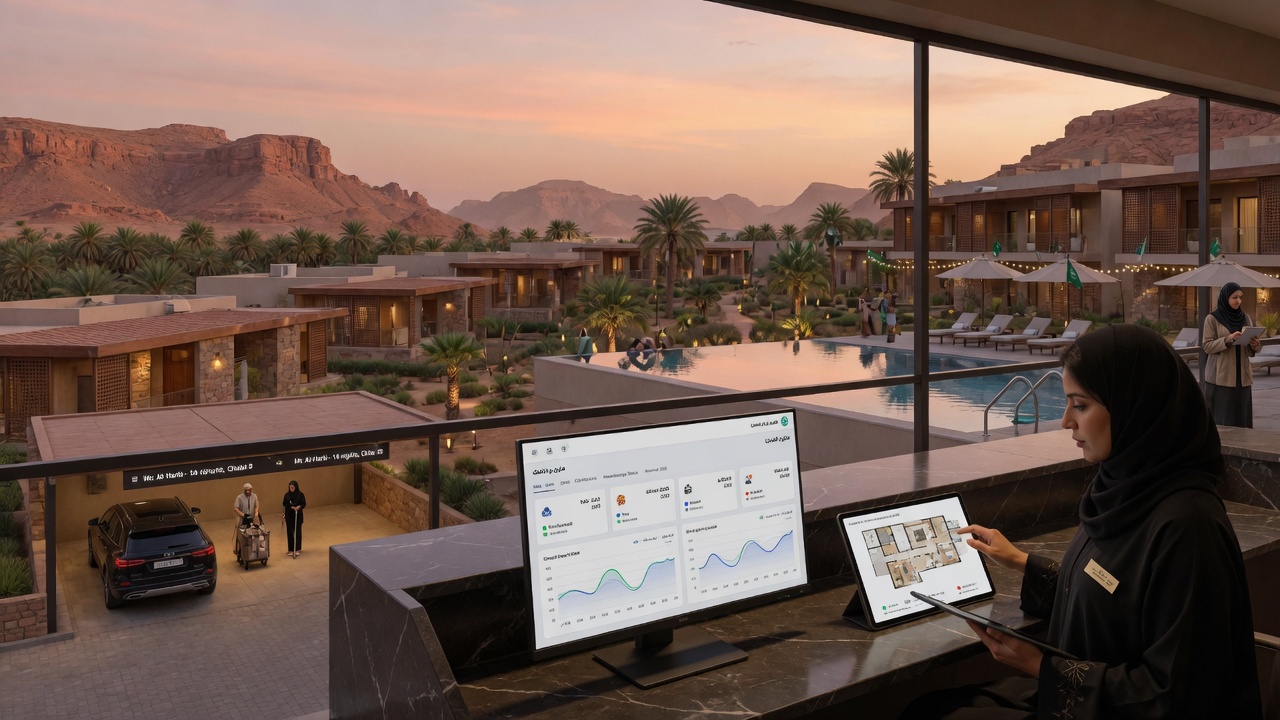
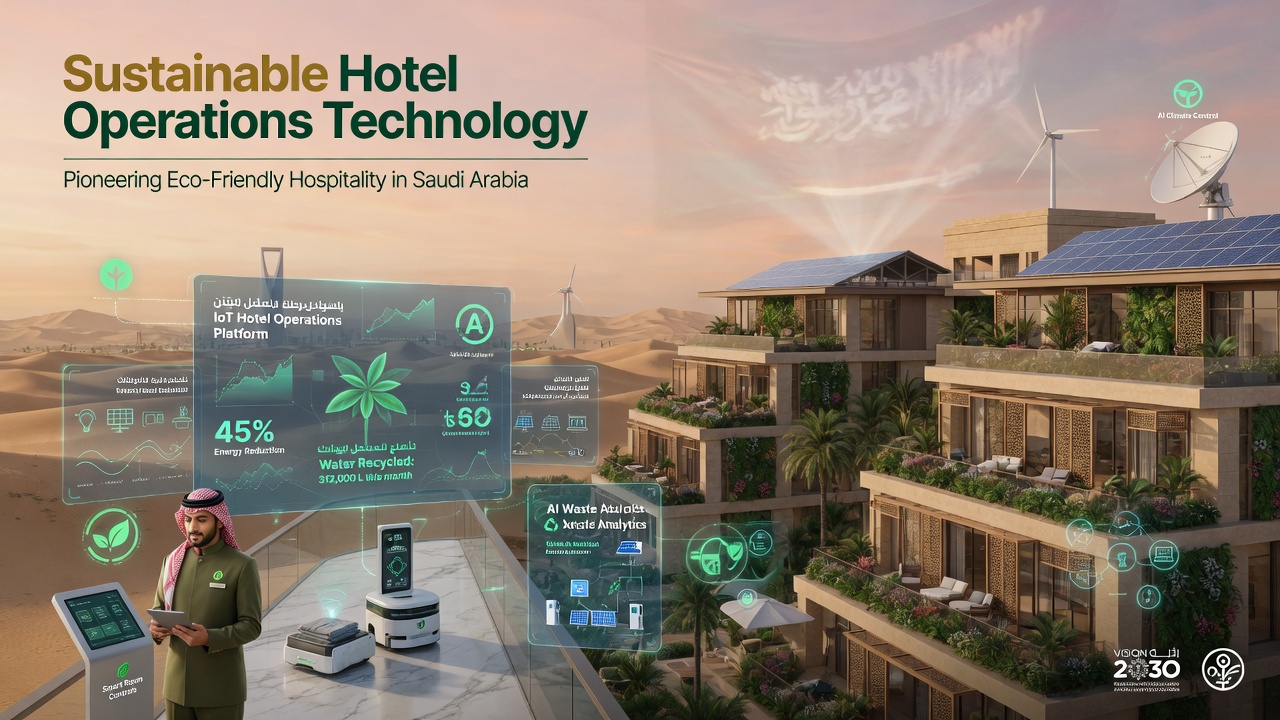
- Smart facility management: IoT‑enabled rooms adjust lighting, temperature, and curtains according to occupancy. In a hot climate like Saudi Arabia, such systems cut energy bills by over 20%, directly contributing to sustainability goals.
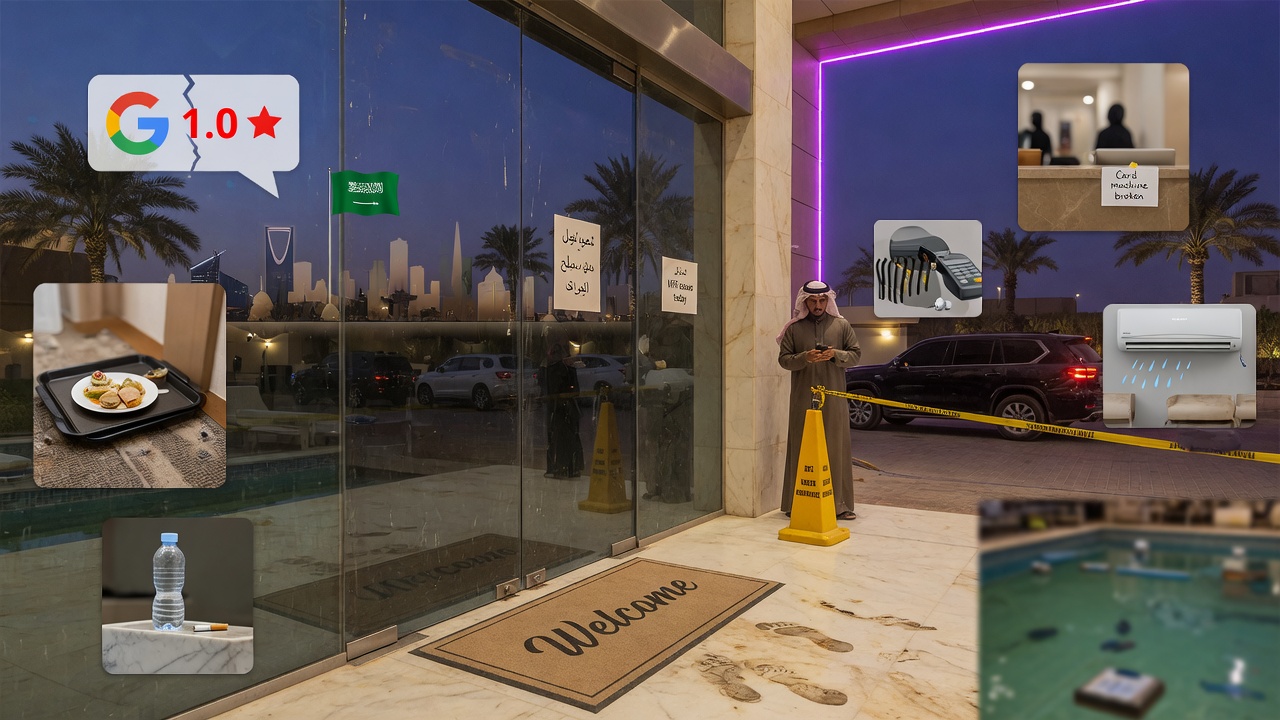
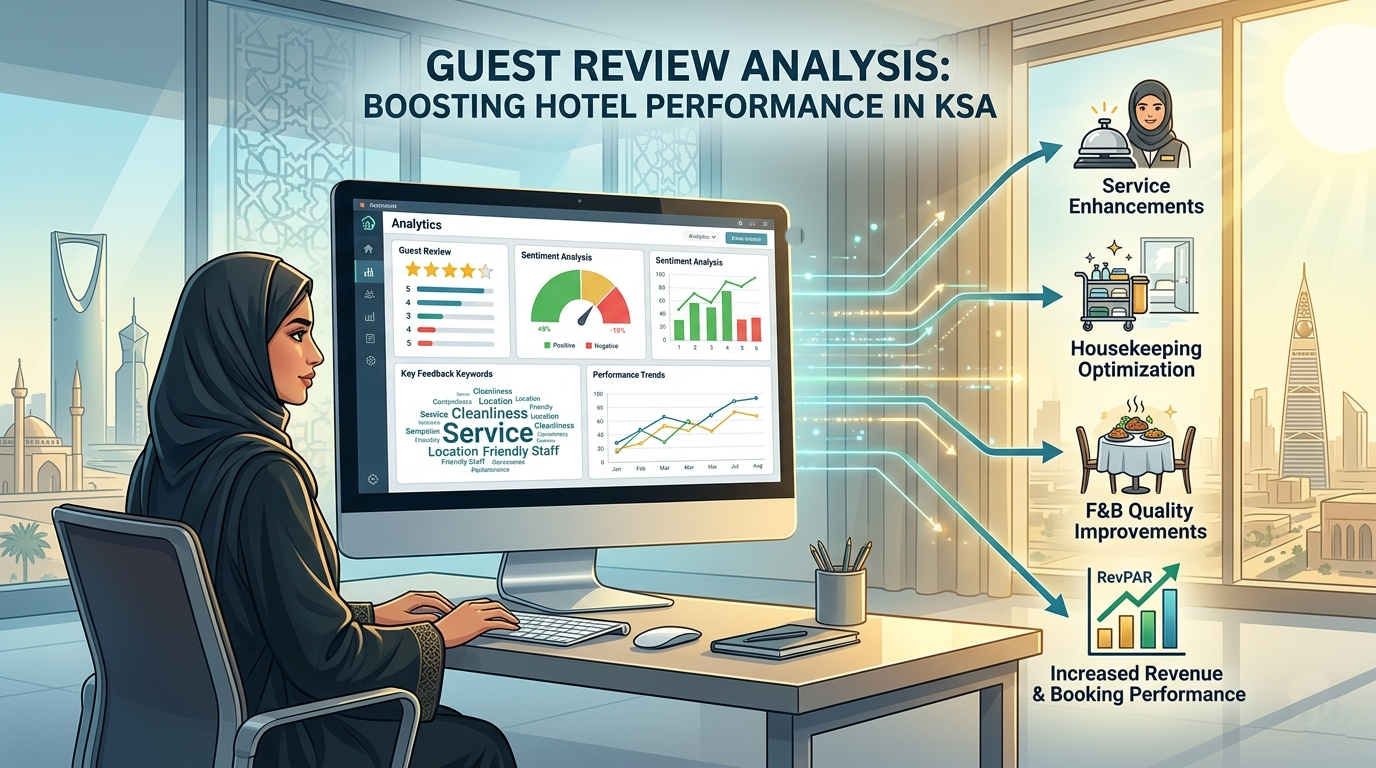
- Sentiment analysis for service recovery: AI scans online reviews and in‑stay feedback in real time, alerting managers to dissatisfied guests before they check out—a game‑changer for hotel revenue management Saudi Arabia relies on repeat business.
Pro Tip
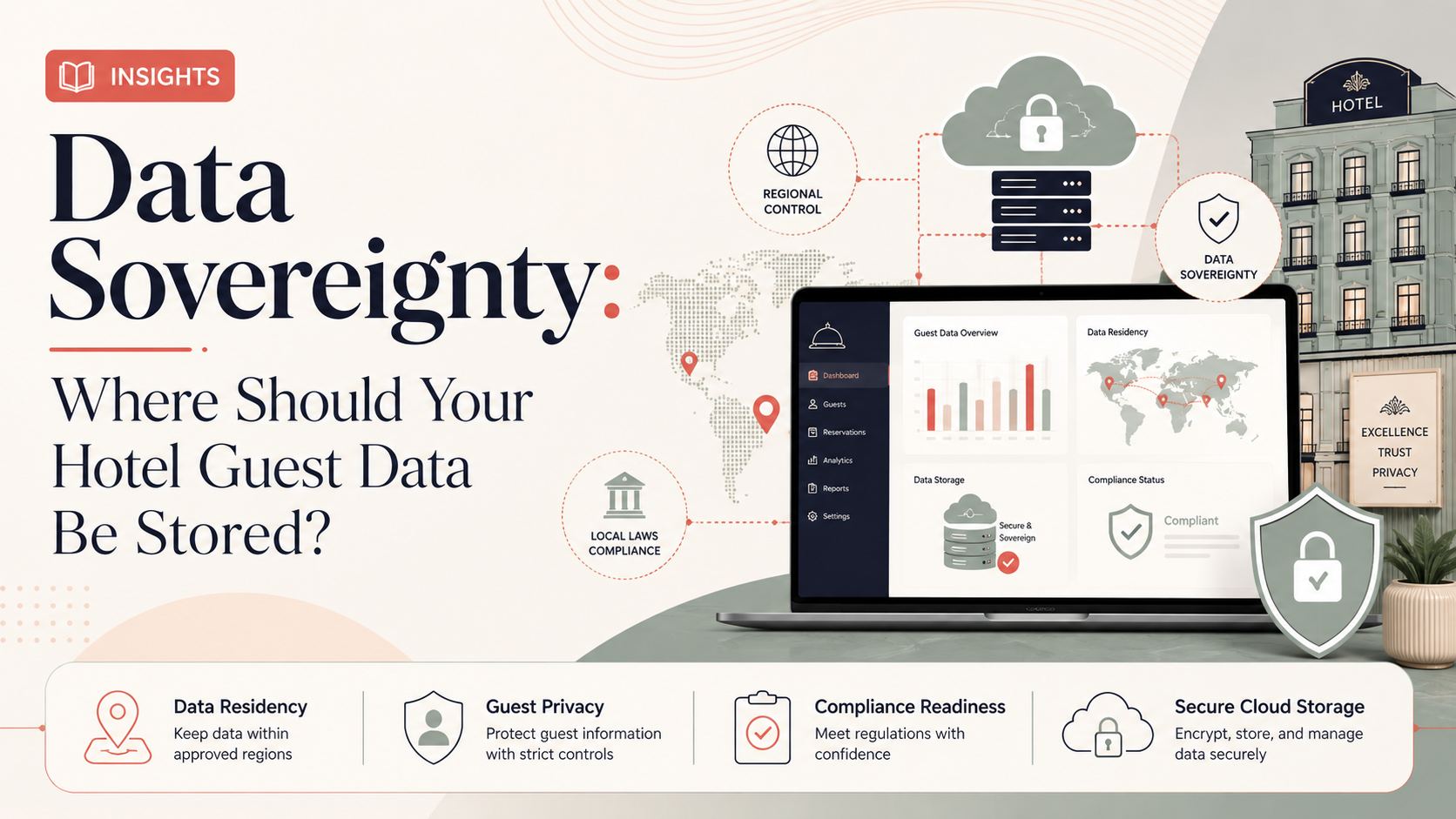
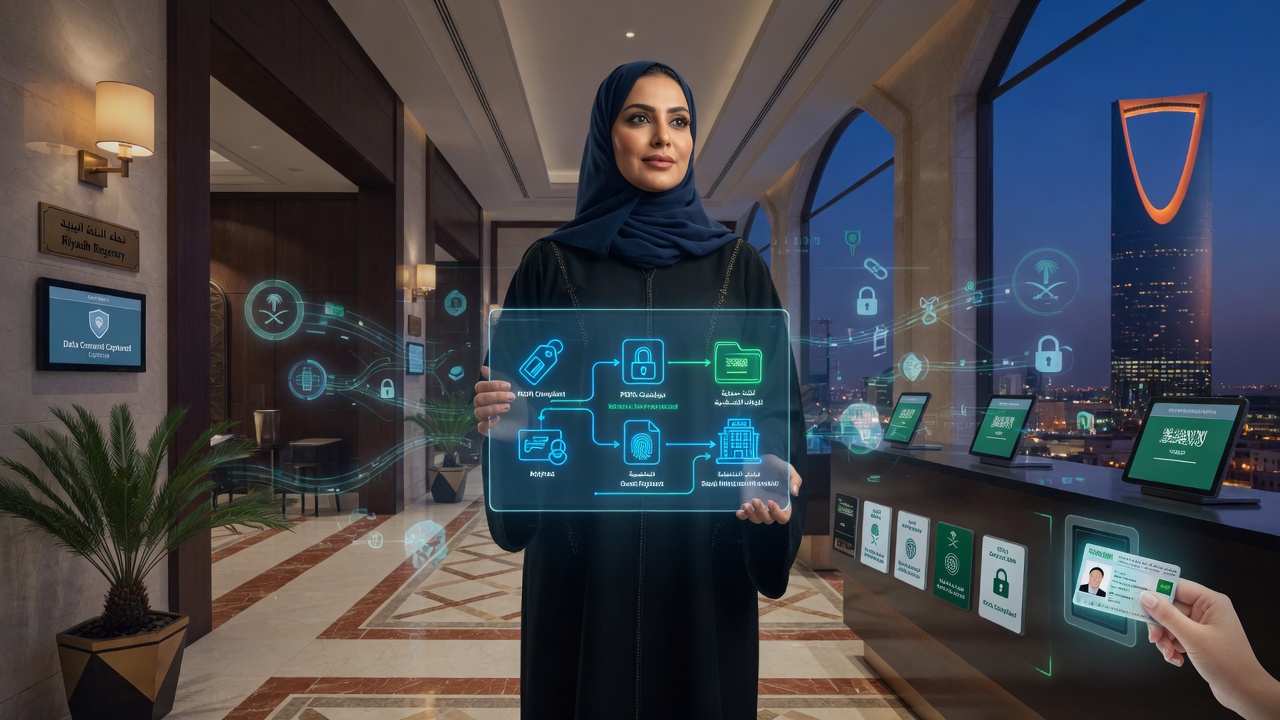
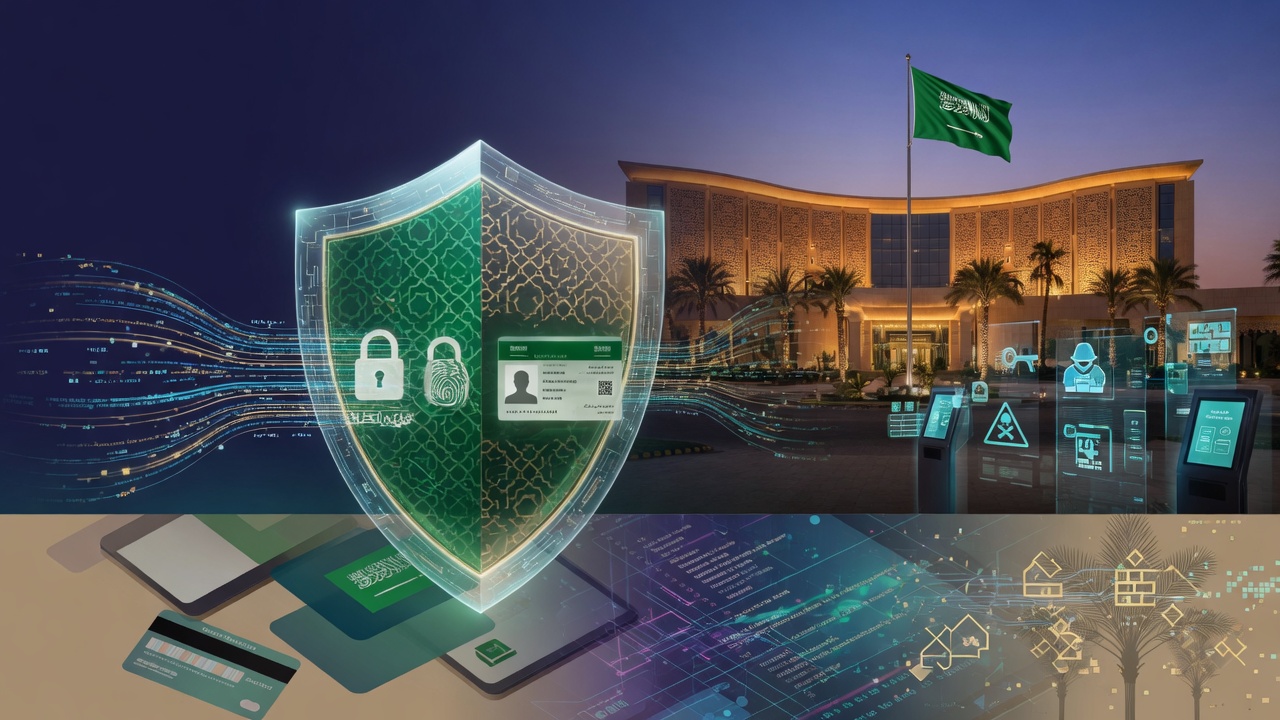
Before investing in any AI solution, confirm that it complies with SDAIA regulations and local privacy laws. Your guests’ data must be stored within the Kingdom to avoid legal complications.
Traditional Hotel management vs. AI‑Driven Operations
| Area |
Traditional Approach |
AI‑Powered Smart Hospitality |
| Revenue Management |
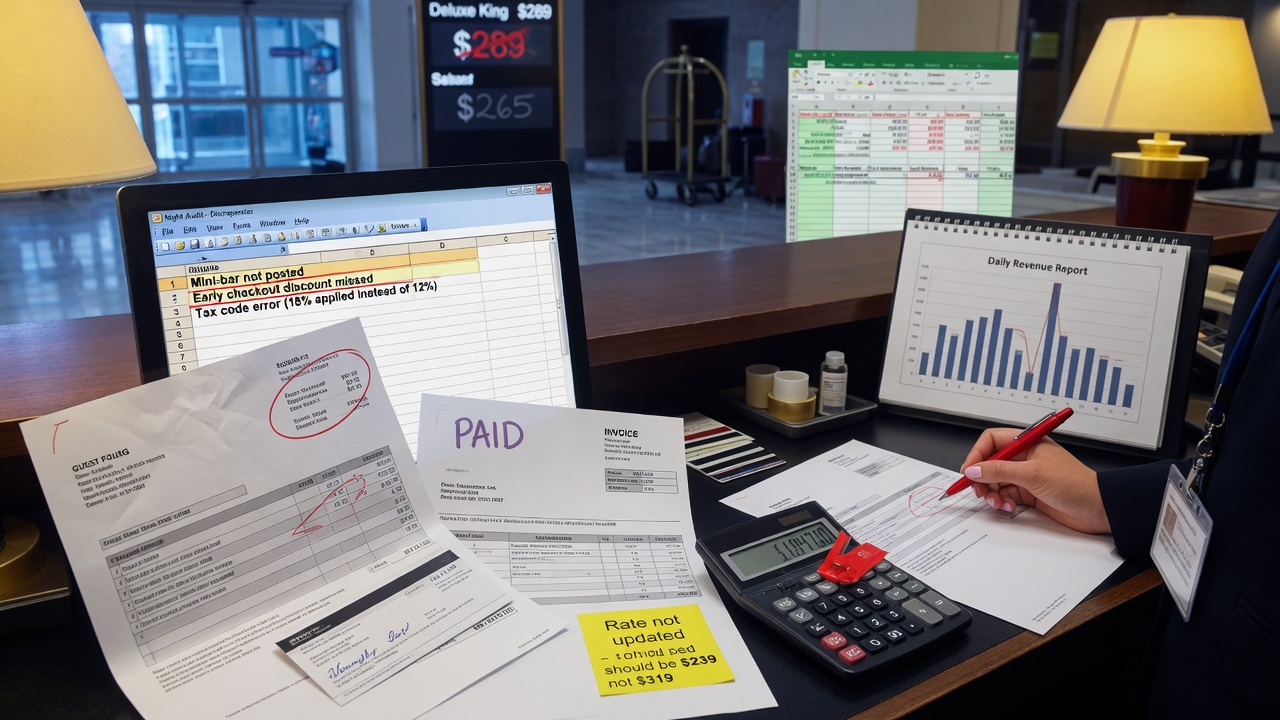
Fixed rates, manual updates |
Dynamic pricing for hotel rooms using real‑time demand signals |
| Guest Service |
Limited front‑desk hours, phone calls |
24/7 AI chatbot hotel with instant translation and personalization |
| Maintenance |
Reactive repairs after breakdowns |
Predictive maintenance avoiding guest disruption |
| Marketing & Upselling |
Mass emails, generic offers |
Personalized recommendations based on guest experience optimization |
| Energy Efficiency |
Manual thermostat control |
AI‑driven building management reducing costs by 20‑30% |
How to Launch Your Smart Transformation Journey
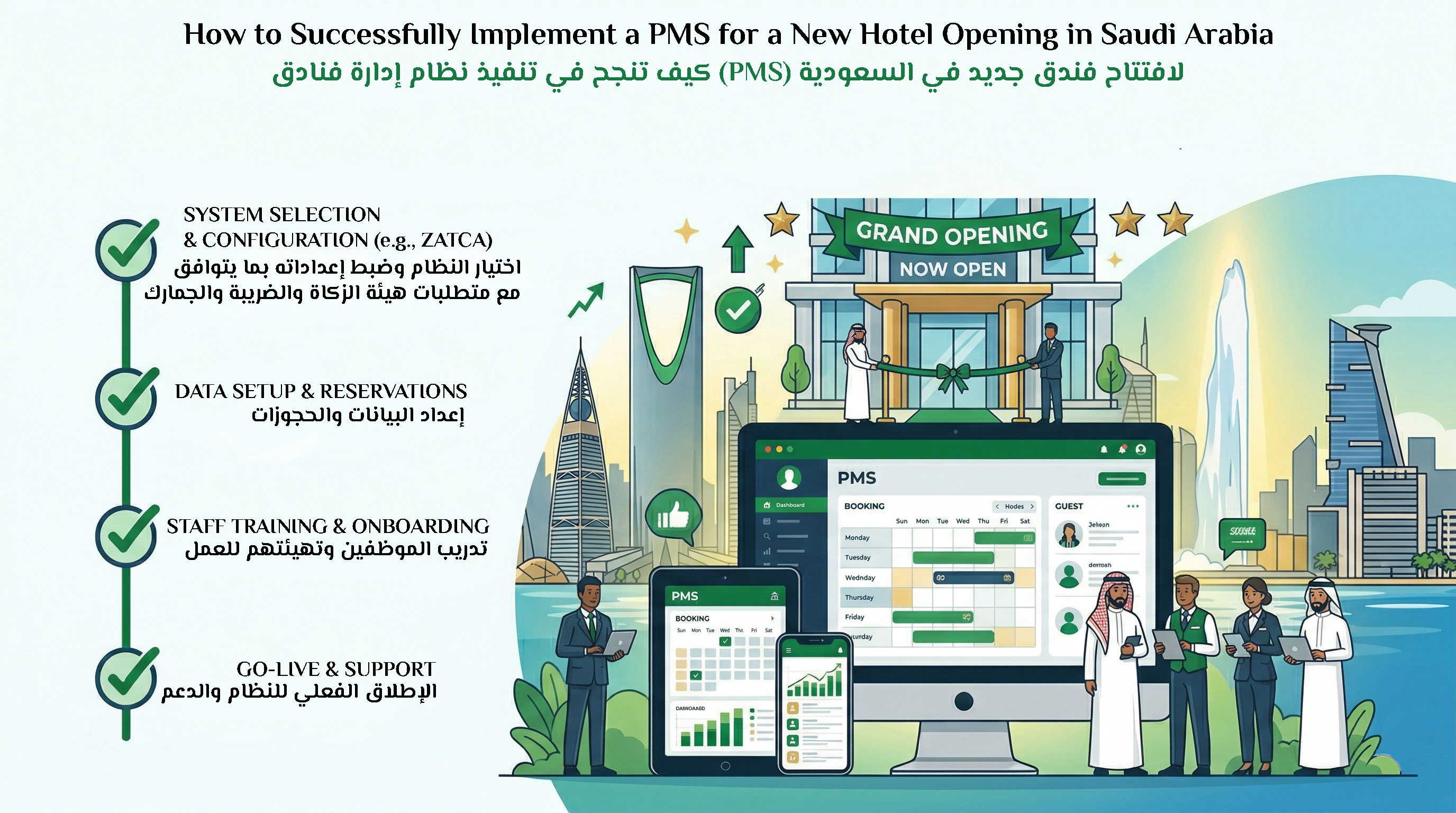
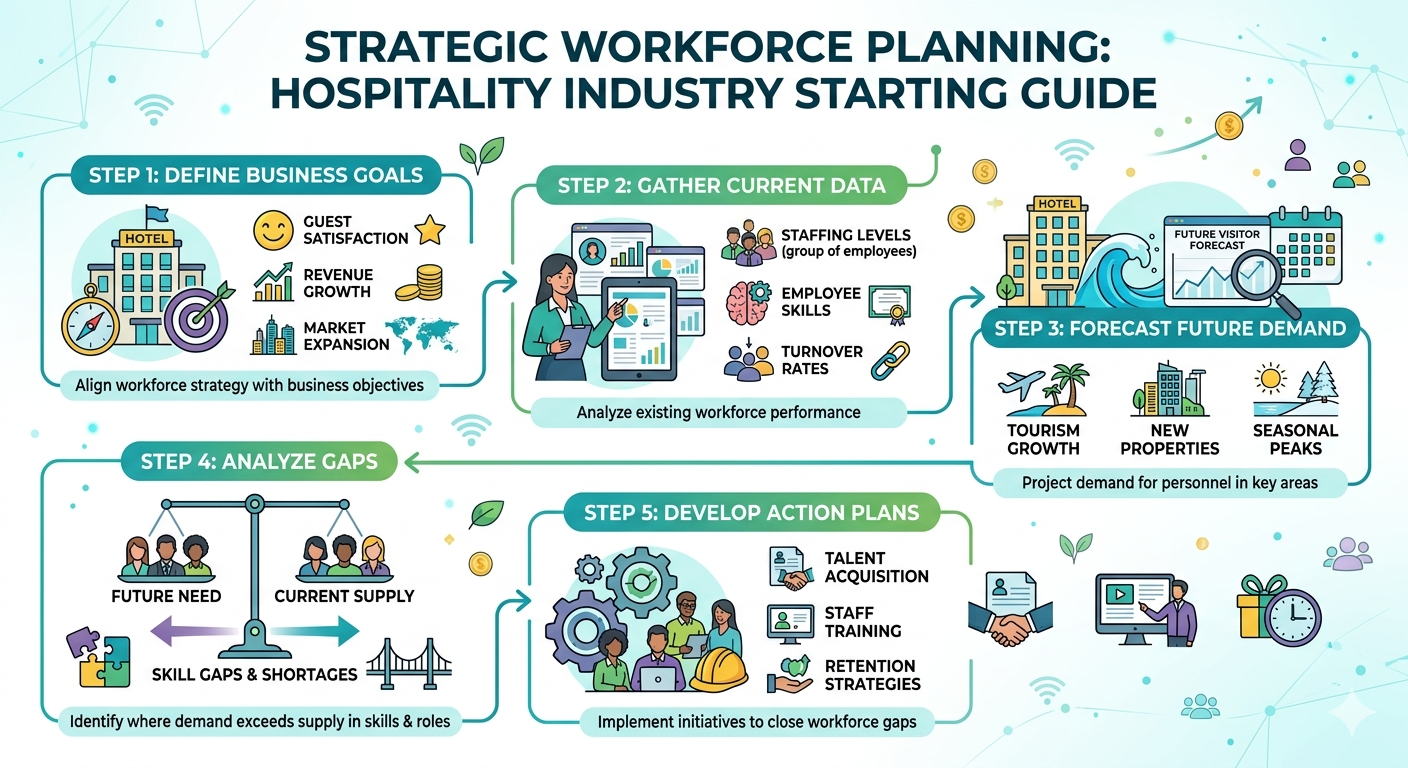
Transitioning to an AI-powered hotel management model does not need to be disruptive. Follow these structured steps designed for the Saudi hospitality context:
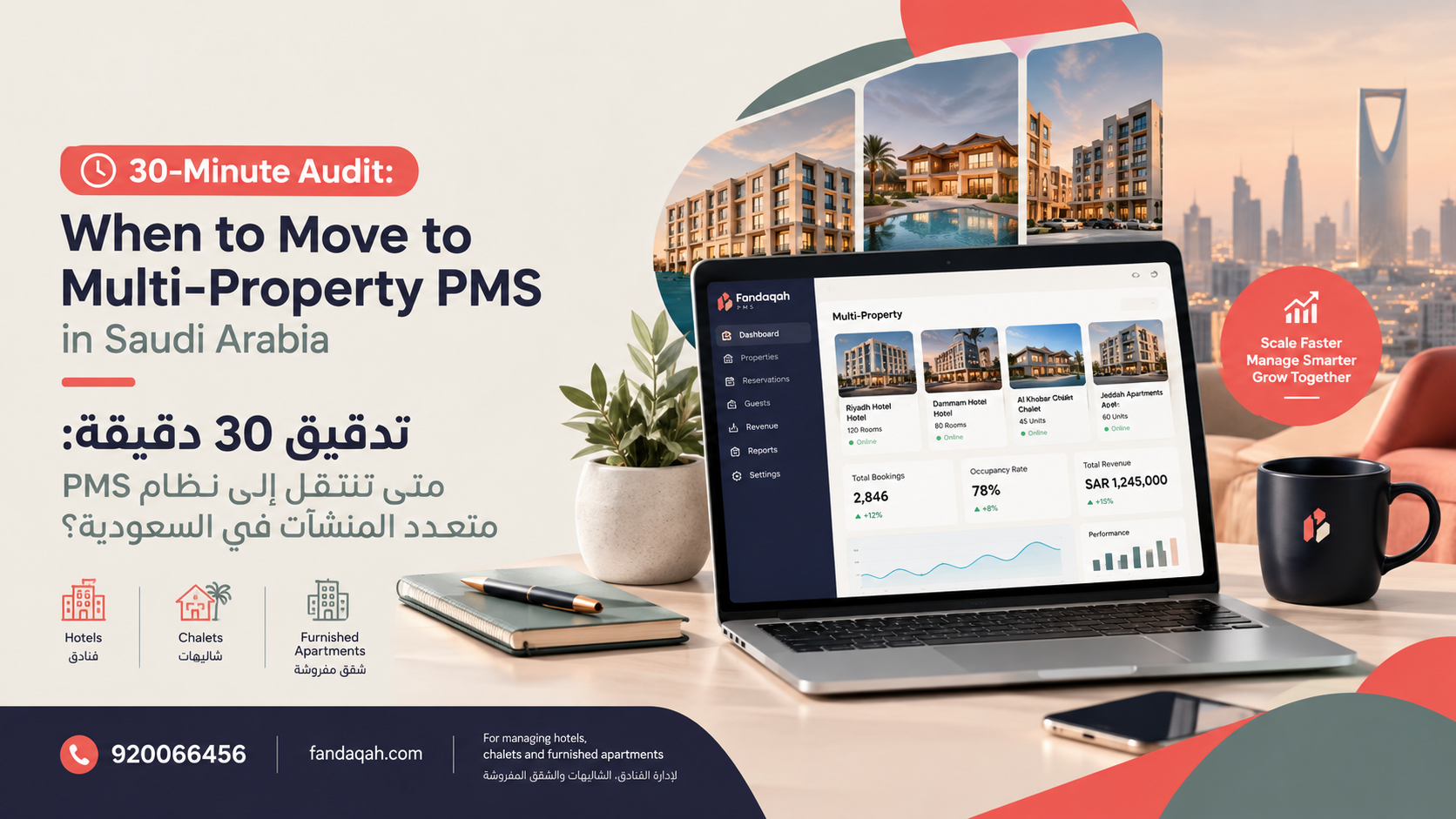
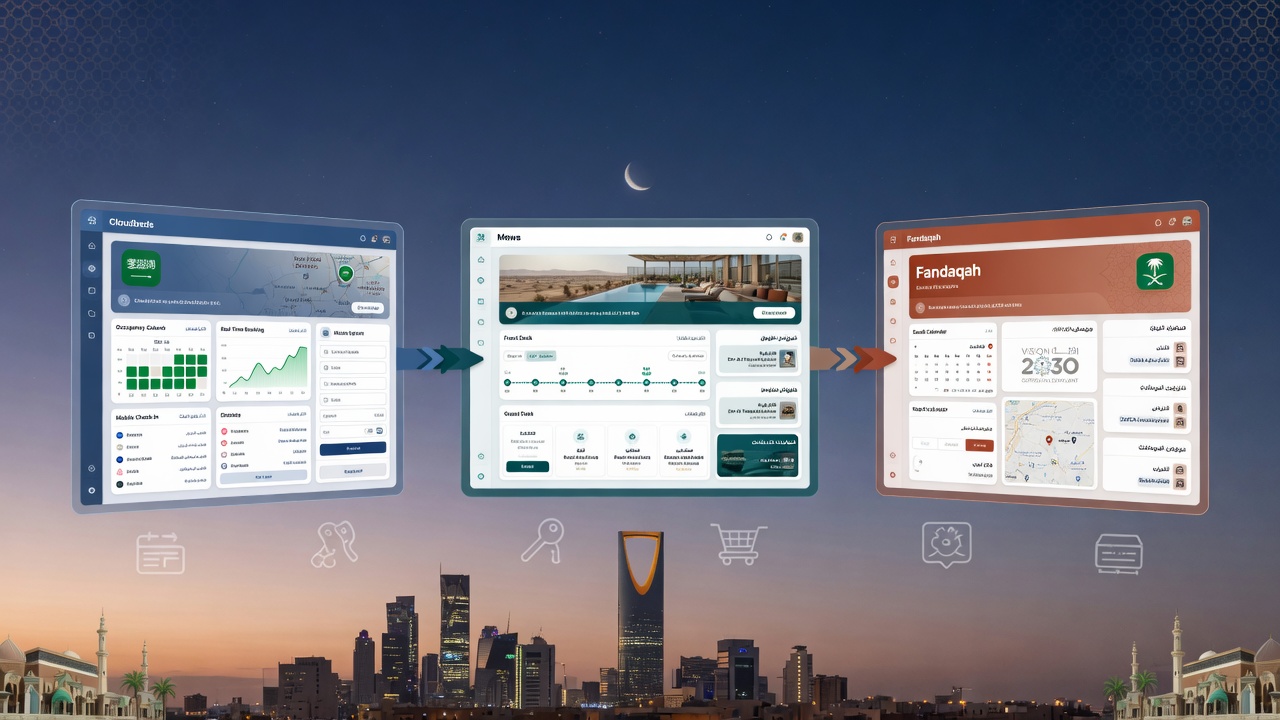
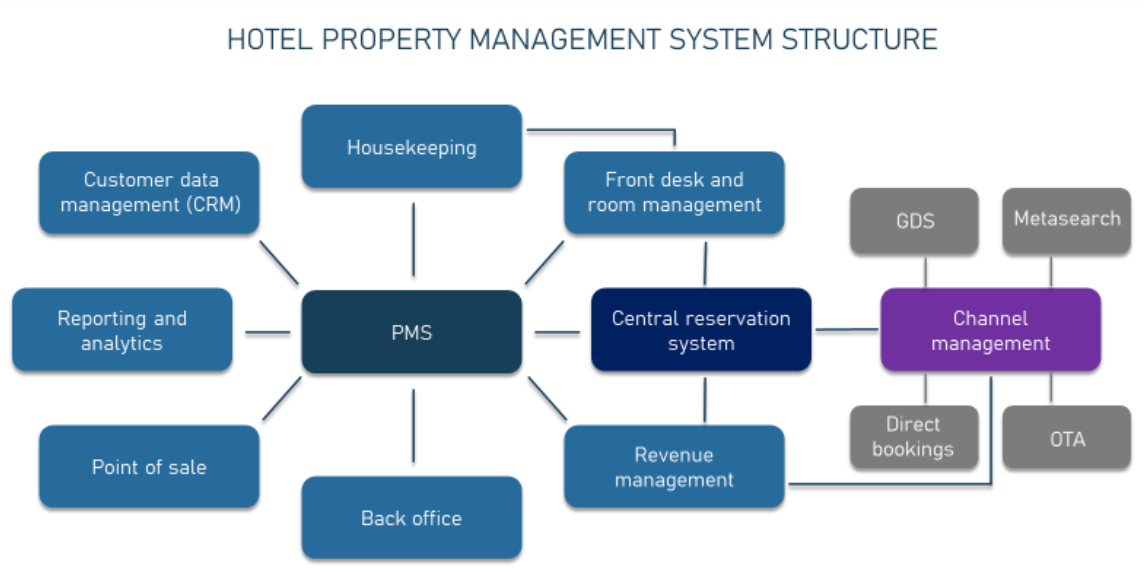
- Audit your digital infrastructure: Ensure your Wi‑Fi network is robust, your Property Management System (PMS) supports API integrations, and you have a centralized guest database.
- Choose a local‑savvy tech partner: Work with vendors who understand digital transformation in Saudi hotels—from Arabic NLP capabilities to integration with local payment gateways.
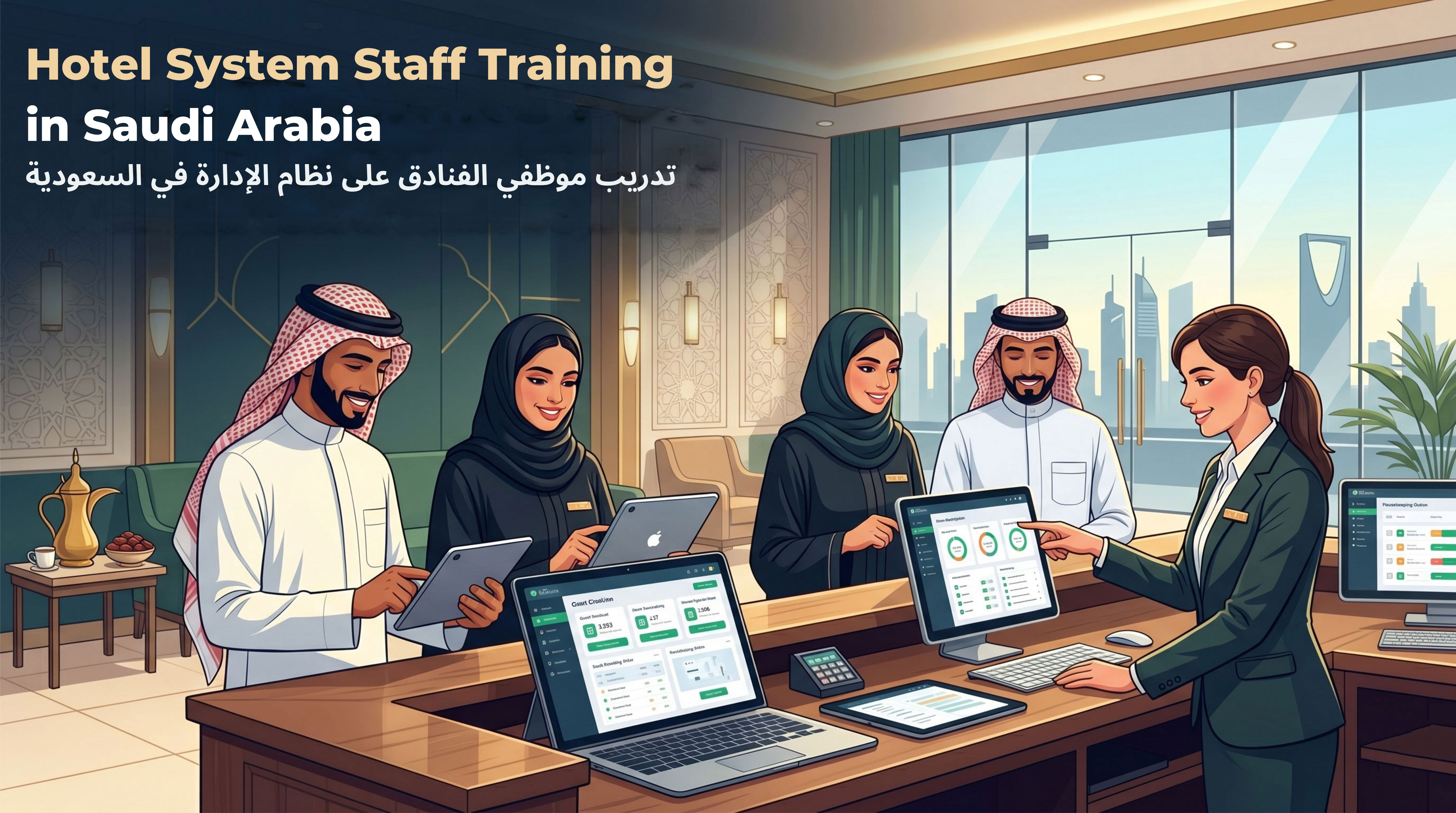
- Upskill your team: Invest in training programs that show housekeepers, front‑desk agents, and management how AI tools will support them, not replace them.
- Start with a high‑impact pilot: Deploy an AI concierge chatbot on your website and WhatsApp first. It delivers immediate cost savings and guest convenience, building momentum for larger projects.
- Scale gradually: Add dynamic pricing for hotel rooms, then predictive maintenance, and finally room automation. Measure ROI at each stage.
Future Trends: Aligning with Saudi Vision 2030
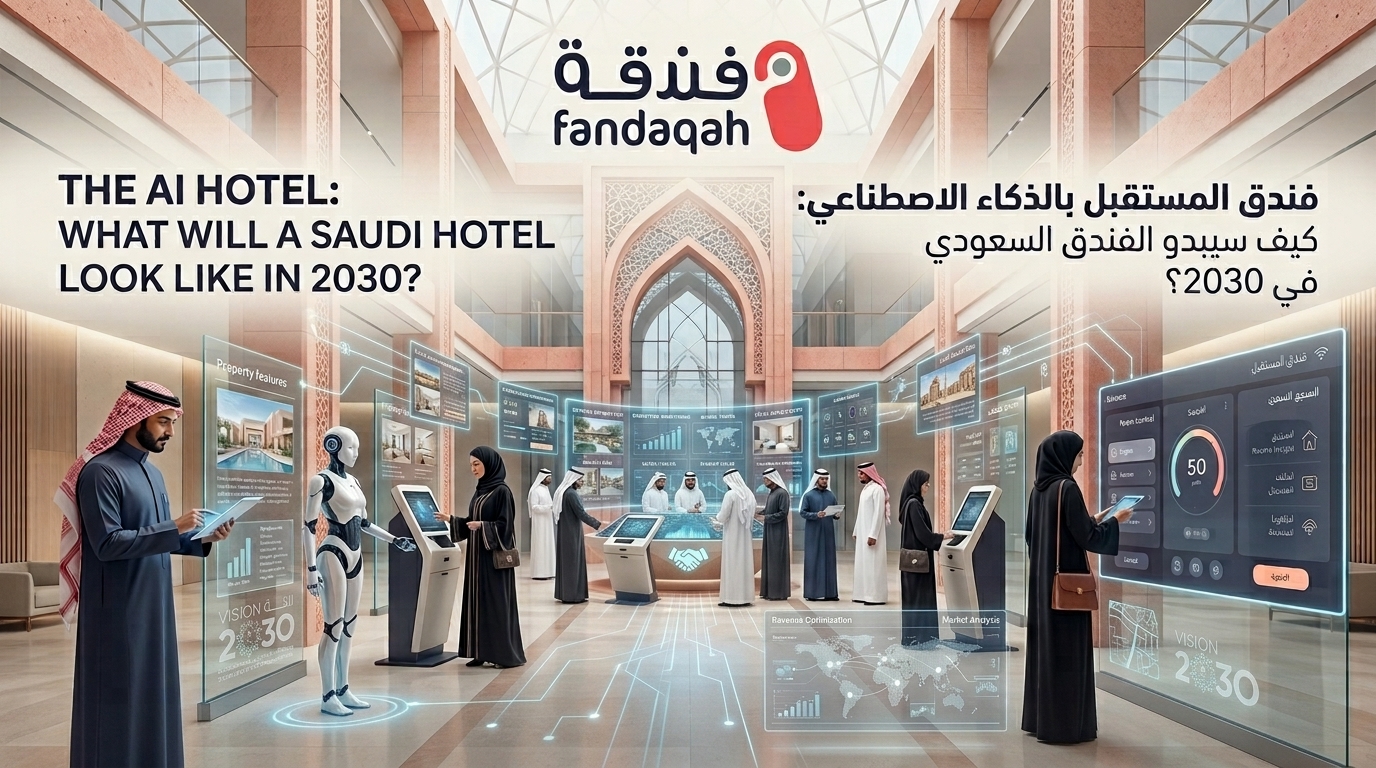
The synergy between AI in Saudi hotels and Vision 2030 smart tourism is unmistakable. As the Kingdom aims to attract 150 million annual visits, emerging technologies will redefine the guest journey:
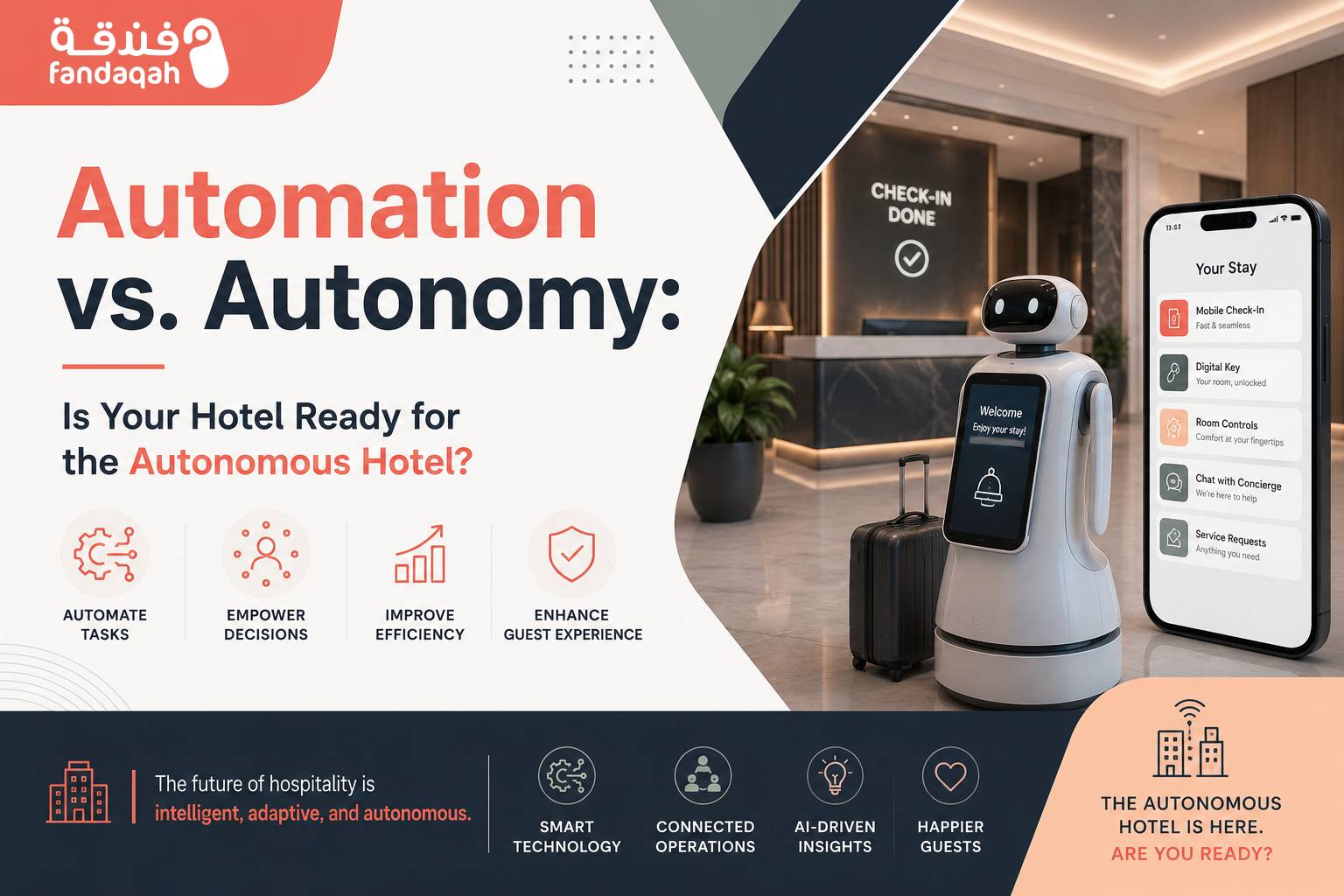
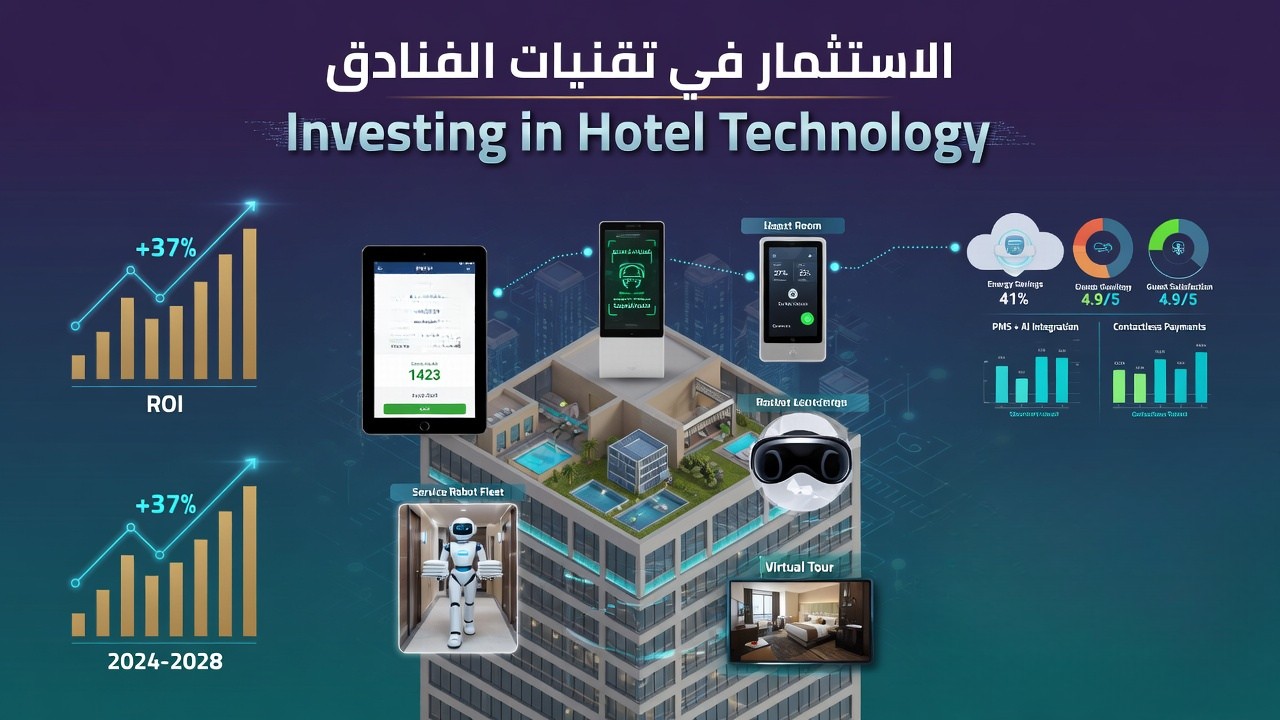
- Service robots: Autonomous butler bots will deliver towels, amenities, and room‑service orders contact‑free—already being tested in luxury hotels in Dubai and set to appear in NEOM.
- Emotion AI: Cameras (with strict privacy filters) will analyze guest facial expressions in public areas to gauge mood and trigger service recovery protocols instantly.
- Voice‑controlled smart rooms: Fully integrated rooms that respond to Arabic voice commands (“Hey room, set temperature to 21 degrees”) integrated with the smart home ecosystems that Gulf travellers are accustomed to.
- Sustainability through AI: Water‑usage optimization and waste‑reduction algorithms will help hotels meet the Saudi Green Initiative targets.
These innovations will not only elevate smart hotel technology in Saudi Arabia but also support the Public Investment Fund’s strategy to create unique, tech‑forward hospitality destinations that rival global benchmarks.
Frequently Asked Questions About AI in Saudi Hotels
What is the minimum cost to implement AI in a small Saudi hotel?
You can begin with a cloud‑based chatbot and simple analytics starting from around 500 SAR per month—ideal for boutique hotels aiming to enhance service without heavy upfront investment.
Will AI compromise guest privacy?
When implemented under SDAIA regulations, all guest data is anonymized and used solely for service improvement. Compliance with the Personal Data Protection Law ensures strict privacy.
How does AI increase hotel sales during Riyadh Season?
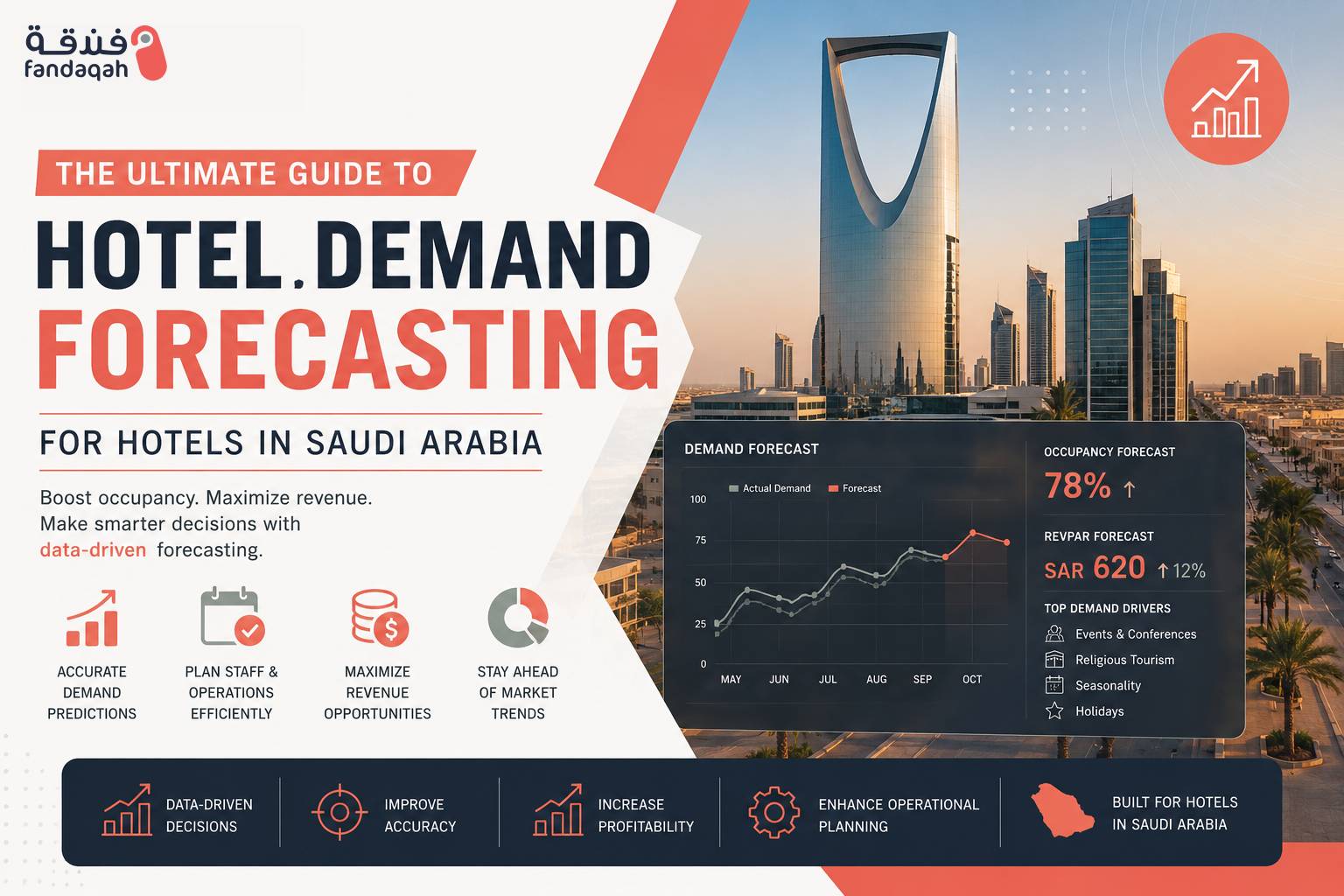
Through dynamic pricing for hotel rooms and real‑time demand forecasting, your hotel can automatically adjust rates to maximize revenue while offering personalized packages that boost occupancy.
What makes AI‑driven hotel management software different from legacy PMS?
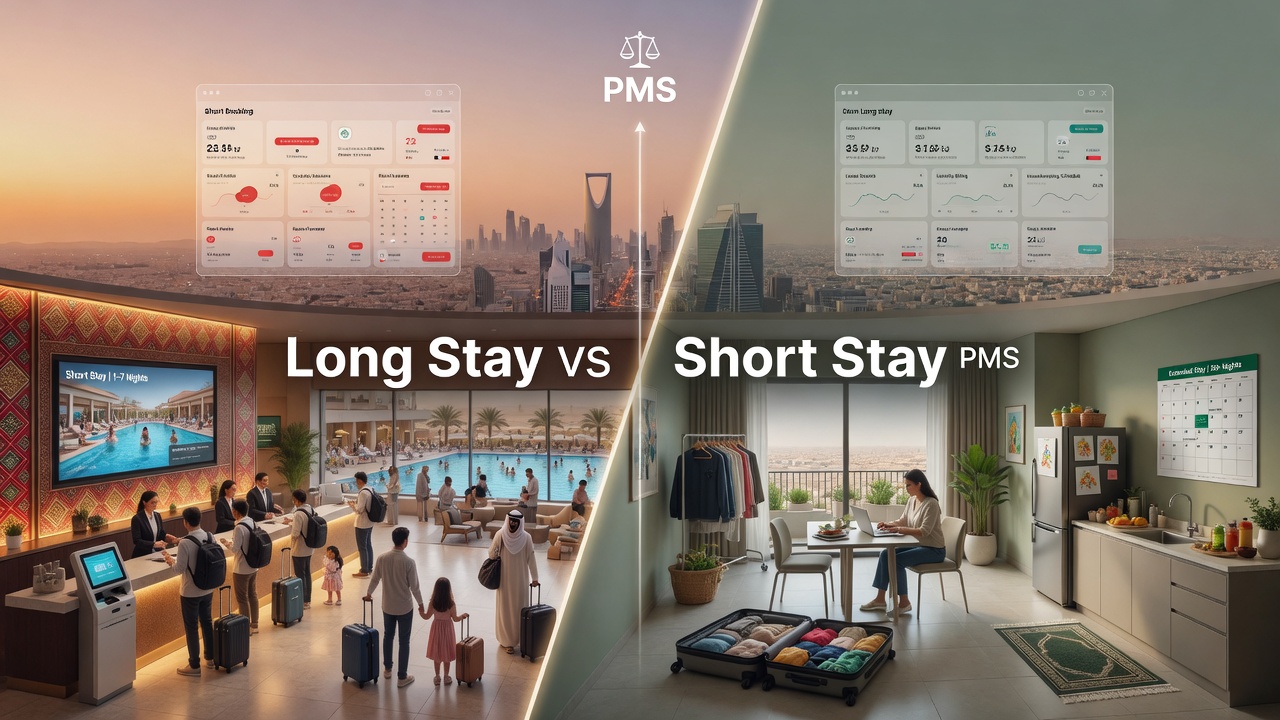
AI‑native platforms use machine learning to forecast demand and optimize resource allocation, whereas legacy systems rely on static rules and manual data entry prone to human error.
Can chatbots handle Saudi dialects?
Absolutely. Advanced AI chatbot hotel solutions are trained on large Arabic language models that understand both Modern Standard Arabic and local Gulf dialects, including Najdi and Hijazi variations.
How long before I see measurable results from AI adoption?
Initial improvements in guest satisfaction and staff productivity typically appear within 3–6 months. Full revenue uplift and hotel revenue management Saudi Arabia gains become clear after 12 months of integrated use.
Is facial recognition check‑in allowed under Saudi law?
Yes, with proper consent and in compliance with SDAIA’s biometric data guidelines. Many Saudi hotels are already trialing this technology to speed up the arrival process.
Conclusion: The Smart Future Begins Today
The question is no longer if your property should adopt AI in Saudi hotels, but when and how quickly you can begin. Through smart hospitality transformation, you can achieve a quantum leap in operational efficiency, reduce overheads, and deliver the seamless, personalized experiences that Saudi and international guests demand. Every step—from deploying a simple AI concierge chatbot to embracing full AI guest service automation—brings you closer to the cutting edge of Vision 2030 smart tourism. Start small, think big, and prepare your hotel not just to welcome the future, but to define it.
Ready to Transform Your Hotel into a Smart Destination?
Reach out to our specialists in AI for Saudi hospitality for a free consultation. We’ll assess your current operations and deliver a tailored roadmap to increase revenue and guest loyalty. Your first step toward the future starts with a conversation.
Request Your Free Consultation
Tags:
AI in Saudi hotels
smart hospitality transformation
AI-powered hotel management
dynamic pricing for hotel rooms
guest experience optimization
AI chatbot hotel
Vision 2030 smart tourism
digital transformation in Saudi hotels
hotel revenue management Saudi Arabia
AI guest service automation
smart hotel technology Saudi Arabia
Saudi hotel AI solutions