How to Plug Hidden Financial Gaps Caused by Municipal Tax, VAT, and Service Charge Mistakes — and Protect Your Profitability Under Saudi Regulations
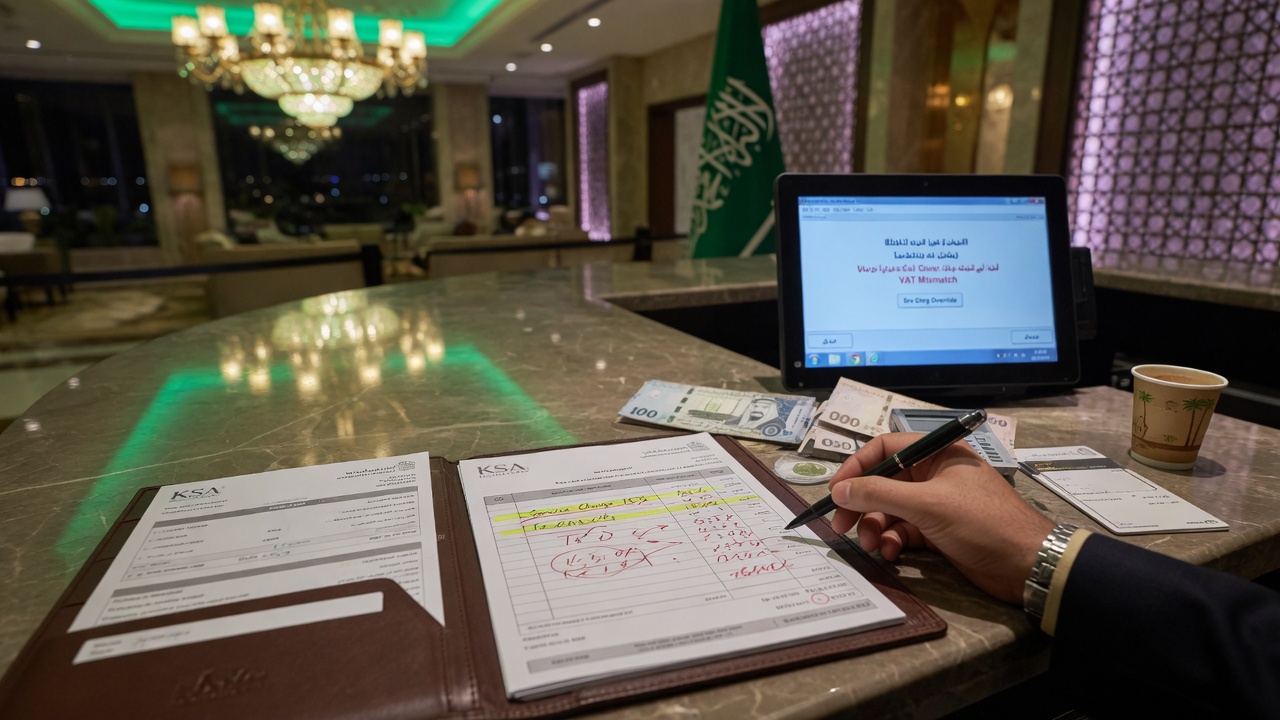
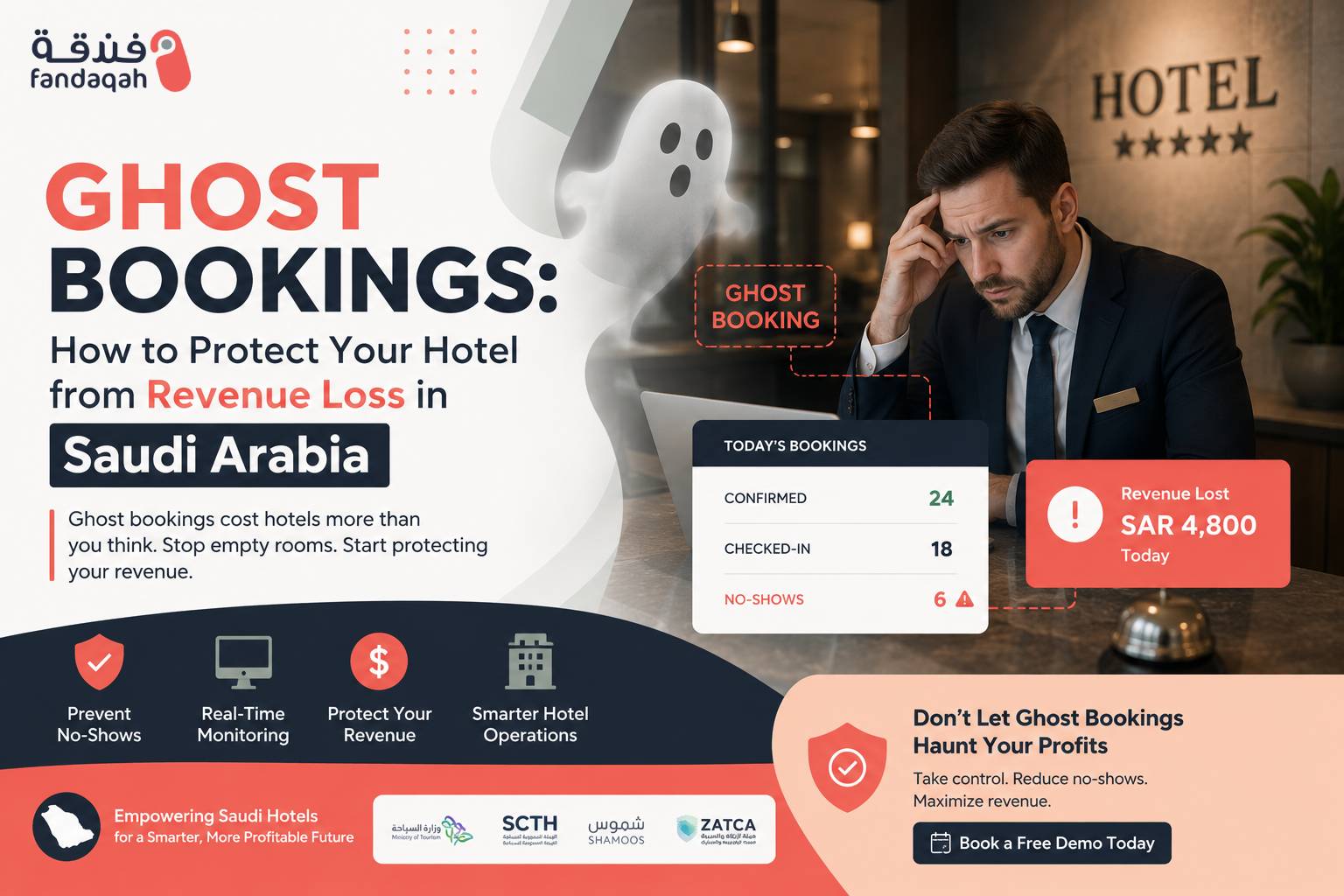
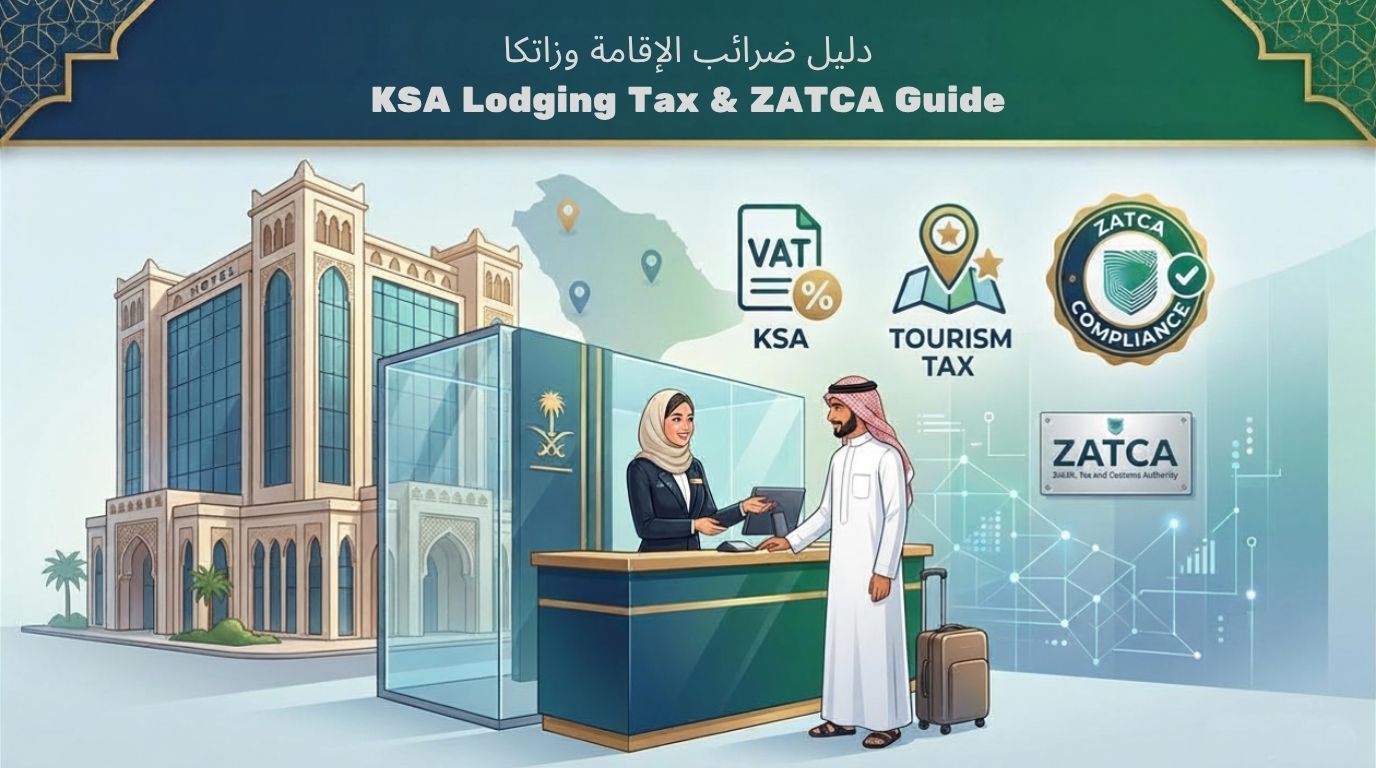
A single miscalculated municipal tax line or an incorrectly posted service charge can quietly drain thousands of riyals from your hotel’s bottom line every month. In the Kingdom of Saudi Arabia’s fast-growing hospitality market, such silent revenue leakage is not just a minor accounting annoyance — it’s a serious threat to profitability and compliance. With ZATCA’s Fatoora e-invoicing mandate, municipal fees, VAT on services, and complex service charge distribution rules, Saudi hoteliers face a perfect storm of financial complexity.
This comprehensive guide uncovers the most common hotel billing errors costing Saudi properties dearly, demonstrates how a modern cloud PMS can automatically prevent them, and shows you how to turn tax compliance from a liability into a strategic advantage aligned with Saudi Vision 2030. Whether you run a boutique hotel in AlKhobar or a multi-property group in Riyadh, mastering accurate tax and service charge handling is now a non‑negotiable pillar of financial health.
What Is Silent Revenue Leakage – and Why Taxes Make It So Dangerous
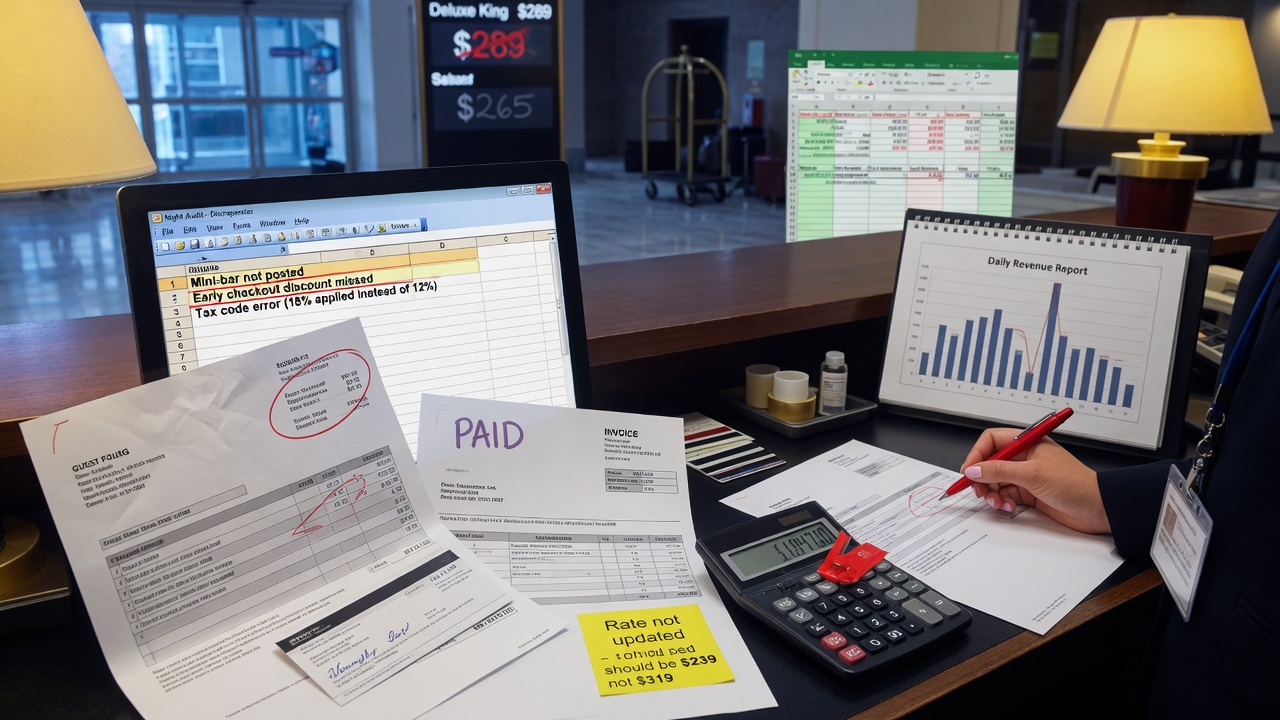
Silent revenue leakage refers to the gradual, often unnoticed loss of income that occurs when your hotel undercharges guests, misallocates taxes, or fails to collect legitimate fees — all without obvious red flags. Unlike a declined credit card or a no‑show, tax and service charge errors are hidden in plain sight on every folio. They slip through because they look correct at a glance, yet they slowly erode your profit margin.
In Saudi Arabia, the risk is especially acute because of the layered tax environment. Hotels must juggle:
- ● VAT (Value Added Tax) on rooms, F&B, and other services — with strict rules on what is taxable and to whom.
- ● Municipal Tax — a percentage added to the room rate, often overlooked or incorrectly applied.
- ● Service Charges — some properties apply a fixed percentage; others distribute it among departments. If not posted or allocated correctly, revenue simply vanishes.
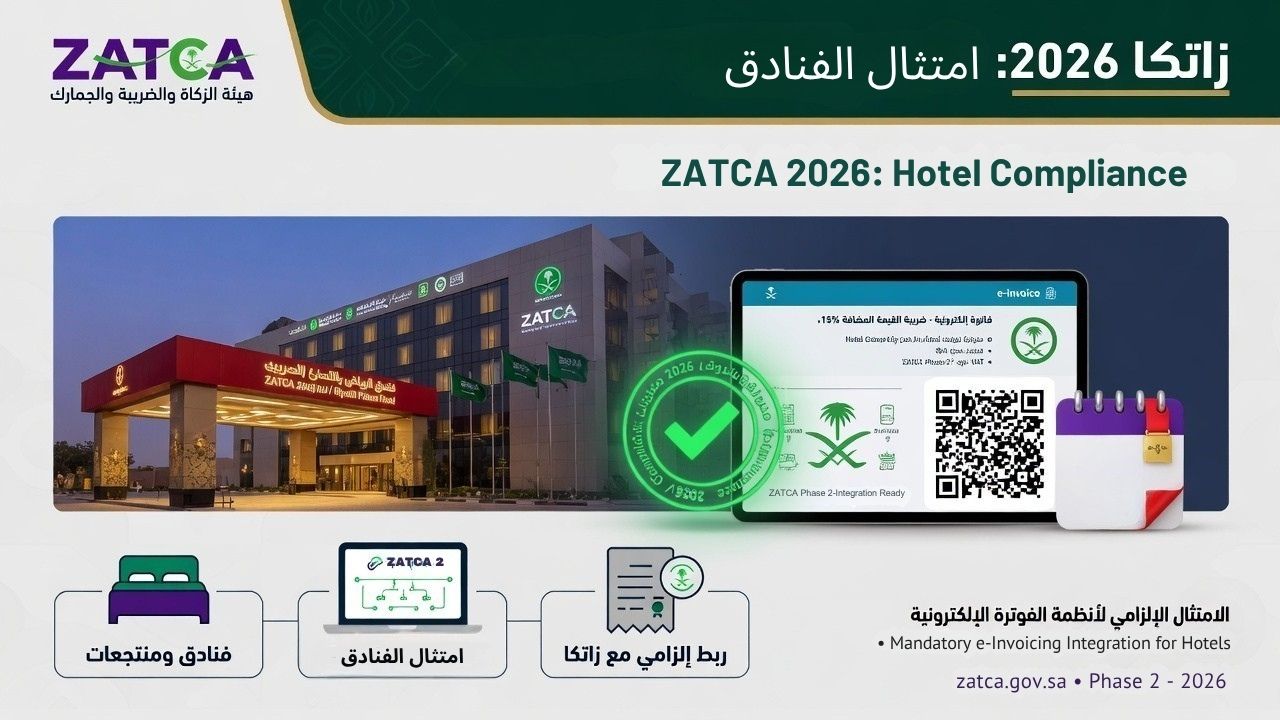
- ● ZATCA (Fatoora) E‑Invoicing — now mandatory for many hotels, demanding crystal‑clear tax breakdowns on every electronic invoice.
When these charges are calculated manually — or with a property management system that lacks Saudi‑specific tax logic — the leakage is inevitable. And because each error might be just a few riyals, they accumulate into staggering annual losses.
⚠ Did You Know? Research by hospitality finance experts shows that manual tax and service charge handling can cause revenue leakage of 1–3% of total room revenue. For a mid‑size Saudi hotel generating SAR 5 million annually in rooms, that’s up to SAR 150,000 silently lost each year — often without anyone noticing until an audit or a ZATCA inspection.
The 7 Most Expensive Tax & Service Charge Errors in Saudi Hotels
To stop hotel revenue leakage in Saudi Arabia, you first need to know exactly where it happens. Here are the mistakes we see most frequently when auditing hotel folios and financial reports across the Kingdom:
1. Municipal Tax Not Added – or Added to the Wrong Base Amount
The municipal tax (often called the “municipality fee”) is a percentage of the room rate. Many hotels either forget to activate it for all rate plans or incorrectly calculate it on a discounted net rate instead of the published selling price. Both errors directly reduce your collected revenue, and you are still liable to remit the correct amount to the authorities.
2. VAT Applied Incorrectly to Mixed Transactions
A single folio can contain room charges (subject to VAT), F&B items (VAT at a different rate or exempt for certain items), and service charges (taxable or not depending on their nature). Applying the same VAT rate across the board — or failing to separate zero‑rated supplies — not only causes leakage but also creates a ZATCA compliance nightmare.
3. Service Charge Not Posted as Revenue
If your property collects a service charge (say 10% on all F&B bills) but that money is not journaled into the correct revenue accounts — or worse, is simply left in a suspense account — you are losing track of genuine earnings. Over time, this unposted income becomes a black hole that distorts your P&L and starves departments of their fair share.
4. Rounding Errors That Compound
When tax is calculated per item and then rounded (or not rounded) inconsistently, the final folio total may differ from the sum of individually calculated taxes. While each discrepancy might be a few halalas, multiplied by thousands of transactions, it adds up. Manual calculators and spreadsheets are notorious for this.
5. Misunderstanding Tax Exemptions for GCC Citizens
Guests from other GCC countries may be entitled to VAT refunds or exemptions under certain conditions. If your front desk does not correctly flag the nationality and apply the right tax rule in the PMS, you either overcharge the guest (leading to disputes) or under‑collect VAT (creating a liability). Both hurt your financial accuracy and guest trust.
6. Late or Inaccurate Service Charge Distribution
Many Saudi hotels distribute service charges among staff as a gratuity or incentive. If the charge is not accurately collected and pooled, the shortfall either diminishes employee morale or forces the hotel to cover the difference from its own pocket — a double hit to the bottom line.
7. Manual Reconciliation Gaps with ZATCA E‑Invoices
With Fatoora, each invoice must carry a universally unique identifier (UUID), a cryptographic stamp, and a precise tax breakdown. A single manual error — a transposed digit, a mis‑typed tax amount — can cause the invoice to be rejected by ZATCA’s system, triggering compliance alerts and potential fines.
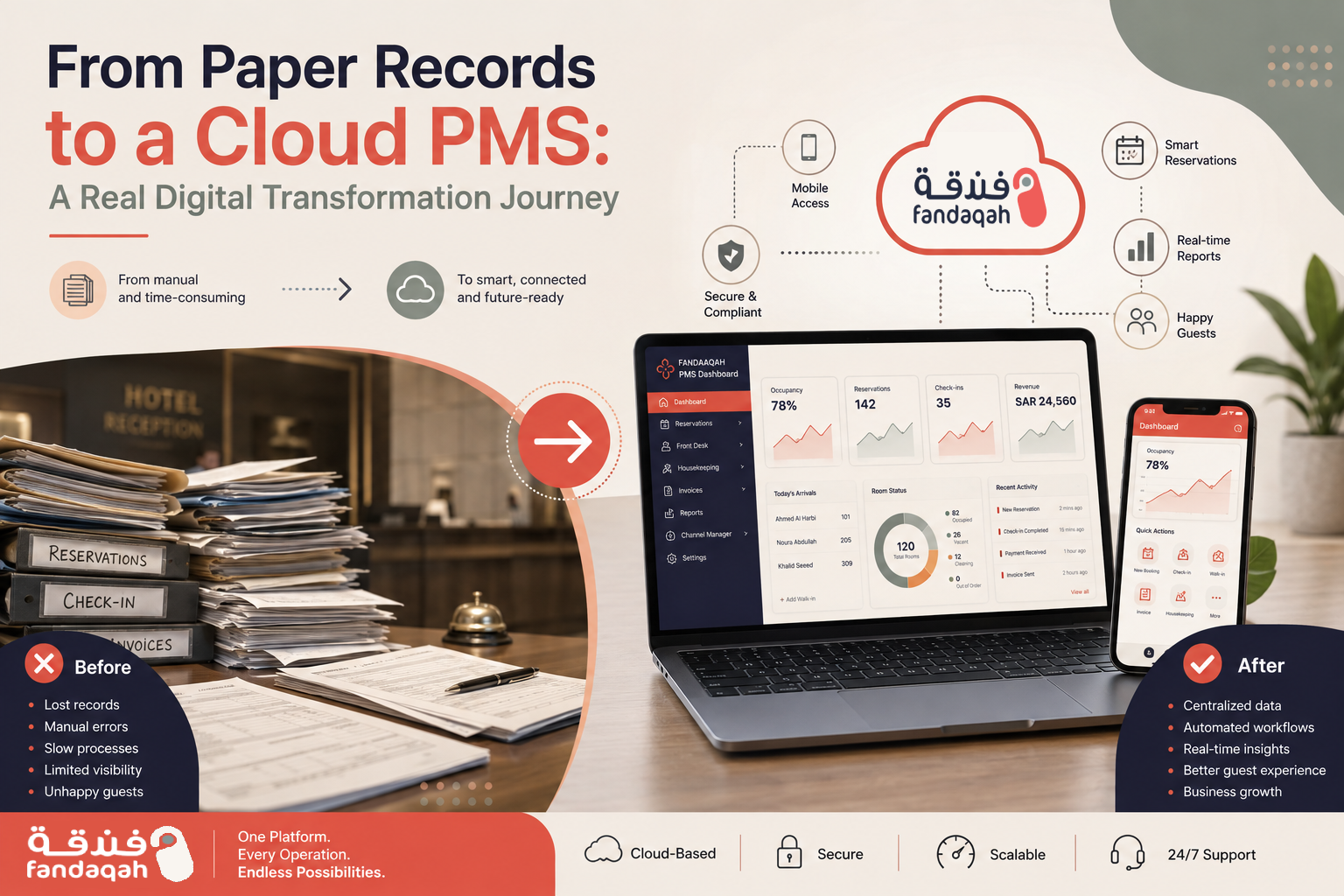
Manual vs. Automated Tax & Service Charge Handling
| Aspect |
Manual / Legacy PMS |
Cloud PMS with Saudi Tax Engine |
| Tax rate updates |
Manually updated when rates change; prone to missing updates. |
Auto‑syncs with regulatory changes; all rate codes instantly applied. |
| Municipal Tax accuracy |
Relies on front desk to remember to add; often skipped or set at wrong rate. |
Configured per rate plan and automatically posted at check‑out. |
| VAT on mixed folios |
Often a single VAT line; no item‑level split, risking ZATCA rejection. |
Line‑item VAT calculation with proper tax codes, ready for Fatoora. |
| Service charge posting |
May be added as a flat amount but not journaled to revenue; often missed. |
Auto‑posts service charge to designated revenue accounts and distributes per rules. |
| ZATCA e‑invoice generation |
Invoice created manually or via basic templates; missing UUID and hash. |
Fully compliant Fatoora e‑invoices generated in real time with all required fields. |
| Audit trail |
Scattered paper or PDF records; difficult to trace changes. |
Complete digital audit trail: who changed what tax rule, when, and why. |
How a Saudi‑Ready Cloud PMS Eliminates Tax & Service Charge Leakage
Modern cloud property management systems purpose‑built for the Kingdom go far beyond simple billing. They embed hotel financial accuracy in Saudi Arabia directly into every transaction, ensuring that tax and service charges are calculated, posted, reported, and invoiced correctly without human intervention. Here’s how:
Real‑Time Tax Logic Engine
A Saudi‑compliant PMS stores all tax rules — VAT percentages, municipal tax rates, and service charge formulas — in a central engine. When a charge is posted, the engine instantly determines the applicable taxes based on the item category, guest nationality, and rate plan. There is no guessing and no manual input.
Auto‑Posting of Municipal Tax and Service Charges
You can define that room revenue code “ROOM” automatically attracts a 5% municipal tax and a 10% service charge. The PMS applies these rules at posting and generates separate journal entries. This ensures that municipal tax errors in hotels KSA are virtually eliminated, and service charges never disappear into thin air.
ZATCA Fatoora Integration
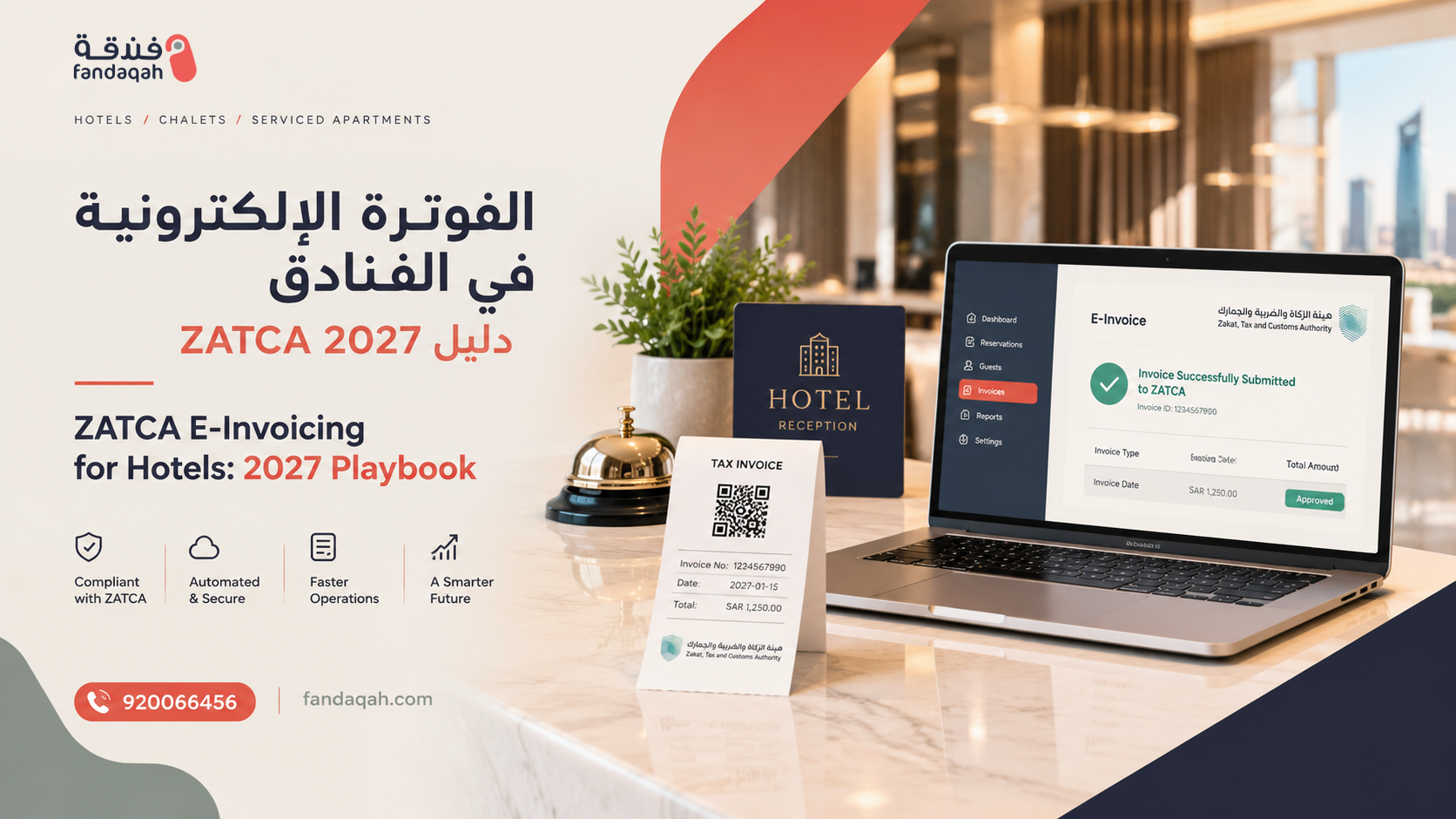
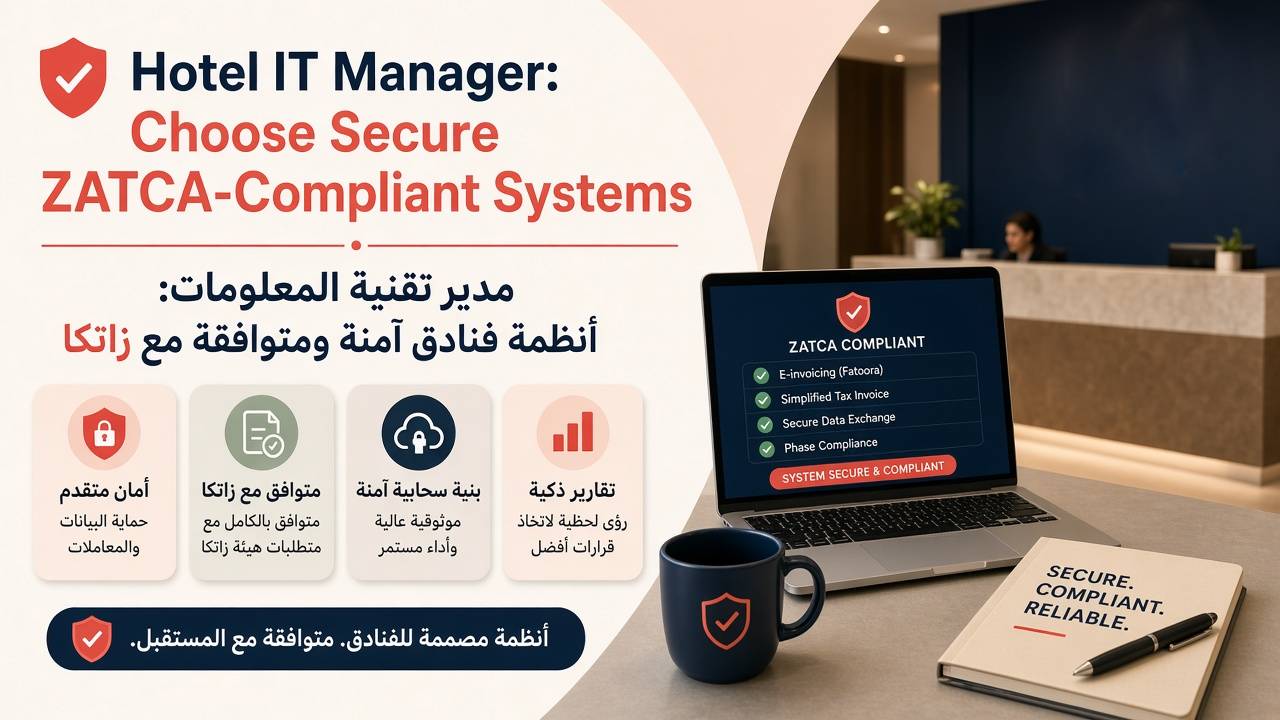
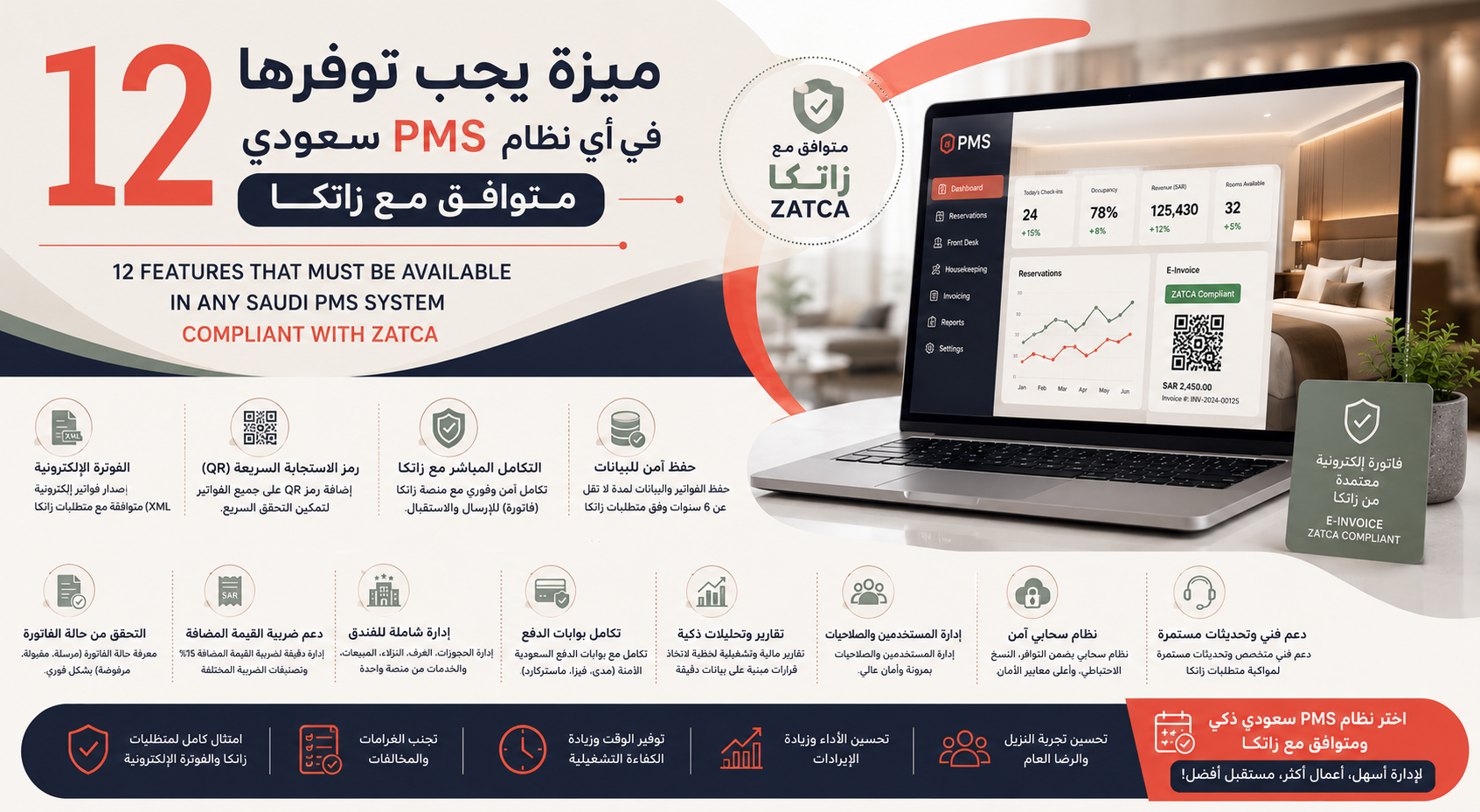
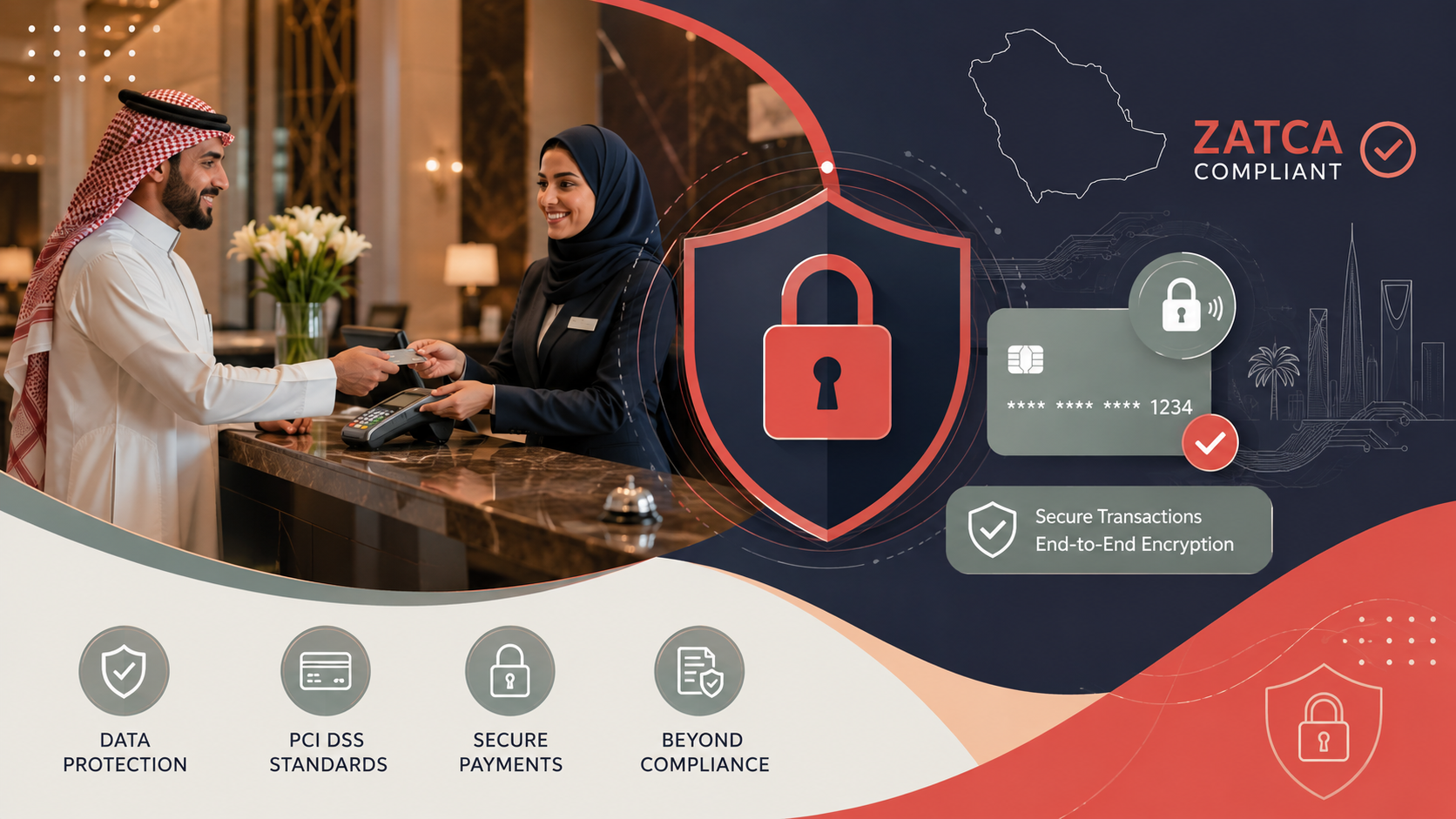
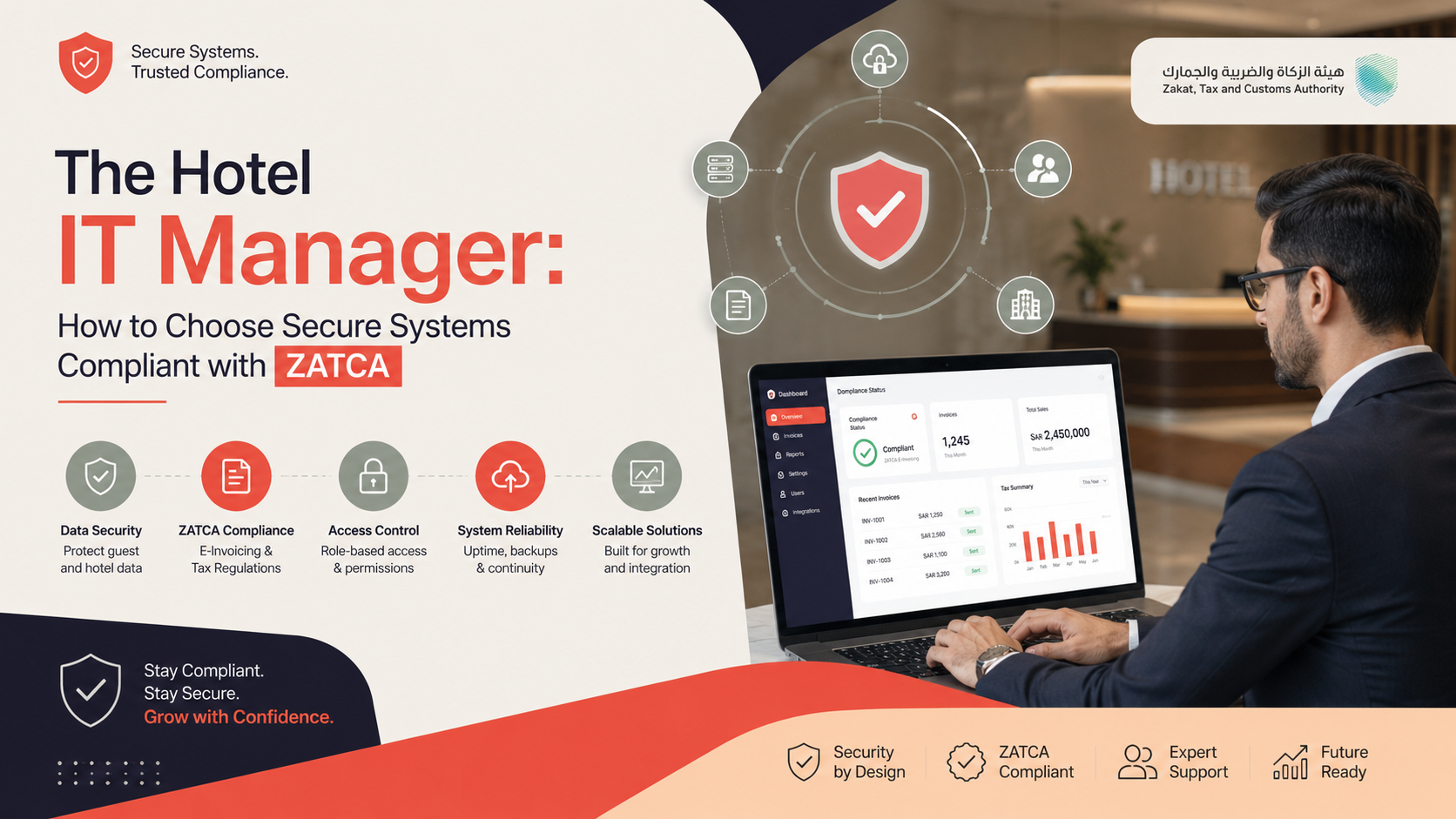
The PMS acts as a ZATCA e‑invoicing compliant solution for hotels. It generates invoices with all mandatory fields — UUID, cryptographic stamp, seller and buyer VAT details, line‑item tax breakdown — and submits them to the Fatoora portal seamlessly. This not only prevents billing errors but also protects you from penalties for non‑compliance.
Configurable Service Charge Distribution
You can set rules: 70% of service charge goes to F&B staff, 20% to kitchen, 10% to housekeeping — or any split you desire. The PMS tracks collected charges and automates the distribution journal, maintaining transparency and eliminating manual spreadsheets.
“We discovered that we were losing over SAR 80,000 a year just from misapplied municipal tax and unposted service charges. Switching to a cloud PMS with built‑in Saudi tax logic turned that leakage into pure profit within the first quarter.”
— Financial Controller, mid‑scale hotel chain, Riyadh
Real‑World Saudi Hospitality Scenarios
Let’s see how automated hotel tax calculation and service charge handling prevent leakage in everyday hotel operations across the Kingdom.
Use Case 1: A Business Traveller’s Folio in Riyadh
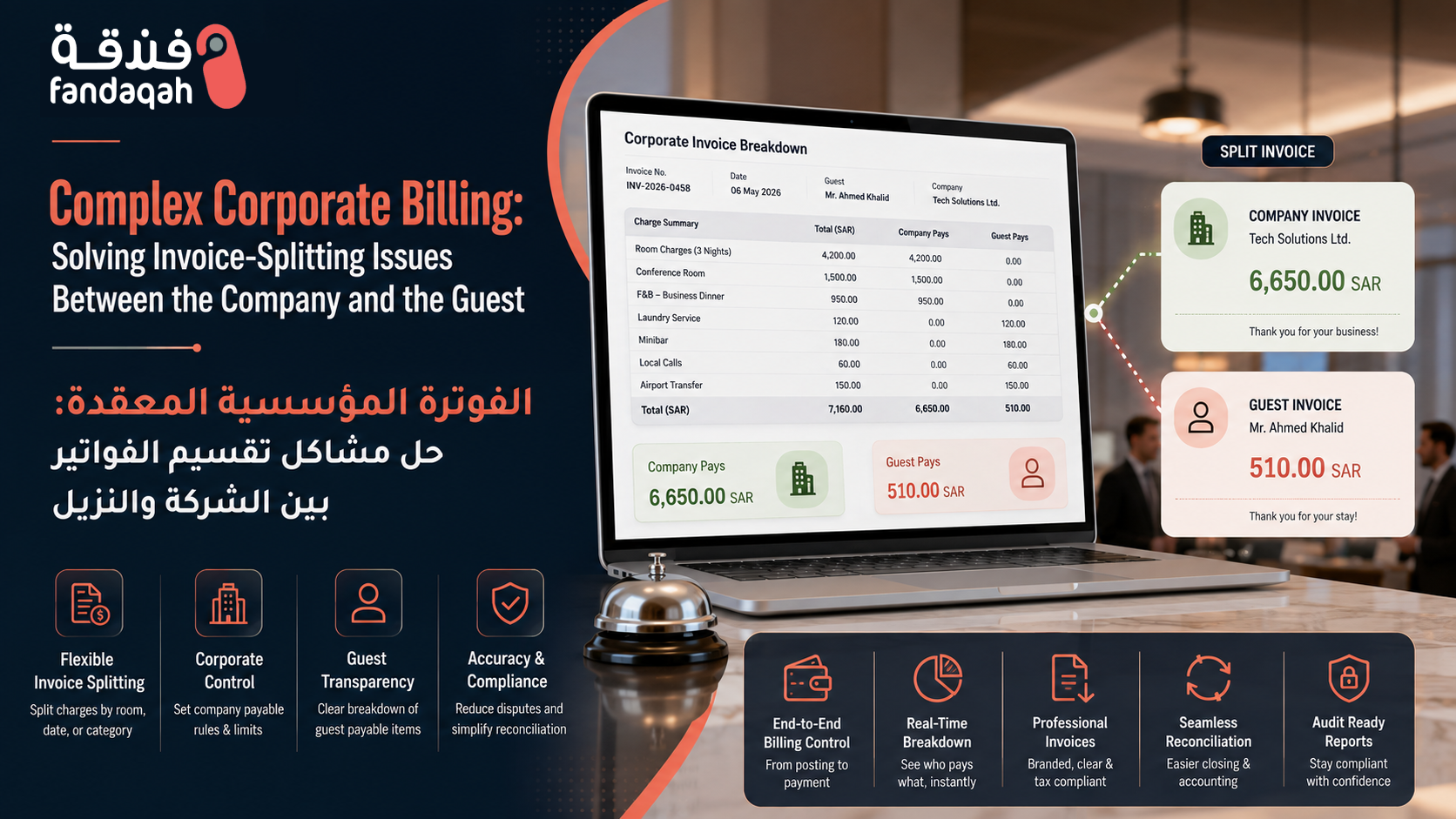
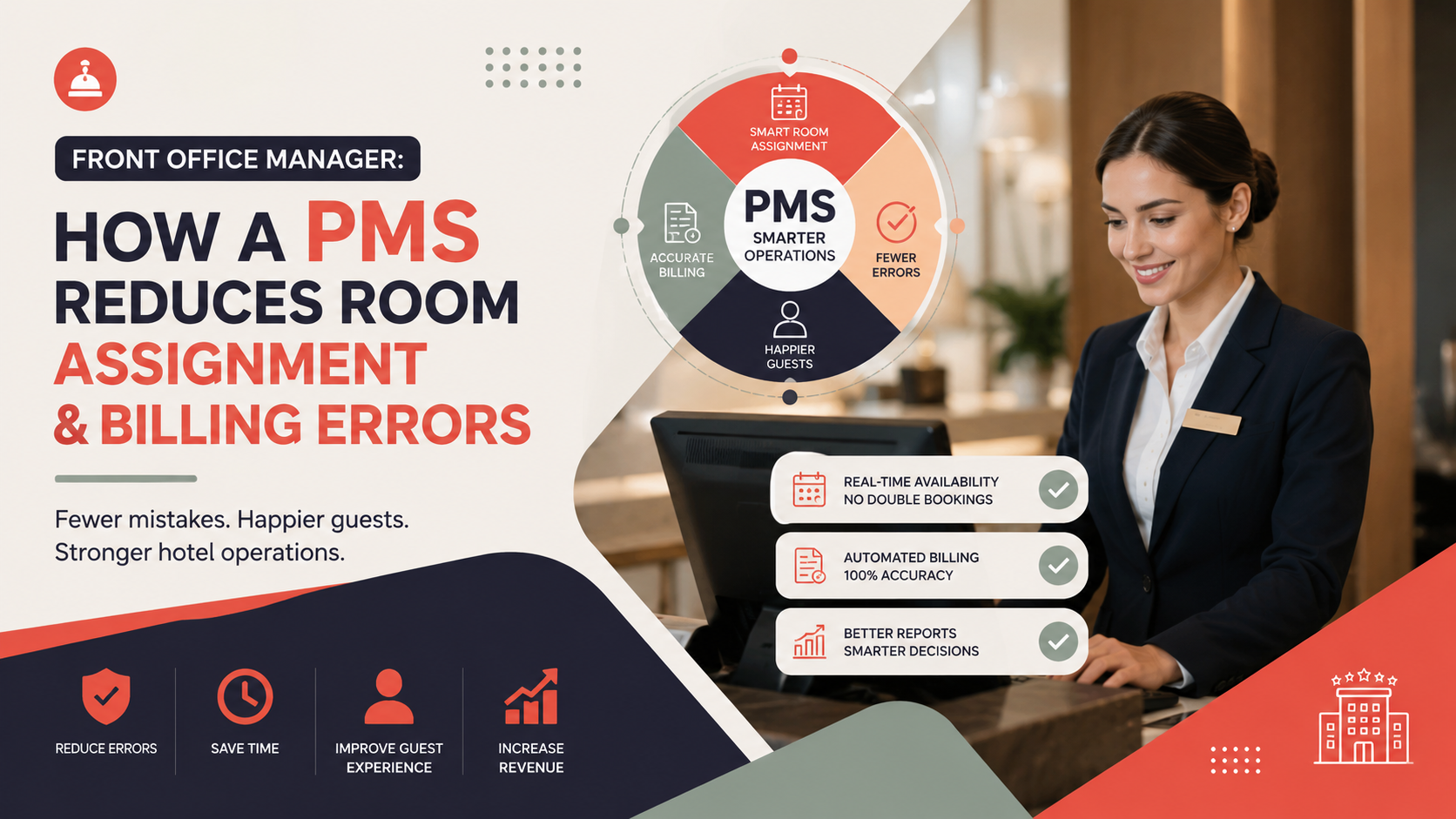
Mr. Al‑Ghamdi checks in for two nights on a corporate rate. His folio includes room charges, a business lunch, and laundry. With a manual system, the front desk might forget to add municipal tax to the room, apply VAT incorrectly to the lunch, and skip service charge on laundry altogether. A cloud PMS automatically posts municipal tax on the room, the correct VAT rate on each F&B item, and the configured service charge on all eligible services — then produces a ZATCA‑ready invoice at check‑out.
Use Case 2: A Family Stay in Jeddah During Eid
A family of four books connecting rooms on a promotional half‑board package. The package includes breakfast and dinner, but the rate plan must still attract municipal tax and VAT where applicable. An intelligent PMS recognizes the package components, applies taxes correctly to each element, and posts the service charge on the F&B portion — ensuring the hotel collects every riyal it is owed without overcharging the guests.
Use Case 3: ZATCA Audit of a Small Boutique Hotel
A boutique property in AlUla receives a ZATCA audit request for the last quarter. Because its cloud PMS recorded every invoice with the required UUID, hash, and tax breakdown, the owner simply exports the data from the PMS dashboard and submits it. No scrambling, no manual re‑calculations — and no penalties.
Financial Transparency and Saudi Vision 2030
Saudi Vision 2030 is built on pillars of accountability, digital transformation, and a thriving private sector. For the hospitality industry, this means that financial opacity is no longer acceptable. ZATCA e‑invoicing for hotels is not just a technical hurdle; it’s a deliberate move to bring every commercial transaction into the light, ensuring fair tax collection and creating a trusted business environment that attracts international investors and tourists.
When your hotel eliminates silent revenue leakage through automated tax and service charge management, you achieve several strategic wins that align perfectly with national goals:
- ✓ Clean, auditable financials that build trust with banks, investors, and potential international partners.
- ✓ Accurate tax contribution that supports the nation’s infrastructure and public services — a source of pride.
- ✓ Improved cash flow because you collect every riyal owed, enabling reinvestment into guest experiences.
- ✓ Enhanced guest trust – when invoices are clear and correct, corporate bookers and leisure travellers are more likely to return.
The Hidden Cost of Doing Nothing
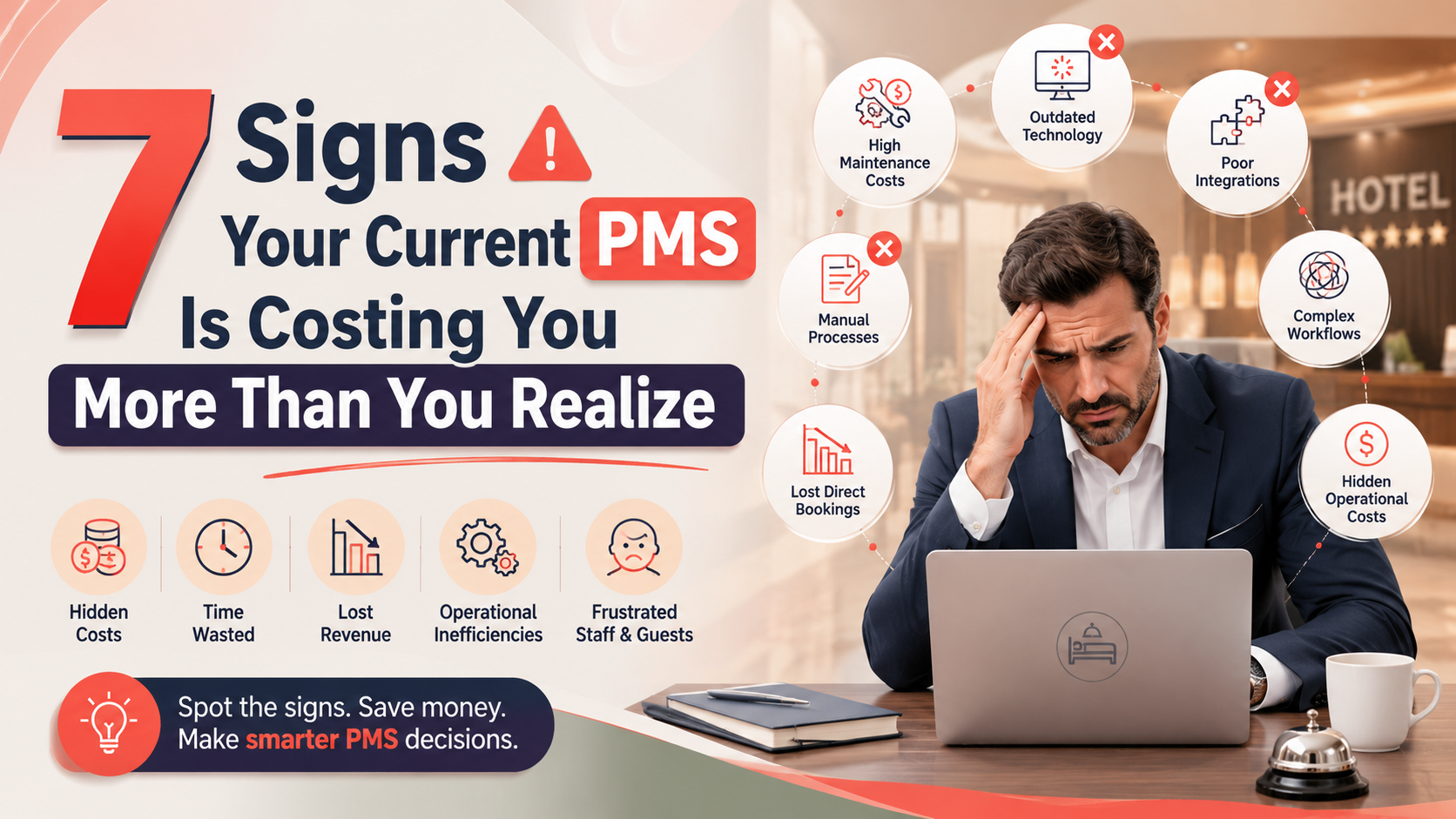
Many hoteliers underestimate the cumulative impact of service charge calculation mistakes in Saudi hotels and other billing errors. But the cost extends beyond lost revenue:
- ⚠ ZATCA fines for non‑compliant invoices, which can reach thousands of riyals per violation.
- ⚠ Employee distrust when service charge distributions are inaccurate or delayed.
- ⚠ Skewed financial reports that lead to poor business decisions — you might think your restaurant is unprofitable when in fact service charges are not being accounted for.
- ⚠ Reputational damage if guests notice billing inaccuracies or if your property appears on a ZATCA non‑compliance list.
Future Trends: AI‑Powered Financial Compliance
As Saudi Arabia’s digital economy matures, the integration of artificial intelligence into hotel finance will accelerate. We are already seeing the first wave of AI‑driven anomaly detection: algorithms that scan thousands of folios to flag unusual tax patterns — a room consistently missing its municipal tax, a service charge rate that suddenly drops. These AI guardians act as a second pair of eyes, catching leakage the moment it happens, not months later during an audit.
Furthermore, ZATCA’s Fatoora platform is expected to evolve towards real‑time invoice validation, meaning your PMS will need to be in constant sync with the tax authority. Hotels relying on cloud PMS for hotel tax compliance in Saudi Arabia will have a clear advantage, as their systems are designed for seamless API‑based integration. Those still on legacy, on‑premise systems will face an increasingly difficult and costly upgrade path.
Frequently Asked Questions About Hotel Tax & Service Charge Leakage in KSA
Q: What is the most common tax error in Saudi hotels?
The most frequent error is failing to apply the municipal tax to room revenue consistently. This often happens when staff override the system or when rate plans are set up incorrectly. Automating this through a PMS with Saudi‑specific tax configuration eliminates the risk.
Q: How does a cloud PMS ensure ZATCA Fatoora compliance?
A compliant cloud PMS generates e‑invoices with all required fields — sequential invoice numbering, UUID, cryptographic hash, seller and buyer VAT details, and a line‑by‑line tax breakdown. It then submits these invoices to the ZATCA portal via API, and stores them in a tamper‑proof, audit‑ready format.
Q: Can service charge errors really affect my bottom line noticeably?
Absolutely. If a 10% service charge is missed on just SAR 30,000 of monthly F&B revenue, that’s SAR 3,000 lost per month — SAR 36,000 per year. Multiply that across multiple outlets or properties, and the figure can be eye‑opening. The damage compounds when service charge is not allocated to the right departments, skewing profitability reports.
Q: Do I need different tax rules for different types of guests in Saudi Arabia?
Yes. For example, certain GCC citizens may be eligible for VAT refunds, while other international guests are not. Your PMS must support guest nationality‑based tax rules to avoid overcharging or under‑collecting VAT and to remain compliant with ZATCA regulations.
Q: How do I start fixing tax leakage in my hotel today?
Start with a mini‑audit: pull 20 random folios from the last month and manually verify that municipal tax, VAT, and service charges were correctly posted. Then document any patterns of error. Next, evaluate whether your current PMS can automate these calculations with Saudi‑specific tax rules. If not, consider migrating to a system purpose‑built for the Kingdom.
Q: Are there penalties for ZATCA e‑invoicing non‑compliance for hotels?
Yes. ZATCA has been clear that failure to issue compliant e‑invoices, or issuing invoices with missing or incorrect data, can result in warnings, fines, and in severe cases, suspension of business activities. The fines are applied per invoice, which can be disastrous for a high‑volume hotel.
Q: Can service charge be used to cover operational costs?
In many Saudi hotels, service charge is treated as revenue and can be used for operational costs, but if it is intended as staff gratuity, it must be distributed transparently and in accordance with your employment contracts. Regardless of its purpose, it must be accurately collected and posted to the correct ledger, or you lose both revenue and staff trust.
Turn Tax Compliance into a Competitive Advantage
Hotel revenue leakage in Saudi Arabia from tax and service charge errors is entirely preventable. It requires no complex new processes — only the right technology and a commitment to financial accuracy. By deploying a cloud PMS that speaks the language of Saudi regulation, you plug the leaks, satisfy ZATCA, and present your guests with flawless invoices that build confidence and loyalty.
Every riyal you stop from silently slipping away goes straight to your bottom line, empowering you to invest in better guest experiences, staff training, and sustainable growth — exactly the kind of forward‑looking hospitality that Saudi Vision 2030 champions.
Ready to Stop Revenue Leakage in Your Hotel?
Don’t let tax and service charge errors drain your profits any longer. Explore our Saudi‑focused cloud PMS solutions that automate tax compliance, ZATCA e‑invoicing, and financial reporting — so you keep every riyal you earn.
Get Your Free Financial Leak Audit →
Trusted by Saudi hotels in Riyadh, Jeddah, Makkah, Madinah and beyond.
Article Tags
hotel revenue leakage Saudi Arabia, municipal tax errors hotels KSA, service charge calculation mistakes Saudi, hotel billing errors KSA, cloud PMS tax compliance Saudi, ZATCA e-invoicing hotels, VAT errors hospitality Saudi, hotel financial accuracy Saudi, automated hotel tax calculation, service charge posting errors, hotel finance automation KSA, how to prevent revenue leakage from tax errors in Saudi hotels, common municipal tax calculation mistakes in KSA hotels, automated service charge postings for Saudi hotels, cloud PMS reduce billing errors Saudi Arabia, ensure accurate VAT and municipal tax in hotel invoices, ZATCA compatible hotel billing system, stop hidden profit loss from hotel service charges, Saudi hotel tax compliance checklist
Disclaimer: This article provides general information on tax and service charge handling for KSA hotels and does not constitute legal, tax, or accounting advice. Always consult a qualified financial professional familiar with Saudi tax law and ZATCA regulations for guidance specific to your property.