Hotel Night Audit in Saudi Arabia: What Should Be Automated? The Complete Guide for Modern Hoteliers
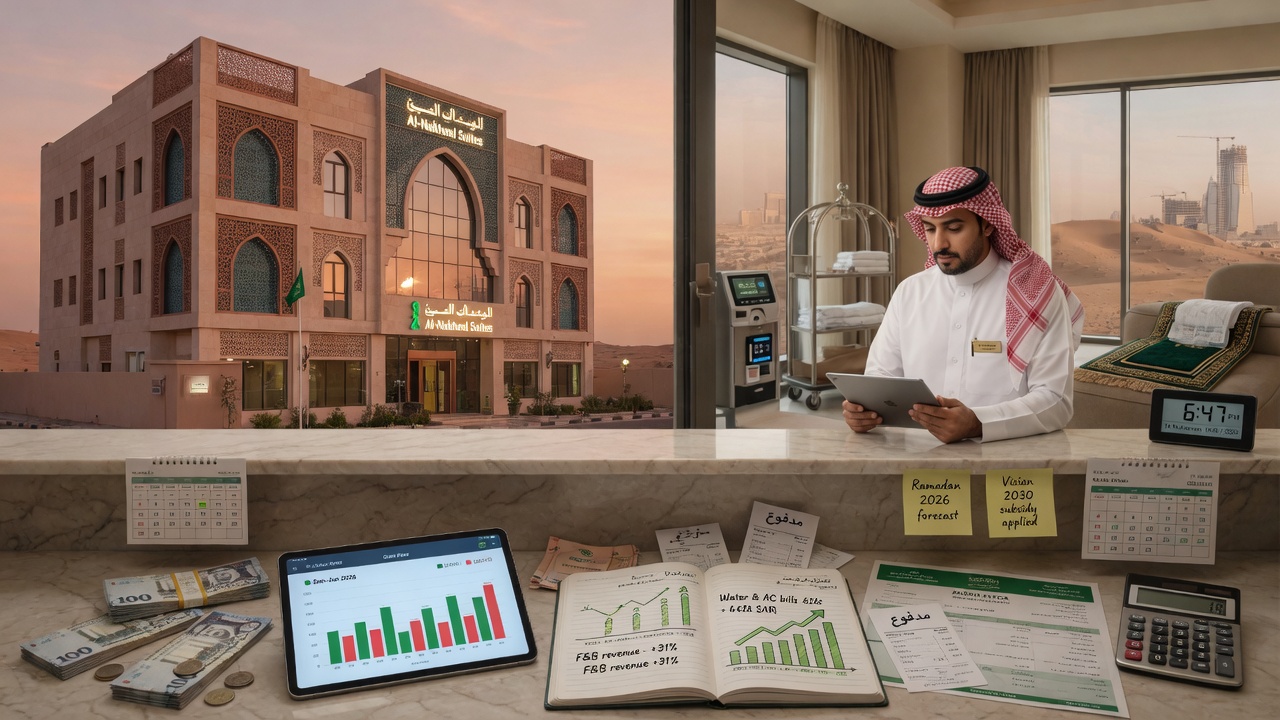
Every night, while guests sleep, one of the most important financial processes in hospitality quietly takes place: the hotel night audit. In Saudi Arabia's fast-growing hotel market — where properties in Riyadh, Jeddah, Makkah, and Madinah handle thousands of transactions daily across rooms, restaurants, and events — the night audit is where the day's revenue is verified, errors are caught, and the books officially close.
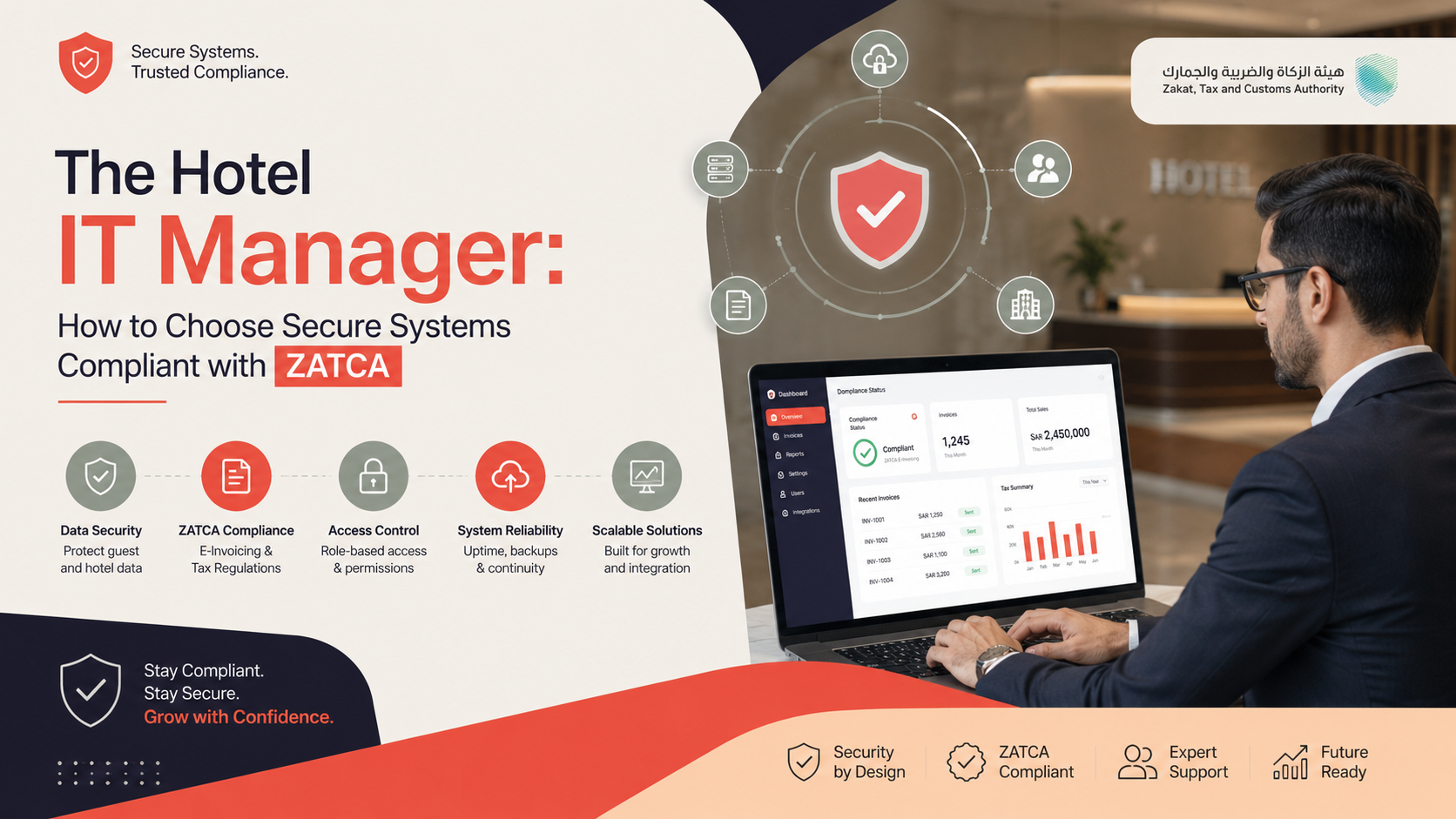
Yet in many Saudi hotels, this critical process still runs the way it did twenty years ago: a lone night auditor, stacks of printed folios, manual posting checks, and a close-of-day routine that stretches past 3 AM. The result? Costly posting errors, missed revenue, compliance risks, and exhausted staff. This guide explains exactly what should be automated in the hotel night audit in Saudi Arabia — and what should stay in human hands — so your property closes the day faster, cleaner, and fully compliant with Saudi regulations like ZATCA e-invoicing (Fatoora) and mandatory guest reporting through the national tourism platforms.
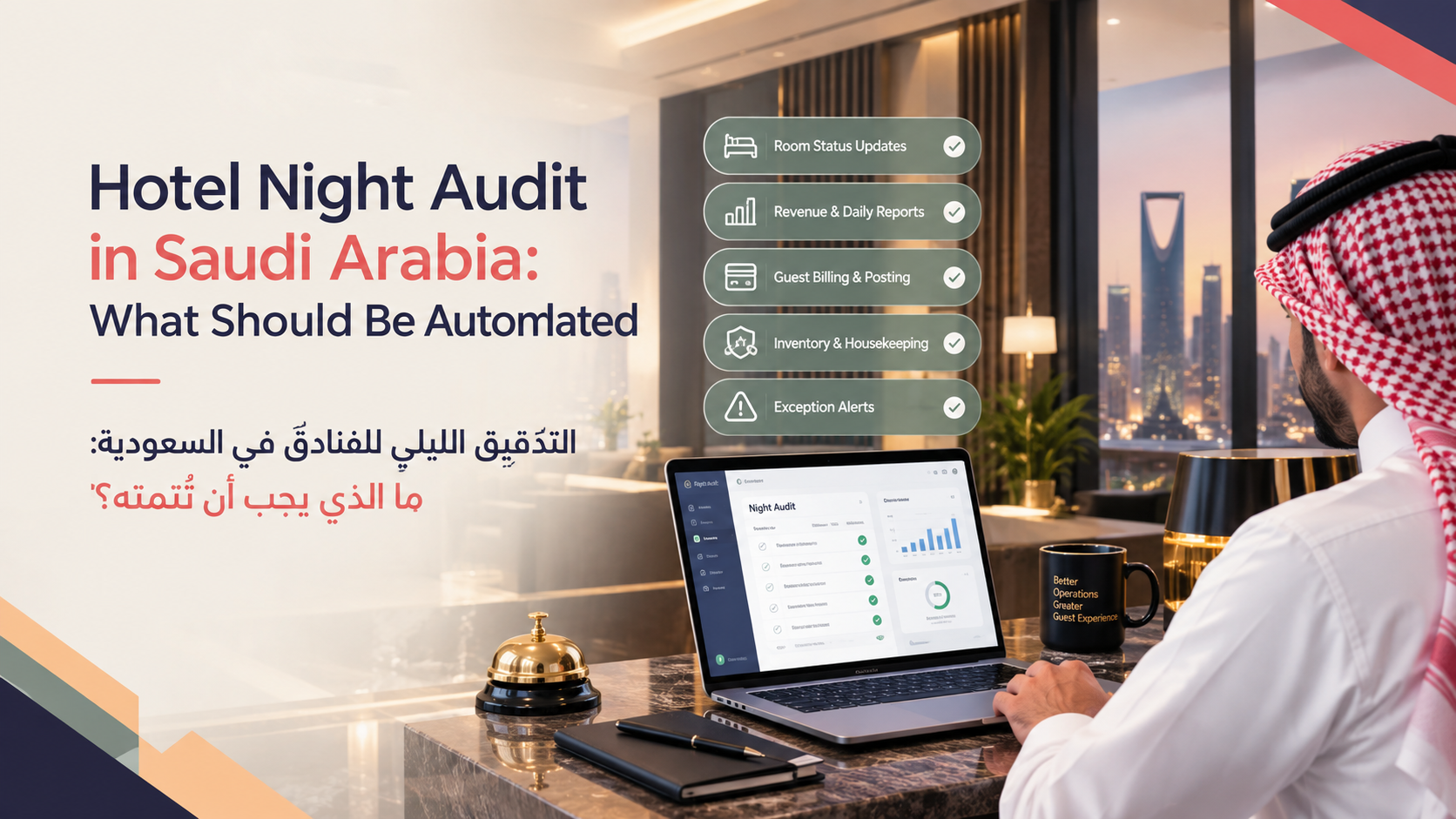
Quick Answer (AEO): Saudi hotels should automate the repetitive, rules-based parts of the night audit: room and tax posting (including 15% VAT and municipality fees), no-show processing, credit limit checks, rate and reservation discrepancy flagging, payment reconciliation, ZATCA-compliant e-invoice generation, guest data reporting, backups, and daily report distribution. Human auditors should focus on exception handling, dispute investigation, fraud review, and front-desk guest service during the night shift.
What Is the Hotel Night Audit — and Why Does It Matter So Much in Saudi Arabia?
The night audit is the daily process of verifying, balancing, and closing all of a hotel's financial activity for the business day. It typically runs between 11 PM and 4 AM and includes:
- Posting room charges and taxes to every in-house guest folio.
- Verifying that rates charged match the rates booked (rate discrepancy check).
- Reconciling payments — cash, mada, credit cards, bank transfers, city ledger, and OTA virtual cards.
- Processing no-shows, late cancellations, and early departures.
- Balancing all revenue departments: rooms, F&B, laundry, spa, minibar, meeting rooms.
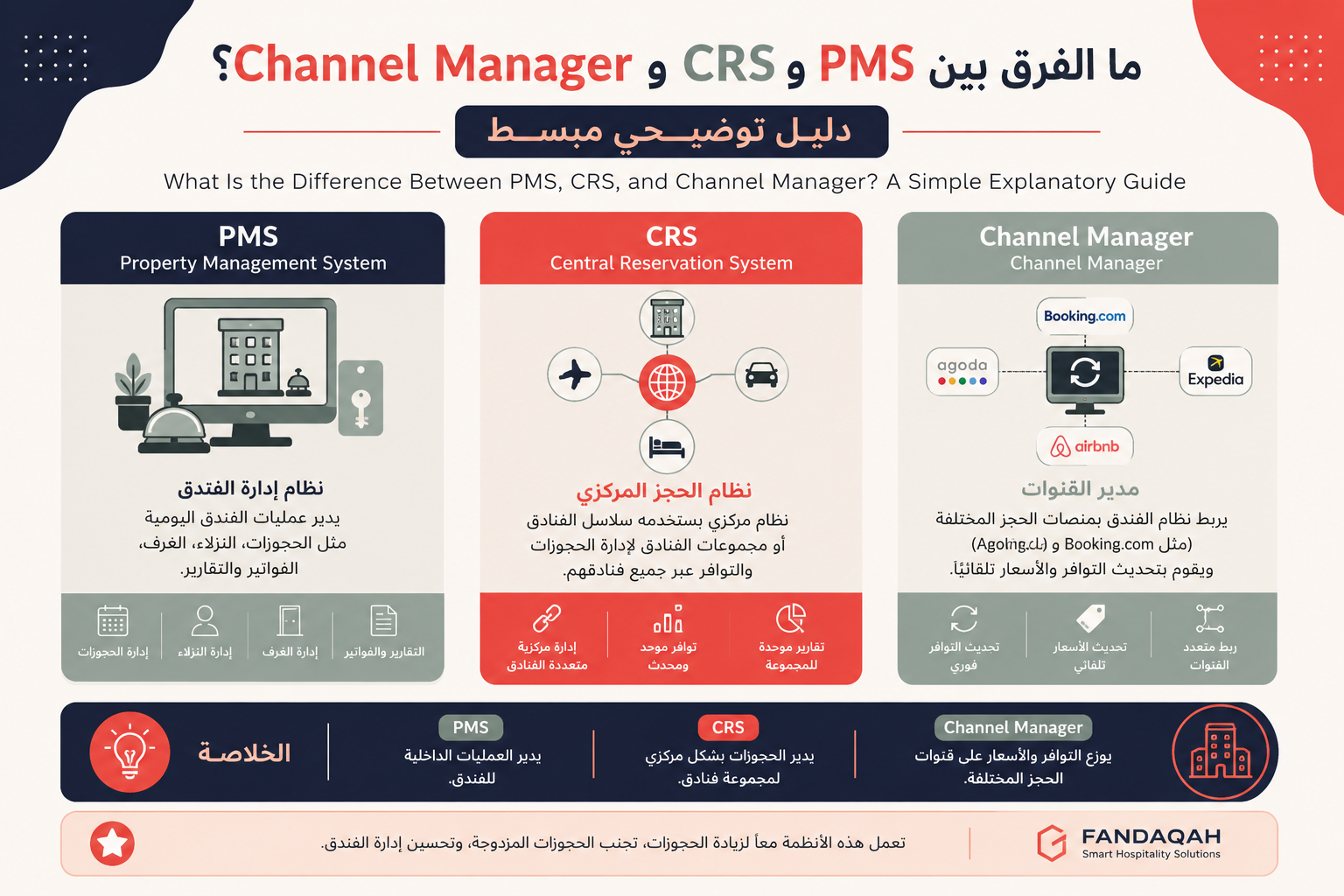
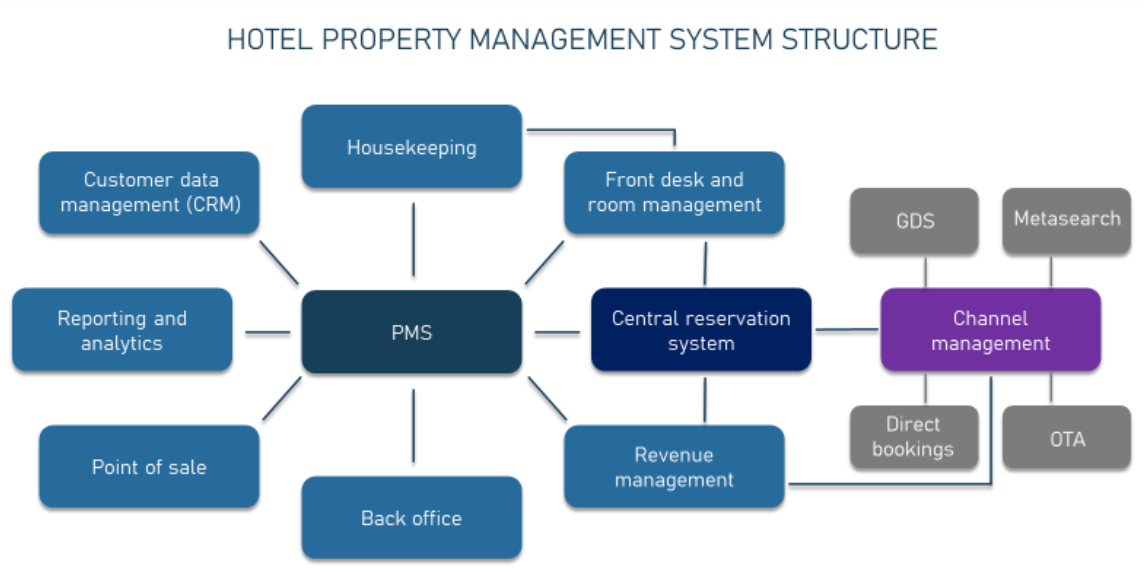
- Rolling the business date forward in the PMS (Property Management System).
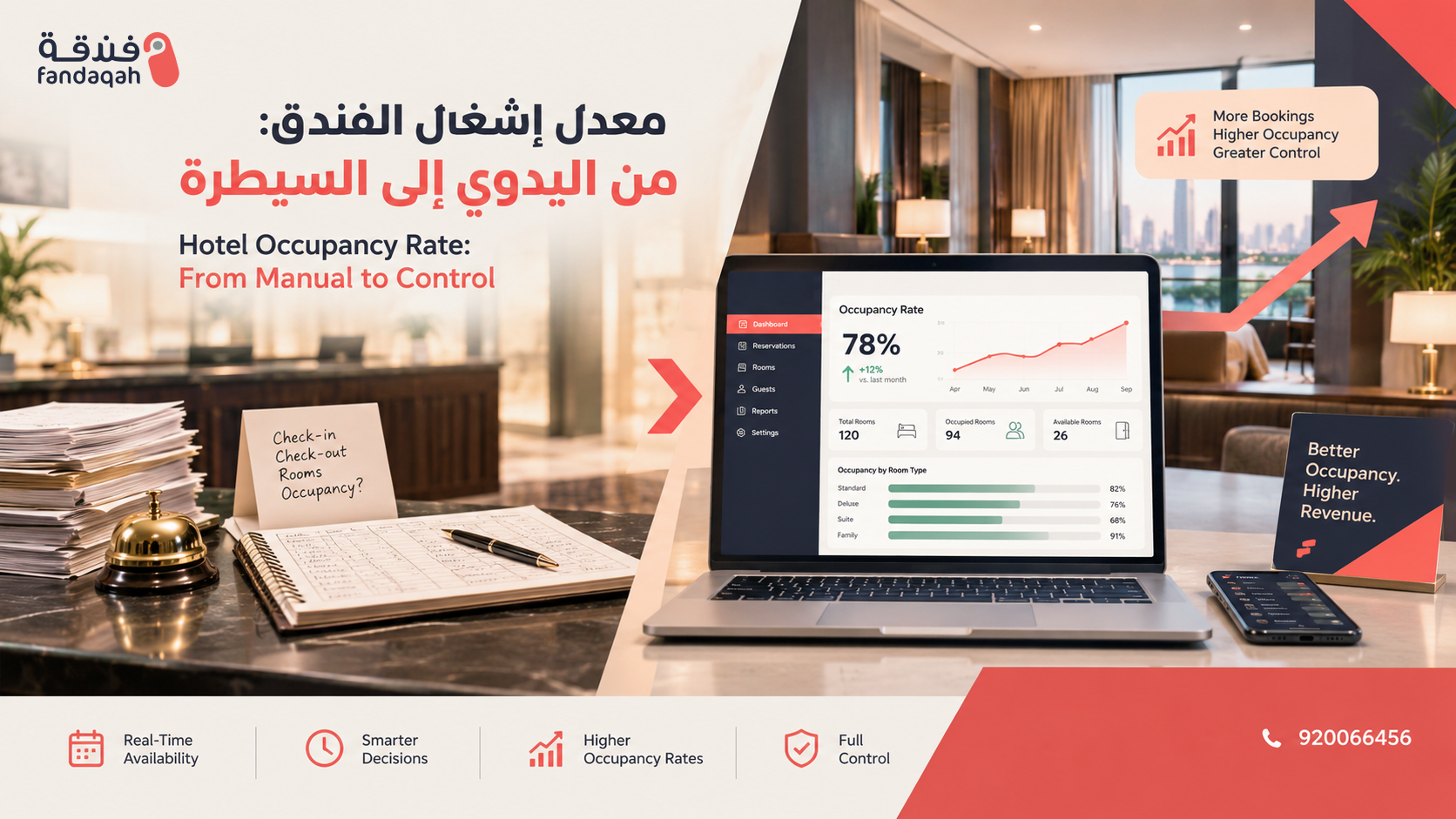
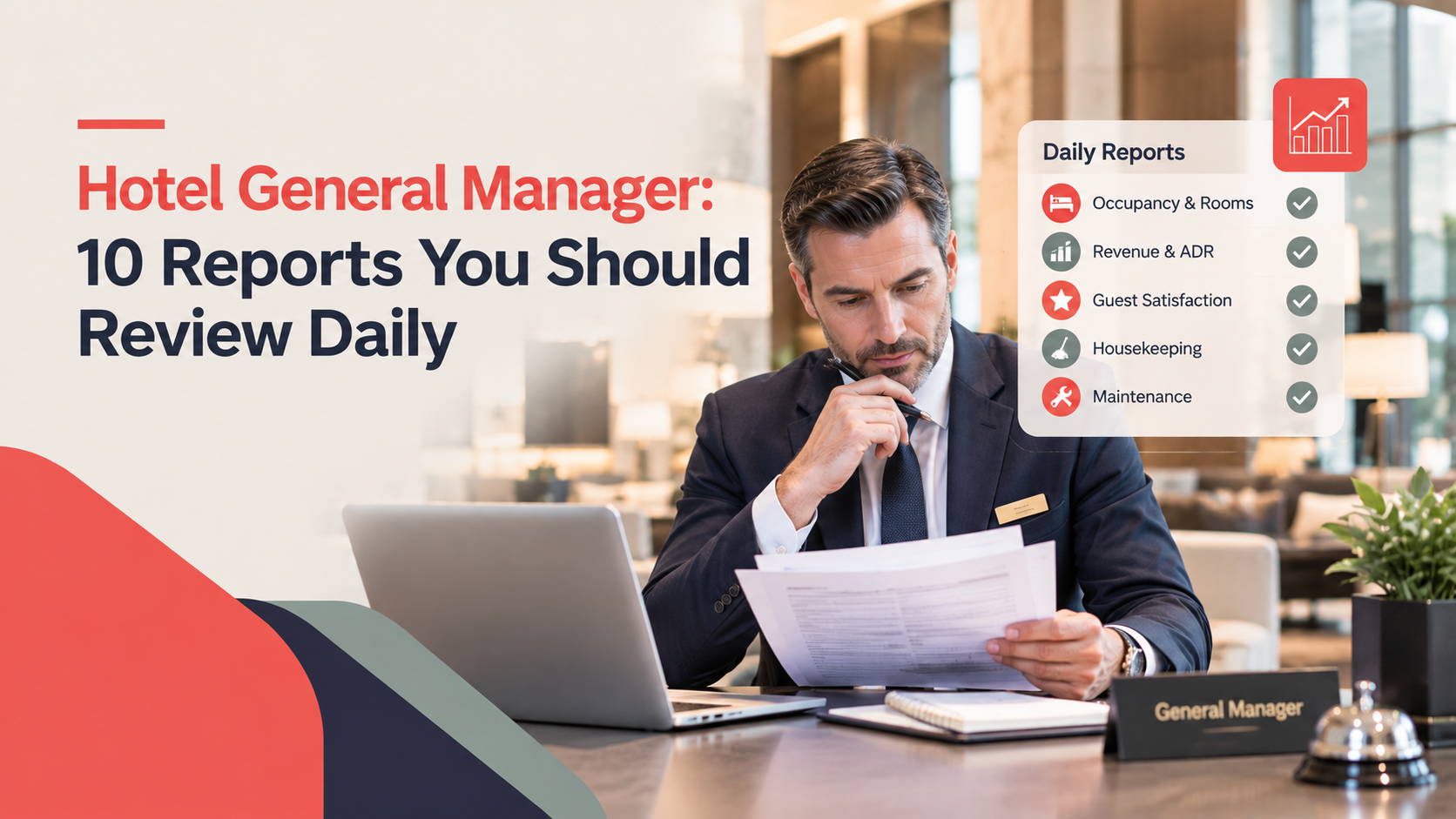
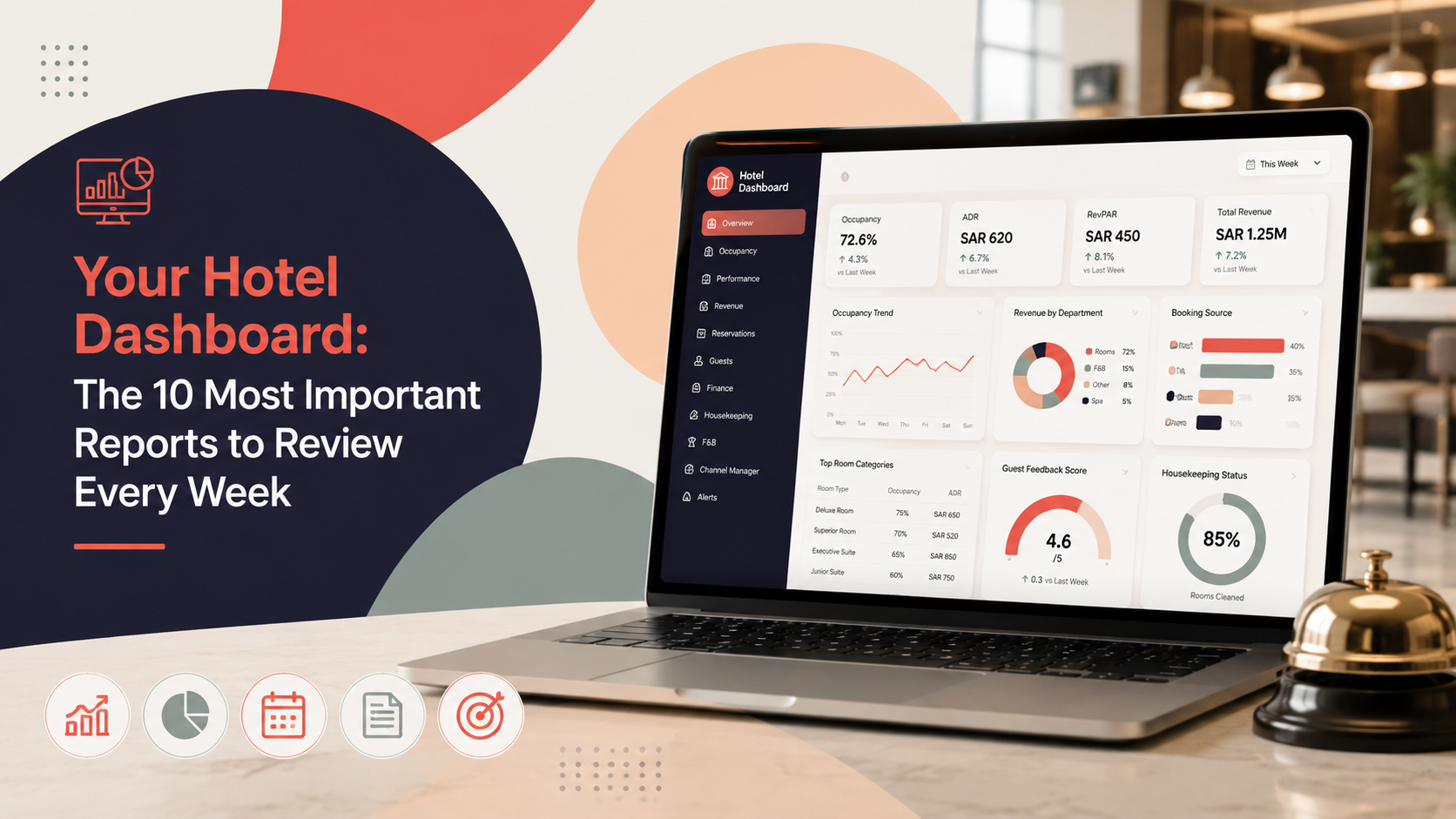
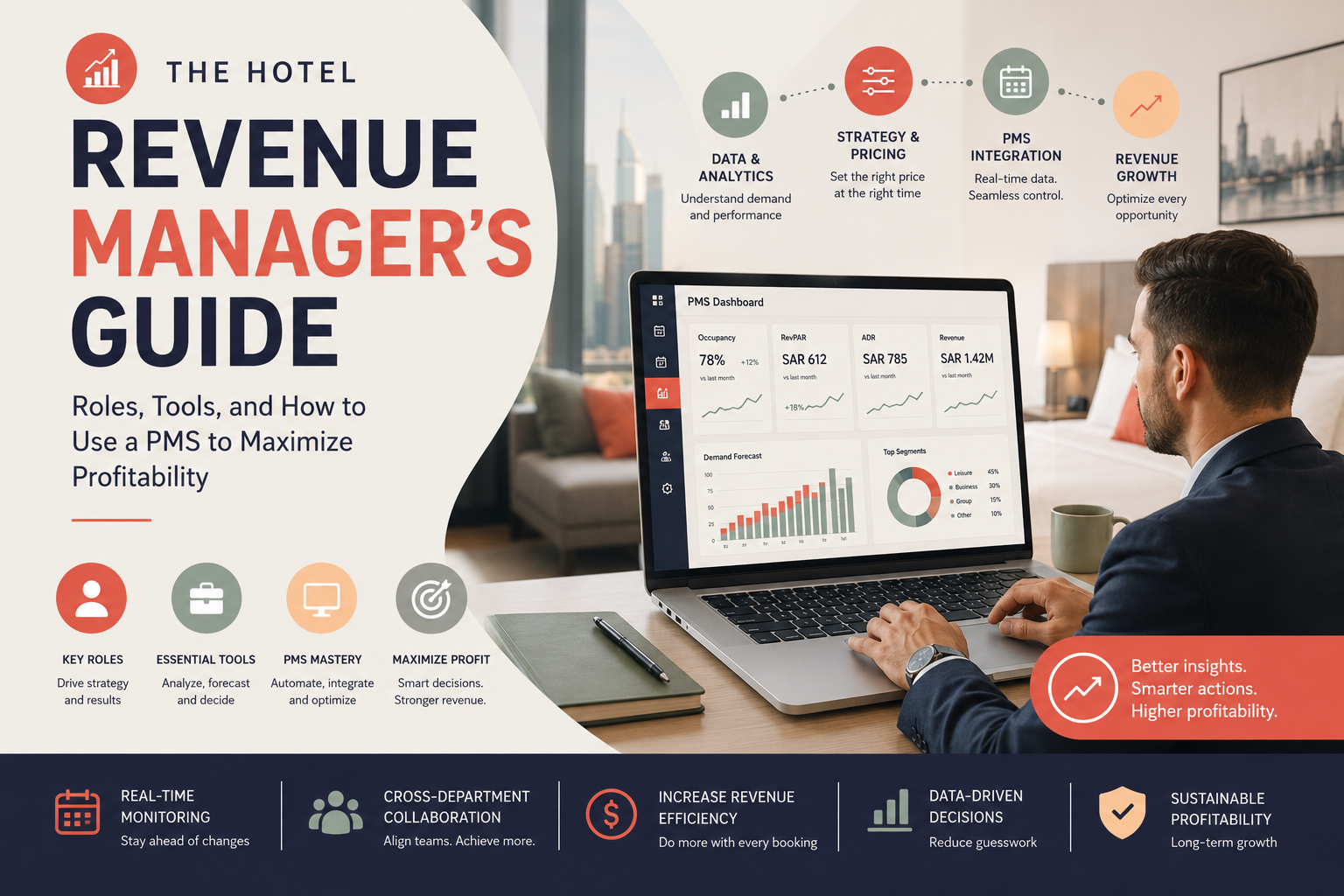
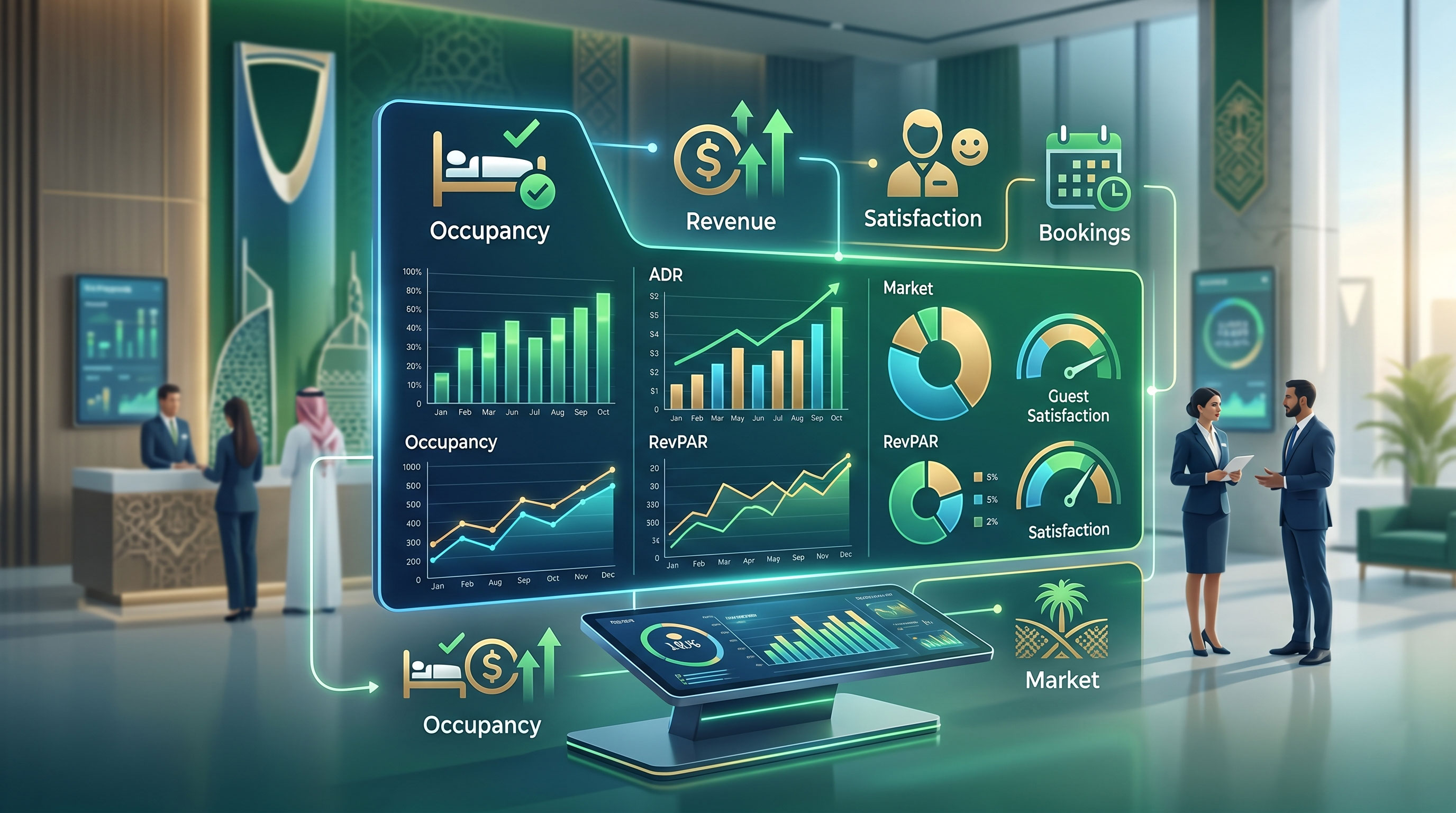
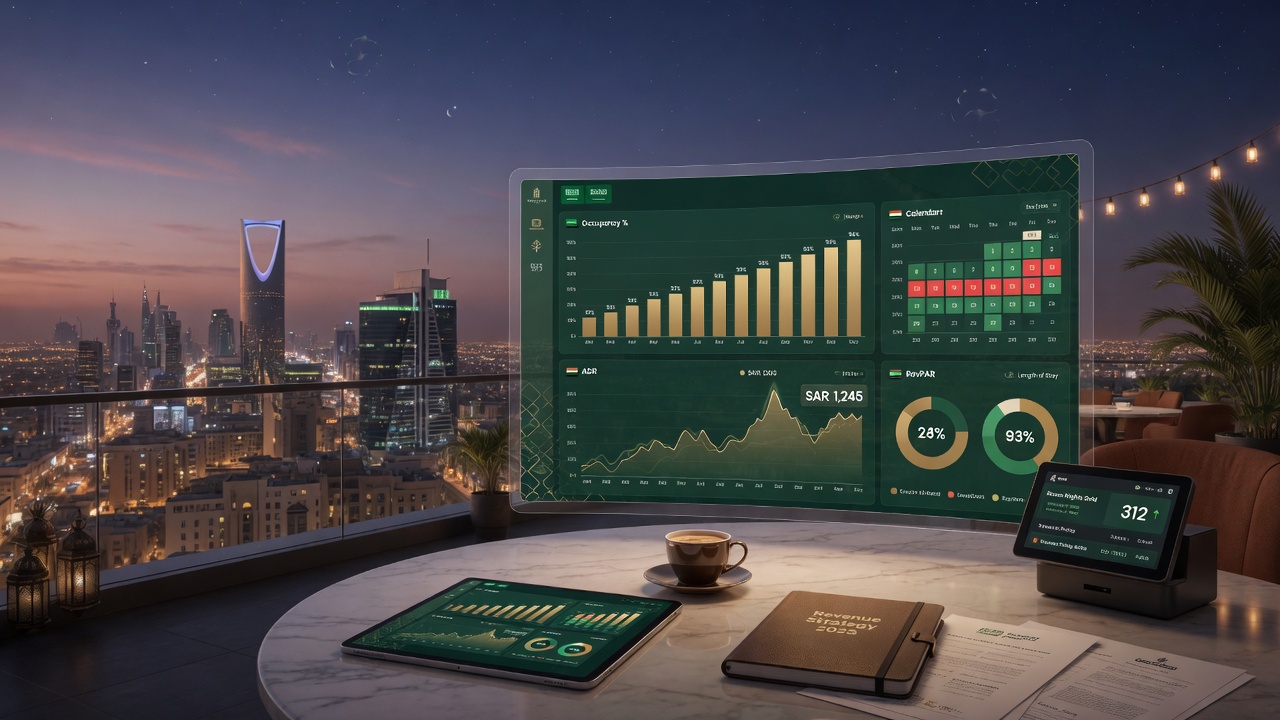
- Producing the Manager's Daily Report: occupancy, ADR, RevPAR, and revenue by department.
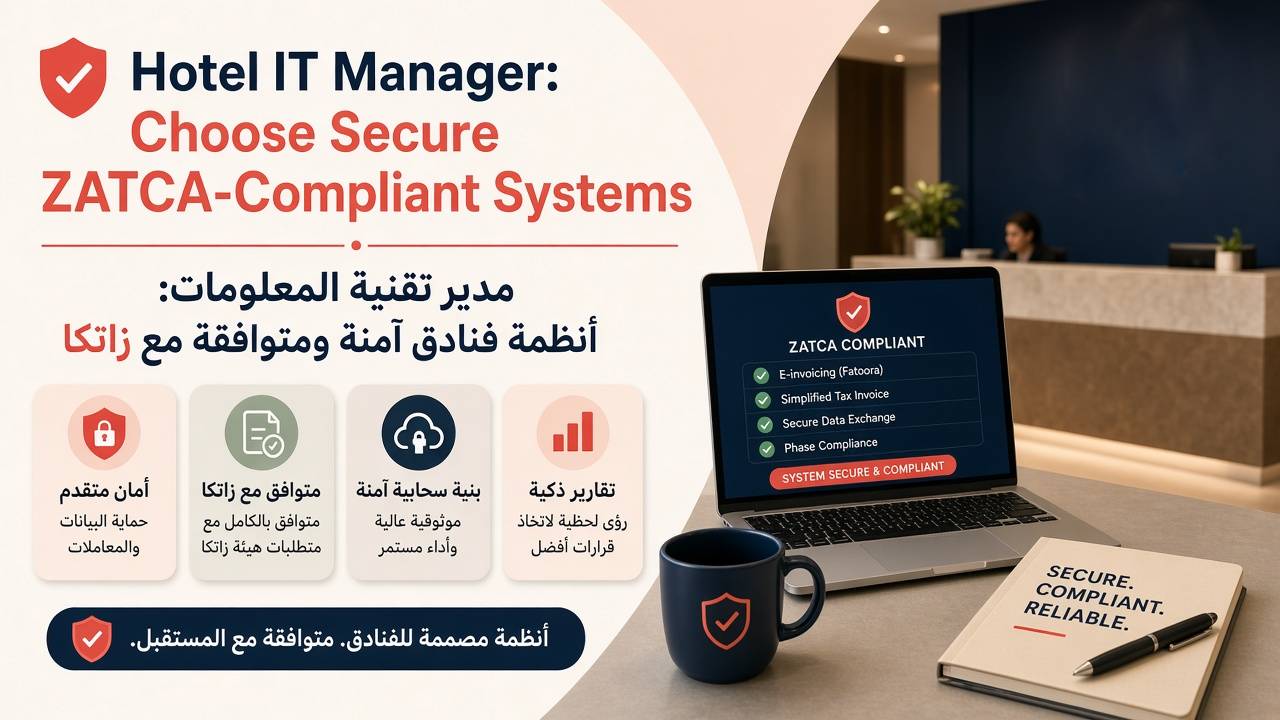
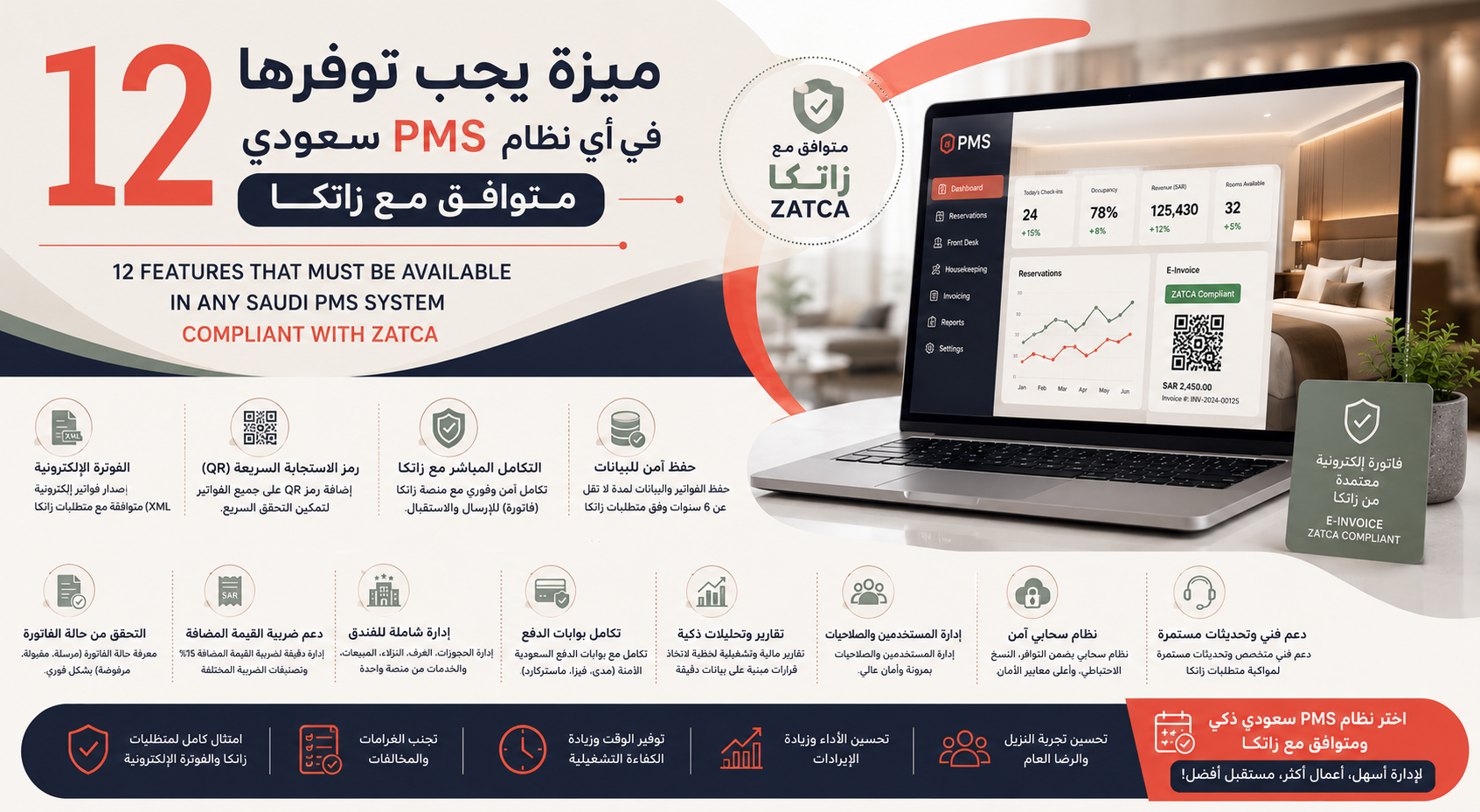
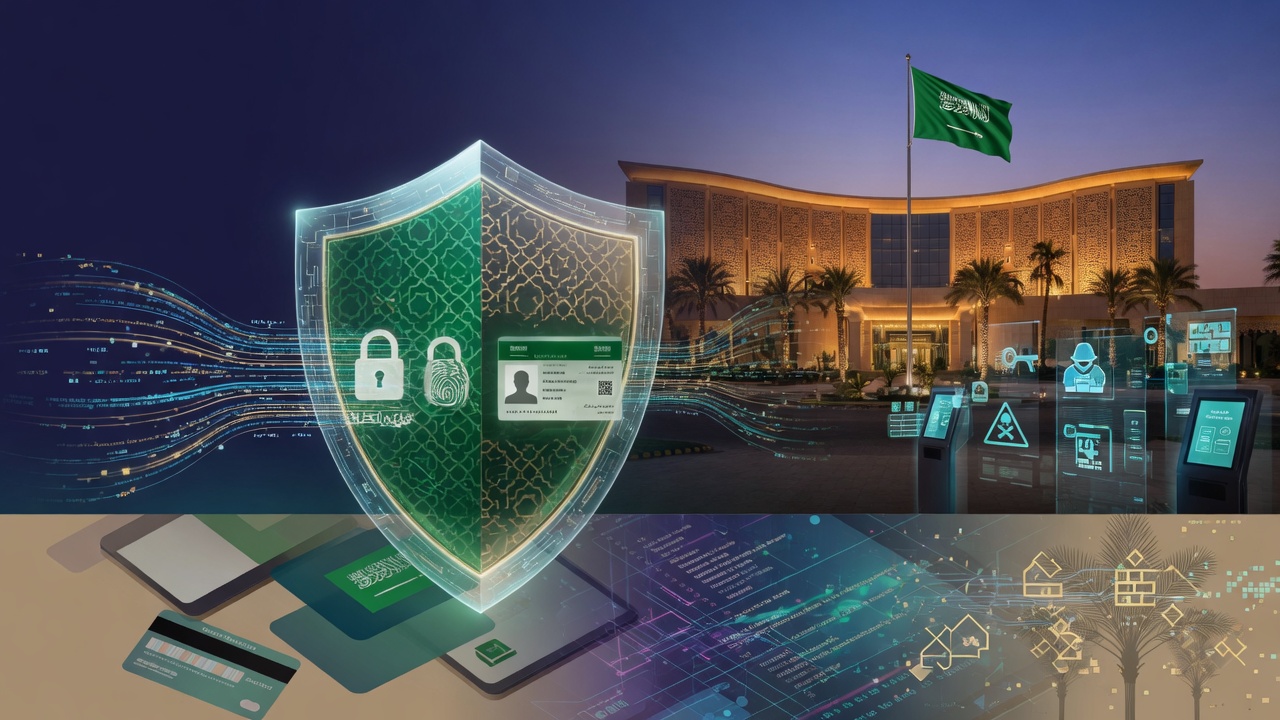
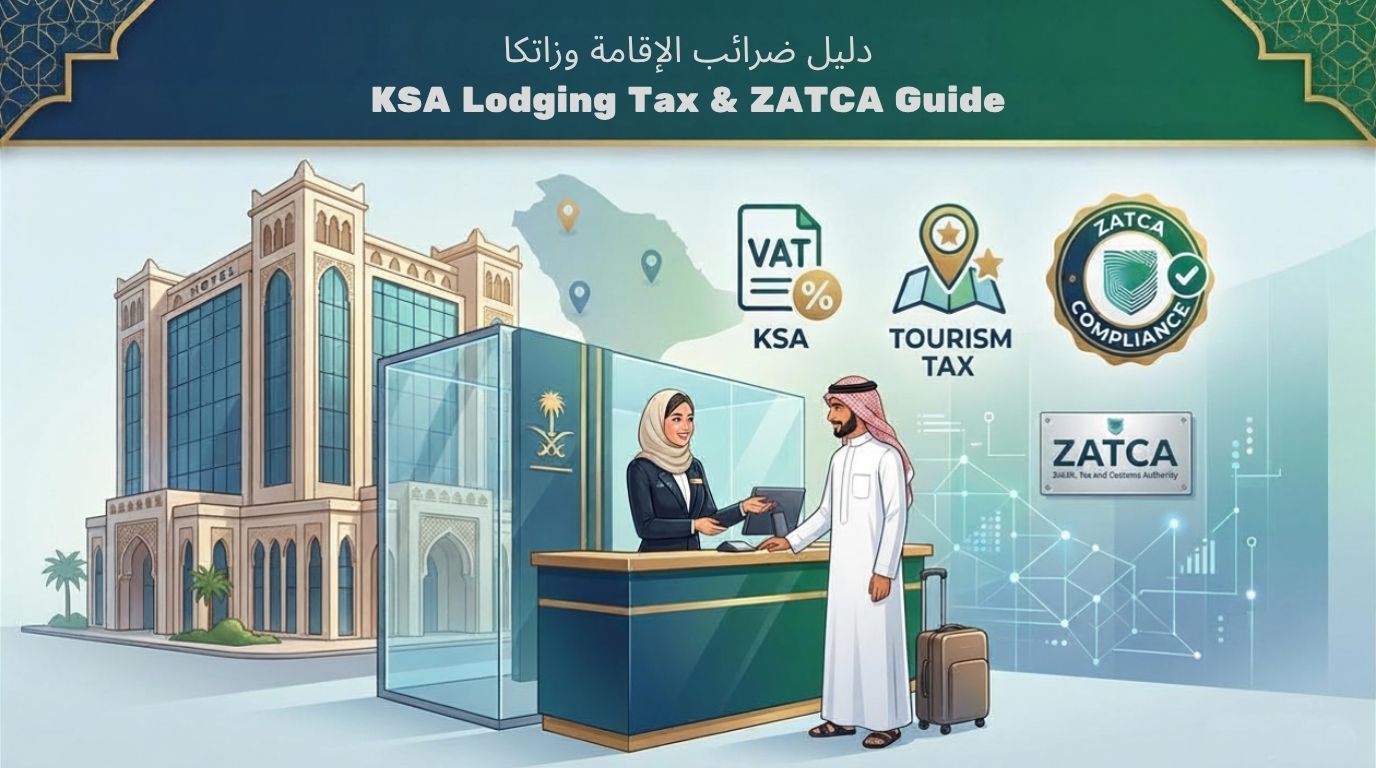
In the Saudi context, the night audit carries extra weight. Hotels in the Kingdom must issue ZATCA-compliant electronic invoices under the Fatoora e-invoicing program, apply 15% VAT and municipality fees correctly on every folio, and maintain accurate guest records for national security and tourism reporting systems. A sloppy night audit is no longer just an accounting problem — it is a regulatory compliance risk that can lead to penalties.
"The night audit is the moment of truth for a hotel's numbers. Automate the arithmetic, and your auditor stops being a human calculator at 2 AM — and becomes a guardian of revenue, compliance, and guest experience."
The Problem with Fully Manual Night Audits
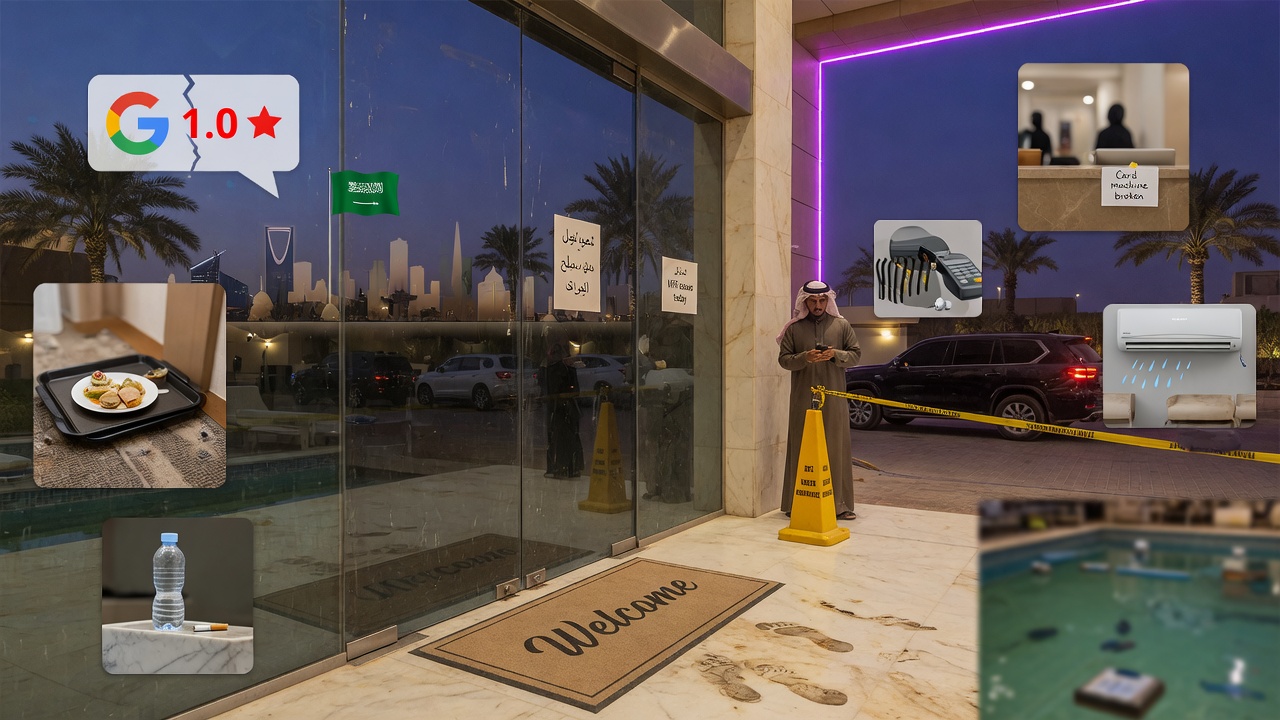
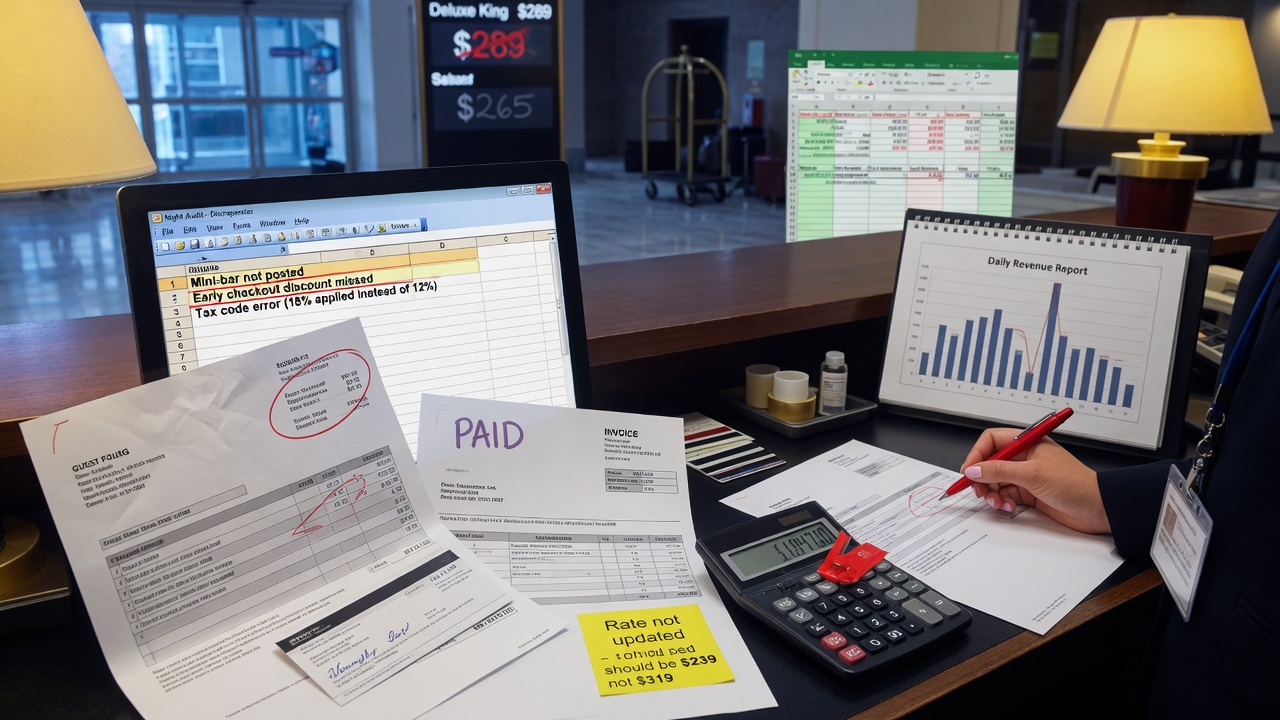
A manual night audit in a 150-room Saudi hotel can involve checking hundreds of folios, dozens of payment batches, and multiple revenue outlets — all performed by one tired person on the night shift who is also answering the phone, checking in late arrivals from delayed flights, and handling guest requests. The predictable consequences:
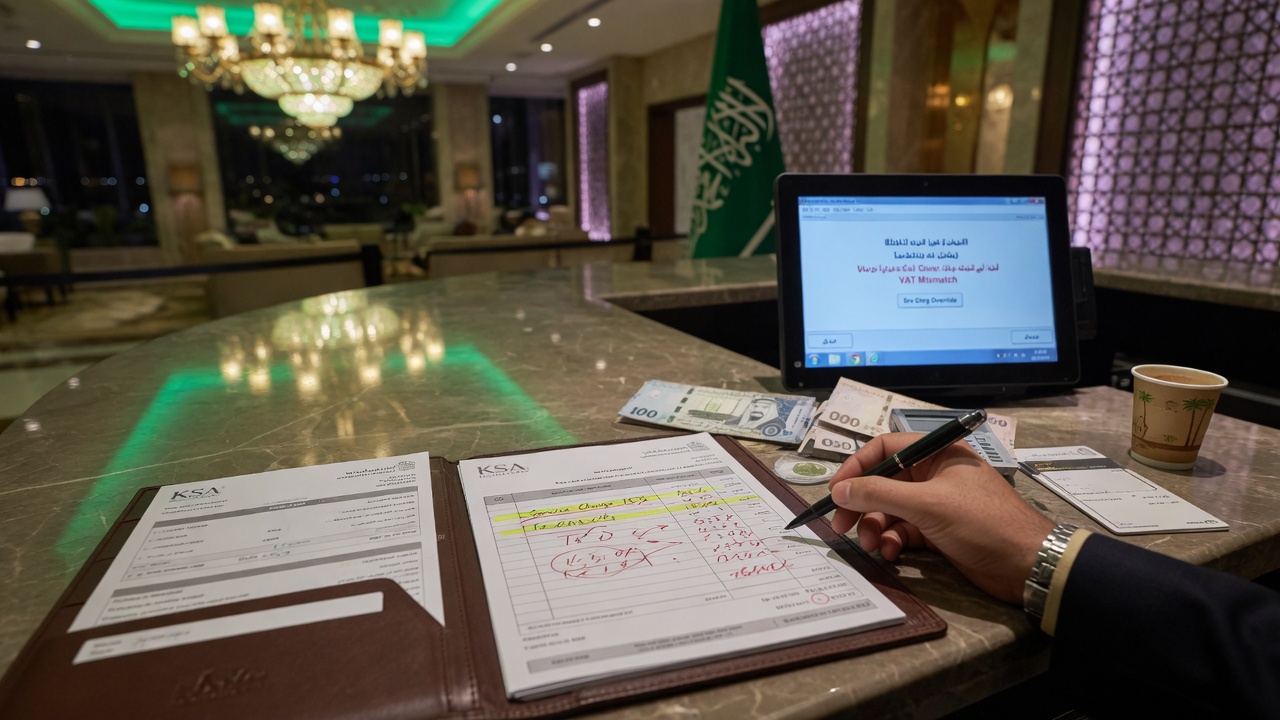
- Posting errors: Wrong rates, missed municipality fees, duplicate charges, or VAT applied incorrectly — each one either leaks revenue or creates a guest dispute at checkout.
- Revenue leakage: Unposted minibar consumption, missed late checkout fees, and unbilled no-shows quietly cost hotels 1–2% of annual revenue.
- Slow closing: A 3–4 hour manual close means reports reach management late, delaying pricing and staffing decisions for the next day.
- Compliance gaps: Manual invoice handling raises the risk of non-compliant tax invoices under ZATCA's Phase 2 integration requirements.
- Staffing pressure: Skilled night auditors are hard to hire and retain; burnout on the night shift is high across the industry.
- Peak-season breakdown: During Hajj, Ramadan, Riyadh Season, or major events, transaction volume triples — exactly when manual processes fail most.
What Should Be Automated in the Night Audit? The Definitive Checklist
1. Room, Tax, and Fee Posting — Automate Fully
Posting the nightly room charge, 15% VAT, and municipality fees to every in-house folio is pure arithmetic. A modern PMS posts these to hundreds of folios in seconds, using the exact rate code and tax rules attached to each reservation. There is no reason a human should do this line by line.
2. Rate and Reservation Discrepancy Checks — Automate Detection, Human Review
The system should automatically compare the rate on each folio against the booked rate, flag mismatches, highlight complimentary or house-use rooms, and surface rooms occupied without a reservation (skips and sleeps). The auditor then reviews only the exceptions — five folios instead of five hundred.
3. No-Show and Cancellation Processing — Automate with Rules
Define your no-show policy once — for example, charge the first night on guaranteed bookings — and let the system apply it automatically at audit time, release the rooms back to inventory, and notify the reservations team. Automated no-show billing alone often recovers meaningful revenue that manual audits forget.
4. Payment and Channel Reconciliation — Automate Matching
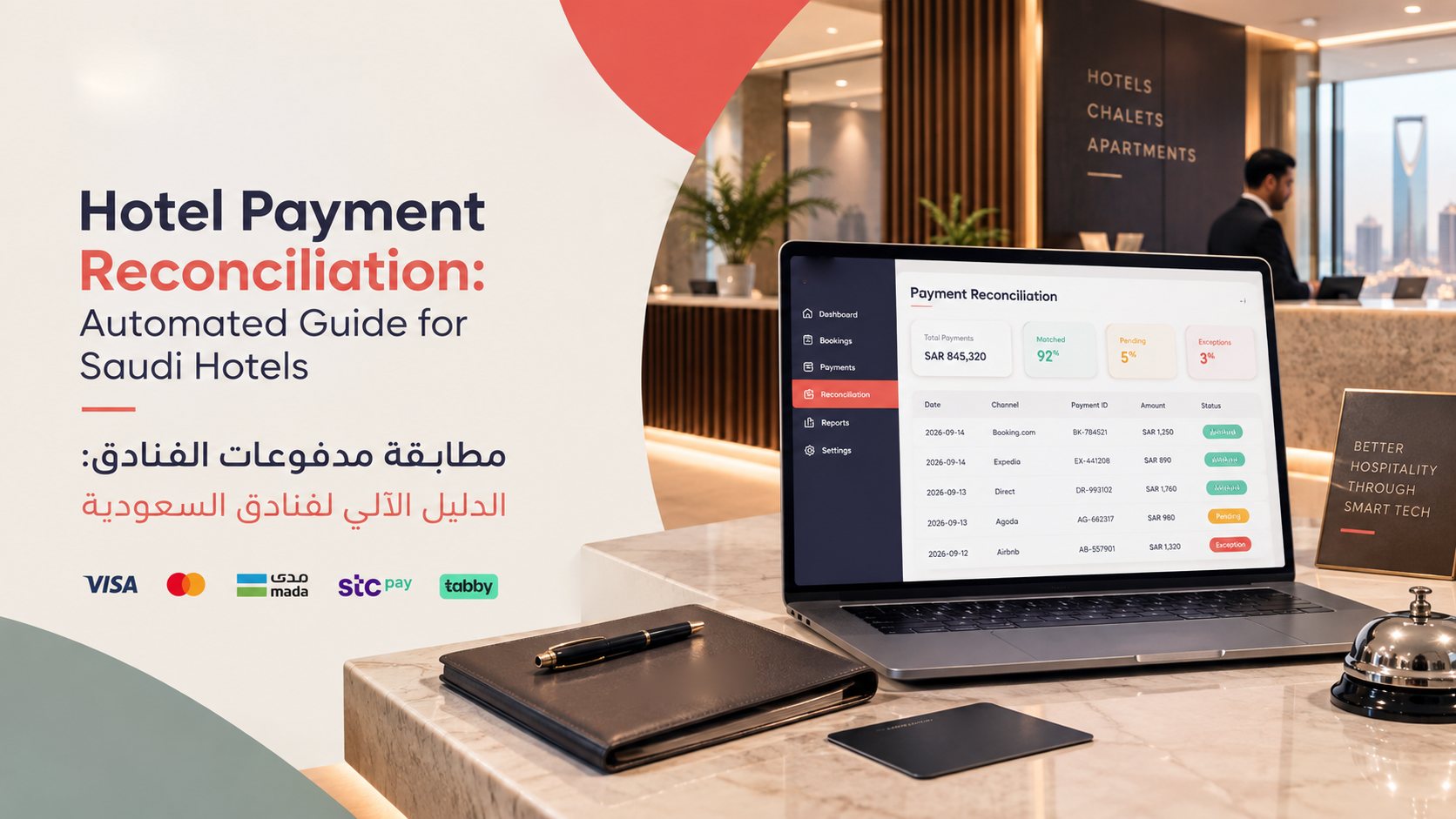
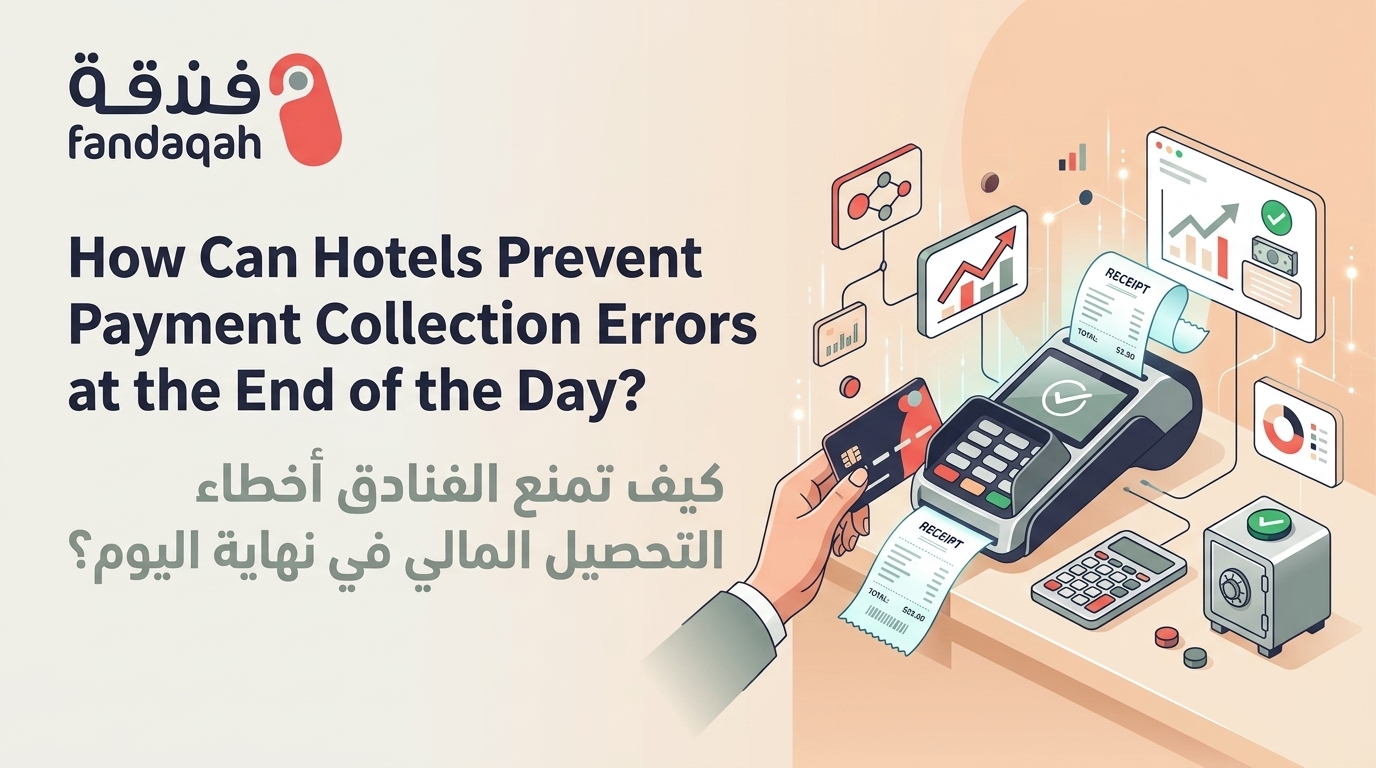
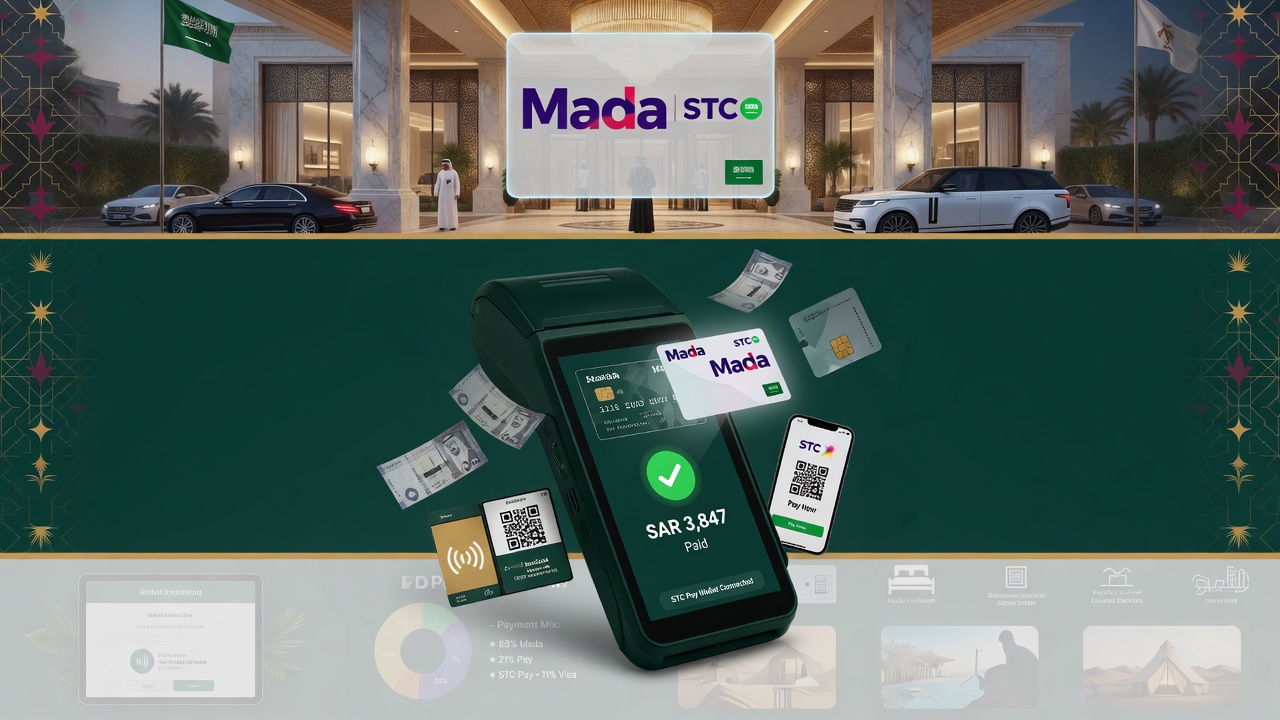
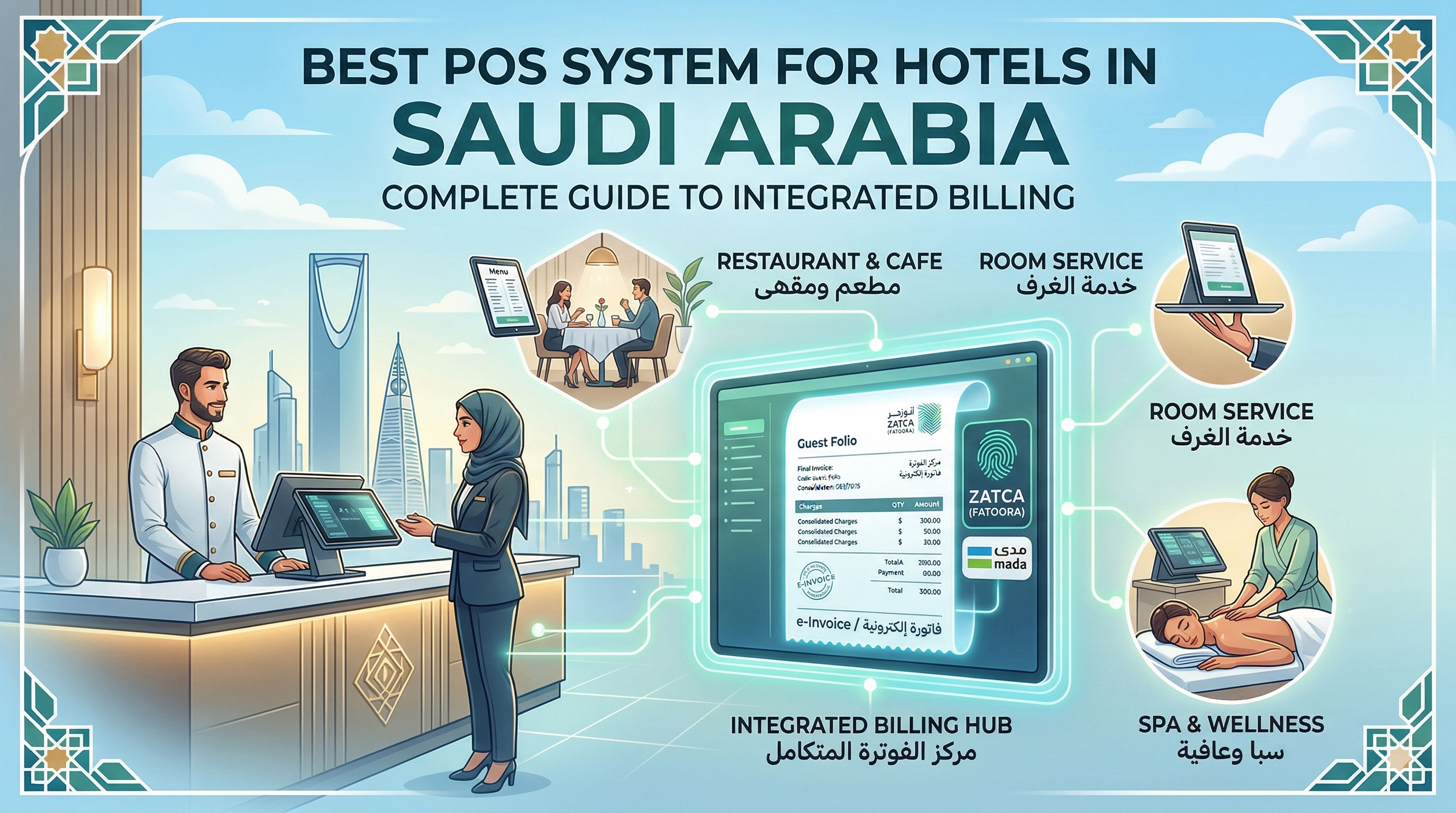
Automated reconciliation matches PMS payment records against payment gateway batches — mada, Visa, Mastercard, Apple Pay, and OTA virtual credit cards — and flags mismatches. In Saudi Arabia, where mada debit transactions dominate front-desk payments, automated batch matching prevents the classic end-of-shift cash drawer mystery.
5. ZATCA E-Invoicing (Fatoora) — Must Be Automated
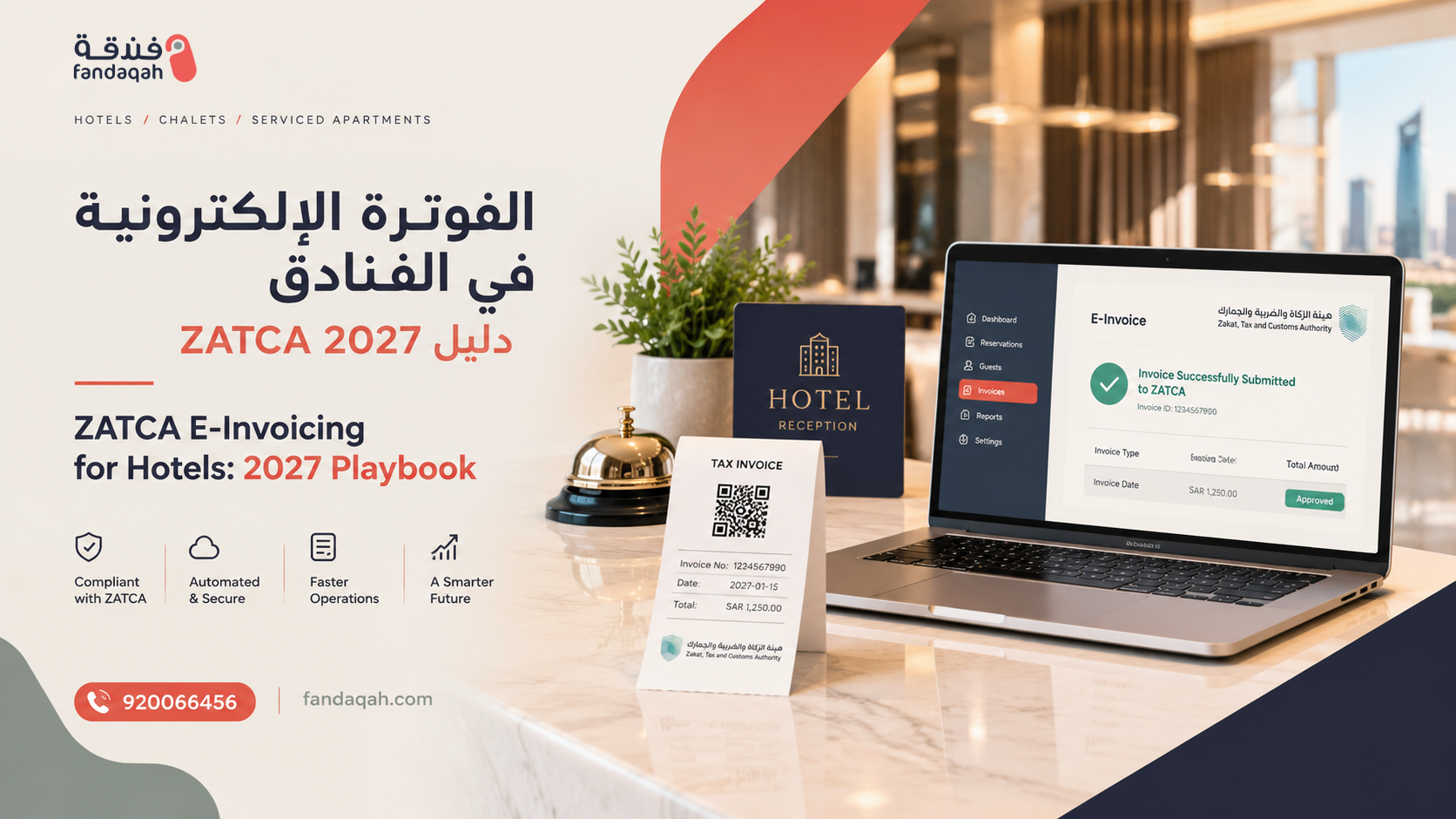
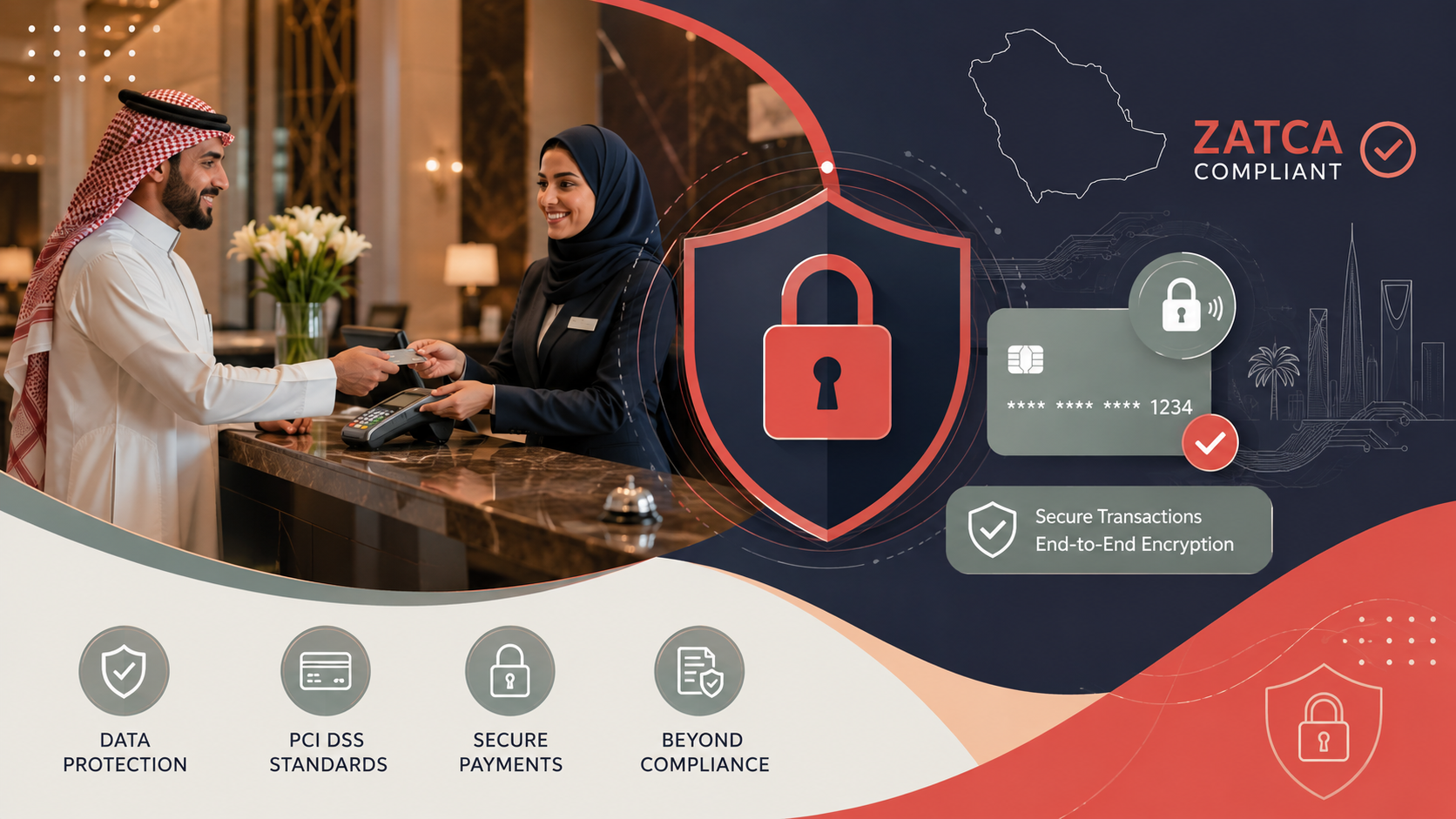
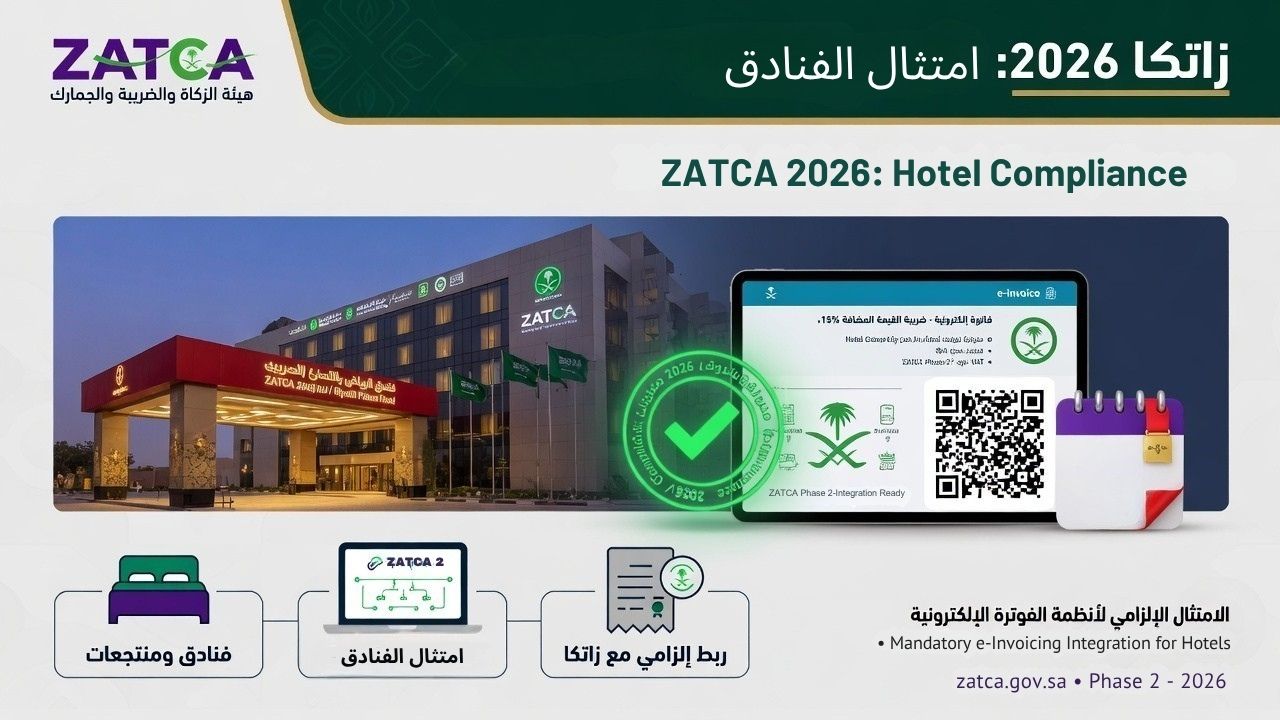
Under ZATCA's e-invoicing regulations, tax invoices must be generated electronically in the required format, with QR codes, and — for businesses in the integration phase — reported or cleared through the Fatoora platform. Manual invoicing is not a sustainable option. Your PMS or its integrated invoicing module should generate compliant e-invoices automatically for every checkout and audit-time posting.
6. Guest Registration Reporting — Automate the Data Flow
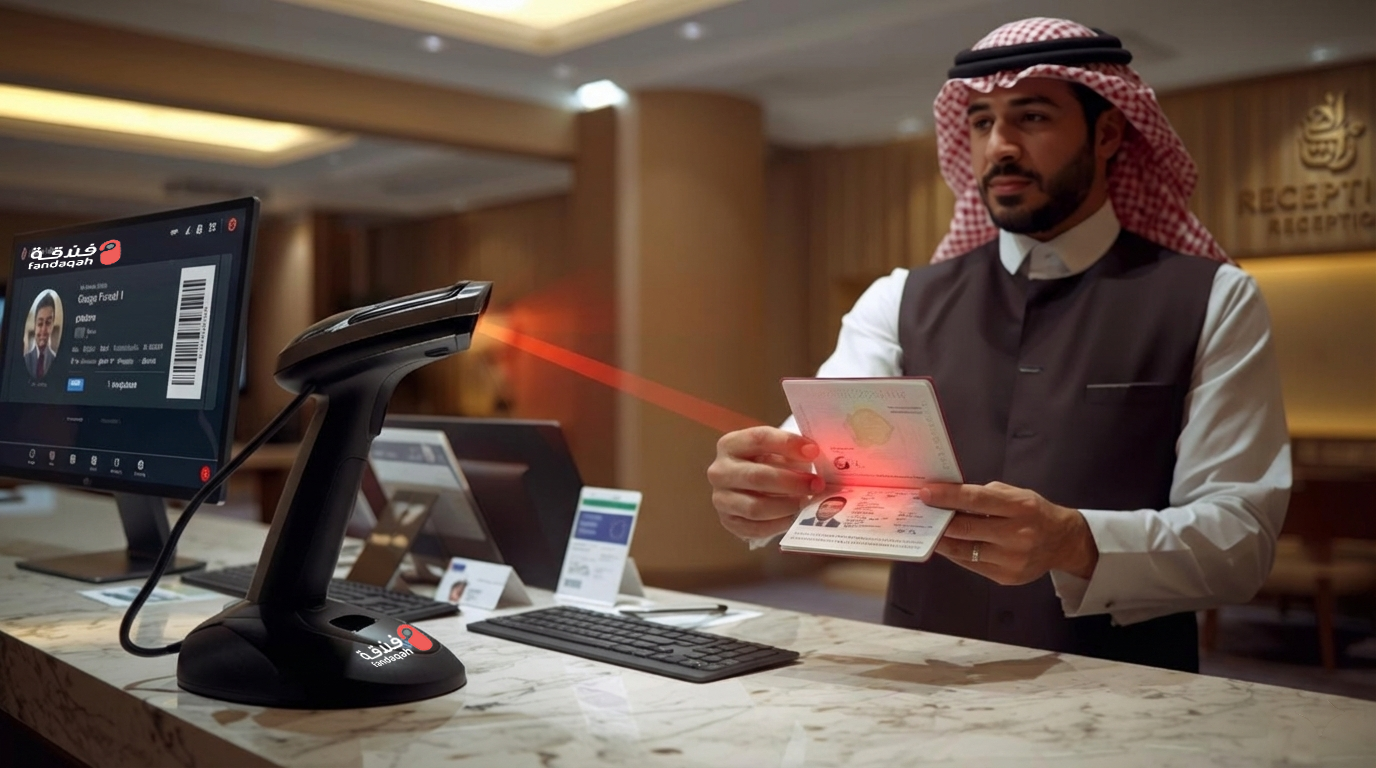
Saudi hotels are required to record and report guest identity data to the national platforms designated by the authorities. Integrating your PMS with these reporting systems removes late-night duplicate data entry, reduces typing errors in ID and Iqama numbers, and keeps the property continuously compliant instead of scrambling at audit time.
7. Interface Balancing — Automate the Connections
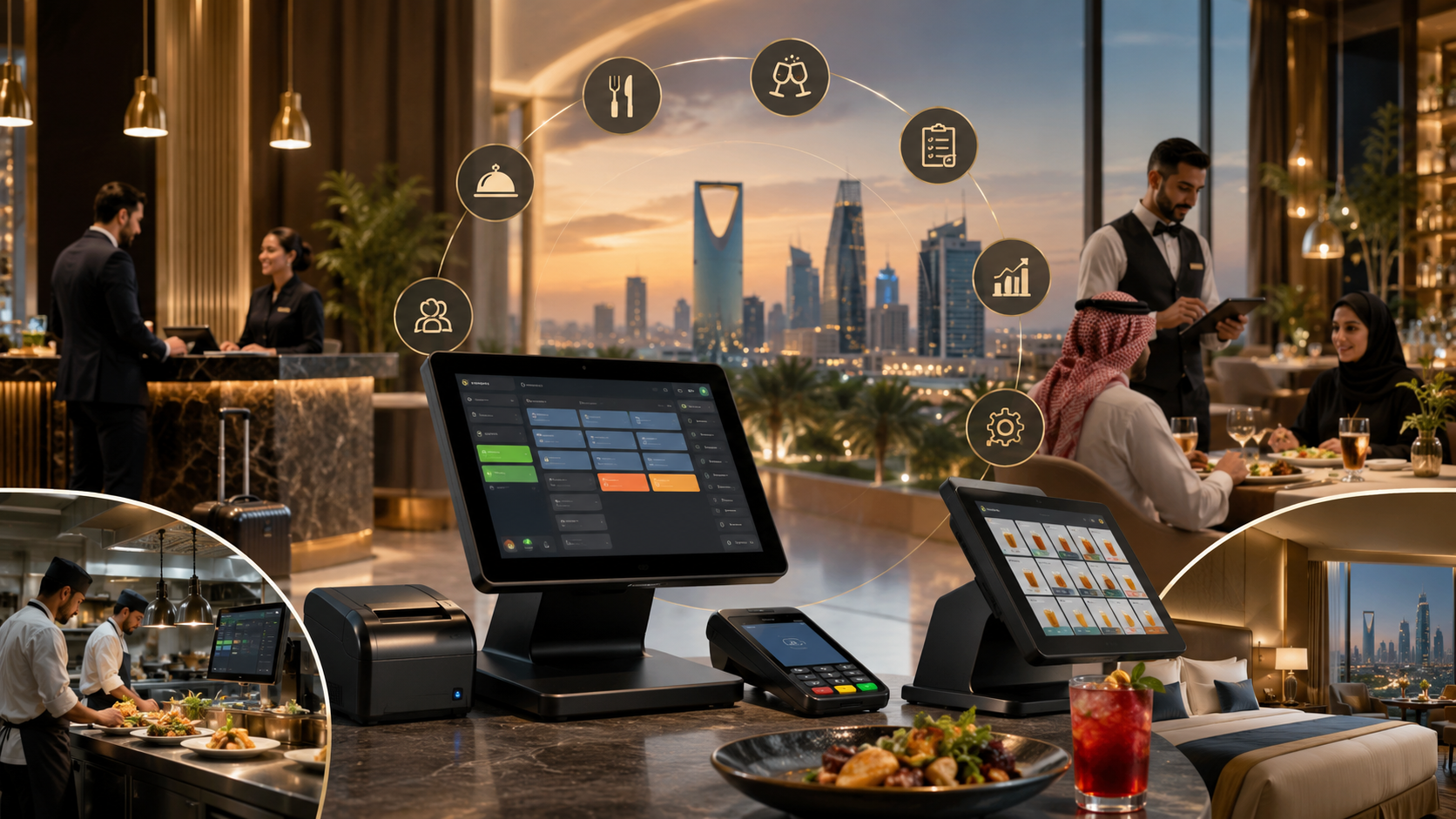
POS-to-PMS interfaces should post restaurant and outlet charges to guest folios in real time, so the night audit merely confirms totals rather than re-keying tickets. The same applies to telephone, minibar, spa, and door-lock/key systems. Every automated interface is one less manual balancing sheet at 1 AM.
8. End-of-Day, Backups, and Report Distribution — Automate Completely
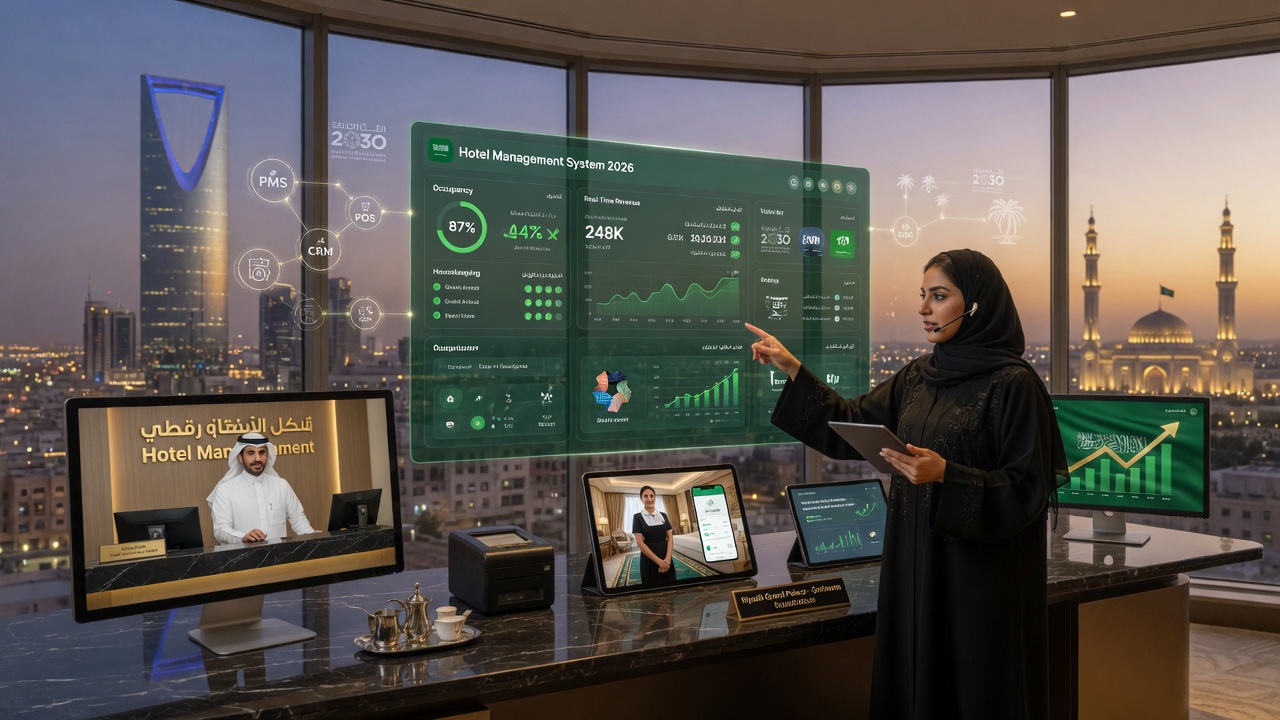
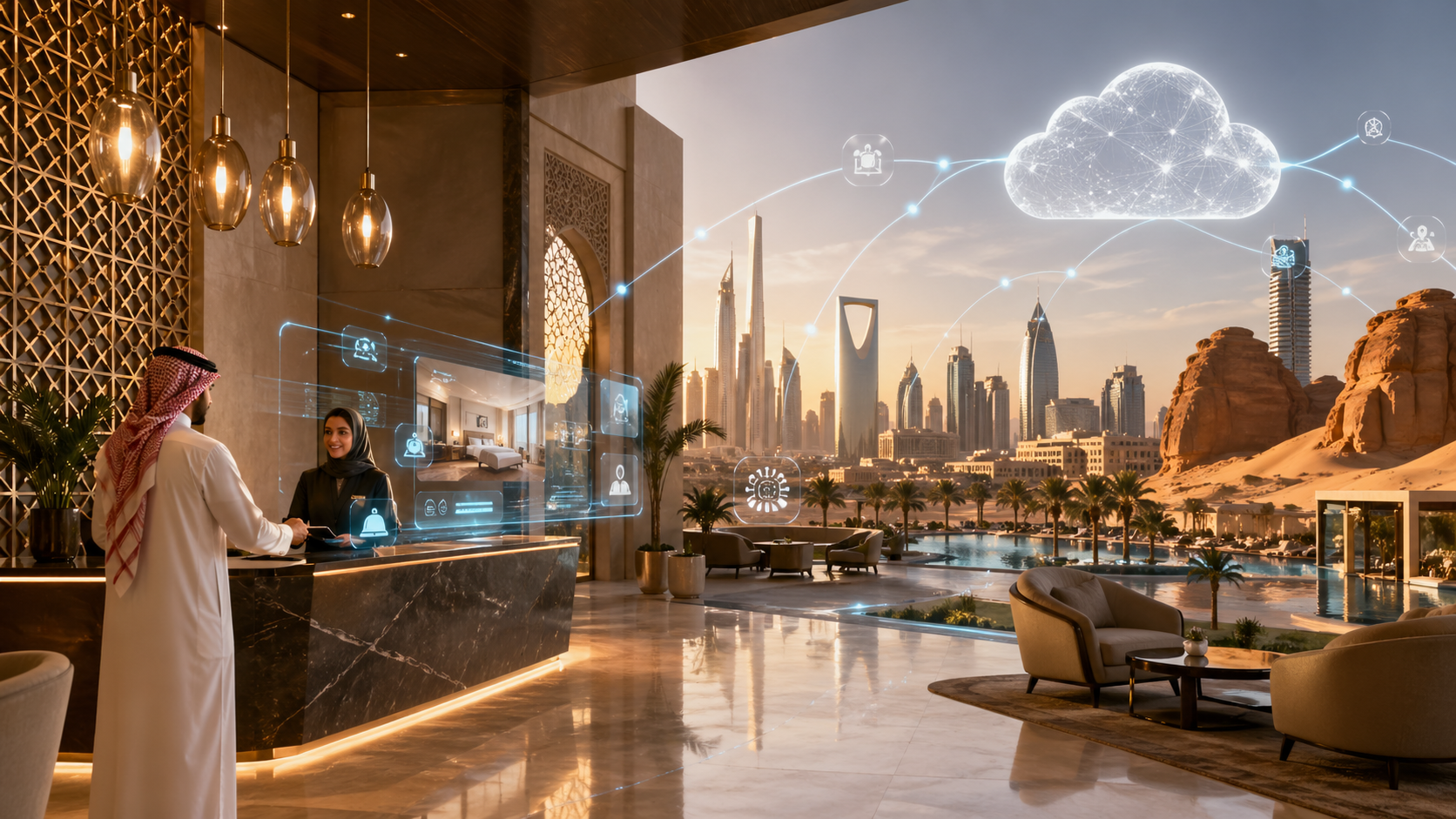
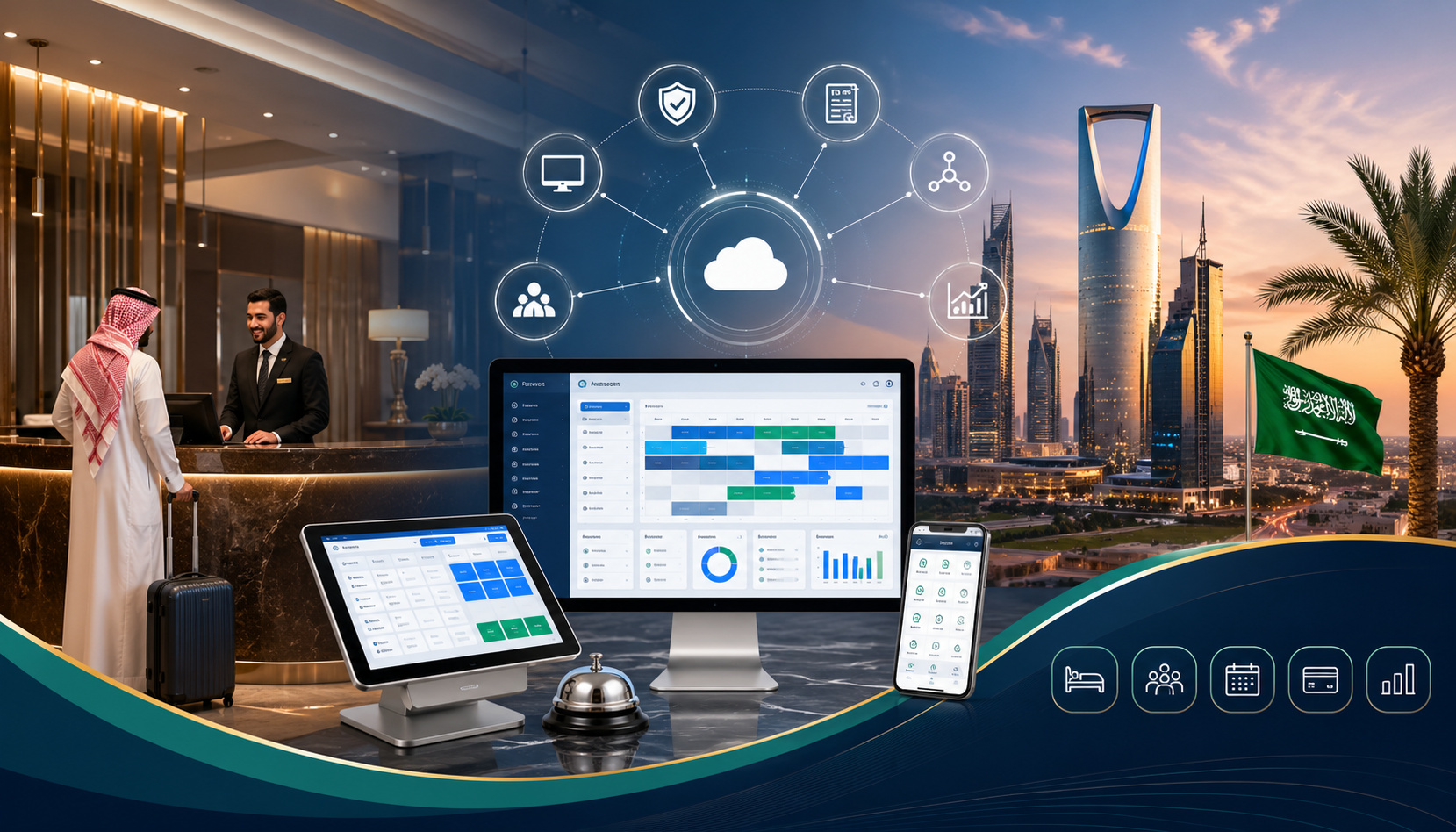
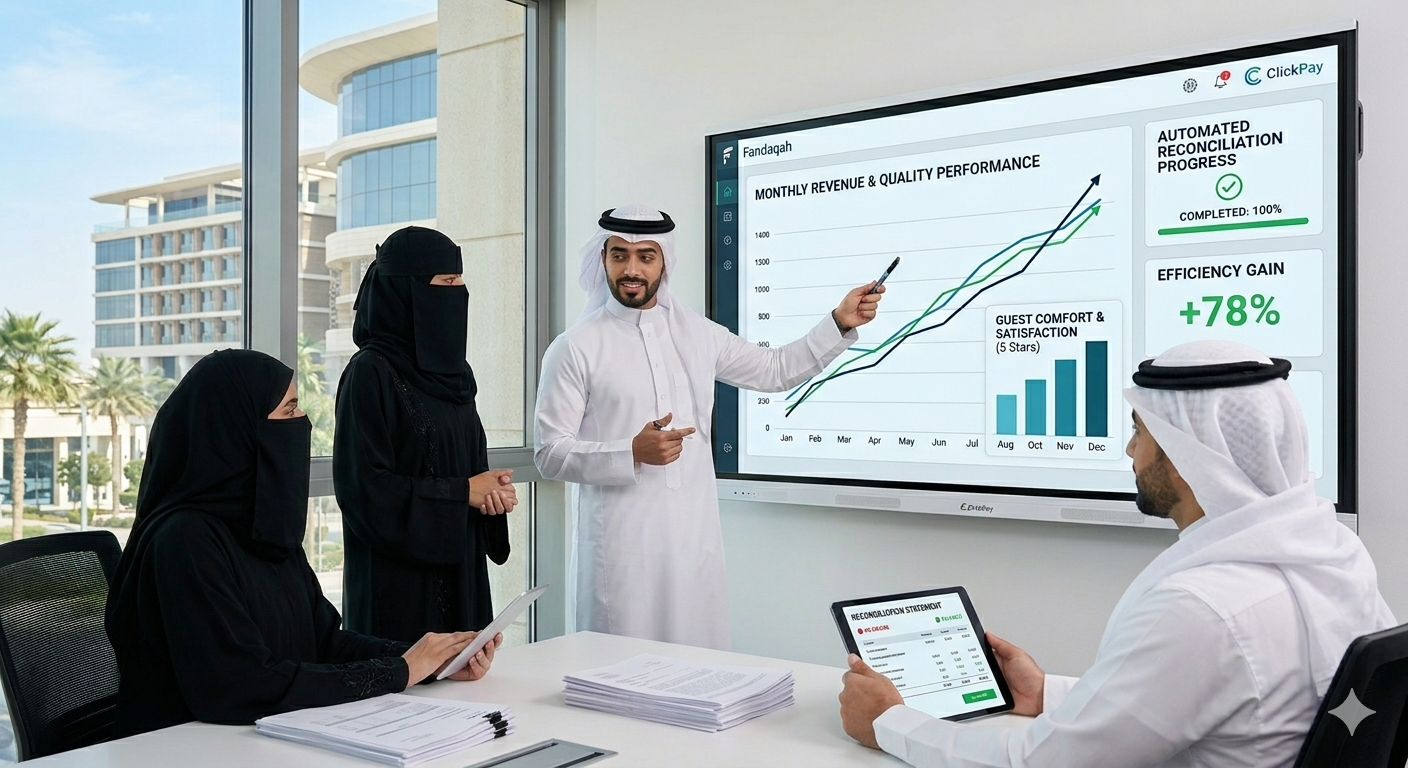
Cloud PMS platforms now run a continuous or one-click end-of-day: the business date rolls automatically, data is backed up in real time, and the Manager's Daily Report — occupancy, ADR, RevPAR, revenue by department, deposit ledger, and city ledger aging — is emailed to owners and department heads before sunrise prayer. No printing, no waiting.
???? Tip Box: Start your automation journey with the two highest-impact wins: automated charge/tax posting and automated no-show billing. Together they typically eliminate 60–70% of night audit workload and recover revenue from day one — before you invest in deeper integrations.
What Should Stay Human? The Night Auditor's New Role
Automation does not eliminate the night auditor — it upgrades the role. The human should own everything that requires judgment:
- Exception investigation: Why does room 412 show a rate override? Who authorized the discount on the group block?
- Fraud and abuse detection: Repeated voids, suspicious refunds, or unusual paid-out patterns that rules can flag but only a person can interrogate.
- Guest disputes: Resolving a billing complaint at midnight with empathy — something no system can do.
- Night-shift guest service: Late check-ins from delayed flights (common on Umrah routes), emergencies, and VIP arrivals.
- Sanity-checking the numbers: Does tonight's revenue make sense given the events in the city? Machines balance; humans understand context.
???? Note Box: Automation is only as good as your setup data. Before switching on auto-posting, audit your rate codes, tax configurations (VAT and municipality fees), routing rules, and package breakdowns. One wrong tax setting replicated across 200 folios every night is worse than any manual error — configure once, verify carefully, then trust the machine.
Key Benefits of Night Audit Automation for Saudi Hotels
- Faster close: End-of-day drops from 3–4 hours to under 30 minutes — or becomes continuous with a cloud PMS.
- Fewer errors, less leakage: Automated posting and reconciliation typically recover 1–2% of revenue lost to missed charges and mistakes.
- Built-in compliance: ZATCA-compliant e-invoices, correct VAT treatment, and timely guest reporting happen by design, not by memory.
- Better decisions, earlier: Managers receive accurate daily reports at dawn, enabling same-day pricing and staffing adjustments.
- Happier night teams: Auditors focus on guests and exceptions instead of data entry — improving retention and Saudization-friendly job quality.
- Peak-season resilience: Whether it's Hajj in Makkah or Riyadh Season crowds, automated audits scale with volume; manual ones collapse under it.
- Audit trail: Every automated action is logged, giving owners and external auditors a clean, traceable record.
Saudi Use Cases: Night Audit Automation City by City
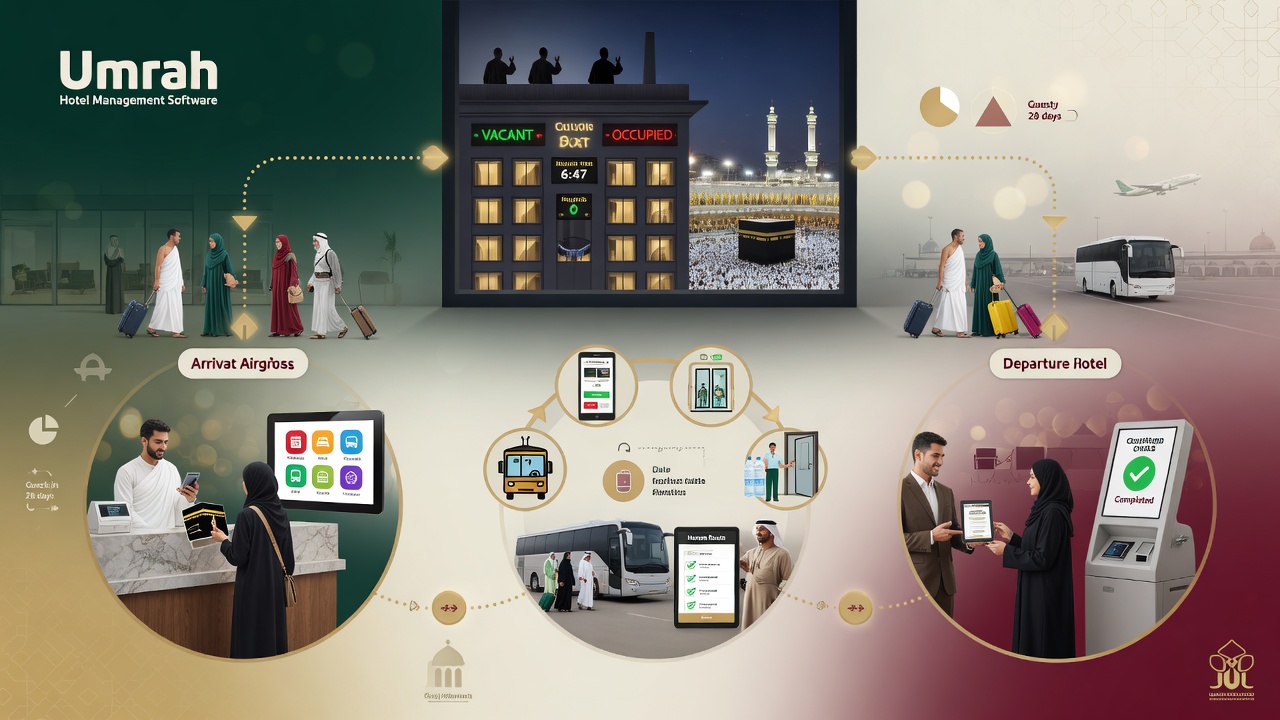
Makkah & Madinah (Umrah and Hajj hotels): Properties near the Haramain process massive group check-ins at all hours, with flights landing around the clock. Automated group folio routing, bulk charge posting, and integrated guest ID reporting let night teams handle 2 AM group arrivals without abandoning the audit. During Hajj, automated audits keep books current even at 100% occupancy with daily turnover.
Riyadh (corporate and event hotels): Business hotels juggle corporate city ledgers, LEAP and conference group billing, and long-stay project accounts. Automated city ledger posting and aging reports mean accounts receivable starts each morning with clean data — critical when corporate clients demand consolidated, VAT-compliant invoices.
Jeddah (leisure and events): Formula 1 weekends and Jeddah Season create extreme transaction spikes across outlets. Real-time POS-to-PMS posting plus automated reconciliation of mada and card batches keeps the audit manageable on the busiest nights of the year.
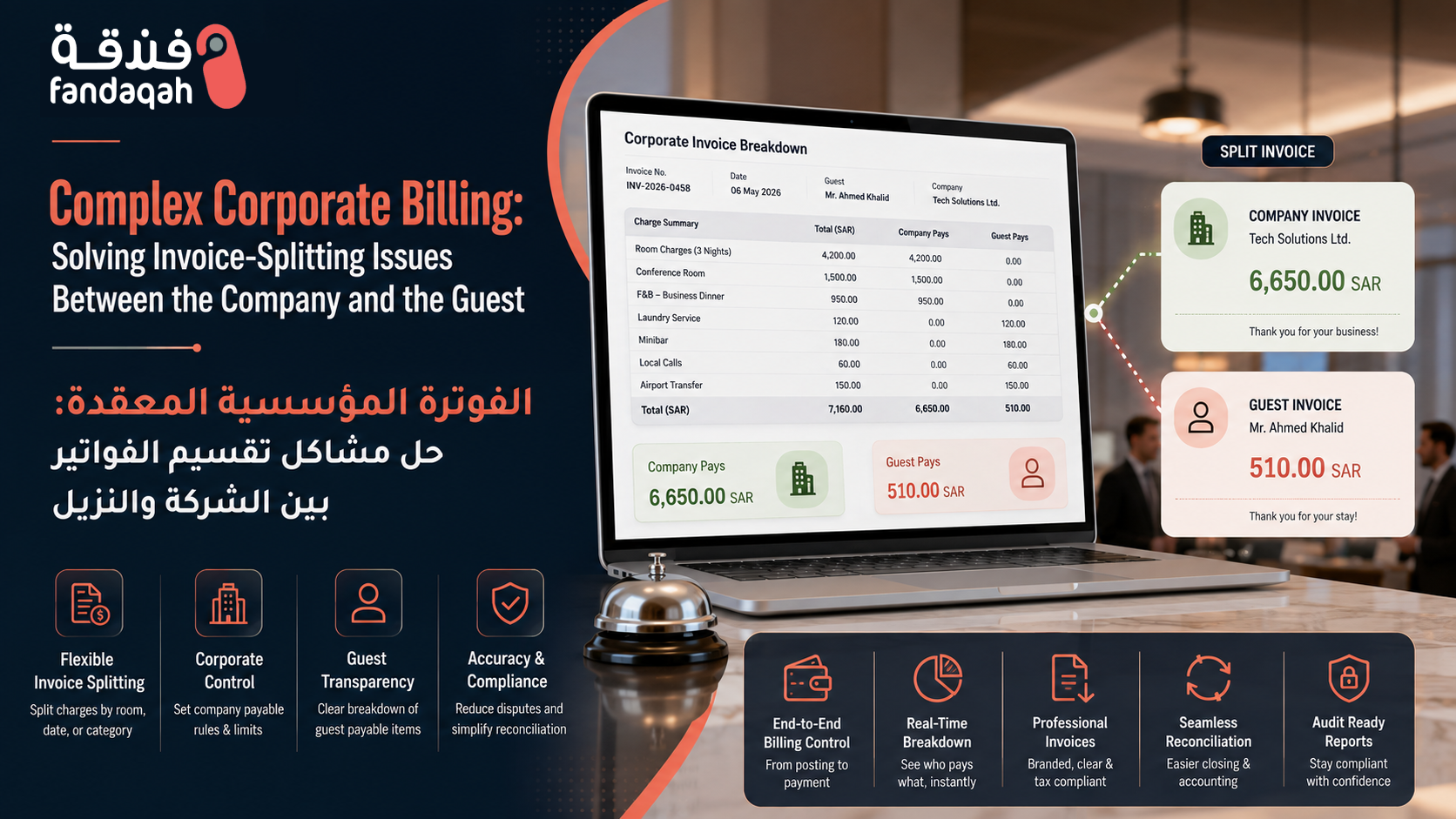
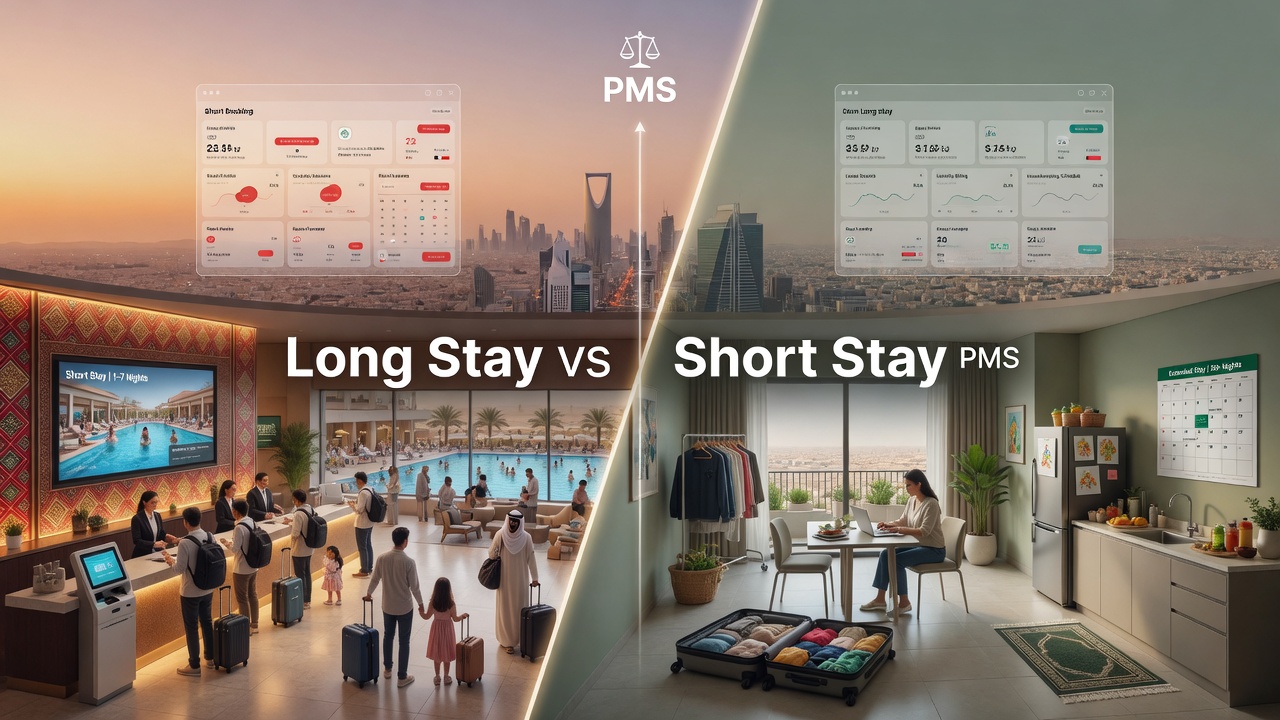
Eastern Province (Dammam, Al Khobar): Long-stay corporate and project business means complex routing rules — company pays room and tax, guest pays extras. Automated folio routing enforces these rules nightly without manual splitting.
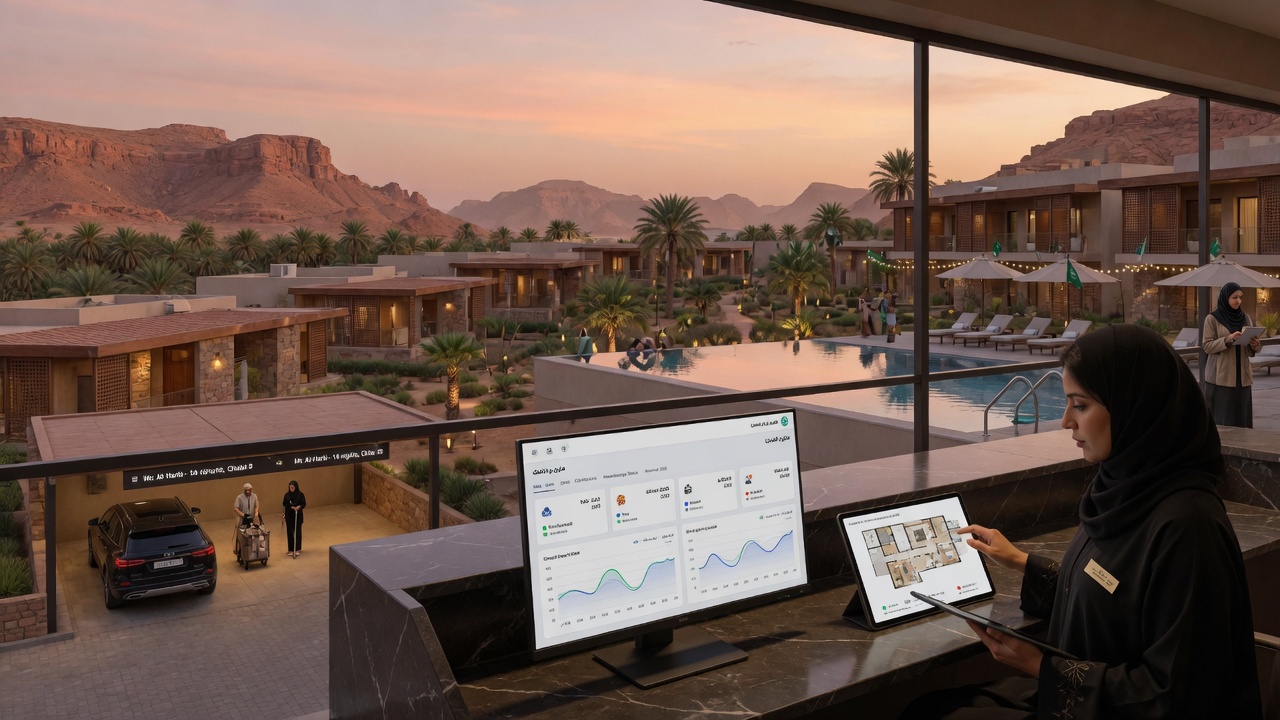
AlUla and emerging destinations: Smaller, experience-led properties often run lean night teams — sometimes a single multi-tasking staff member. A cloud PMS with automated end-of-day makes a full-scale night audit possible without a dedicated auditor at all.
Comparison: Manual Night Audit vs Automated Night Audit
| Aspect |
Manual Night Audit ❌ |
Automated Night Audit ✅ |
| Time to close |
3–4 hours, often longer in peak season |
Under 30 minutes, or continuous close |
| Charge posting |
Folio-by-folio; VAT/fee errors common |
Bulk auto-posting with correct tax rules |
| No-shows |
Often missed or billed inconsistently |
Policy applied automatically; revenue recovered |
| ZATCA e-invoicing |
Manual handling; compliance risk |
Compliant e-invoices generated by design |
| Reconciliation |
Spreadsheet matching of card/mada batches |
Automatic matching; only exceptions reviewed |
| Reporting |
Printed reports available mid-morning |
Daily reports auto-emailed before sunrise |
| Auditor's focus |
Data entry and arithmetic |
Exceptions, fraud review, and guest service |
| Peak-season performance |
Breaks down under Hajj/event volume |
Scales seamlessly with transaction volume |
How to Implement Night Audit Automation: A Practical Roadmap
- Step 1 — Map your current audit: List every task your night auditor performs and how long each takes. You cannot automate what you have not documented.
- Step 2 — Clean your configuration: Verify rate codes, VAT and municipality fee setups, package splits, and routing rules in the PMS.
- Step 3 — Automate posting and no-shows first: The fastest ROI with the lowest risk.
- Step 4 — Connect the interfaces: POS, payment gateway, channel manager, e-invoicing module, and guest reporting integrations.
- Step 5 — Redefine the auditor's checklist: Shift the role to exception review, verification, and guest service; retrain accordingly.
- Step 6 — Run parallel for two weeks: Compare automated results against manual checks before fully trusting the system.
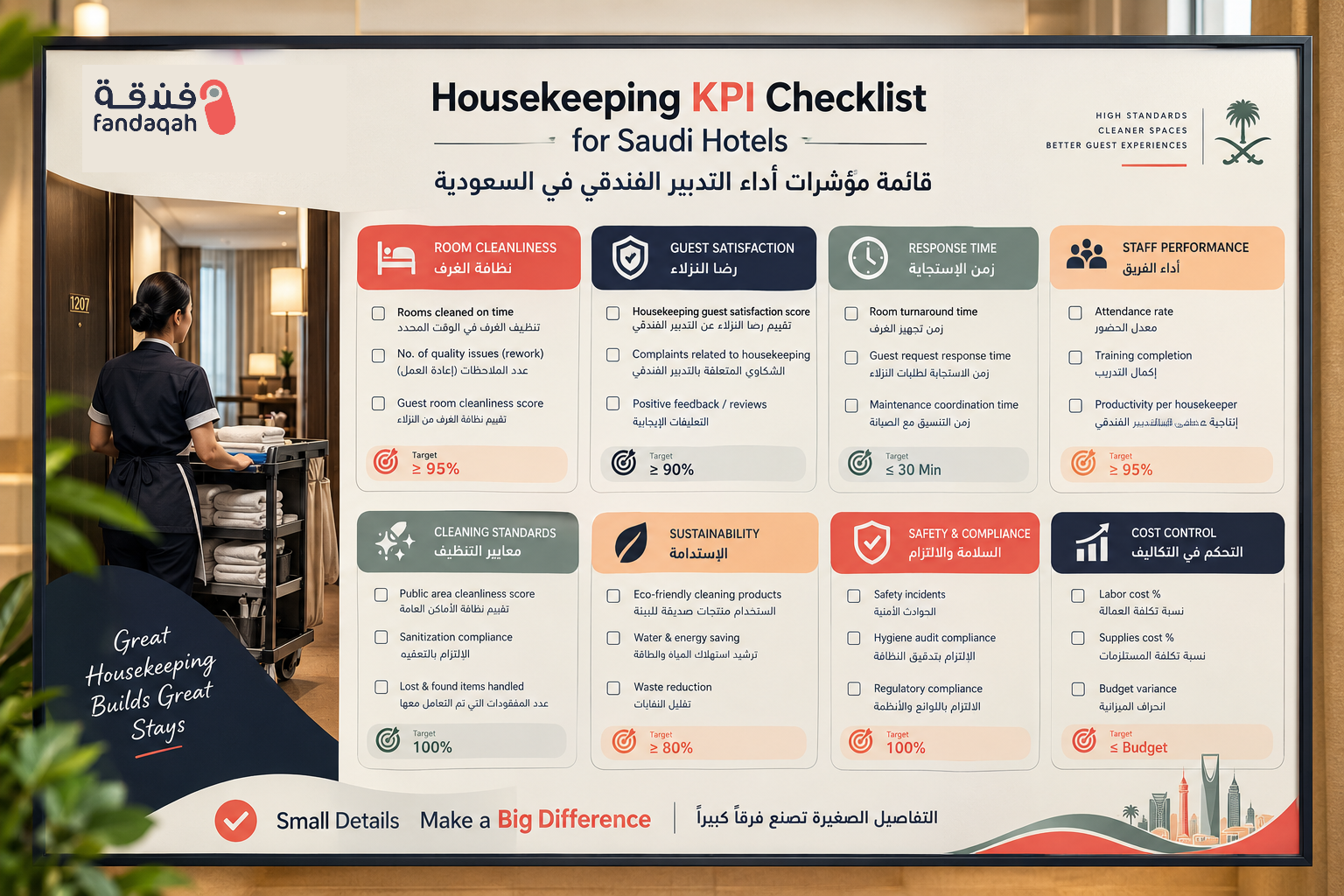
- Step 7 — Monitor monthly: Track close time, error counts, recovered no-show revenue, and compliance flags as ongoing KPIs.
Future Trends: Night Audit in the Vision 2030 Era
Saudi Arabia's Vision 2030 is transforming hospitality at unprecedented scale: over 150 million targeted annual visits, giga-projects like NEOM, the Red Sea destinations, Diriyah, and Qiddiya, plus Expo 2030 and the FIFA World Cup 2034. This transformation is reshaping the night audit itself:
- The continuous close: Cloud PMS platforms are moving toward real-time, always-balanced ledgers — the "night" audit becomes an anytime audit.
- AI-assisted anomaly detection: Machine learning flags unusual voids, rate overrides, and refund patterns automatically, turning fraud detection from luck into a system.
- Deeper regulatory integration: As ZATCA's e-invoicing phases expand and tourism data platforms mature, hotels with automated, integrated systems will comply effortlessly while manual operators struggle.
- Lean staffing models: New destinations like AlUla and the Red Sea favor smaller, tech-enabled teams — automation makes premium service possible without heavy back-office headcount.
- Saudization and skill upgrading: Automated audits create more attractive, analytical night roles for Saudi talent — reviewing exceptions and revenue insights rather than typing folios.
FAQ: Hotel Night Audit Automation in Saudi Arabia
What is a hotel night audit?
The night audit is the daily process of posting charges, verifying rates, reconciling payments, balancing all revenue departments, processing no-shows, and closing the hotel's business date — typically performed overnight and concluded with the Manager's Daily Report.
Which night audit tasks should be automated first?
Start with automated room, VAT, and fee posting, plus rule-based no-show billing. These two deliver the fastest return: they remove most of the manual workload and immediately recover revenue that manual audits commonly miss.
Does automation eliminate the night auditor's job?
No. It transforms the role from data entry to exception review, fraud checking, dispute resolution, and night-shift guest service. Hotels still need a trained person overnight — automation just makes that person far more valuable.
How does ZATCA e-invoicing affect the night audit in Saudi hotels?
Every tax invoice must be generated electronically in ZATCA's required format with QR codes, and integrated businesses must report or clear invoices through the Fatoora platform. This makes automated, PMS-integrated e-invoicing effectively mandatory — manual invoicing cannot keep up or stay compliant at scale.
Can small hotels and furnished apartments in Saudi Arabia afford night audit automation?
Yes. Cloud PMS subscriptions have made automated end-of-day, auto-posting, and e-invoicing accessible to properties of every size — often for less than the monthly cost of the errors and lost no-show revenue a manual audit produces.
What is a continuous (real-time) audit, and is it better?
A continuous audit means the cloud PMS keeps ledgers balanced in real time, so there is no heavy overnight close — the business date rolls automatically. For most hotels it is better: reports are always current, and peak-season volume never overwhelms a single overnight process.
How long does implementing night audit automation take?
With a modern cloud PMS, configuration and testing typically take two to six weeks, including a parallel-run period where automated results are checked against manual audits before full cutover.
What KPIs show that night audit automation is working?
Track end-of-day close time, posting error counts, recovered no-show revenue, reconciliation exceptions, invoice compliance flags, and how early the daily report reaches management. All six should improve within the first month.
Conclusion: Automate the Arithmetic, Elevate the Auditor
The question is no longer whether Saudi hotels should automate the night audit — it is how fast. Automated charge and tax posting, no-show processing, payment reconciliation, ZATCA-compliant e-invoicing, guest data reporting, and automated end-of-day deliver a faster close, cleaner books, recovered revenue, and built-in regulatory compliance. Meanwhile, the night auditor evolves into what the role should always have been: a guardian of exceptions, a fraud detector, and a warm human presence for guests arriving at 2 AM.
As Vision 2030 brings record visitor volumes and rising compliance standards to the Kingdom, the hotels that automate their night audit today will run leaner, close faster, and compete stronger tomorrow. Map your audit, clean your configuration, automate the repetitive 80% — and let your people own the 20% that truly needs them.
Tags: hotel night audit Saudi Arabia, night audit automation, what should be automated in night audit, hotel PMS Saudi Arabia, end of day process hotel, ZATCA e-invoicing hotels, Fatoora compliance hospitality, hotel VAT Saudi Arabia, automated no-show billing, hotel payment reconciliation mada, night auditor duties, cloud PMS for hotels, continuous audit hotel, hotel revenue leakage, POS PMS interface, manager daily report hotel, night audit checklist, hotel operations automation, Vision 2030 hospitality technology, Makkah Madinah hotel operations, Riyadh hotel technology, hotel back office automation, hotel compliance Saudi Arabia, fandaqah