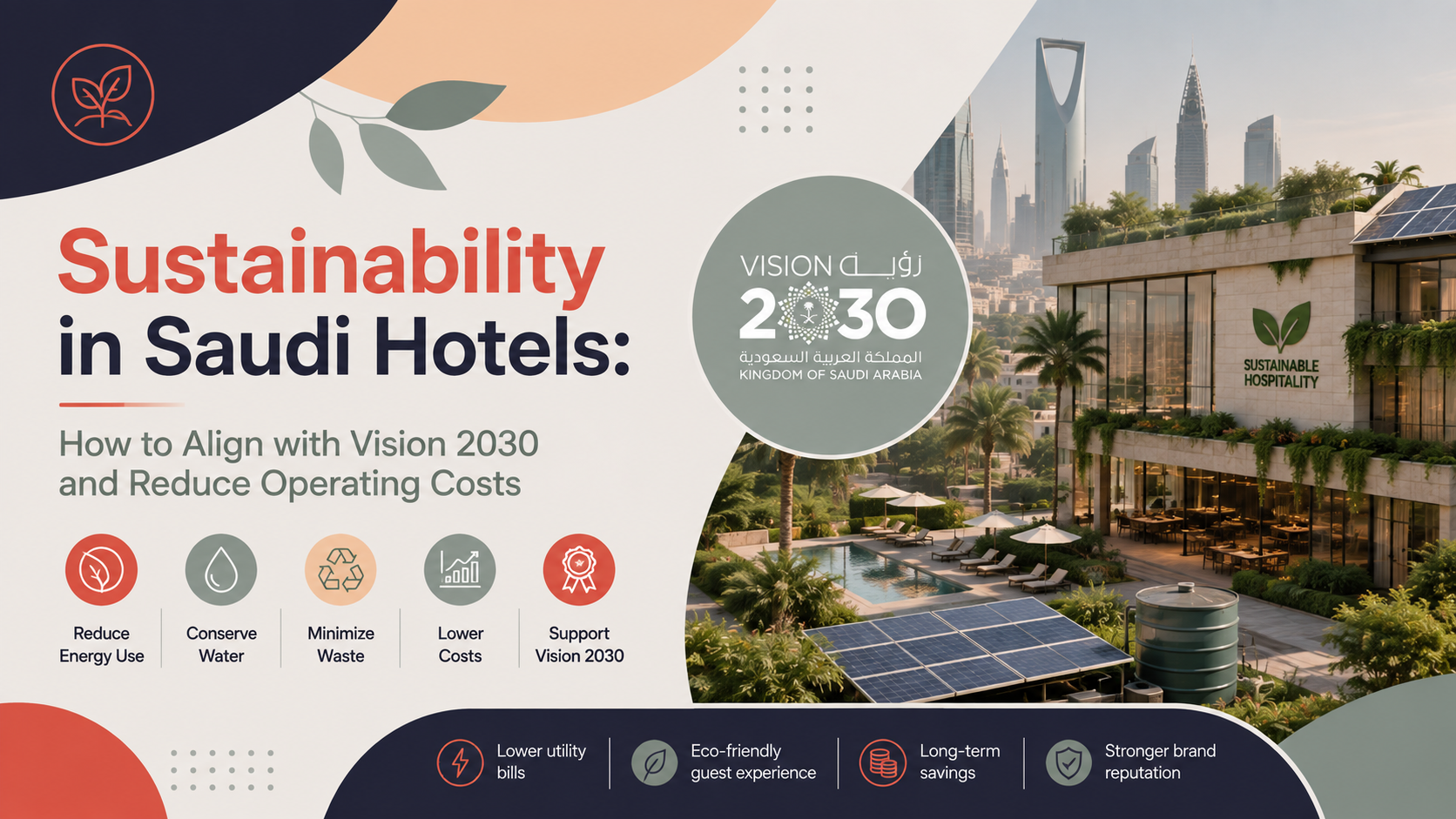
Eco-friendly hotels are no longer a niche trend — they are a strategic necessity in the Kingdom of Saudi Arabia. With Vision 2030 steering the nation towards a greener, more diversified economy, sustainable hospitality has become a critical differentiator. Saudi travelers and international tourists alike now seek accommodations that align with their environmental values. This comprehensive guide will show you exactly how to transform your property into an eco-friendly hotel in Saudi Arabia, reduce operational costs, and attract the new generation of conscious guests.
Whether you manage a boutique hotel in Jeddah, a desert resort in AlUla, or a city hotel in Riyadh, implementing sustainable hotel practices is simpler than you think. From energy-efficient lighting to locally sourced organic amenities, we will walk you through every step, backed by the Kingdom's own green initiatives and the Saudi Green Initiative.
Why Sustainability Matters for Saudi Hotels
The hospitality industry accounts for a significant portion of global carbon emissions, and Saudi Arabia is no exception. However, the Kingdom is rewriting this narrative. The Saudi Vision 2030 framework explicitly champions sustainable tourism and environmental stewardship, making green hotels a cornerstone of the future economy. Recent traveler surveys indicate that over 70% of Saudi tourists prefer eco-friendly accommodations when given the choice. This isn't just about ethics — it's about revenue, reputation, and regulatory alignment.
"Sustainability is not a cost to be managed; it's an investment that pays dividends in guest loyalty, operational efficiency, and long-term resilience." — Hospitality sustainability expert, Gulf Green Building Council
By embracing eco-friendly practices, your hotel can tap into the fast-growing eco-tourism Saudi Arabia movement, attract corporate clients with ESG mandates, and future-proof your business against stricter environmental regulations that are already taking shape in the Kingdom.
Quick Win: Switching to LED lighting and installing low-flow water fixtures can reduce your hotel's energy and water bills by up to 30% within the first year, with minimal upfront investment.
Key Principles of Eco-Friendly Hotel Operations
Transitioning to a green hotel model requires a holistic approach. Below are the five foundational pillars that every Saudi hotelier must master to achieve genuine hotel sustainability.
1. Energy Efficiency and Renewable Energy
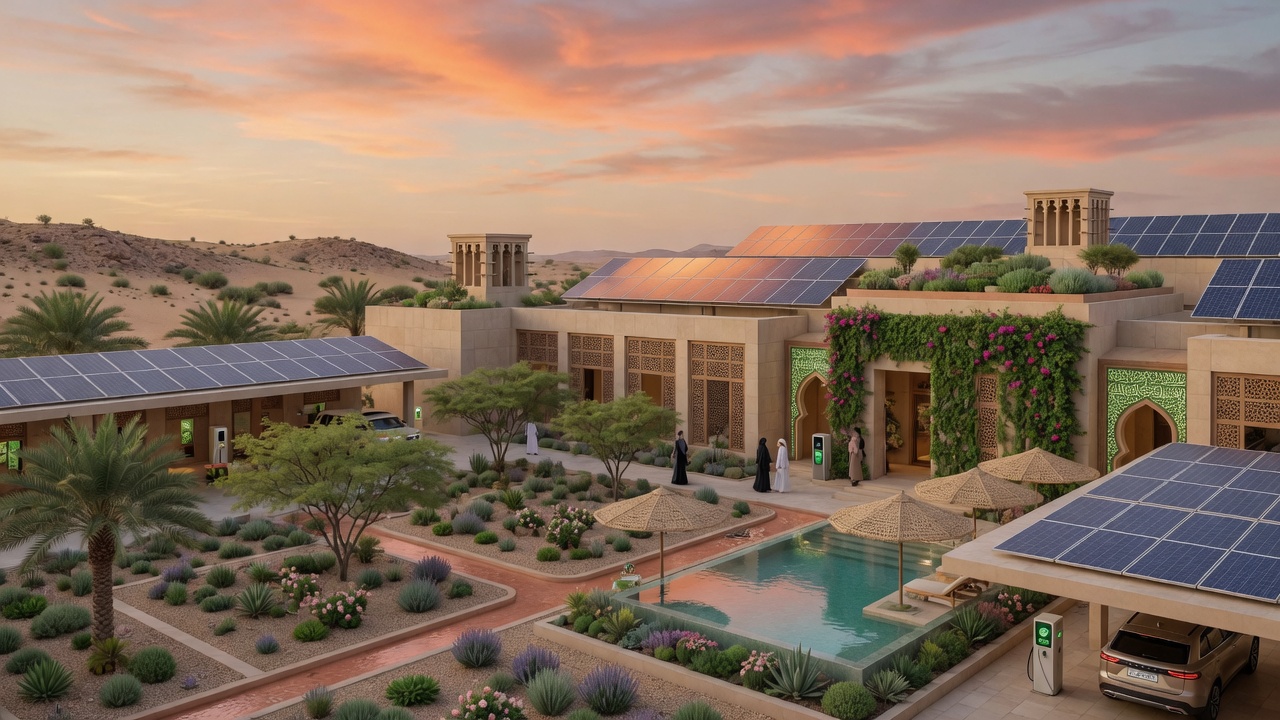
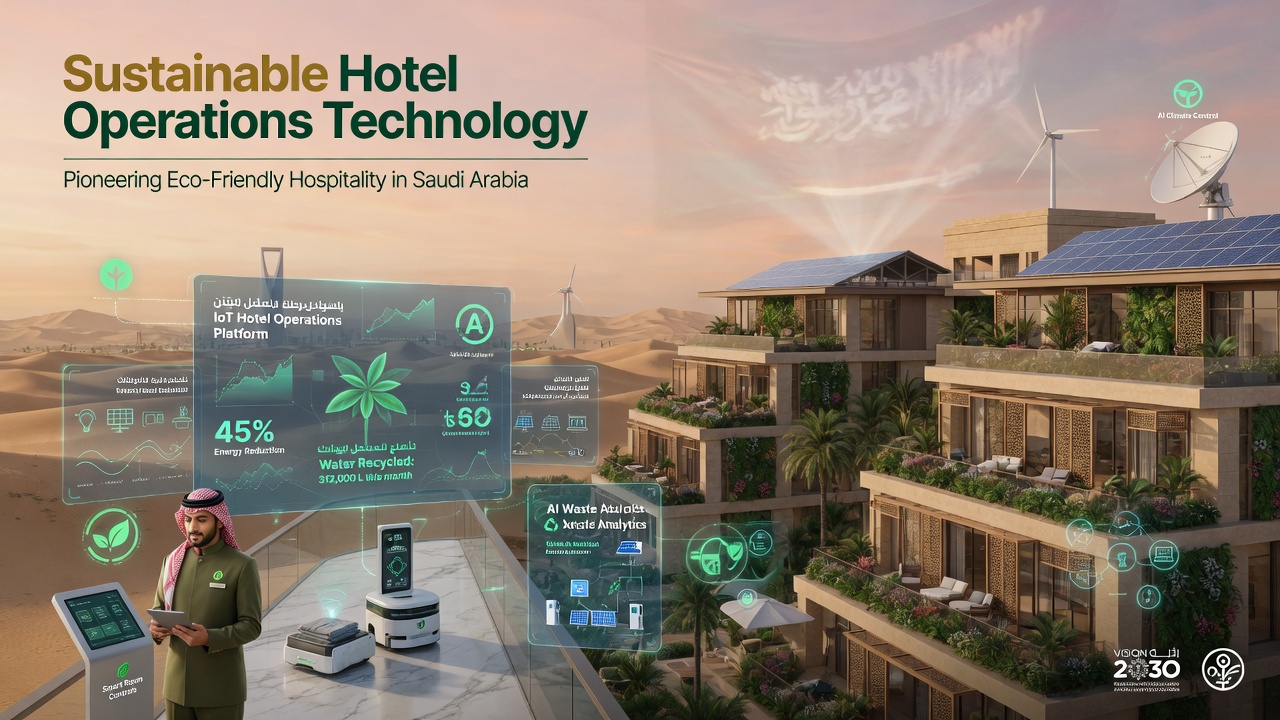
Saudi Arabia's climate demands robust air conditioning, but energy consumption can be slashed with smart technology. Start with a professional energy audit, then prioritize upgrades that combine energy-efficient hotel systems with renewable sources. Solar panels are particularly viable in the Kingdom, given its abundant sunlight. Many hotels in NEOM and the Red Sea Project are already integrating renewable energy hotels Saudi infrastructure into their design.
- Smart thermostats and occupancy sensors reduce HVAC waste in unoccupied rooms.
- Install solar water heaters for laundry and guest showers — they pay for themselves in under three years.
- Upgrade to inverter air conditioning and energy-efficient appliances with high ESR ratings.
- Use natural ventilation and shading in common areas during cooler months.
2. Water Conservation Strategies
Water scarcity is a pressing concern in Saudi Arabia, making water conservation hospitality a top priority. A single hotel room can consume over 300 liters per day if unchecked. Implement these water-saving measures to reduce your utility costs and align with the Saudi water conservation goals.
- Install low-flow showerheads, faucets, and dual-flush toilets in all guest rooms.
- Deploy a greywater recycling system for landscaping and toilet flushing.
- Use native, drought-resistant plants in your garden — a key green landscaping Saudi hotels technique.
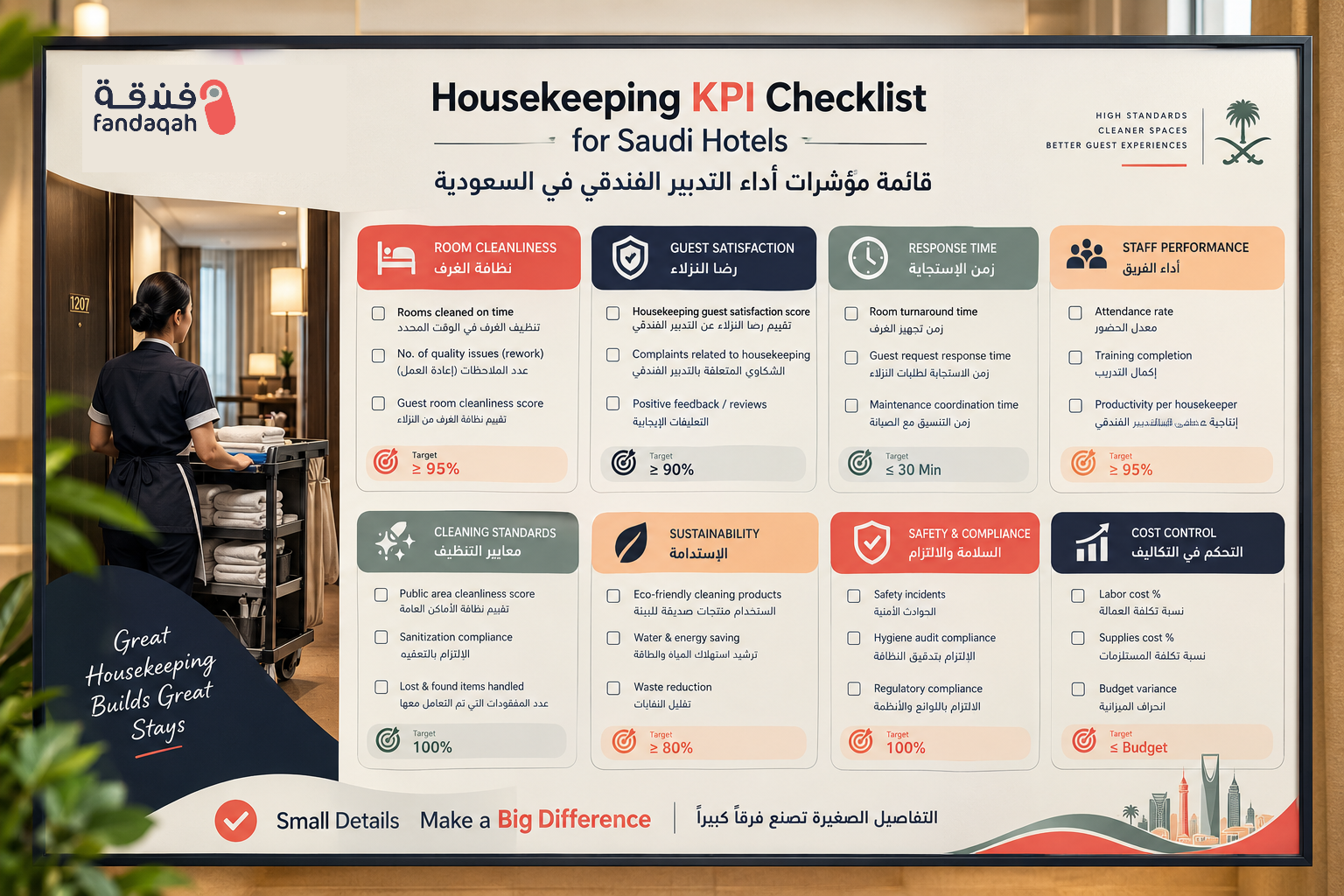
- Train housekeeping to avoid unnecessary towel and linen washing; implement a linen reuse program encouraged through guest communication.
Note: The Saudi Ministry of Environment, Water and Agriculture offers guidelines and incentives for commercial water-saving projects. Check their latest circulars to see if your hotel qualifies for support.
3. Waste Management and Recycling
Hotels generate enormous waste — from food scraps to single-use plastics. A robust hotel recycling program Saudi Arabia can cut disposal costs by 20-40% and significantly improve your property's eco-credentials. The key is to follow the reduce, reuse, recycle hierarchy, adapted to Saudi waste infrastructure.
- Eliminate single-use plastic bottles, straws, and toiletries. Switch to refillable dispensers and glass water bottles.
- Set up color-coded recycling bins in guest rooms, kitchens, and back-of-house areas.
- Partner with local recycling companies (e.g., Naqa'a or municipal waste management services) to ensure proper sorting.
- Compost organic kitchen waste on-site or collaborate with farms that can use it for fertilizer.
4. Sustainable Procurement and Local Sourcing
An eco-friendly hotel thinks beyond its own operations — it considers the entire supply chain. Prioritize vendors that demonstrate environmental responsibility and, whenever possible, source locally to cut transportation emissions. This also boosts the local Saudi economy, a key tenet of Vision 2030.
- Choose organic, locally grown food from Saudi farms for your restaurants.
- Use eco-certified cleaning products that are biodegradable and safe for greywater systems.
- Opt for furniture and decor made from recycled or sustainably harvested materials.
- Work with local artisans for in-room amenities, blending sustainability with authentic Saudi hospitality.
5. Green Building Design and Certifications
For new builds or major renovations, integrating green building standards from the outset is the most impactful step. But even existing properties can earn certifications by retrofitting and improving operations. Saudi Arabia now has its own rating system, Mostadam, alongside international options like LEED.
Pursuing green hotel certification Saudi not only validates your efforts but also serves as a powerful marketing tool. Guests actively search for certified eco-friendly stays, and platforms like Booking.com and Google Hotels now display sustainability badges.
Benefits of Transforming into a Green Hotel
Why should you invest time and resources into becoming a sustainable property? Here are the concrete, measurable advantages for Saudi hotel owners.
- Lower Operating Costs: Energy and water efficiency directly reduce monthly utility bills.
- Higher Average Daily Rate (ADR): Eco-conscious travelers are willing to pay a premium for sustainable stays.
- Improved Brand Reputation: Align with Vision 2030 and the Saudi Green Initiative to build trust with both local and international guests.
- Regulatory Readiness: Stay ahead of upcoming environmental laws and avoid compliance penalties.
- Guest Loyalty: 68% of global travelers say they are more likely to return to a hotel that actively reduces its environmental impact.
- Staff Pride and Retention: Employees feel motivated working for a responsible employer.
Practical Steps to Transform Your Saudi Hotel (with Real-World Use Cases)
Let's translate principles into action. Here is how different types of Saudi properties can implement eco-friendly hotel practices immediately.
Boutique City Hotels (Riyadh, Jeddah, Dammam)
Space is often limited, but small changes yield big results. The Al Faisaliah Hotel in Riyadh, for example, transitioned to a fully digital check-in and guest directory, eliminating paper waste. They also introduced a rooftop herb garden that supplies the kitchen while insulating the top floor.
You can replicate these by installing motion-sensor LED lighting in corridors, offering guests a discount for skipping daily housekeeping, and partnering with local recycling cooperatives. These steps dramatically lower your hotel carbon footprint reduction KSA.
Desert Resorts and Eco-Lodges (AlUla, The Red Sea)
Properties in fragile ecosystems must lead the charge. The upcoming Red Sea Project has set a new benchmark: 100% renewable energy and a complete ban on single-use plastics. Desert resorts can harvest solar power, use natural cooling techniques like wind towers, and construct buildings with rammed earth to minimize thermal impact. Implementing water-efficient irrigation and planting native species like acacia and ghaf trees restores local biodiversity while creating stunning landscapes.
Large Chain Hotels (Makkah, Madinah)
High guest turnover in pilgrimage hotels demands scalable solutions. Large properties can invest in building management systems (BMS) that automate energy and water usage across thousands of rooms. Bulk amenities in refillable containers, centralized recycling stations on each floor, and AI-driven food waste trackers in buffets drastically reduce environmental impact while maintaining five-star service.
Comparison of Green Certifications in Saudi Arabia
Choosing the right certification can be confusing. The table below clarifies the main options available in the Kingdom.
| Certification |
Origin |
Focus Areas |
Best For |
Saudi Relevance |
| Mostadam |
Saudi Arabia |
Water conservation, energy, materials, local context |
All property types |
Specifically designed for Saudi climate and regulations; aligns with Vision 2030 KPIs |
| LEED |
International (USGBC) |
Site, water, energy, indoor quality, innovation |
Large commercial hotels |
Globally recognized; many international brands require it |
| Green Key |
International |
Staff involvement, guest awareness, environmental management |
Independent hotels & resorts |
Affordable and practical, with strong educational component |
| EarthCheck |
Australia |
Benchmarking, carbon footprint, community |
Resorts and eco-lodges |
Used by several Red Sea developments; data-driven approach |
Future Trends: How Vision 2030 Will Reshape Sustainable Hospitality
The Saudi Vision 2030 sustainable tourism blueprint is the most ambitious in the region. Mega-projects like NEOM, AMAALA, and The Red Sea are all being developed with net-zero carbon footprints. This will set a new standard that all hotels in the Kingdom will eventually need to meet. We foresee several trends gaining momentum:
- Carbon labeling on menus and room rates — guests will see the environmental footprint of their choices.
- AI-powered energy grids that balance load between hotels and the national grid, optimizing renewable usage.
- Circular economy models where food waste is converted to biogas on-site, and greywater is fully recycled.
- Eco-certifications becoming mandatory for government contracts and Hajj/Umrah service providers.
- Community-based tourism that directly funds local environmental and cultural preservation projects.
Hotels that proactively adopt sustainable hotel operations KSA today will not only survive but thrive in this new ecosystem. They will be the preferred choice for government events, eco-conscious high-spenders, and the Saudi millennial traveler who values purpose over price.
Vision 2030 Insight: The Public Investment Fund (PIF) has explicitly prioritized green hospitality ventures. Aligning your sustainability messaging with national pillars can open doors to partnerships and visibility in official tourism campaigns.
Frequently Asked Questions About Eco-Friendly Hotels in Saudi Arabia
1. What exactly qualifies a hotel as “eco-friendly” in Saudi Arabia?
An eco-friendly hotel implements measurable practices to reduce its environmental impact, such as energy efficiency, water conservation, waste reduction, and use of sustainable materials. In Saudi Arabia, alignment with Vision 2030 and certifications like Mostadam further define the standard.
2. Is it expensive to convert my existing hotel into a green property?
Many changes have low upfront costs and quick payback. For example, LED retrofits and water-saving fixtures often pay for themselves within 12-18 months. Start with small operational shifts and gradually invest in larger upgrades like solar panels as your savings accumulate.
3. How can I market my hotel’s sustainability efforts to attract Saudi guests?
Highlight your eco-friendly initiatives on your website, in booking descriptions, and through social media. Use recognisable badges if you achieve a certification. Share behind-the-scenes content showing your recycling program or garden, and include a sustainability statement in your guest welcome packet.
4. Are there government incentives for green hotels in Saudi Arabia?
Yes, various entities linked to Vision 2030 offer support. The Saudi Industrial Development Fund and the Saudi Green Initiative have programs that may include soft loans or technical assistance for sustainable projects. Always check with the Ministry of Tourism for the latest incentives.
5. What is the most impactful first step for a small hotel in Riyadh?
Conduct a simple waste and energy walk-through audit. Identify where the most waste is generated and where energy spikes occur. Often, adjusting AC settings in unused areas and implementing a towel reuse program yield immediate, noticeable savings.
6. How does sustainability tie into the guest experience in Saudi Arabia?
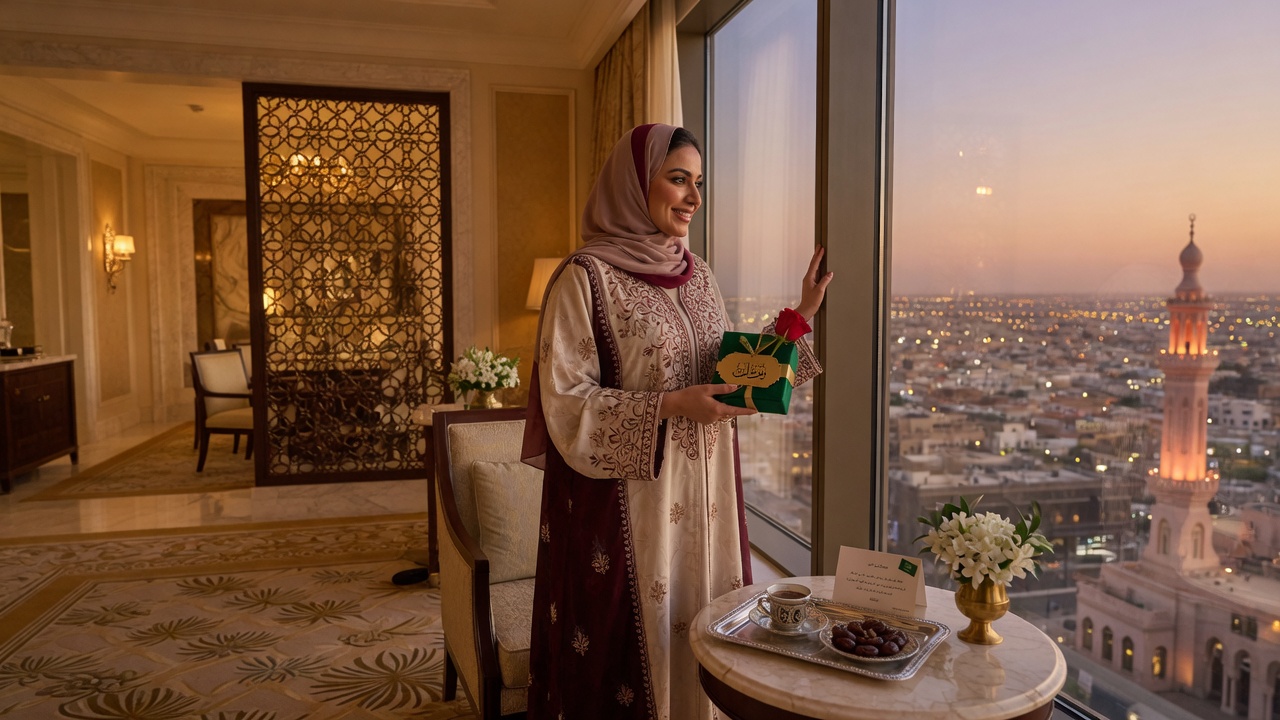
Sustainability enhances the experience when framed as authentic Saudi hospitality. Locally sourced dates and Arabic coffee served in reusable pottery, rooms scented with natural regional essences, and desert excursions that emphasize conservation all create a richer, more memorable stay.
7. Can I get a green hotel certification without major construction?
Absolutely. Programs like Green Key and the operational categories of Mostadam focus on management practices, staff training, and guest engagement rather than requiring structural changes. You can become certified largely by changing how you operate your existing building.
8. What role does technology play in a sustainable hotel?
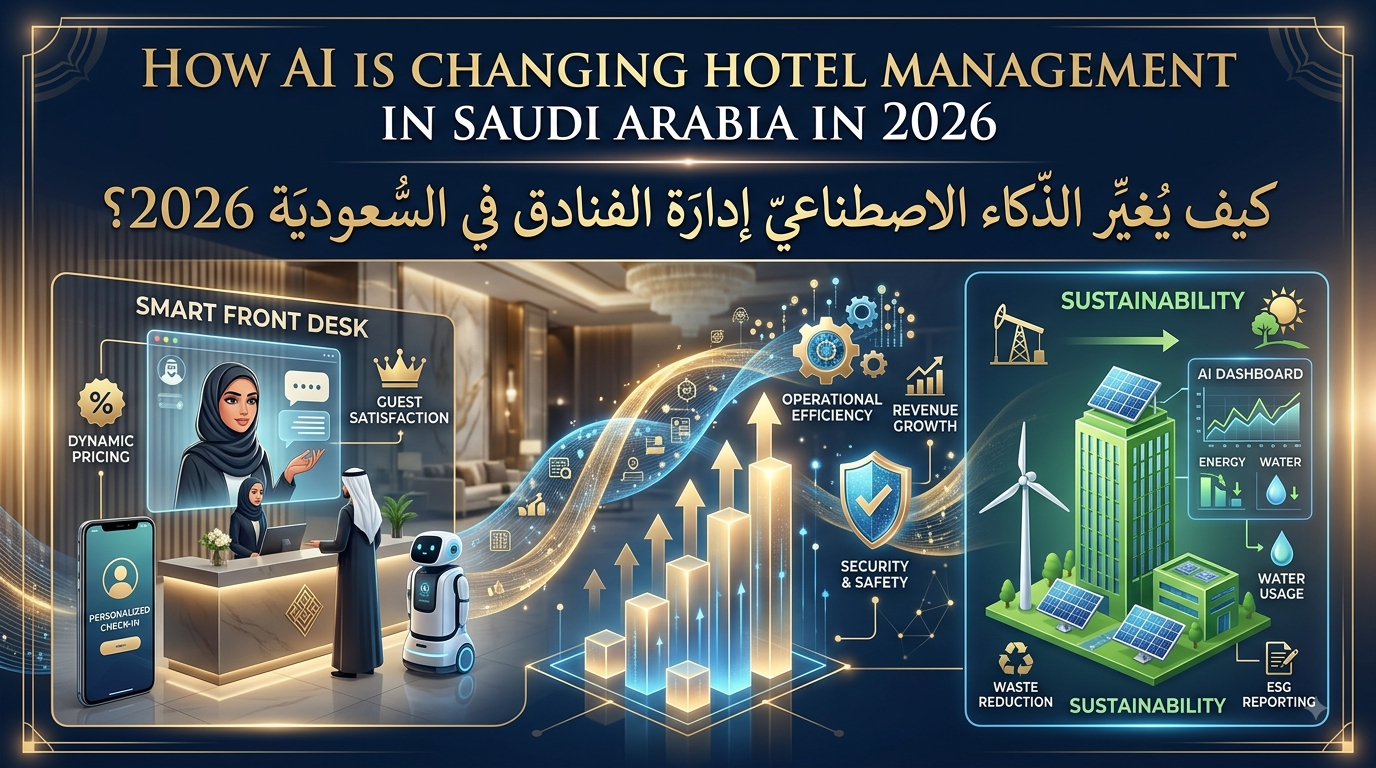
Technology is a force multiplier. Smart room controls, AI-driven energy management systems, digital check-in to reduce paper, and real-time water leak detection all reduce waste while gathering data for continuous improvement. A modern PMS with sustainability reporting can track your footprint automatically.
Conclusion: Your Roadmap to a Greener Saudi Hotel Starts Now
Becoming an eco-friendly hotel in Saudi Arabia is no longer optional for forward-thinking hoteliers — it is the pathway to profitability, resilience, and national pride. By embedding sustainable practices across energy, water, waste, procurement, and design, you align your property with the Kingdom's most ambitious aspirations.
This comprehensive guide has equipped you with the knowledge to start small or leap ahead, whether through a simple recycling program or a full Mostadam certification. Remember, every initiative counts towards a brighter, greener future for Saudi hospitality.
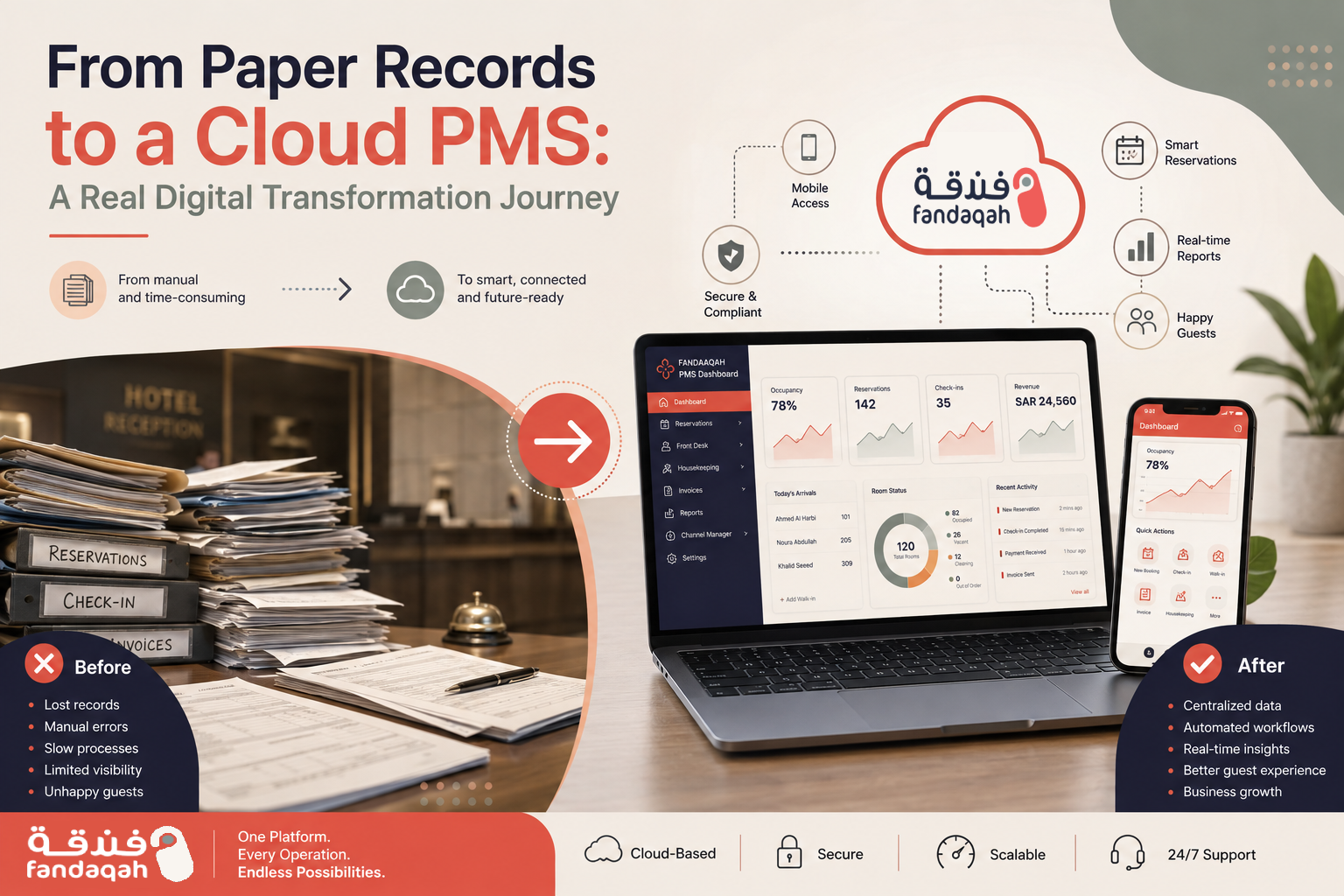
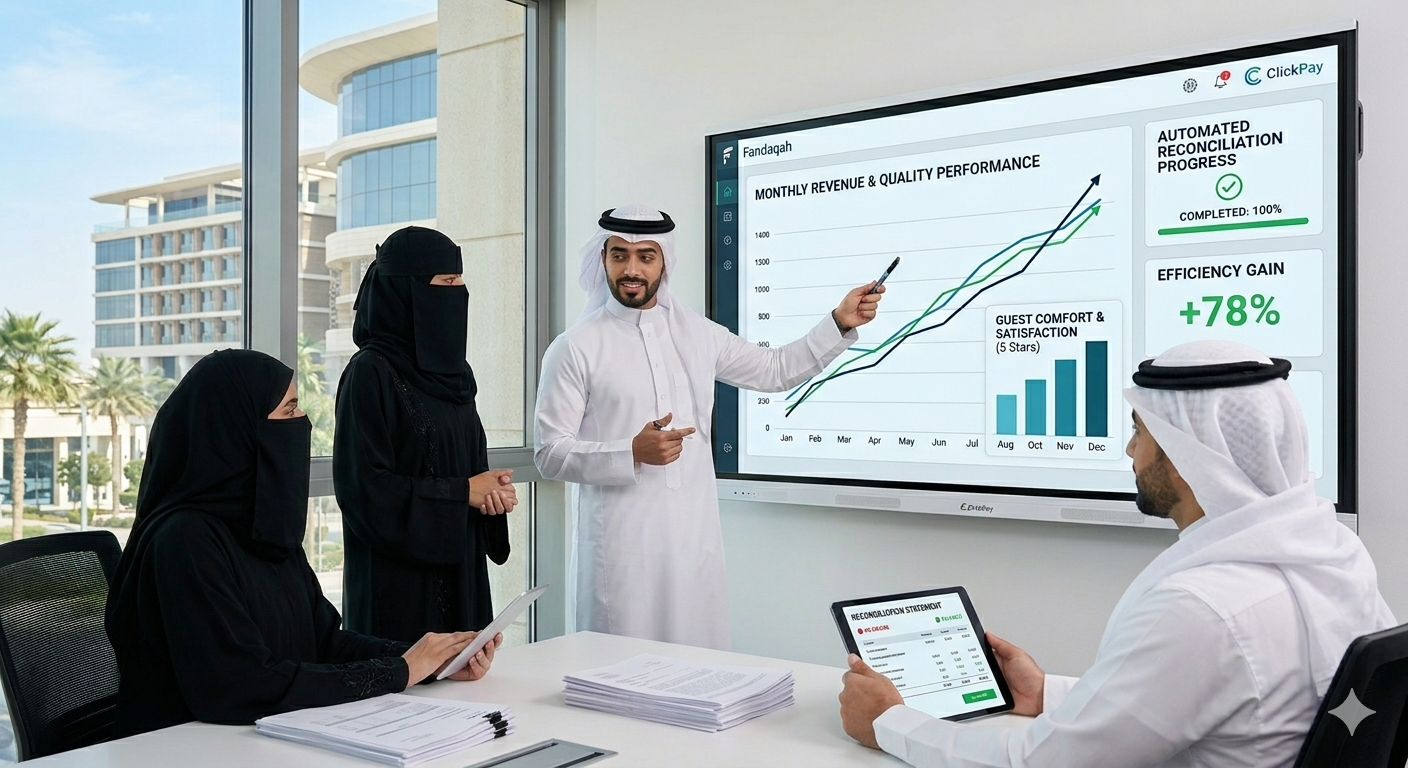
The journey may seem complex, but you don't have to walk it alone. Platforms like Fandaqah offer technology solutions that help you monitor your environmental impact, automate resource management, and communicate your green story to guests.
Ready to Make Your Saudi Hotel a Sustainability Leader?
Explore how smart hospitality technology can streamline your green operations and boost guest satisfaction.
Request Your Free Sustainability Demo
Tags: eco-friendly hotel Saudi Arabia, sustainable hospitality KSA, green hotel Saudi, Vision 2030 tourism, hotel sustainability guide, energy efficiency hotels Saudi, water conservation hospitality, waste management hotels, green certification Saudi, eco-tourism Saudi Arabia, hotel recycling program, carbon footprint reduction KSA, sustainable hotel operations, mostadam certification, LEED hotel Saudi, Saudi green initiative, best practices sustainable hospitality, how to make hotel eco-friendly in Saudi Arabia