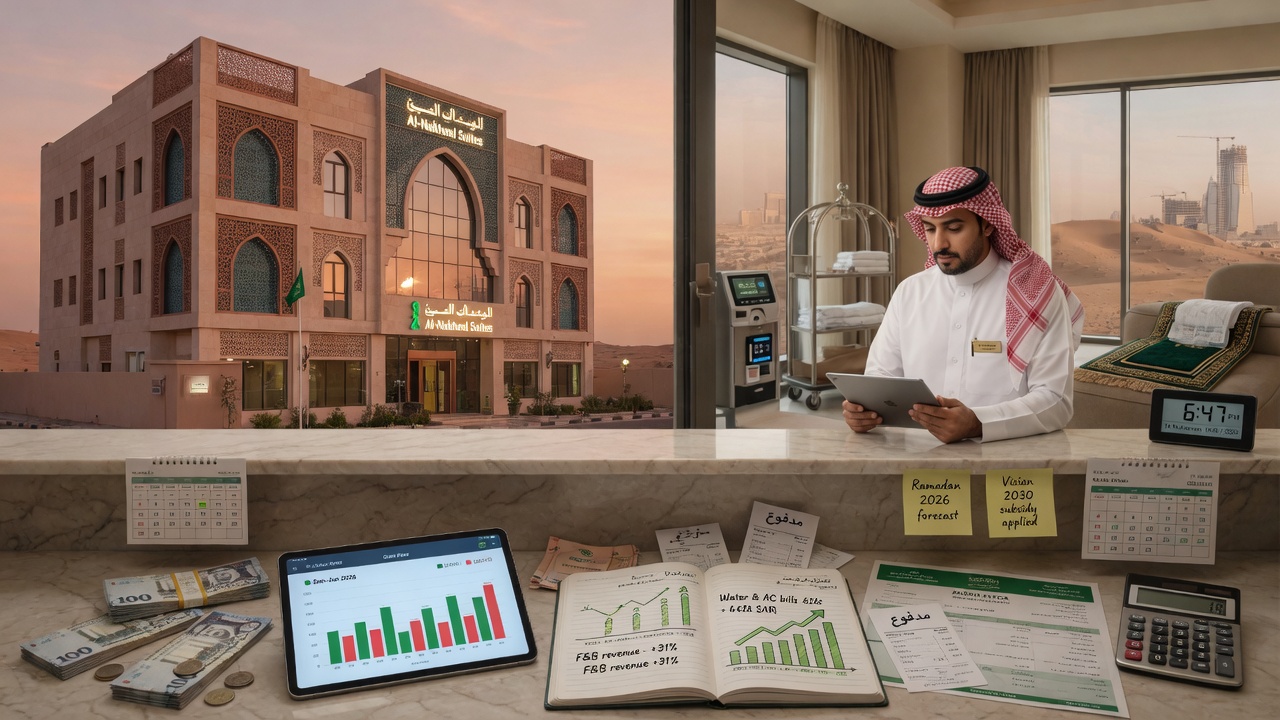
Running a small hotel in Saudi Arabia is no longer just about filling rooms. With the Kingdom's tourism sector accelerating under Vision 2030, boutique hotels, heritage inns, and family-run accommodations are facing a new reality: revenue growth does not automatically equal financial health. The single most decisive factor separating thriving properties from those that quietly close their doors is cash flow management for small hotels in Saudi Arabia.
Unlike large hotel chains with corporate treasury departments, small hotel owners in Riyadh, Jeddah, AlUla, Abha, and Dammam must personally navigate the delicate balance between incoming guest payments and outgoing operational costs. Seasonal demand swings — driven by Hajj, Umrah, school holidays, and the Riyadh Season events — create unique hospitality cash flow patterns that demand careful planning. This comprehensive guide will equip you with practical, actionable strategies to stabilize your hotel's cash position, plan for lean periods, and build a financially resilient business aligned with the Kingdom's tourism ambitions.
Did You Know? According to sector data, over 40% of small hospitality businesses in the GCC region cite cash flow mismanagement — not low occupancy — as the primary reason for financial distress. In Saudi Arabia, where seasonal revenue can fluctuate by up to 60% between peak and off-peak months, this risk is even more pronounced.
What Is Cash Flow Management in the Hotel Context?
At its core, cash flow management refers to the process of tracking, analyzing, and optimizing the movement of money into and out of your hotel. It is not the same as profitability. A hotel can be fully booked during Ramadan or the Hajj season and still face a cash crunch if receivables are delayed or if fixed costs consume too large a share of operating capital. Effective hotel financial management means ensuring that you always have enough liquid funds to cover payroll, supplier invoices, maintenance, and unexpected expenses — even during the slowest months.
For Saudi hoteliers, cash flow is shaped by several distinctive factors: the seasonal rhythm of religious tourism, the growing domestic leisure market, corporate travel linked to government and mega-project activity, and the increasing adoption of digital booking platforms that may delay payment settlements. Understanding these dynamics is the foundation of sound small hotel budgeting and long-term sustainability.
Pro Tip: Separate your operating account from a dedicated cash reserve account. Transfer a fixed percentage of every guest payment — even just 5–7% — into the reserve. This builds a buffer that can cover 2–3 months of lean-season expenses without panic.
The Core Components of Hotel Cash Flow
To master cash flow management for small hotels in Saudi Arabia, you must first understand its building blocks. Every riyal that enters and exits your property falls into one of the categories below. Mapping these clearly is the first step toward hotel profit optimization.
1. Operating Cash Inflows
- Room revenue — direct bookings, OTAs (Online Travel Agencies), corporate contracts, walk-ins
- Food & beverage sales — in-house restaurants, room service, event catering
- Ancillary services — laundry, airport transfers, tour desk commissions, spa services
- Event & meeting space rentals — growing in demand across Riyadh and Jeddah business districts
- Government reimbursements — relevant for hotels serving official delegations or Umrah package groups
2. Operating Cash Outflows
- Staff salaries and housing allowances — typically the largest fixed cost, especially with Saudization compliance
- Utilities — electricity and water, which spike during summer months in the Kingdom
- OTA commissions — ranging from 10% to 25%, paid to Booking.com, Expedia, Almosafer, and others
- Supplier payments — food, toiletries, cleaning materials, linens
- Maintenance & repairs — HVAC servicing is critical in the Saudi climate
- Marketing costs — social media ads, Google Hotel Ads, influencer collaborations
- Licensing & municipal fees — tourism licenses, baladiya fees, civil defense inspections
Unique Cash Flow Challenges for Hotels in Saudi Arabia
While global hospitality cash flow principles apply universally, Saudi Arabia presents a distinctive set of challenges that demand localized strategies. Small hotel owners who ignore these nuances often find themselves scrambling during critical periods.
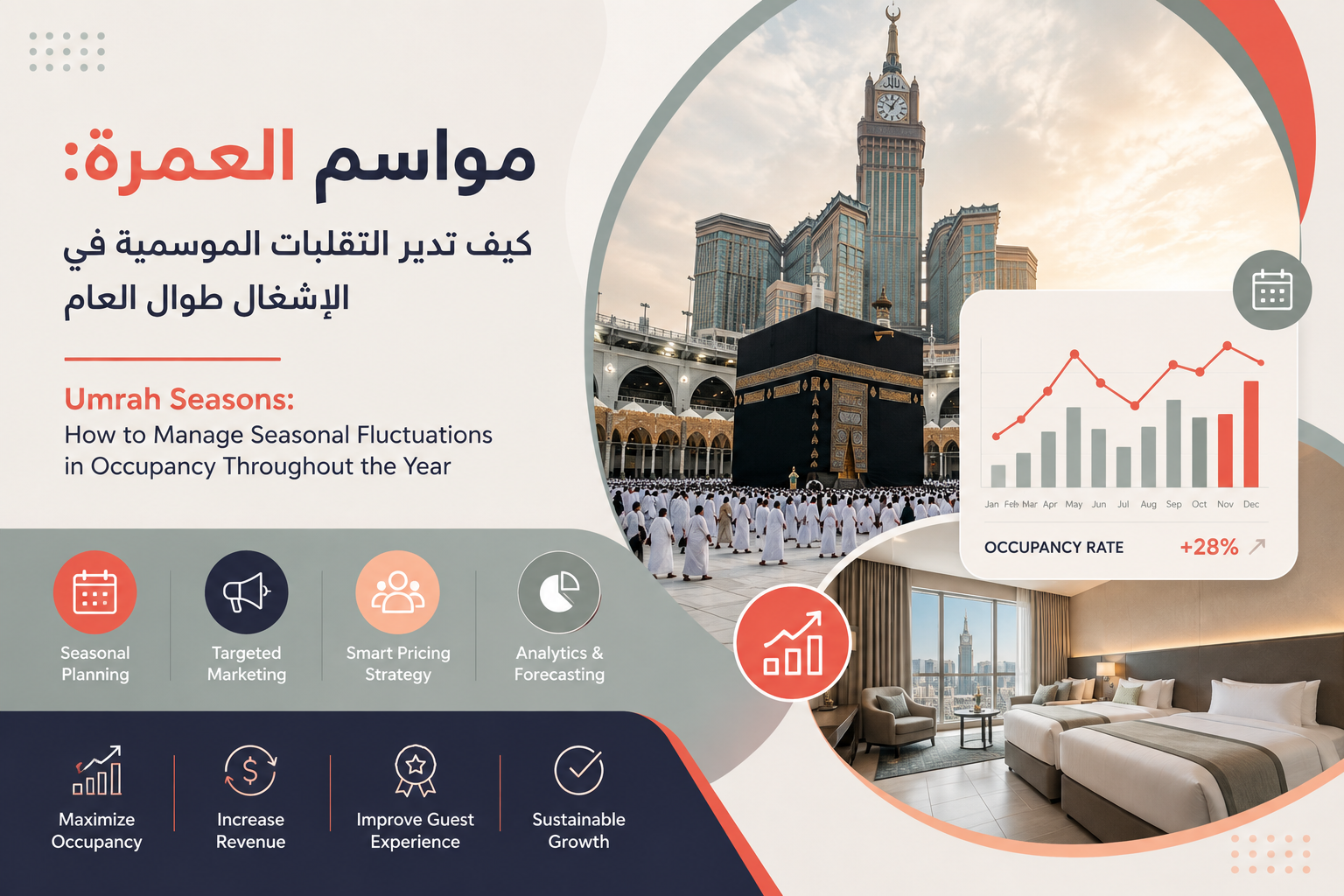
Seasonal Revenue Patterns Across Key Saudi Destinations
| Season / Event |
Typical Months |
Demand Level |
Cash Flow Impact |
| Hajj Season |
Dhul-Hijjah (varies annually) |
Very High (Makkah, Madinah, Jeddah) |
Strong inflows; high prepayment rates |
| Umrah Peak |
Ramadan, school breaks |
High |
Moderate to strong; package-dependent |
| Riyadh Season / Events |
Oct–Mar (varies) |
Very High (Riyadh specifically) |
Strong; short booking windows |
| Summer Holidays |
Jun–Aug |
Moderate (Abha, Taif, highlands) |
Steady; domestic leisure travelers |
| Off-Peak / Shoulder |
Jan–Feb, Sep–Oct (varies) |
Low to Moderate |
High risk; cash reserves critical |
Table: Seasonal cash flow patterns for Saudi hotels — plan reserves accordingly.
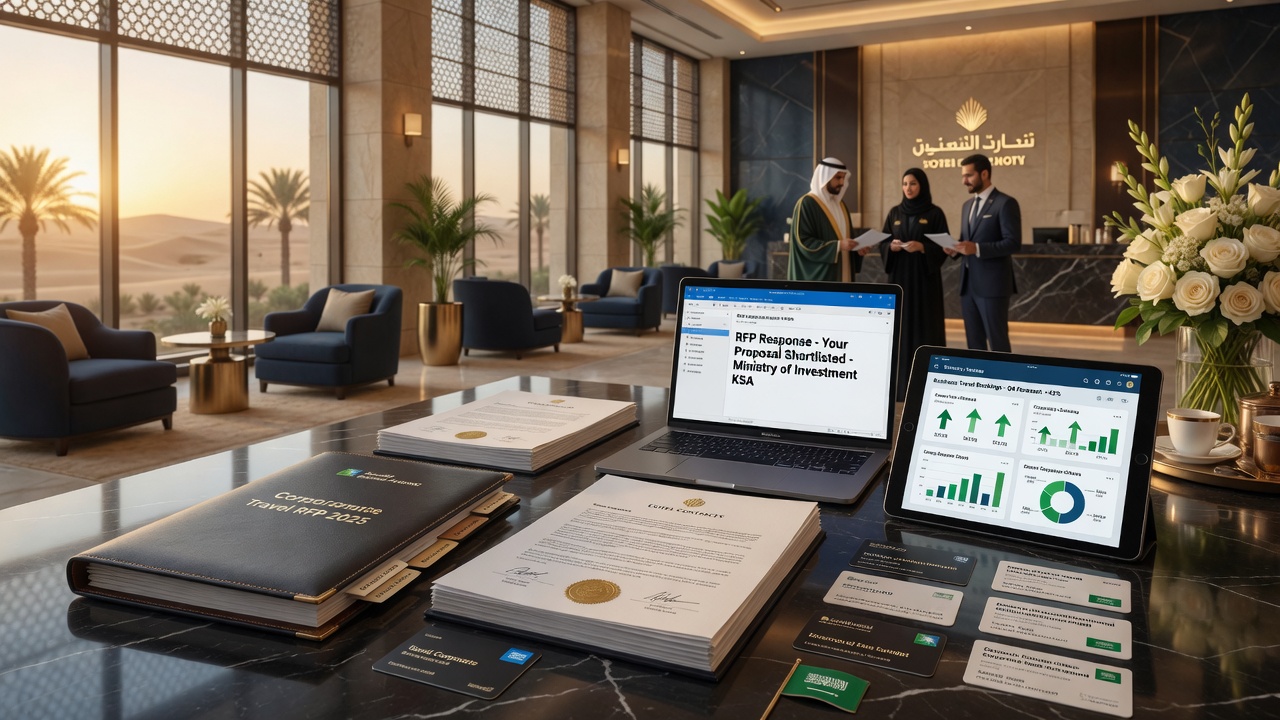
Beyond seasonality, cash flow challenges for boutique hotels in Saudi Arabia also include delayed payments from corporate clients and tour operators, who may take 30–60 days to settle invoices. Additionally, the rapid digitization of the Saudi hospitality industry means that OTA commissions are deducted before funds reach your account, creating a lag that can distort your perception of available cash.
"In the Saudi boutique hotel market, cash flow is the heartbeat of daily operations. You can have 90% occupancy during Riyadh Season and still face a payroll crisis in February if you haven't planned for the trough. The key is treating every peak-season riyal as a bridge to the next quiet month — not as instant profit."
— Hospitality Finance Advisor, GCC Region
7 Proven Strategies for Improving Hotel Cash Flow in Saudi Arabia
Implementing robust best practices for hotel financial planning in Saudi Arabia requires a mix of revenue acceleration, cost discipline, and smart forecasting. Below are seven actionable strategies that small hotel owners can deploy immediately.
1. Build a 12-Month Rolling Cash Flow Forecast
A static annual budget is insufficient for the volatility of seasonal revenue management for hotels in KSA. Instead, build a rolling 12-month forecast that updates monthly. Factor in known peak periods (Ramadan, Hajj, Riyadh Season), expected off-peak troughs, and one-off events like weddings, conferences, or local festivals. Use conservative estimates for occupancy and average daily rate (ADR), and always include a contingency line for unexpected expenses — HVAC breakdowns, sudden staffing needs, or regulatory inspection costs.
2. Negotiate Supplier Payment Terms Strategically
Many small hotel owners in the Kingdom accept standard supplier payment terms without question. Negotiate for 45–60 day payment cycles with food and amenity suppliers, aligning outflows more closely with your revenue collection cycle. Where possible, build relationships with local Saudi suppliers who understand the seasonal nature of tourism cash flow in KSA and may offer flexible terms during lean months.
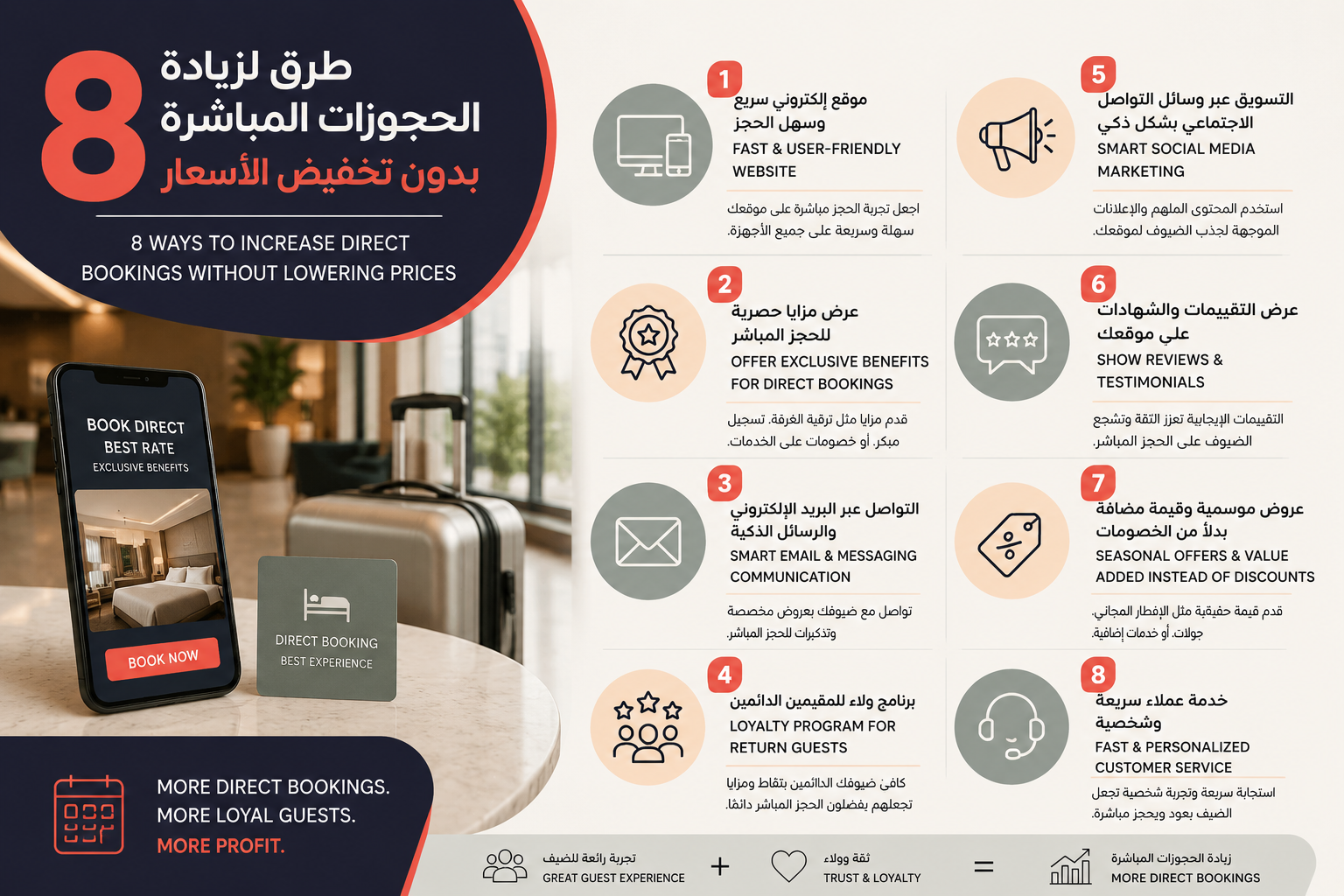
3. Incentivize Direct Bookings and Prepayments
OTAs are essential for visibility, but their commission structures and delayed settlement cycles strain cash flow. Offer guests a 5–10% discount for booking directly through your website or WhatsApp business line, with full or partial prepayment. This accelerates cash inflows and reduces dependency on third-party platforms. For Saudi travelers, who increasingly prefer seamless digital experiences, a well-designed Arabic-English booking portal can significantly boost direct conversions.
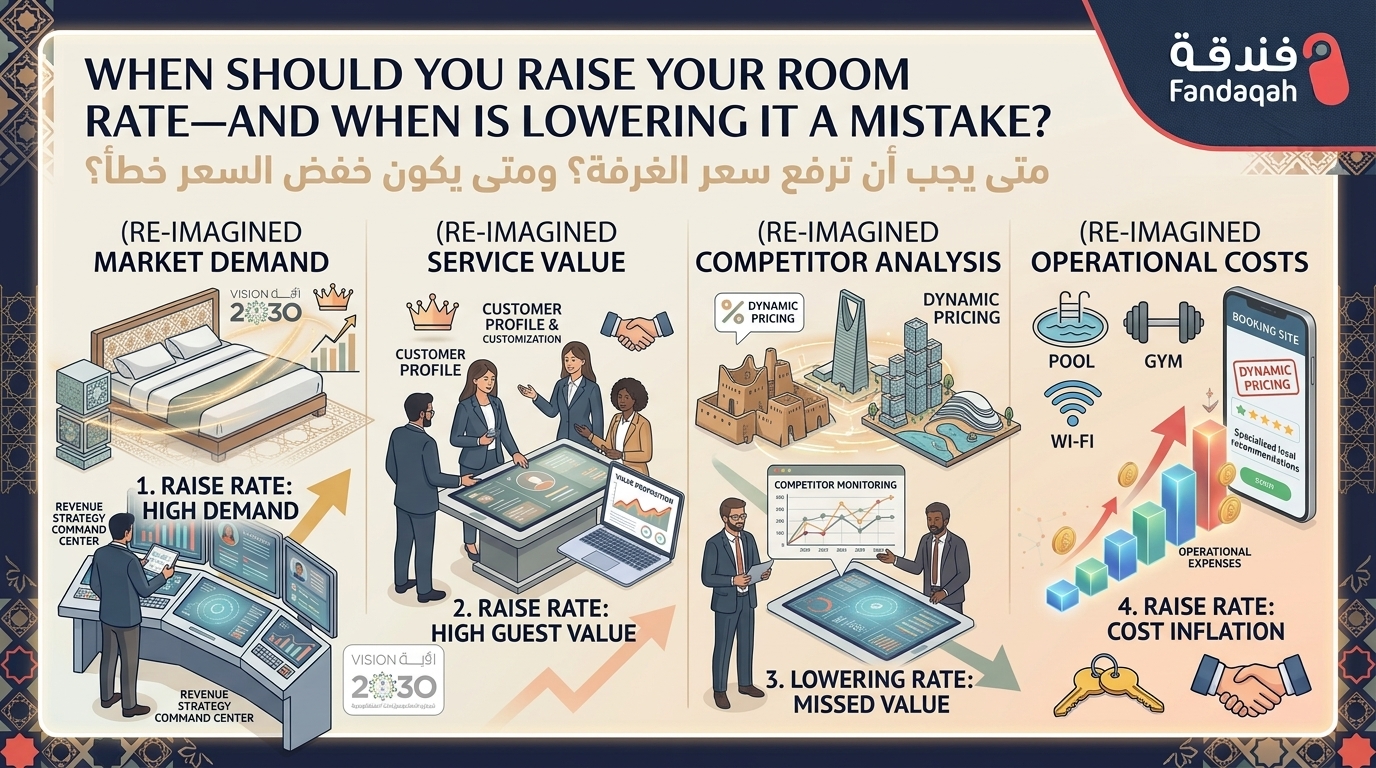
4. Implement Dynamic Pricing for Off-Peak Periods
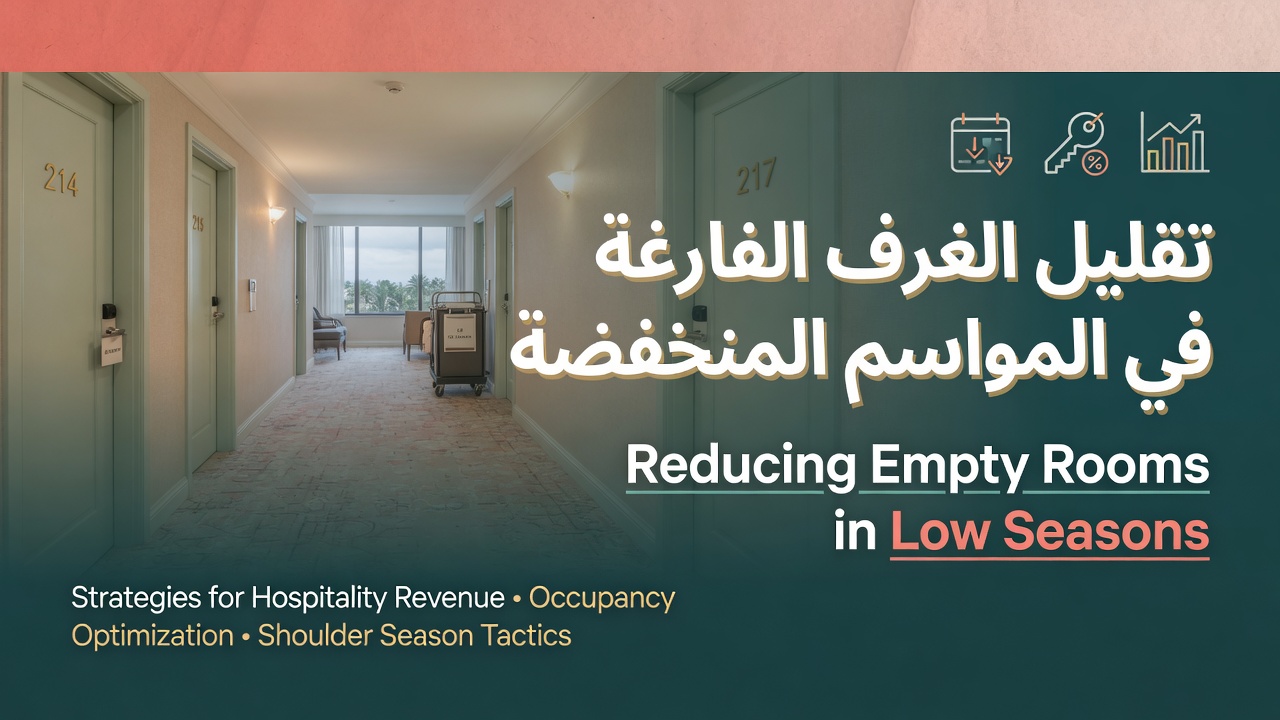
Rather than accepting empty rooms during slow months, adopt dynamic pricing strategies to attract domestic tourists, weekend getaways from GCC neighbors, and corporate training groups. A room sold at 40% of peak ADR still contributes to covering fixed costs and improves overall hotel revenue management. The key is ensuring that variable costs (cleaning, amenities, utilities per occupied room) are covered, so every additional booking adds positive cash flow.
5. Create a Dedicated Cash Reserve Fund
As highlighted earlier, this cannot be overstated. Open a separate bank account and automate a transfer of 7–10% of all gross revenue during peak months. This fund should be treated as untouchable except for covering operating costs during the lowest-revenue months. For a small hotel generating SAR 200,000 monthly during peak season, this translates to SAR 14,000–20,000 set aside each month — building a meaningful buffer within a single season.
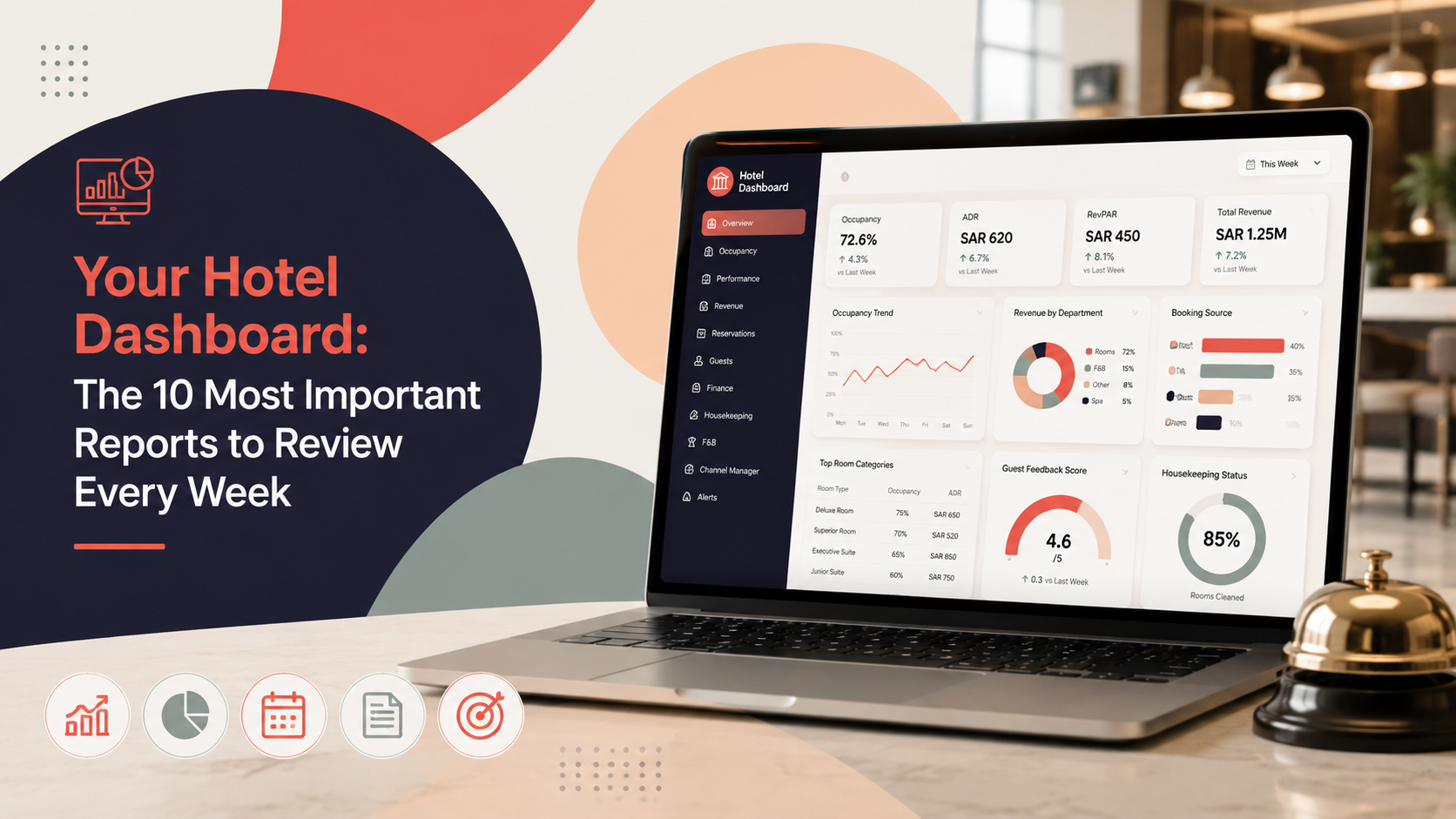
6. Monitor Key Cash Flow Metrics Weekly
You cannot manage what you do not measure. Track these hospitality accounting metrics religiously:
- Days Cash on Hand (DCOH) — how many days you can operate with current cash reserves
- Operating Cash Flow Ratio — operating cash flow divided by current liabilities
- RevPAR (Revenue Per Available Room) — a standard hospitality KPI that ties occupancy and rate together
- Accounts Receivable Aging — especially critical for corporate and government clients
- Cost Per Occupied Room (CPOR) — helps identify operational inefficiencies
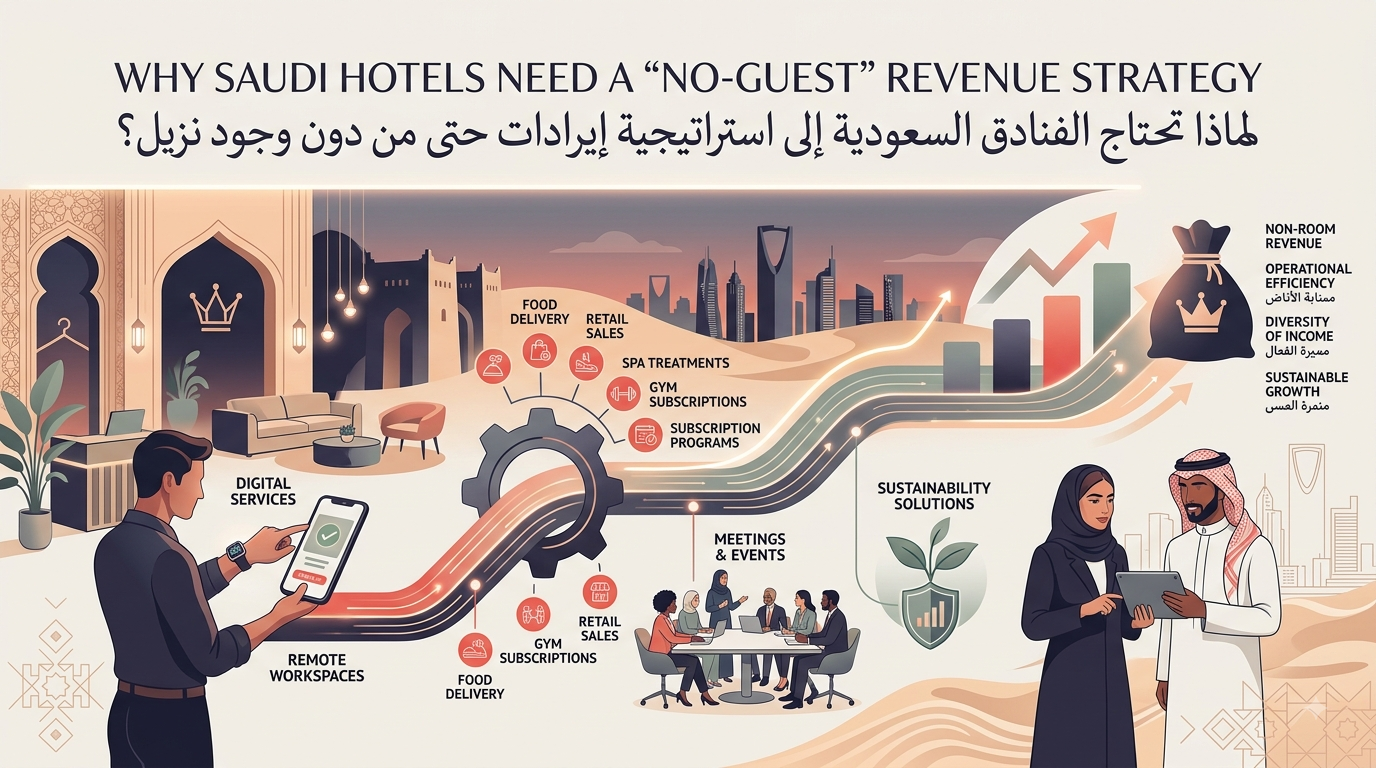
7. Diversify Revenue Streams Beyond Room Nights
Over-reliance on room revenue makes your cash flow vulnerable to occupancy dips. Explore ancillary income sources: partner with local tour operators for desert excursions or heritage tours, offer co-working day passes (a growing trend in Riyadh and Jeddah), host small corporate workshops, or rent underutilized spaces for pop-up retail or art exhibitions. These diversified streams smooth out seasonal revenue management for hotels in KSA and build community engagement.
Vision 2030 and the Future of Hotel Cash Flow in Saudi Arabia
Saudi Arabia's Vision 2030 is not just a national transformation plan — it is fundamentally reshaping the hospitality landscape. With targets to attract 150 million annual visits by 2030, massive investments in NEOM, the Red Sea Project, Diriyah Gate, and AlUla are creating ripple effects that benefit small hotels across the Kingdom. But what does this mean for cash flow management for small hotels in Saudi Arabia?
- Increased year-round demand: As Saudi Arabia diversifies beyond religious tourism, leisure and business travel will fill traditional off-peak gaps, reducing cash flow volatility.
- Government support programs: The Tourism Development Fund and SME support initiatives offer financing and guarantees that can ease working capital constraints for small hoteliers.
- Digital payment acceleration: The push toward a cashless economy means faster settlement of guest payments and reduced receivables delays.
- Data-driven decision-making: Access to tourism analytics and forecasting tools will improve the accuracy of small hotel budgeting and cash flow projections.
- Increased competition: More hotels entering the market means pricing pressure — making efficient cash flow management a competitive necessity, not a luxury.
Small hotel owners who align their financial practices with the Vision 2030 hotel business opportunities will find themselves better positioned to capture grants, attract investors, and scale operations. The key is treating cash flow management not as a back-office chore but as a strategic pillar of growth.
QUICK CHECKLIST
✅ Build a 12-month rolling cash flow forecast
✅ Open a dedicated cash reserve account
✅ Negotiate supplier terms to 45+ days
✅ Incentivize direct bookings with prepayment discounts
✅ Track DCOH, RevPAR, and AR aging weekly
✅ Diversify revenue beyond room nights
✅ Stay informed about Vision 2030 tourism grants and financing programs
Traditional vs. Strategic Cash Flow Management: A Comparison
Understanding the difference between reactive and proactive approaches is essential for improving hotel cash flow during off-season periods. The table below illustrates the contrast.
| Aspect |
Traditional Approach |
Strategic Approach |
| Forecasting |
Annual budget, rarely updated |
Rolling 12-month forecast, updated monthly |
| Cash Reserves |
Ad-hoc, whatever remains |
Structured, 7–10% of revenue auto-transferred |
| Supplier Payments |
Standard 30-day terms |
Negotiated 45–60 day cycles |
| Revenue Mix |
90%+ room-dependent |
Diversified: F&B, events, co-working, tours |
| Off-Peak Strategy |
Accept low occupancy |
Dynamic pricing, domestic market targeting |
| Financial Monitoring |
Monthly bank balance check |
Weekly KPI dashboard review |
Table: Shifting from reactive to strategic cash flow management yields measurable stability improvements within 6–12 months.
Real-World Use Cases: Saudi Hotel Cash Flow Scenarios
To ground these concepts in reality, consider three typical scenarios faced by small hotel owners across the Kingdom — and how strategic cash flow management for small hotels in Saudi Arabia addresses each.
Scenario A: The Jeddah Boutique Hotel Near the Airport
Challenge: Strong occupancy during Hajj and Umrah seasons, but occupancy drops below 25% in January–February and August–September. The owner struggles to retain skilled staff year-round because payroll pressure during lean months forces layoffs, which then creates rehiring and training costs each peak season.
Solution: By building a cash reserve fund during the Hajj windfall months and negotiating extended supplier payment terms, the hotel can maintain a core team year-round. During off-peak months, the hotel partners with local businesses to host small conferences and training sessions, generating a steady base of weekday revenue that covers fixed costs.
Scenario B: The Heritage Inn in AlUla
Challenge: High season aligns with winter cultural festivals and events, generating excellent revenue from November to March. However, summer months see almost zero tourist traffic. The property has high fixed maintenance costs due to the age and heritage nature of the building.
Solution: The owner implements a strict 10% revenue auto-transfer into a reserve account. During peak months, SAR 50,000–80,000 accumulates in the fund. This covers summer operating costs entirely. Additionally, the property offers discounted long-stay packages (2–4 weeks) for remote workers and creatives seeking a quiet desert retreat, generating incremental off-season cash flow.
Scenario C: The Family-Run Hotel in Abha
Challenge: Strong summer demand from domestic tourists escaping the heat, but winter months are unpredictable. The hotel relies heavily on walk-in bookings and has no direct online booking system, leaving it dependent on OTAs with high commission rates.
Solution: The owner invests in a simple, mobile-optimized direct booking website with an Arabic-first interface. By offering a 7% discount for direct prepaid bookings, the hotel shifts 30% of its bookings away from OTAs within six months, saving on commissions and accelerating cash inflows. The improved cash position allows for winter marketing campaigns targeting GCC weekend travelers.
Frequently Asked Questions About Hotel Cash Flow in Saudi Arabia
Q: How much cash reserve should a small hotel in Saudi Arabia maintain?
Ideally, maintain enough reserves to cover 2–3 full months of operating expenses, including payroll, utilities, and essential supplies. For a small hotel with monthly operating costs of SAR 80,000, aim for a reserve fund of SAR 160,000–240,000. Build this gradually by setting aside 7–10% of peak-season revenue.
Q: What are the biggest cash flow mistakes small hotel owners make in the Kingdom?
The three most common mistakes: (1) treating peak-season profit as disposable income rather than building reserves, (2) failing to track OTA commission deductions and their impact on net cash received, and (3) not negotiating payment terms with suppliers, leading to misaligned cash outflows and inflows.
Q: How does Saudization affect hotel cash flow?
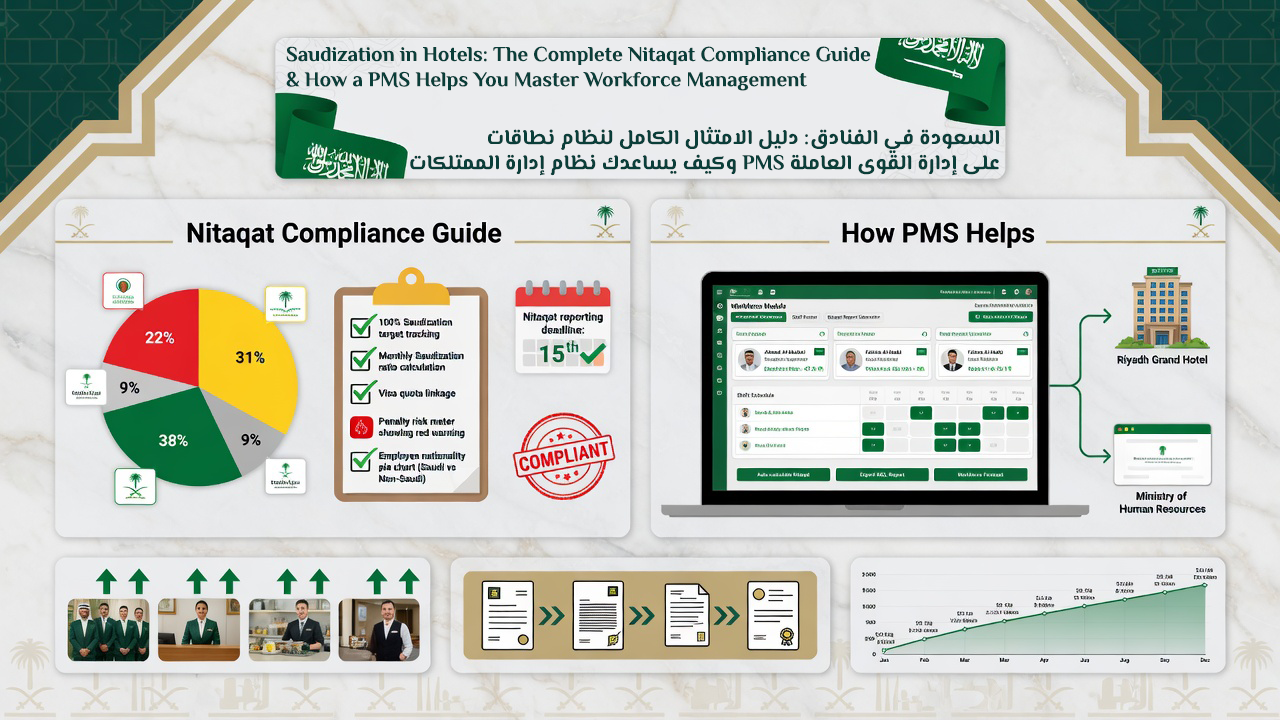
Saudization (Nitaqat) requirements increase fixed payroll costs, as Saudi employees typically command higher salaries and benefits than expatriate workers. This makes small hotel expense tracking in Saudi Arabia even more critical. Factor these costs into your cash flow forecast and explore government subsidies and training support programs that can offset some expenses.
Q: Can small hotels access financing to manage cash flow gaps?
Yes. The Tourism Development Fund (TDF) and various Saudi banks offer SME lending products tailored to hospitality businesses. Additionally, the Kafalah program provides loan guarantees that can improve your access to working capital financing. Always compare terms and ensure that any financing costs are justified by the cash flow benefit.
Q: How can I improve cash flow during the low season without slashing rates too deeply?
Instead of blanket discounting, offer value-added packages — include breakfast, a local experience, or a late checkout — that maintain your ADR while increasing perceived value. Target niche segments like remote workers, corporate training groups, and GCC weekend travelers who are less price-sensitive and more interested in unique experiences.
Q: What role do digital payment solutions play in hotel cash flow?
Digital payment gateways — such as STC Pay, Apple Pay, and online bank transfers — accelerate guest payment collection and reduce the administrative burden of cash handling. For direct bookings, integrating a payment gateway that settles within 1–3 business days significantly improves hospitality cash flow compared to waiting for OTA remittance cycles, which can take 30 days or more.
Q: Should I hire a professional accountant or manage hotel finances myself?
For properties with more than 10 rooms or annual revenue exceeding SAR 500,000, a professional hospitality accountant — even on a part-time basis — can pay for themselves through improved cash flow management, tax optimization (including VAT compliance), and financial reporting that supports better decision-making. The complexity of hospitality accounting warrants specialized expertise.
Conclusion: Cash Flow Is the Lifeline of Your Hotel Business
In the dynamic and rapidly evolving Saudi hospitality market, cash flow management for small hotels in Saudi Arabia is not a periodic task — it is a daily discipline. From the seasonal rhythms of Hajj and Riyadh Season to the transformative ambitions of Vision 2030, hotel owners who treat cash flow as a strategic priority will not only survive the lean months but thrive across the entire year. The principles are clear: forecast diligently, reserve aggressively, negotiate supplier terms, diversify revenue, and monitor key metrics without fail.
The Saudi hospitality industry is entering a golden era, with unprecedented government support, surging tourist arrivals, and a growing domestic appetite for unique, localized experiences. Small hotels — with their authenticity, personalized service, and deep community roots — are perfectly positioned to capture this demand. But only those with disciplined hotel financial management will have the staying power to enjoy the full benefits of the Kingdom's tourism boom.
Take the first step today: open that separate cash reserve account, build your 12-month rolling forecast, and commit to weekly financial reviews. Your future self — and your hotel — will thank you.
Ready to Strengthen Your Hotel's Financial Foundation?
Download our free "Saudi Hotel Cash Flow Planner" template — a practical, easy-to-use spreadsheet designed specifically for small and boutique properties in the Kingdom.
Get the Free Planner Now →
No spam. Just practical tools for Saudi hoteliers.
Tags:
cash flow management for small hotels in Saudi Arabia, hotel financial management, hospitality cash flow, small hotel budgeting, Saudi hospitality industry, hotel revenue management, seasonal cash flow, hotel operating expenses, hospitality accounting, tourism cash flow KSA, hotel profit optimization, Vision 2030 hotel business opportunities, improving hotel cash flow during off-season, cash flow challenges for boutique hotels in Saudi Arabia, best practices for hotel financial planning Saudi Arabia, seasonal revenue management for hotels in KSA, small hotel expense tracking in Saudi Arabia, how to manage cash flow in small hotels