Published on April 27, 2026 | Reading time: 14 minutes | Hospitality & Technology Insights
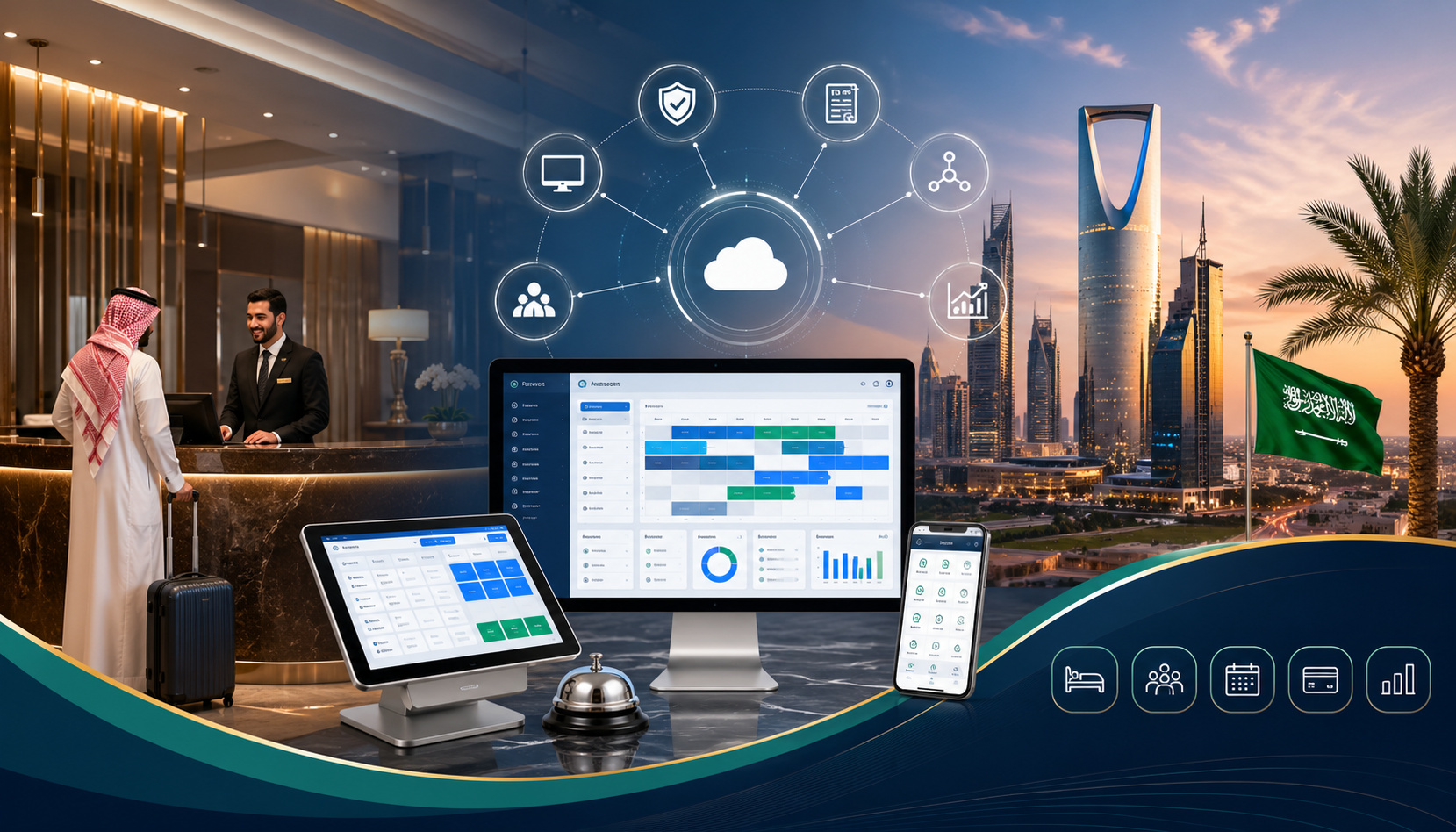
The Kingdom of Saudi Arabia is undergoing one of the most ambitious hospitality expansions in modern history. With Vision 2030 targeting 150 million annual visits and over 310,000 new hotel keys by 2030, hotel groups are rapidly scaling their portfolios across Riyadh, Jeddah, the Red Sea coastline, NEOM, and the holy cities of Makkah and Madinah. Yet, with this explosive growth comes a critical operational challenge: how do hotel groups centralize operations and reporting across multiple properties without losing local agility, guest satisfaction, or financial control?
This in-depth guide explores multi-property hotel management in Saudi Arabia — the strategies, technologies, cultural considerations, and future-ready frameworks that enable hotel groups to streamline operations, unify reporting, and drive profitability across diverse property portfolios. Whether you manage three boutique hotels or thirty full-service resorts, this article delivers actionable insights tailored to the Saudi market.
Did You Know?
Saudi Arabia's hotel supply is projected to grow by 67% between 2024 and 2030, making centralized multi-property management systems not just advantageous — but essential for survival in the Kingdom's competitive hospitality landscape.
1. What Is Multi-Property Hotel Management?
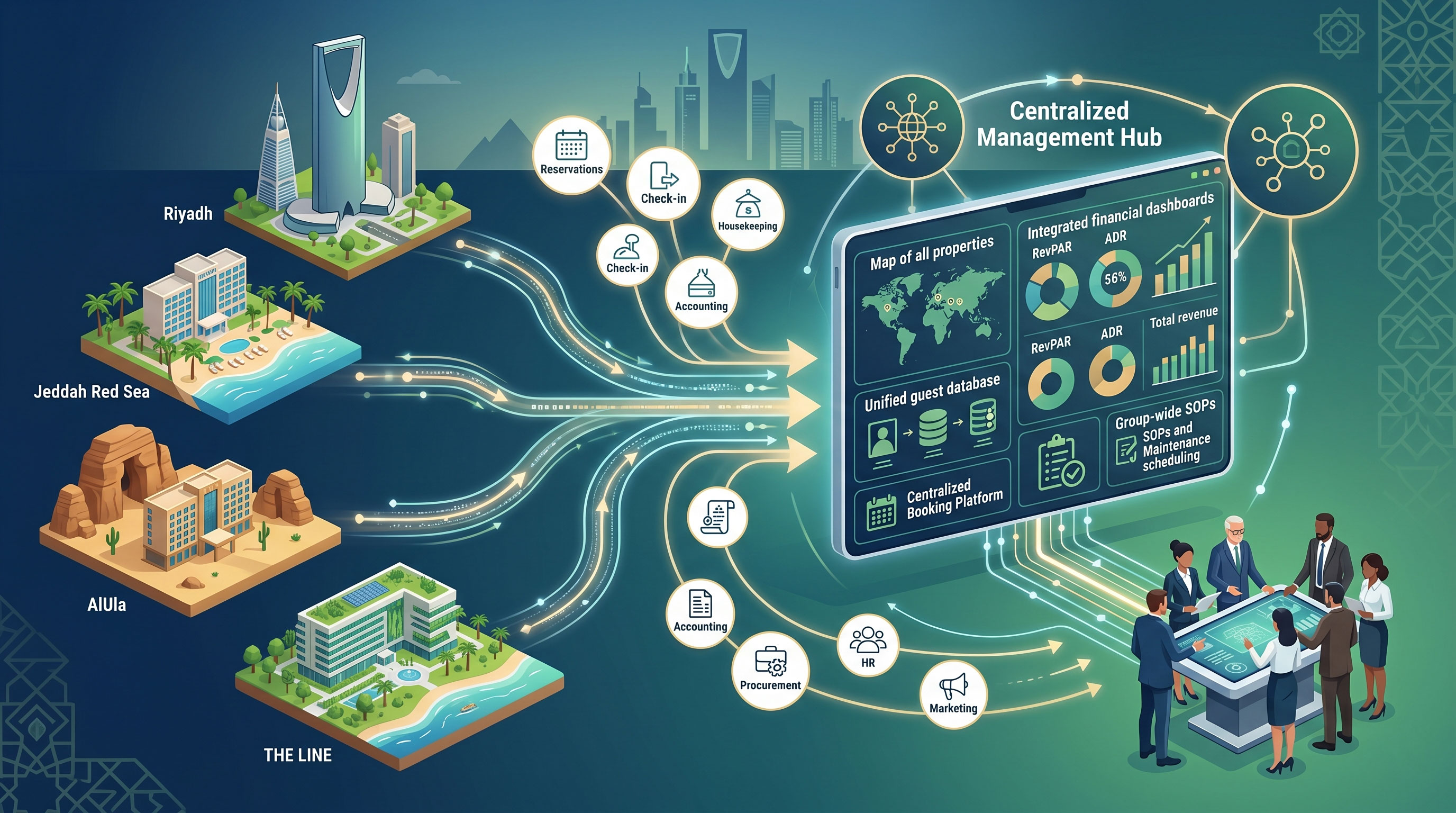
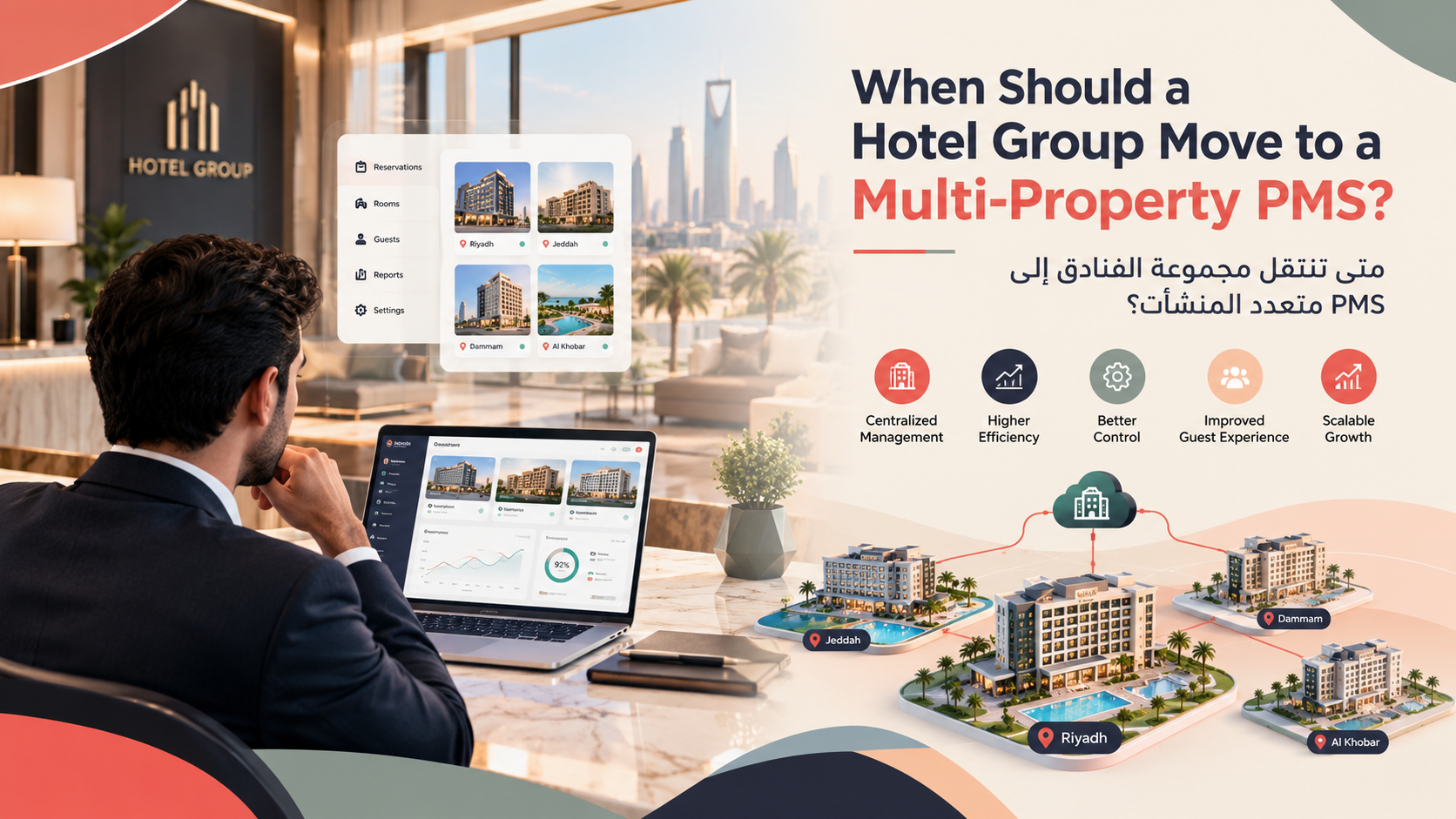
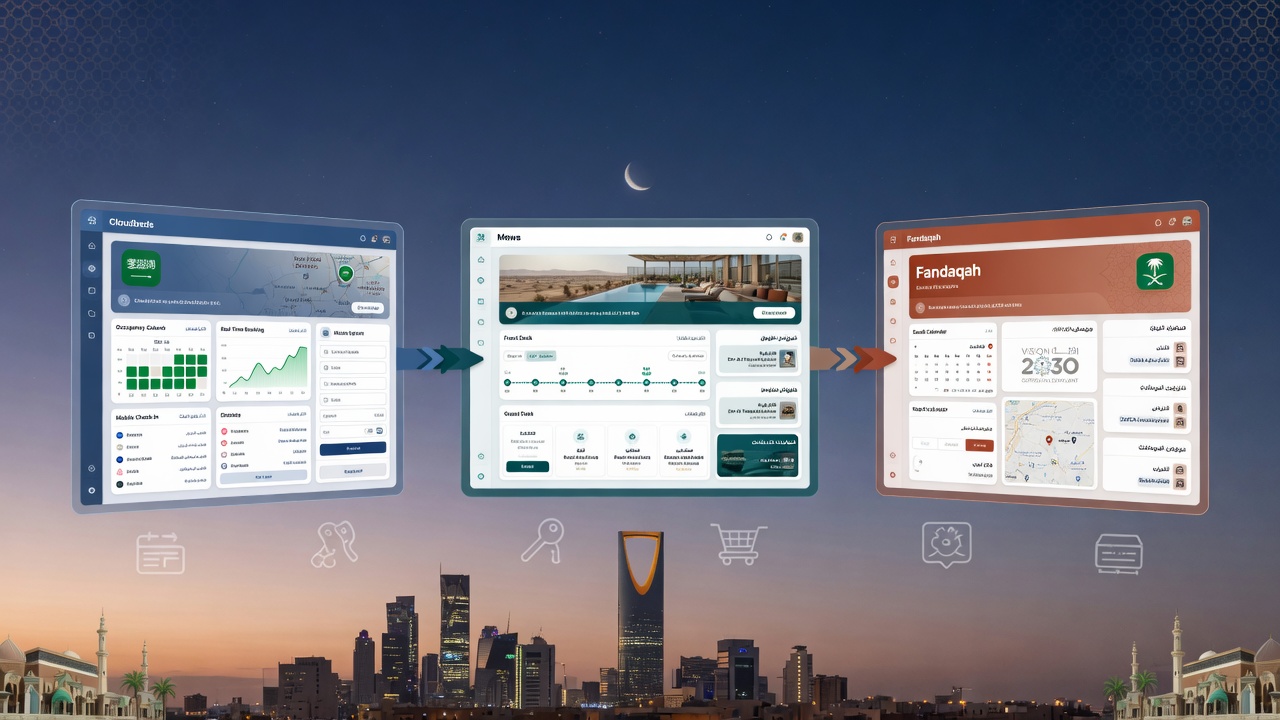
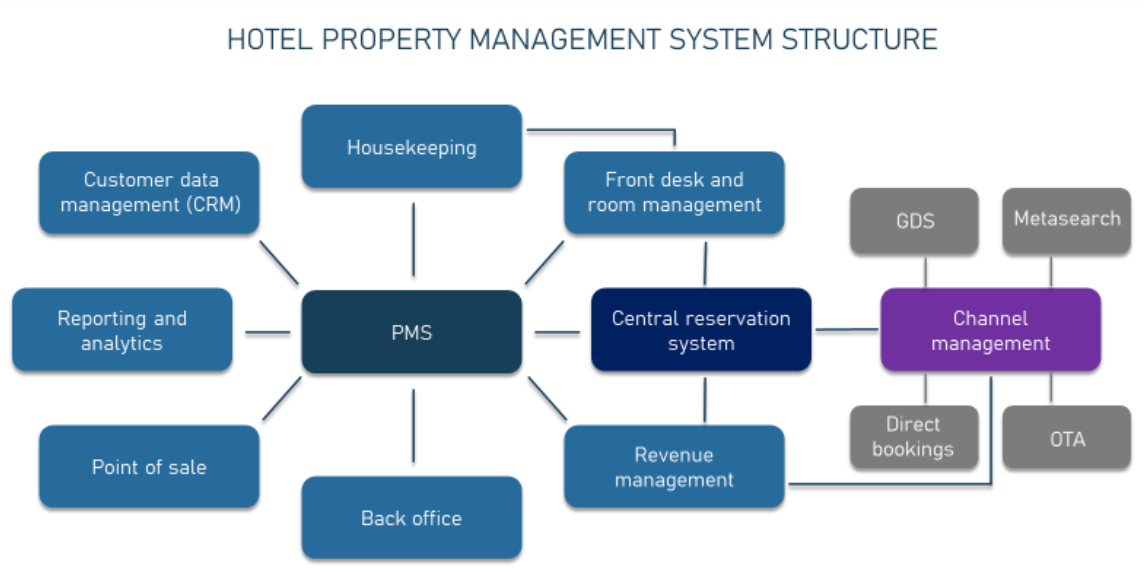
At its core, multi-property hotel management refers to the centralized oversight, coordination, and optimization of two or more hotel properties under a single ownership group, management company, or brand umbrella. This goes far beyond simply owning multiple hotels. It encompasses unified financial reporting, centralized procurement, shared revenue management, consolidated HR systems, and integrated guest data platforms that allow hotel groups to operate as cohesive ecosystems rather than isolated units.
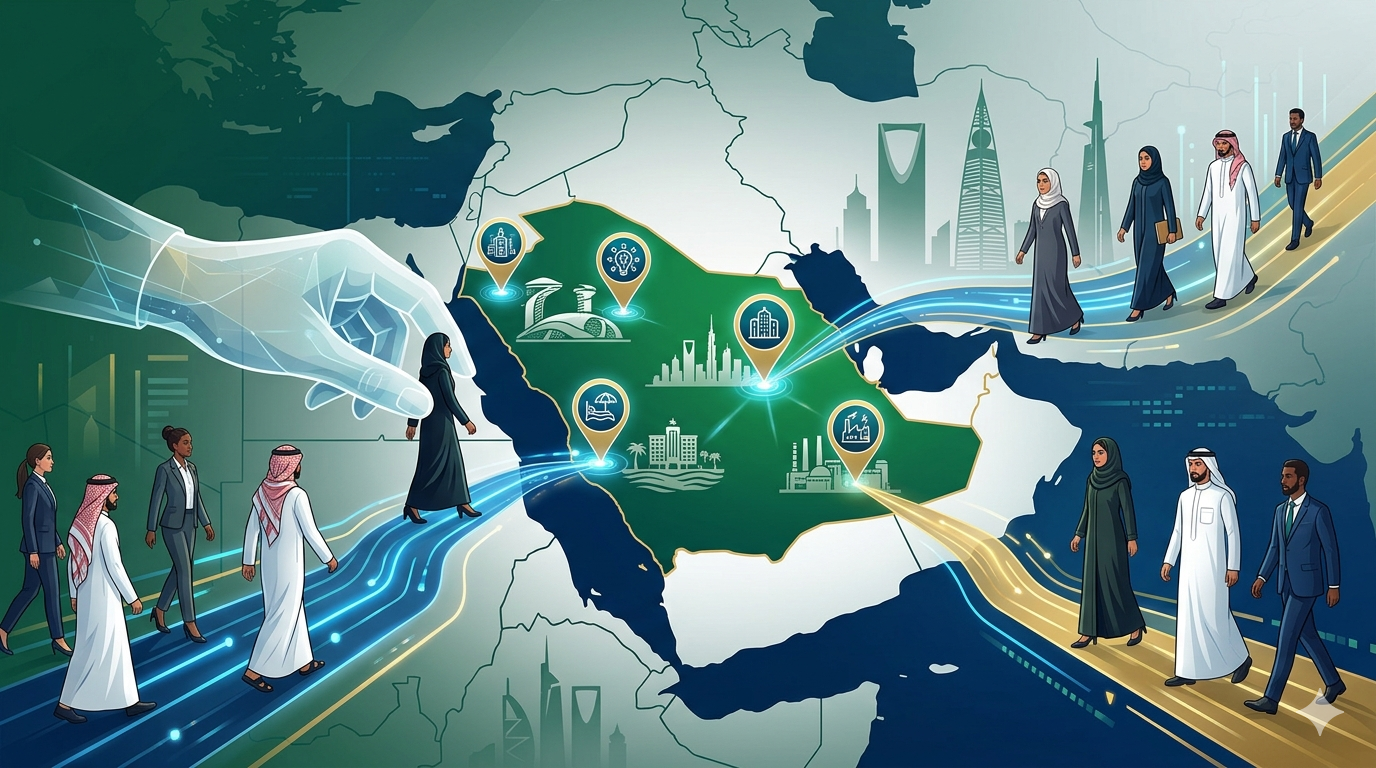
In the Saudi context, multi-property management takes on unique dimensions. Properties may be geographically dispersed — from the futuristic urban landscapes of NEOM to the heritage-rich corridors of AlUla and the coastal luxury of the Red Sea Global project. Each location carries distinct guest profiles, regulatory environments, and seasonal demand patterns. A centralized approach must therefore balance standardization with localization — a theme we will explore throughout this article.
???? Key Insight: Centralization is not about eliminating property-level autonomy. The most successful Saudi hotel groups practice "centralized strategy, localized execution" — where brand standards, financial controls, and technology platforms are unified, but day-to-day guest interactions and cultural adaptations remain property-specific.
2. Why Centralization Matters Now in Saudi Arabia
The Saudi hospitality market is not growing in isolation — it is transforming within a broader national economic revolution. Several converging factors make centralized hotel operations and reporting more critical than ever:
-
1
Vision 2030 Mega-Projects: Giga projects like NEOM, the Red Sea Project, Qiddiya, and Diriyah Gate are creating multi-hotel clusters that demand unified management from day one. Operators cannot afford fragmented systems when launching 5–15 properties within a single development zone.
-
2
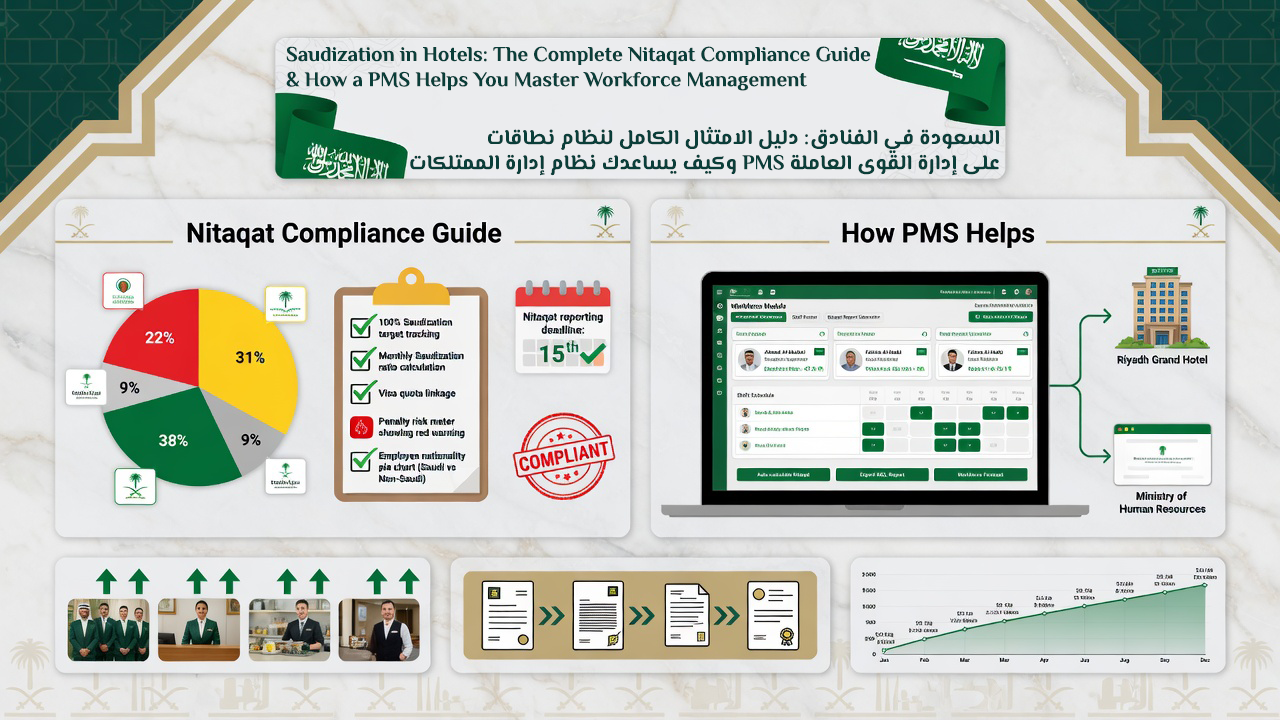
Saudi Talent Development: With Saudization (Nitaqat) policies and the growing emphasis on cultivating local hospitality talent, centralized HR and training platforms enable groups to deploy standardized career development programs while tracking compliance across all properties.
-
3
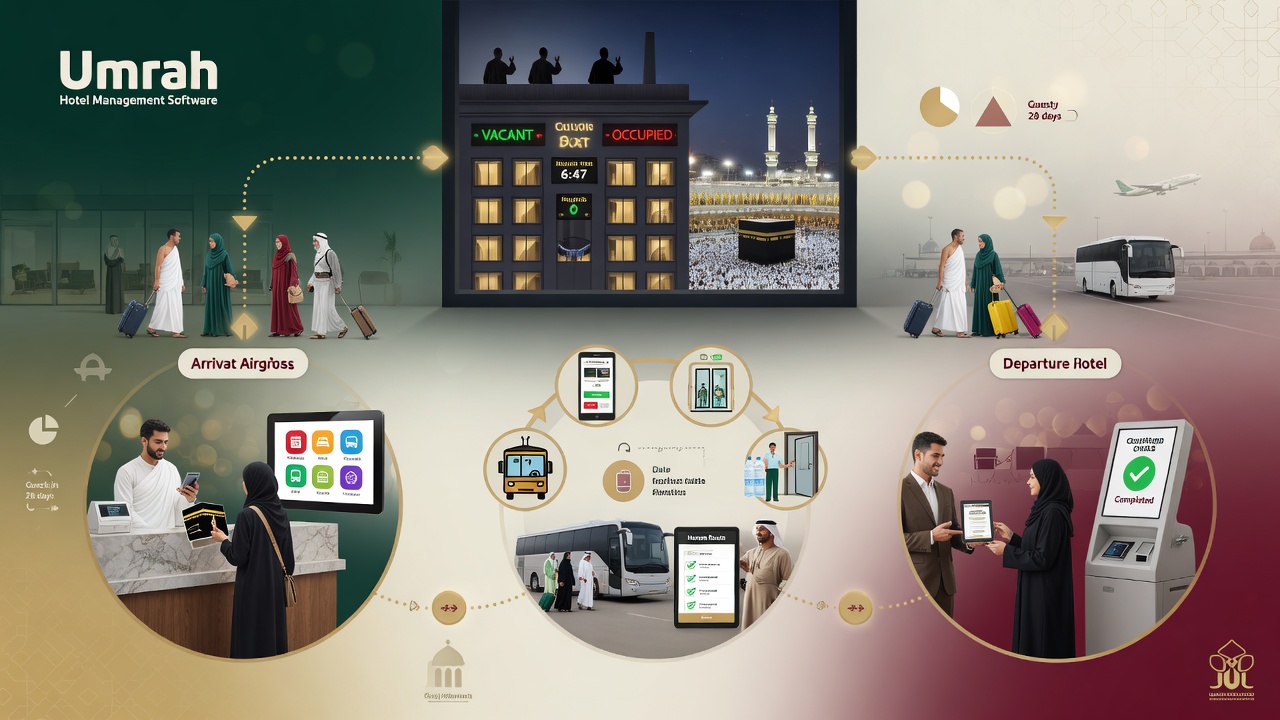
Religious Tourism Scale: Makkah and Madinah witness massive seasonal surges during Hajj and Umrah. Centralized revenue and distribution systems allow groups to dynamically shift inventory, pricing, and staffing across properties in real time during peak pilgrimage periods.
-
4
Investor & Owner Expectations: Institutional investors and REITs increasingly dominate Saudi hotel ownership. They demand consolidated, transparent, and real-time financial reporting — impossible to deliver with siloed property-level systems.
-
5
Guest Experience Continuity: Loyalty programs and personalized guest experiences require a single view of each guest across all properties. Centralized CRM and guest data platforms are no longer optional — they are competitive necessities.
3. Key Pillars of Centralized Multi-Property Operations
Successful multi-property hotel management in Saudi Arabia rests on six operational pillars. Each pillar must be intentionally designed to support centralization while respecting the Kingdom's unique regulatory, cultural, and market dynamics.
3.1 Unified Property Management System (PMS) Architecture
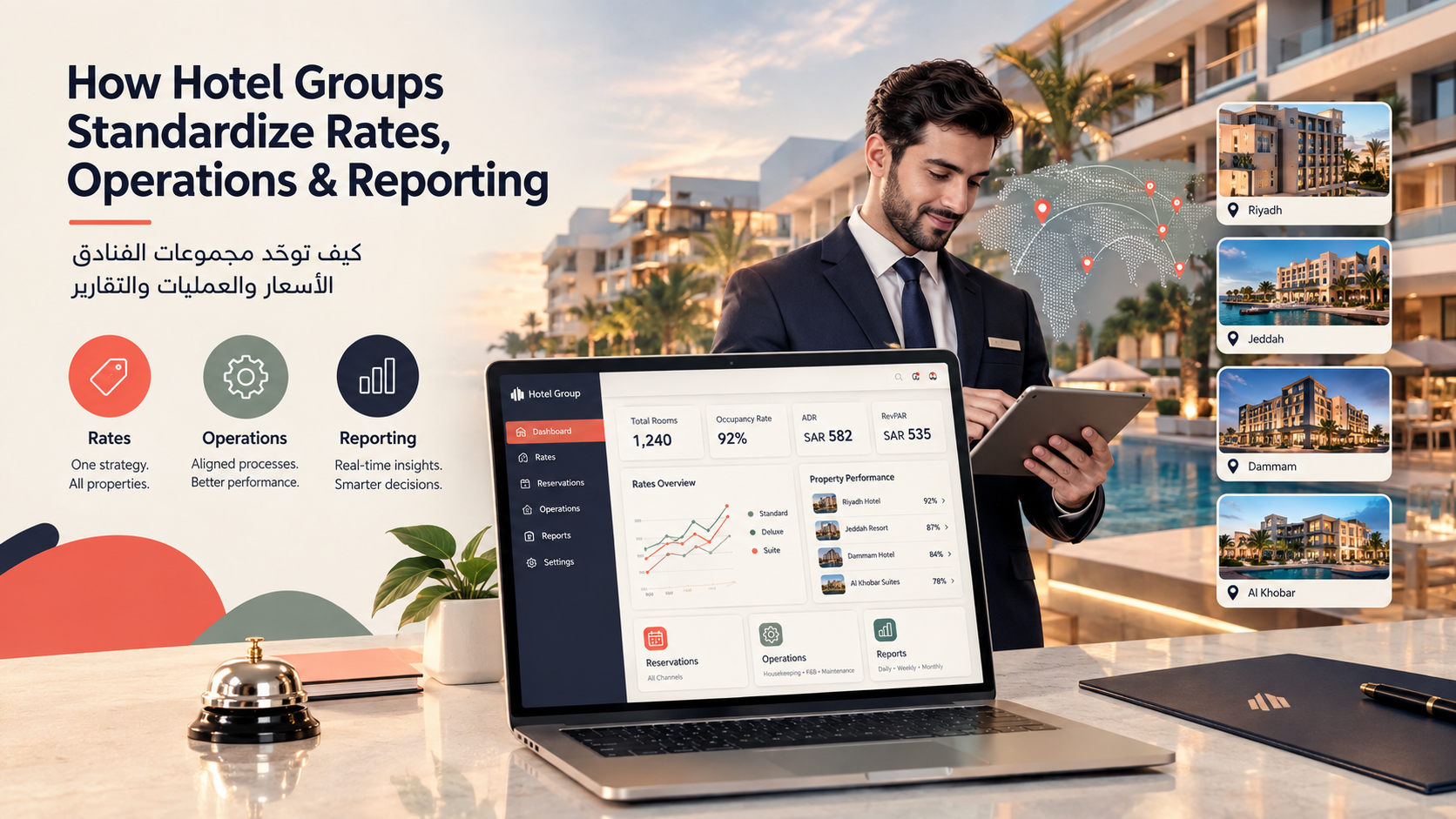
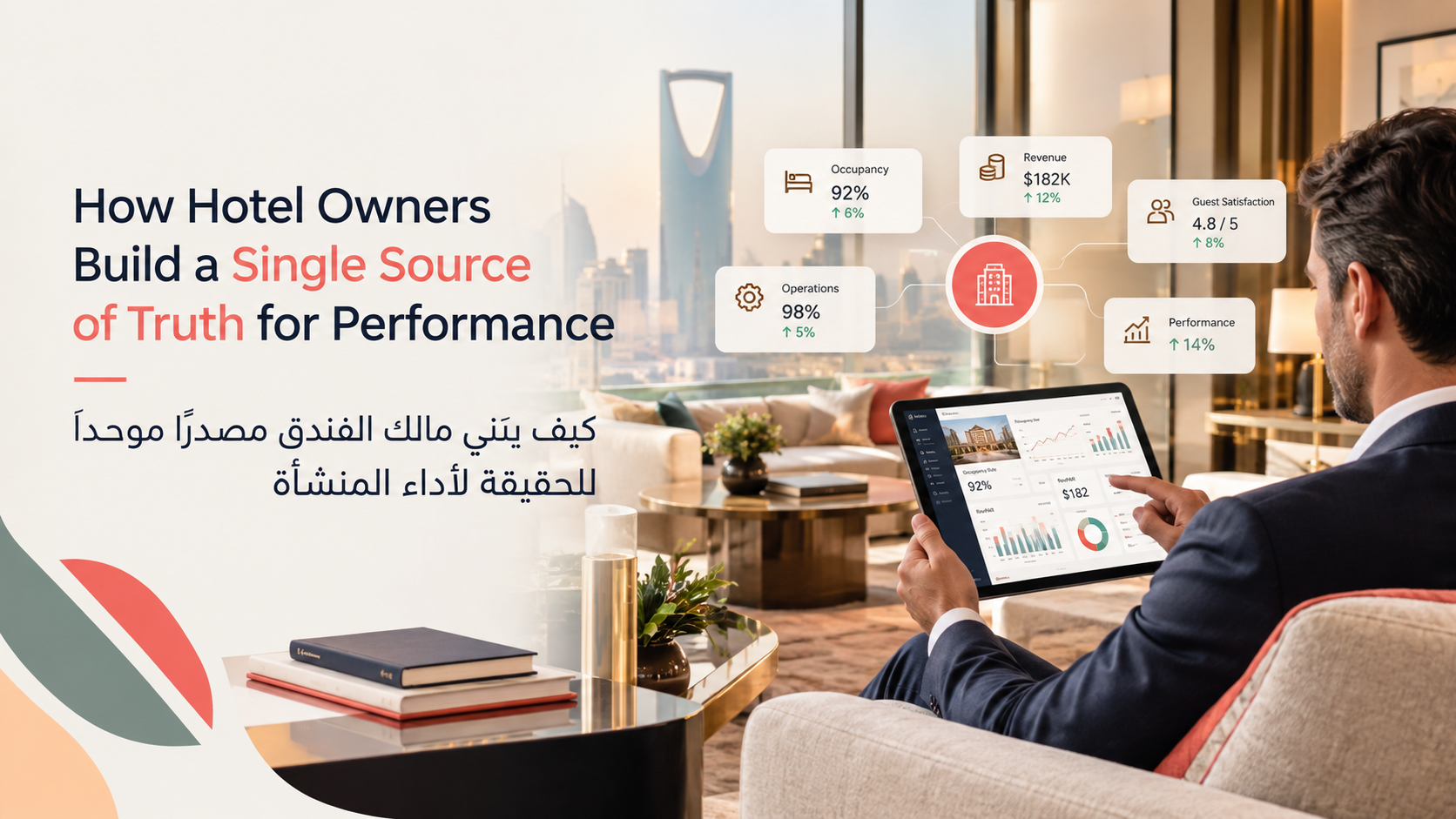
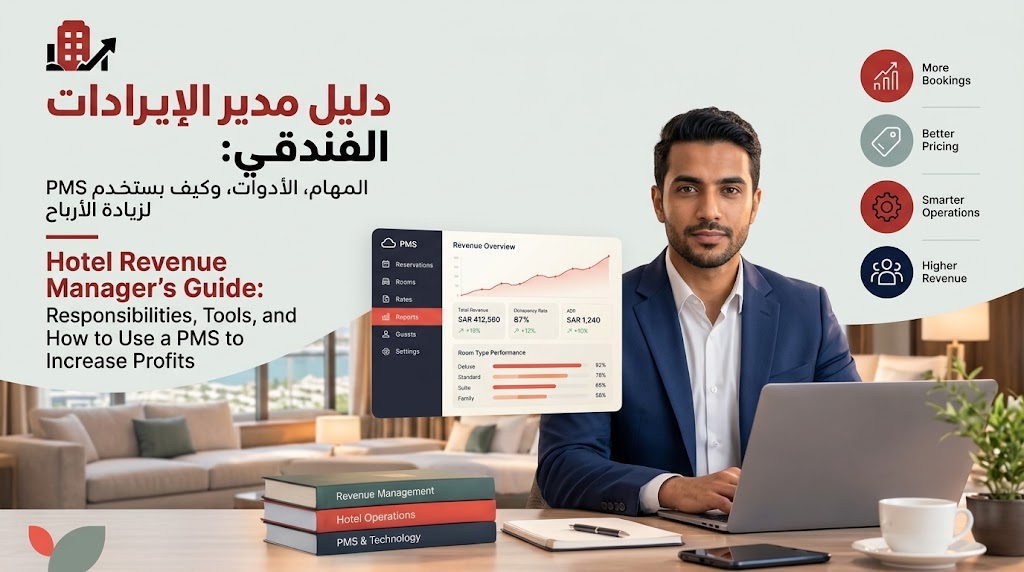
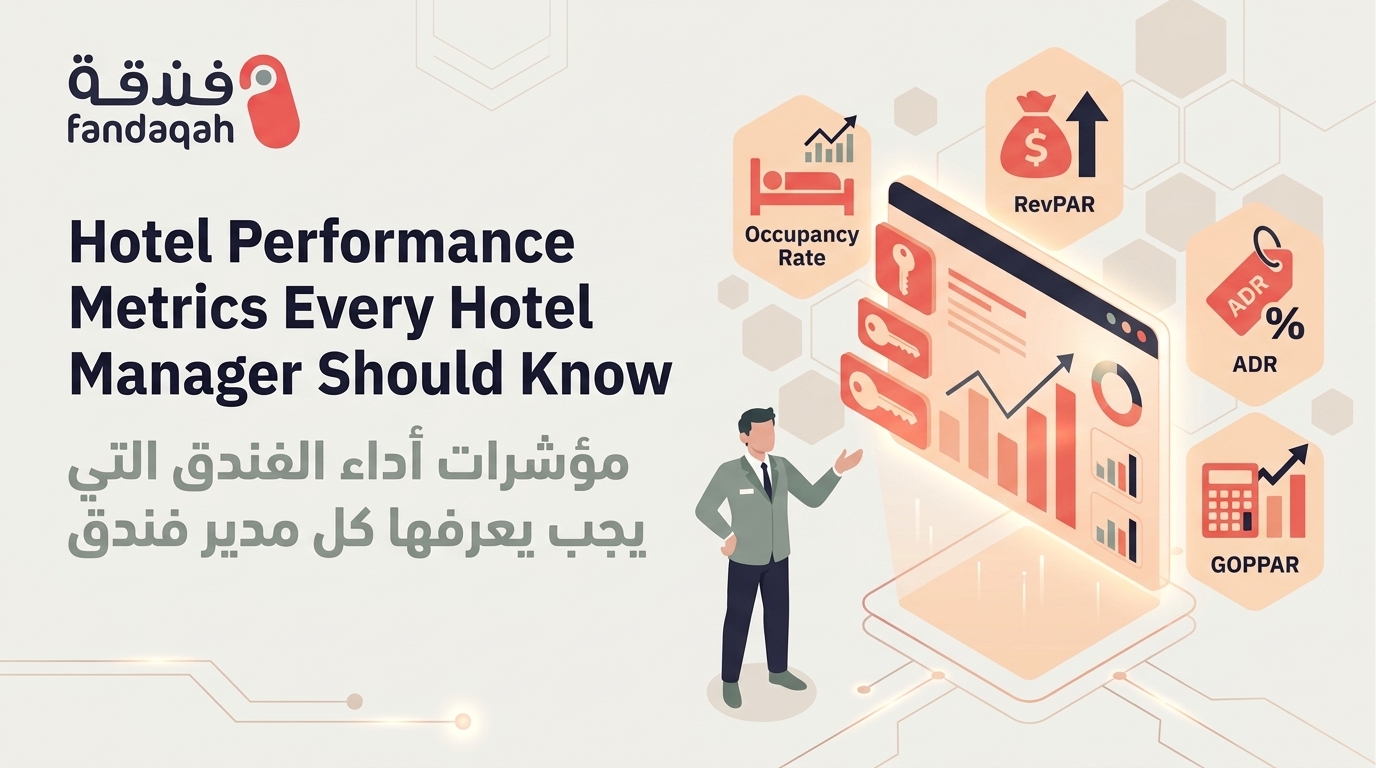
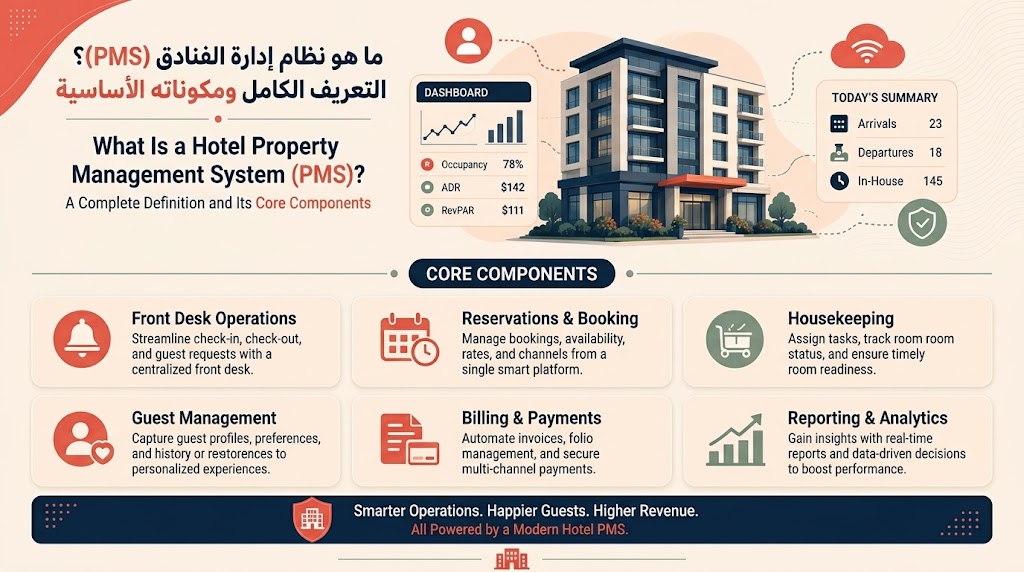
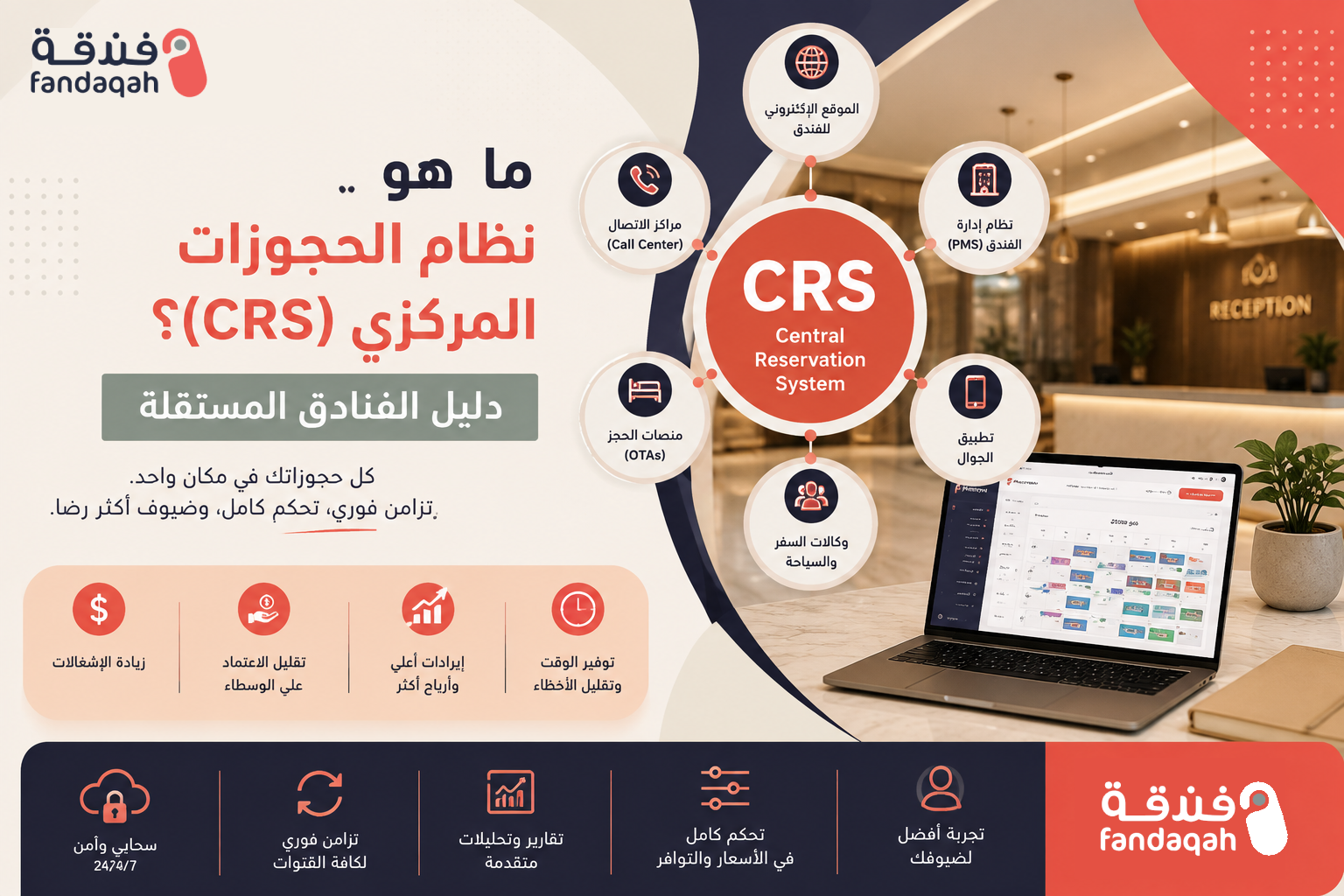
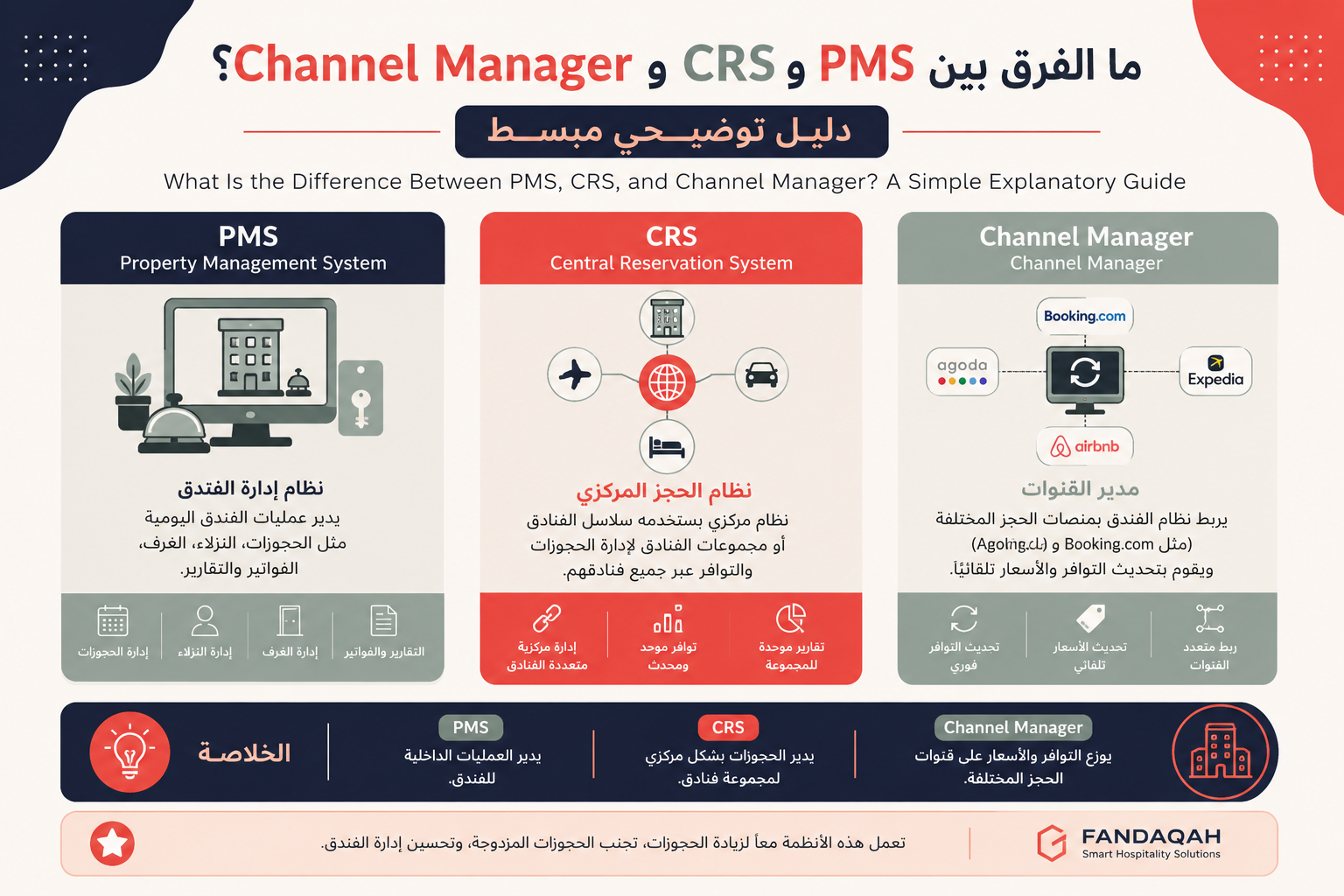
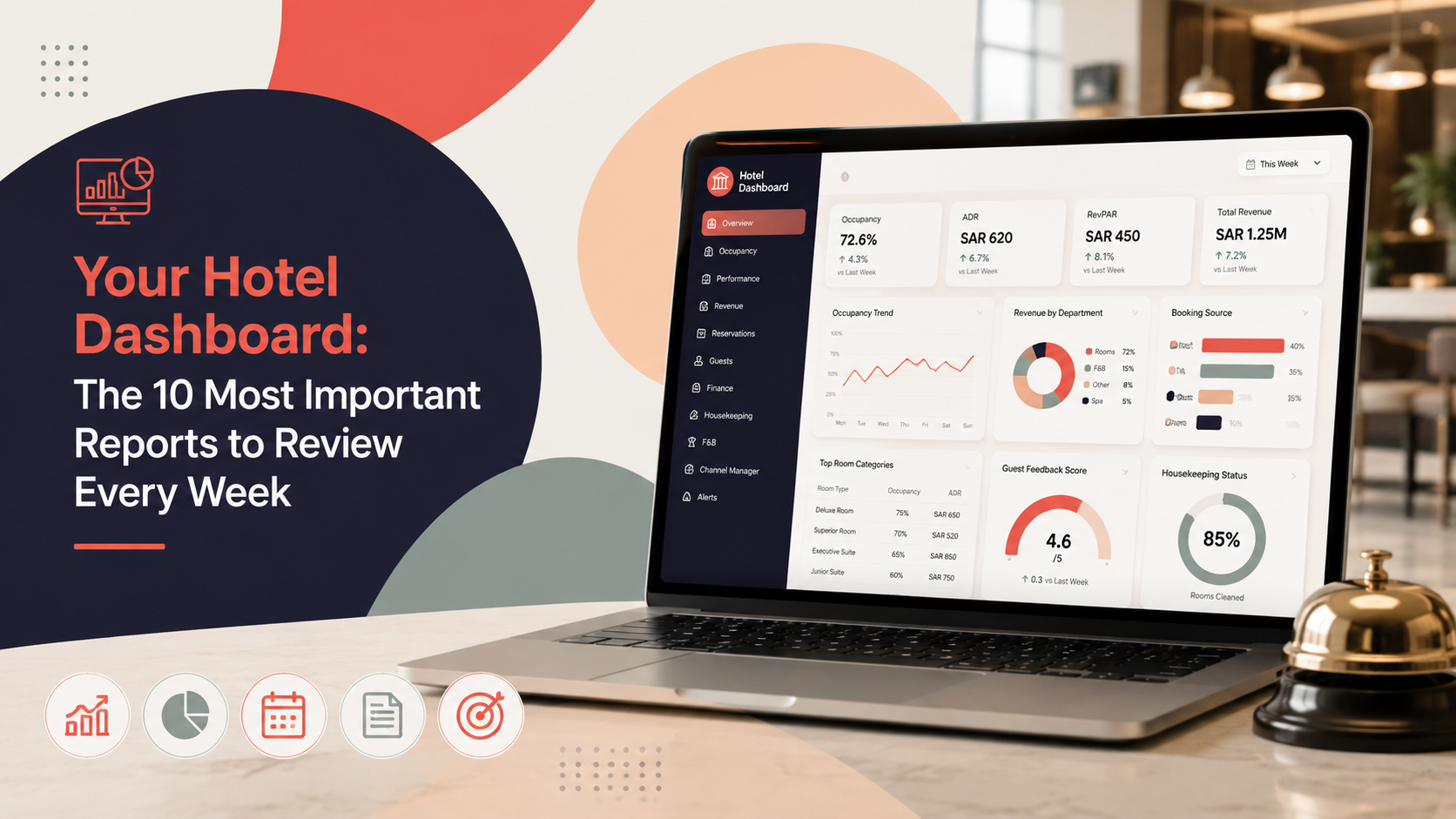
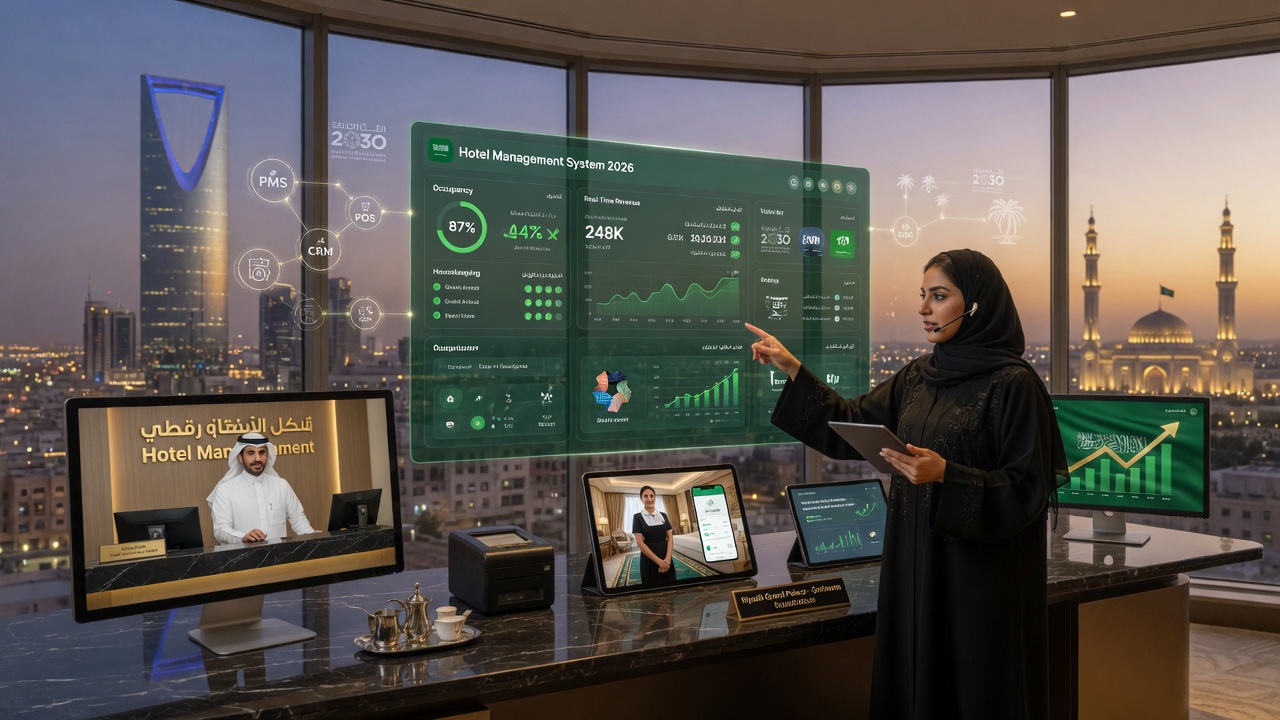
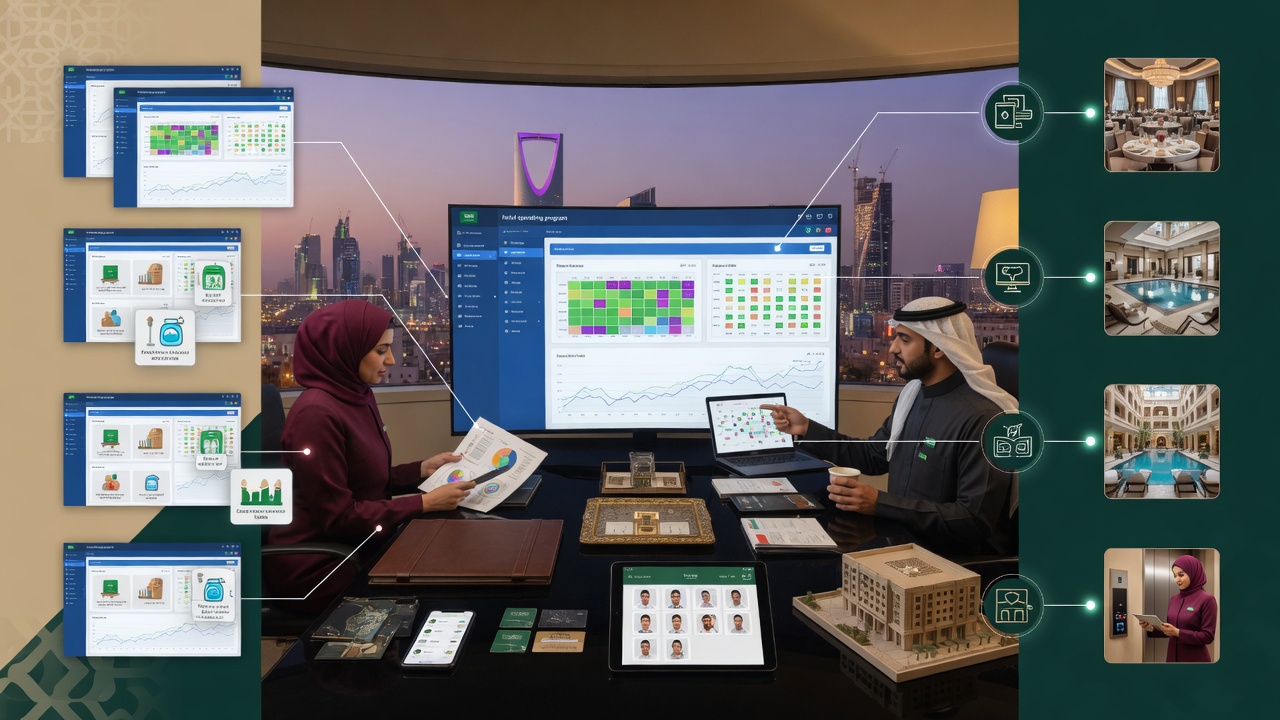
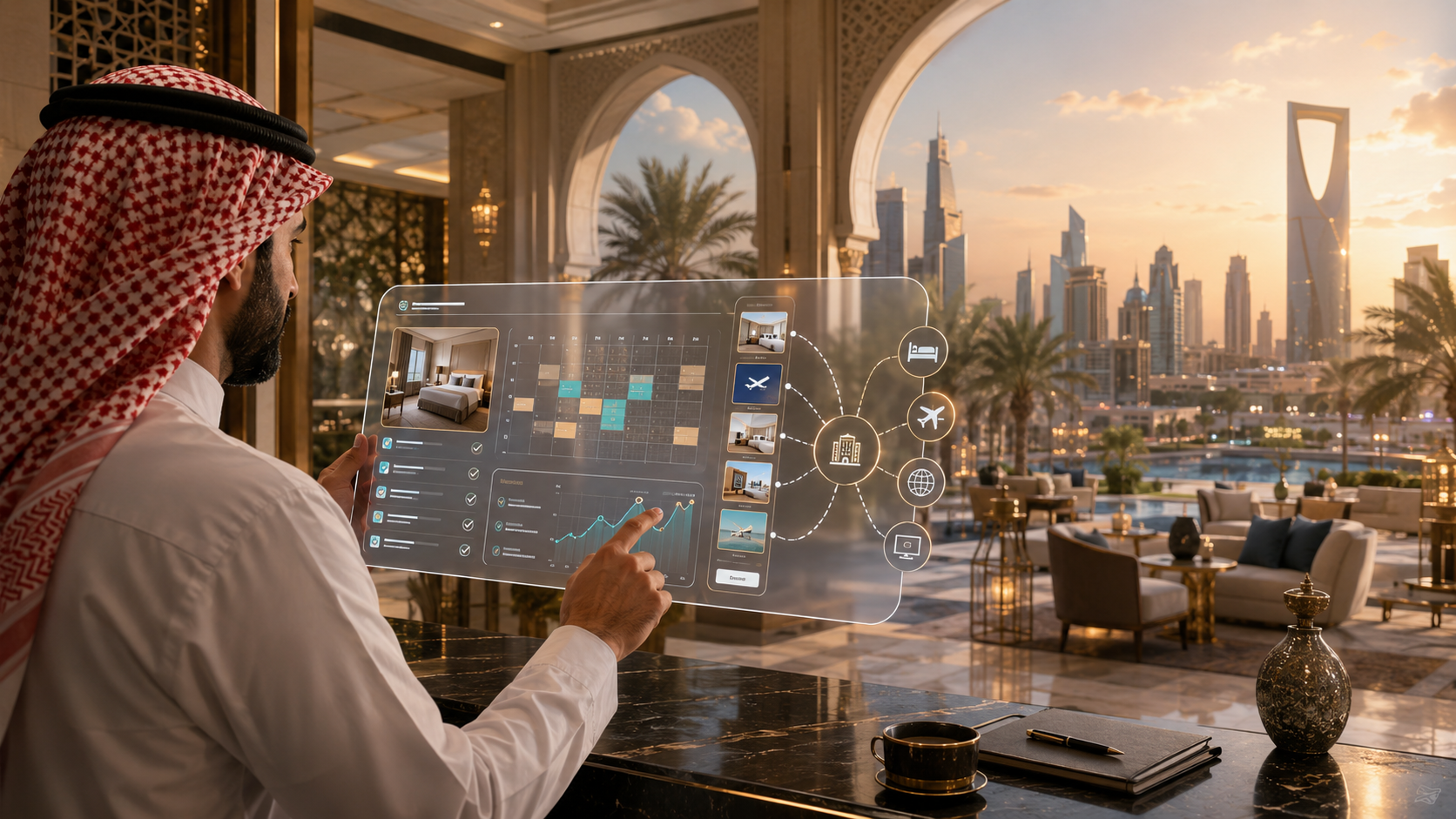
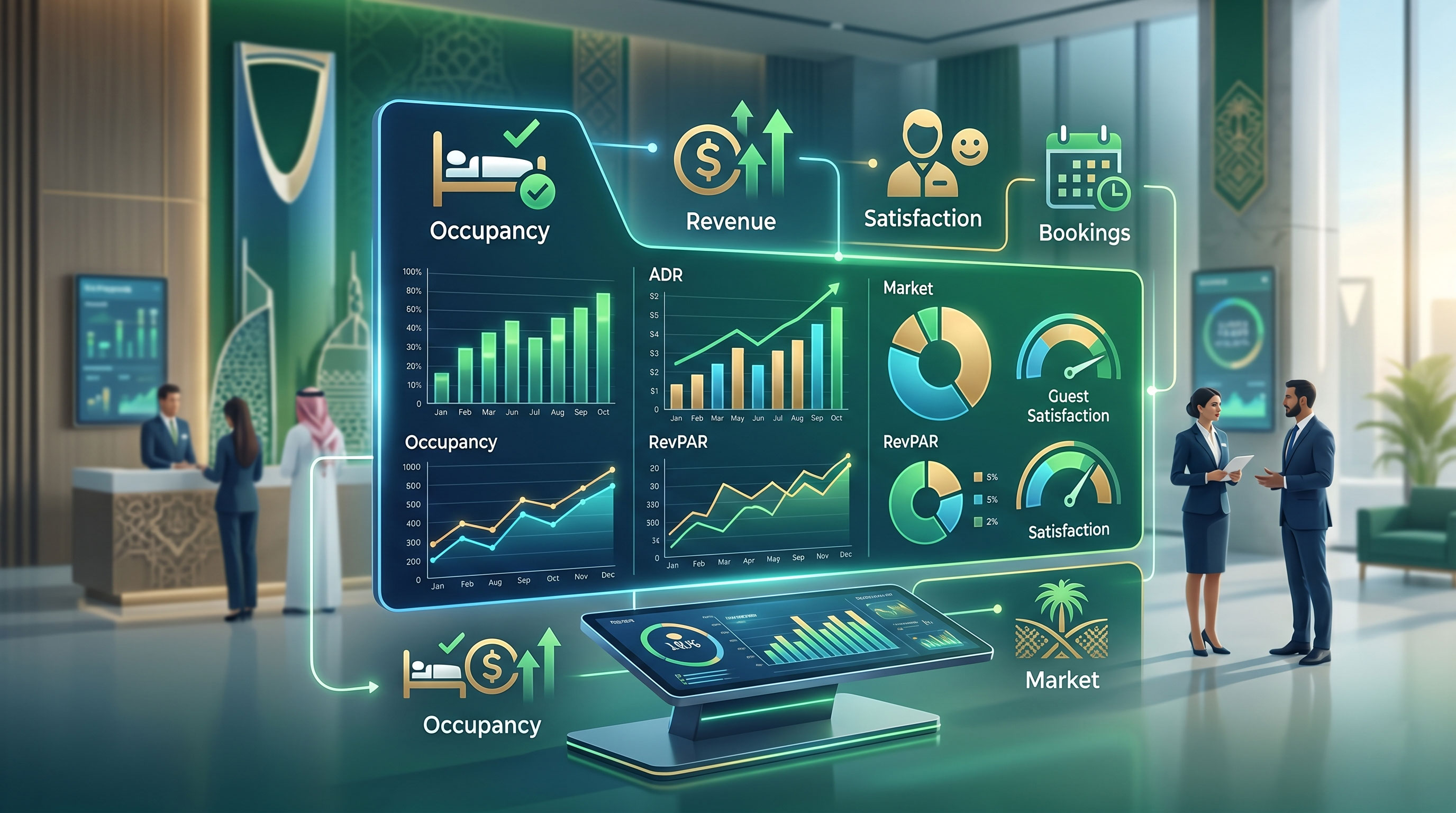
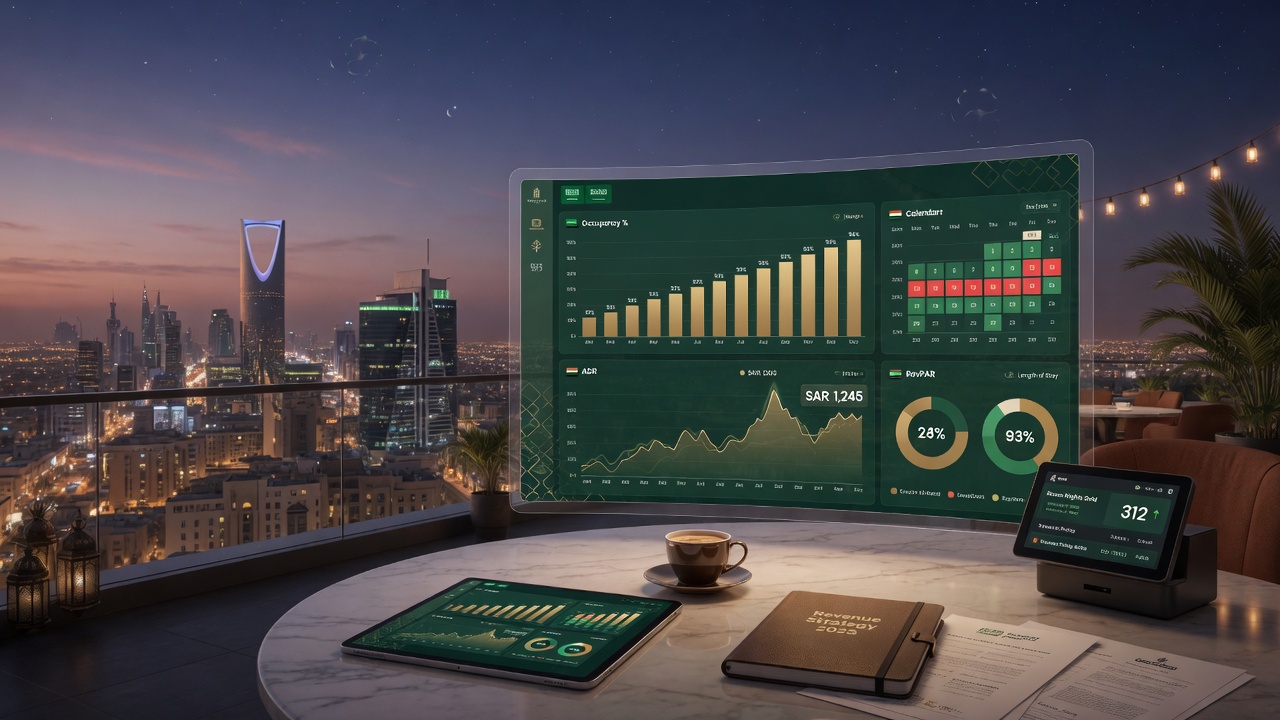
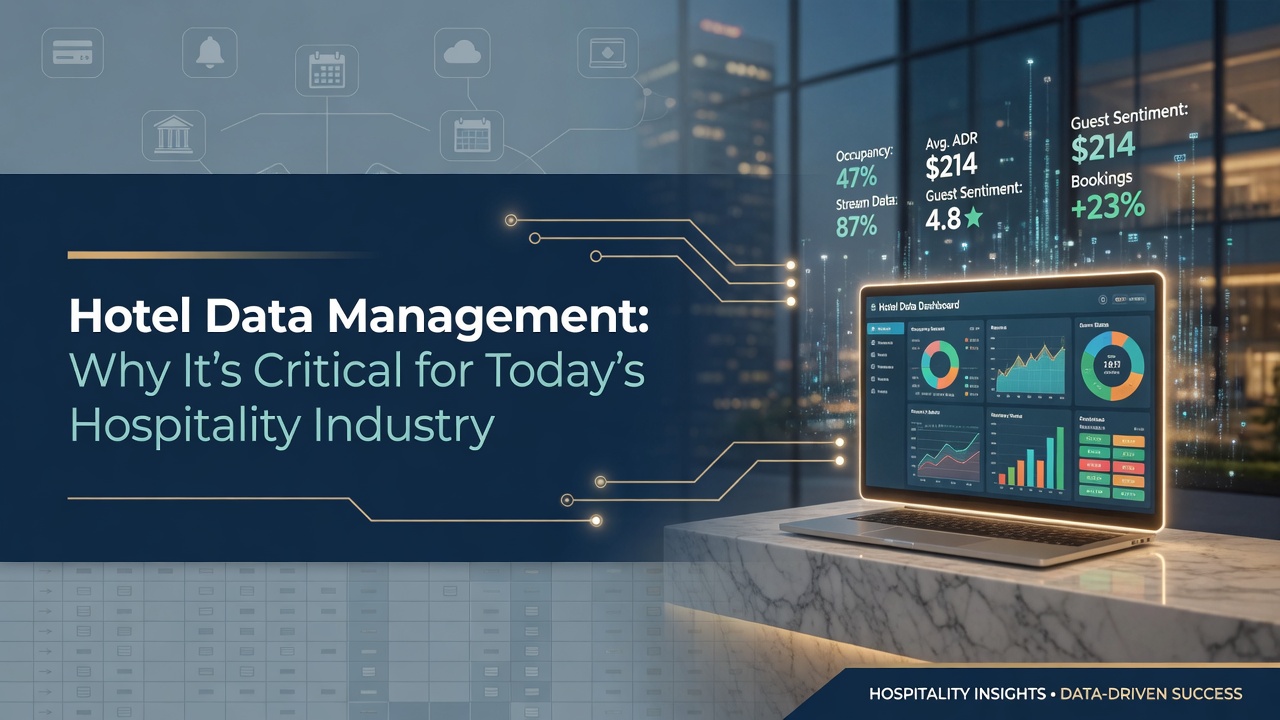
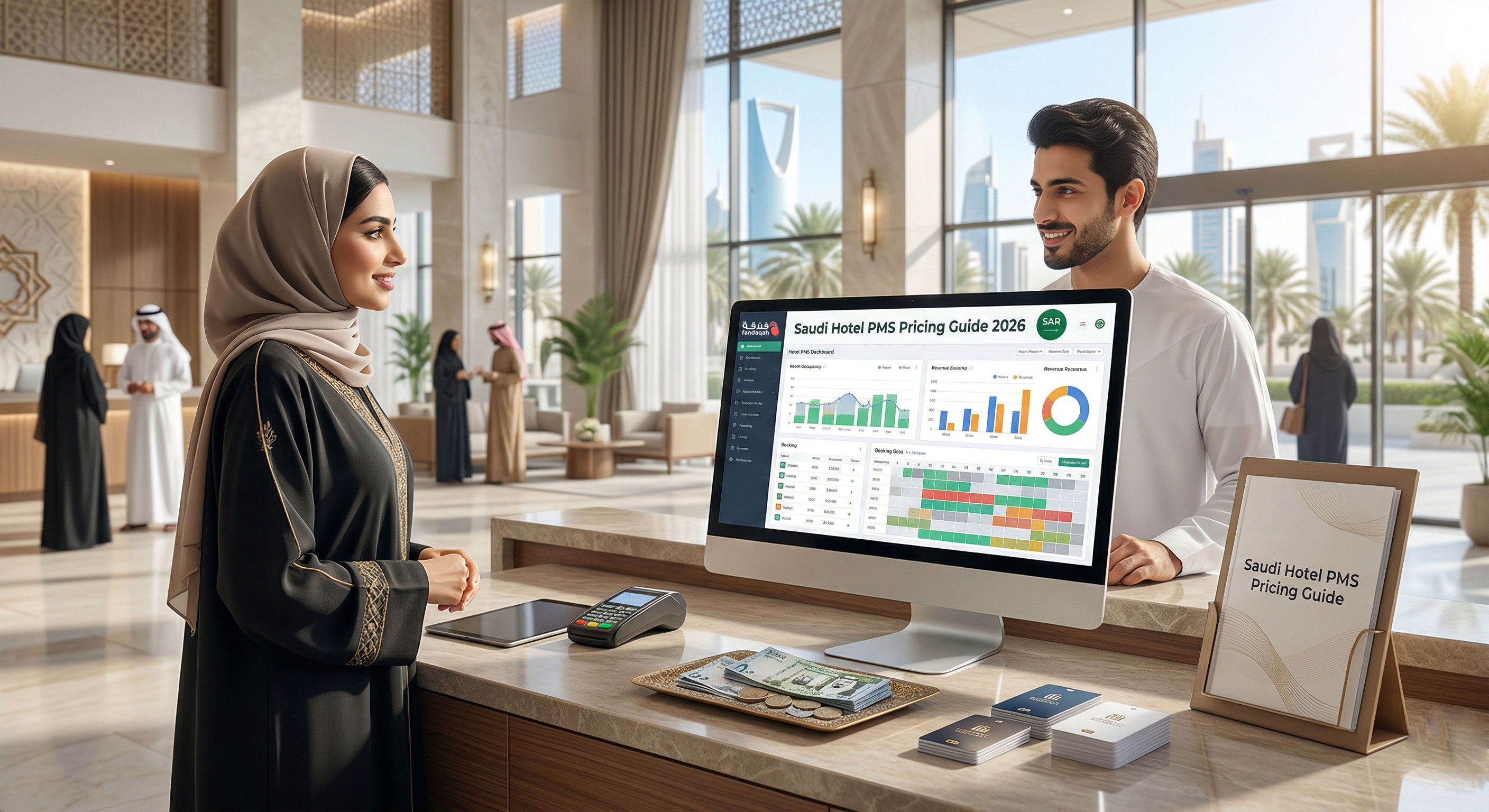
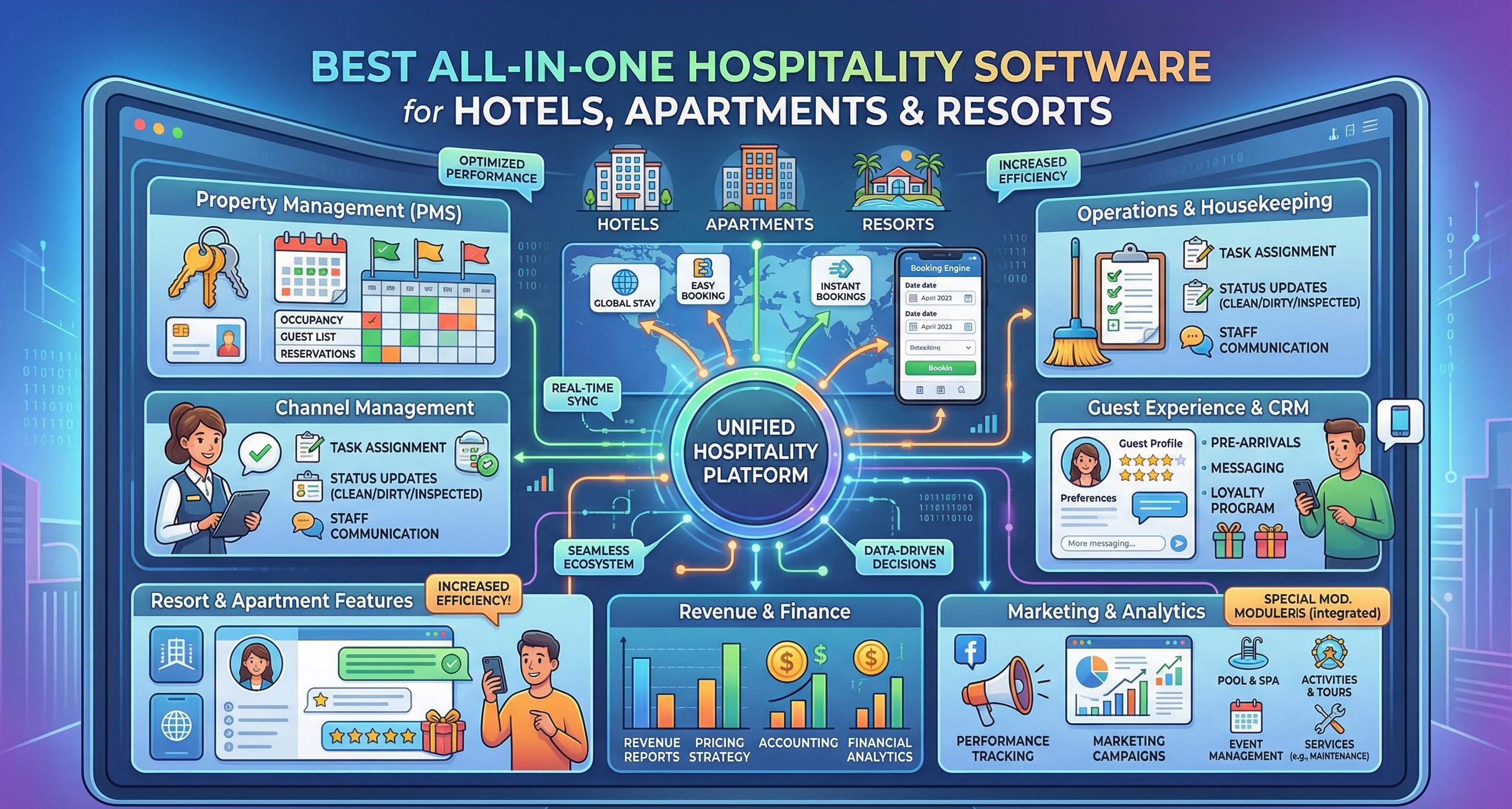
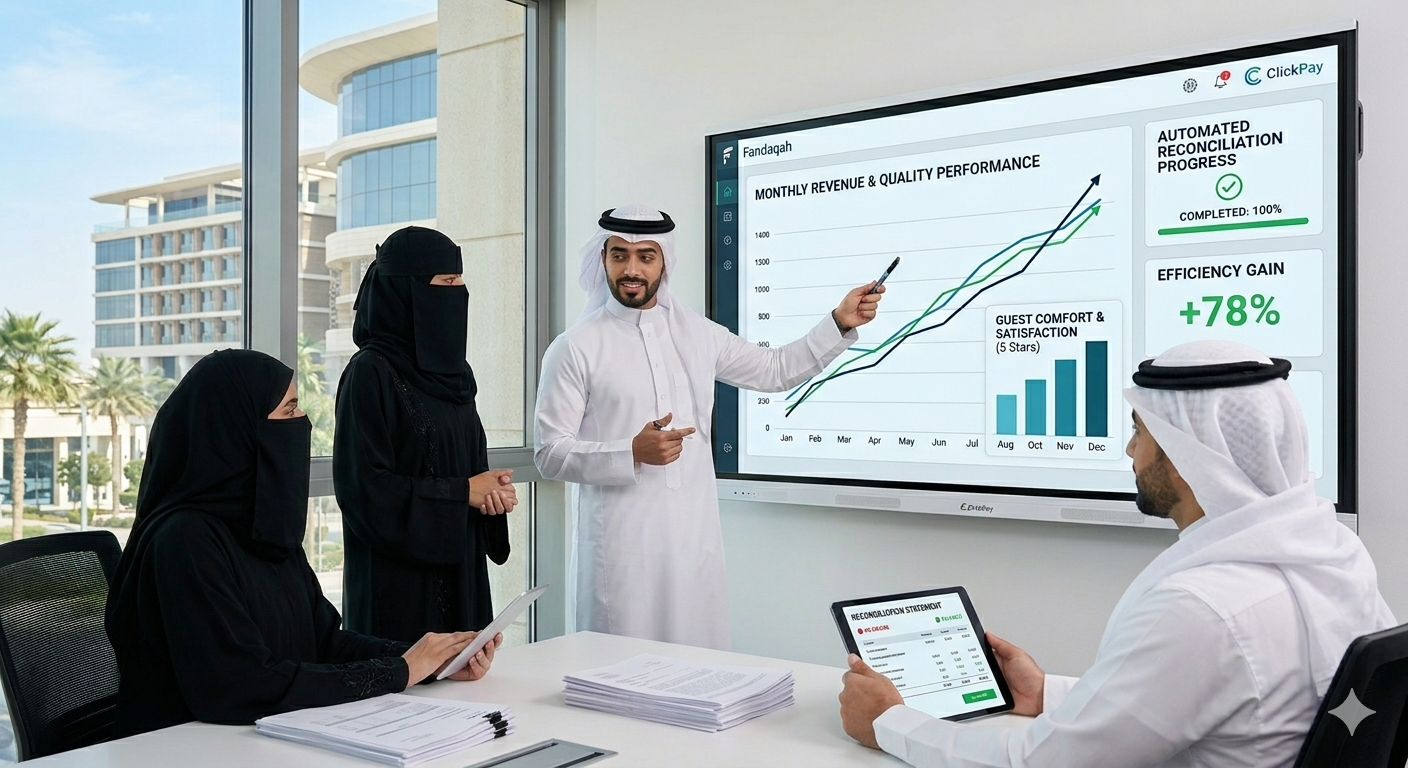
A centralized hotel management platform — either a cloud-native multi-property PMS or an integrated ecosystem of best-of-breed solutions — forms the technological backbone. Leading platforms enable group-level dashboards that aggregate occupancy, ADR (Average Daily Rate), RevPAR, and GOPPAR across all properties in real time. For Saudi hotel groups, this means a single login reveals the performance of a luxury resort on the Red Sea alongside a city-center business hotel in Riyadh.
3.2 Centralized Revenue Management & Distribution
Revenue management across multiple Saudi properties requires sophisticated hotel group reporting and analytics capabilities. A centralized revenue team can monitor market segments, competitor pricing, and demand forecasts for all properties simultaneously. During Ramadan, for instance, demand patterns shift dramatically — business travel declines while domestic leisure and Umrah-related stays surge. Centralized revenue management enables agile, data-driven rate adjustments across the portfolio.
3.3 Consolidated Financial Reporting & Compliance
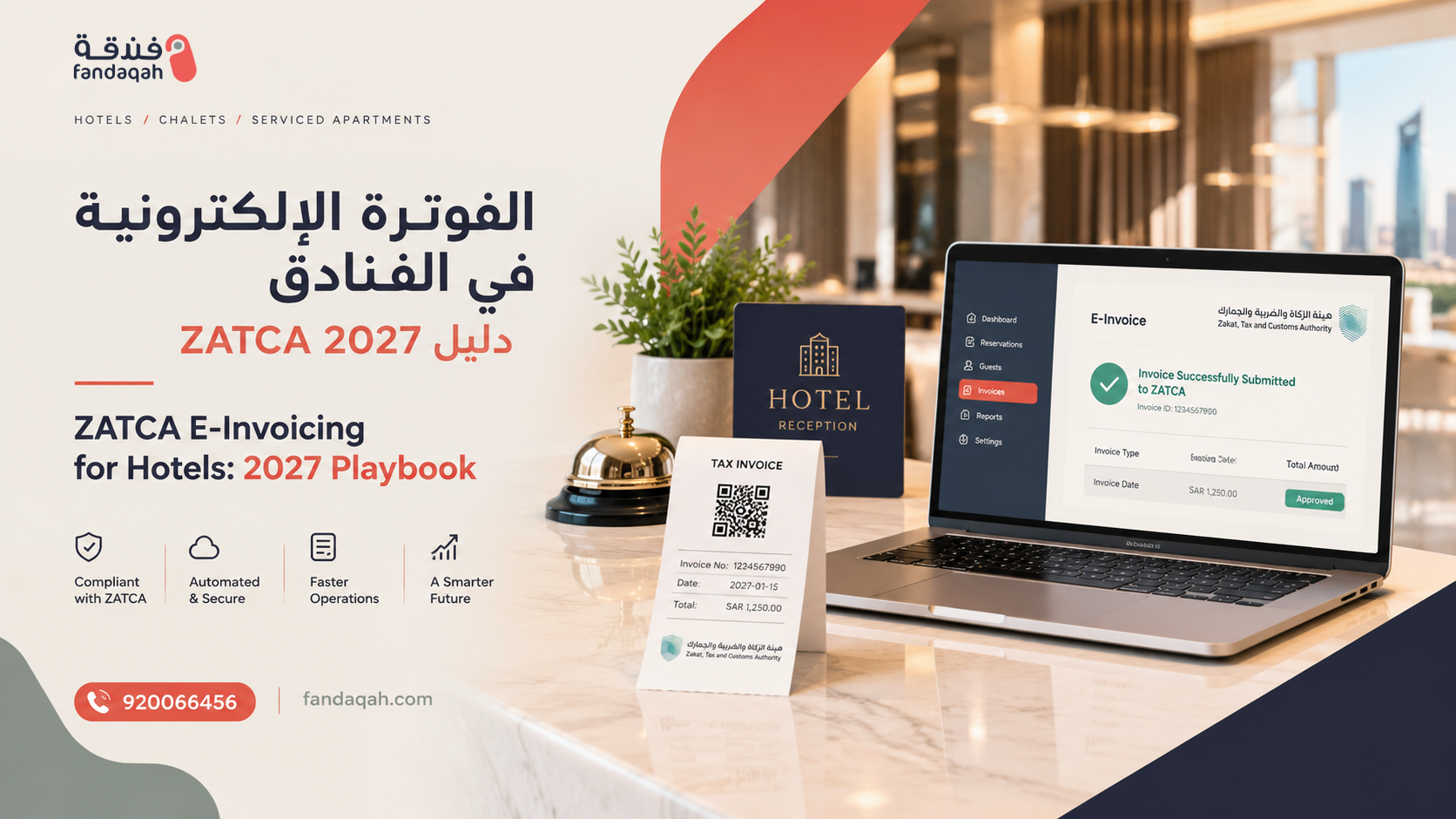
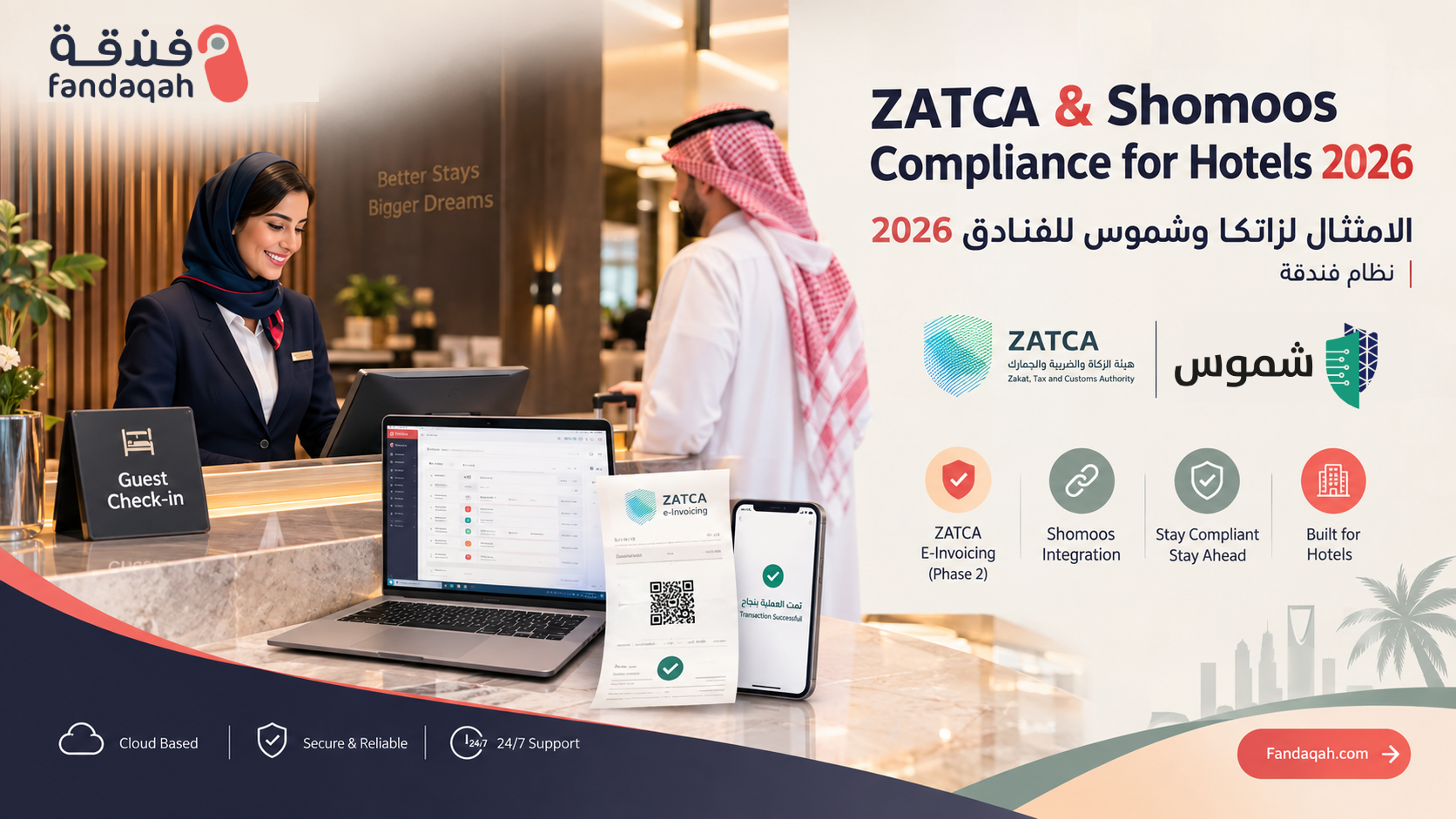
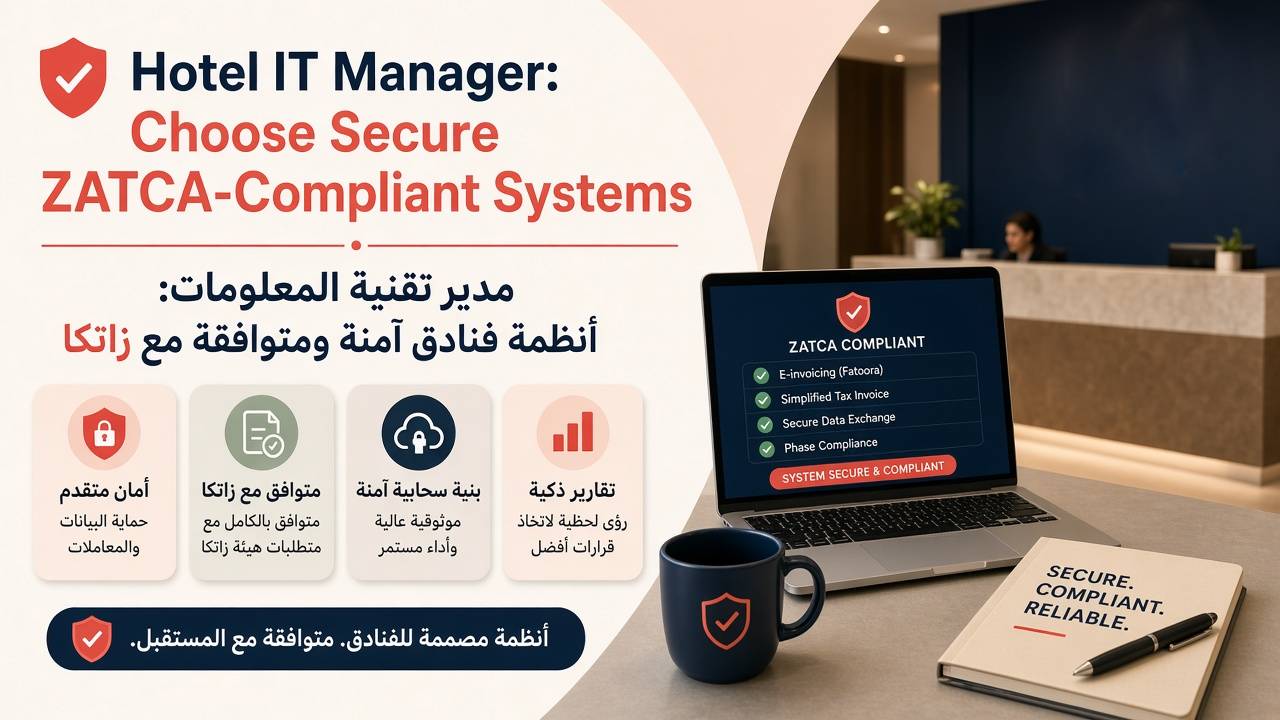
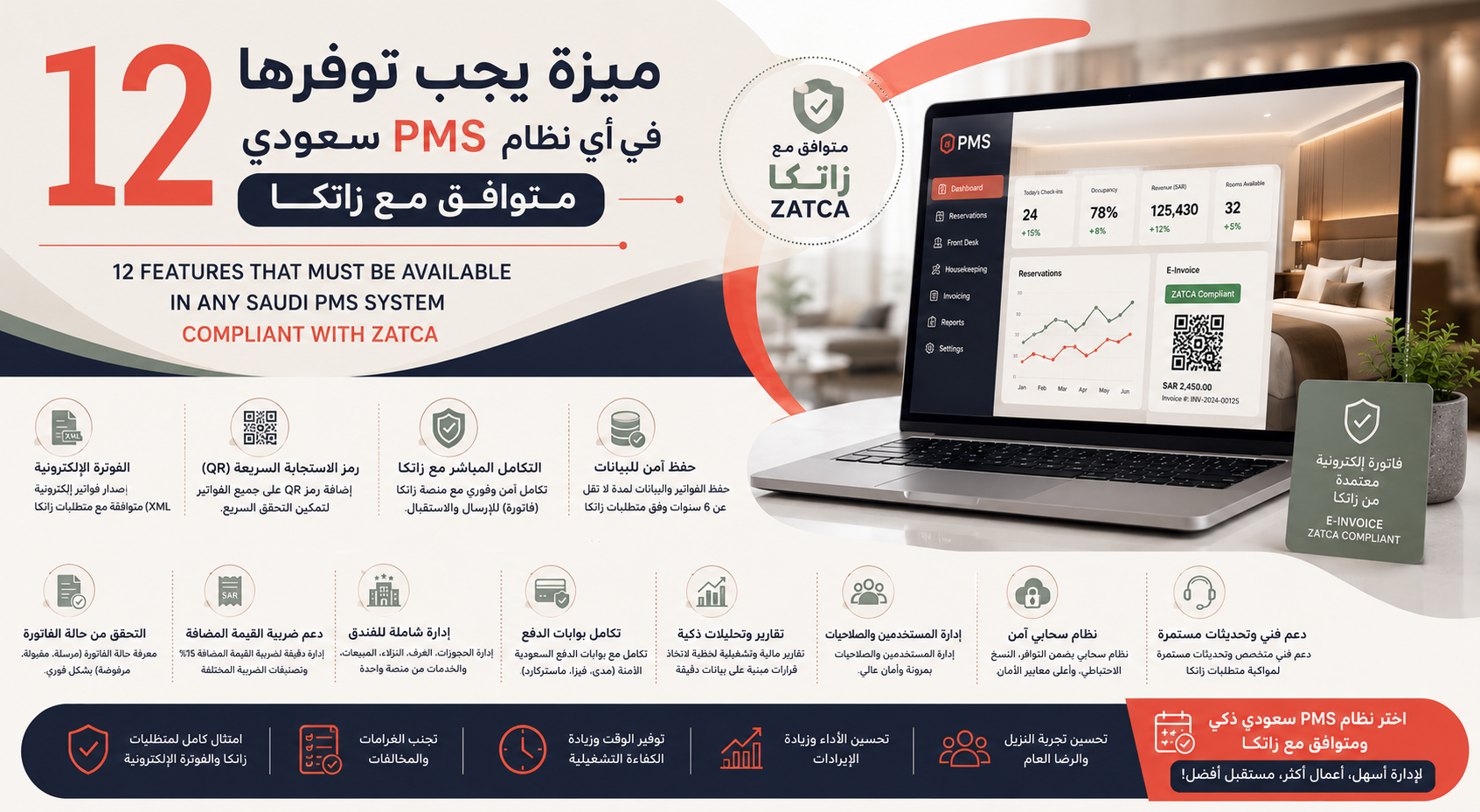
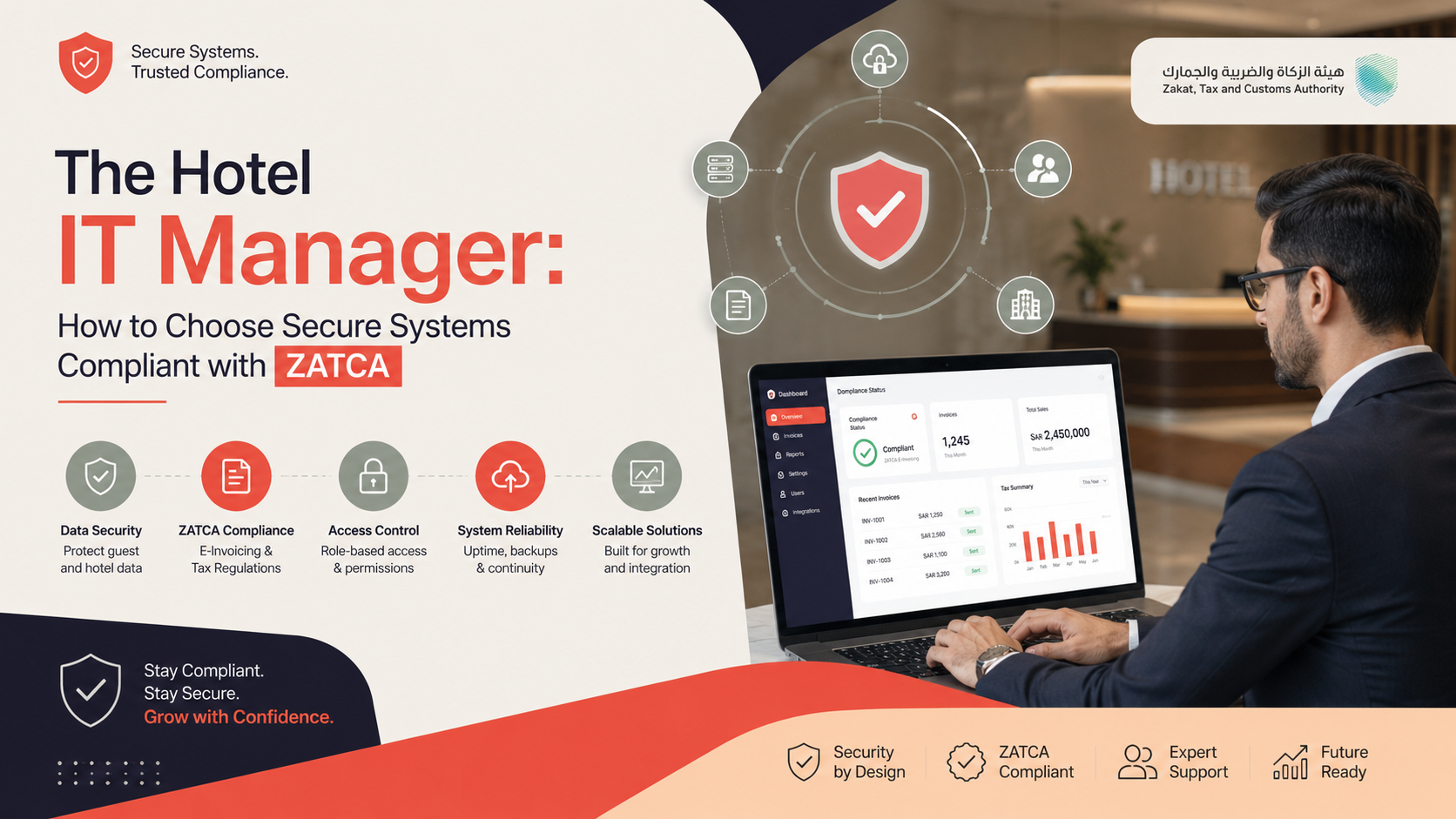
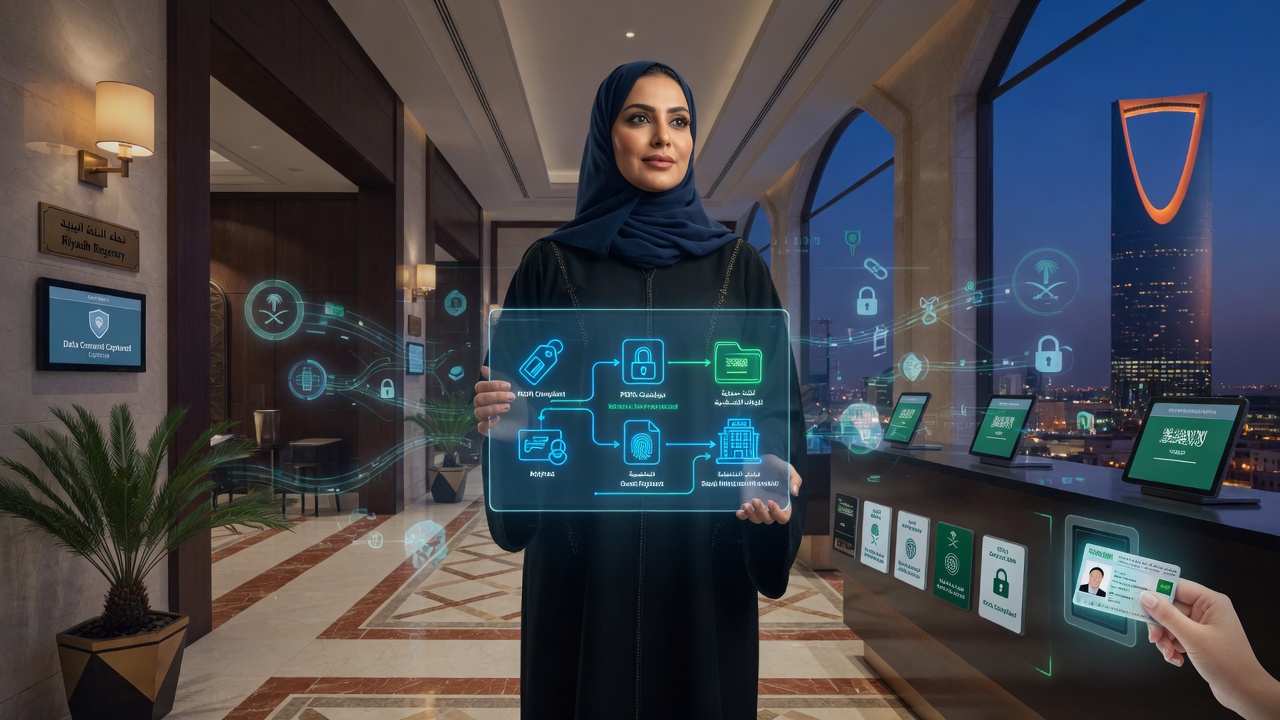
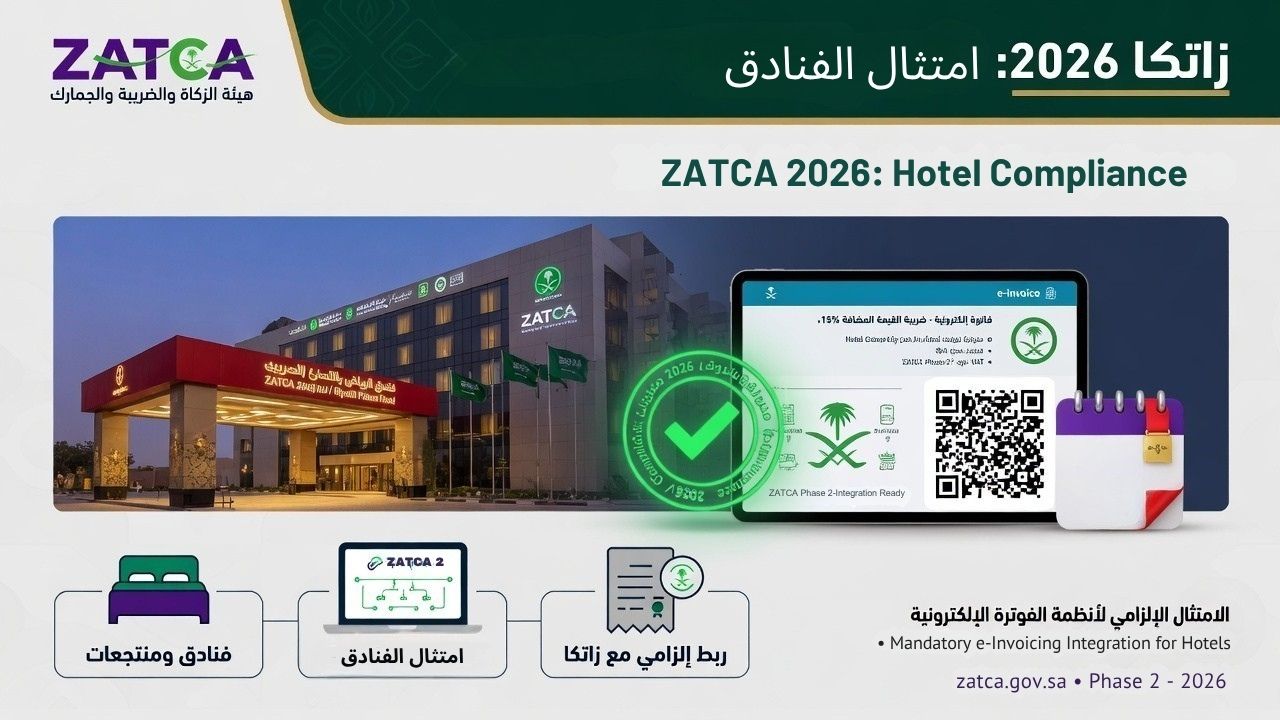
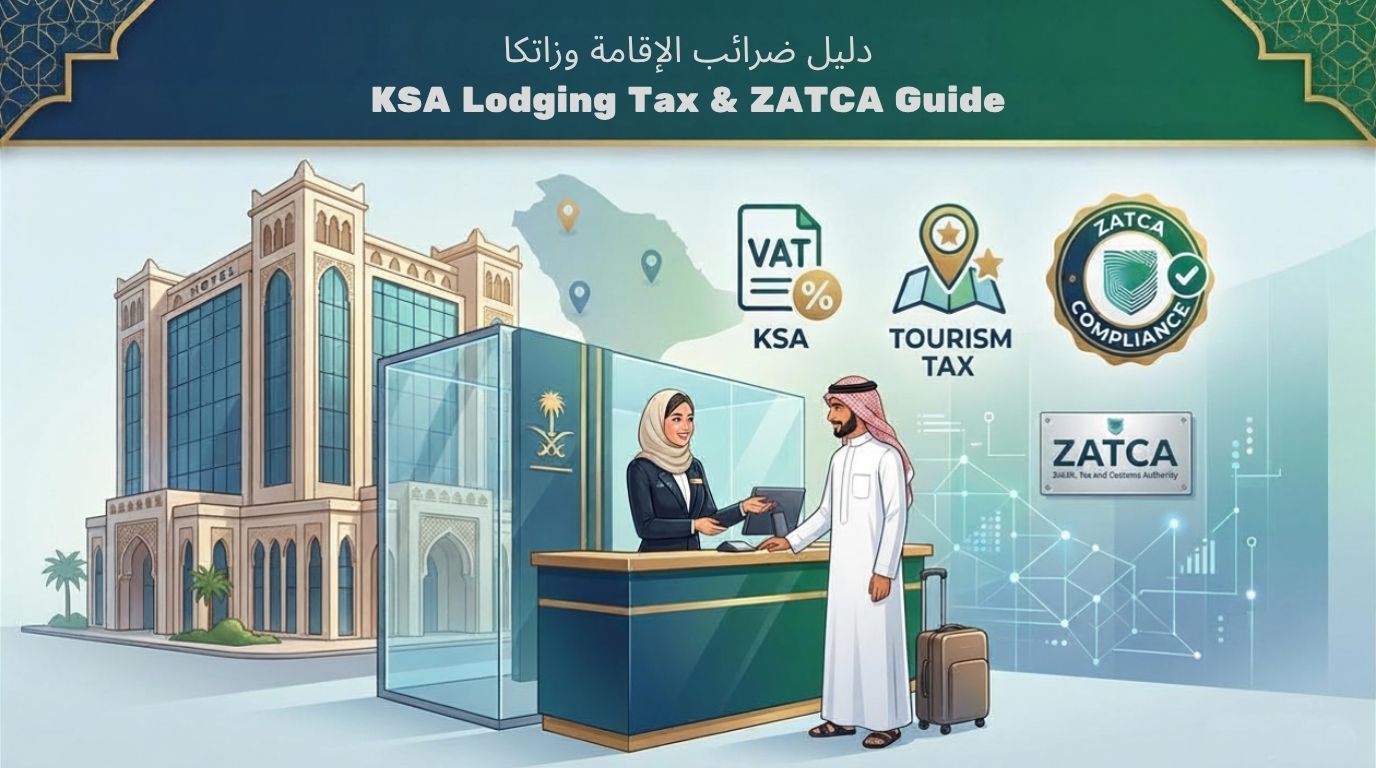
Saudi Arabia's ZATCA (Zakat, Tax and Customs Authority) mandates strict e-invoicing and VAT compliance. A centralized financial system ensures consistent tax reporting, eliminates duplicate data entry, and produces consolidated P&L statements, balance sheets, and cash flow reports at the group level. This is especially valuable for groups with mixed ownership structures, joint ventures, or international investors requiring IFRS-compliant reporting.
3.4 Centralized Procurement & Supply Chain
By centralizing procurement, Saudi hotel groups can negotiate volume-based contracts with suppliers — from F&B vendors to linens and amenities. In a market where many hotel supplies are imported, consolidated purchasing power directly impacts the bottom line. Centralized procurement also ensures brand consistency in guest-facing products across all properties.
3.5 Integrated Human Resources & Talent Management
With Saudization targets varying by property category and location, centralized HR systems help groups track compliance, manage payroll, and deploy training programs efficiently. A group-level HR platform also facilitates internal mobility — allowing talented Saudi professionals to gain experience across different properties and regions within the portfolio, supporting the Kingdom's talent development goals under Vision 2030.
3.6 Unified Guest Data & Loyalty Ecosystems
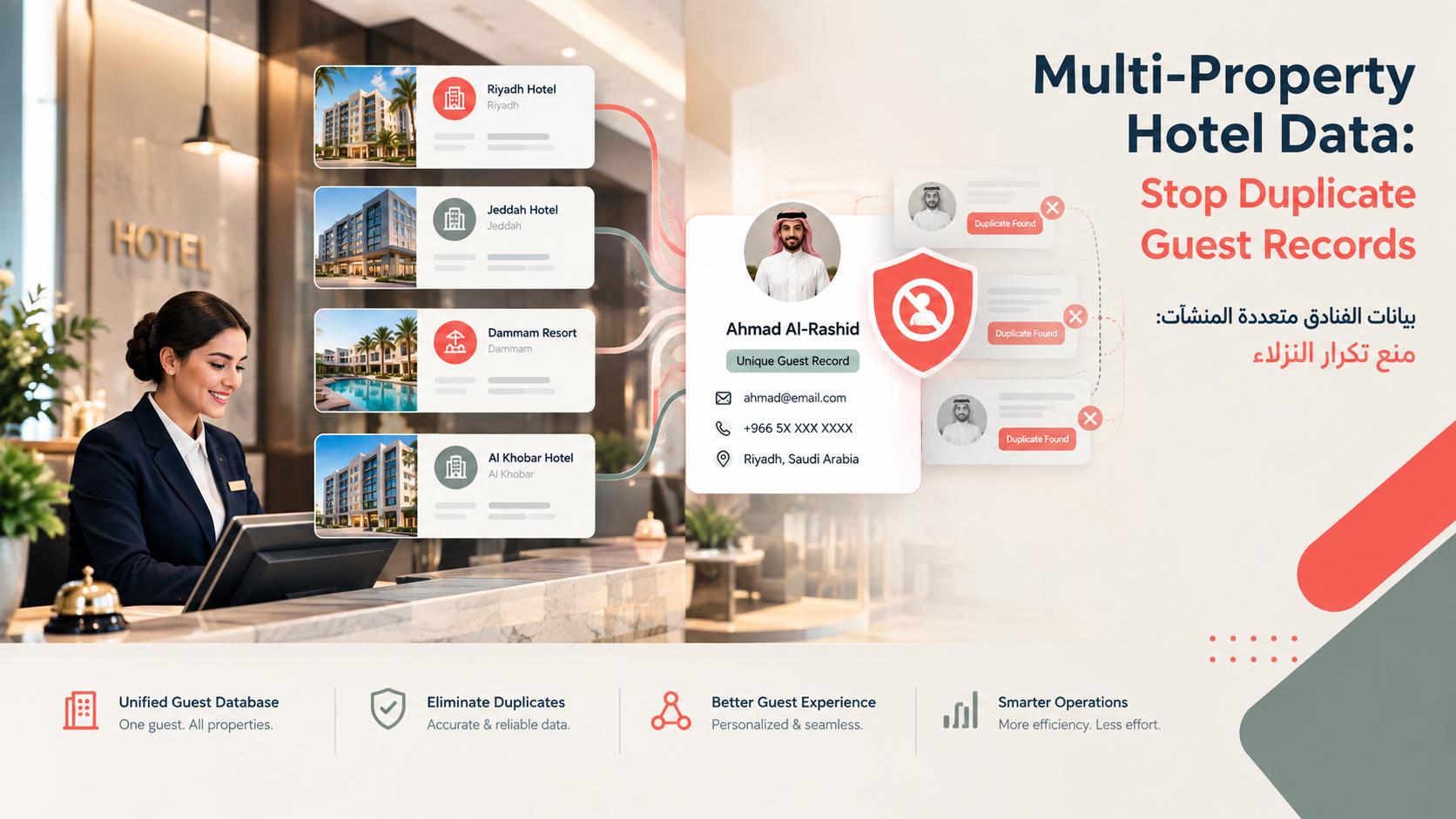
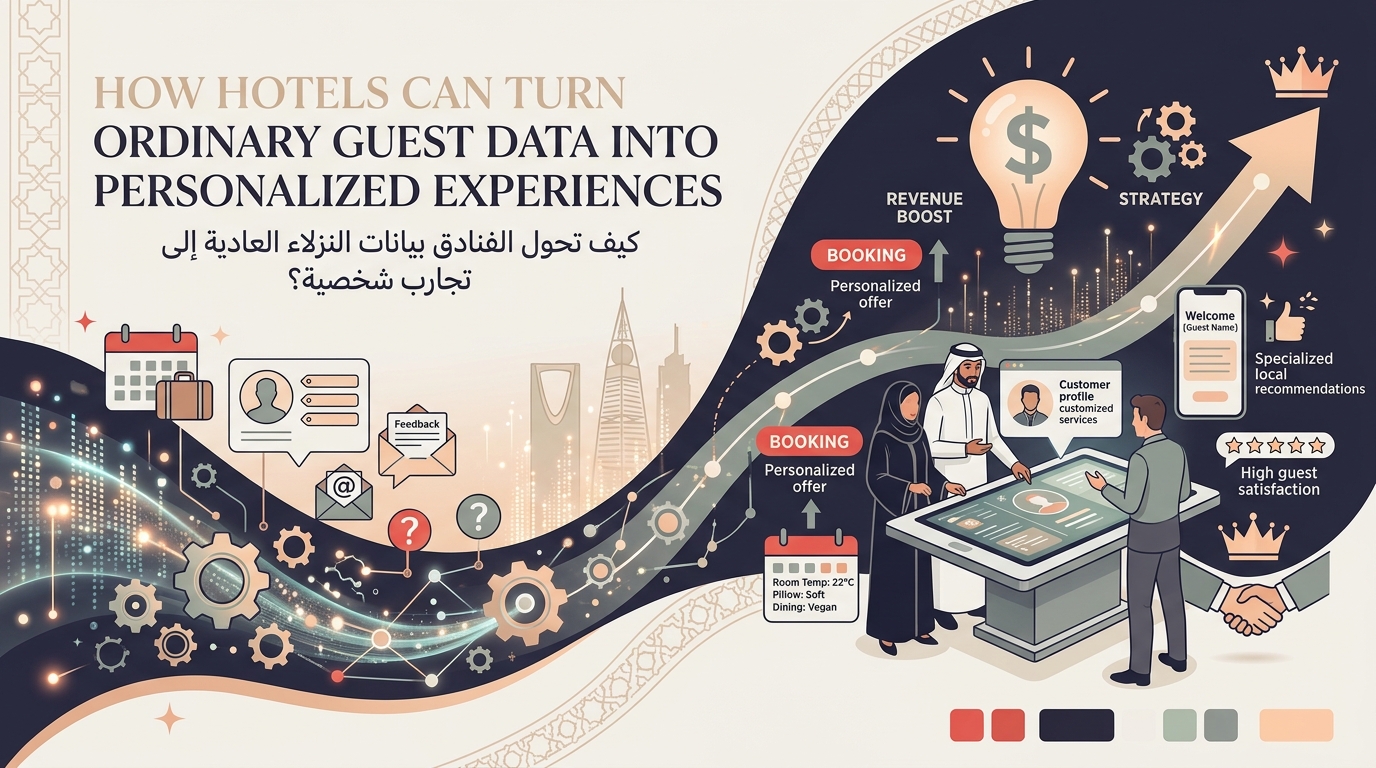
A centralized Customer Data Platform (CDP) captures guest preferences, stay history, and spending patterns across all properties. When a loyal guest who frequents a group's Jeddah hotel visits their new property in AlUla, the front desk already knows their room preferences, dietary requirements, and special occasions. This level of personalization drives repeat business and strengthens brand loyalty in an increasingly competitive market.
4. Key Features & Benefits of Centralized Hotel Management
| Feature |
Description |
Benefit for Saudi Hotel Groups |
| Group-Level Dashboard |
Real-time consolidated view of KPIs across all properties |
Enables swift, data-driven decisions for portfolio-wide strategy |
| Multi-Property PMS |
Single platform managing reservations, housekeeping, and front desk across locations |
Reduces IT overhead and training costs; ensures consistent guest experience |
| Centralized Revenue Management |
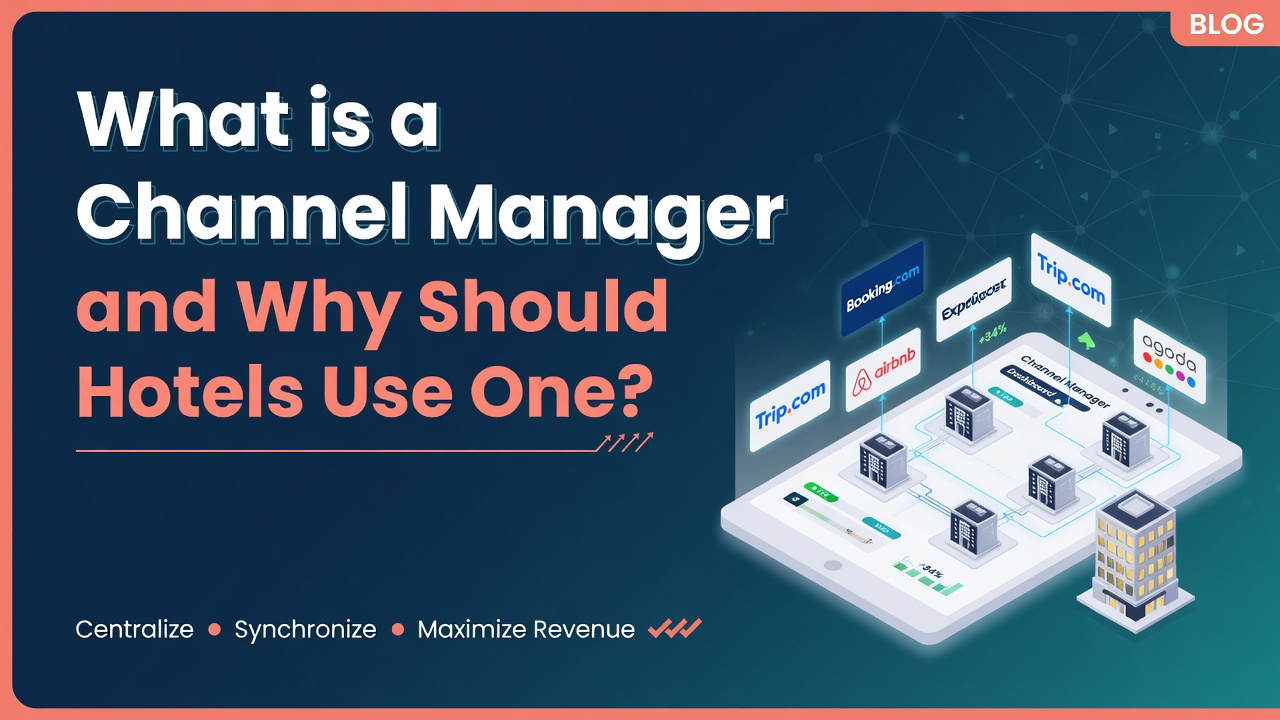
Dynamic pricing, demand forecasting, and channel management from a single hub |
Maximizes RevPAR during peak seasons like Hajj, Ramadan, and Riyadh Season |
| Consolidated Financial Reporting |
Automated P&L, balance sheet, and cash flow aggregation |
Simplifies ZATCA compliance and investor reporting; reduces audit costs |
| Unified Procurement |
Group-wide supplier contracts and inventory management |
Lowers F&B and operational supply costs through volume discounts |
| Centralized Guest Profiles |
Single guest record accessible across all properties |
Drives loyalty and repeat bookings; personalizes the Saudi hospitality experience |
| Saudization Compliance Dashboard |
Real-time tracking of Saudization percentages and training hours |
Ensures regulatory compliance and supports Vision 2030 talent goals |
5. Use Cases: Multi-Property Hotel Management Across Saudi Arabia
The diversity of Saudi Arabia's tourism landscape means that hotel group management strategies must adapt to vastly different operating contexts. Here are four representative use cases illustrating how centralization delivers value across the Kingdom:
5.1 Mega-Project Clusters: NEOM & The Red Sea
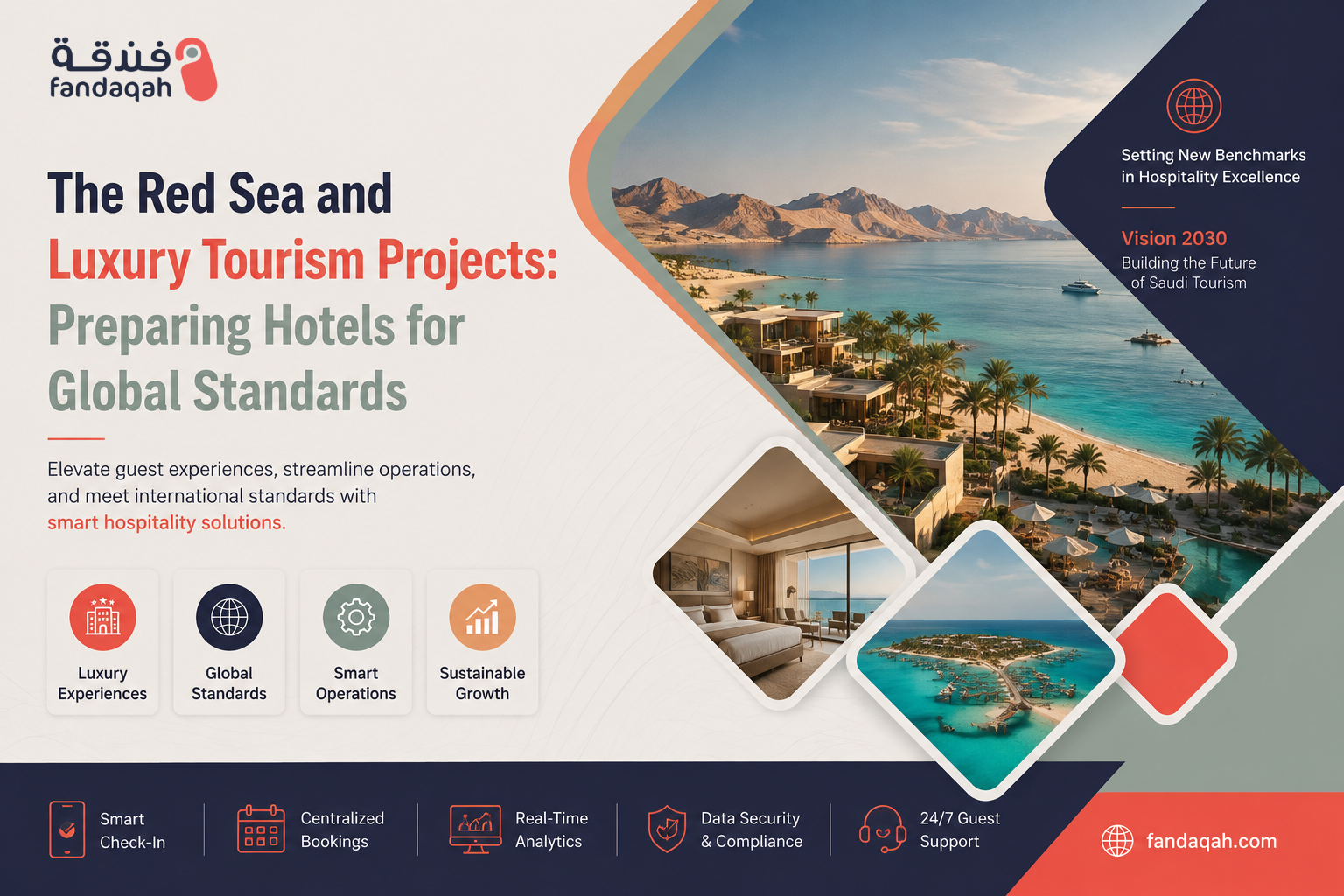
NEOM's Sindalah Island and the Red Sea Global's Ummahat Islands feature multiple luxury resorts within walking distance or a short boat ride of each other. In these multi-hotel clusters, centralized operations allow for shared back-of-house services — laundry, engineering, and waste management — while each property maintains its distinct brand identity. Centralized reporting provides the developer with a holistic view of the destination's performance, enabling coordinated marketing and guest experience initiatives.
5.2 Religious Tourism Hubs: Makkah & Madinah
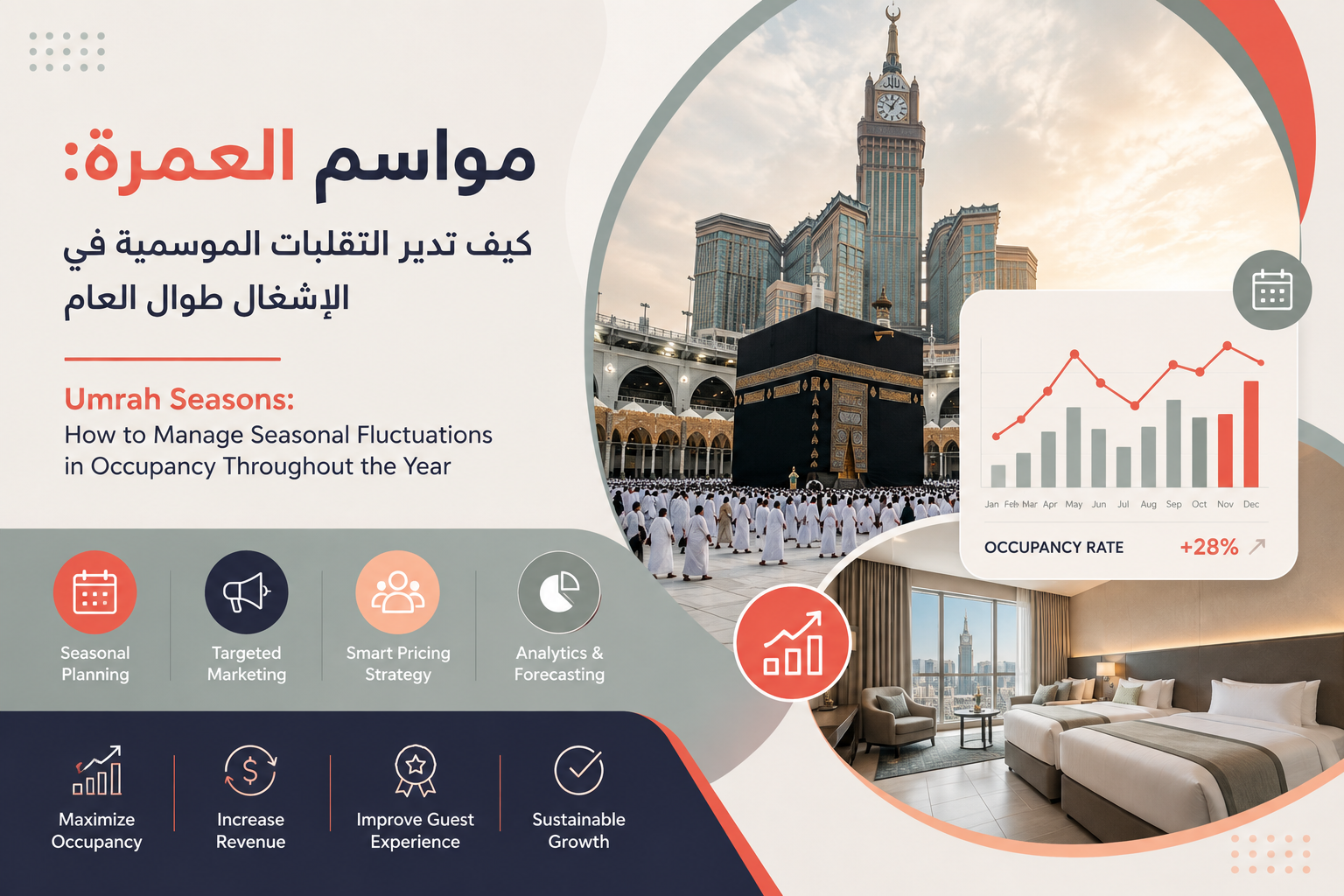
Hotel groups operating multiple properties in the holy cities face extreme demand fluctuations. During Hajj, occupancy can hit 100% across all properties, while off-peak months require aggressive cost management. A centralized hotel management platform enables groups to dynamically allocate inventory between direct bookings, tour operators, and government quotas. Post-Hajj, consolidated data helps analyze profitability by feeder market and booking channel, informing the following year's strategy.
5.3 Mixed-Use Urban Portfolios: Riyadh & Jeddah
A group operating a luxury hotel, a midscale serviced apartment tower, and a boutique property in Riyadh's diplomatic quarter faces three distinct guest segments. Centralized CRM and loyalty systems allow the group to cross-sell — directing business travelers from the luxury property to the serviced apartments for extended stays, or recommending the boutique hotel for leisure weekends. Multi-property reporting solutions aggregate performance data to guide portfolio expansion decisions.
5.4 Heritage & Eco-Tourism: AlUla & Asir
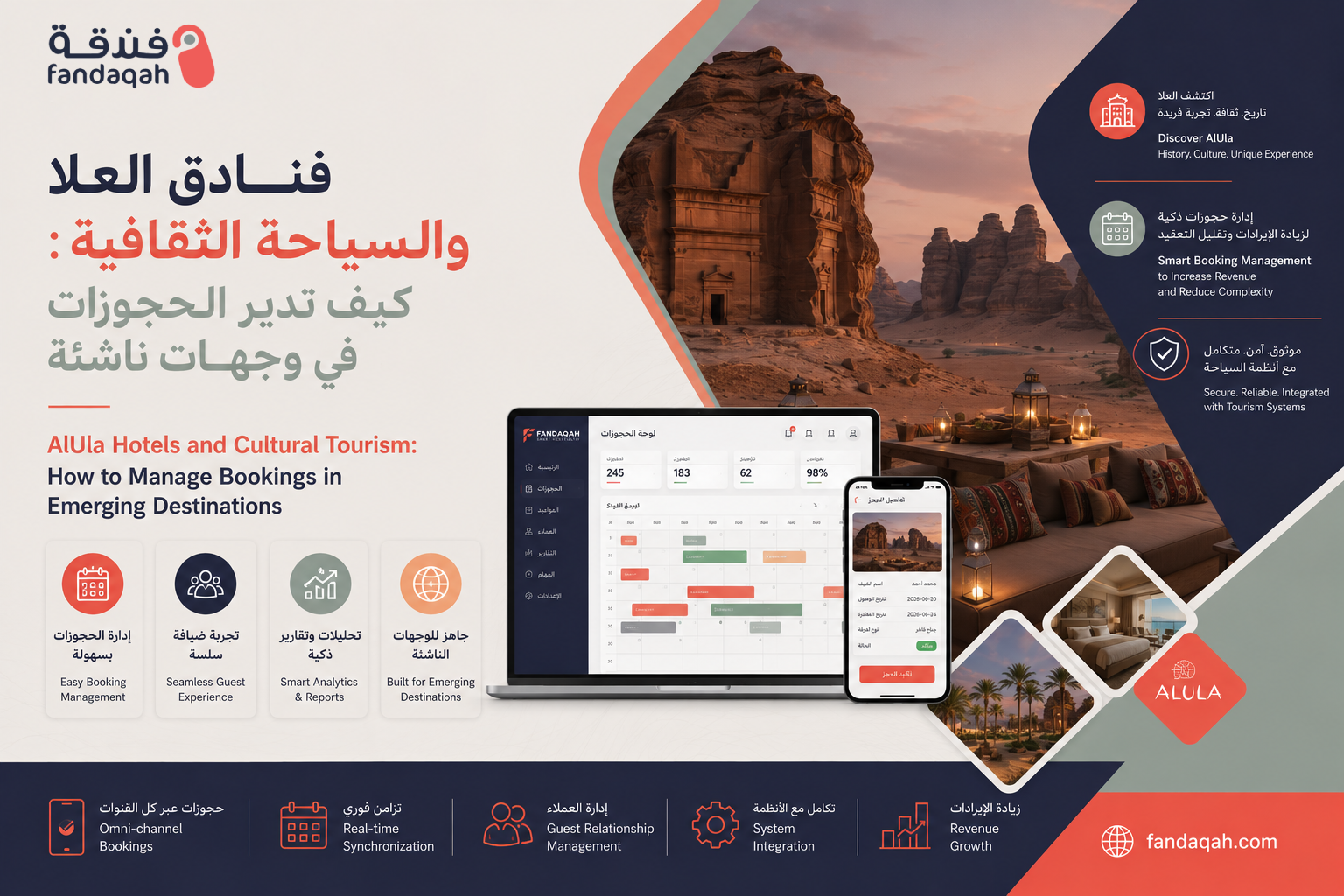
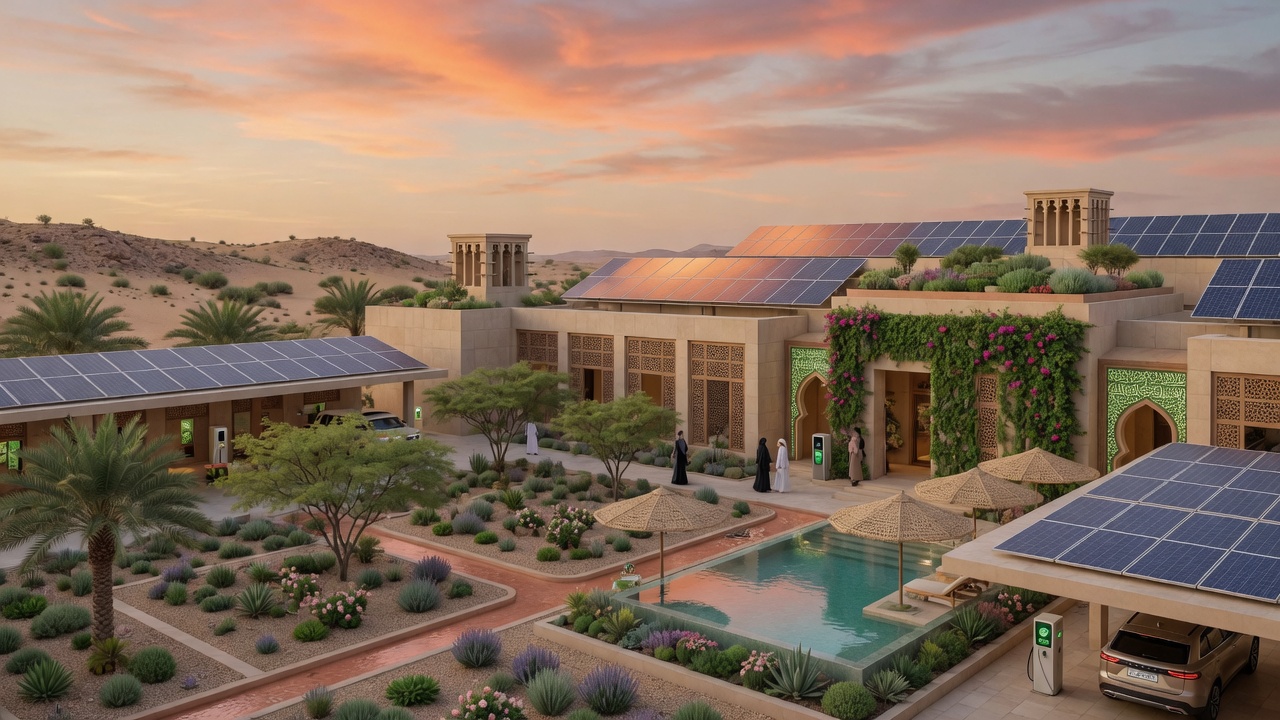
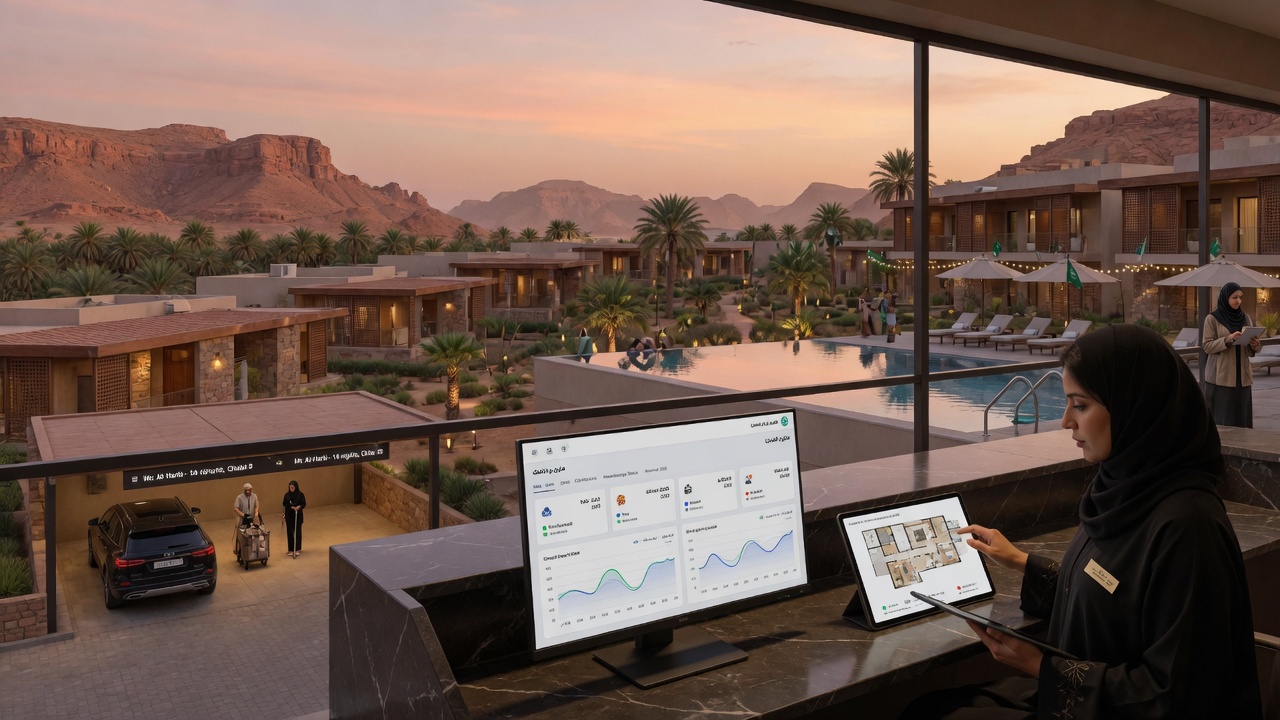
Boutique eco-lodges and heritage hotels in AlUla and the Asir mountains often operate with lean teams and limited connectivity. Cloud-based centralized hotel operations allow these remote properties to leverage group-level revenue management, digital marketing, and procurement without needing on-site specialists. The result is authentic, locally rooted hospitality backed by world-class operational infrastructure.
"The future of Saudi hospitality lies not in standalone hotels, but in intelligently connected portfolios. Centralization is the engine that transforms a collection of properties into a cohesive, high-performing hospitality ecosystem."
— Industry Perspective, Saudi Hospitality Sector
6. Comparison: Centralized vs. Decentralized Hotel Group Operations
Understanding the trade-offs between centralized and decentralized models helps Saudi hotel groups design the optimal operating framework. The table below compares the two approaches across critical dimensions:
| Dimension |
Centralized Model |
Decentralized Model |
| Financial Control |
High — consolidated P&L, real-time visibility |
Fragmented — delayed, property-by-property reporting |
| Operational Agility |
Balanced — group-level strategy with local flexibility |
High locally, but poor portfolio-wide coordination |
| Cost Efficiency |
Strong — shared services reduce overhead |
Weaker — duplicated roles and systems |
| Guest Experience |
Consistent — unified standards and guest profiles |
Variable — depends on each property's management |
| Compliance & Risk |
Strong — standardized ZATCA, Saudization tracking |
Higher risk — inconsistent compliance practices |
| Technology Investment |
Higher upfront, lower per-property cost over time |
Lower upfront, higher cumulative and integration costs |
7. Technology Stack: Building Your Centralized Hotel Management Platform
Selecting the right technology is foundational to successful multi-property hotel management in Saudi Arabia. The ideal technology stack should be cloud-native, API-first, and designed for the specific demands of the Saudi market — including Arabic language support, Hijri calendar integration, and ZATCA e-invoicing compatibility.
- Cloud-Native Multi-Property PMS: Platforms like Opera Cloud, Mews, or Apaleo that support group-level configuration, cross-property reservations, and centralized guest profiles. Ensure the PMS supports Arabic interface and right-to-left text.
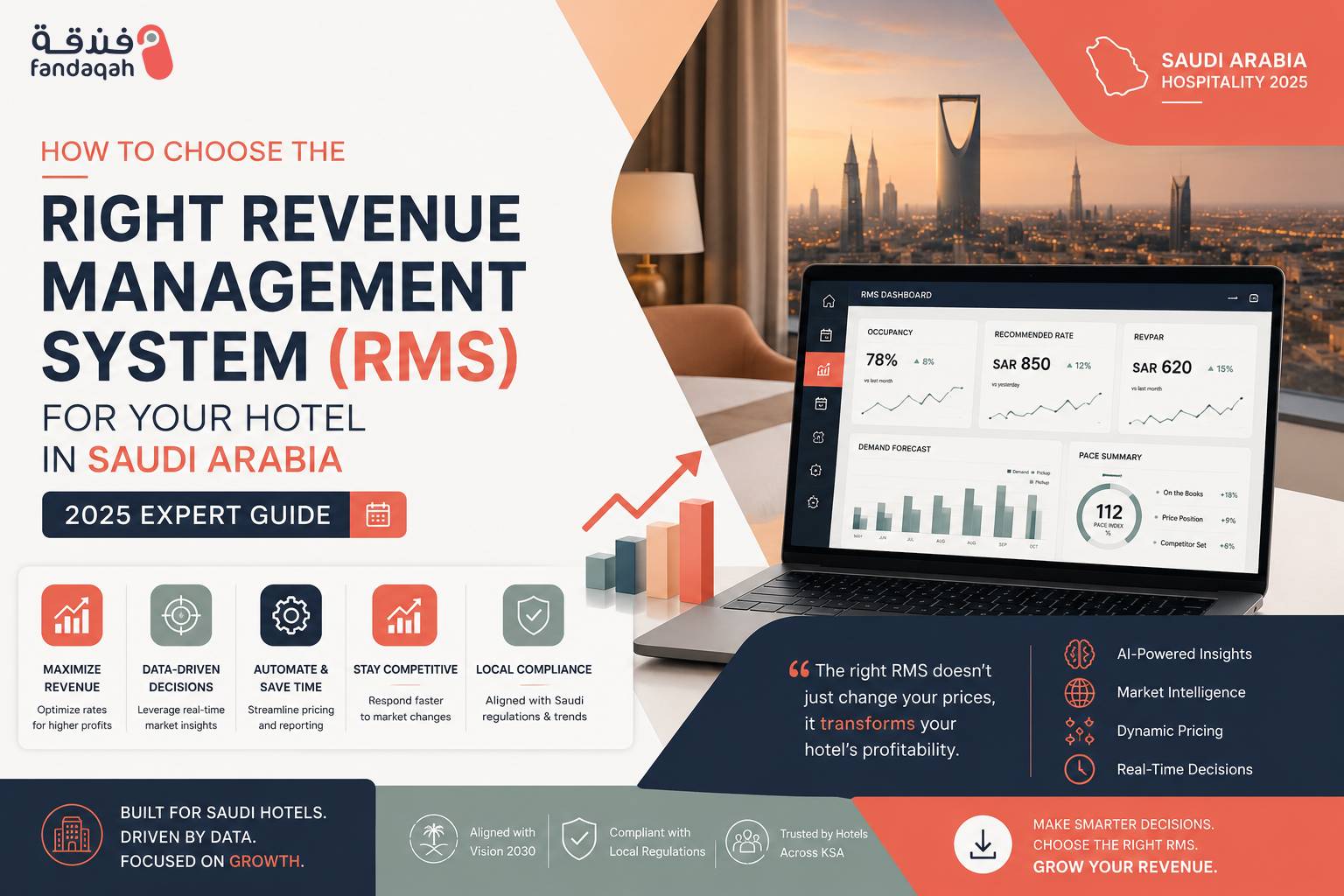
- Enterprise Revenue Management System (RMS): Solutions like IDeaS or Duetto that provide portfolio-level forecasting, competitive benchmarking, and automated rate recommendations for each property.
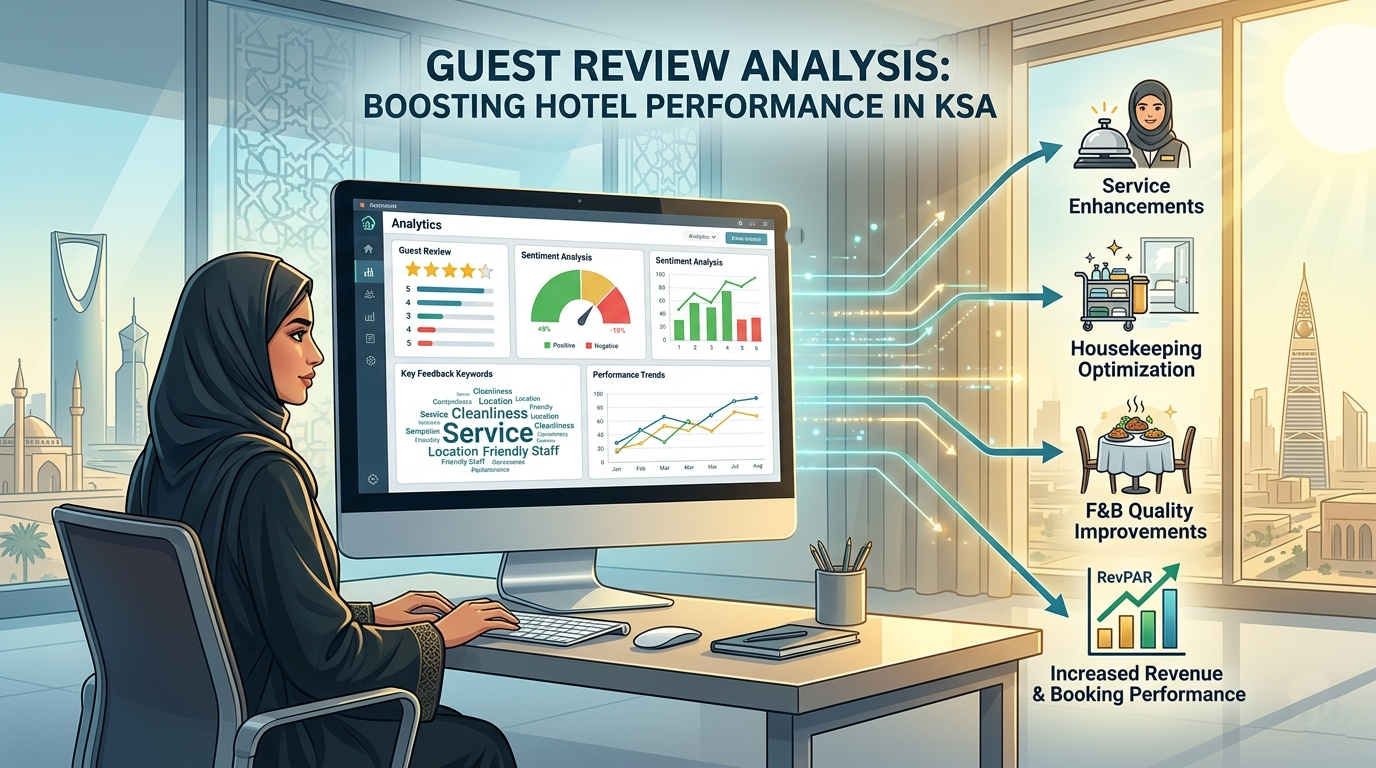
- Consolidated Business Intelligence (BI): Tools like Power BI or Tableau — integrated with your PMS and financial systems — to create group-level dashboards customized for owners, operators, and investors.
- Centralized Accounting & ERP: Platforms like SAP, Oracle, or Microsoft Dynamics that support multi-entity consolidation, ZATCA-compliant e-invoicing, and IFRS reporting standards.
- Group CRM & Loyalty Engine: A centralized guest data platform that unifies profiles, tracks preferences, and powers personalized marketing across all properties.
- Integrated HR & Payroll: Systems that manage Saudization tracking, multi-entity payroll, and centralized training modules — essential for compliance and talent development.
Pro Tip: When evaluating technology vendors for the Saudi market, ask specifically about ZATCA Phase 2 e-invoicing readiness, Arabic language support across all modules, and local data residency compliance with Saudi PDPL (Personal Data Protection Law) requirements. Many international platforms claim regional readiness but fall short on these critical details.
8. Future Trends: Multi-Property Hotel Management & Vision 2030
Saudi Arabia's Vision 2030 is not just a backdrop — it is the strategic blueprint reshaping every aspect of the Kingdom's hospitality sector. Here are the key trends that will define hotel group operations in Saudi Arabia over the next five years:
8.1 AI-Driven Portfolio Optimization
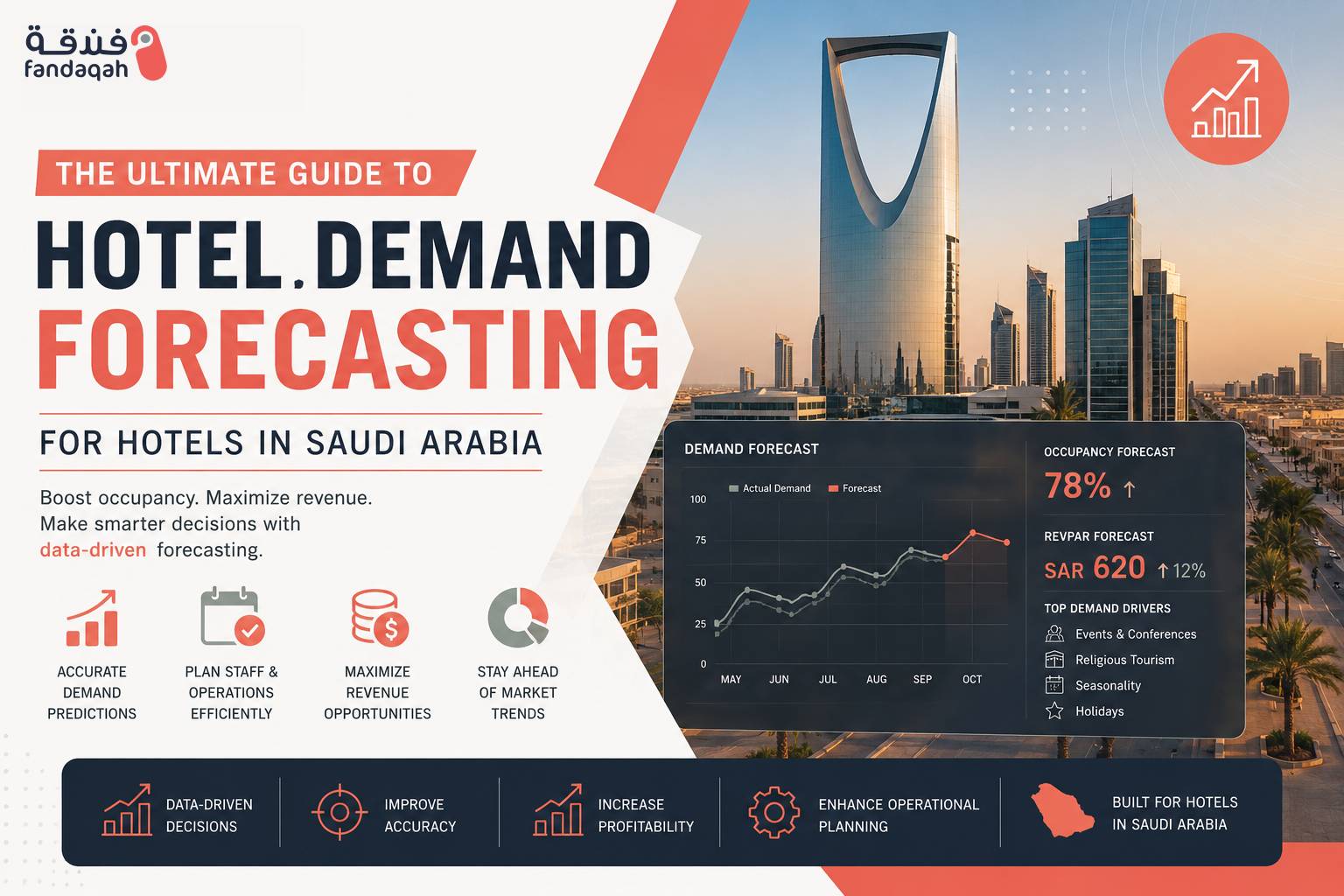
Artificial intelligence will increasingly power predictive analytics across hotel portfolios — forecasting demand surges around events like Riyadh Season, Formula 1 in Jeddah, and Islamic holidays. AI models trained on Saudi market data will recommend optimal pricing, staffing levels, and inventory allocation for each property in real time.
8.2 Sustainability & ESG Centralization
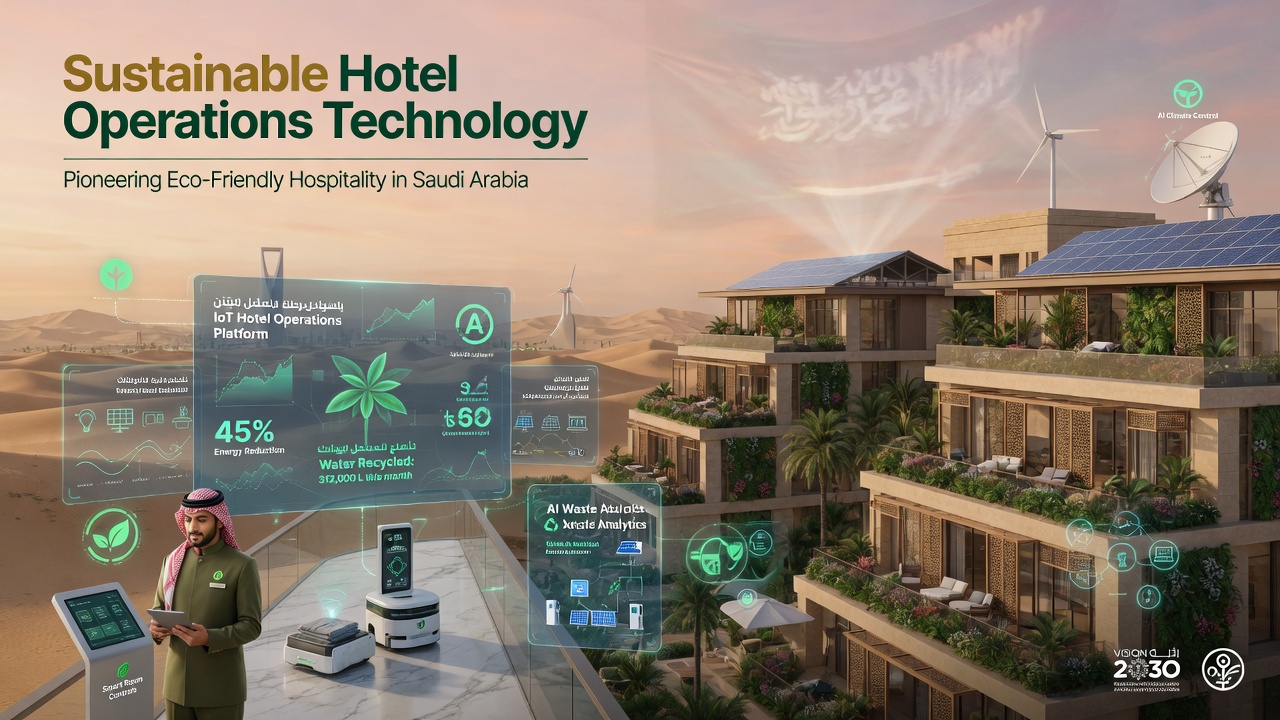
With projects like Red Sea Global setting new benchmarks for regenerative tourism, hotel groups must centralize ESG (Environmental, Social, Governance) tracking. Centralized systems will monitor energy consumption, water usage, waste diversion, and carbon footprint across all properties — essential for meeting Saudi Green Initiative targets and attracting sustainability-conscious investors.
8.3 Hyper-Personalization Through Unified Data
As Saudi Arabia competes for high-value international tourists, centralized guest data platforms will enable hyper-personalization at scale. Imagine a guest who stays at a group's Red Sea resort receiving a pre-arrival offer for a cultural experience at the group's AlUla property — all powered by a unified understanding of their preferences and travel patterns.
8.4 Saudi Talent Mobility Platforms
Vision 2030's human capital goals will drive the creation of internal talent marketplaces within large hotel groups. Centralized HR platforms will match Saudi professionals with development opportunities across different properties, accelerating career growth and supporting the Kingdom's goal of increasing Saudi employment in the hospitality sector.
8.5 Blockchain for Multi-Property Settlements
For hotel groups with complex ownership structures and joint ventures, blockchain-based smart contracts could streamline inter-property settlements, owner distributions, and supplier payments — reducing administrative overhead and increasing financial transparency.
Note: The Saudi Ministry of Tourism's National Tourism Strategy explicitly prioritizes digital transformation in hospitality. Hotel groups that proactively adopt centralized, AI-enabled management platforms may be eligible for government incentives and preferred partner status in mega-project developments.
9. Implementation Roadmap: How to Centralize Your Saudi Hotel Operations
Moving from fragmented, property-level operations to a centralized multi-property management model is a significant undertaking. Here is a phased roadmap designed for Saudi hotel groups:
-
Phase 1 — Assessment & Strategy (Months 1–3): Audit existing systems, processes, and skill sets across all properties. Define the target operating model, technology requirements, and phased implementation plan. Engage Saudi-based technology partners with local market expertise.
-
Phase 2 — Core Technology Deployment (Months 4–9): Implement the multi-property PMS, centralized financial system, and BI dashboards. Begin with 2–3 pilot properties before rolling out across the entire portfolio. Ensure ZATCA compliance from day one.
-
Phase 3 — Process Standardization (Months 7–12): Develop and document standard operating procedures (SOPs) for all centralized functions — revenue management, procurement, financial reporting, and HR. Balance standardization with room for property-specific cultural and market adaptations.
-
Phase 4 — Advanced Integration (Months 10–18): Integrate CRM, loyalty, and guest data platforms. Enable cross-property personalization and unified guest communications. Implement AI-driven revenue optimization tools calibrated for Saudi market dynamics.
-
Phase 5 — Continuous Optimization (Ongoing): Establish a centralized Centre of Excellence to continuously refine processes, evaluate emerging technologies, and ensure the group stays ahead of Saudi market trends and regulatory changes.
10. Frequently Asked Questions (FAQ)
Q1: What is the best multi-property hotel management system for Saudi Arabia?
The best system depends on your portfolio size, budget, and specific needs. Look for cloud-native platforms with Arabic language support, ZATCA e-invoicing compliance, Hijri calendar integration, and local data hosting. Leading options include Oracle Opera Cloud, Mews, and Apaleo — but always verify Saudi-specific capabilities before committing.
Q2: How can small hotel groups (3–5 properties) benefit from centralization?
Even small groups gain significant benefits: reduced IT costs (one system vs. multiple), consolidated financial reporting for investors, shared procurement savings, and the ability to cross-sell between properties. Many cloud PMS platforms now offer affordable multi-property tiers specifically designed for smaller portfolios.
Q3: How does centralized hotel management support Saudization compliance?
Centralized HR systems provide real-time Saudization tracking across all properties, automated reporting for Ministry of Human Resources requirements, and consolidated training platforms to upskill Saudi talent. This ensures compliance while supporting career development goals aligned with Vision 2030.
Q4: Can centralized operations work for properties in remote areas like AlUla or NEOM?
Yes — cloud-based centralized platforms are ideal for remote properties. They require only reliable internet connectivity and reduce the need for on-site IT and revenue management specialists. Many Saudi remote resorts already operate successfully on centralized group systems, leveraging satellite internet and local edge computing where needed.
Q5: What are the biggest challenges when centralizing hotel operations in Saudi Arabia?
Key challenges include: change management (property teams accustomed to autonomy), data migration from legacy systems, ZATCA compliance complexity, and finding technology partners with genuine Saudi market expertise. A phased approach with strong leadership communication significantly mitigates these challenges.
Q6: How does multi-property reporting improve investor confidence?
Consolidated, real-time reporting provides investors with transparent, auditable financial data across the entire portfolio. This reduces perceived risk, supports REIT valuations, and enables data-driven decisions on portfolio expansion or optimization — critical for attracting international investment into Saudi hospitality.
Q7: Is centralized hotel management relevant for franchised properties?
Absolutely. While brand standards are set by the franchisor, the franchisee managing multiple properties can still centralize financial reporting, procurement, HR, and owner reporting across their portfolio. This layer of centralization sits above individual brand PMS systems and drives operational efficiency.
11. Conclusion: The Future Is Centralized
Saudi Arabia's hospitality sector is on an unprecedented growth trajectory. With Vision 2030 fueling world-class developments, evolving guest expectations, and increasing regulatory sophistication, multi-property hotel management in Saudi Arabia is no longer a luxury — it is a strategic imperative. Hotel groups that embrace centralized operations and reporting will unlock operational efficiencies, enhance guest experiences, ensure compliance, and position themselves to capture a disproportionate share of the Kingdom's tourism boom.
The journey toward centralization requires intentional investment in technology, processes, and people. But the rewards — portfolio-wide visibility, cost optimization, talent development, and investor confidence — far outweigh the implementation challenges. Whether you operate in the bustling urban centers of Riyadh and Jeddah, the spiritual heartlands of Makkah and Madinah, or the pioneering destinations of NEOM and the Red Sea, a centralized approach transforms a collection of individual hotels into a cohesive, competitive, and future-ready hospitality group.
As the Kingdom continues its remarkable transformation, the question is not whether to centralize — but how quickly you can do it. The groups that move decisively today will define the Saudi hospitality landscape of tomorrow.
Ready to Centralize Your Hotel Operations?
Discover how leading Saudi hotel groups are transforming their portfolios with centralized management solutions. Get a free consultation tailored to your group's unique needs.
Request Your Free Consultation →
No obligation • Confidential • Tailored to Saudi market
???????? Saudi Arabia is building the future of global hospitality. Centralized multi-property management is the foundation upon which that future will be built.
Tags:
multi-property hotel management Saudi Arabia, hotel group operations, centralized hotel reporting, Saudi hospitality management, hotel portfolio management, Vision 2030 hospitality, hotel management software Saudi, Saudi hotel groups, hospitality operations centralization, hotel group reporting, multi-hotel management system, centralize hotel operations in Saudi Arabia, multi-property hotel reporting solutions Saudi, hotel group management Saudi Vision 2030, how to manage multiple hotels in Saudi Arabia, centralized hotel management platform Saudi, Saudi hotel portfolio management best practices, multi-property PMS Saudi Arabia, hotel group reporting and analytics Saudi, Saudi Arabia hotel technology, ZATCA compliance hospitality, Saudization hotel management, NEOM hotel operations, Red Sea Global hospitality, Makkah Madinah hotel management