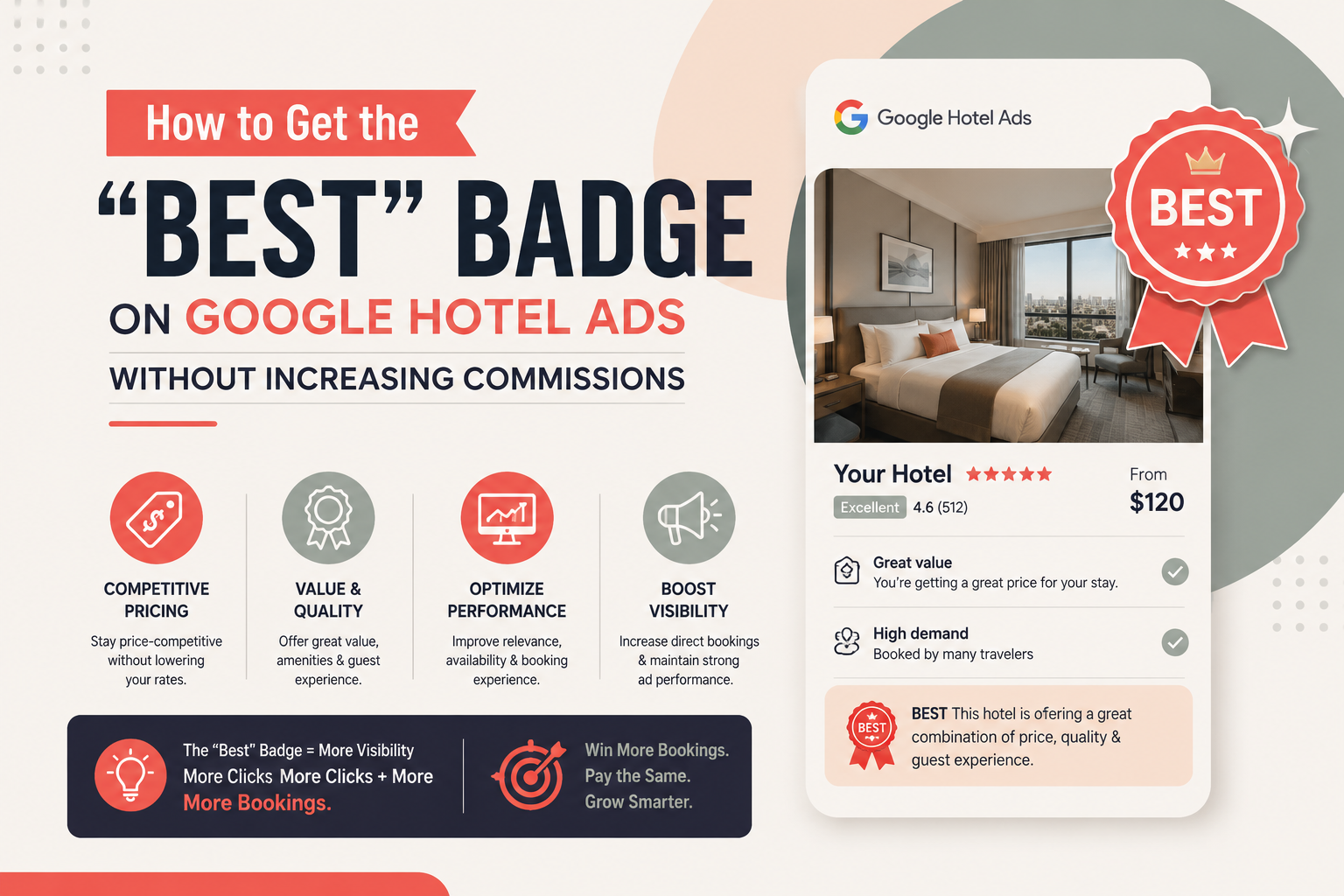
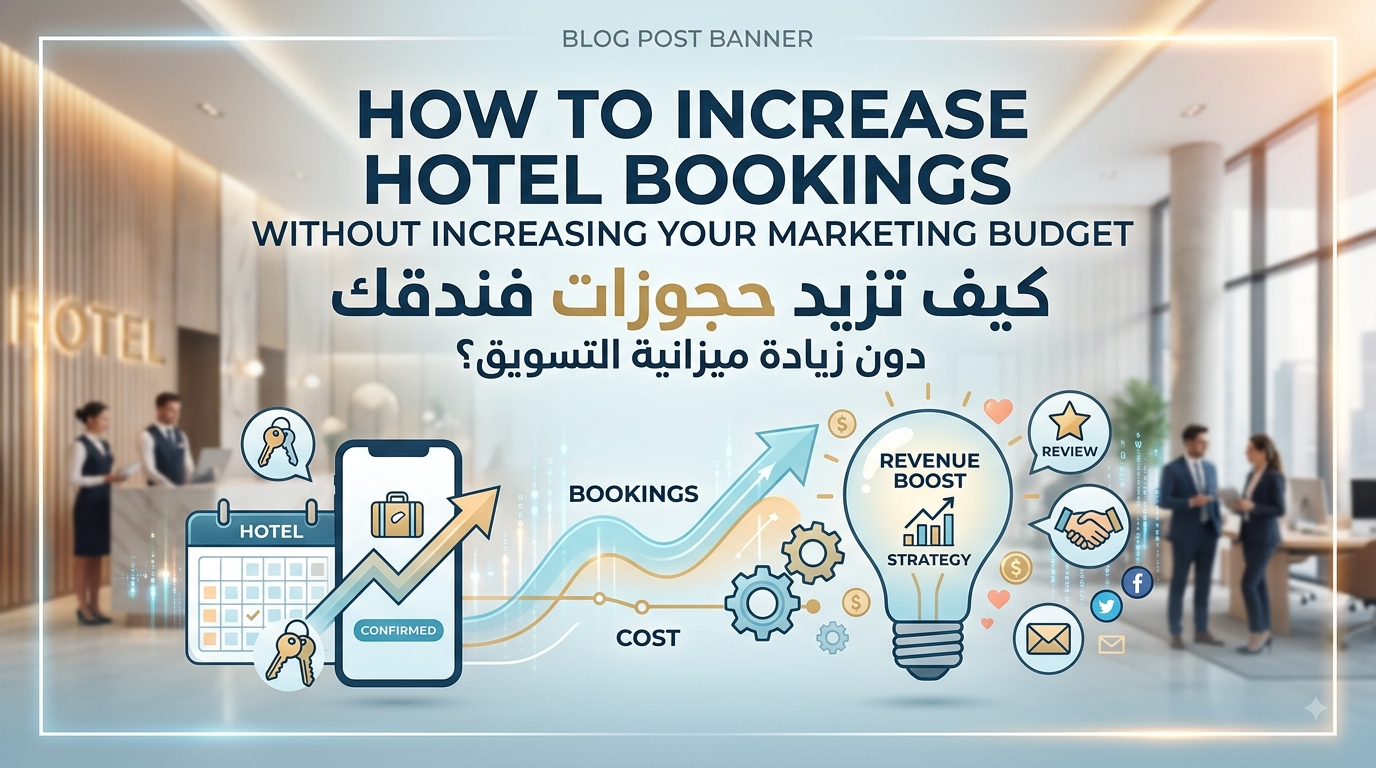
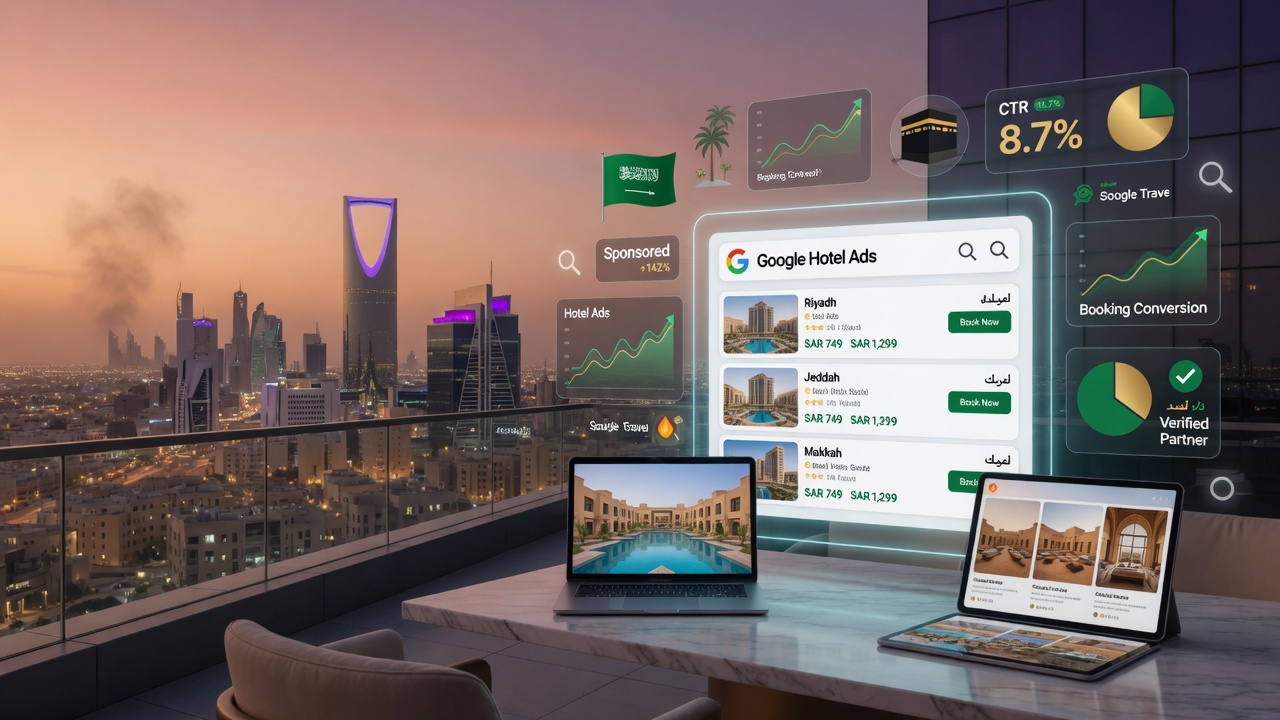
Many hotel owners and revenue managers want to know how to get the “Best” badge on Google Hotel Ads without paying a higher commission or aggressively increasing advertising costs. The practical answer is not to chase a badge or top position through spending alone. The stronger strategy is to improve price accuracy, direct-booking value, landing-page quality, conversion tracking, hotel data, and bidding efficiency.
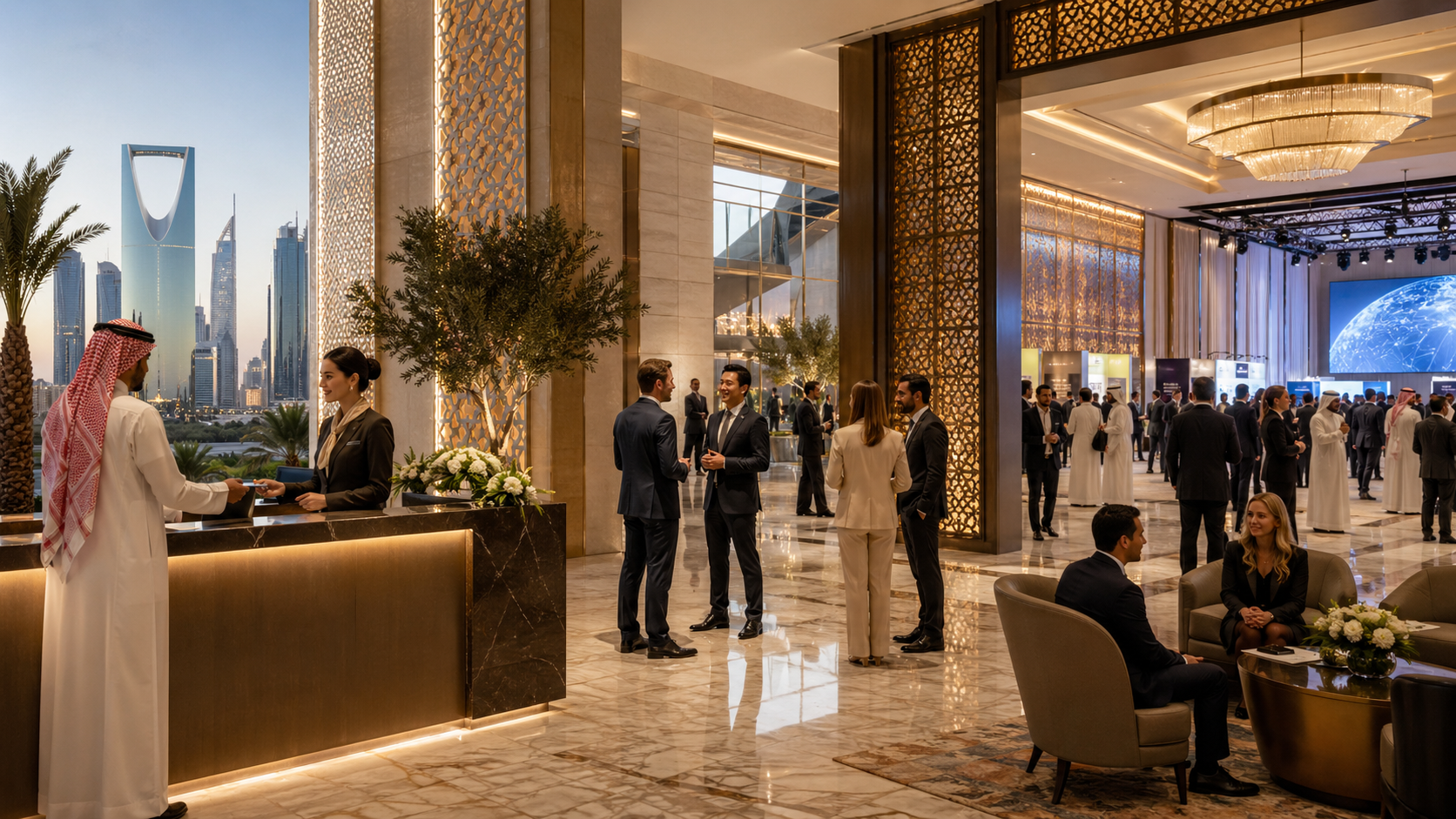
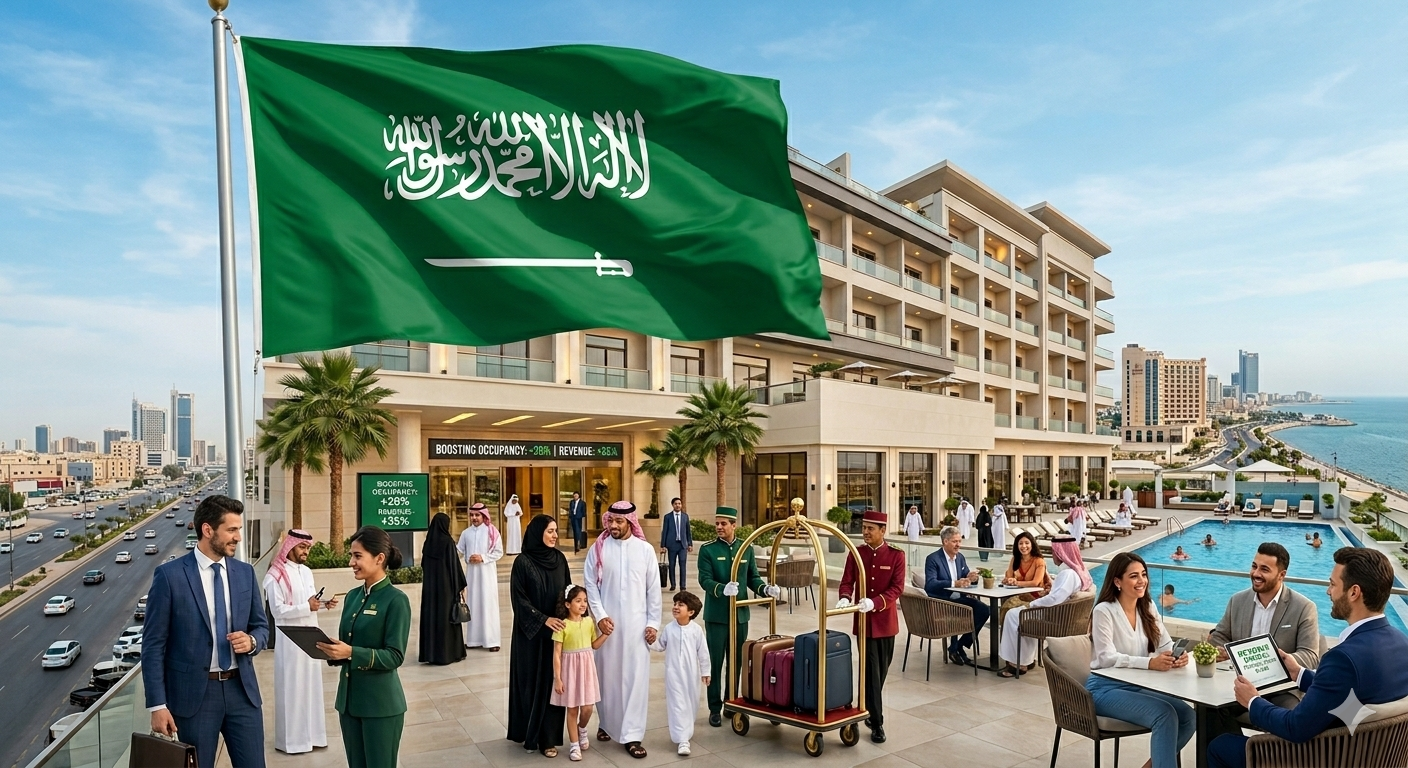
This approach is especially relevant to hotels in Saudi Arabia. Properties in Riyadh, Jeddah, Makkah, Madinah, Al Khobar, Dammam, AlUla, and emerging tourism destinations face increasing competition from international hotel groups, online travel agencies, serviced apartments, and new hospitality developments. A hotel that improves its Google booking presence can attract more direct reservations while protecting its net room revenue.
Direct answer: Google does not document a universal hotel-booking badge officially called “Best” that can be guaranteed by paying a higher commission. Paid hotel booking links are identified with an “Ads” badge, while free booking links appear under “All options.” What hotels often call the “Best” position is usually a prominent, competitive, and trustworthy booking offer. To improve your chance of earning that position, focus on excellent price accuracy, relevant rates, a clear booking journey, strong direct-booking benefits, and bidding based on profitable reservation value.
What Does the “Best” Badge on Google Hotel Ads Really Mean?
The phrase “Best badge” is commonly used by hotel teams to describe a highly visible booking link, an attractive official-site rate, or a preferred-looking offer on a hotel’s Google profile. However, it is important to separate this informal industry language from Google’s documented interface.
When travellers search for hotels through Google Search or Google Maps, they may see hotel photos, ratings, amenities, prices, and booking links. Paid booking links carry an “Ads” label, while free booking links are listed within the “All options” area. Google may also show the lowest price supplied by participating partners for a property in hotel search results.
For hotel managers, the useful goal is therefore not a decorative label. The real goal is to create the most compelling direct-booking option while maintaining an acceptable acquisition cost. A successful offer should be easy to find, accurately priced, clearly differentiated, and simple to book.
The strongest Google Hotel Ads position is not simply the one that pays the most. It is the one that combines a competitive bid, accurate pricing, traveller relevance, and a booking experience that converts.
How Google Hotel Ads Ranking Works
Google states that hotel ad ranking is determined through an auction that considers both the partner’s bid and the quality of the advertisement. Quality factors include, but are not limited to, the accuracy of the partner’s prices and how effectively the offer addresses the traveller’s needs. This means a larger bid can improve competitiveness, but spending alone does not replace quality.
The Bid
The bid represents how much the advertiser is prepared to pay or what return the campaign is expected to achieve. Depending on the available campaign setup, hotel advertising can use strategies focused on return on advertising spend, conversion value, or cost per click.
Price and Offer Quality
The price displayed on Google should match the total bookable price on the hotel’s website for the selected dates, occupancy, room, and conditions. Mandatory charges must be disclosed, and the selected rate should remain easy to identify after the traveller clicks.
Traveller Relevance
A relevant offer matches the traveller’s actual search. For example, a guest searching for two adults in Riyadh for three nights should reach a page showing those dates, the correct occupancy, and an available room. Requiring the guest to repeat the search creates friction and can damage performance.
The Booking Experience
Google’s referral experience policy requires the selected room and rate to be presented prominently, the total price to be shown before personal information is requested, and the booking flow to remain clear and functional. Pages should also load within a reasonable time and should not become unusable for more than ten seconds.
Why Increasing Commission Is No Longer the Right Strategy
The topic of increasing commission requires an important update. Google deprecated commission-based bid strategies for Hotel Ads on February 20, 2025. Google recommended moving eligible campaigns toward strategies such as Target ROAS, Enhanced CPC, or Performance Max for travel goals. Therefore, modern hotel advertising should focus less on raising a commission percentage and more on improving conversion value, return on advertising spend, and data quality.
Important update: If your team still discusses “raising the Google Hotel Ads commission,” review the current campaign setup. The commercial decision should now focus on target return, click cost, conversion value, and total direct-booking profitability rather than an outdated commission-bidding model.
The Most Important Factor: Excellent Price Accuracy
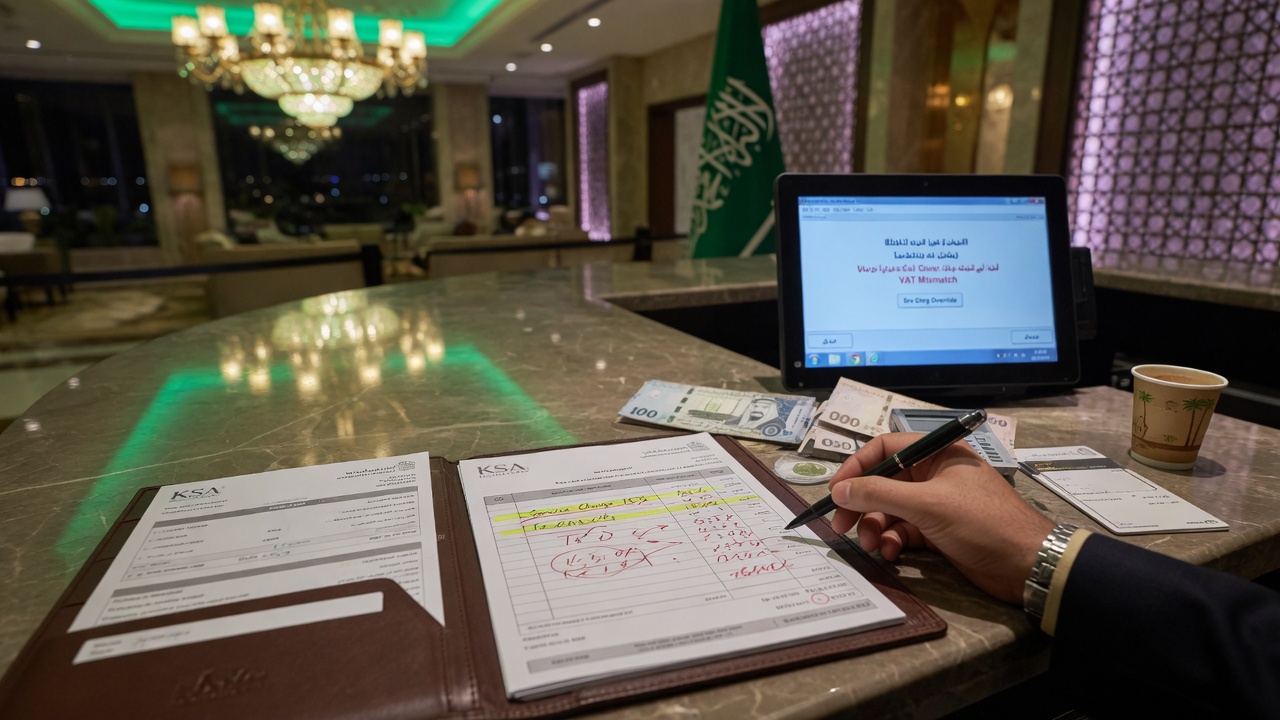
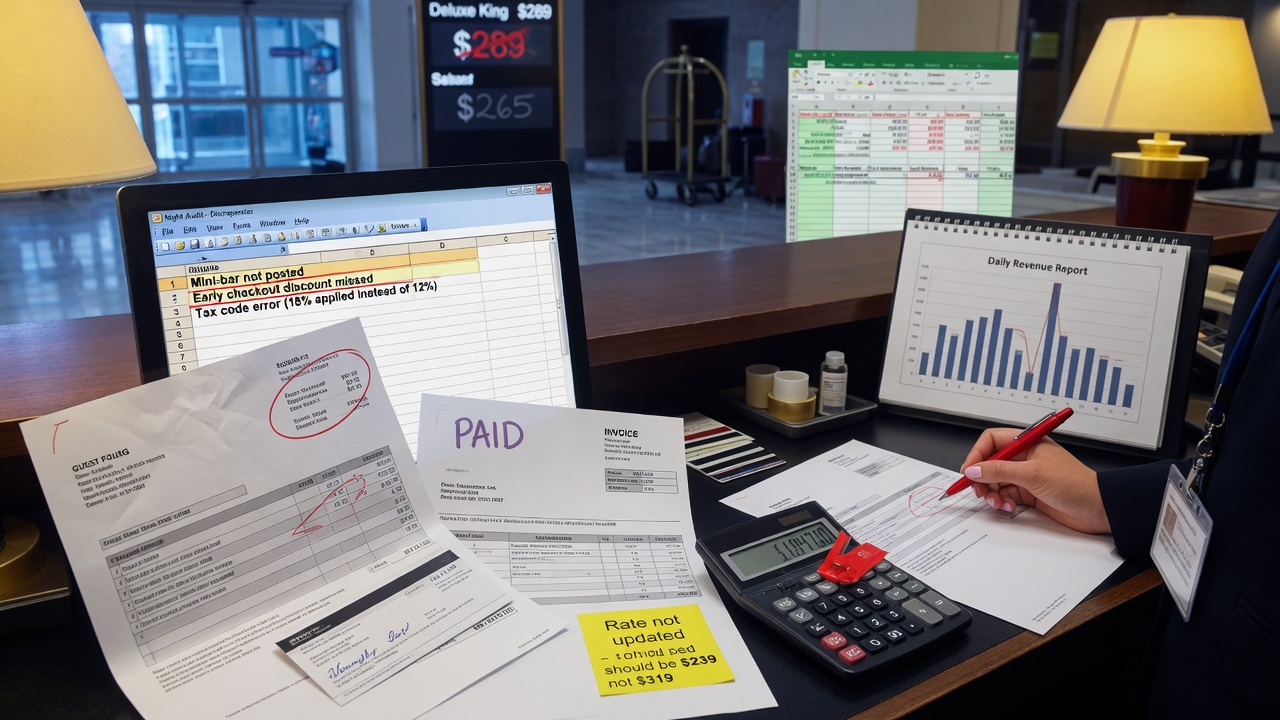
Improving Google Hotel Ads price accuracy is one of the highest-value actions a hotel can take without increasing its advertising cost. Google checks whether the price displayed on its platform matches the total price on the landing and booking pages. It also evaluates taxes, mandatory fees, occupancy, stay dates, refundability, and whether the rate can actually be booked.
Google classifies partner price accuracy from Excellent to Failed. An Excellent score gives ads and free booking links a positioning preference. Fair or Poor performance can negatively affect auction position, advertising cost, and free booking link placement. A Failed score can cause ads and free booking links to be disabled.
Common Causes of Price Inaccuracy
- Rates are changed in the property system but are not updated quickly enough on Google.
- Mandatory taxes or hotel fees appear only at the final payment stage.
- The Google price is calculated for one guest while the landing page shows two guests.
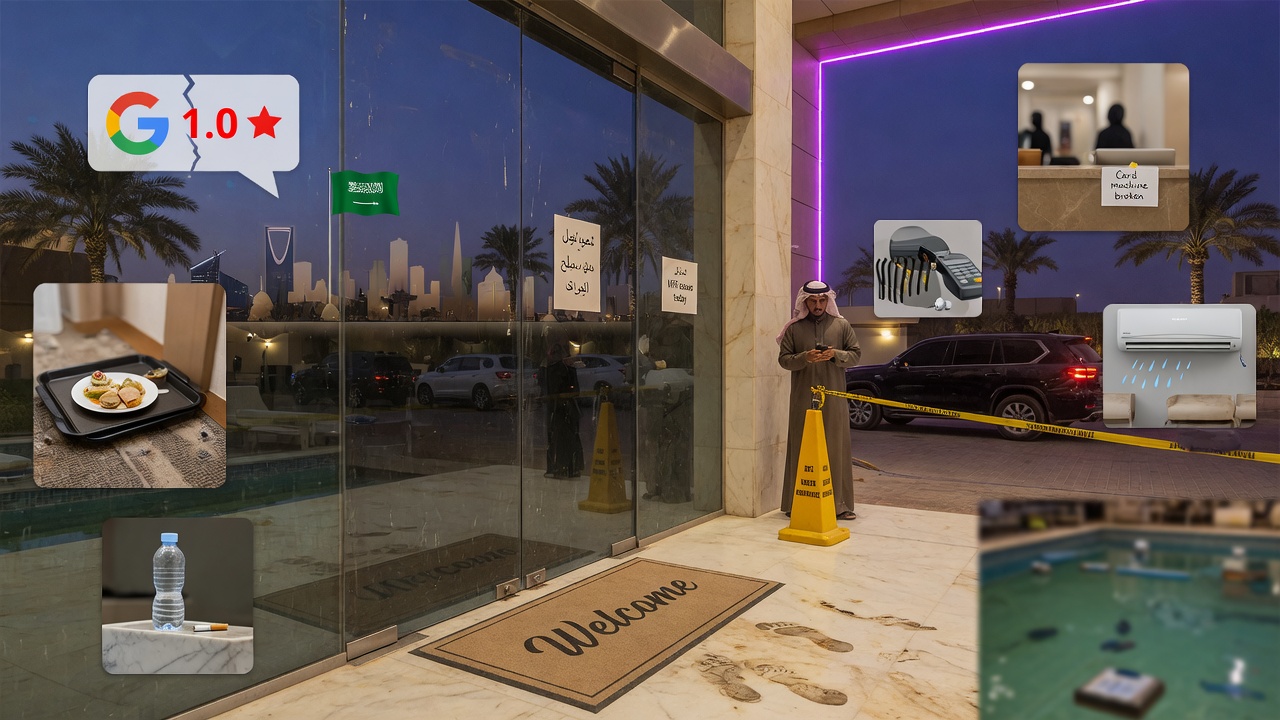
- A room becomes unavailable between the click and the booking-page visit.
- Currency conversion is outdated or inconsistent.
- The advertised rate requires a membership condition that is not properly disclosed.
- An optional service is selected by default and increases the total price.
- The refundability or cancellation terms change after the click.
- The booking engine redirects the guest to a general search page instead of the selected rate.
Price accuracy tip: Review the Hotel Center price accuracy report by property, source market, stay date, room type, and device. Repair repeated mismatches before increasing campaign budgets. Better accuracy can improve position, protect free visibility, reduce wasted clicks, and strengthen guest trust.
10 Ways to Improve Google Hotel Ads Visibility Without Paying More
1. Synchronise Prices and Availability Frequently
Your central reservation system, property management system, channel manager, booking engine, and Google feed should exchange updates reliably. Google recommends refreshing pull prices several times a day and updating changed prices whenever rates change in the hotel’s system.
2. Display the Complete Price Clearly
Do not surprise the guest with additional mandatory charges near the payment stage. Display the total price clearly and provide an understandable breakdown of VAT, municipality-related charges, service charges, and any compulsory fee applicable to the stay.
3. Maintain Direct-Rate Competitiveness
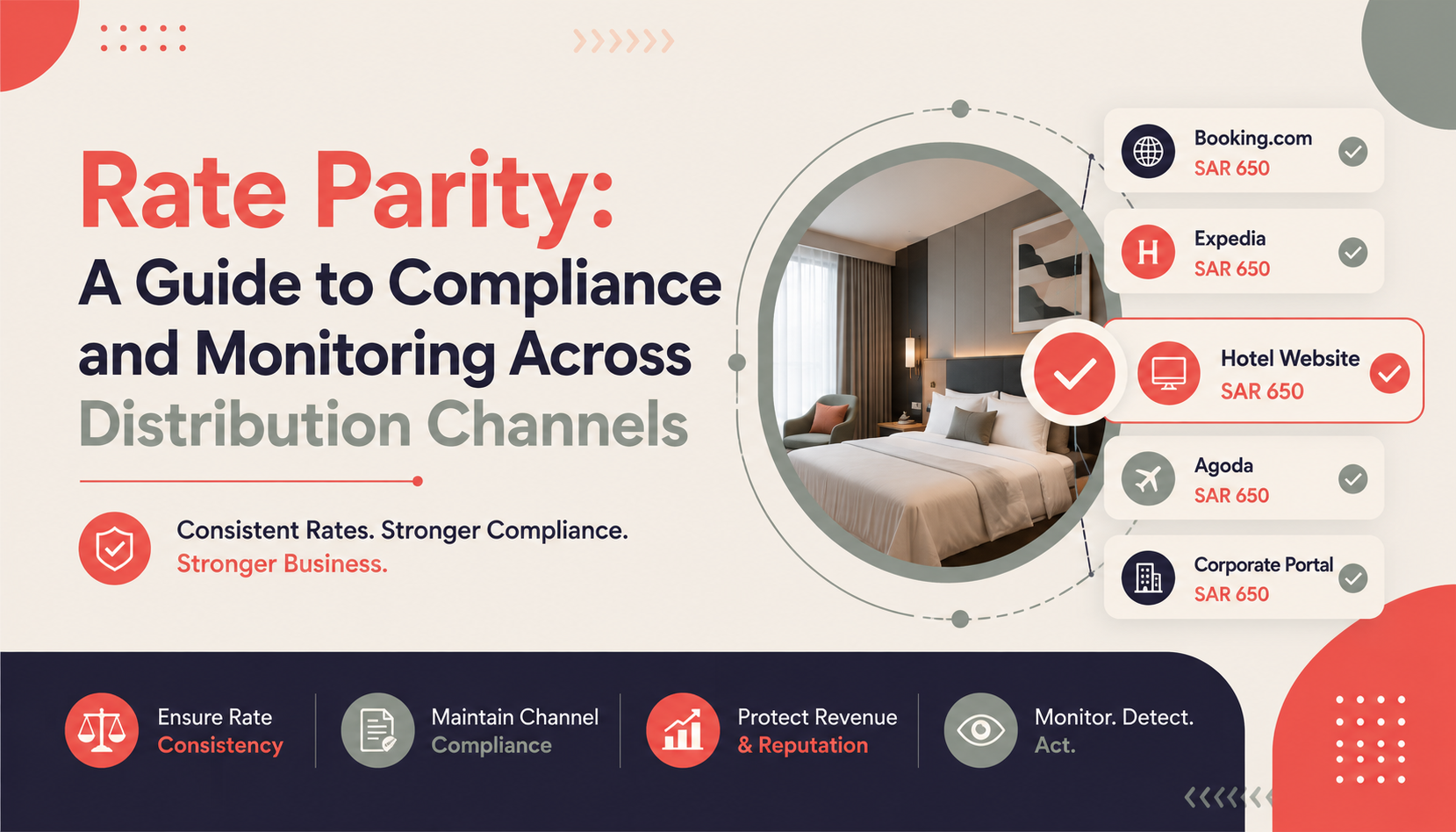
Travellers can compare your direct price with rates from online travel agencies. The official website does not always need to be dramatically cheaper, but it should not be repeatedly more expensive without offering additional value. Audit rate parity by stay date, room type, occupancy, device, and source country.
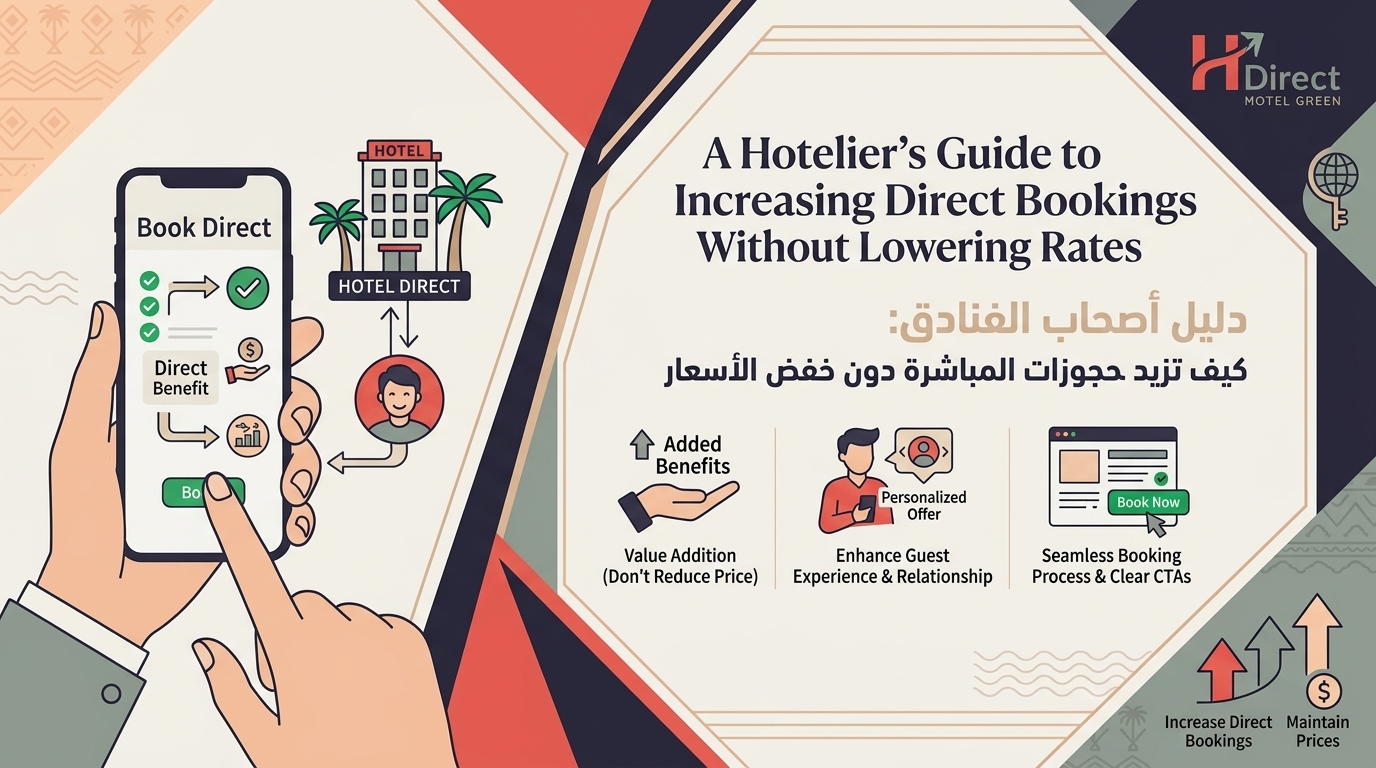
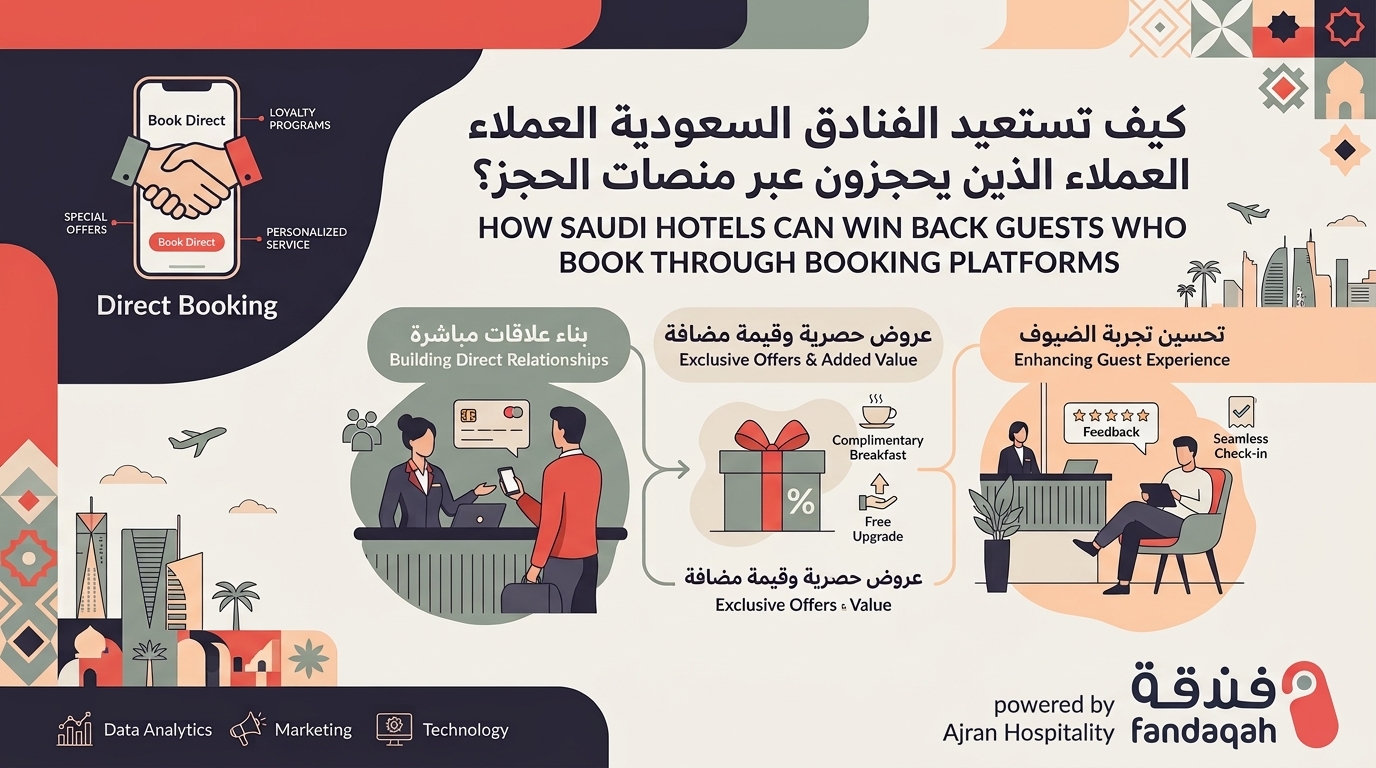
4. Add Low-Cost Direct-Booking Benefits
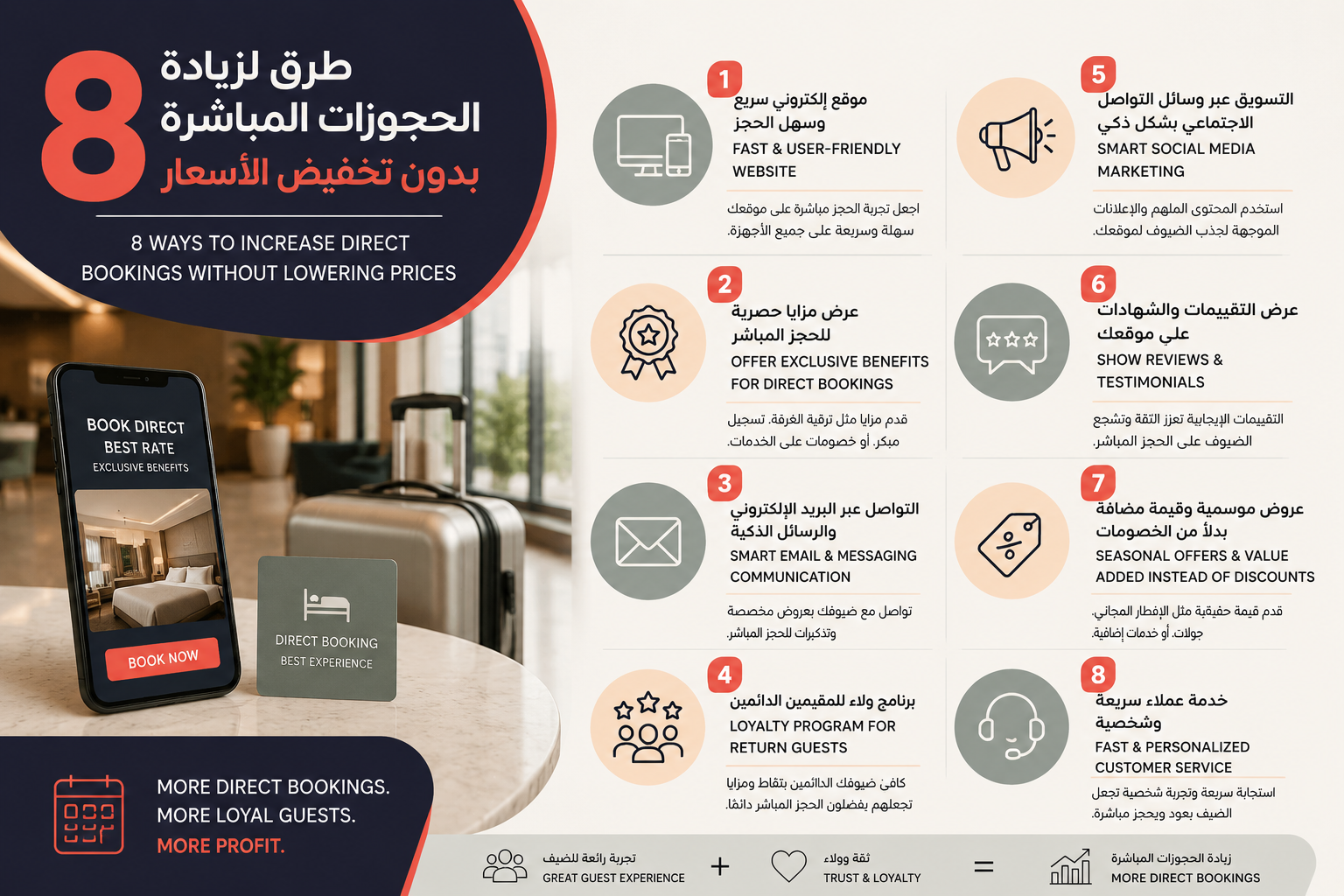
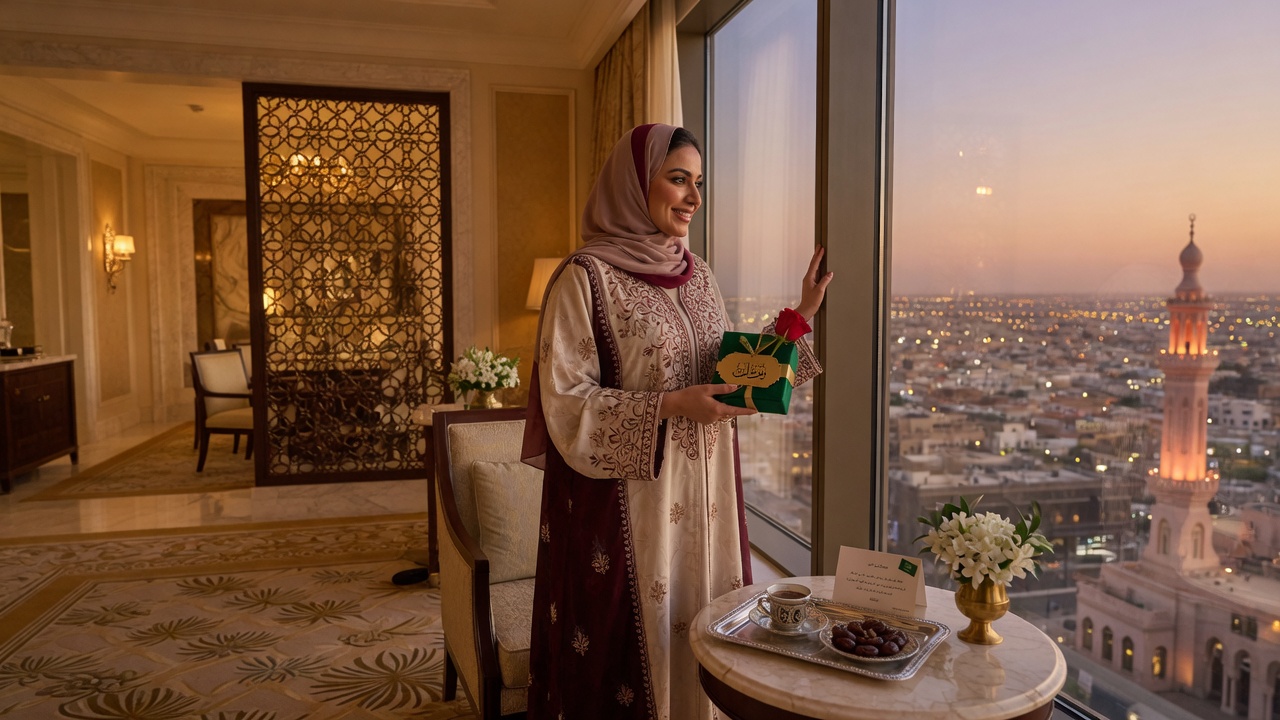
When you cannot offer a lower price, improve the package. Useful benefits for Saudi hotels can include free parking, flexible cancellation, complimentary internet, loyalty credit, a welcome drink, late departure subject to availability, an airport-transfer discount, or breakfast added at a lower cost than a public package.
5. Send Guests Directly to the Selected Offer
Preserve the hotel, check-in date, check-out date, occupancy, language, currency, room, and rate selected on Google. The chosen offer should be visible near the top of the landing page, not hidden behind tabs or below several alternative rates. Google’s referral policy specifically requires a consistent and prominent presentation of the selected room and rate.
6. Improve Mobile Booking Performance
Test the booking journey on common mobile screen sizes. The page should open quickly, the price should be readable, room details should be easy to scan, and the main booking button should be obvious. Avoid oversized images, intrusive pop-ups, unnecessary animation, and forms that are difficult to complete on a phone.
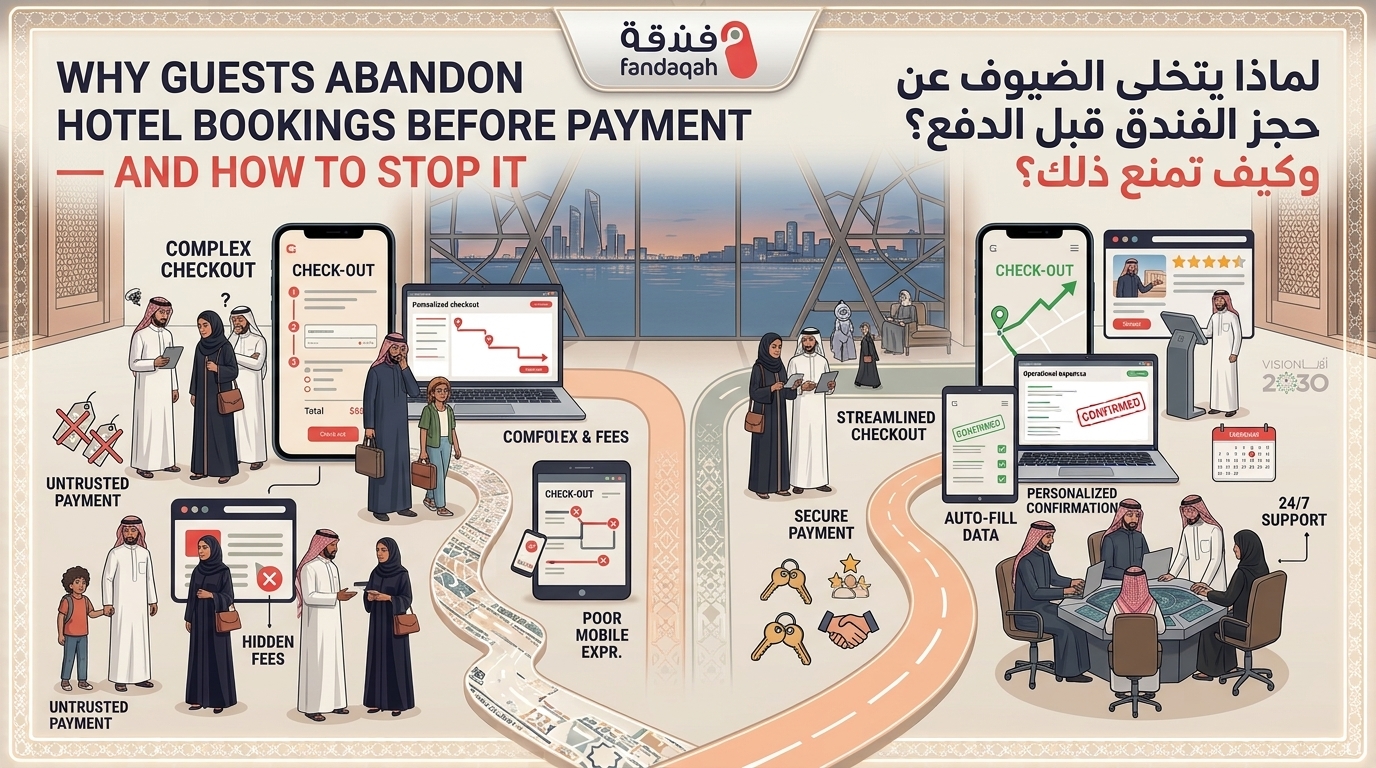
7. Reduce Booking Friction
Ask only for information required to complete the reservation. Do not force account creation, repeat date selection, or require the traveller to contact the hotel for a rate advertised as bookable online. Display the final price before requesting personal details, as required by Google’s referral experience policy.
8. Improve Hotel Content and Business Information
Maintain accurate property details, including location, category, contact information, amenities, photographs, check-in policies, parking, breakfast, accessibility, and transport options. Travellers view these details alongside prices and booking links, so weak content can reduce confidence even when the rate is competitive.
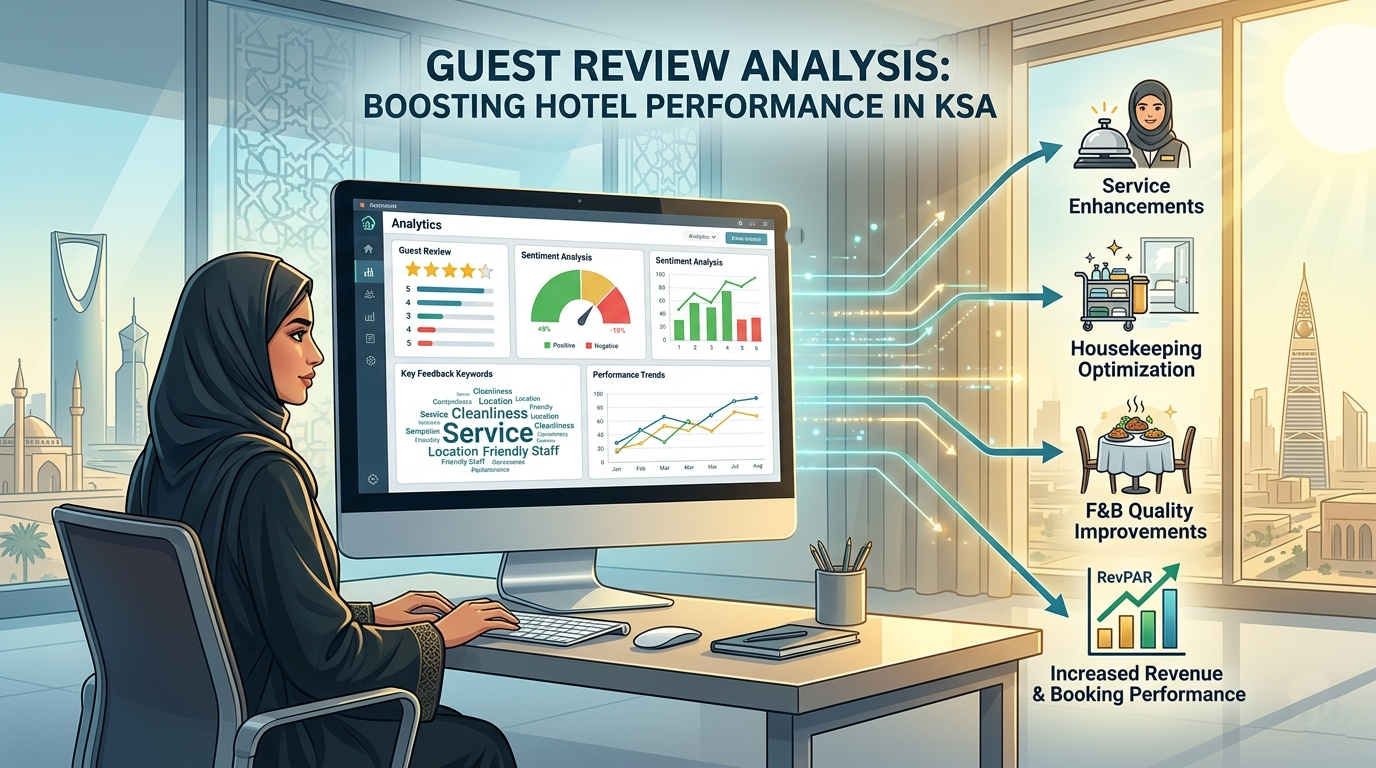
9. Track Reservation Value Correctly
Send accurate reservation values, currency, conversion dates, and cancellation updates into your measurement system. Without clean data, an automated bidding strategy may optimise for incomplete or misleading results. Measure confirmed and net reservation value rather than treating every booking as equally profitable.
10. Strengthen Free Booking Links
Free booking links appear under “All options,” and clicks on those links are free. They still depend on accurate rates and a compliant booking experience. A hotel that improves free-booking-link eligibility can capture additional direct demand without increasing paid-media costs.
Google Hotel Ads Optimisation Table
| Optimisation Area |
Why It Matters |
Recommended Action |
| Price accuracy |
Affects auction position, costs, and free-link placement |
Repair mismatches and maintain an Excellent score |
| Rate availability |
Prevents clicks from reaching unavailable offers |
Improve feed speed and system synchronisation |
| Direct-rate value |
Makes the official website more attractive |
Offer parity, a lower price, or a valuable inclusion |
| Landing-page relevance |
Reduces confusion and abandonment |
Preserve selected dates, occupancy, room, and rate |
| Mobile usability |
Supports faster and easier booking |
Simplify pages, buttons, forms, and payment steps |
| Conversion data |
Helps automated bidding value profitable demand |
Track revenue, currency, cancellations, and net value |
| Free booking links |
Can generate direct traffic without click charges |
Maintain eligibility, accurate rates, and compliant pages |
Best Google Hotel Ads Strategies for Saudi Hotels
Business Hotels in Riyadh
Riyadh hotels can segment performance around weekday demand, exhibitions, conferences, government activity, and corporate travel. Instead of bidding aggressively every day, prioritise valuable dates and traveller segments. Direct-booking packages may include breakfast, flexible cancellation, parking, workspace access, and late departure subject to availability.
City and Airport Hotels in Jeddah
Jeddah hotels should highlight proximity to the airport, commercial districts, event areas, medical facilities, and transport connections. An airport-transfer offer, parking inclusion, or flexible arrival policy may create more value than a large discount.
Hotels in Makkah and Madinah
Properties in Makkah and Madinah should pay particular attention to occupancy, meal plans, room capacity, transport details, and cancellation terms. Rapid demand changes during religious seasons can create price mismatches if system updates are delayed. The room type and total amount must remain consistent throughout the booking journey.
Resorts and Emerging Destinations
Hotels in AlUla, Red Sea destinations, and other developing leisure markets may compete on experience rather than price alone. Clearly explain whether airport transfers, meals, tours, activities, or destination services are included. A higher direct rate can remain attractive when the value is understandable.
Serviced Apartments and Extended-Stay Properties
Extended-stay accommodation can emphasise kitchens, laundry facilities, parking, workspaces, and weekly-rate value. These features may produce a stronger direct-booking proposition than repeatedly reducing the nightly price.
Increasing Spend vs Improving Quality
| Strategy |
Possible Benefit |
Commercial Risk |
| Increase bids broadly |
May increase visibility and clicks quickly |
Can raise acquisition costs without improving conversion |
| Reduce room rates heavily |
May improve price competitiveness |
Can damage average daily rate and profitability |
| Improve price accuracy |
Supports position, trust, and free-link performance |
Requires reliable systems and daily monitoring |
| Improve booking conversion |
Generates more reservations from existing traffic |
Requires technical and user-experience improvements |
| Optimise for reservation value |
Focuses spend on more valuable demand |
Depends on accurate conversion and revenue data |
Profitability rule: Do not evaluate Google Hotel Ads only by visibility or gross booking value. Calculate net reservation revenue after advertising cost, discounts, payment fees, cancellations, refunds, and operating inclusions.
A 30-Day Google Hotel Ads Improvement Plan
Week 1: Audit Prices and Hotel Data
- Review current and predicted price accuracy.
- Check tax, fee, currency, and occupancy mismatches.
- Test high-demand dates and popular room types.
- Verify hotel name, location, contact details, amenities, and images.
- Confirm that free and paid booking links open correctly.
Week 2: Improve the Booking Journey
- Test landing-page speed and usability on mobile devices.
- Preserve the selected hotel, dates, occupancy, and rate.
- Display the total amount before collecting guest information.
- Remove unnecessary form fields and booking steps.
- Make cancellation and payment conditions easy to understand.
Week 3: Strengthen the Direct Offer
- Compare official-site prices with major travel agencies.
- Add direct-booking benefits with controlled operating costs.
- Review refundable, non-refundable, breakfast, and member rates.
- Create packages for business, family, religious, or extended-stay demand.
- Check whether the most valuable offer is clearly visible after the click.
Week 4: Optimise Campaign Economics
- Measure click-through rate, conversion rate, and booking cost.
- Compare performance by device, market, stay date, and length of stay.
- Confirm that reservation value and currency are tracked correctly.
- Remove cancelled bookings from profitability analysis.
- Shift investment toward demand that produces stronger net revenue.
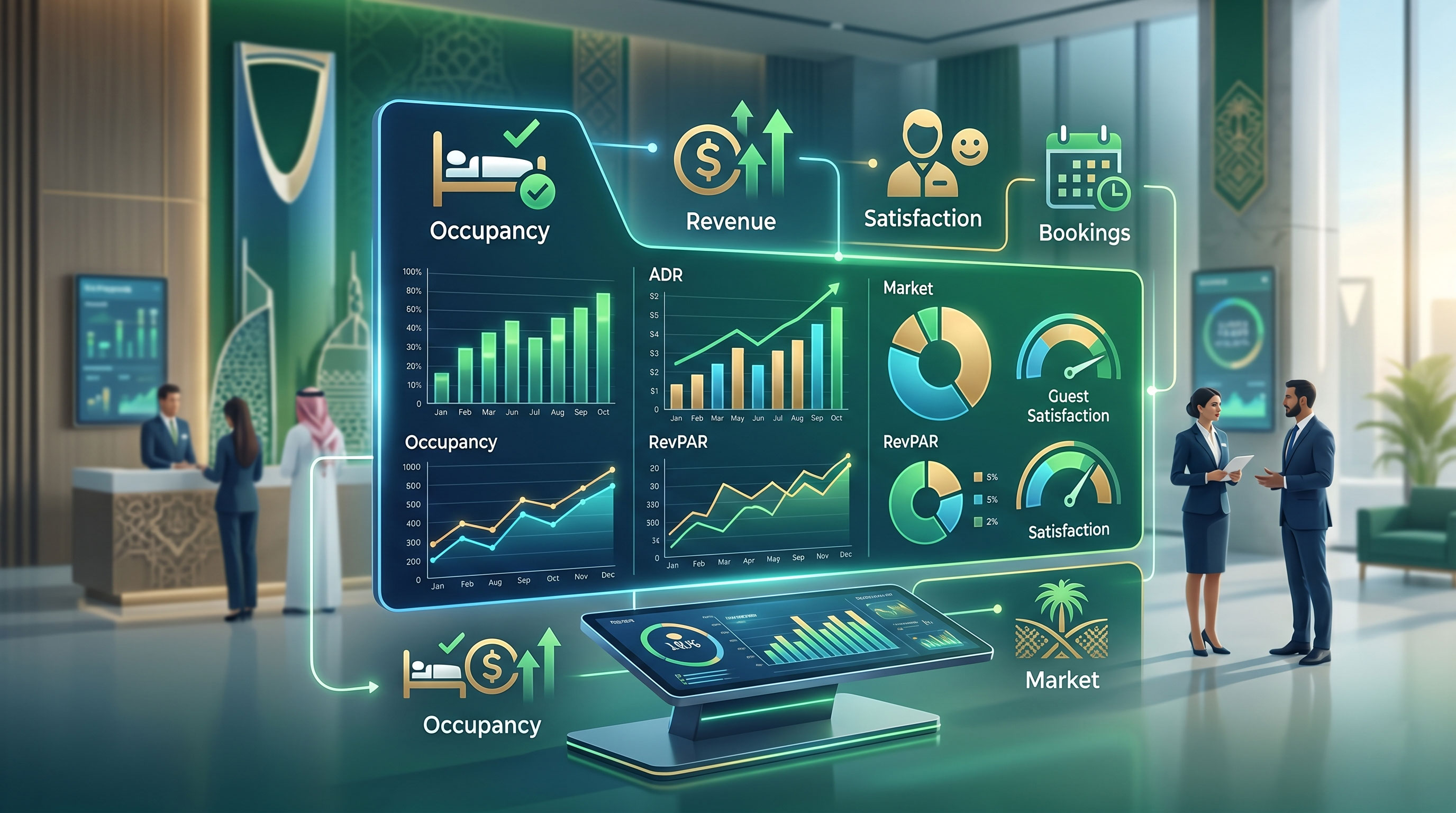
Performance Metrics That Matter More Than a Badge
- Impression share: How often your booking link appears when it is eligible.
- Click-through rate: The percentage of impressions that generate visits.
- Booking conversion rate: The percentage of visits that become reservations.
- Cost per booking: Advertising cost divided by valid reservations.
- Return on advertising spend: Reservation value compared with media cost.
- Average booking value: Revenue generated by the average reservation.
- Cancellation rate: The percentage of tracked reservations later cancelled.
- Net revenue: Revenue after advertising costs, discounts, refunds, and fees.
- Direct-booking share: The proportion of reservations completed through direct channels.
- Repeat direct-booking rate: The percentage of acquired guests who later return without paid reacquisition.
Common Mistakes That Reduce Google Hotel Ads Performance
- Increasing bids before fixing inaccurate rates.
- Advertising a low base rate and adding mandatory fees later.
- Sending travellers to the hotel homepage instead of the selected offer.
- Losing selected dates or occupancy after the click.
- Using a slow booking engine that performs poorly on mobile.
- Forcing guests to register before viewing the final amount.
- Failing to track cancellation-adjusted reservation value.
- Offering a large direct discount without calculating net profit.
- Ignoring free booking links and focusing only on paid visibility.
- Using outdated commission-bidding assumptions.
- Measuring success by clicks or position instead of profitable bookings.
Future Trends, Artificial Intelligence, and Saudi Vision 2030
Saudi Arabia’s expanding hospitality market will make digital hotel distribution increasingly competitive. As more hotels, resorts, branded residences, and serviced apartments enter the market, properties will need better pricing infrastructure, cleaner content, stronger direct-booking experiences, and more disciplined revenue measurement.
AI-Driven Hotel Discovery
Travellers increasingly use conversational search and artificial intelligence to compare hotels. Clear property information, accurate amenities, consistent rates, understandable policies, and relevant destination details help machines interpret when a property is suitable. This is why Generative Engine Optimization should complement traditional search optimisation.
Real-Time Pricing Infrastructure
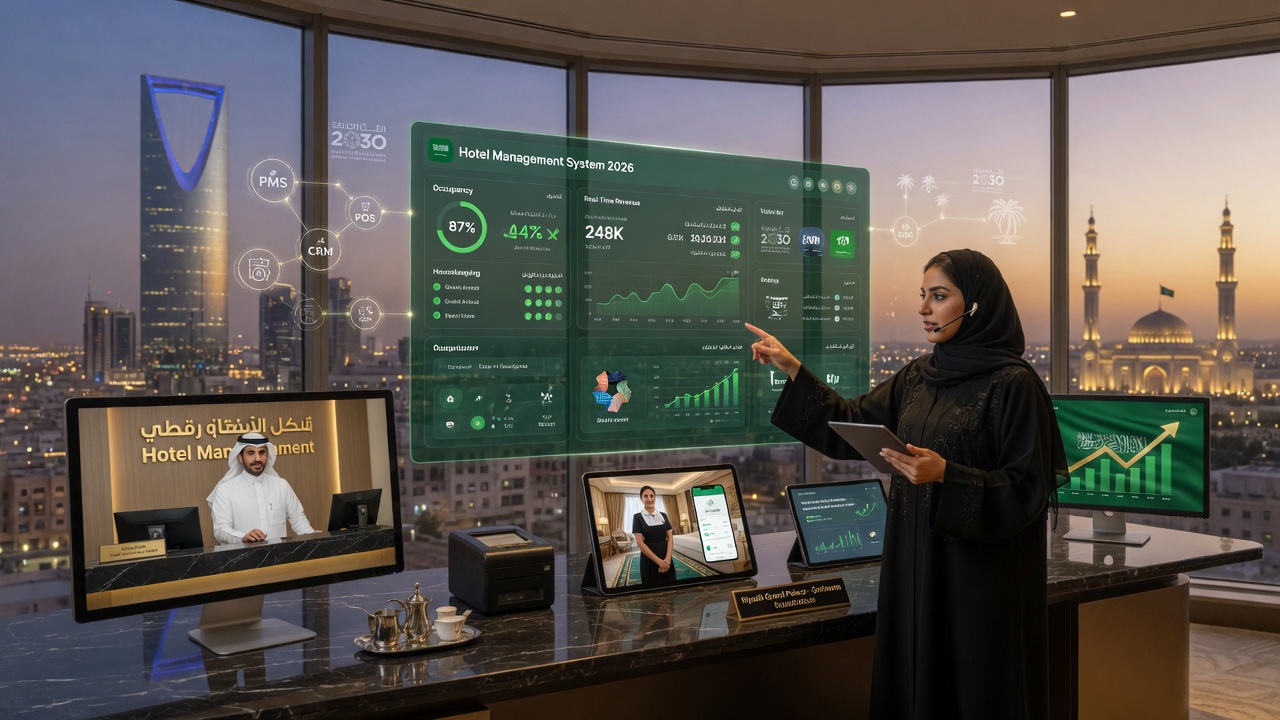
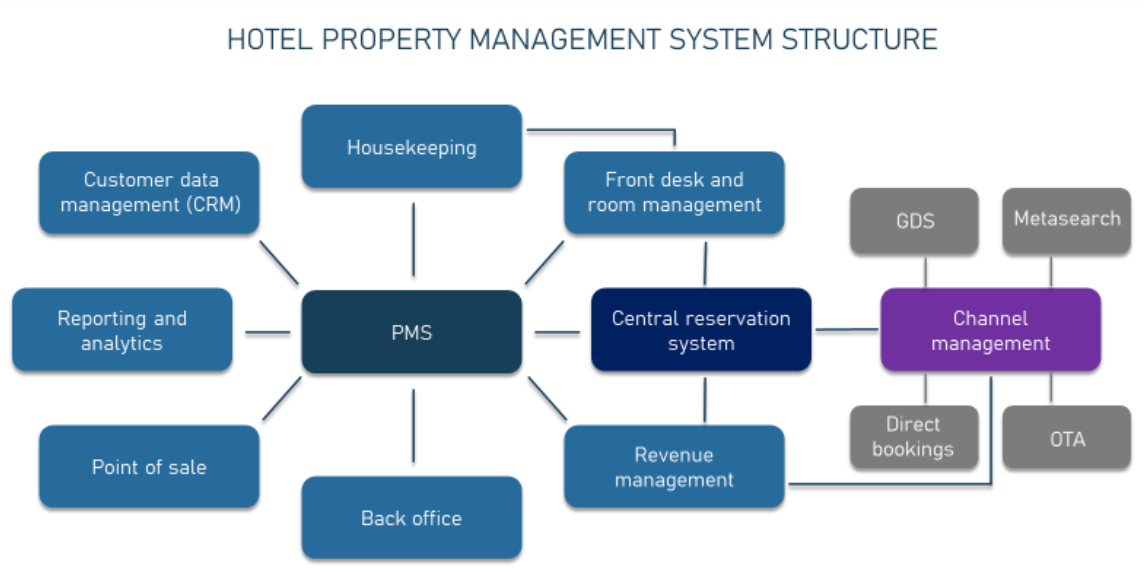
More hotels will connect revenue management systems, property management systems, central reservation platforms, channel managers, booking engines, Hotel Center, and analytics tools. Faster communication between systems will reduce stale rates and improve the ability to respond to events, seasonality, and demand changes.
Value-Based Advertising
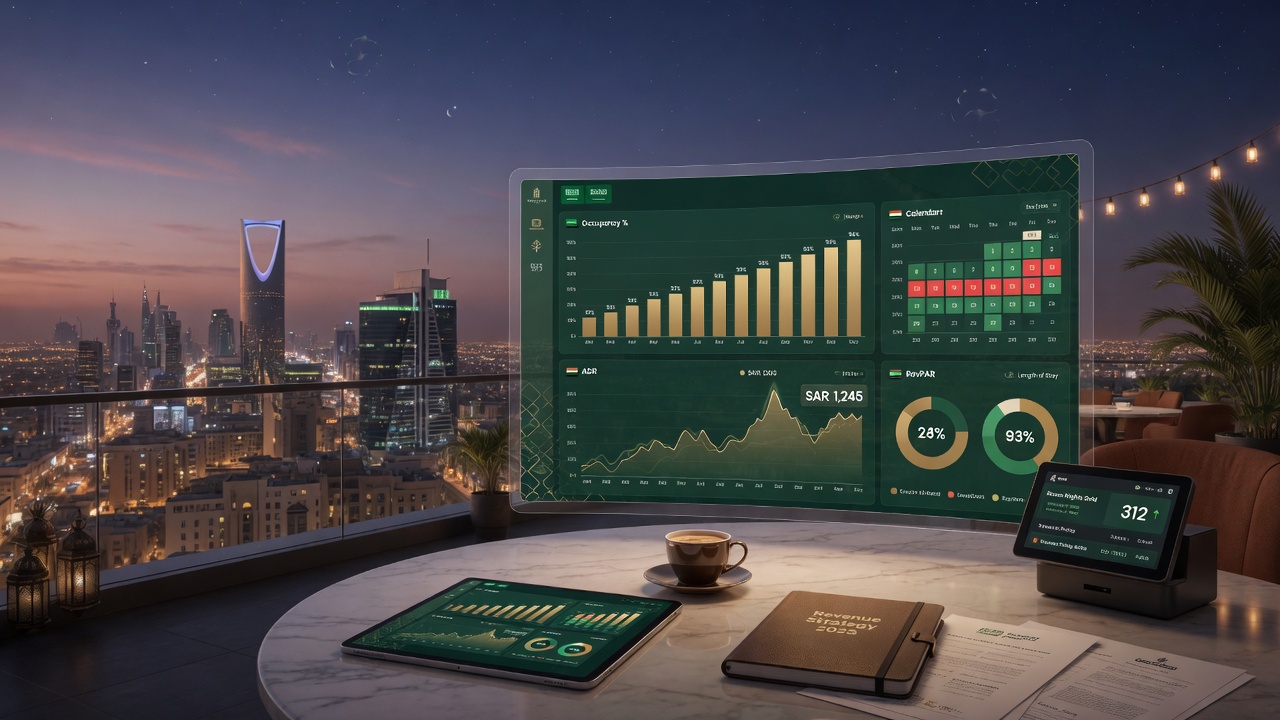
Hotel teams will move away from asking how much they should pay for the highest position. The stronger question will be how much the property can profitably invest to acquire a reservation with a specific value, length of stay, cancellation risk, and likelihood of returning.
Vision 2030 Relevance
The continued development of tourism, business events, entertainment, cultural destinations, and major projects under the broader Vision 2030 transformation creates opportunities for Saudi hotels. Properties that build reliable direct-distribution capabilities can compete more effectively for domestic guests, international visitors, corporate travellers, groups, and event-related demand.
Frequently Asked Questions About the “Best” Badge on Google Hotel Ads
Is there an official “Best” badge on Google Hotel Ads?
Google’s hotel documentation describes paid booking links marked with an “Ads” badge and free booking links under “All options.” It does not describe a universal, guaranteed hotel badge officially named “Best.” Hotels commonly use the phrase to refer to a prominent or especially competitive booking offer.
Can a hotel improve its ranking without increasing advertising costs?
Yes. Improving price accuracy, rate availability, landing-page relevance, mobile usability, conversion tracking, and direct-rate value can improve efficiency. Google confirms that hotel ad ranking considers both bids and advertisement quality.
Are commission-based Hotel Ads campaigns still available?
Google deprecated commission-based Hotel Ads bid strategies on February 20, 2025. Google advised advertisers to consider alternatives such as Target ROAS, Enhanced CPC, and Performance Max for travel goals.
What should a hotel improve first?
Start with price accuracy and bookability. The total amount on the hotel website should match the amount shown on Google for the selected dates and occupancy. Poor price accuracy can negatively affect auction position, advertising cost, and free booking link placement.
How can a direct hotel rate compete with an online travel agency?
The hotel can offer the same or a lower price, or add a useful direct-booking benefit such as flexible cancellation, parking, breakfast value, loyalty credit, or late departure. The benefit should be clear, genuine, and easy to obtain.
Do free booking links generate direct hotel reservations?
They can. Free booking links appear under “All options,” and Google does not charge for clicks on those links. The hotel must still maintain accurate prices and a suitable referral and booking experience.
Does website speed affect Hotel Ads performance?
A slow or non-functional page harms the booking experience and conversion rate. Google’s referral experience policy requires pages to load within a reasonable time and considers a page non-functional when users cannot interact with it for more than ten seconds.
How should a Saudi hotel measure campaign profitability?
Calculate net reservation revenue after advertising cost, direct discounts, payment fees, cancellations, refunds, and package inclusions. Compare that result with the net cost of obtaining the same reservation through an online travel agency or another paid channel.
Conclusion
Learning how to get the “Best” badge on Google Hotel Ads without increasing commissions begins with correcting the objective. Hotels should not chase an unofficial badge or the highest position at any cost. They should build the most accurate, relevant, convincing, and profitable direct-booking offer possible.
Start with excellent price accuracy. Make sure mandatory charges are transparent, preserve the selected offer after every click, simplify the mobile booking process, communicate direct-booking value, activate free booking opportunities, and measure reservation value correctly. These improvements can raise conversion and reduce the need to buy visibility through increasingly expensive bids.
For Saudi hotels, the commercial opportunity is significant. As hospitality demand expands under the Kingdom’s wider tourism and economic transformation, hotels with strong direct-distribution systems will be better positioned to attract valuable guests, control acquisition costs, and build long-term customer relationships.
Improve Quality Before Increasing Spend
Audit your Hotel Center price accuracy, test the complete mobile booking journey, compare your direct rate with travel agencies, improve free booking links, and optimise campaigns around net reservation value rather than position alone.
SEO, AEO, and GEO Keyword Strategy
Primary Keyword: How to get the “Best” badge on Google Hotel Ads
Secondary Keywords: Google Hotel Ads optimisation, Google Hotel Ads for Saudi hotels, hotel price accuracy, direct hotel bookings, Google Hotel Center, free booking links, hotel advertising strategy, hotel booking conversion, hotel revenue management, hotel rate parity
Long-Tail Keywords: how to improve Google Hotel Ads ranking without paying more, how Saudi hotels can increase direct bookings from Google, how to improve hotel price accuracy in Google Hotel Center, best Google Hotel Ads strategy for hotels in Saudi Arabia, how to reduce Google Hotel Ads cost per booking, how to optimise free booking links for a hotel, how to compete with online travel agencies on Google Hotels
Tags
Google Hotel Ads, Google Hotel Center, Saudi Hotels, Hotel Price Accuracy, Direct Hotel Bookings, Free Booking Links, Hotel Revenue Management, Hotel Rate Parity, Hotel Booking Engine, Hotel Digital Marketing, Hotel Conversion Optimisation, Saudi Hospitality, Vision 2030, Travel Advertising