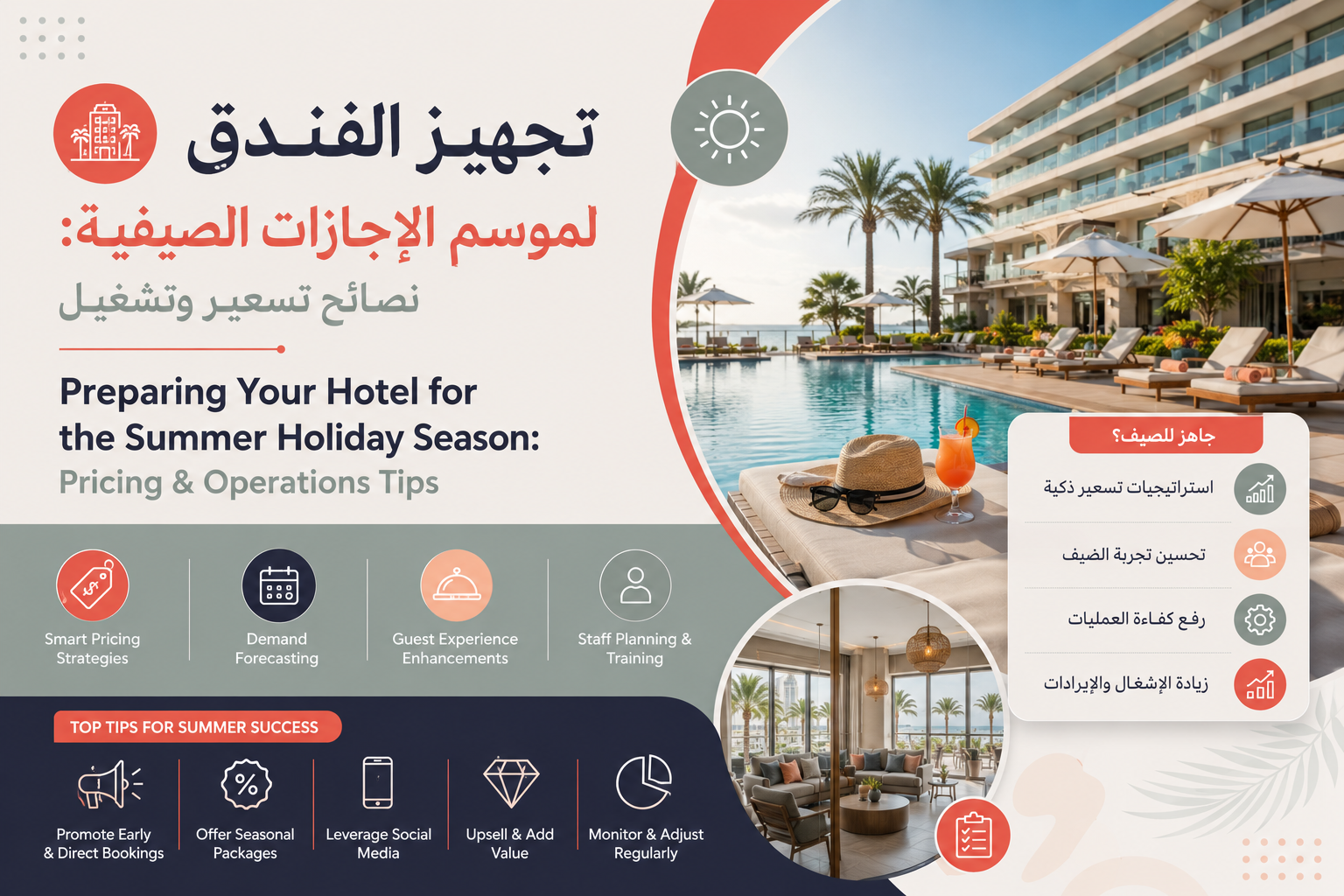
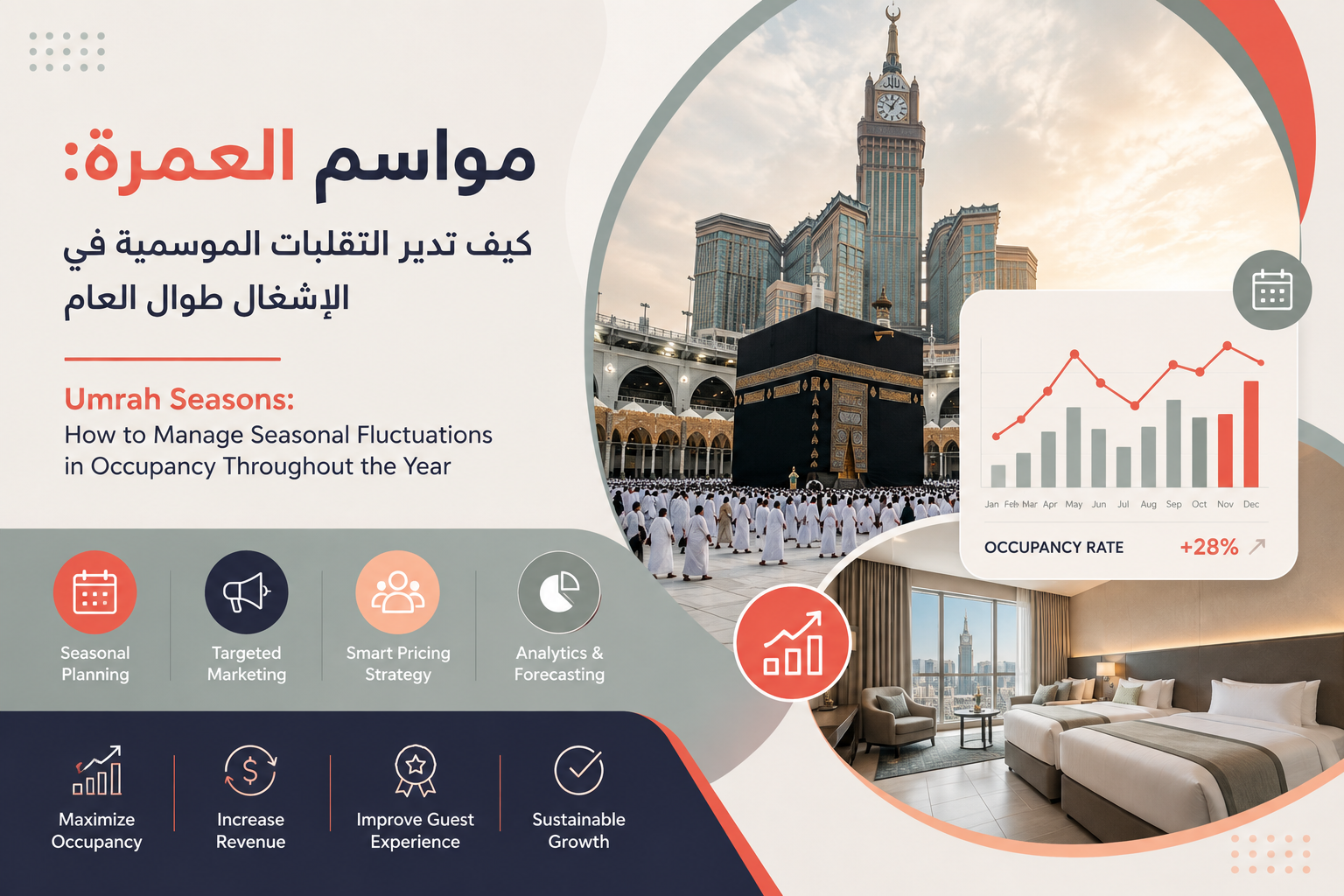
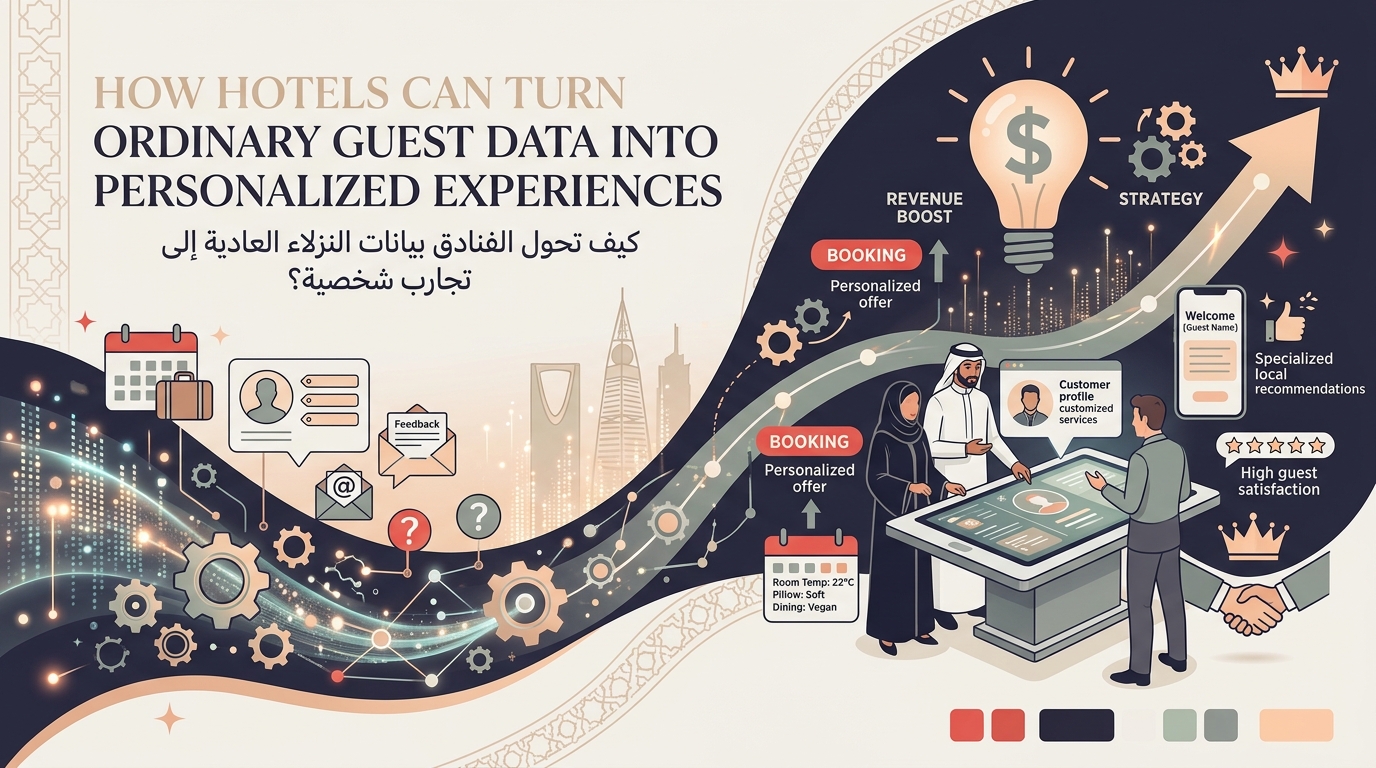
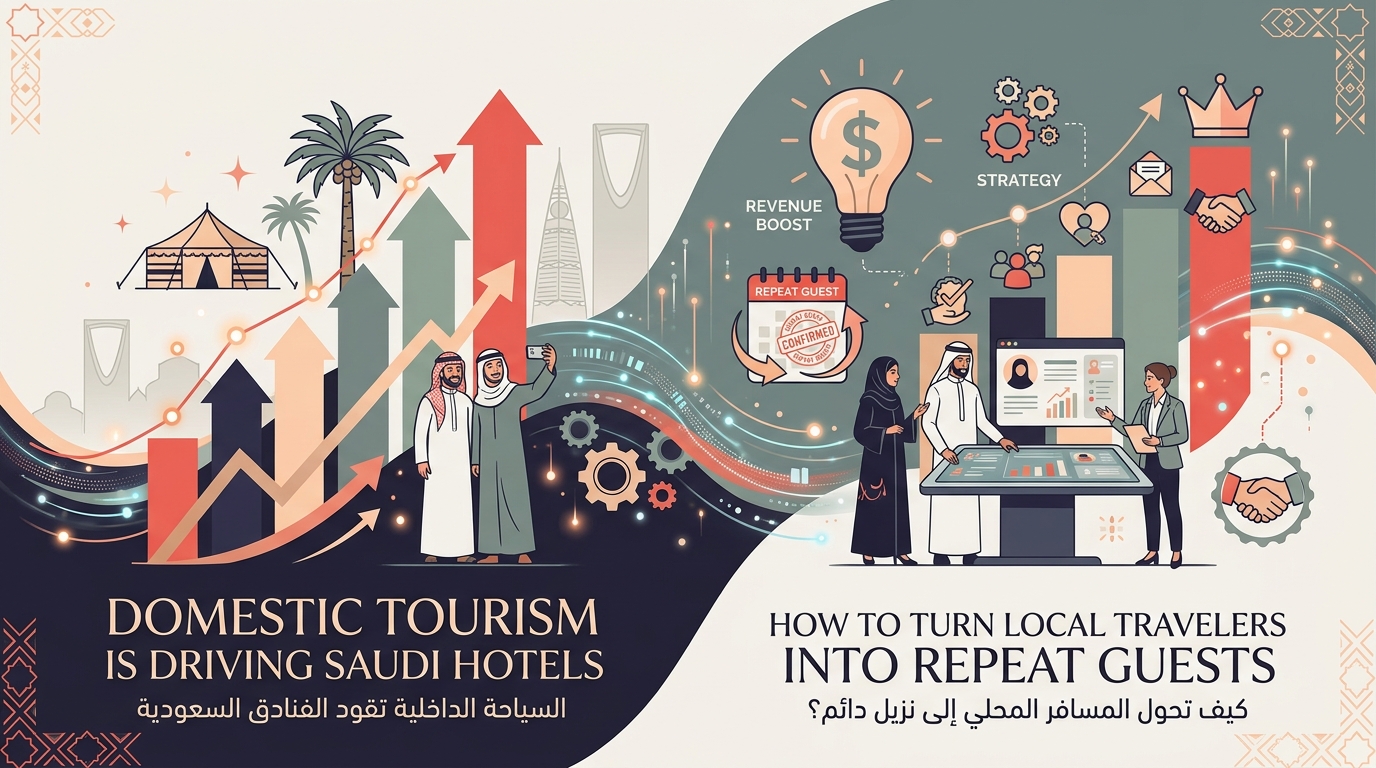
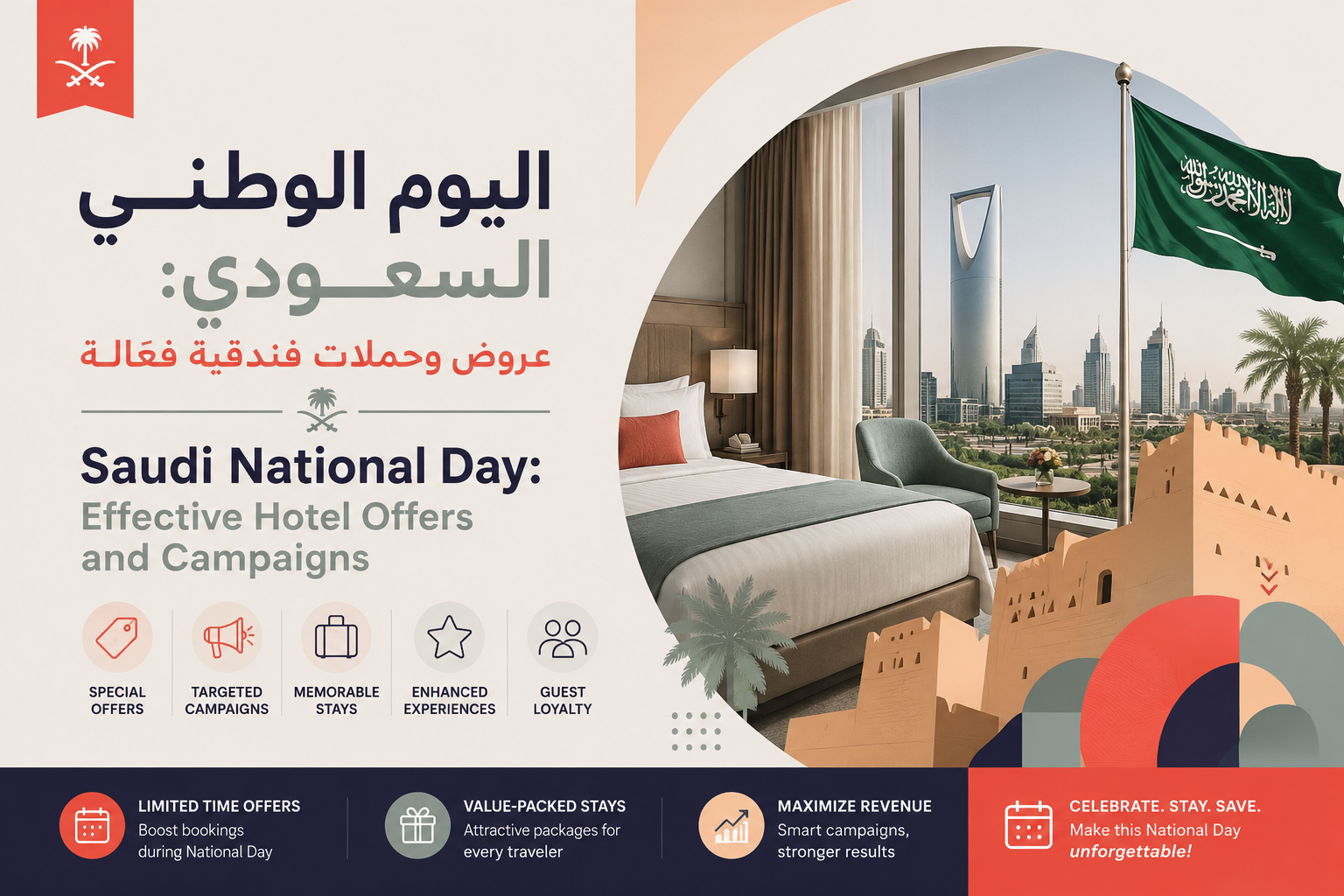
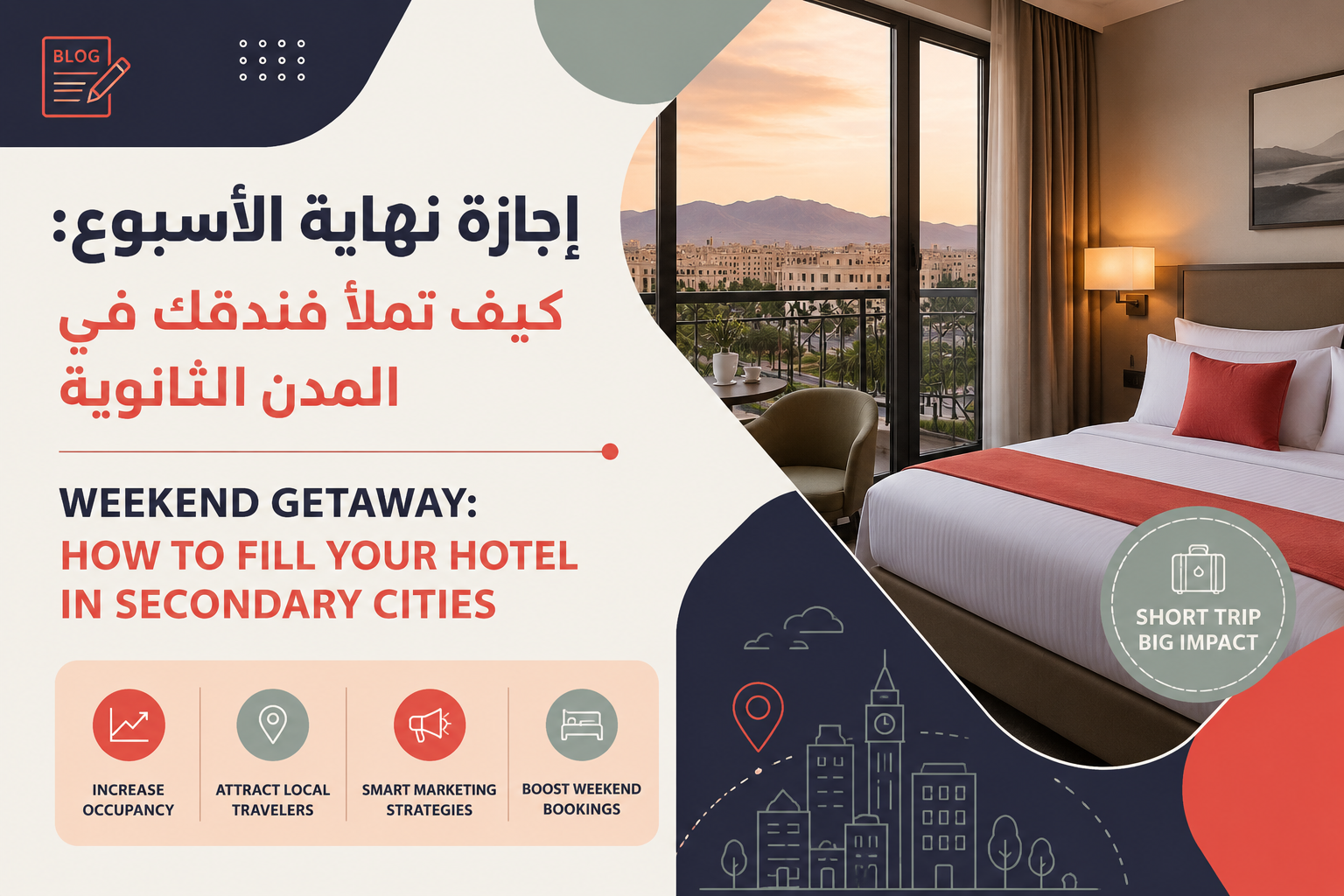
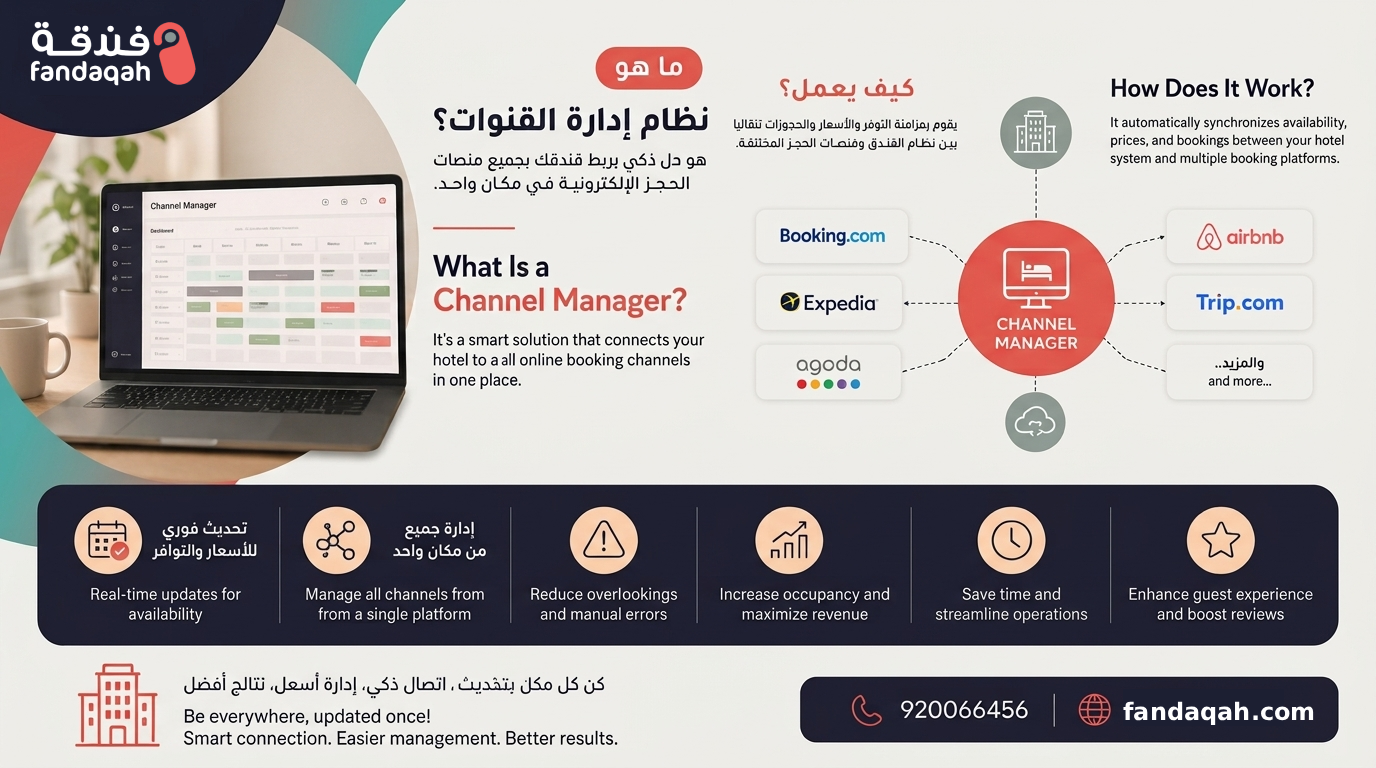
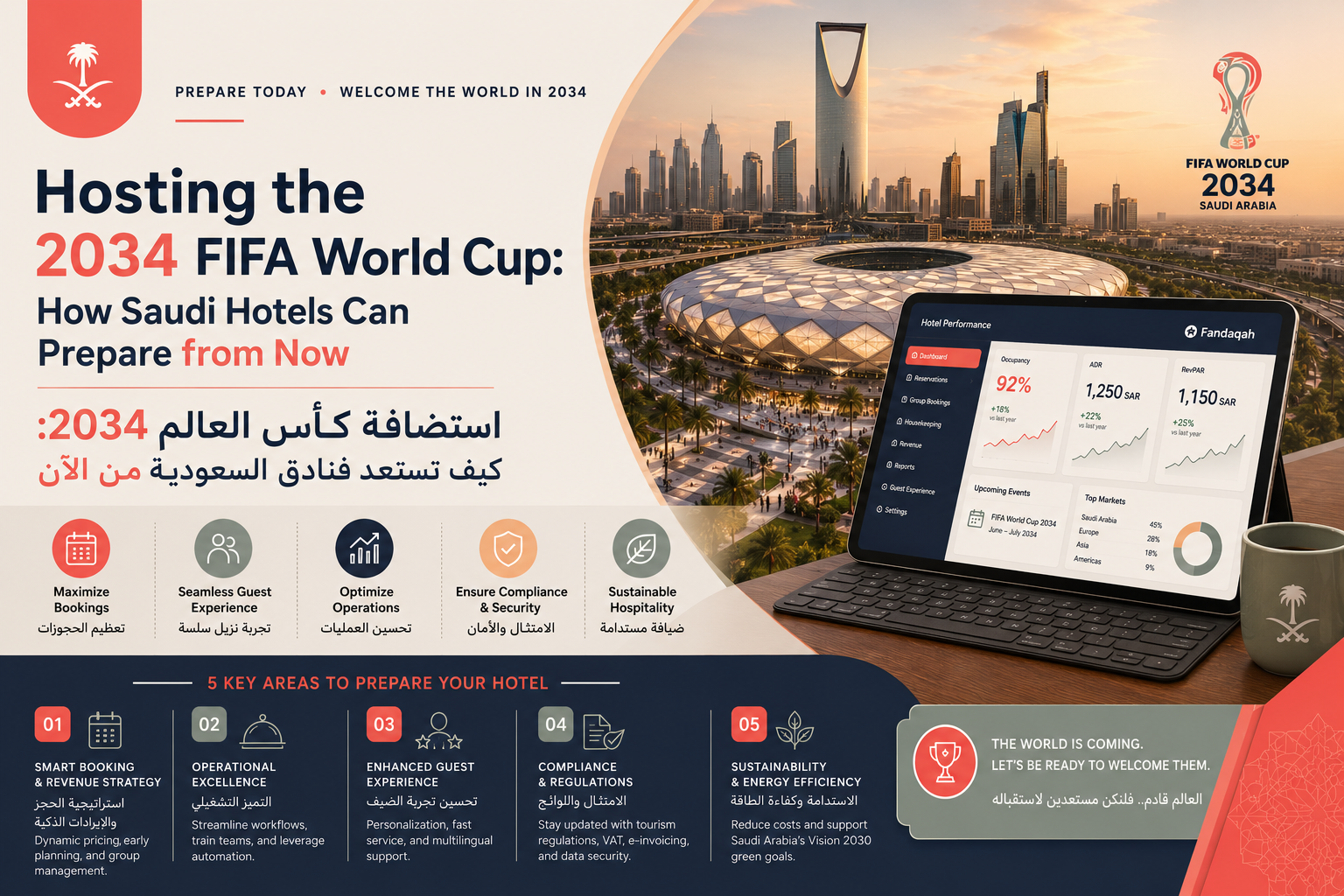
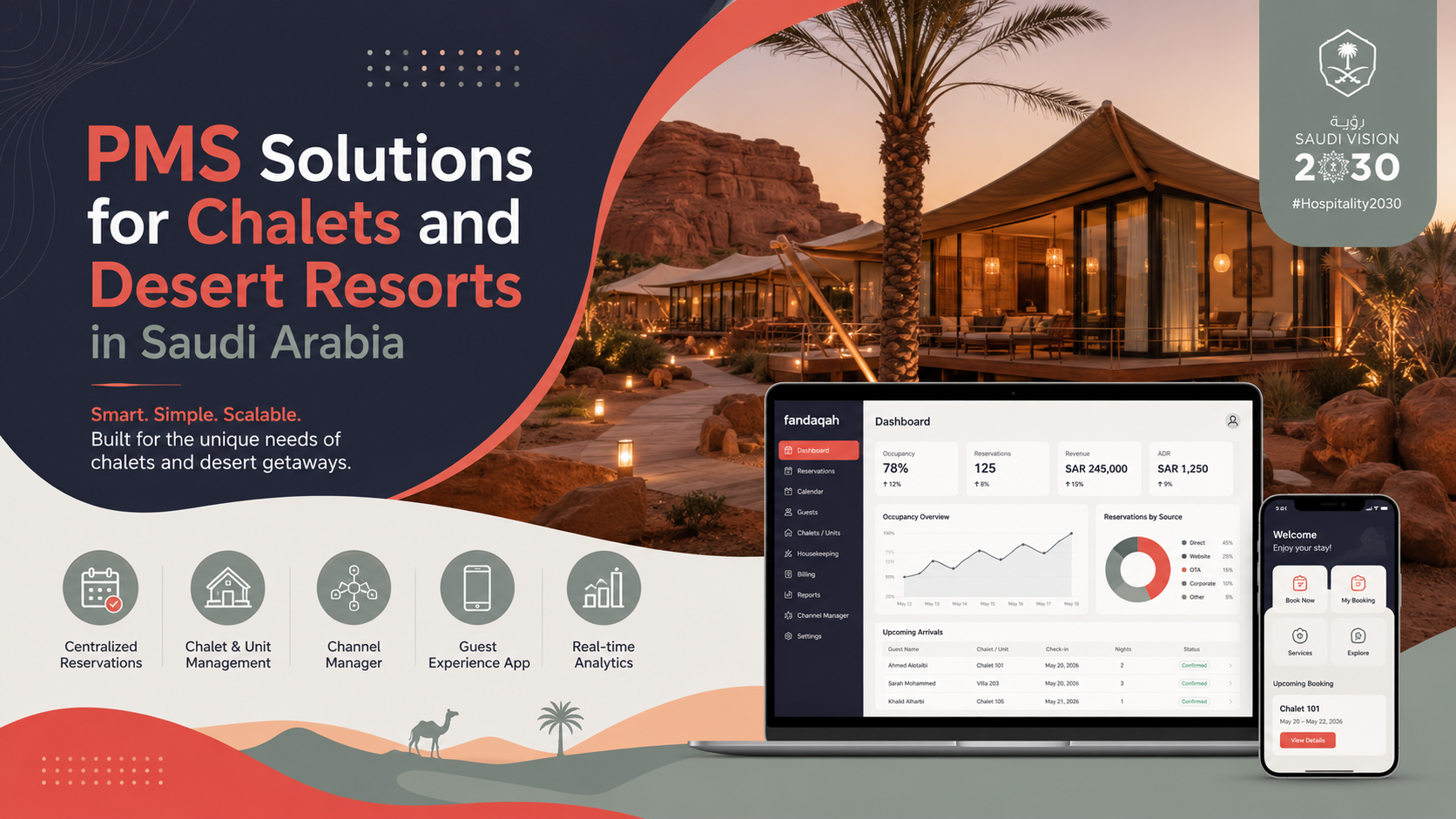
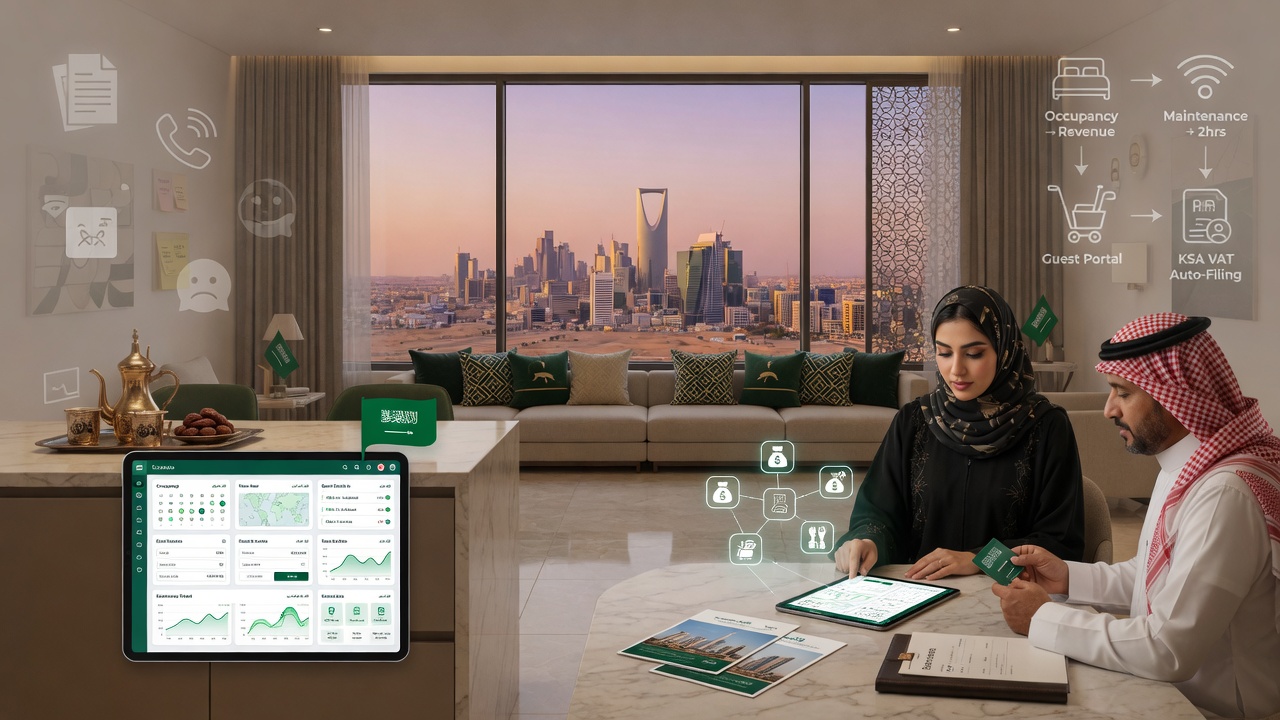
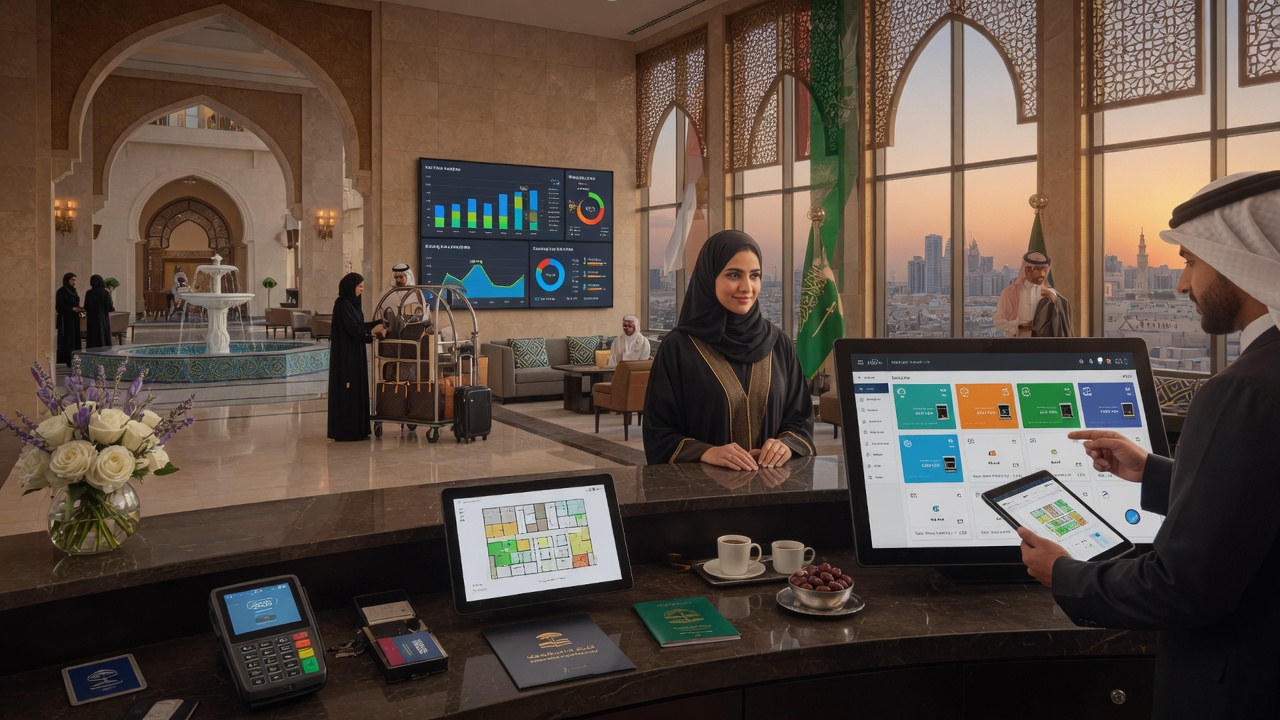
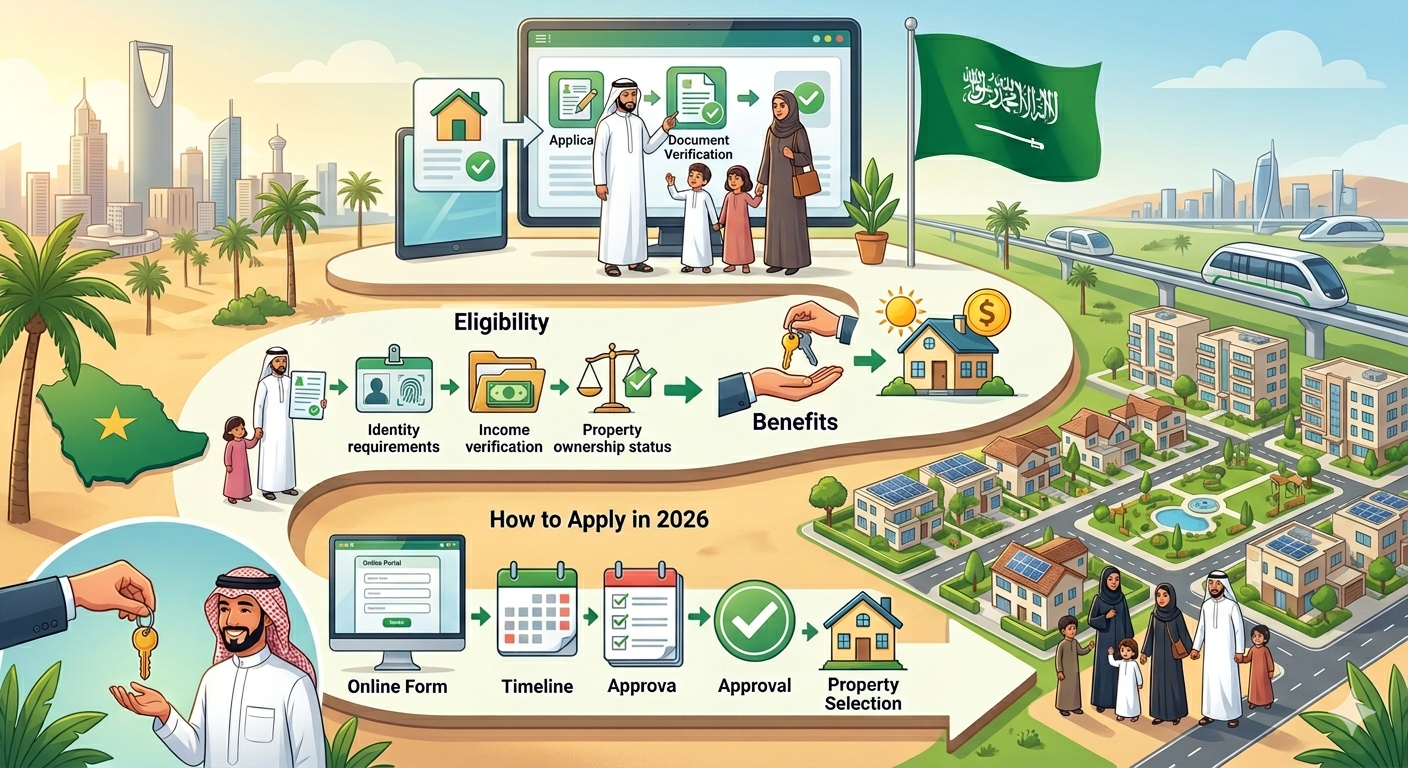
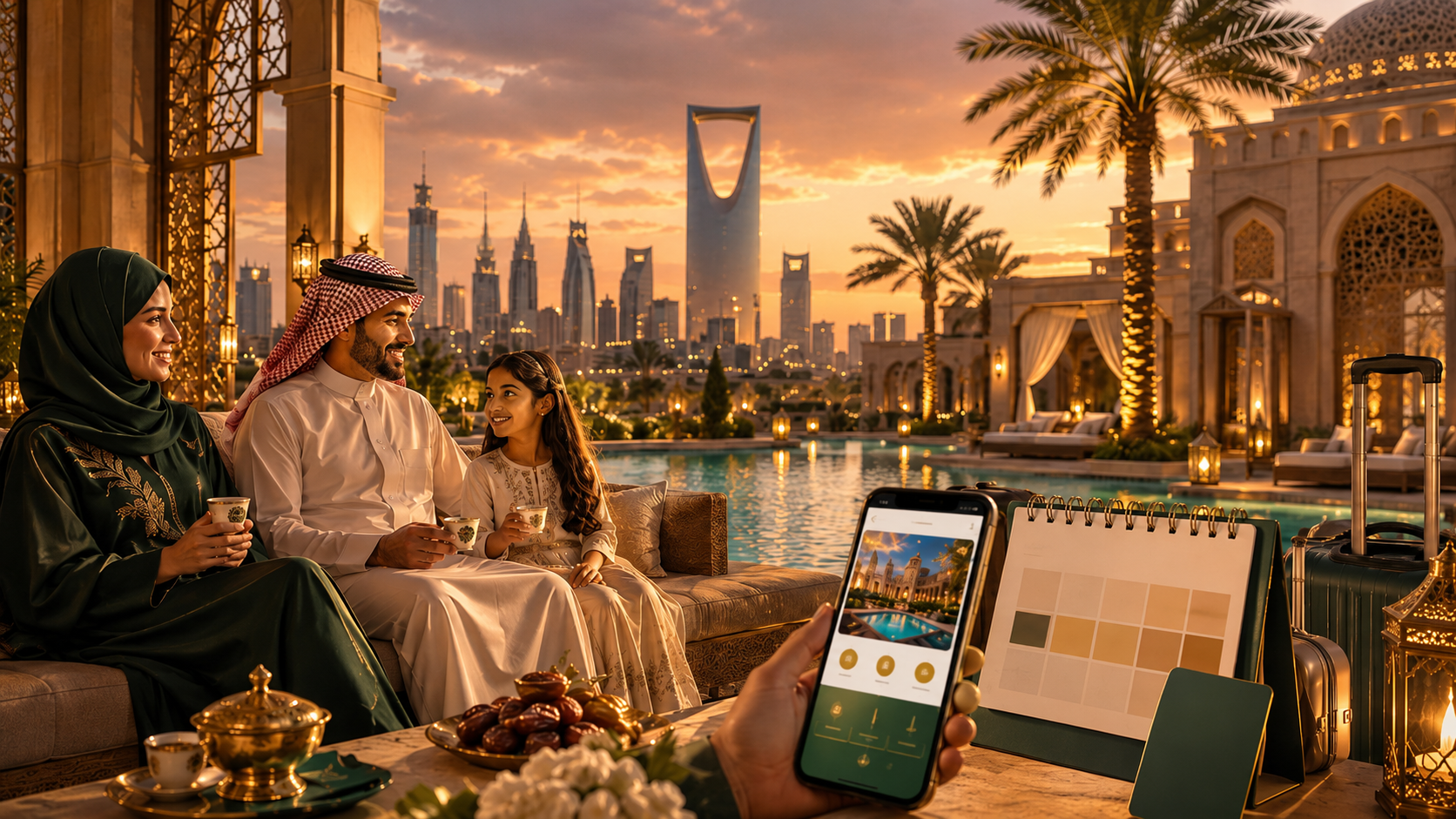
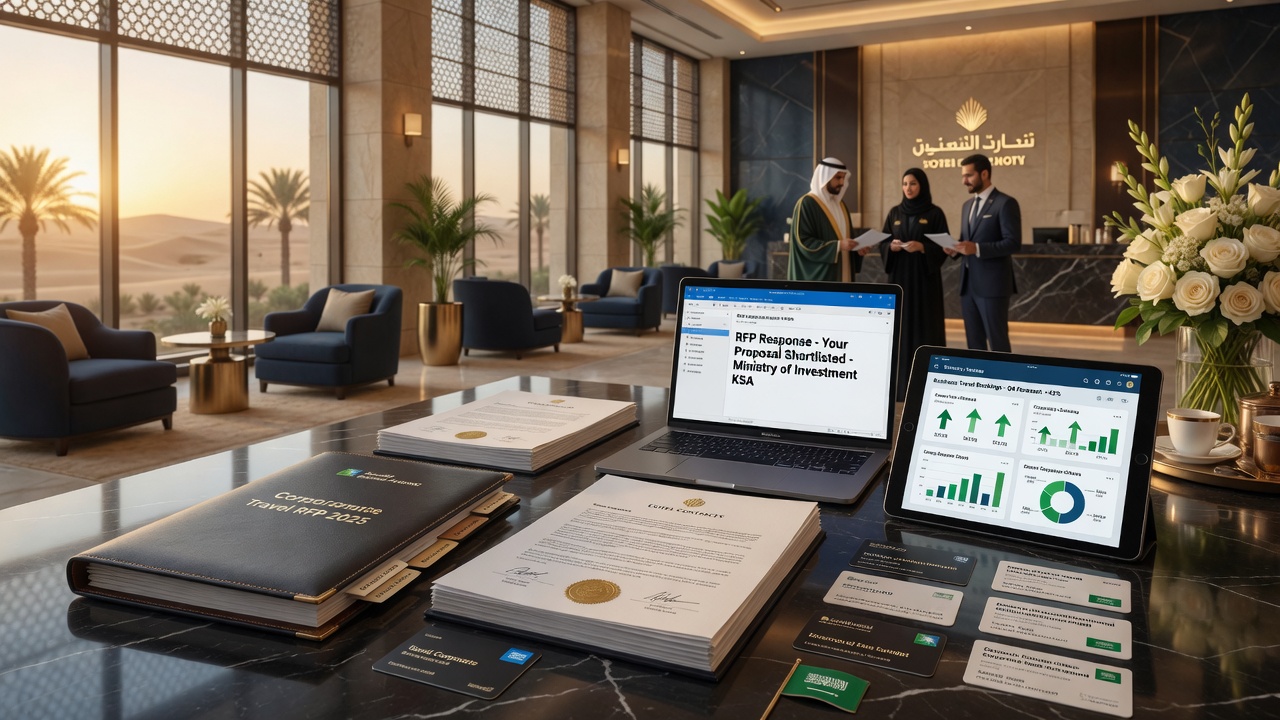
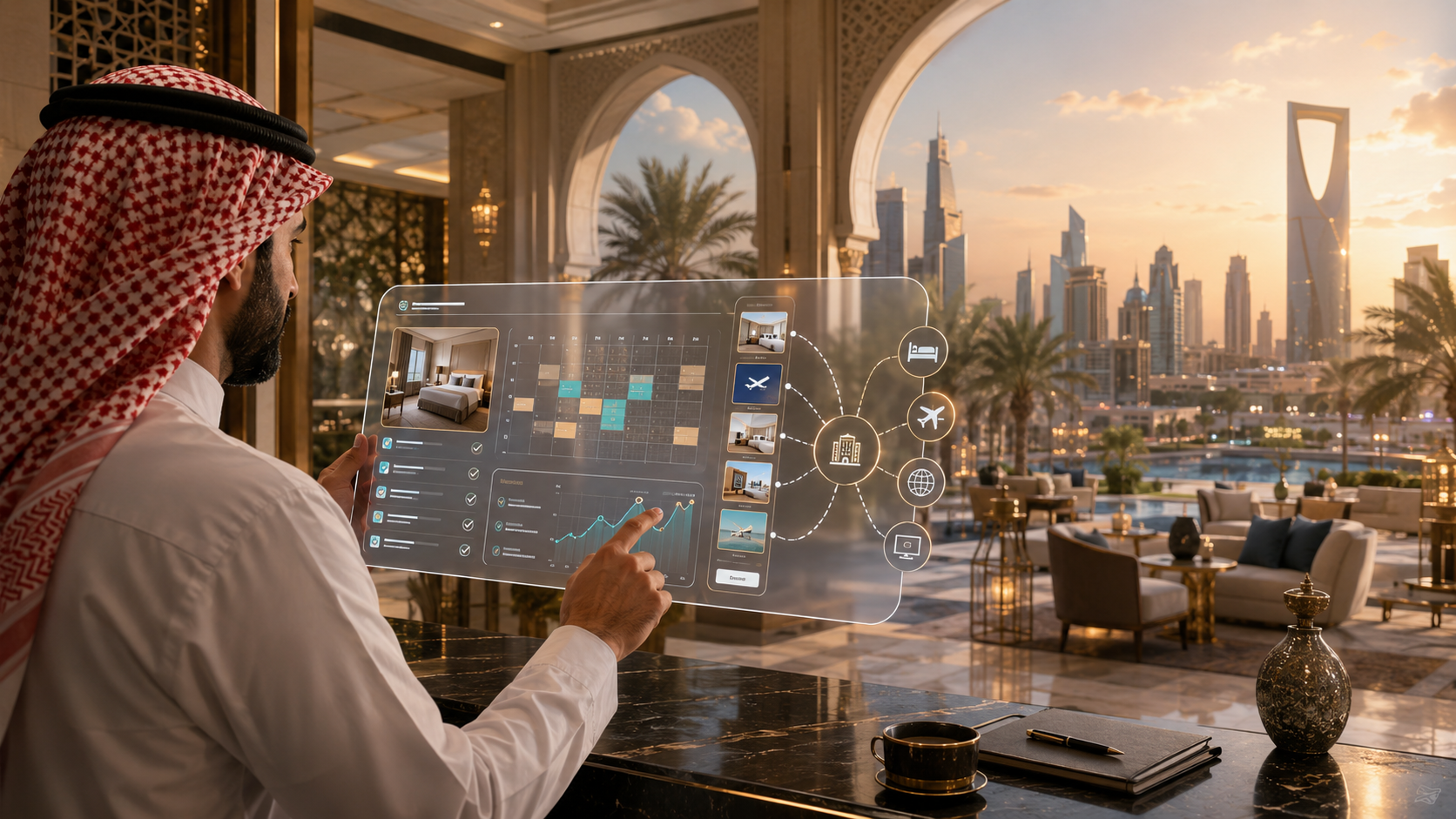
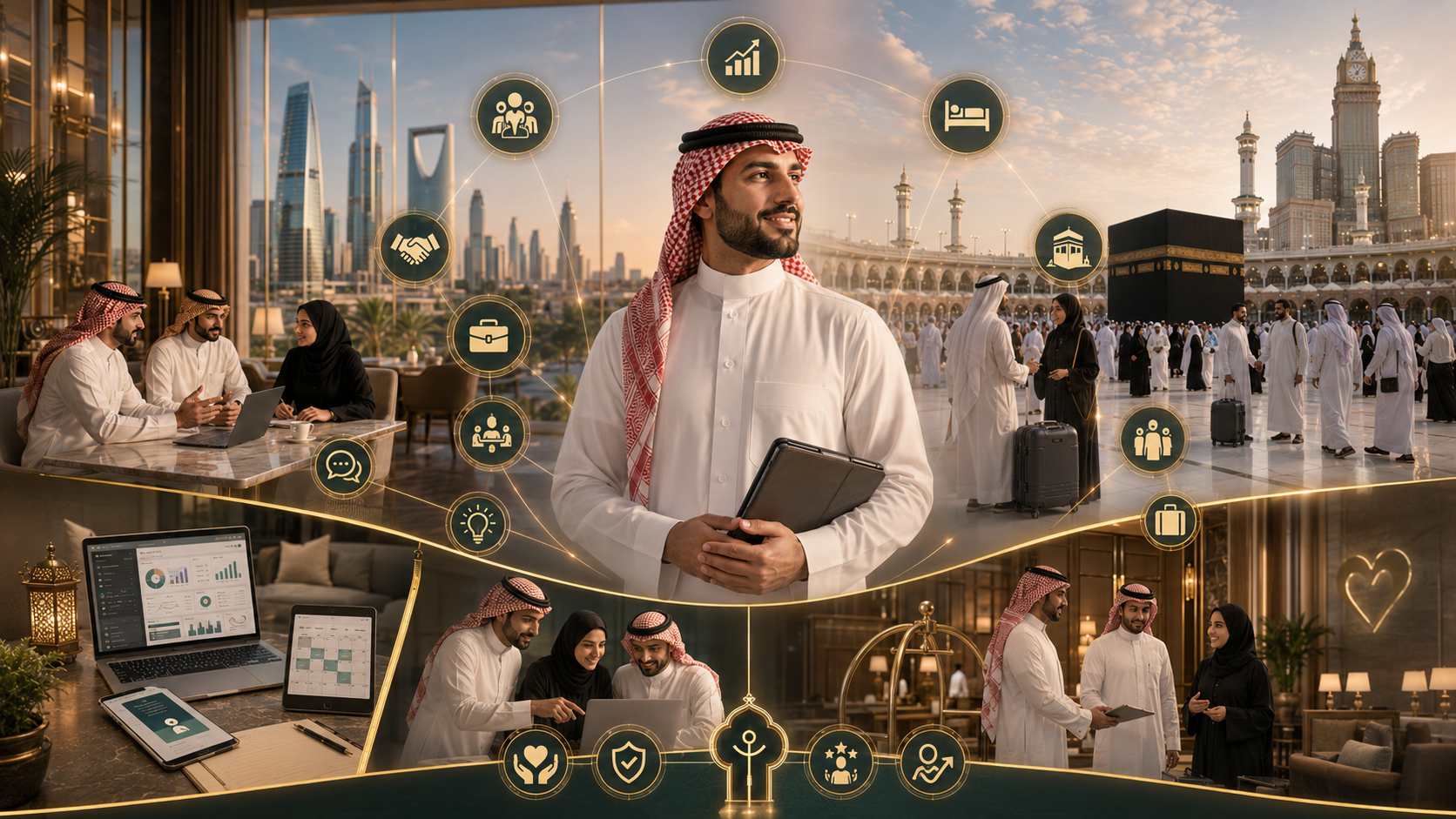
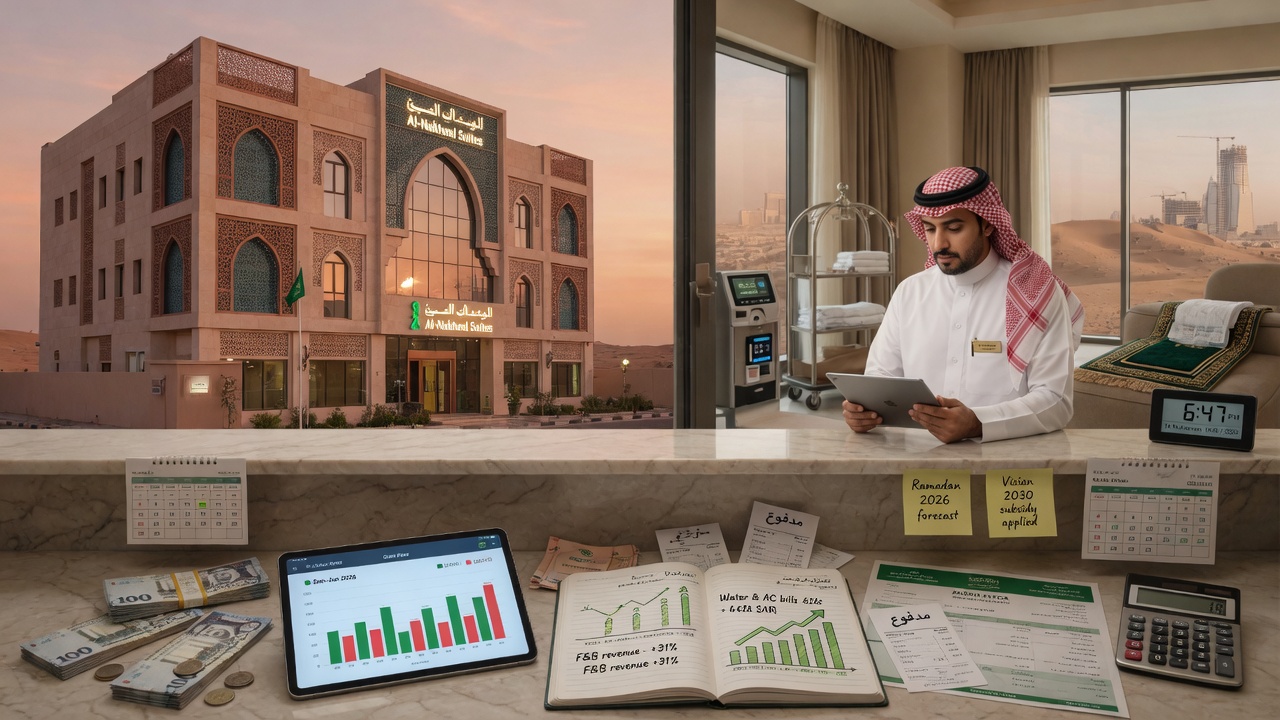
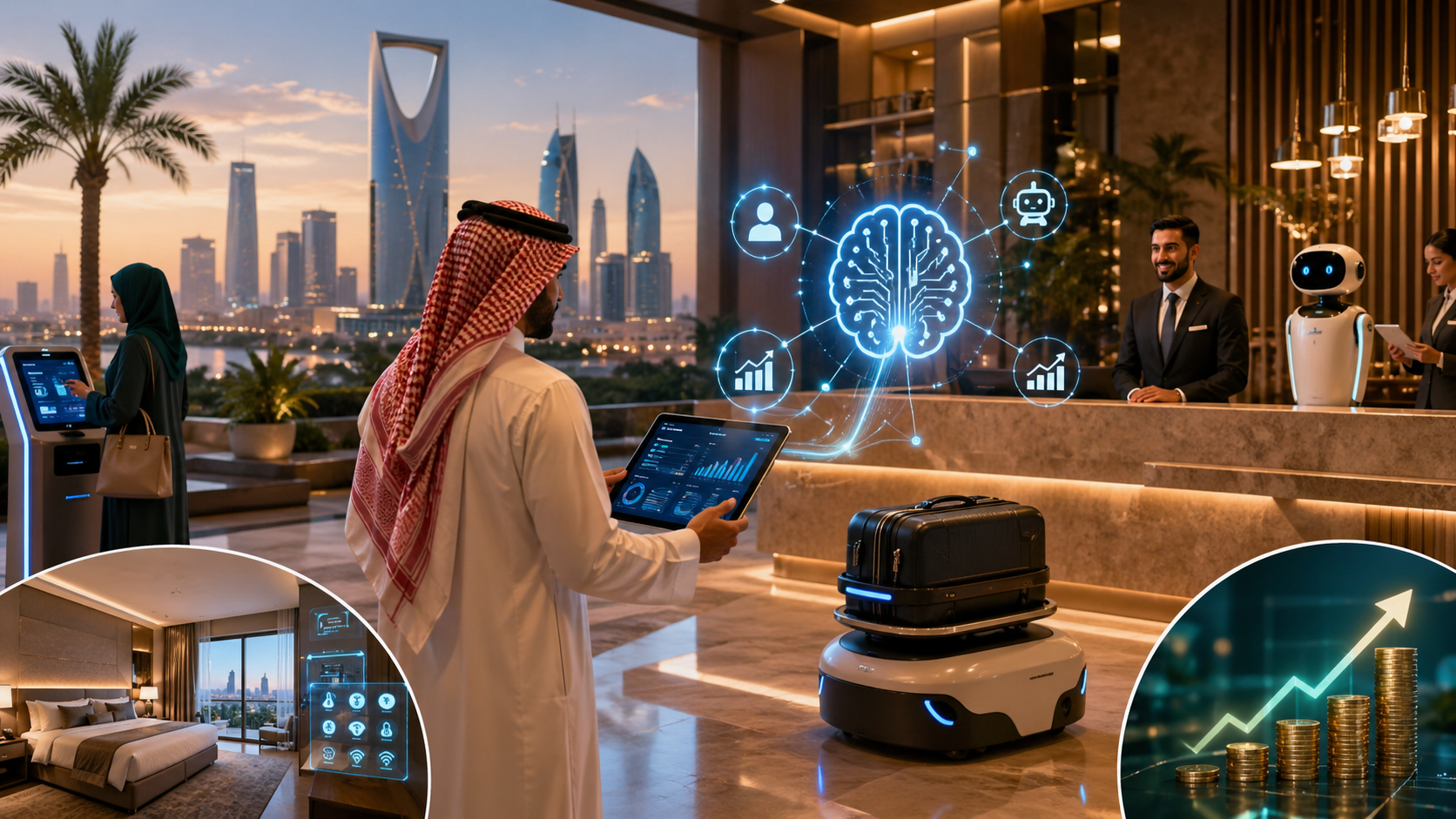
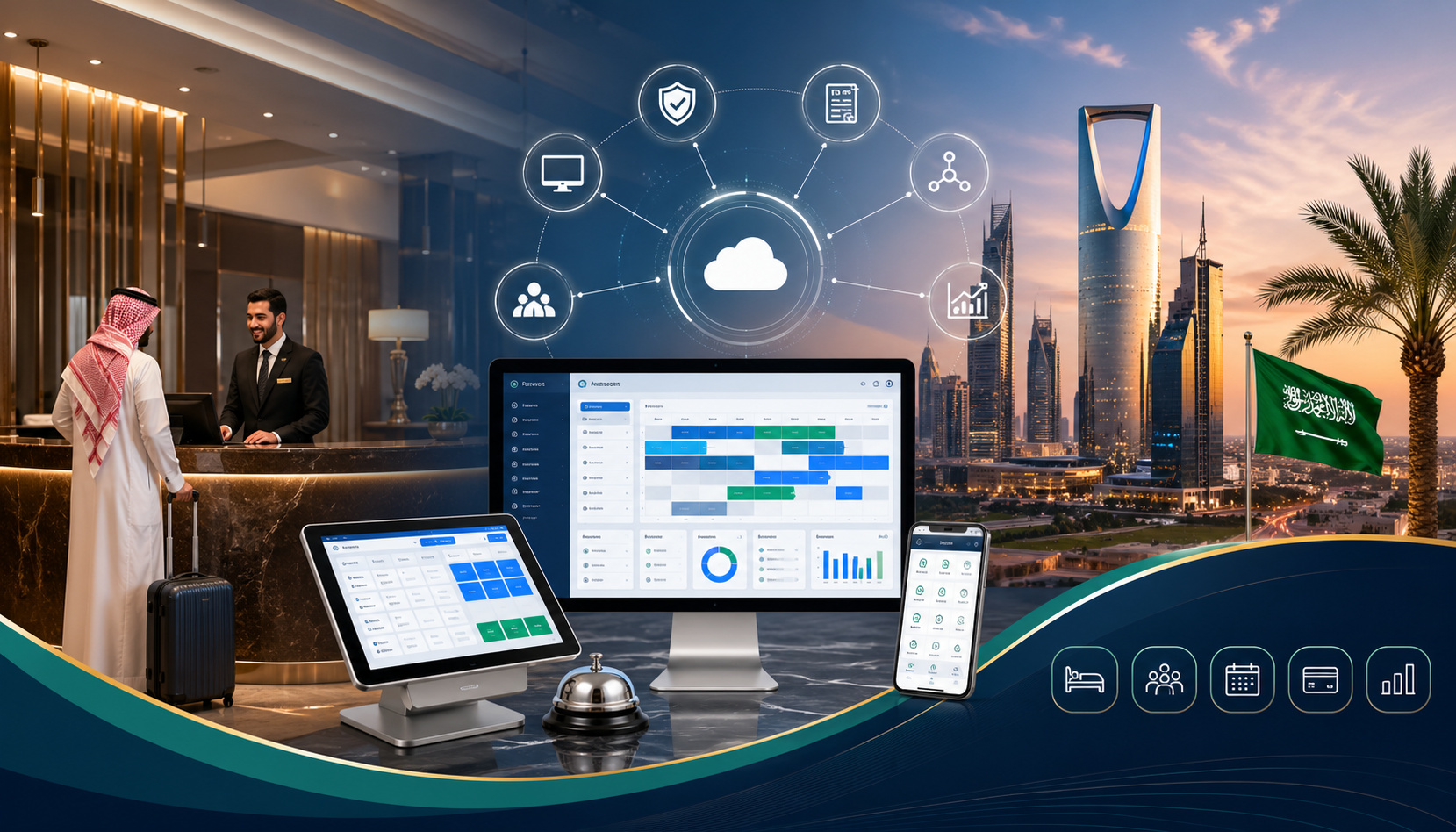
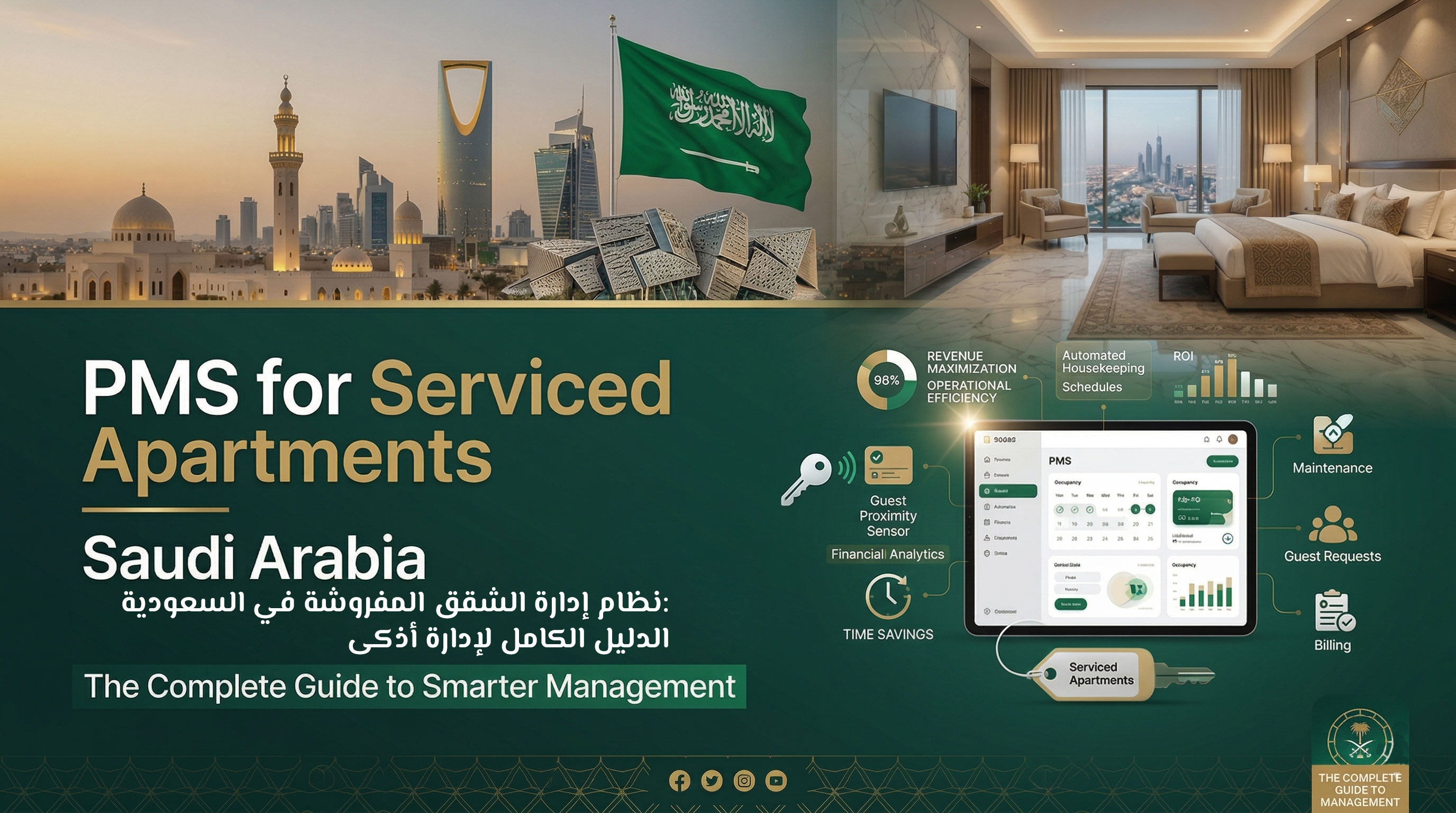
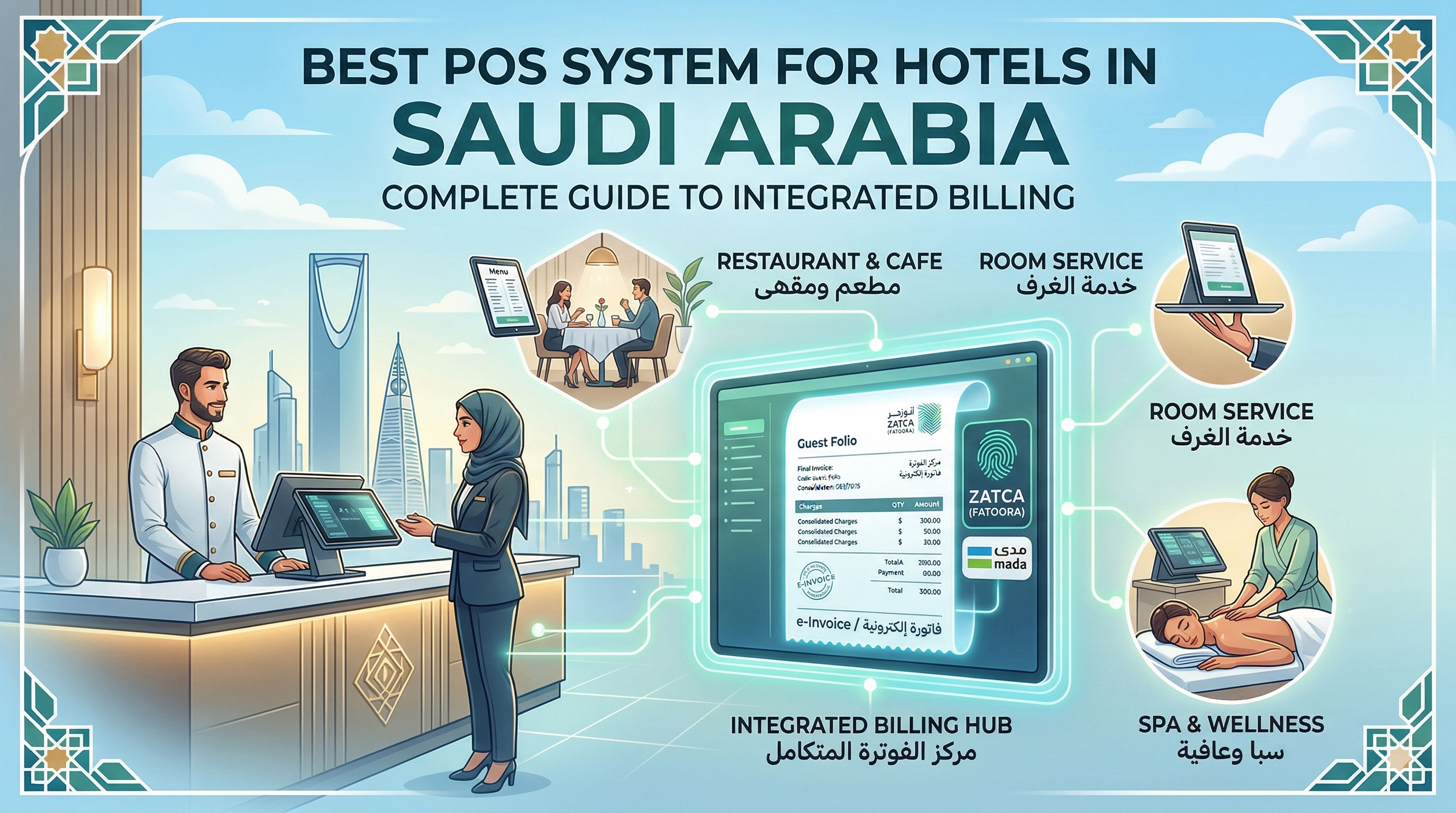
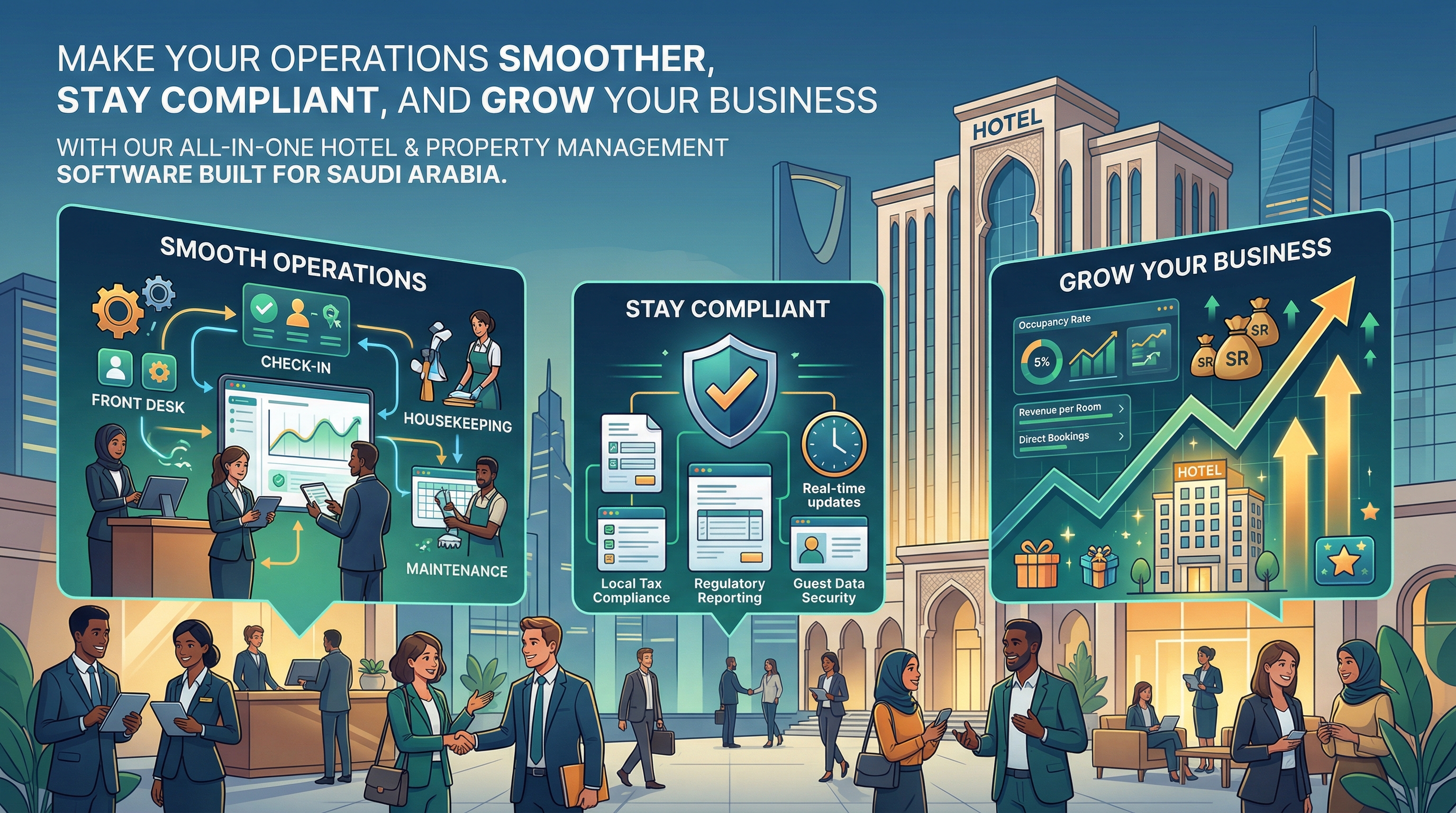
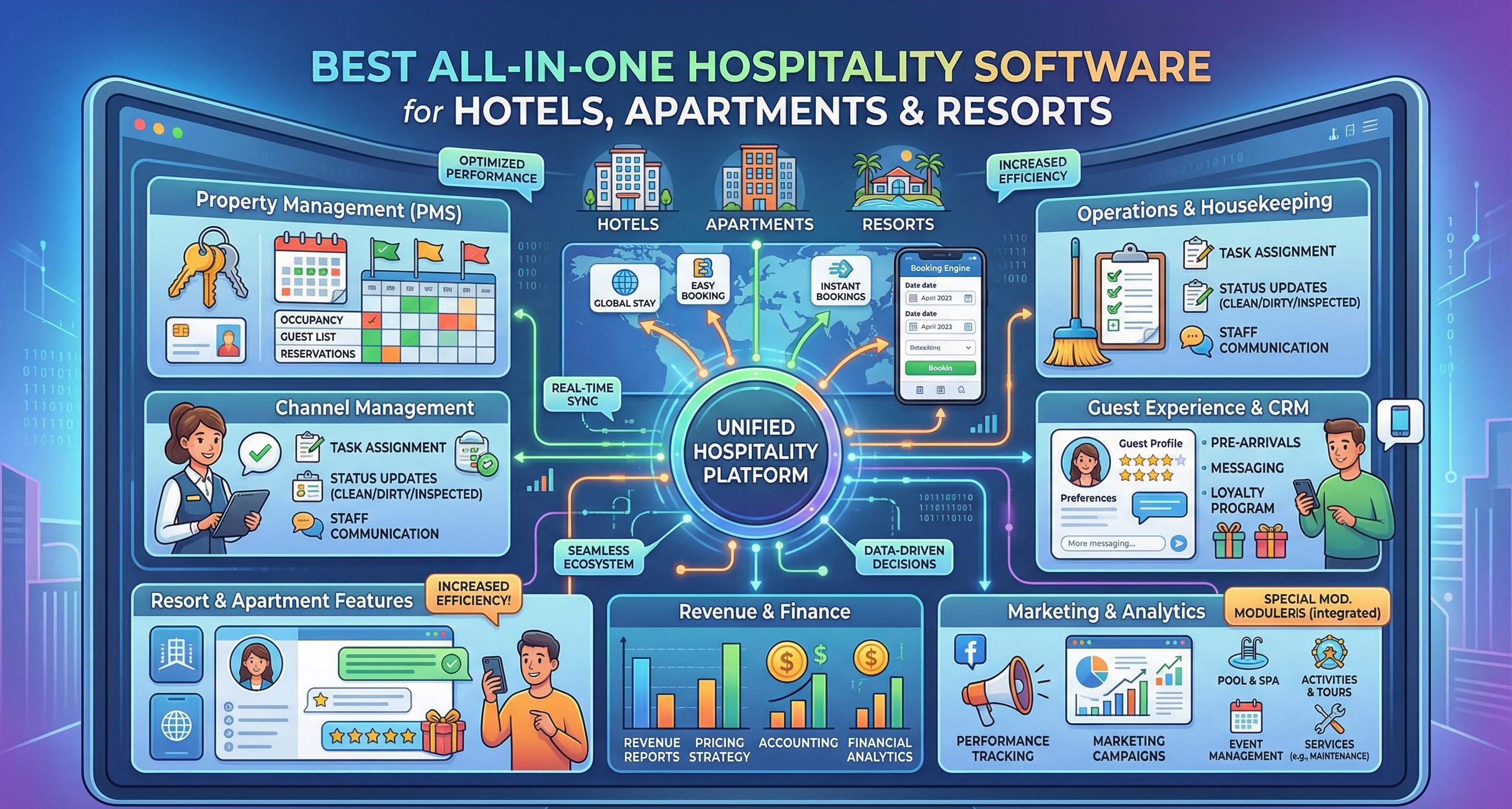
Discover the Kingdom’s transformation through Vision 2030, where ancient spirituality meets modern adventure tourism. The Future of Hospitality Summit is driving regional change. Explore spiritual journeys, adventure tourism, Saudi guest check-in software, and Saudi hotel management systems — all while staying fully compliant with ZATCA, Shomoos, and the Ministry of Tourism.
Table of Contents
- Understanding Saudi Arabia’s Tourism Evolution
- Vision 2030 and the Hospitality Transformation
- Spiritual Tourism: Makkah and Madinah
- Adventure Tourism: The Red Sea and Asir Mountains
- Overview of the Future of Hospitality Summit
- The Hotel Technology Revolution in the Kingdom
- Compliance Requirements: ZATCA, Shomoos, and the Ministry
- Investment Opportunities in Saudi Hospitality
- Networking & Business Development
- Fandaqah Solutions for Saudi Hoteliers
- Future Trends & 2030 Market Outlook
- Conclusion & Next Steps
1. Understanding Saudi Arabia’s Tourism Evolution
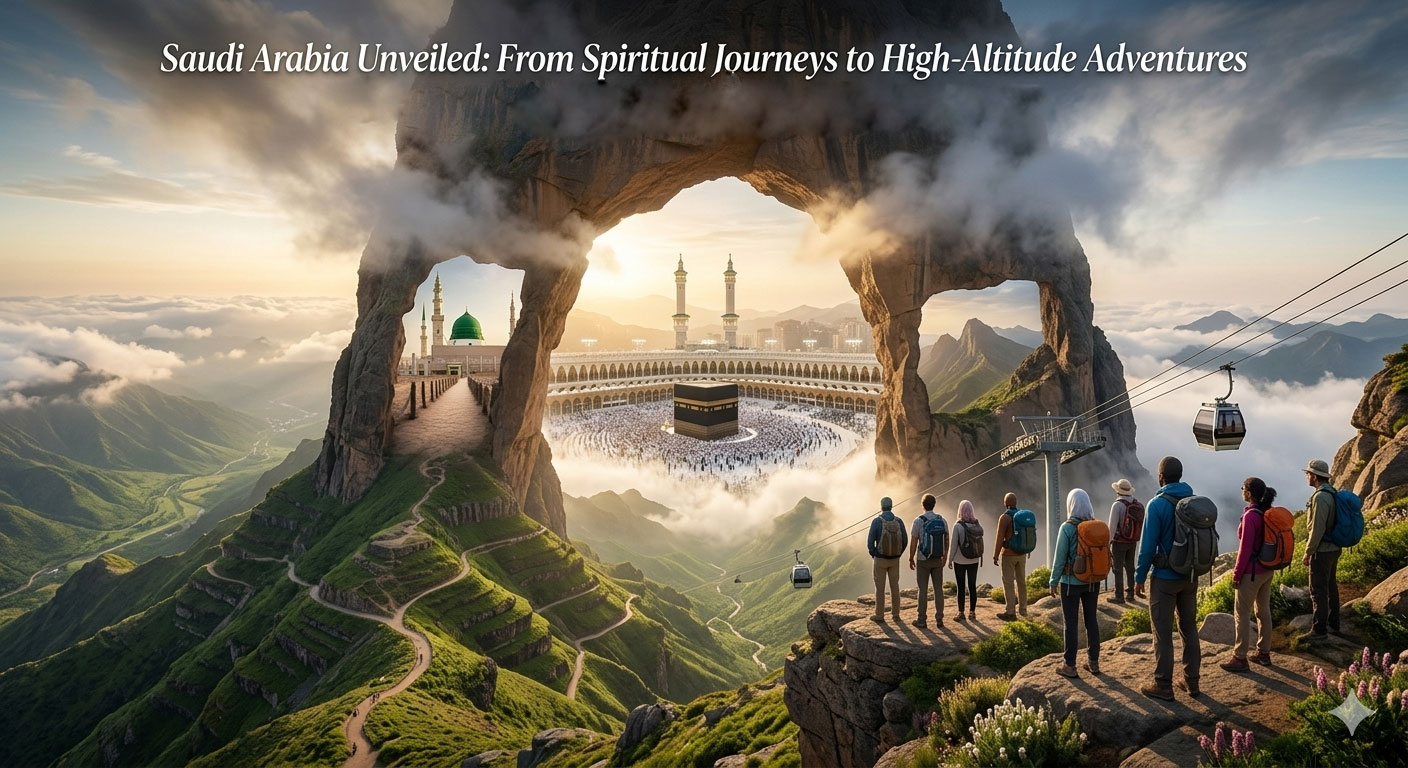
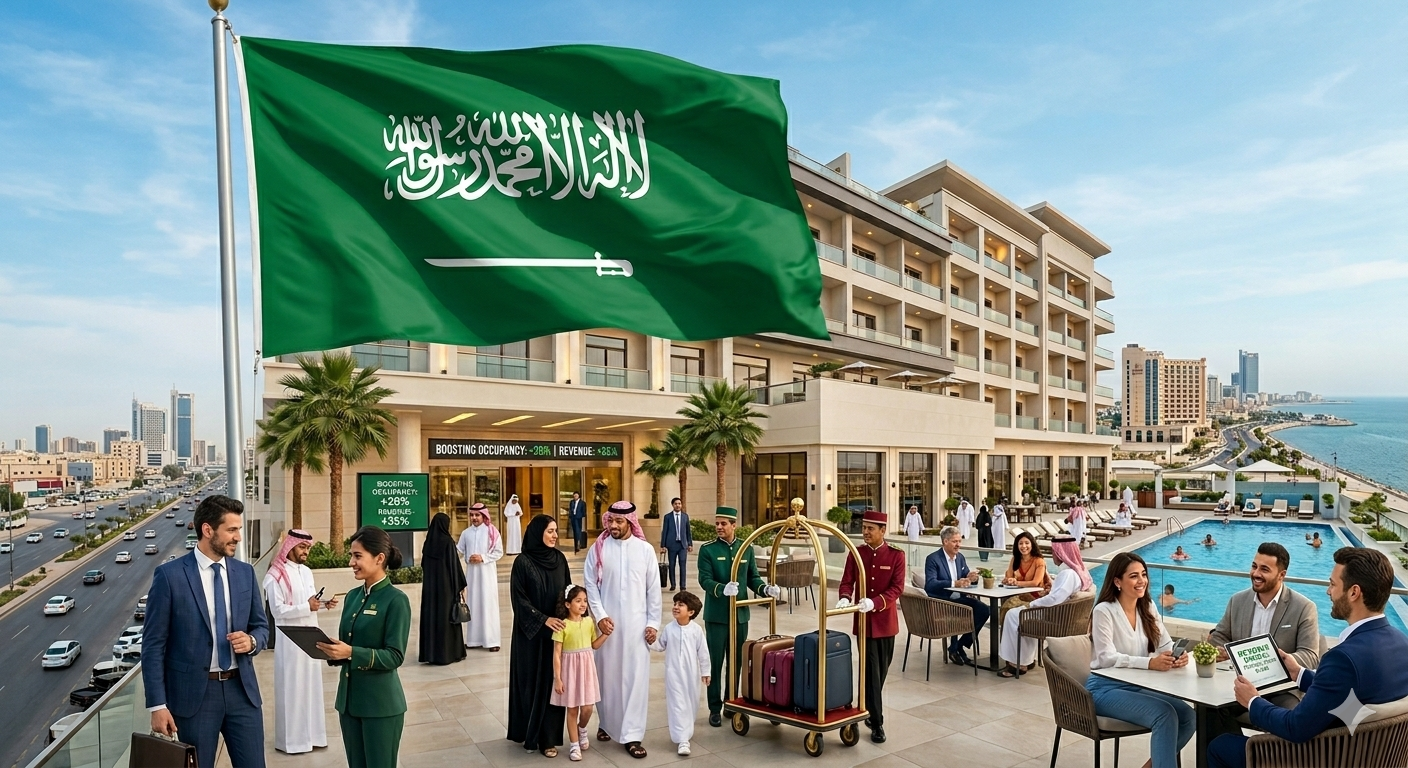
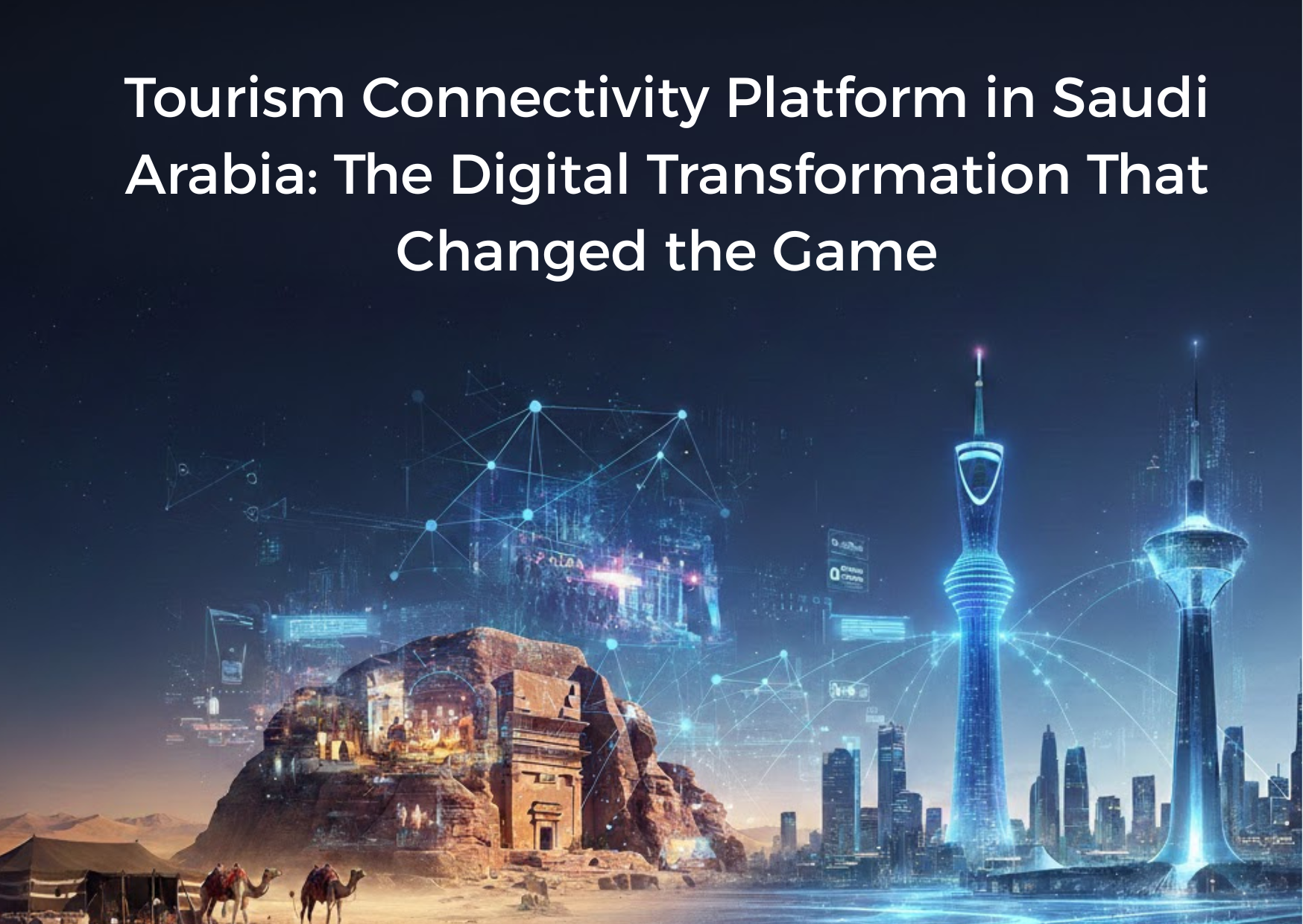
Saudi Arabia stands at the threshold of one of the most significant tourism transformations in modern history. Long known for its spiritual importance to Muslims worldwide, the Kingdom is now revealing itself as a diverse destination offering everything from sacred Hajj experiences to thrilling high‑altitude adventures. This evolution is no accident — it is the result of deliberate strategic planning under Vision 2030, the Kingdom’s comprehensive economic diversification program.
The Future of Hospitality Summit serves as the central gathering point for industry leaders navigating this shift. With the market moving at unprecedented speed, hotel owners, investors, and technology providers must understand the full scope of emerging opportunities across the Kingdom. From the holy cities of Makkah and Madinah welcoming millions of pilgrims annually, to the pristine waters of the Red Sea attracting luxury travelers, to the mist‑covered peaks of the Asir Mountains drawing adventure seekers — Saudi Arabia’s tourism landscape is as diverse as it is vast.
The dual pillars of Saudi tourism: Spiritual tourism remains the cornerstone, with Hajj and Umrah bringing millions of visitors requiring quality accommodation and services. Simultaneously, leisure and adventure tourism is exploding, driven by new visa policies, giga‑projects, and infrastructure investments that make the Kingdom accessible to international travelers seeking unique experiences.
2. Vision 2030 and the Hospitality Transformation
362,000 new hotel rooms by 2030
150M annual visitors target
$110B hospitality investment
20% GDP contribution target
Vision 2030 is more than an economic plan — it is a complete reimagining of Saudi Arabia’s role in the global tourism industry. The hospitality sector sits at the heart of this transformation, with ambitious goals requiring massive investment, innovative technology, and operational excellence.
Government Support Mechanisms
- Tourism Development Fund provides financing for hospitality projects
- Streamlined licensing through Ministry of Tourism platforms
- Foreign ownership regulations allowing 100% international investment
- Infrastructure investments in airports, roads, and public transport
- Training programs to develop Saudi hospitality workforce
- Marketing campaigns promoting Saudi Arabia globally
- Special economic zones offering tax incentives for tourism investors
- Public-private partnership frameworks for large‑scale developments
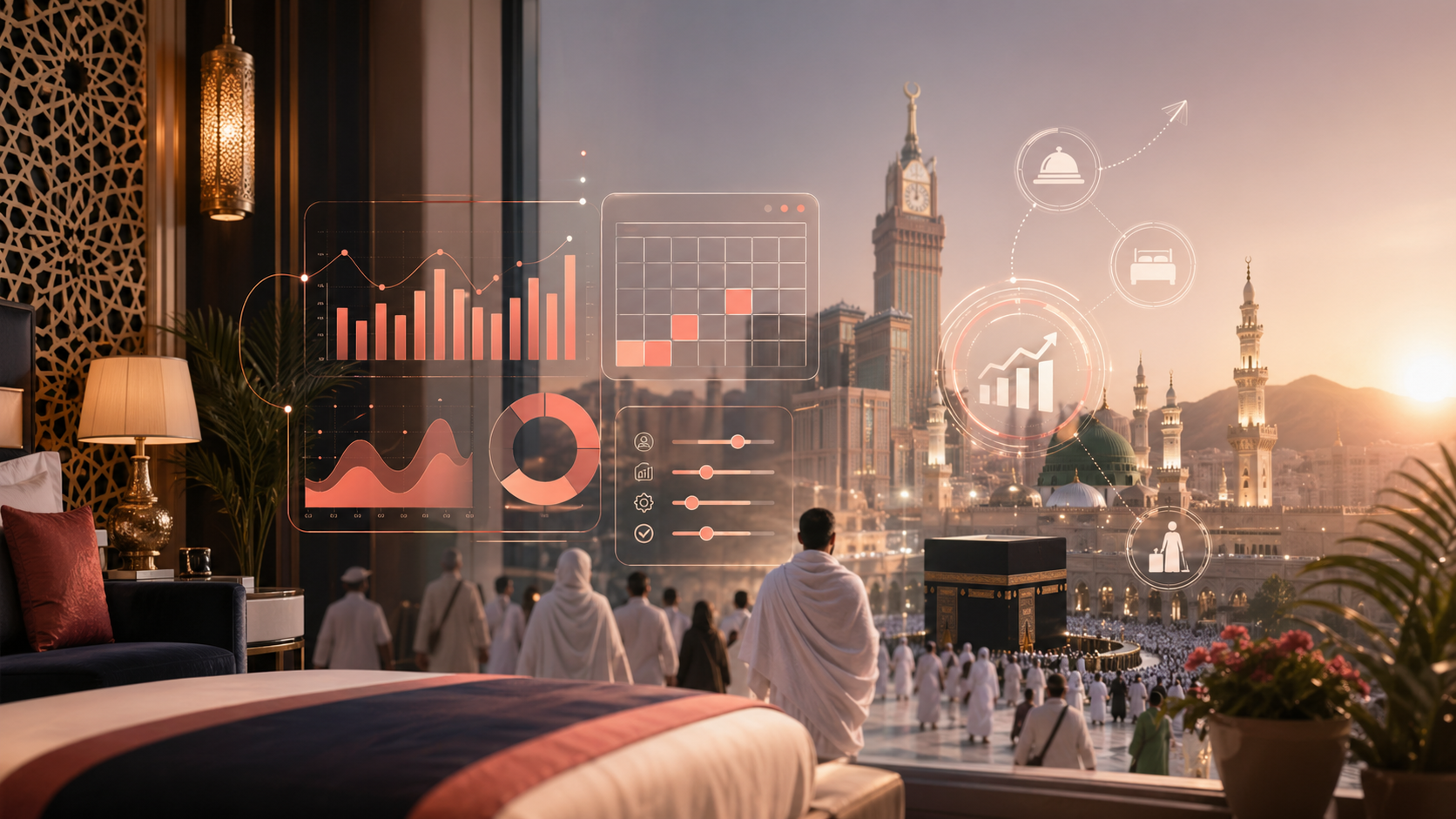
3. Spiritual Tourism: Makkah and Madinah
Spiritual tourism remains the foundation of Saudi Arabia’s hospitality sector. Every year, millions of Muslims travel to Makkah for Hajj and to both Makkah and Madinah for Umrah. This steady, predictable flow of visitors creates stable demand for accommodation, making the holy cities attractive for hospitality investment.
Makkah Al-Mukarramah
Makkah welcomes over 15 million Umrah pilgrims annually, with an additional 2.5 million during the Hajj season. Peak demand occurs during Ramadan and Hajj, with occupancy rates consistently exceeding 95%. Properties near the Grand Mosque command premium rates, but even farther locations maintain strong occupancy due to the sheer volume of visitors.
Madinah Al-Munawwarah
Madinah hosts approximately 12 million visitors annually, with most pilgrims visiting both holy cities. The city offers a slightly more relaxed atmosphere than Makkah, with longer average stays. Hotels near the Prophet’s Mosque are in high demand, and new developments continue to expand capacity to meet growing needs.
Technology Requirements for Spiritual Tourism Properties
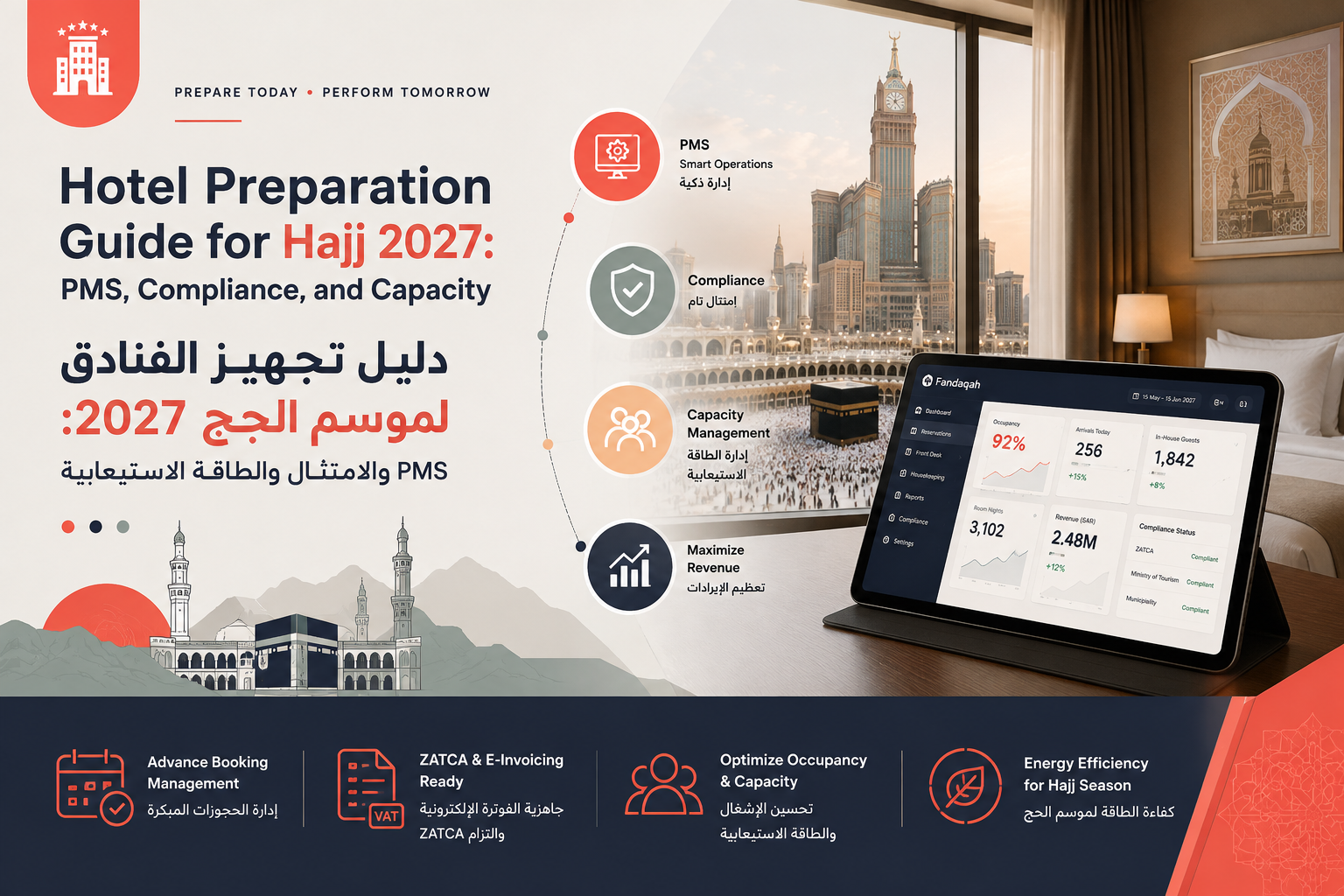
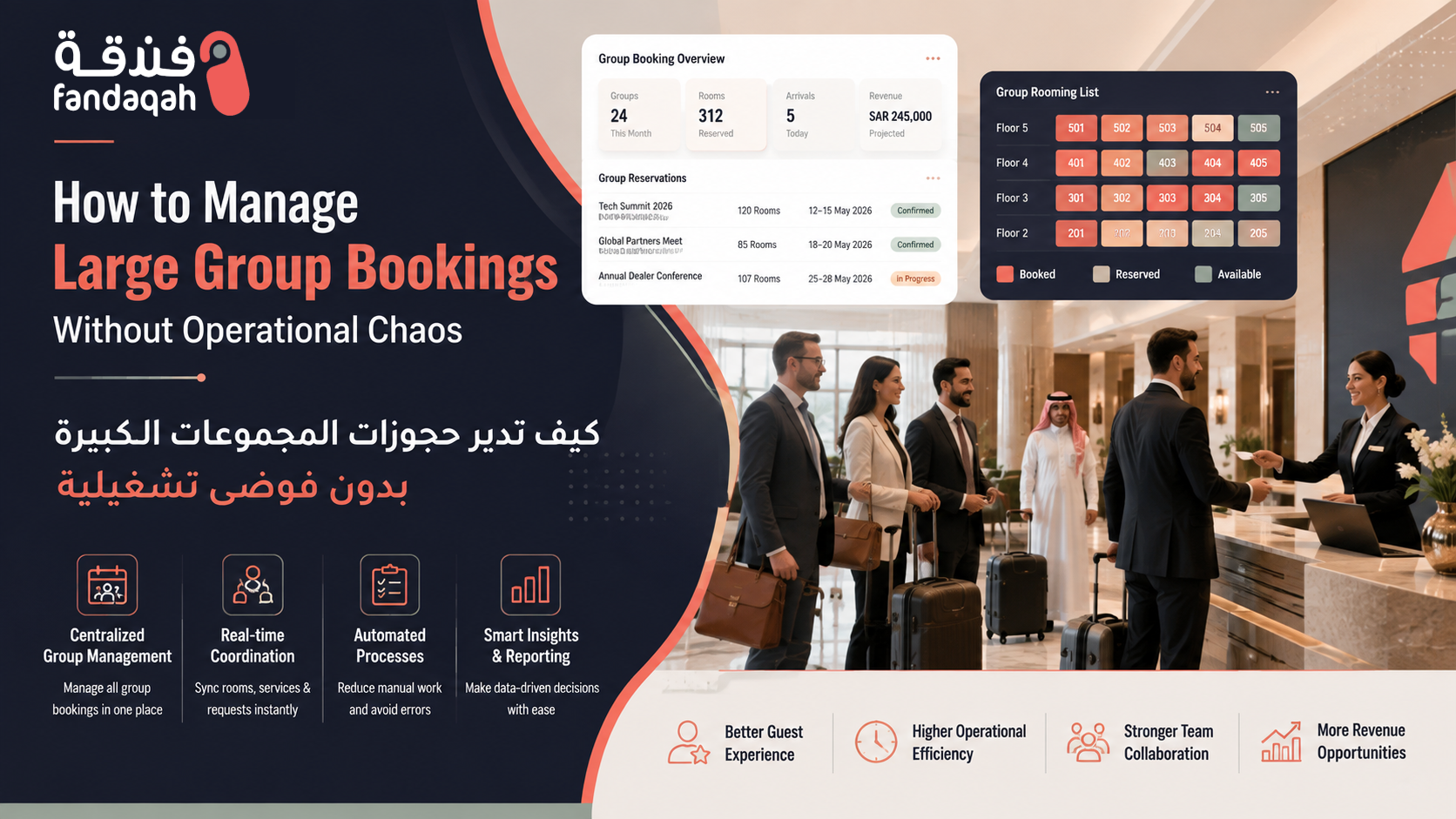
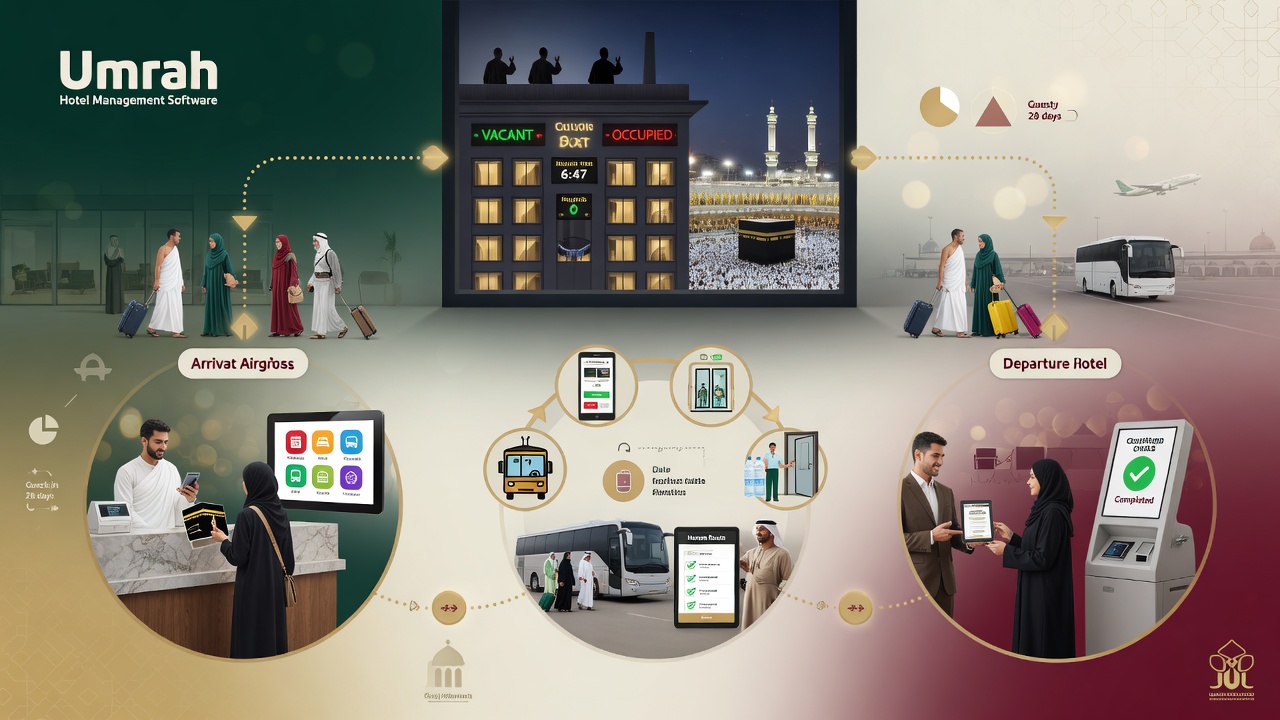
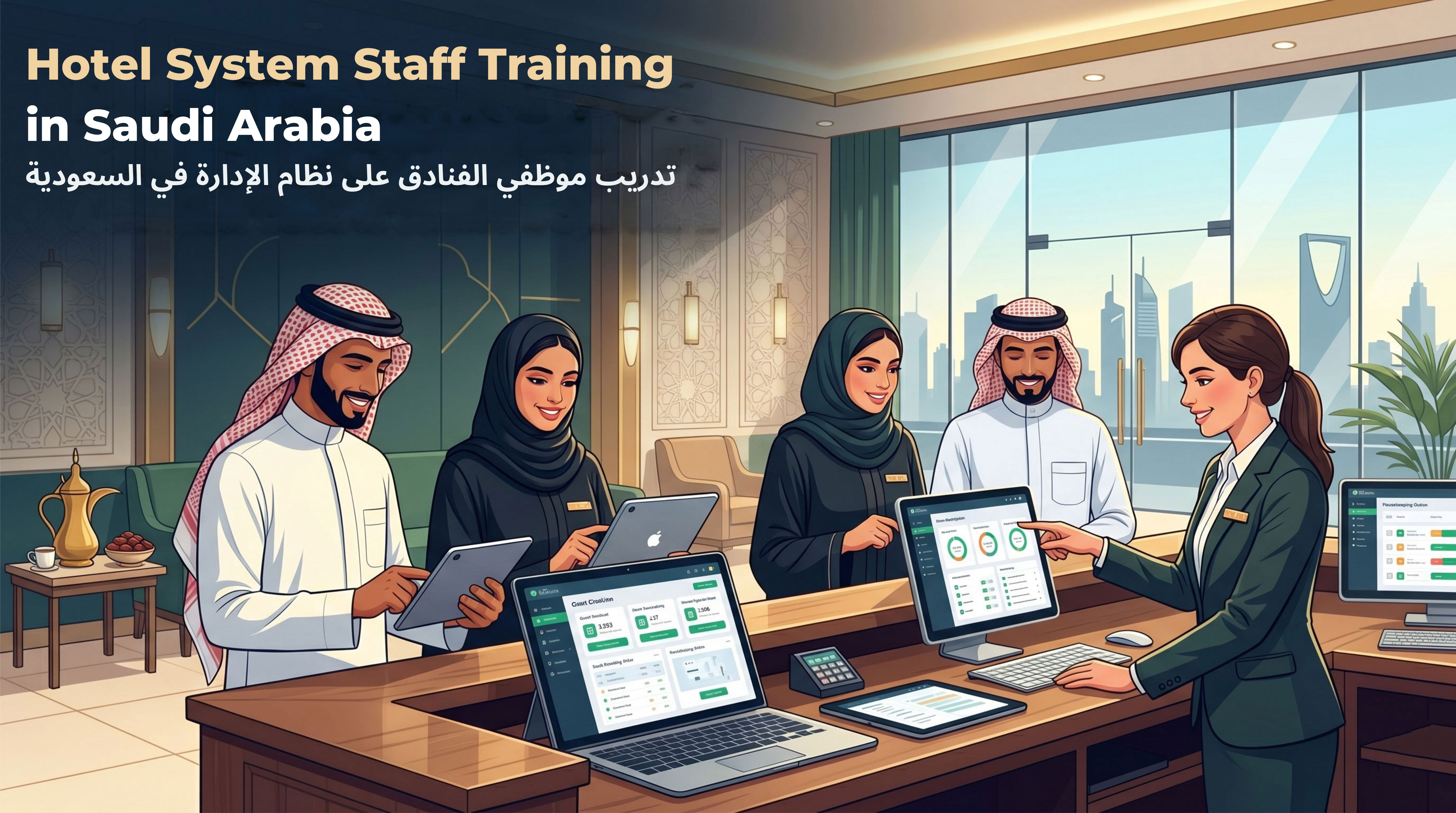
Hotels serving pilgrims face unique operational challenges that demand tailored technology solutions. Peak seasons put immense pressure on check‑in systems, with thousands of guests arriving simultaneously. Group bookings from tour operators require coordinated management. Multilingual support is essential to serve pilgrims from dozens of countries. Maintaining compliance with Ministry of Tourism regulations and the Shomoos system even during the busiest periods is critical.
Saudi guest check‑in software solutions designed for Hajj properties offer features like group check‑in, pilgrim data management, and integration with tour operator systems. Saudi hotel management platforms must handle massive transaction volumes while adhering to ZATCA e‑invoicing requirements. Fandaqah’s hotel management system is engineered to meet these needs, ensuring smooth operations even during peak Hajj seasons.
Hajj Season Readiness Checklist:
• Ensure PMS can handle 10x normal check‑in volume
• Pre‑register group bookings with Shomoos
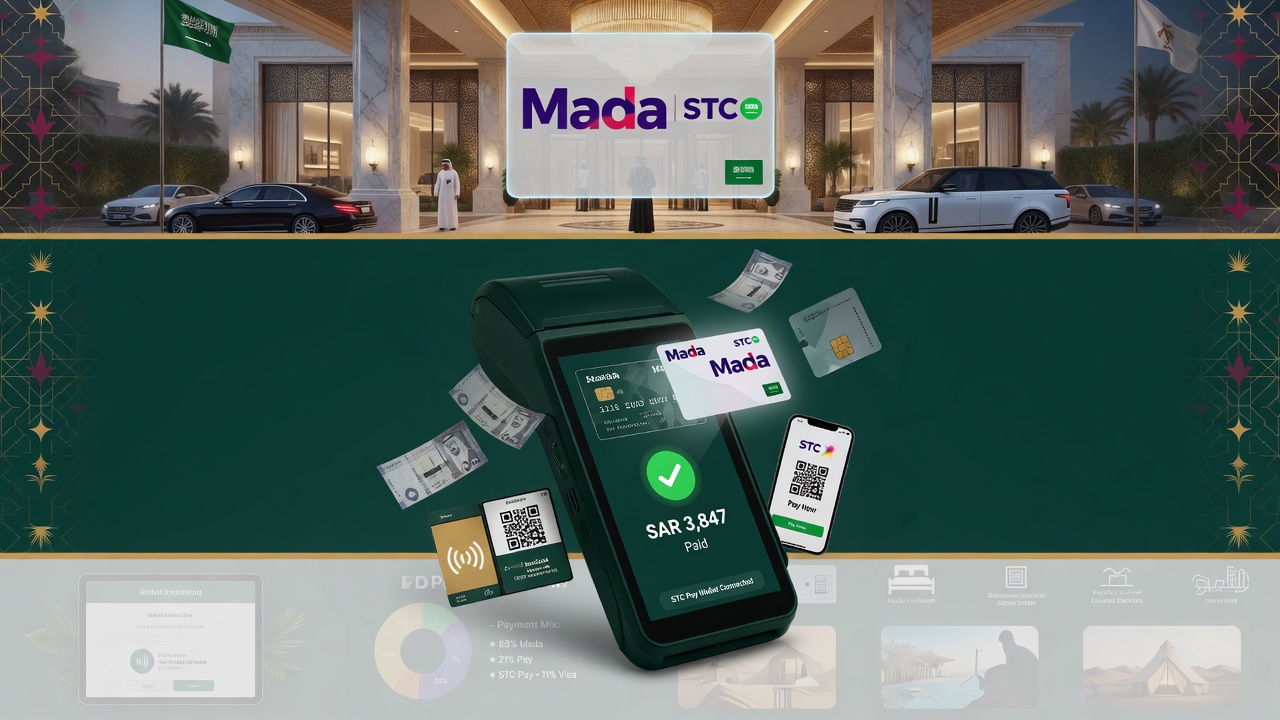
• Prepare ZATCA‑compliant invoices for high‑volume transactions
• Train staff on multilingual guest communication
• Coordinate with tour operators on arrival schedules
• Test technology systems before peak season begins
• Prepare contingency plans for system disruptions
• Monitor Ministry of Tourism compliance requirements
4. Adventure Tourism: The Red Sea and Asir Mountains
While spiritual tourism provides stability, adventure and leisure tourism represent the growth engine for Saudi hospitality’s future. The Kingdom’s diverse geography — from 2,500 kilometers of Red Sea coastline to mountain ranges exceeding 3,000 meters — creates opportunities for experiences found nowhere else in the region.
The Red Sea Project
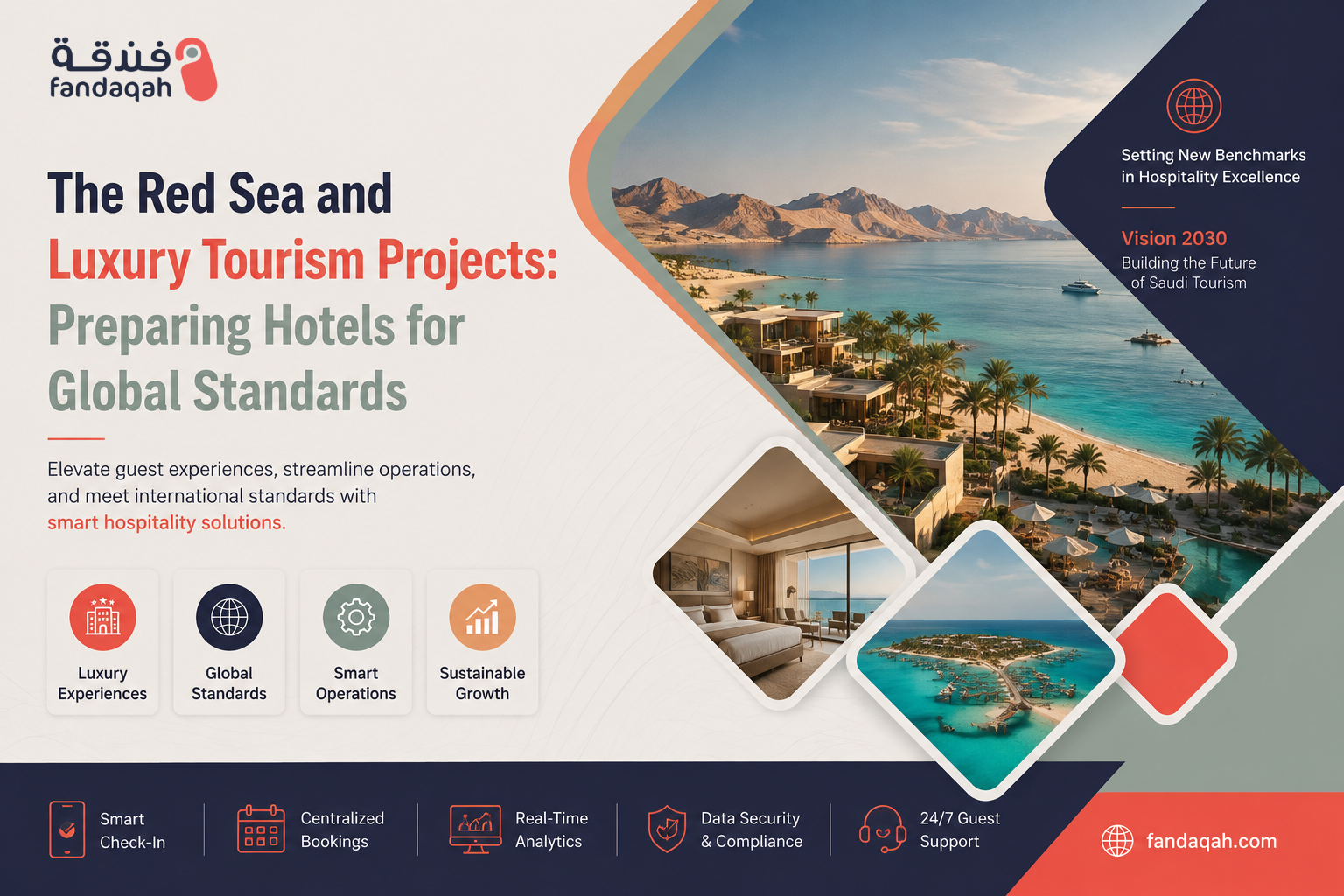
The Red Sea Project is developing 90 islands into one of the world’s most ambitious luxury tourism destinations. With pristine coral reefs, untouched beaches, and a strict commitment to regenerative tourism, the project targets high‑end international travelers. Hotels here must deliver world‑class luxury while maintaining rigorous environmental standards. Technology systems must support sustainability reporting and personalized guest experiences.
⛰️ Asir Mountains
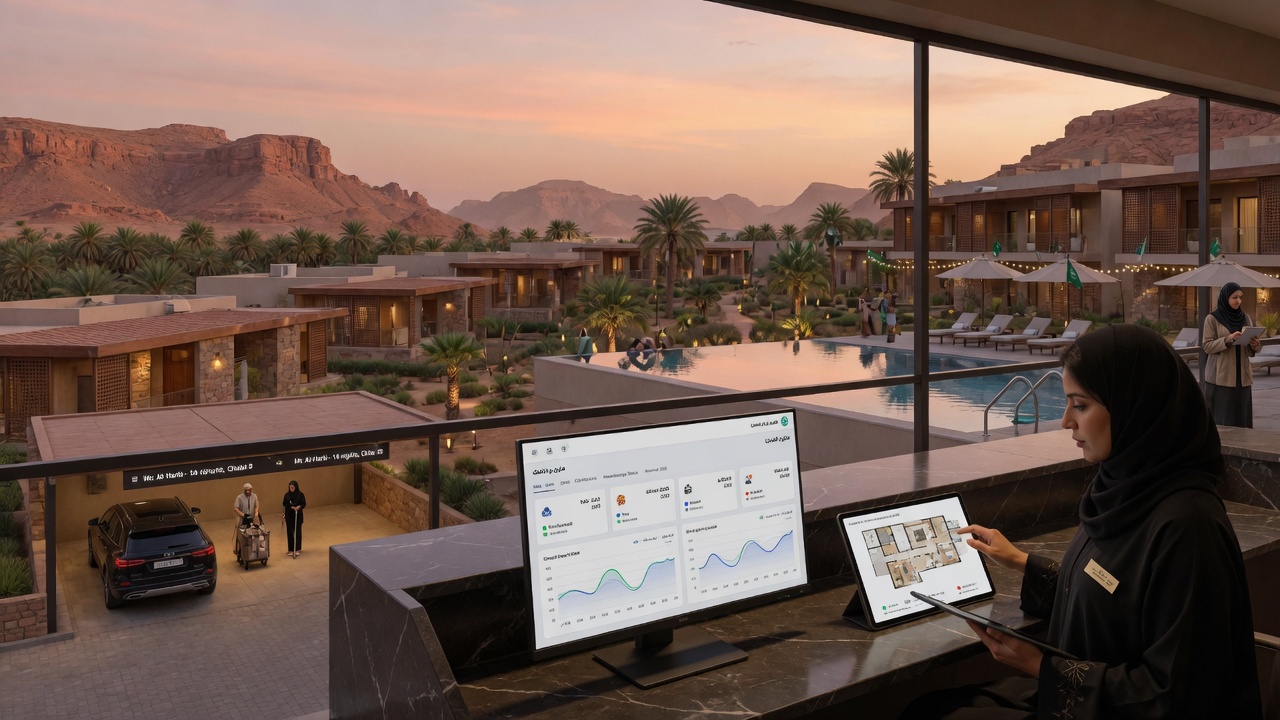
Asir region, with its cool climate, terraced agriculture, and dramatic landscapes, offers a completely different experience from Saudi Arabia’s desert image. Cable cars, hiking trails, and eco‑lodges are being developed to attract adventure tourists. Properties here serve guests seeking outdoor activities, cultural experiences, and natural beauty. Technology must support activity booking, local experience coordination, and seasonal demand fluctuations.
Technology Priorities for Adventure Tourism Properties
- Mobile‑first guest experience platforms
- Activity & experience booking integration
- Sustainability metrics & reporting tools
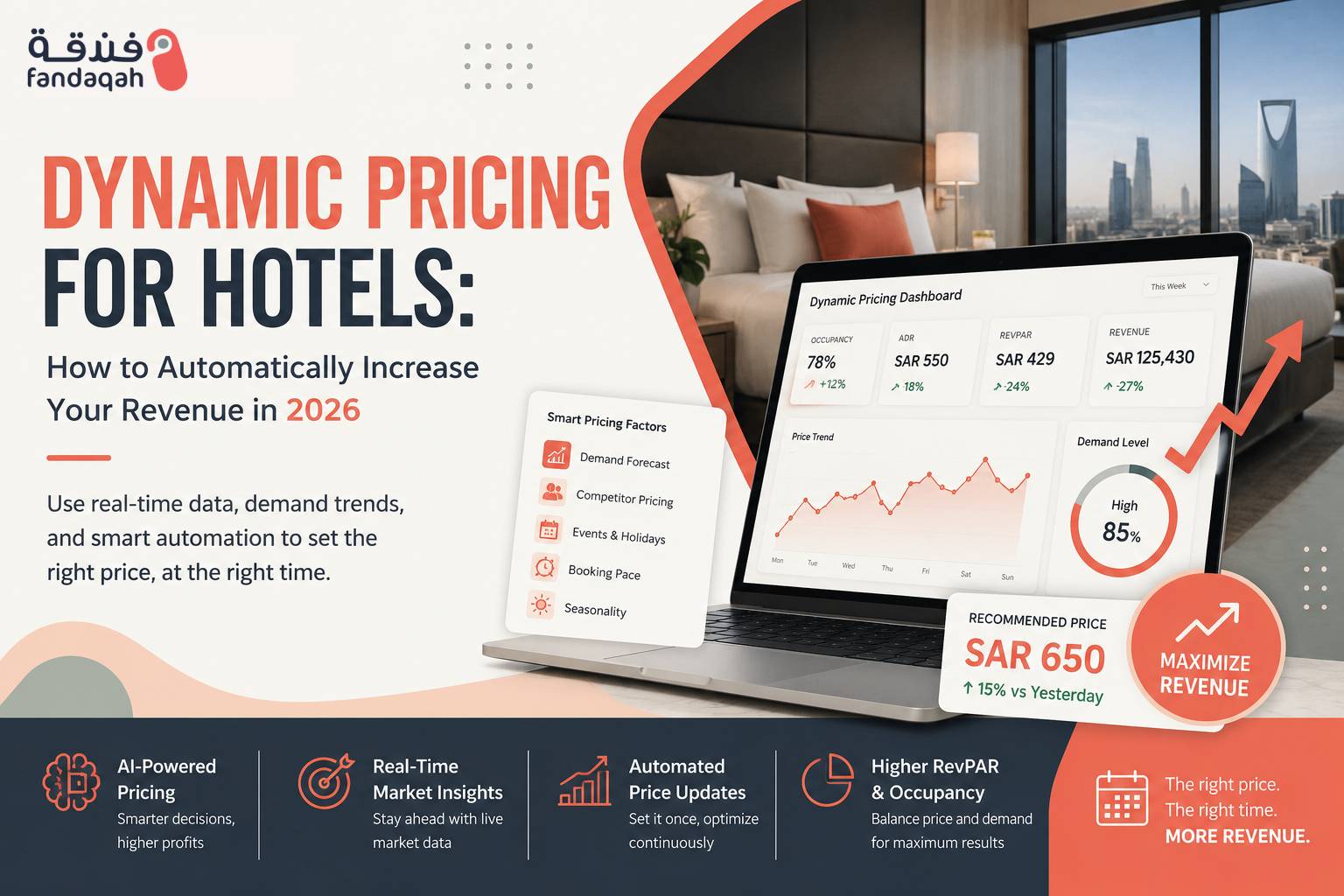
- Dynamic revenue management for seasonal demand
- Remote property management capabilities
- Local experience provider connectivity
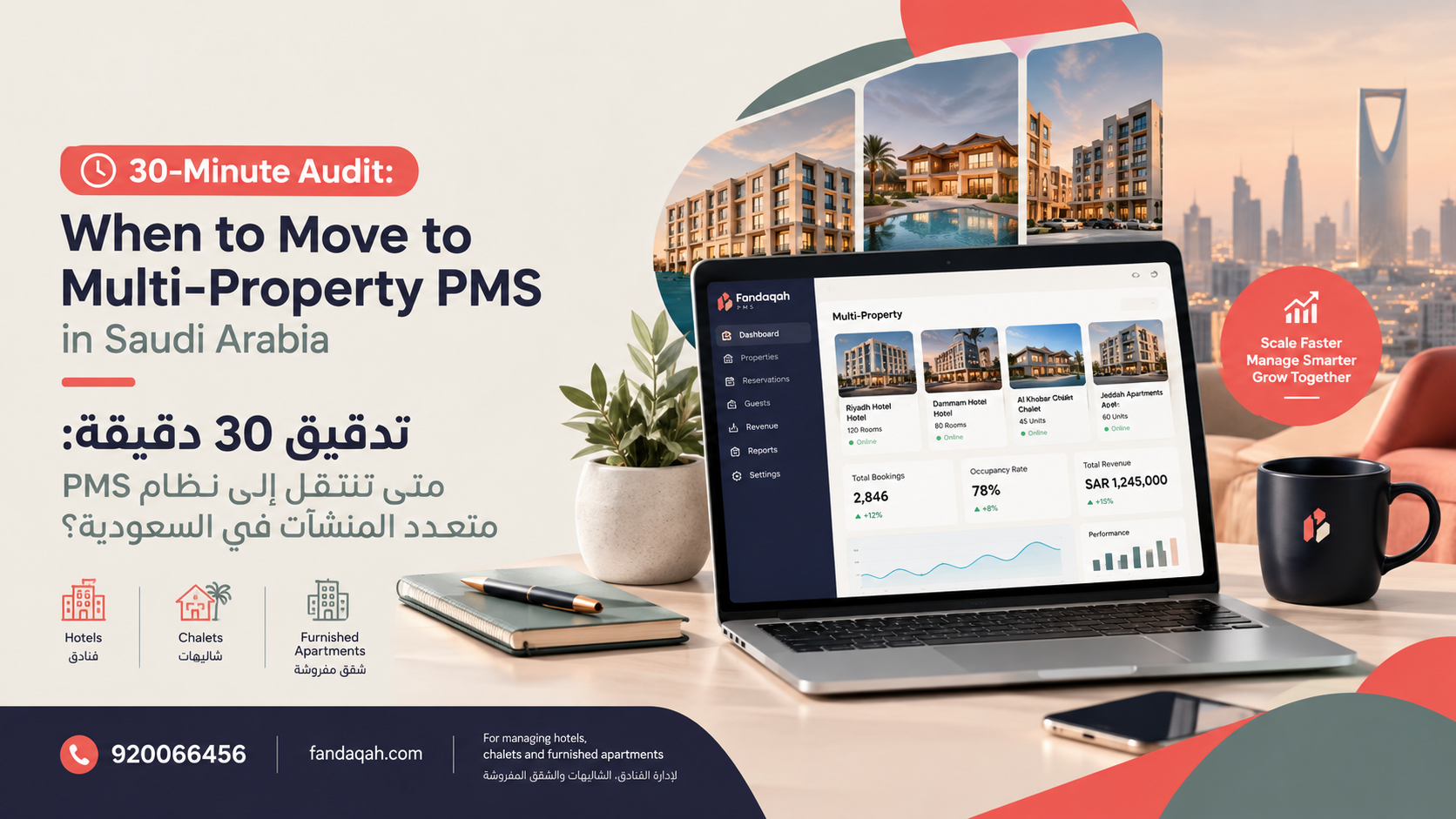
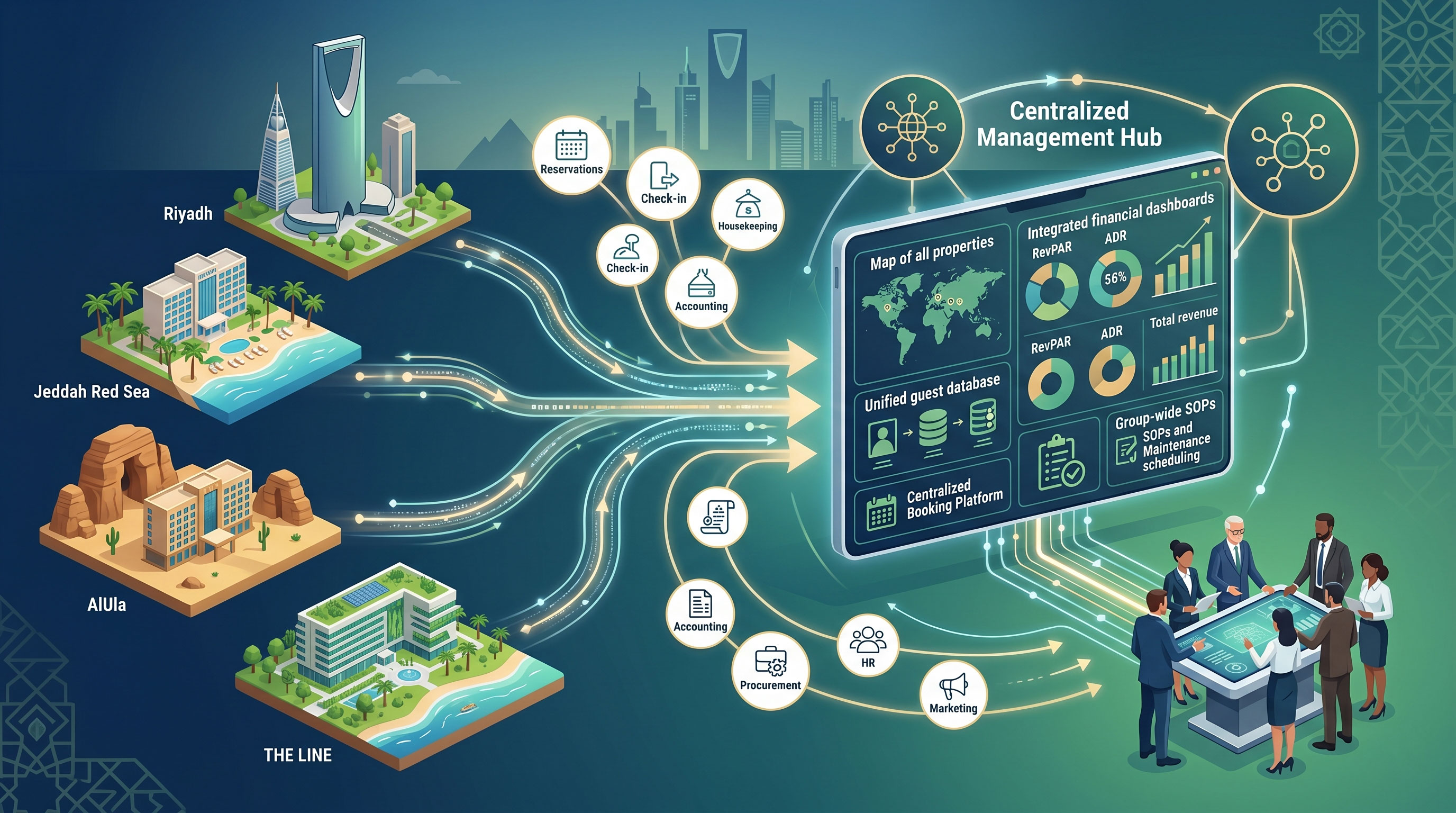
- Multi‑property management for resort complexes
- Guest communication & concierge tools
5. Overview of the Future of Hospitality Summit
| Information | Details |
|---|
| Event Name | Future of Hospitality Summit Saudi Arabia 2026 (9th Edition) |
| Dates | April 20–22, 2026 |
| Venue | Mandarin Oriental Al Faisaliah, Riyadh, Saudi Arabia |
| Theme | "Where Opportunity Meets Capital" |
| Expected Attendance | 1,500+ global hospitality investors & decision‑makers |
| 2025 Business Opportunities | $1.6 billion reported by delegates |
| 2025 Hotel Signings | 11 high‑profile hotel signings & announcements |
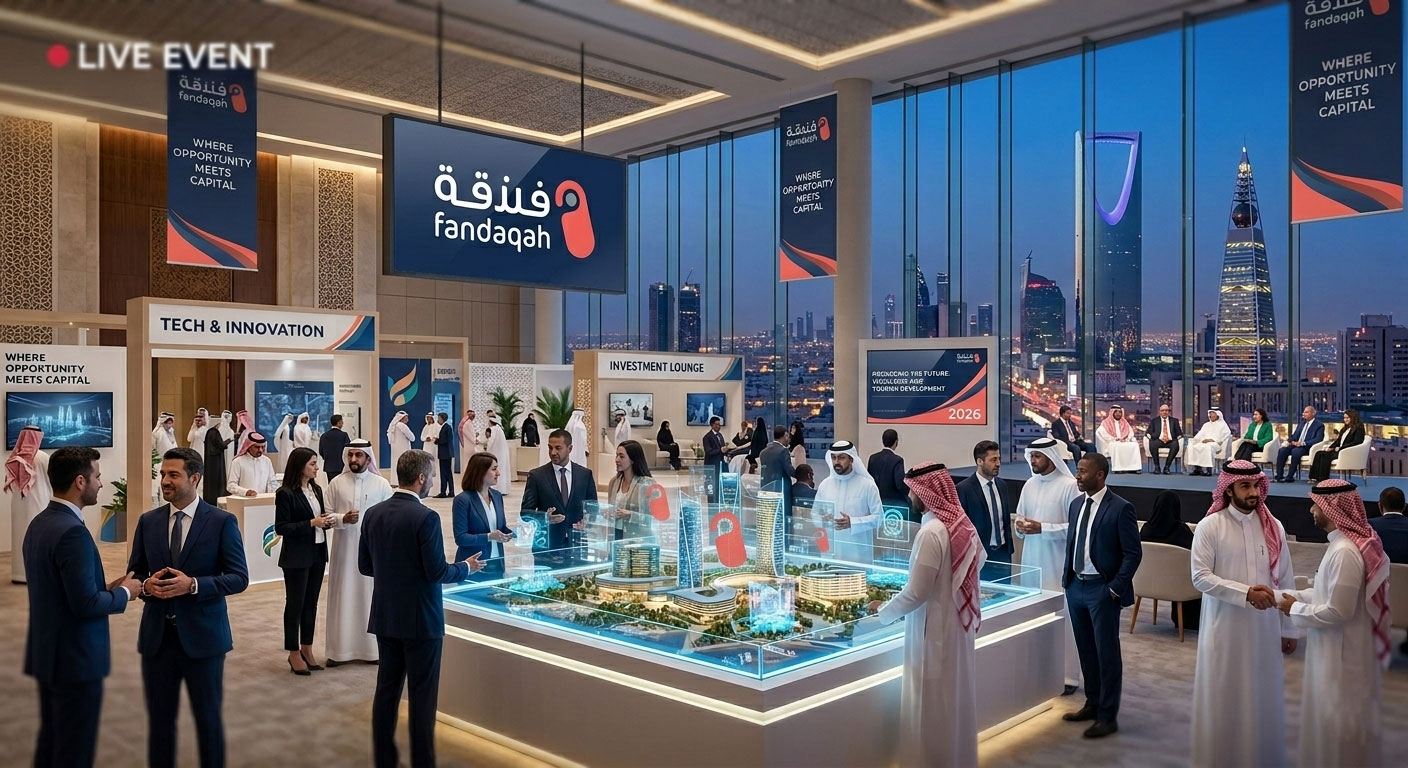
The Future of Hospitality Summit has established itself as the premier gathering for hospitality industry leaders in the Kingdom. Now in its ninth edition, the summit brings together over 1,500 participants including hotel owners, investors, operators, technology providers, and government officials. The 2026 event continues the theme "Where Opportunity Meets Capital," reflecting the summit’s focus on connecting investment with development opportunities.
6. The Hotel Technology Revolution in the Kingdom
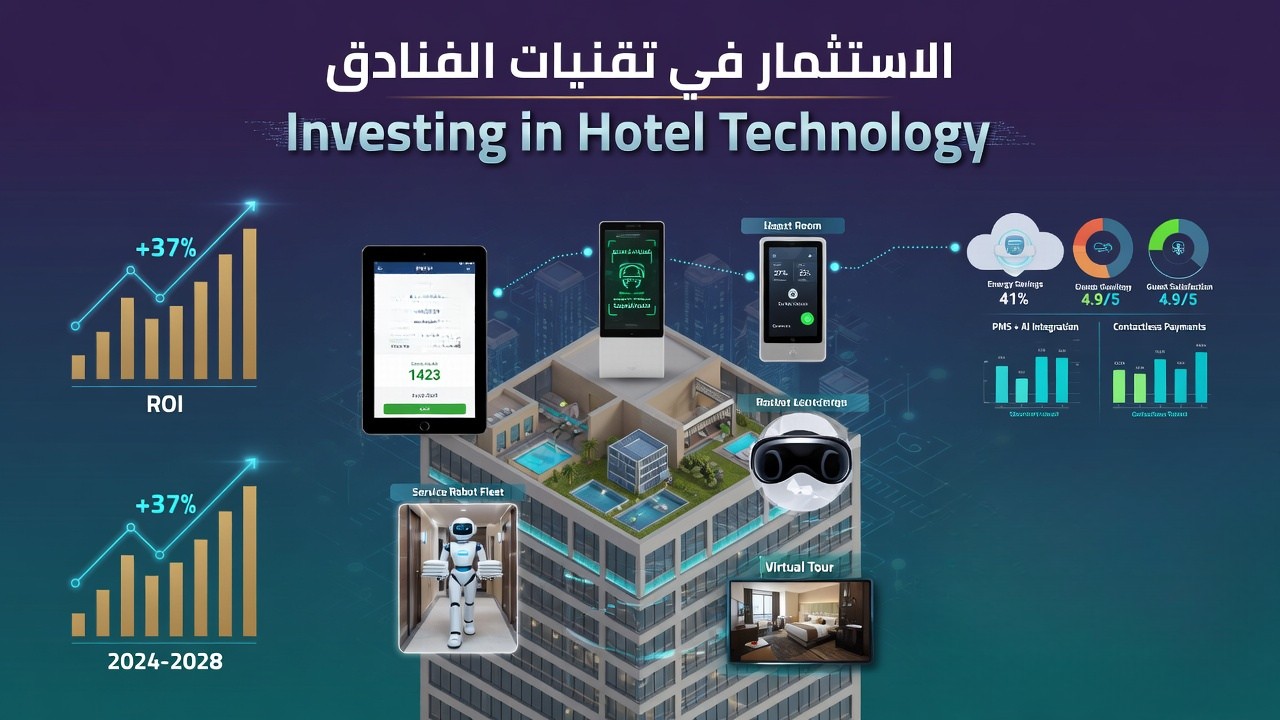
Technology drives every aspect of hospitality operations in Saudi Arabia. From the moment a guest books a room to check‑out time, digital systems enhance efficiency, improve experiences, and ensure compliance. The Future of Hospitality Summit dedicates significant programming to technology and innovation, recognizing that digital transformation is no longer optional — it is essential for competitive success.
Saudi Hotel Management System: The Operational Backbone
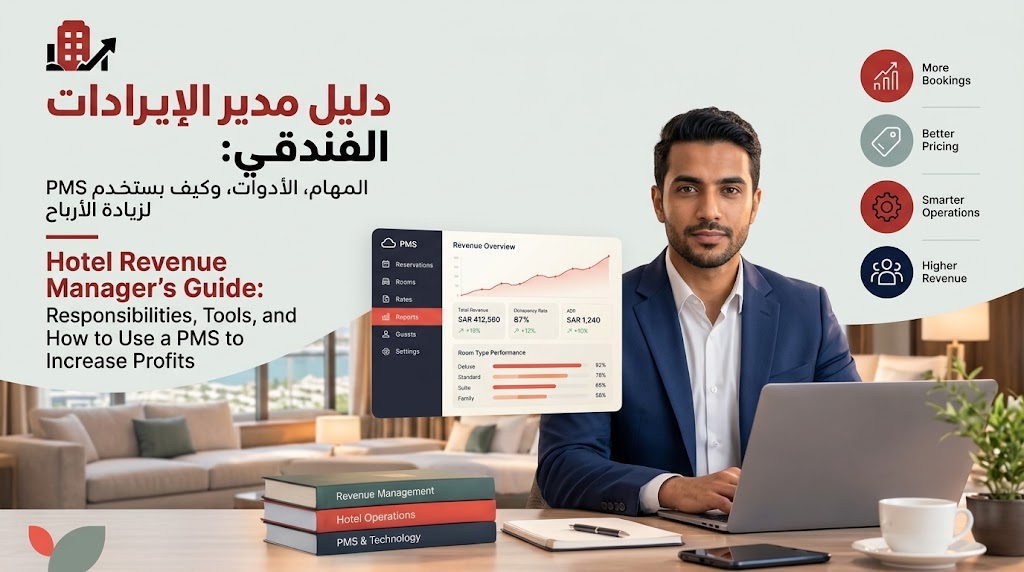
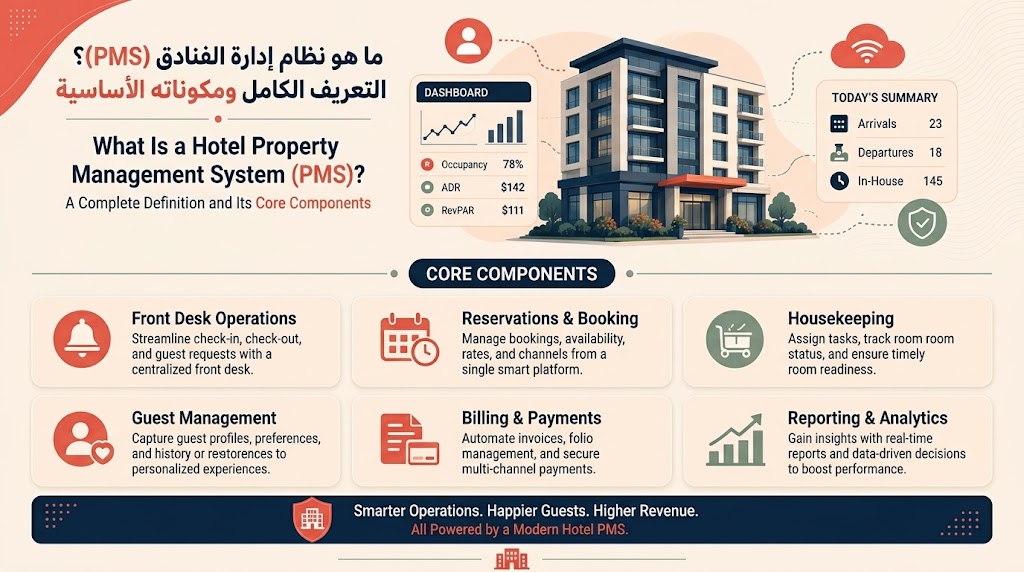
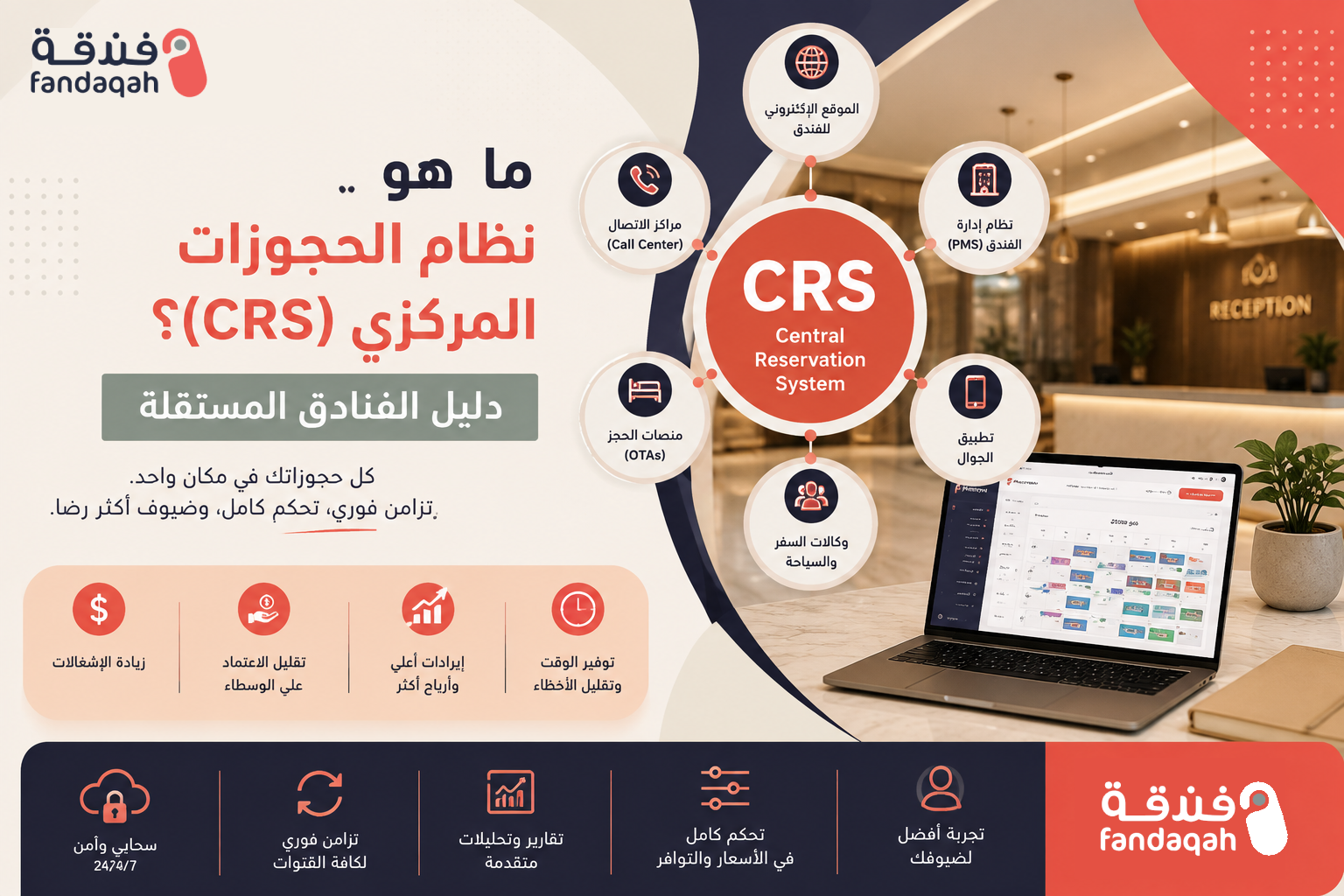
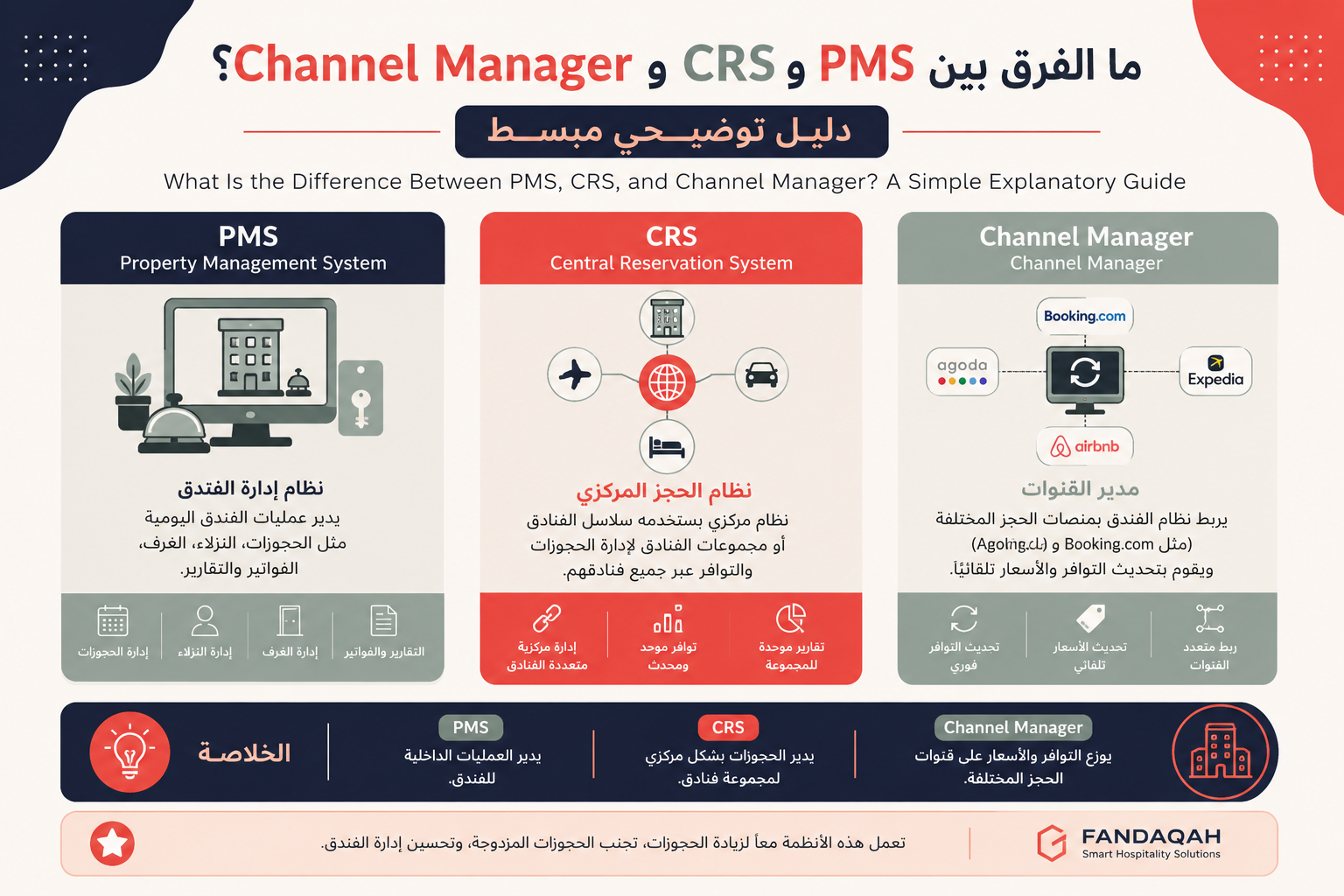
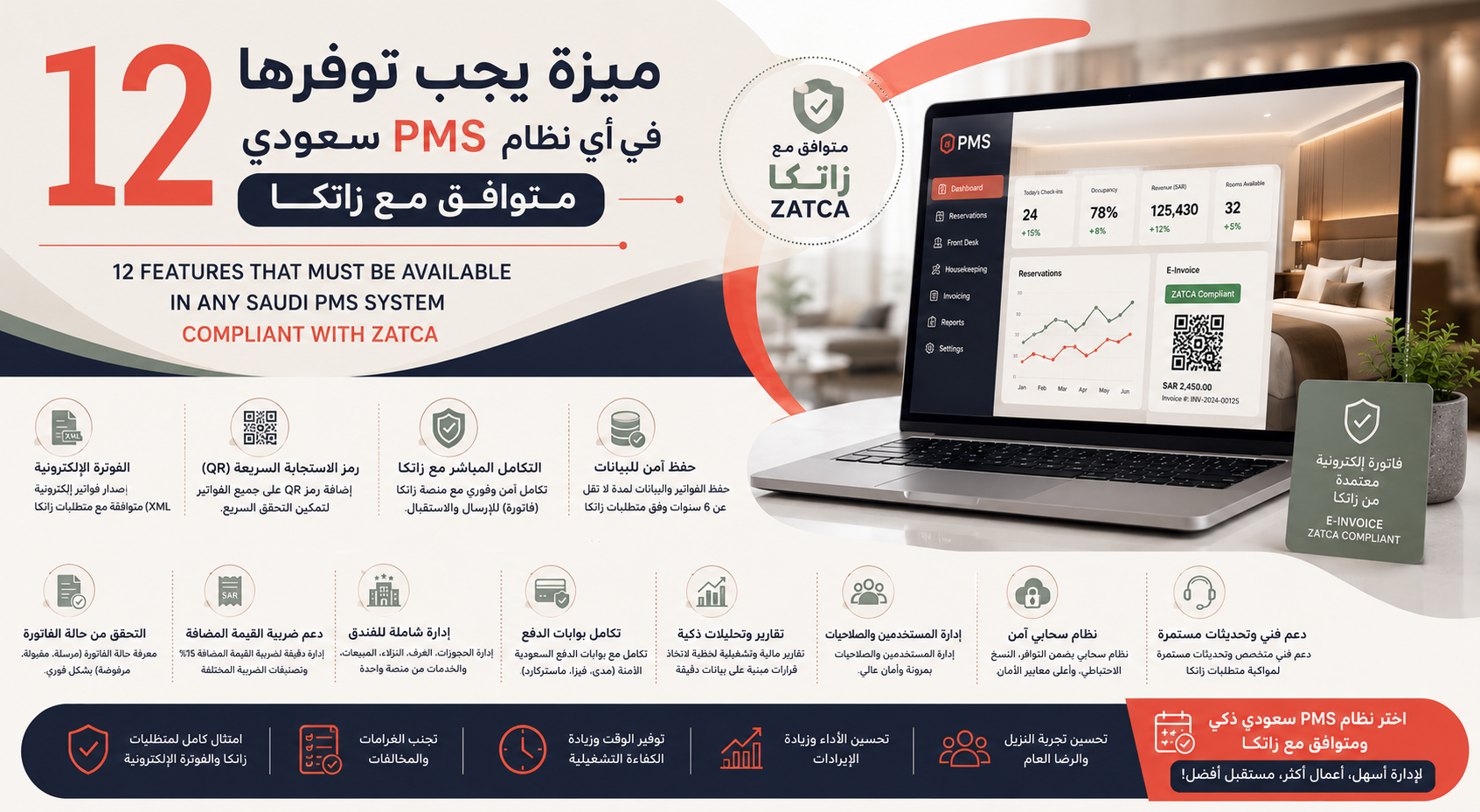
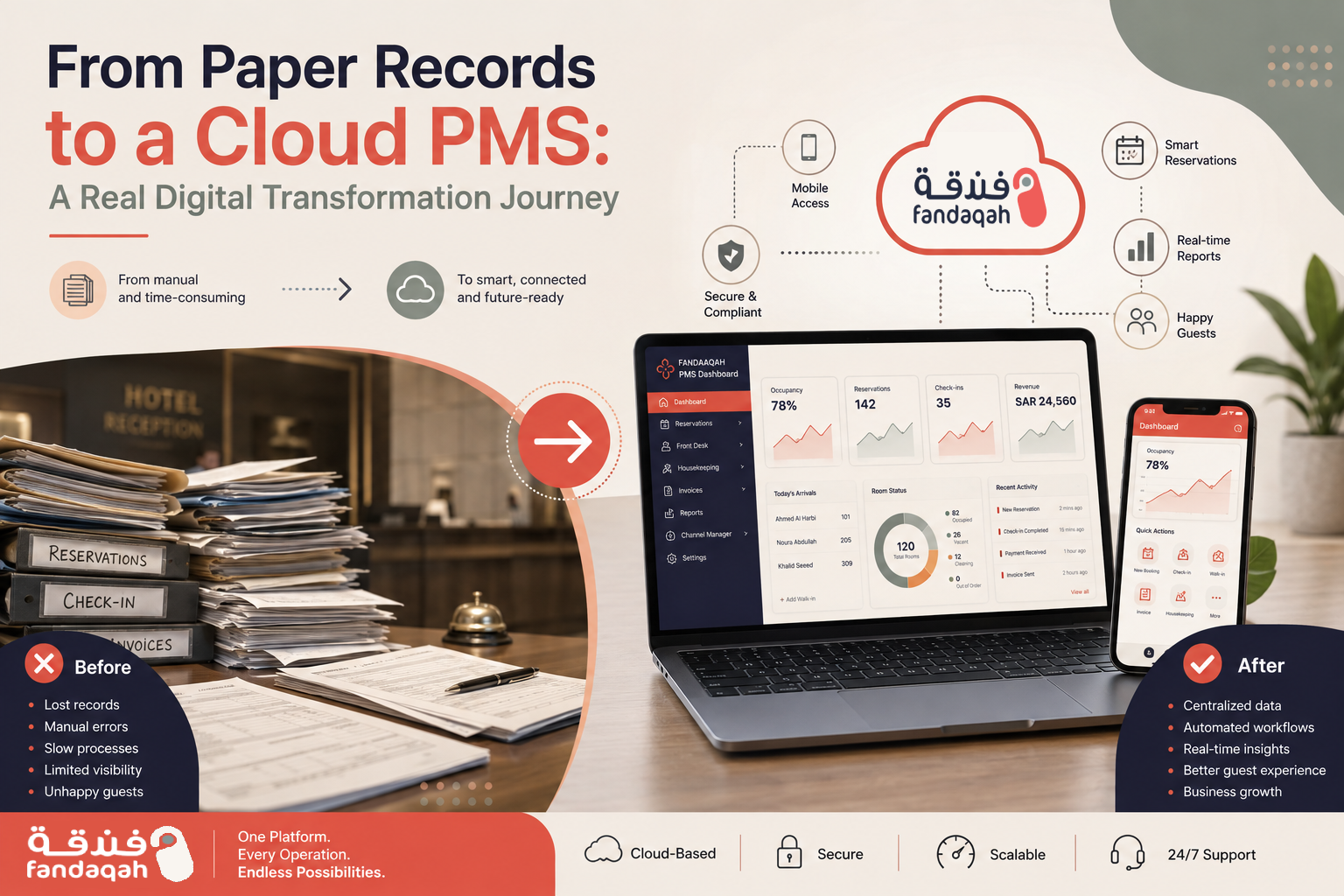
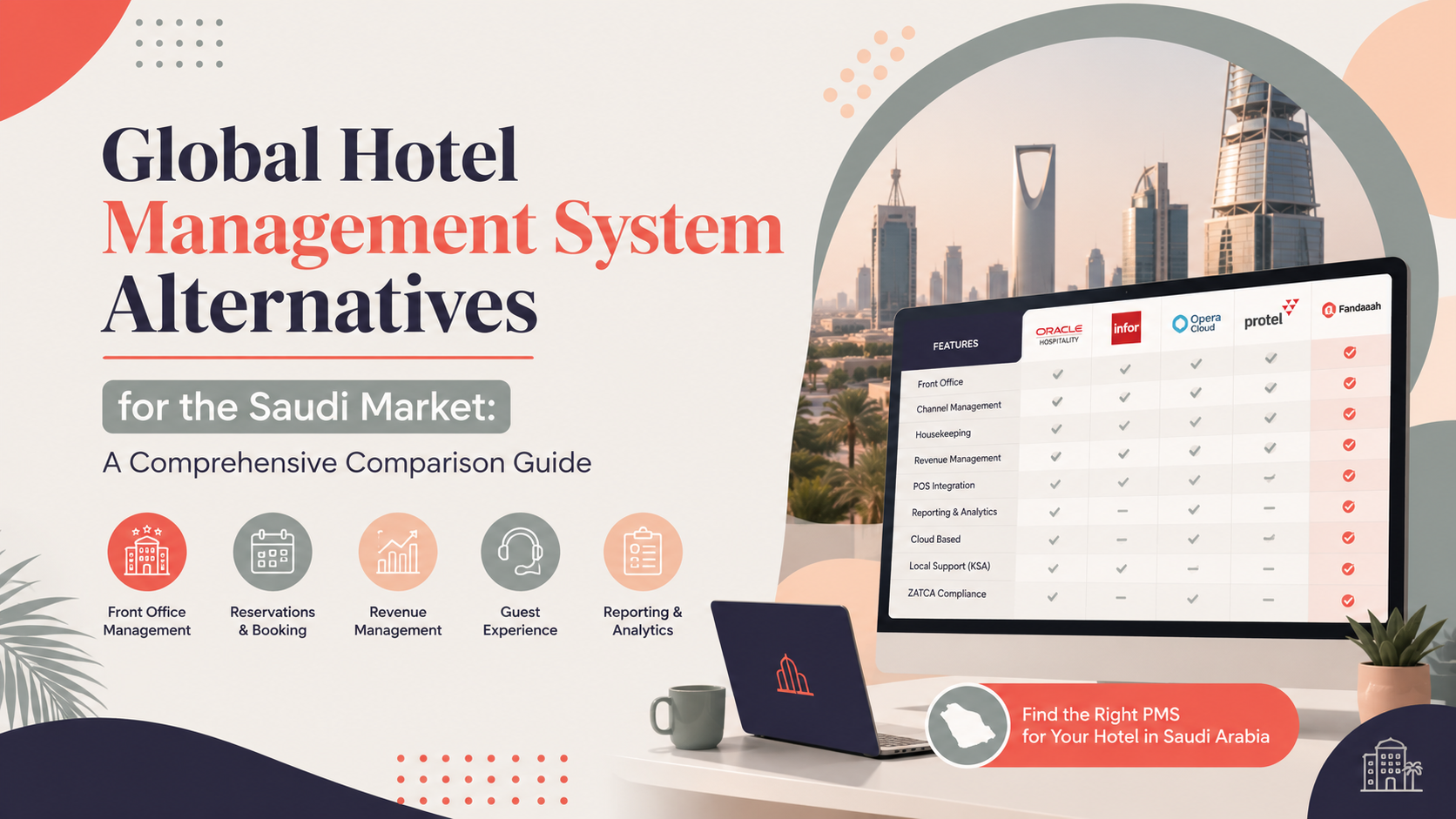
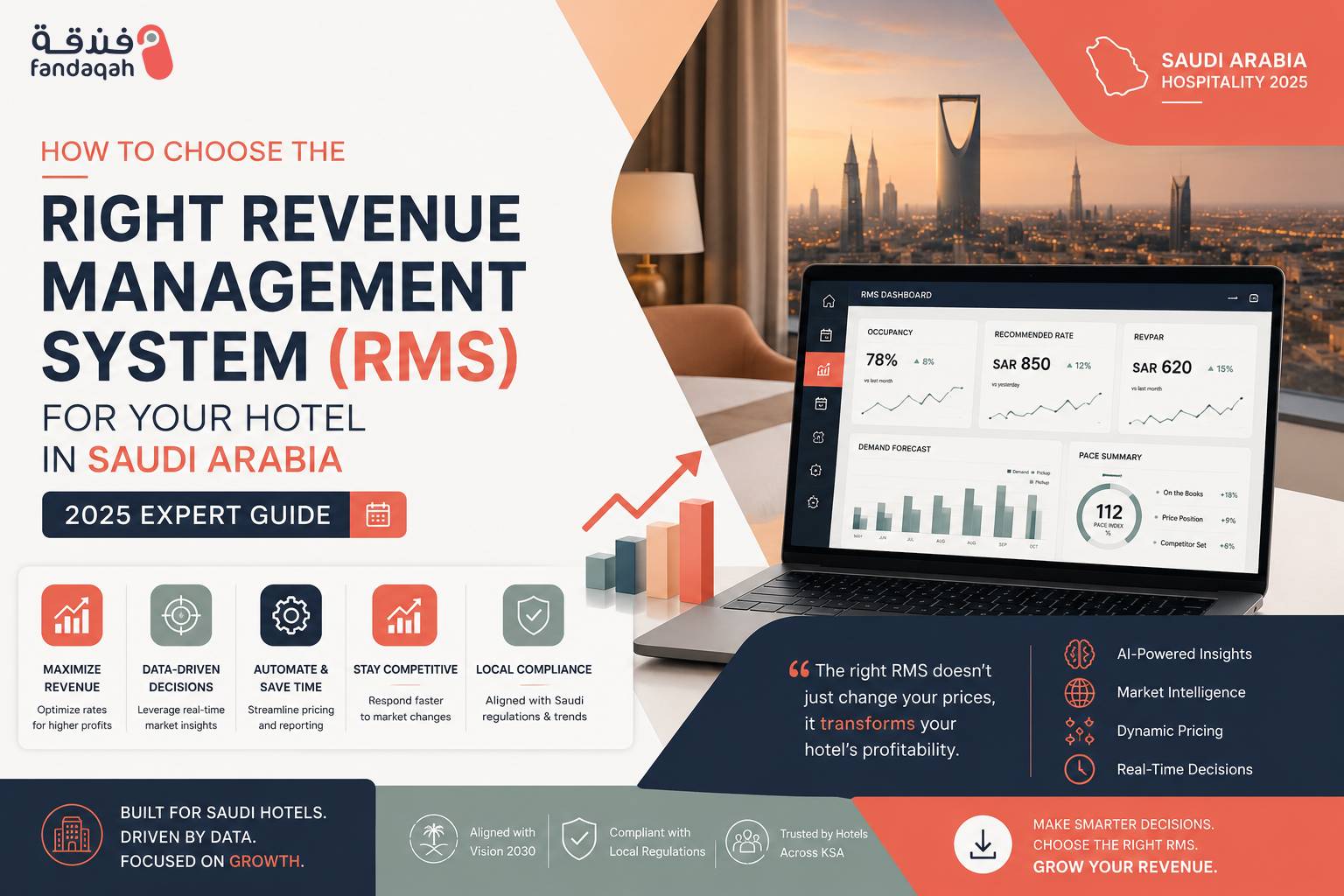
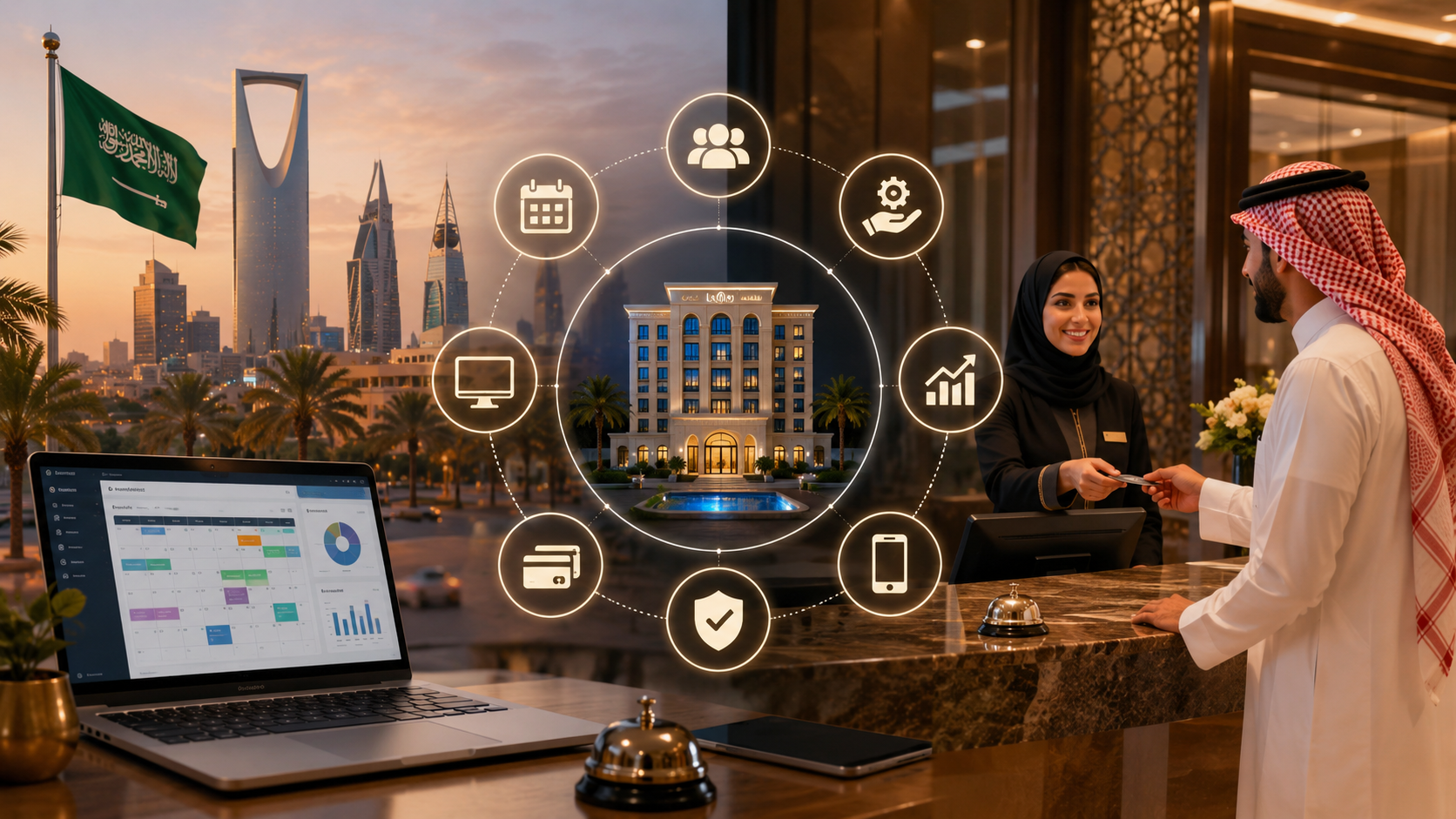
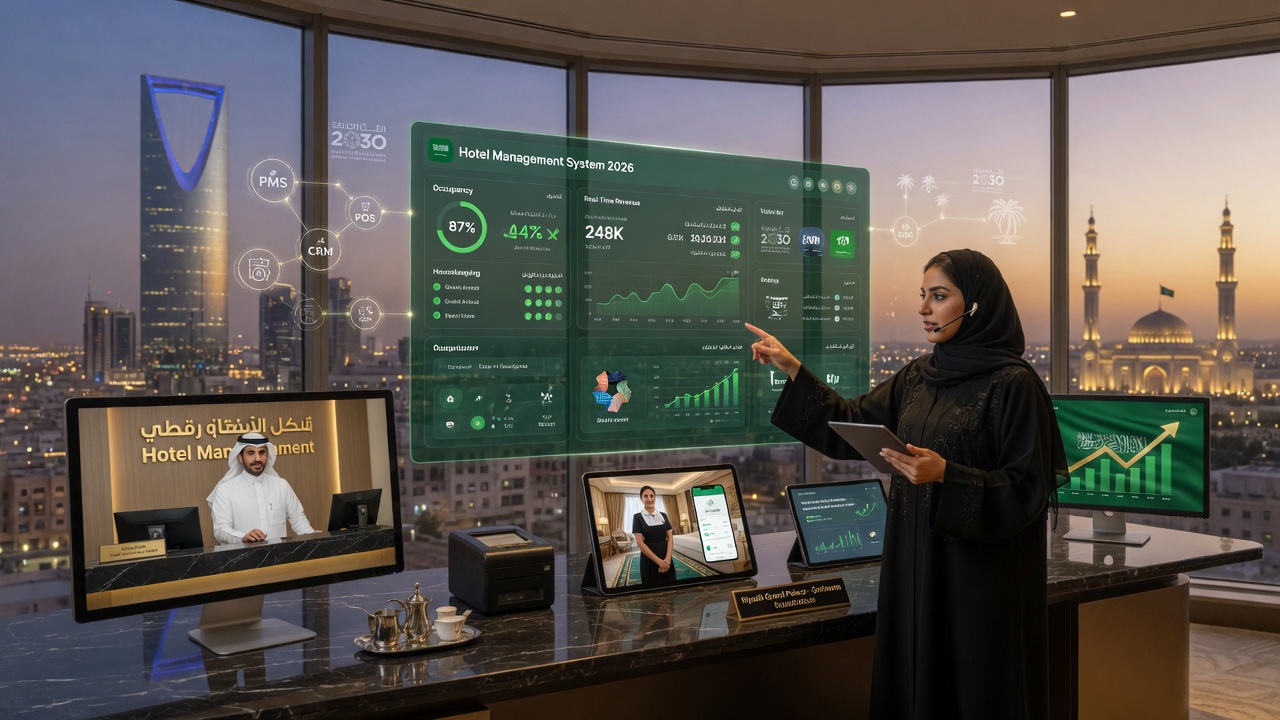
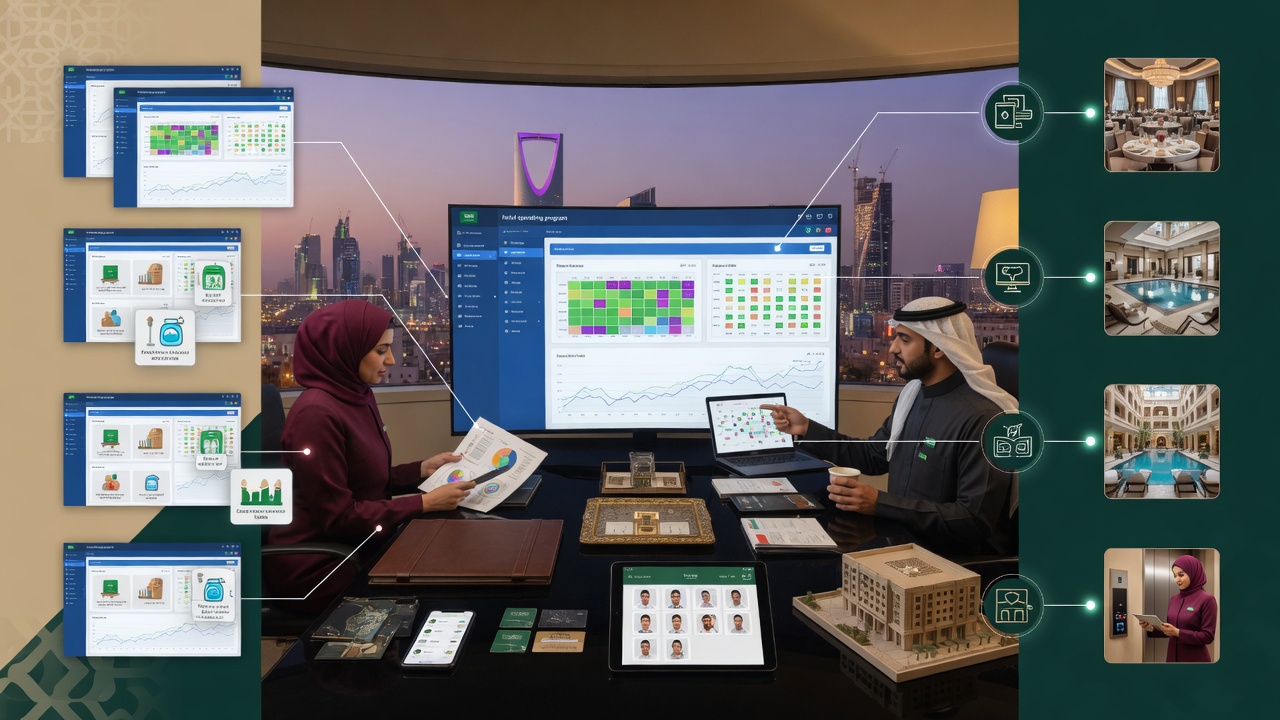
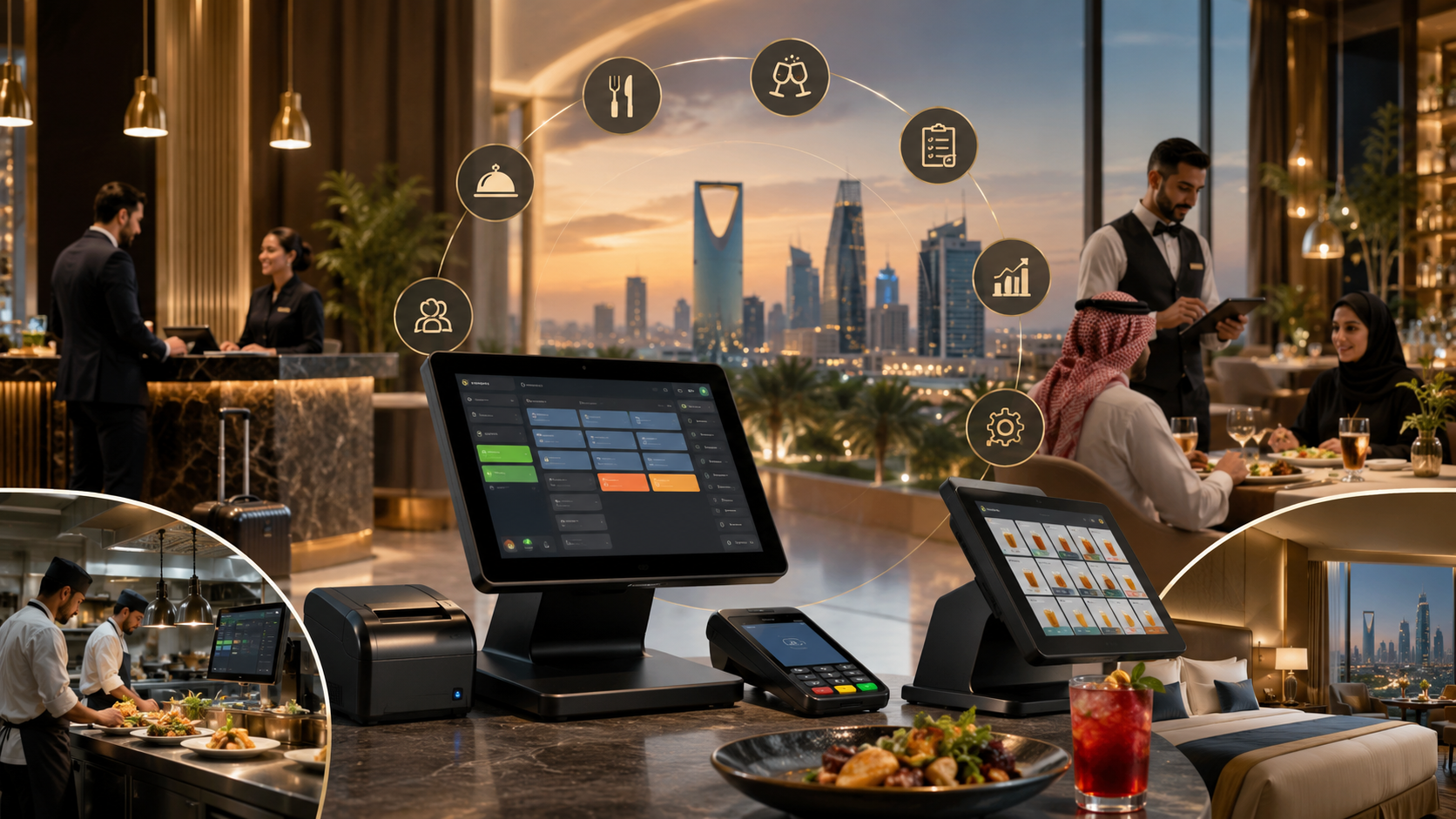
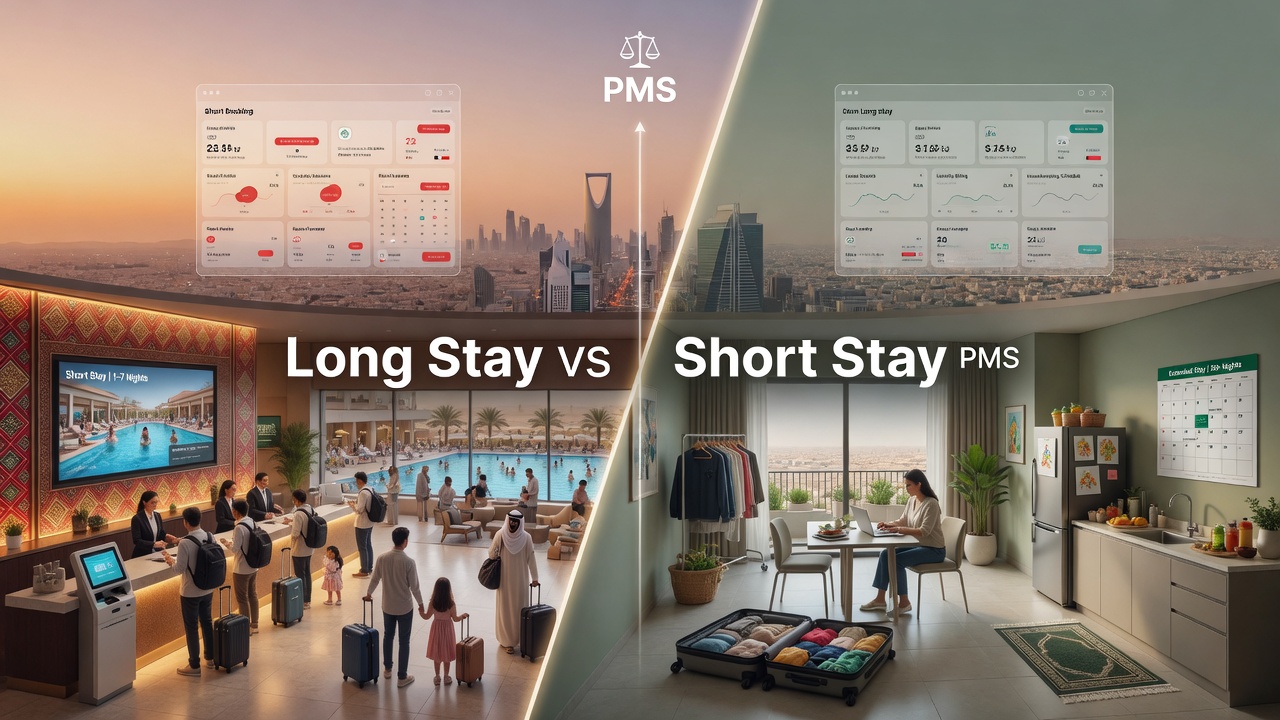
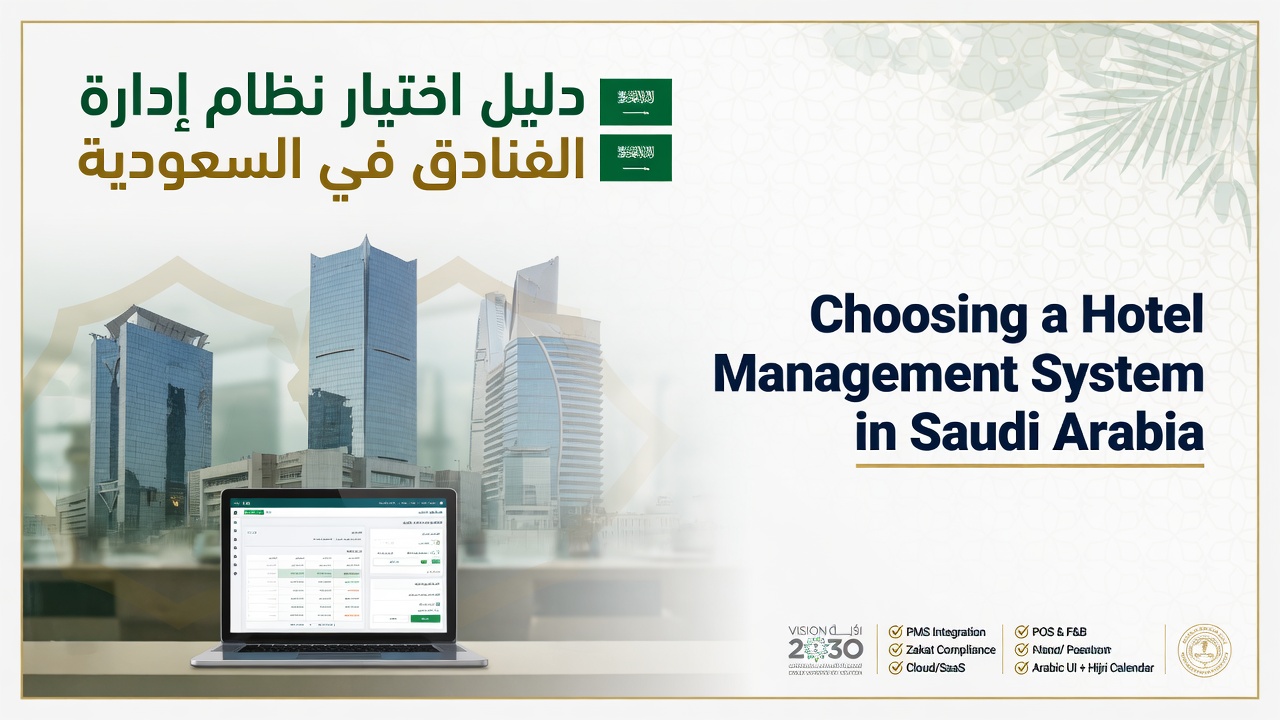
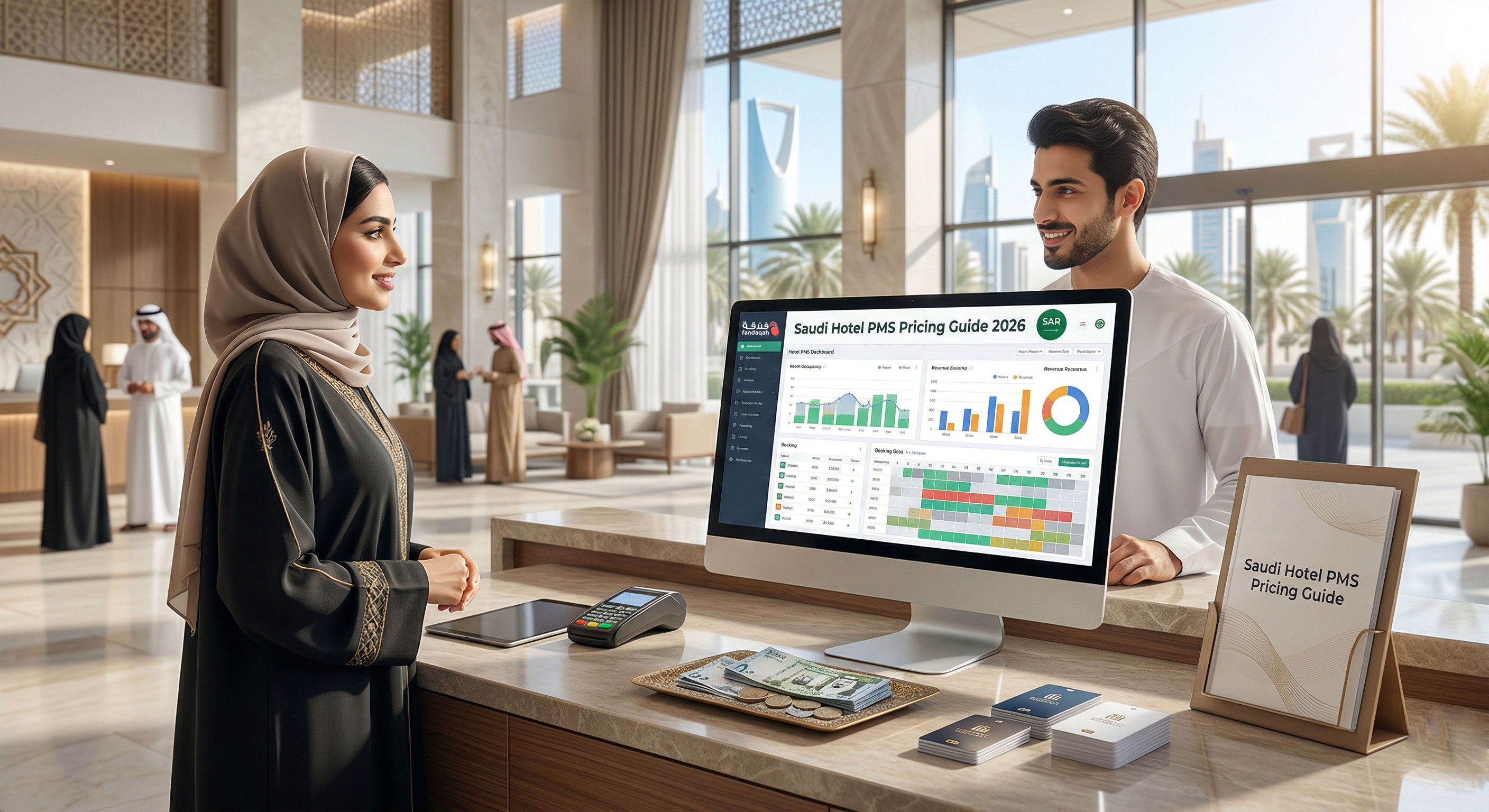
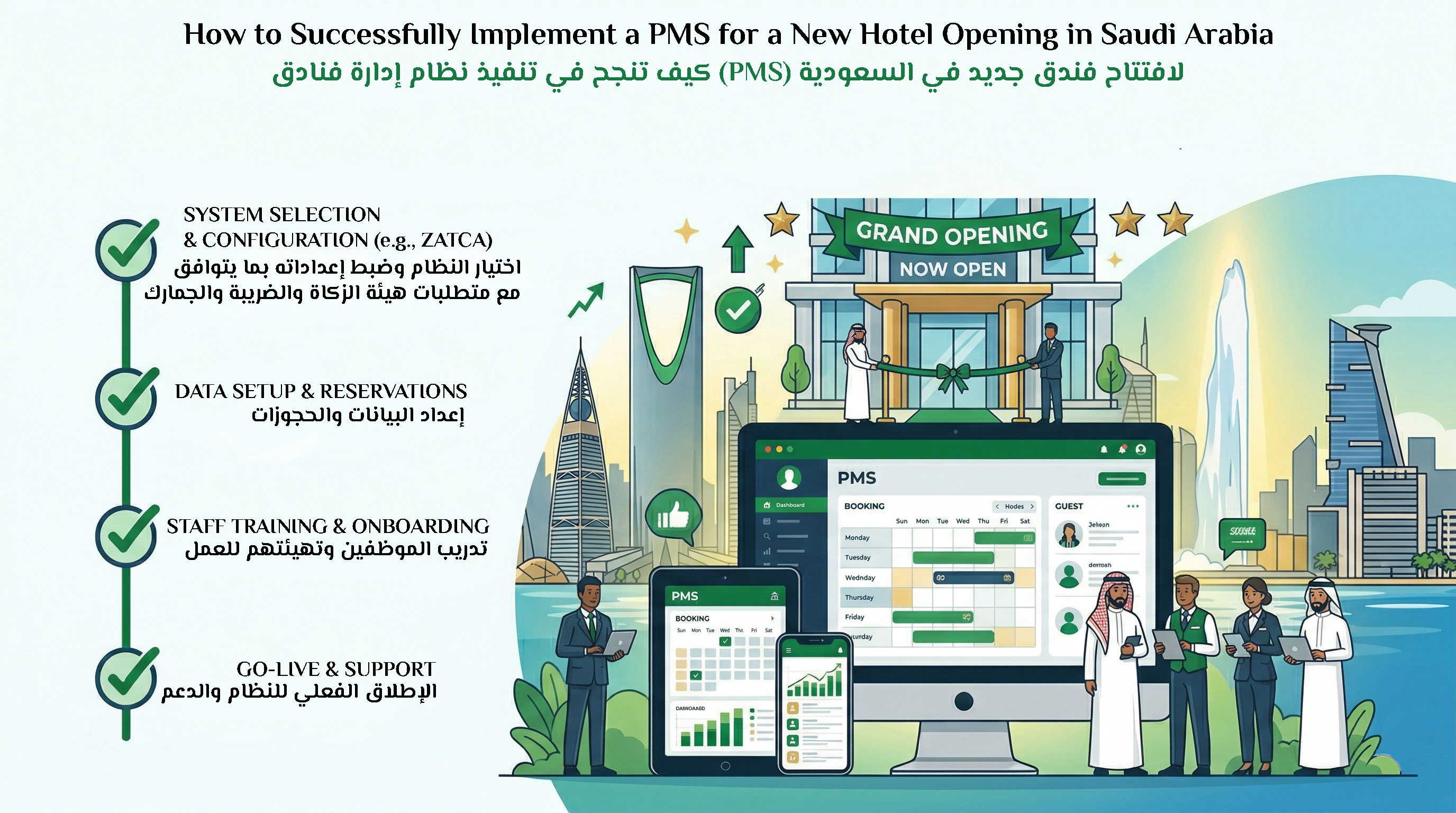
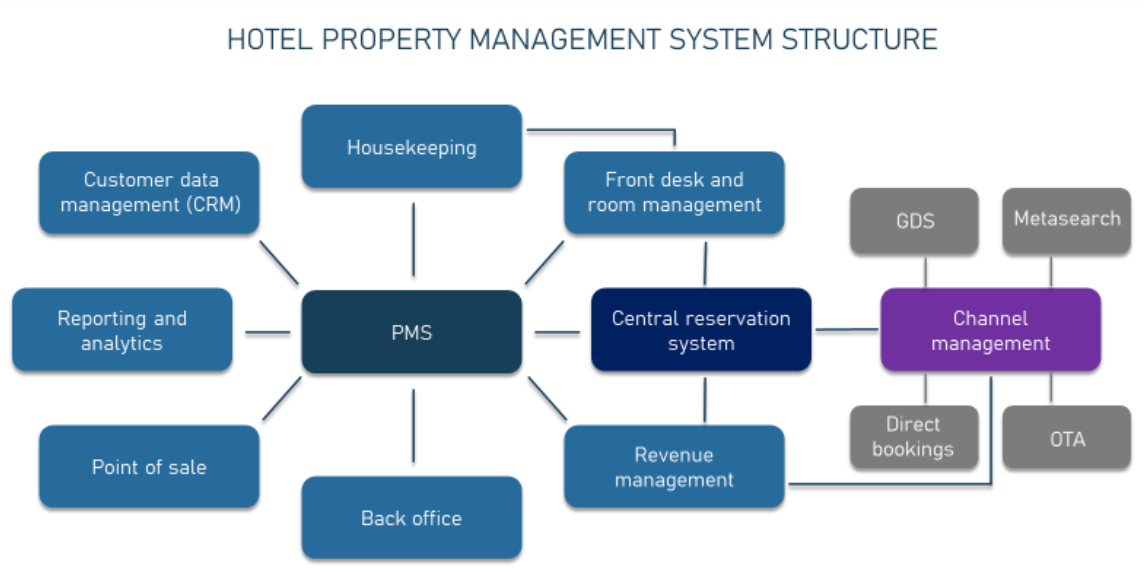
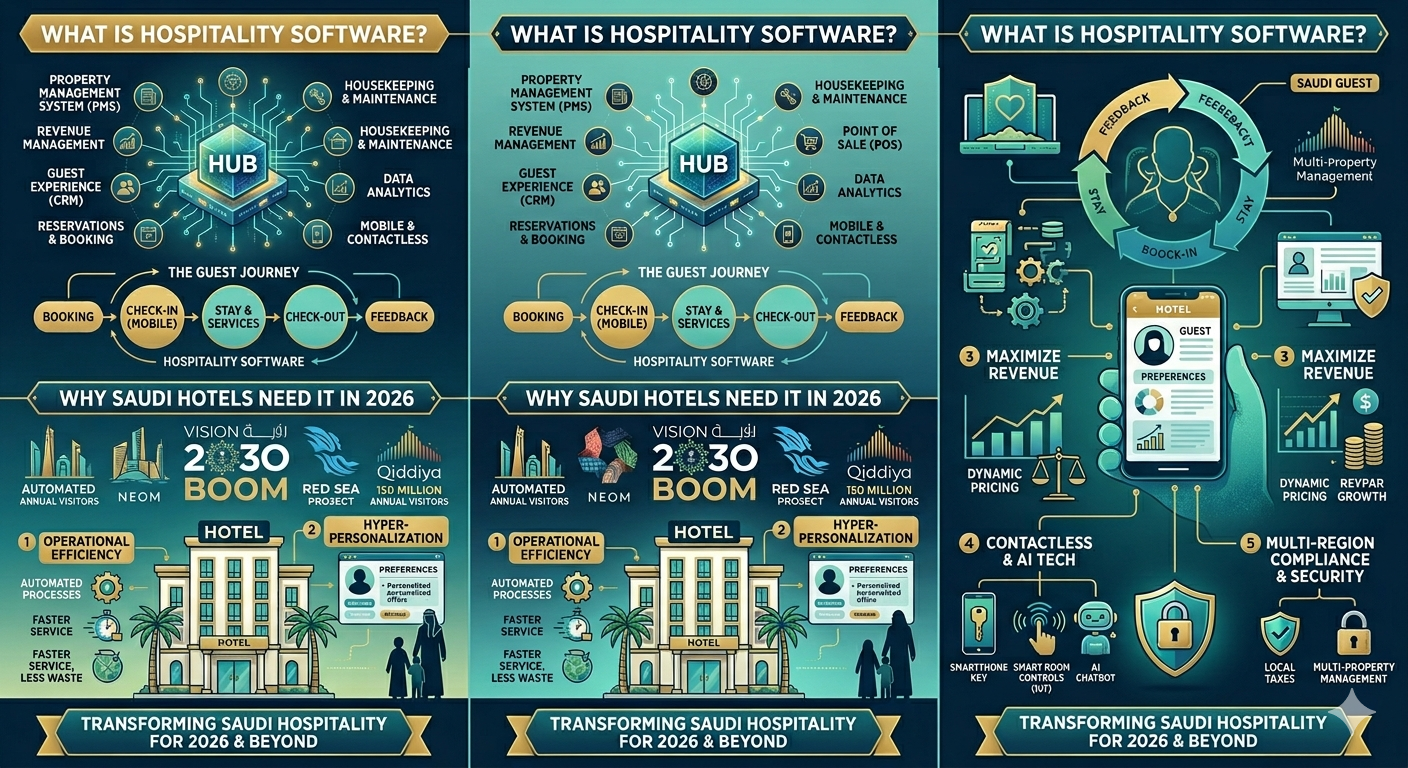
A property management system (PMS) serves as the operational backbone of any hotel. In Saudi Arabia, however, a hotel management system must do more than manage reservations and rooms. It must integrate with government platforms, generate ZATCA‑compliant invoices, report guest data to Shomoos, and provide Ministry of Tourism compliance reporting. Standard international PMS solutions often lack these Saudi‑specific capabilities, creating operational challenges for hoteliers.
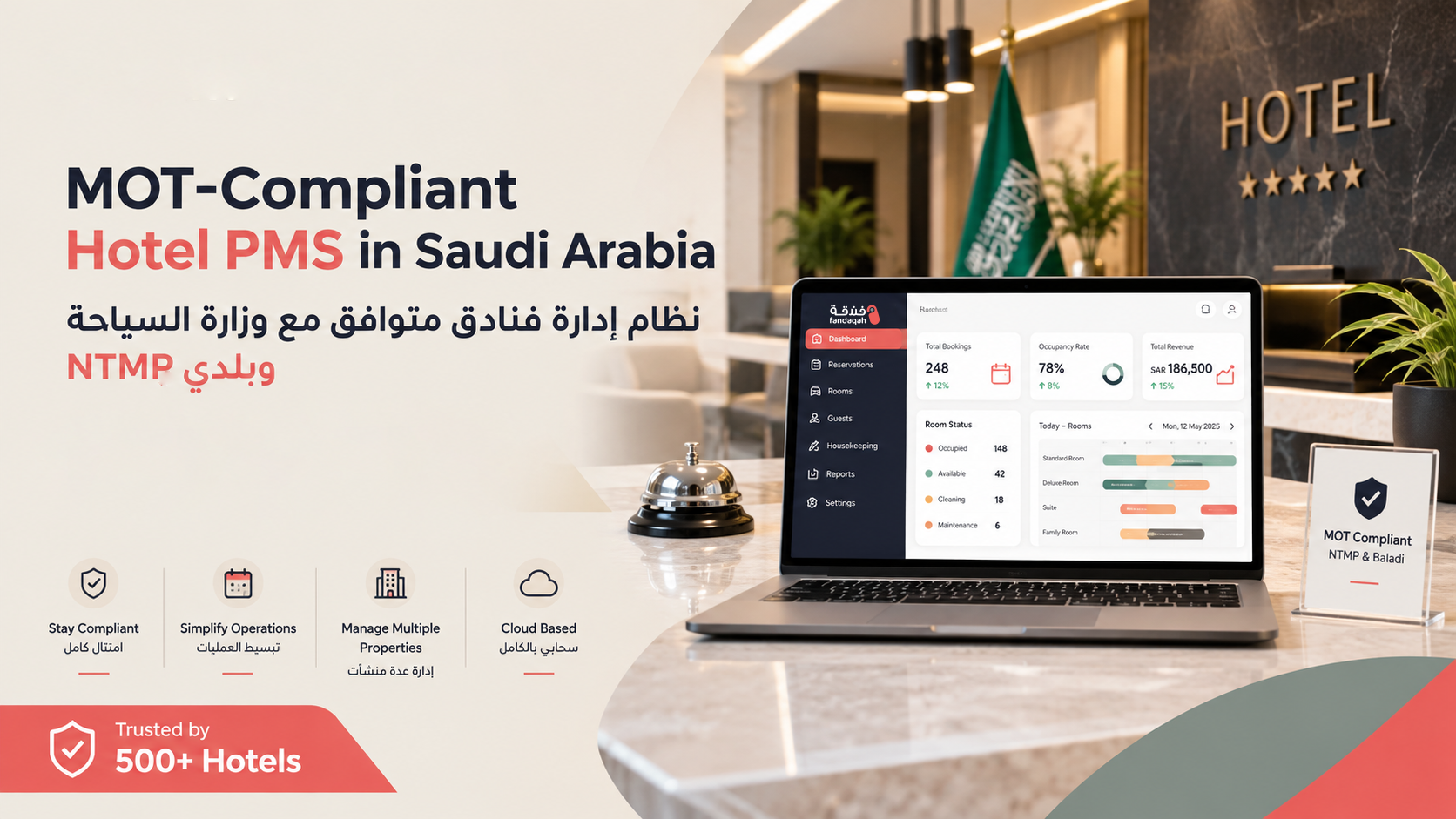
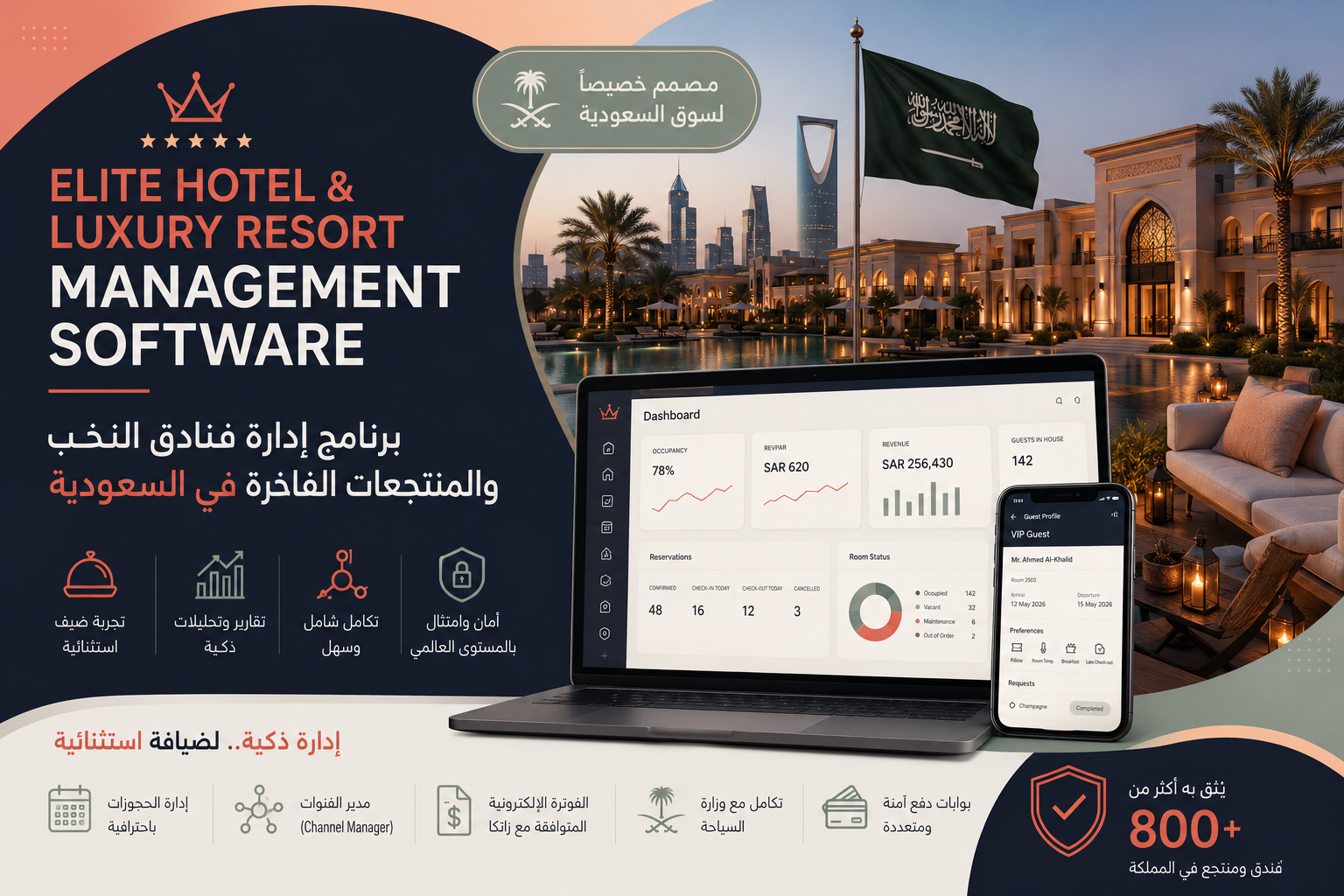
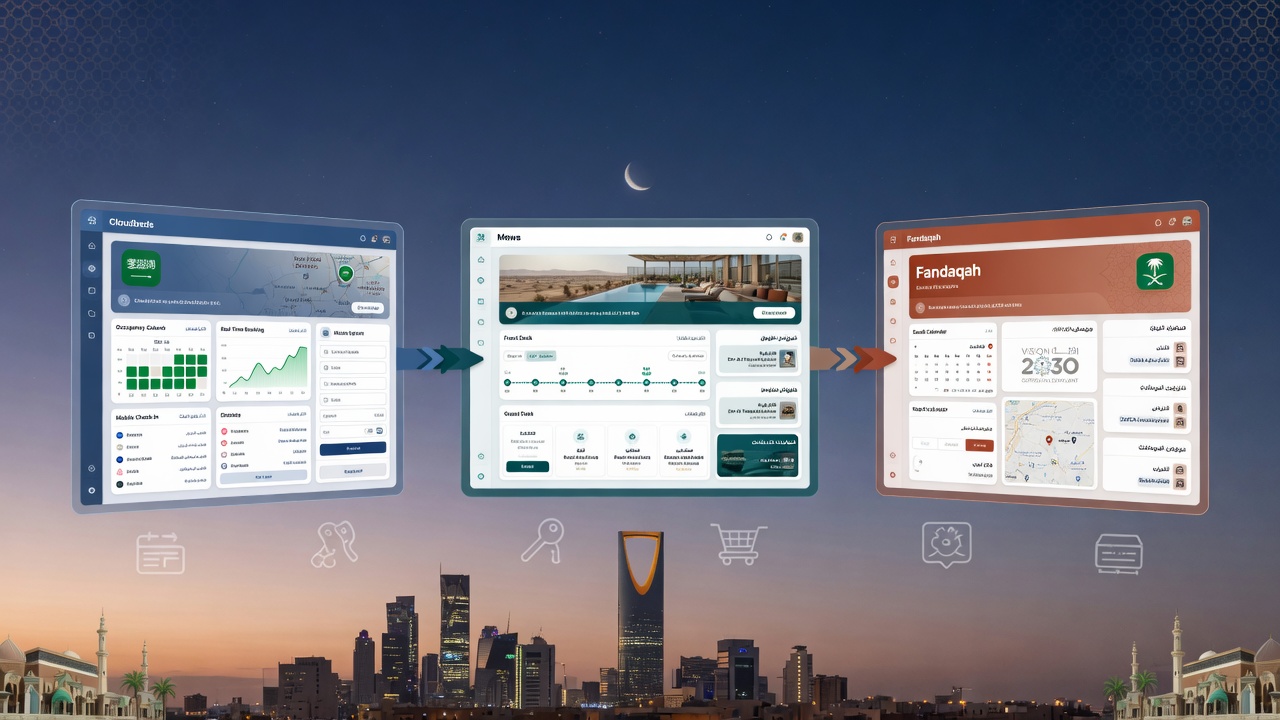
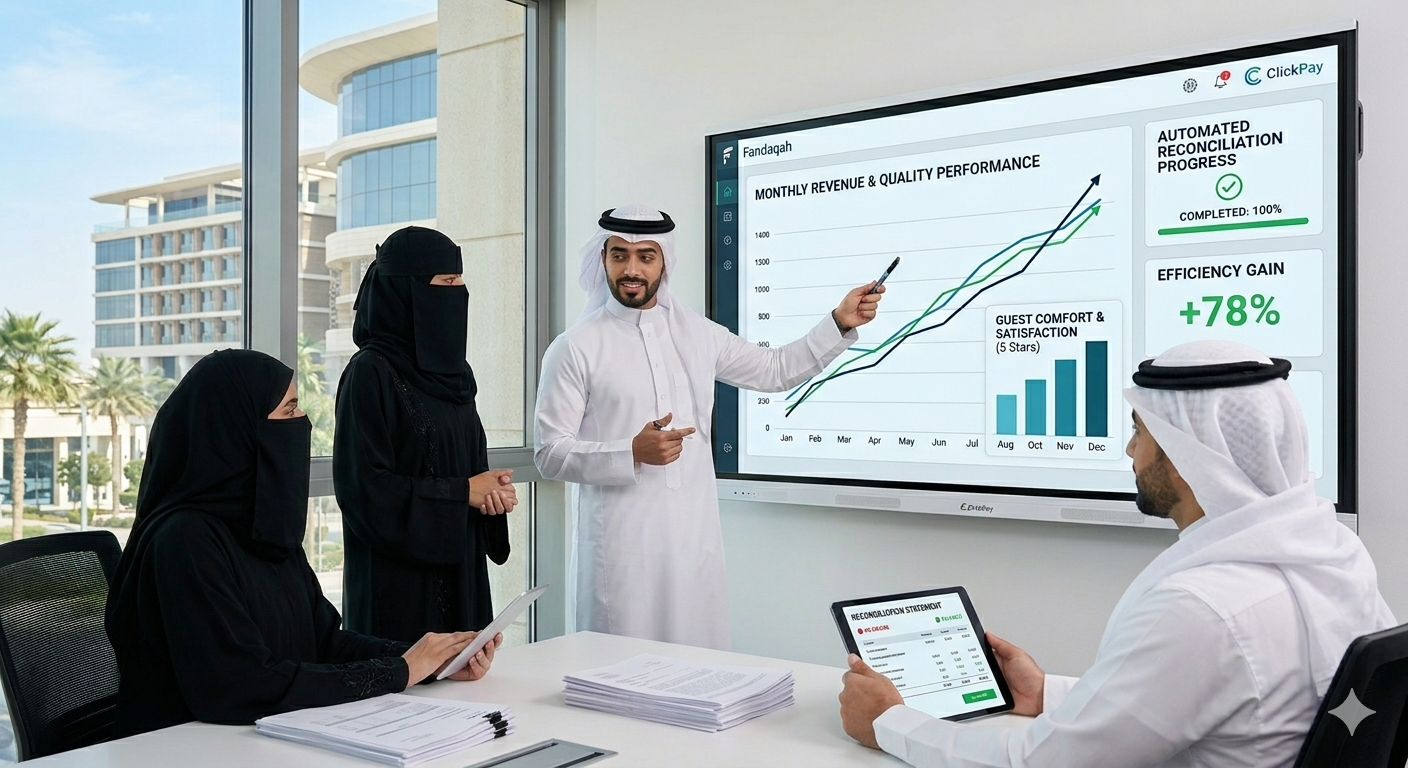
Fandaqah’s Saudi hotel management solution is purpose‑built for the Kingdom’s regulatory environment. The system seamlessly integrates with ZATCA for e‑invoicing, connects with Shomoos for guest registration, and automates Ministry of Tourism reporting. This eliminates manual compliance work, reduces error risk, and frees staff to focus on guest service rather than administrative tasks.
Saudi Guest Check‑In Software
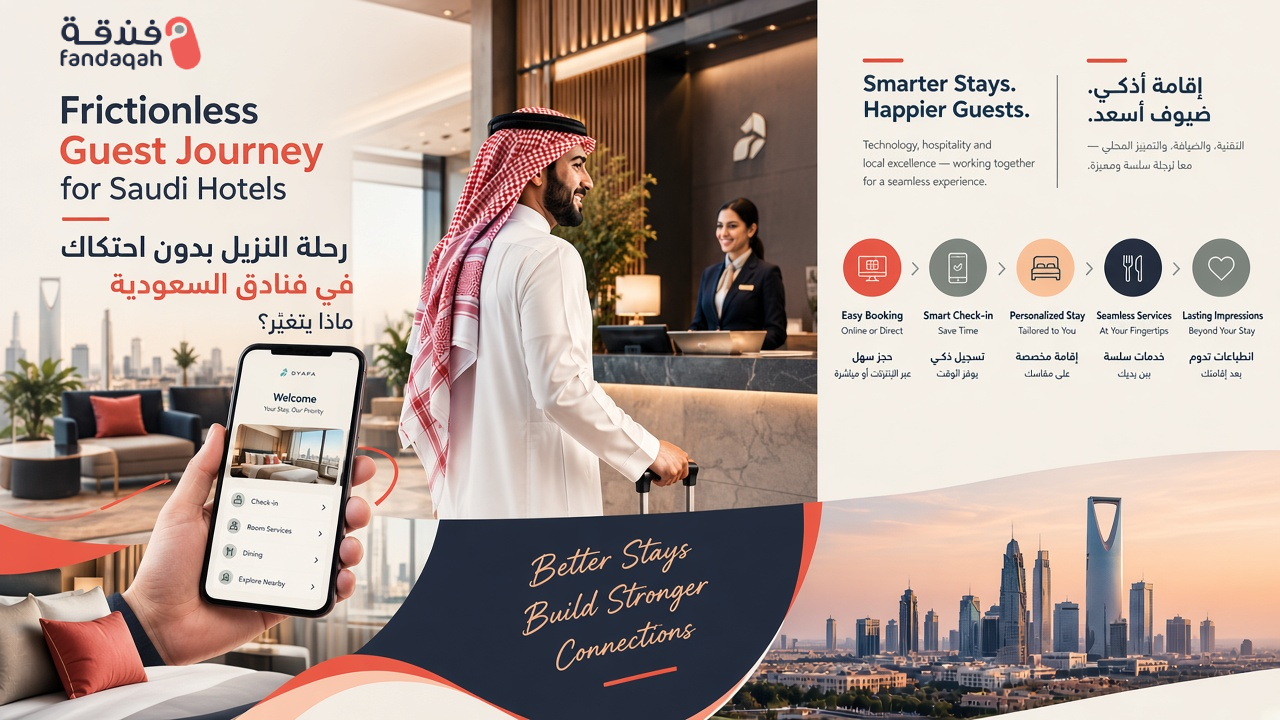
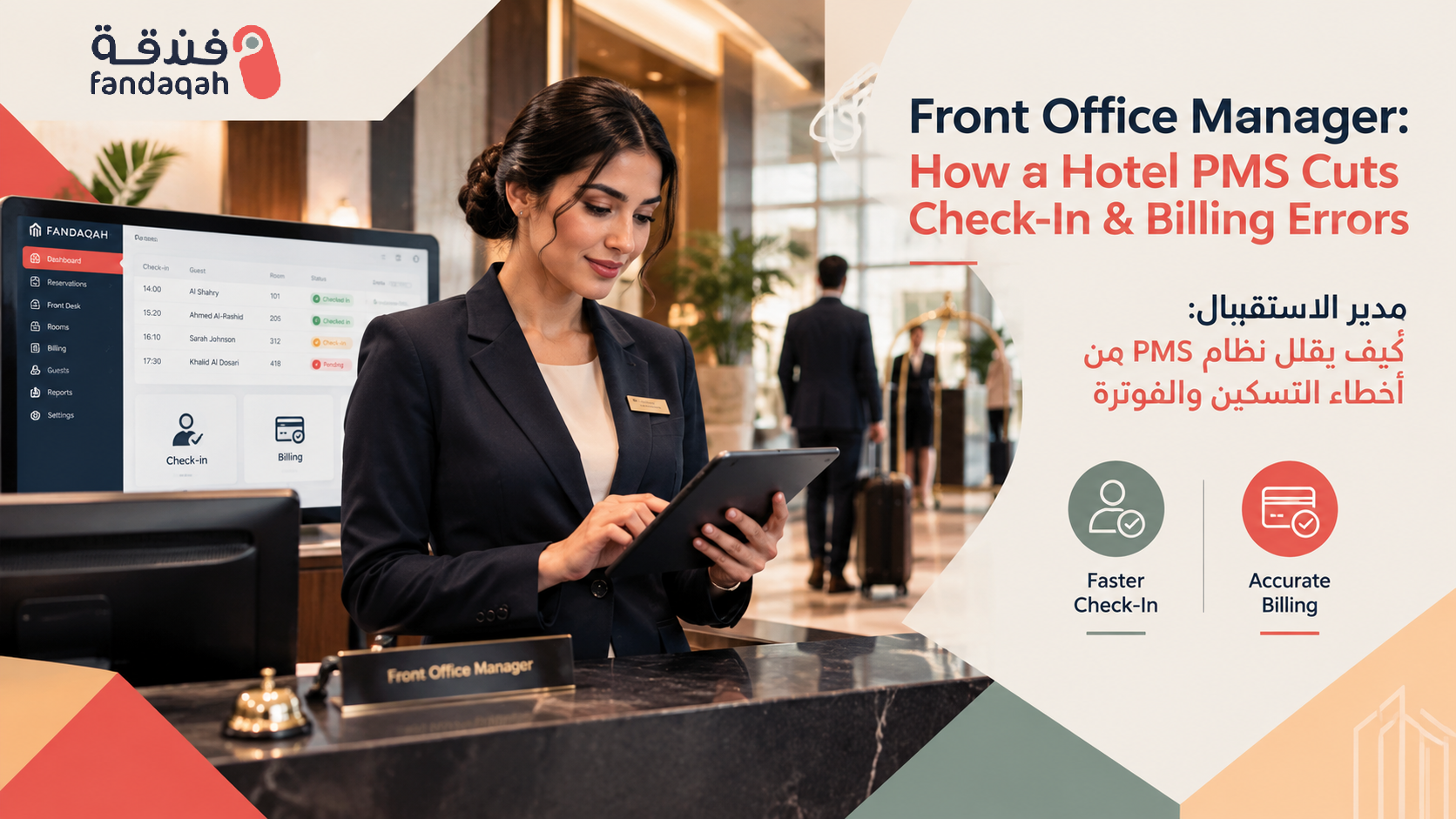
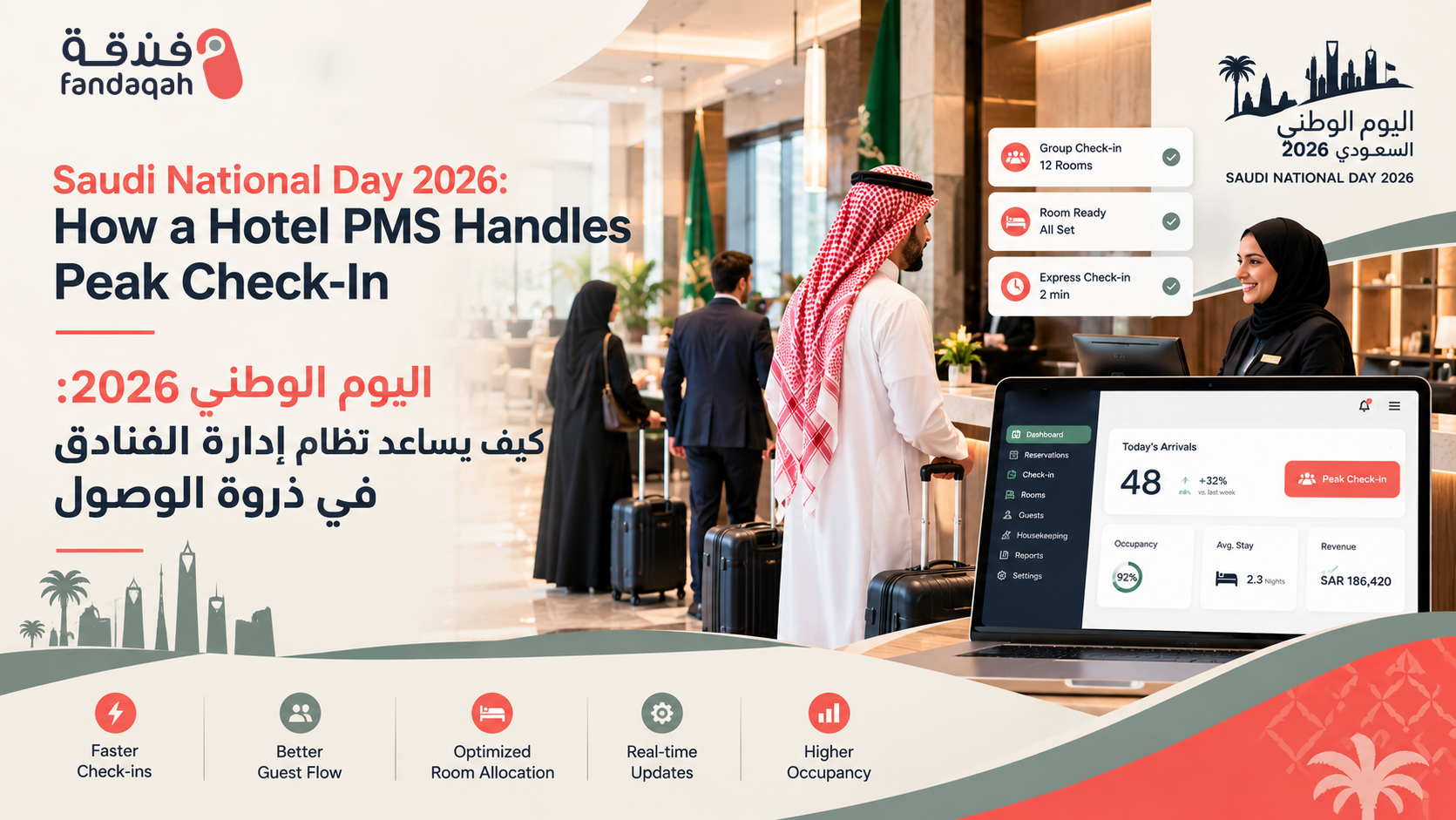
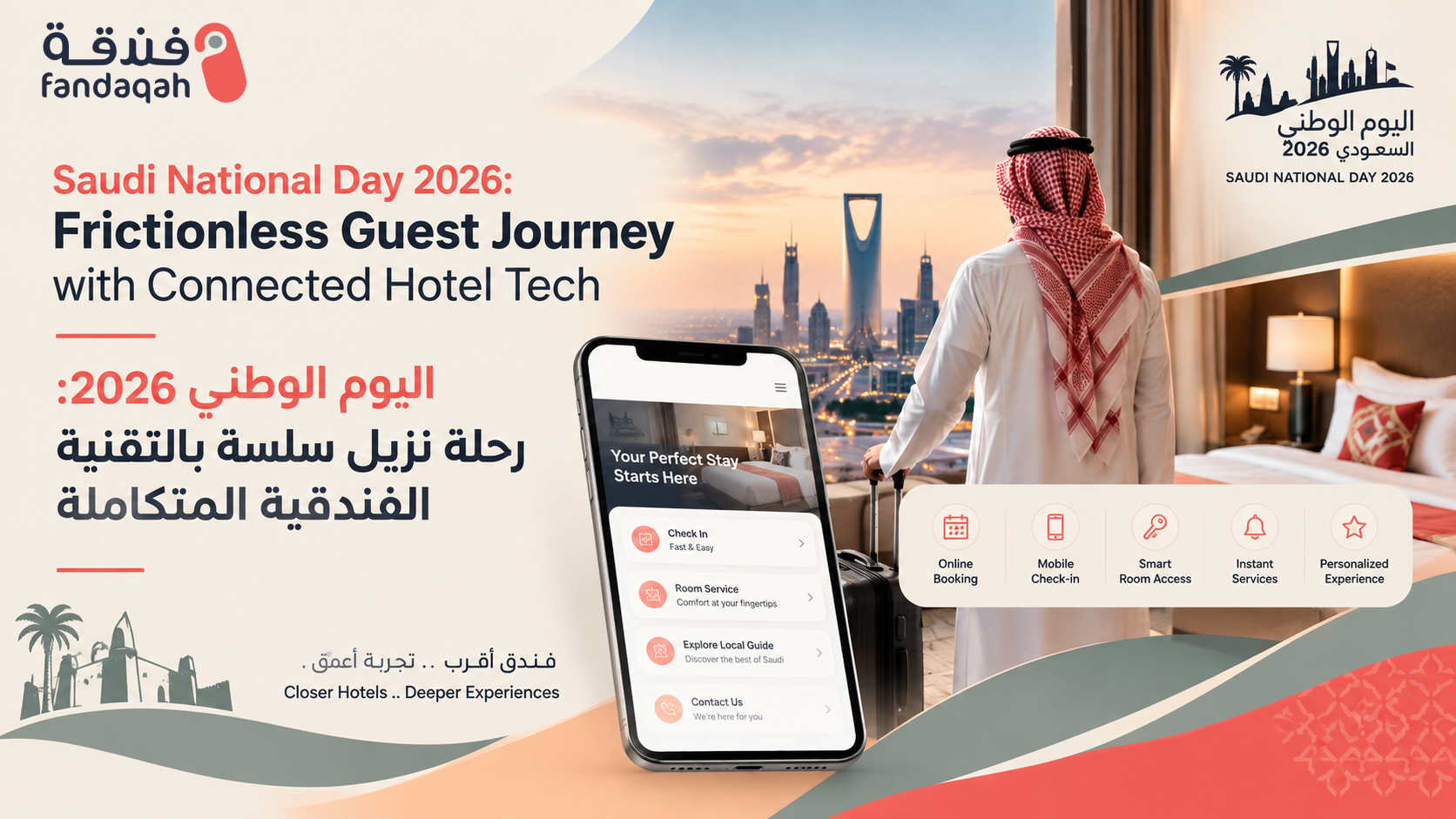
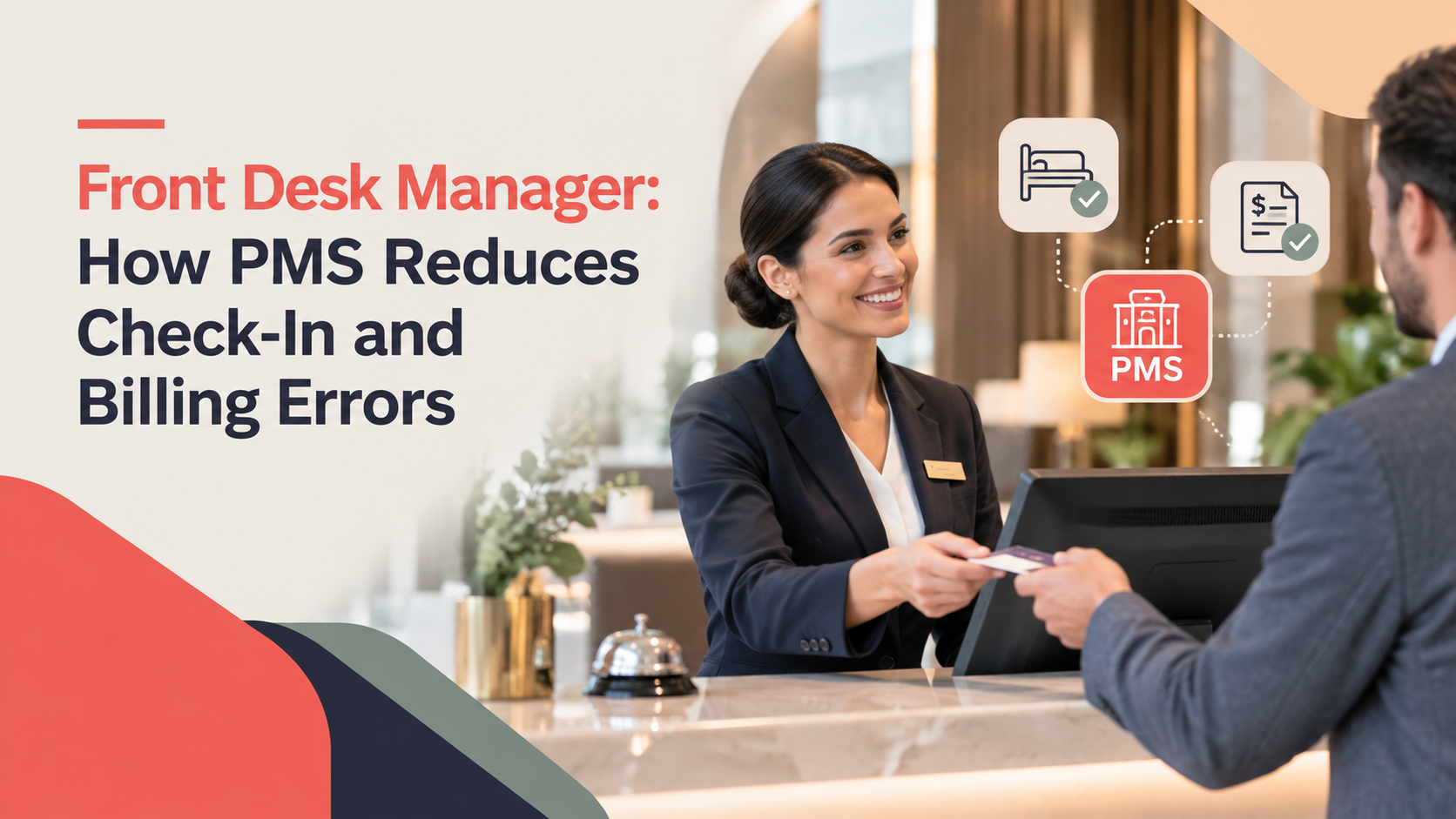
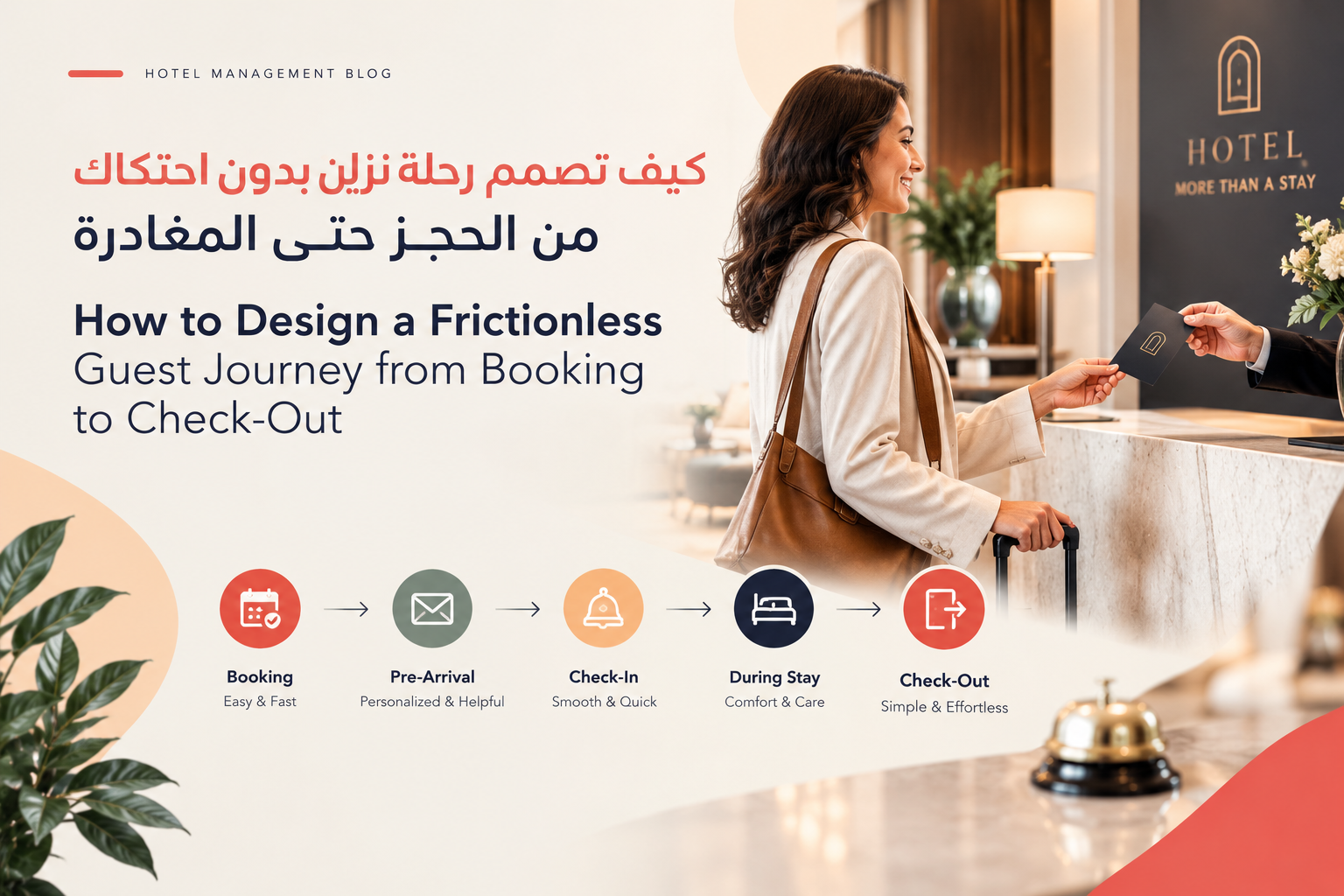
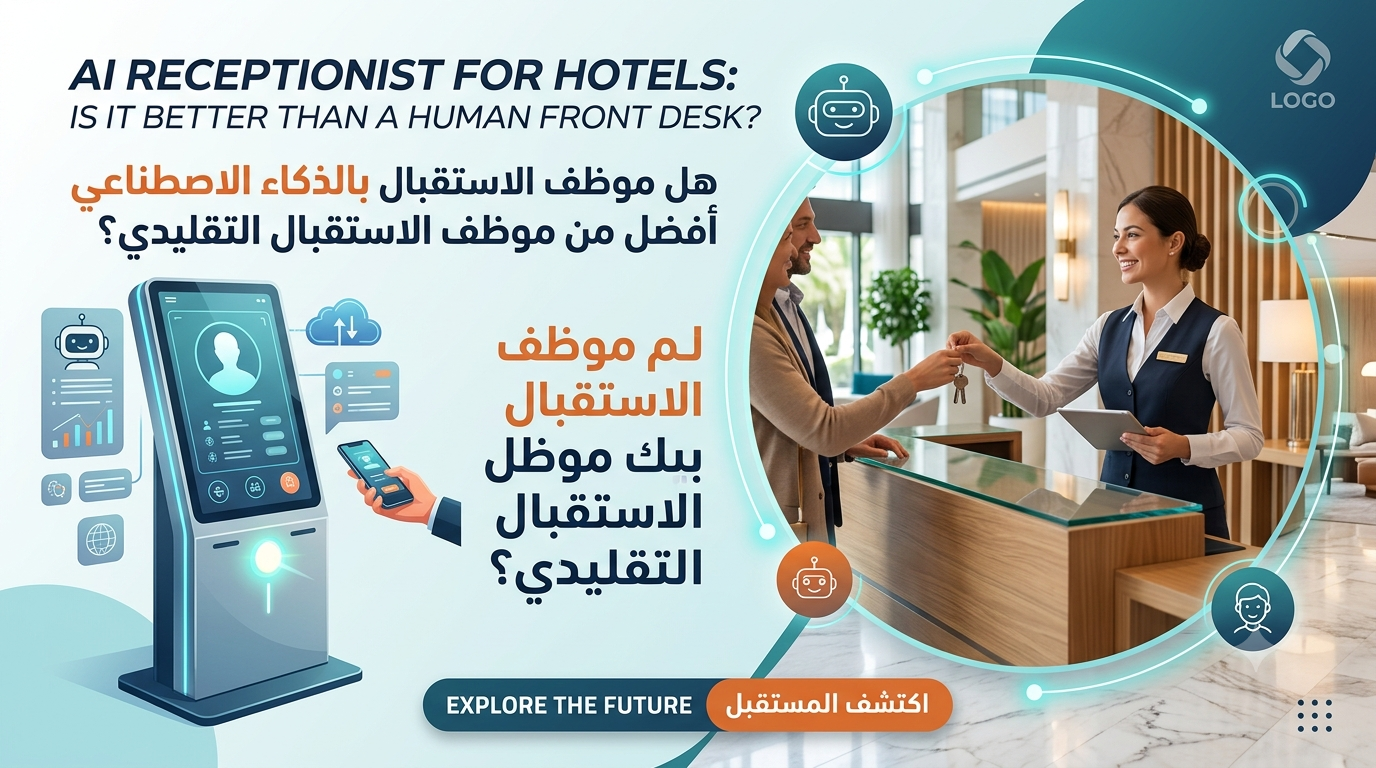
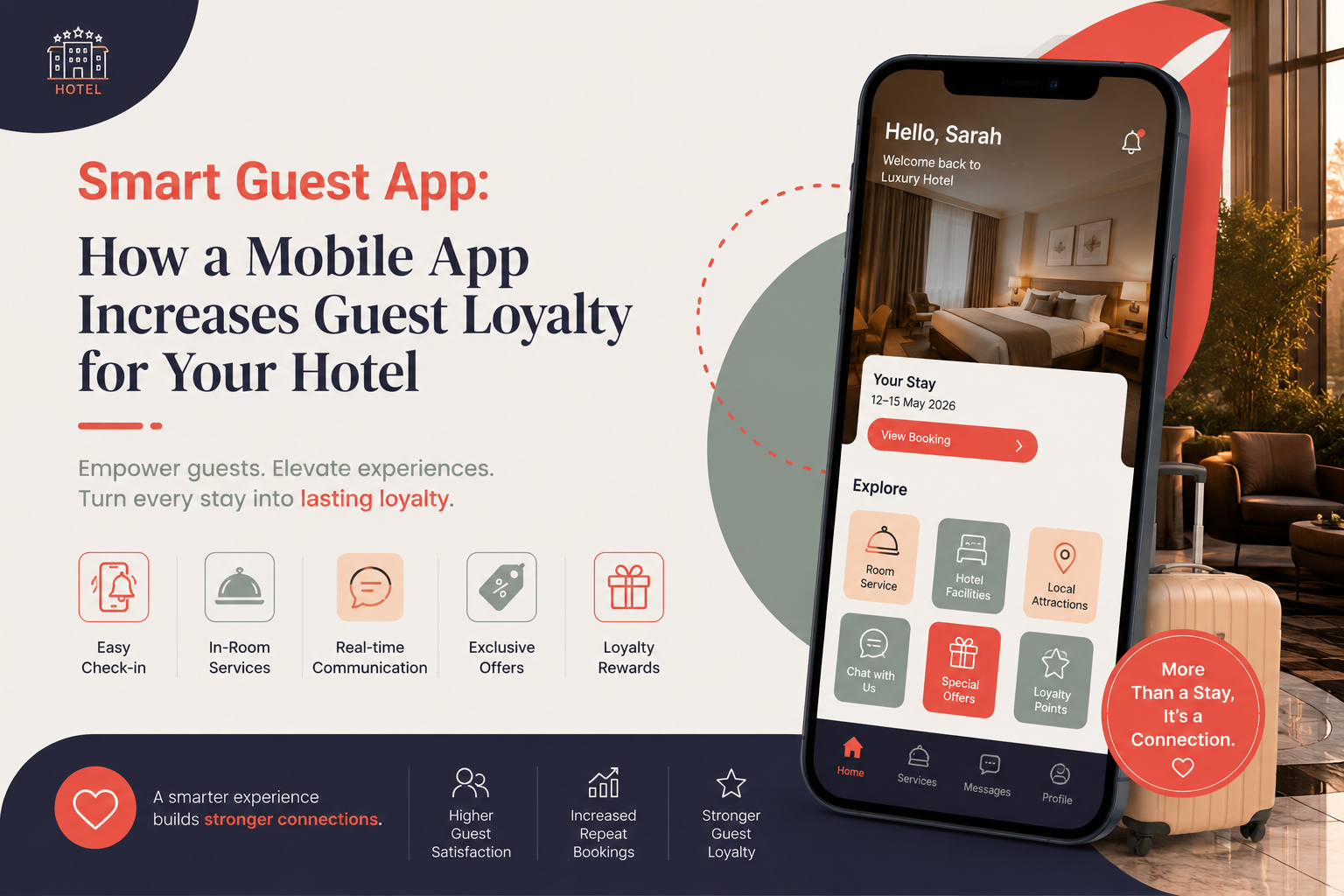
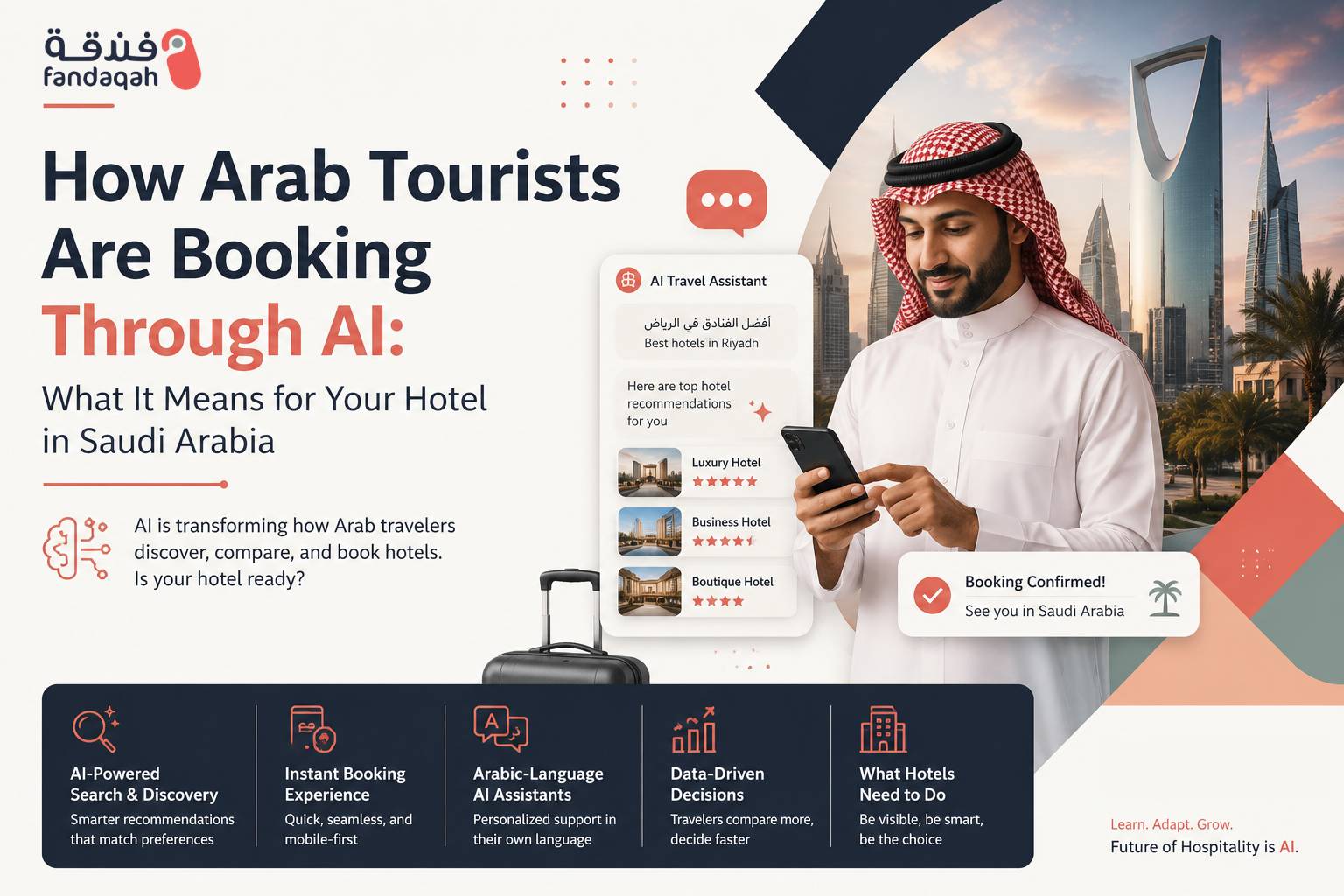
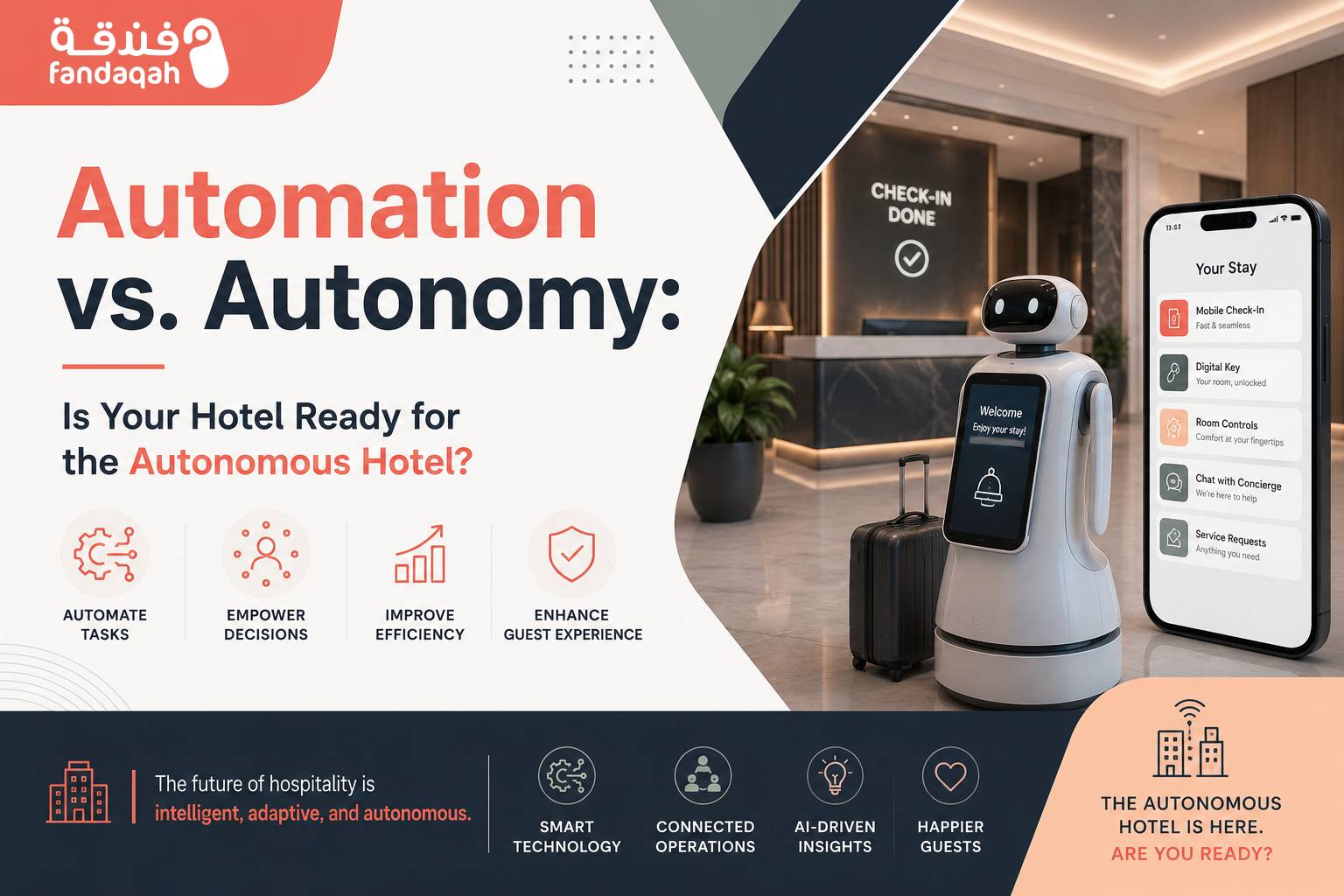
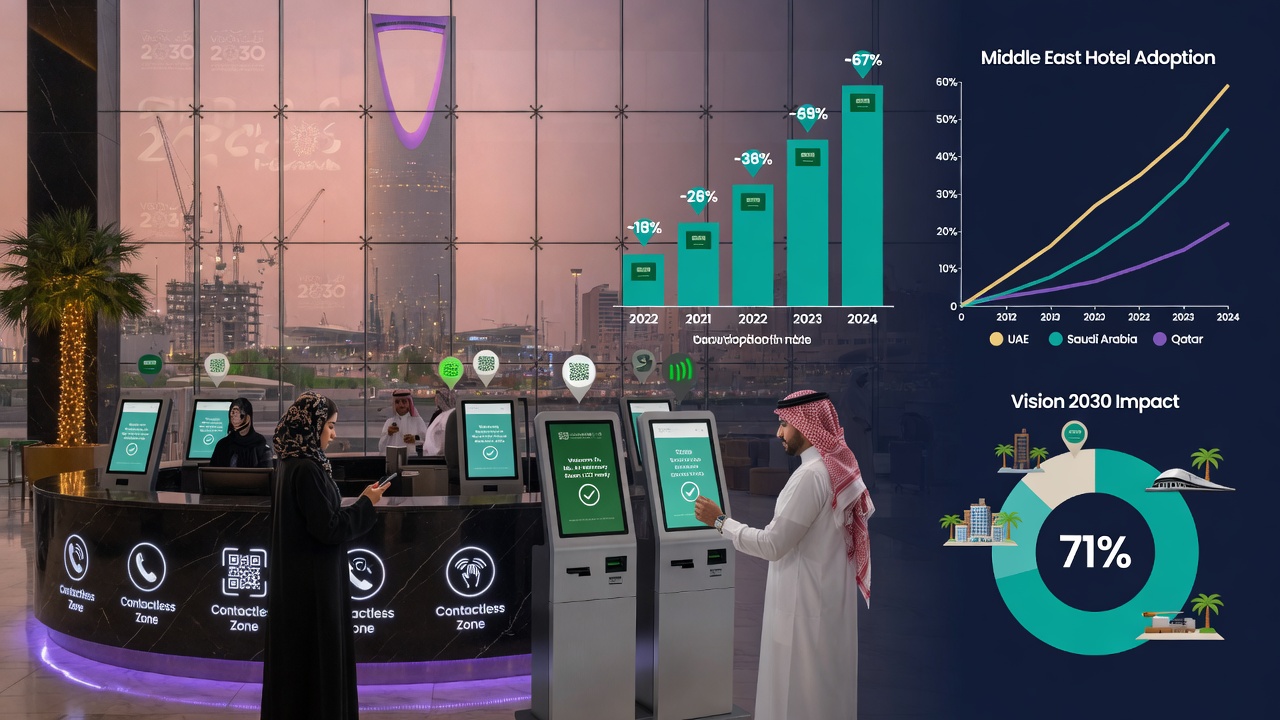
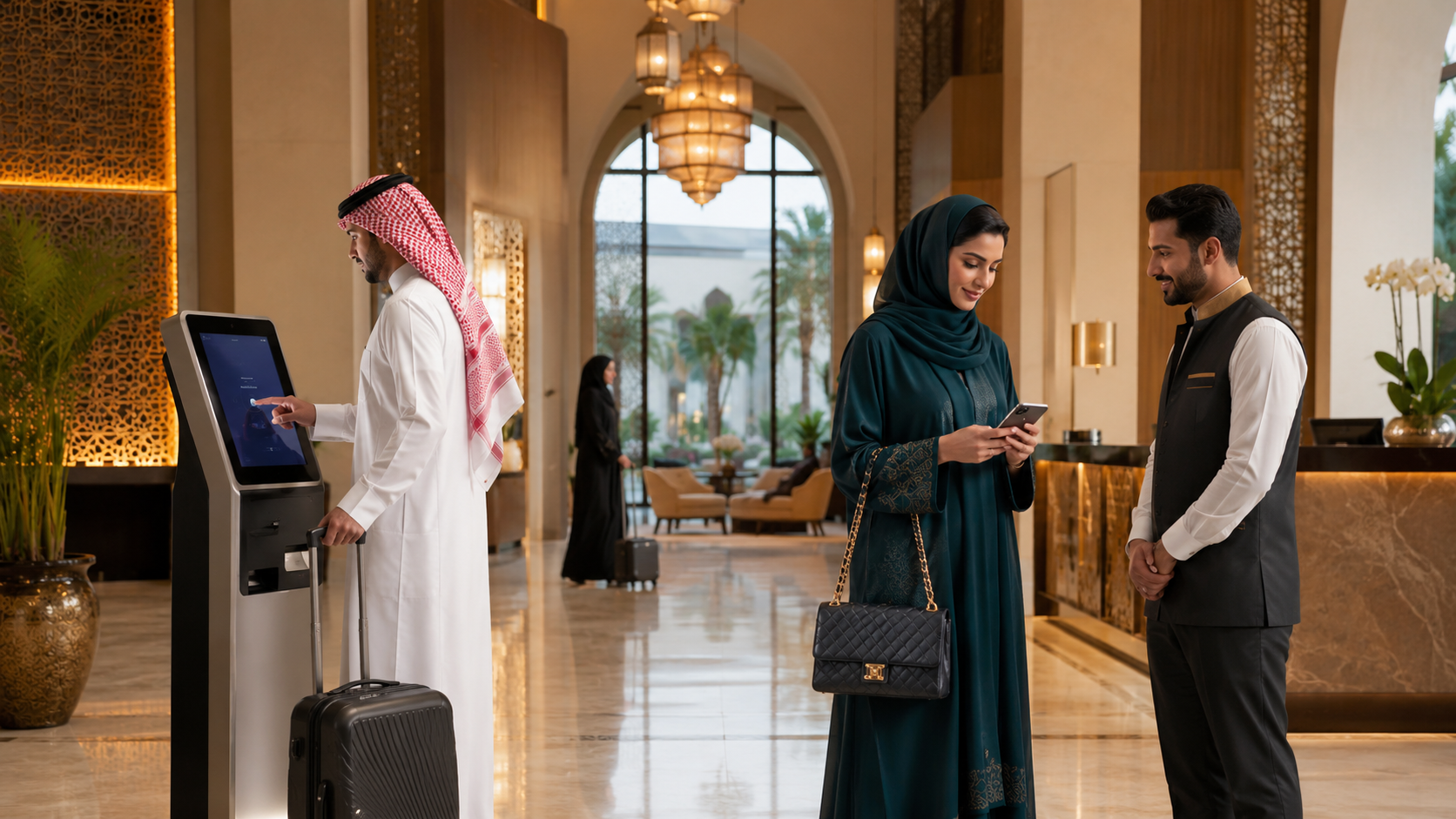
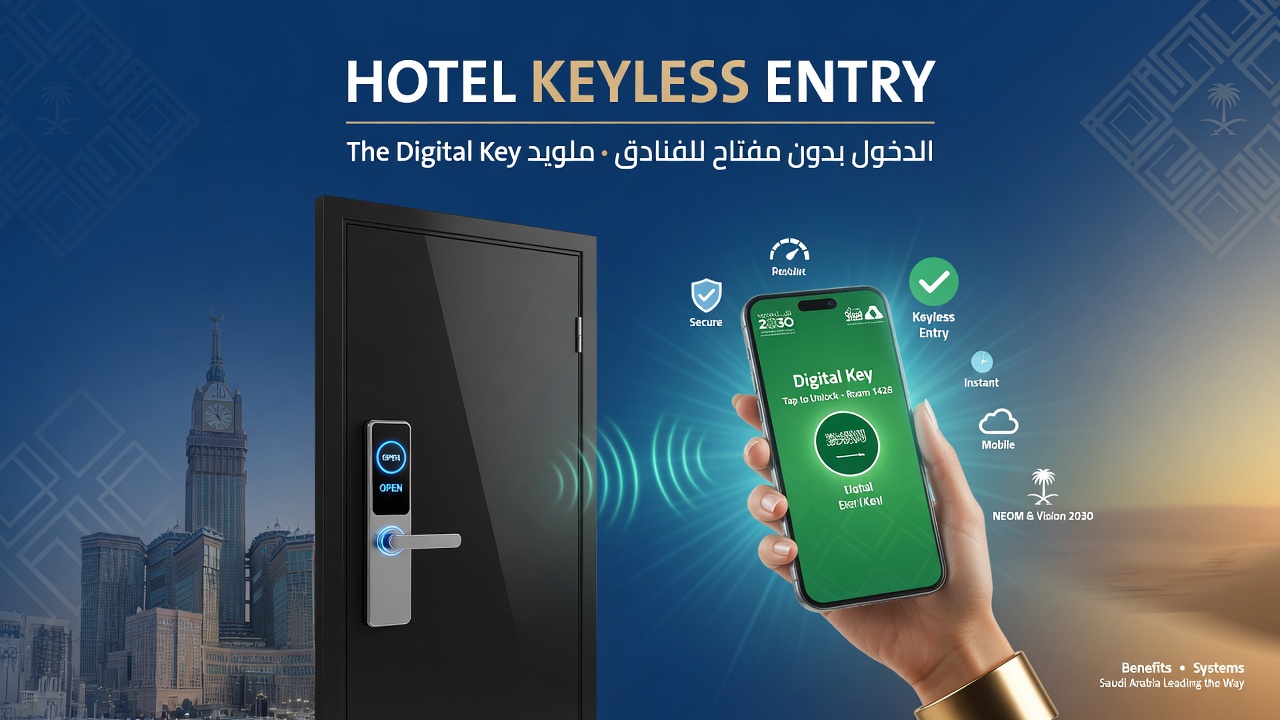
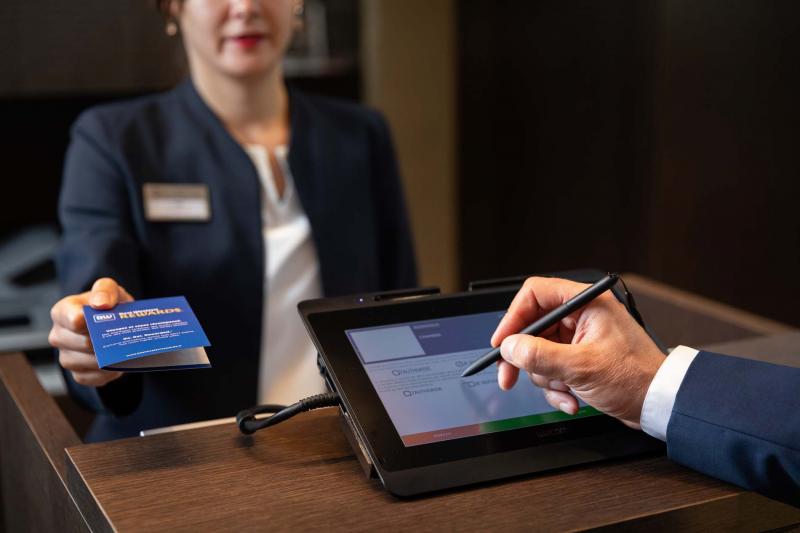
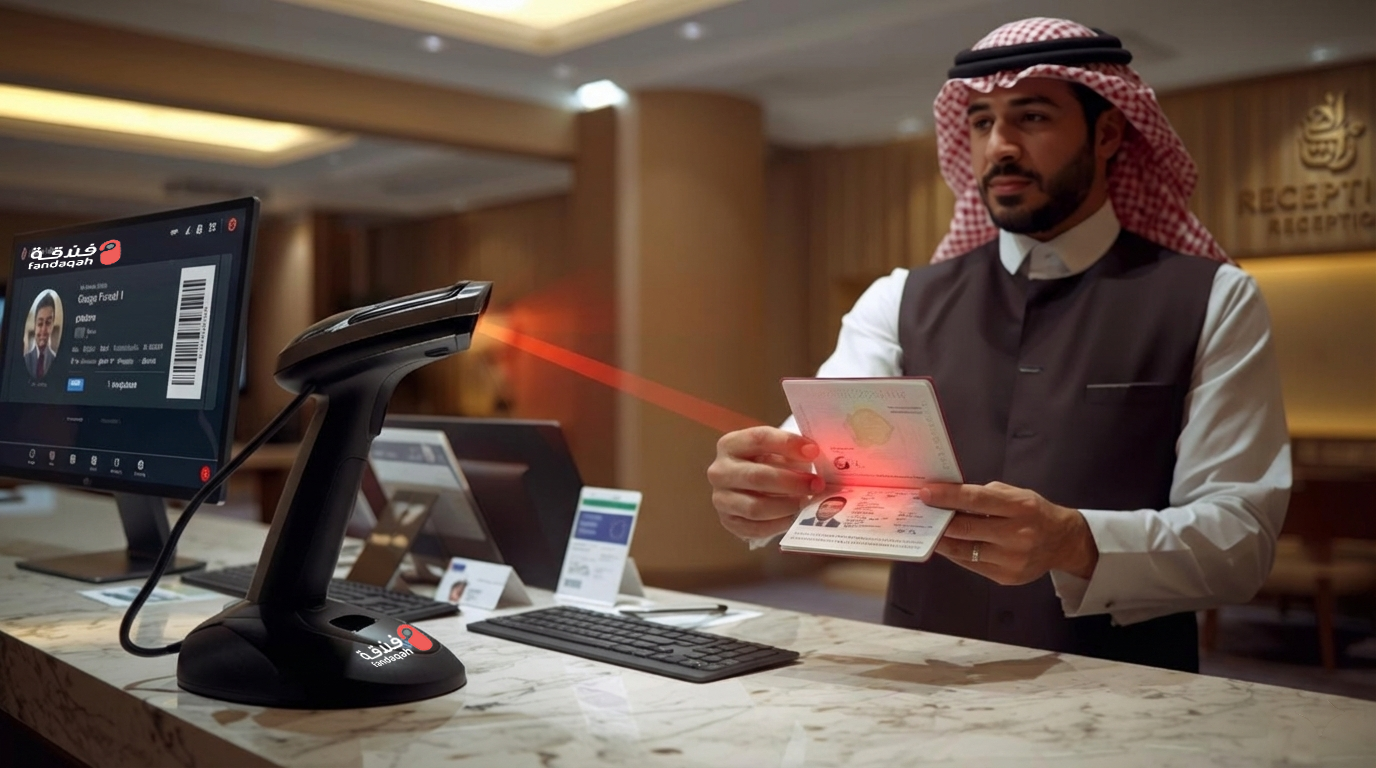
Automated guest check‑in is one of the most visible technology improvements for hotel guests. Self‑service kiosks, mobile check‑in, and digital key systems reduce wait times, improve convenience, and enhance the arrival experience. For hotels, automation reduces front‑desk workload, minimizes data entry errors, and creates upselling opportunities during the check‑in process.
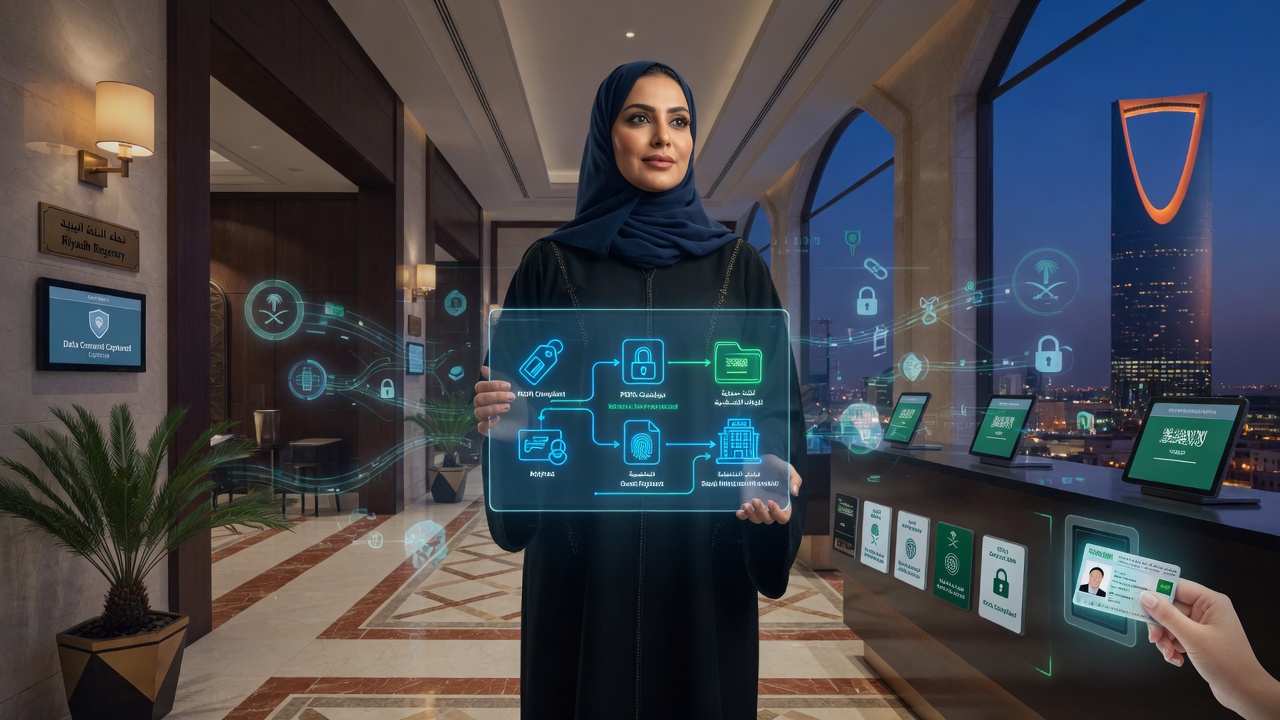
In Saudi Arabia, automated check‑in must also handle compliance requirements automatically. When a guest checks in via kiosk or mobile app, the system must capture required identification data, verify it against government databases, and transmit it to Shomoos without staff intervention. Fandaqah’s Saudi guest check‑in software achieves this seamlessly, ensuring compliance while enhancing guest experience.
7. Compliance Requirements: ZATCA, Shomoos, and the Ministry
Compliance is one of the most critical considerations for hospitality operators in Saudi Arabia. The Kingdom has implemented comprehensive regulatory frameworks that all hotel operators must adhere to. Understanding these requirements is essential for successful operations.
ZATCA E‑Invoicing Compliance
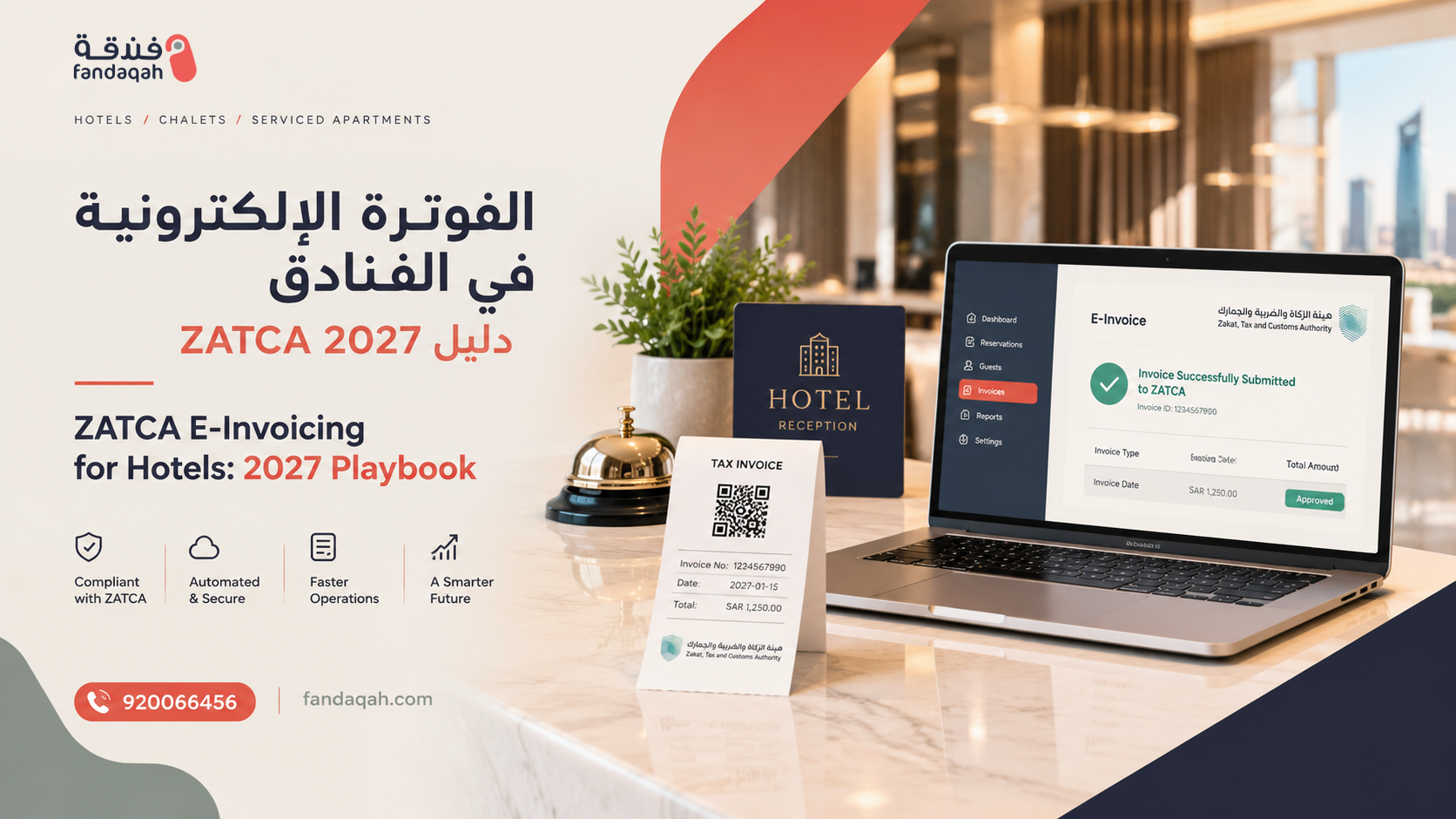
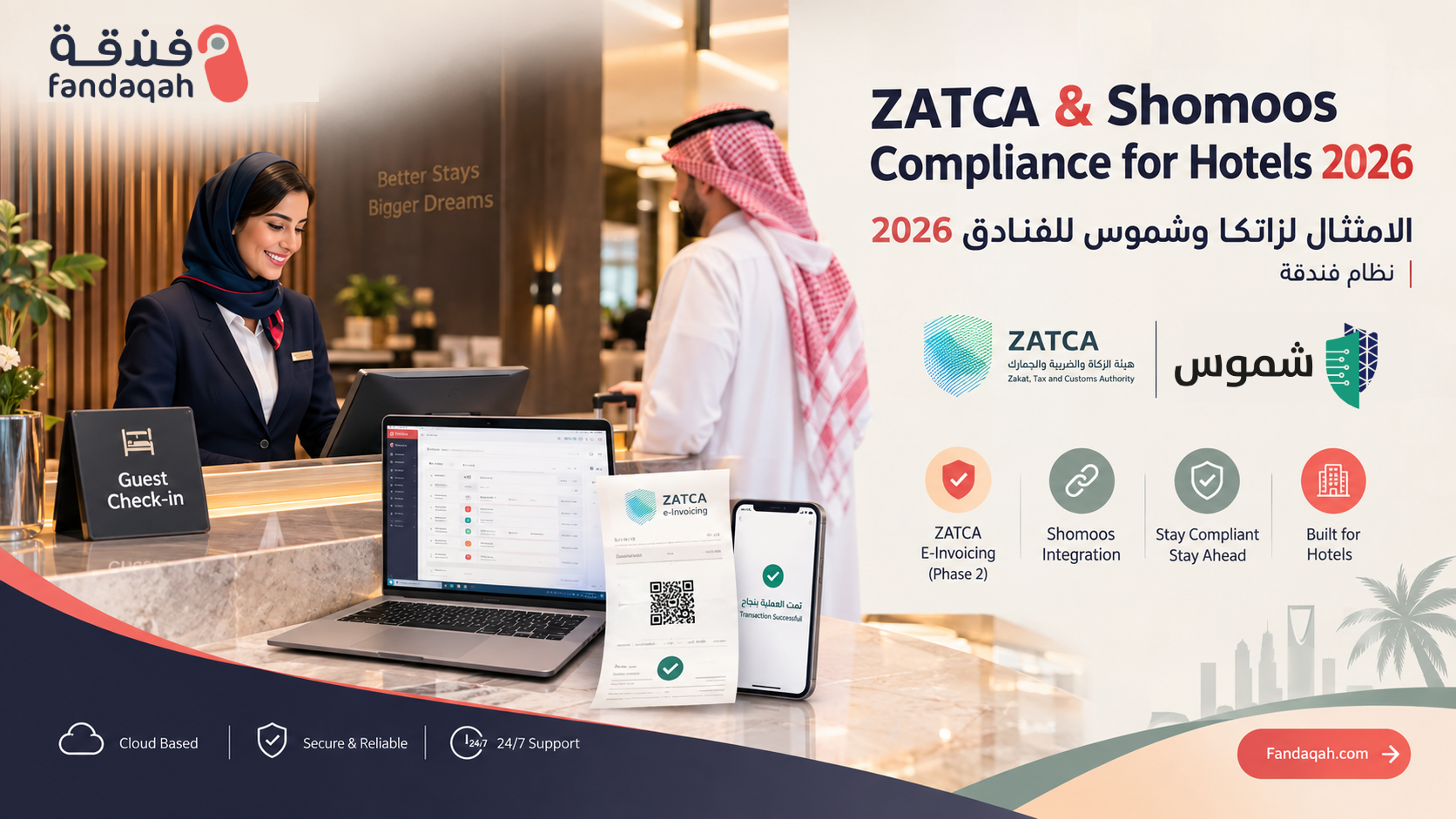
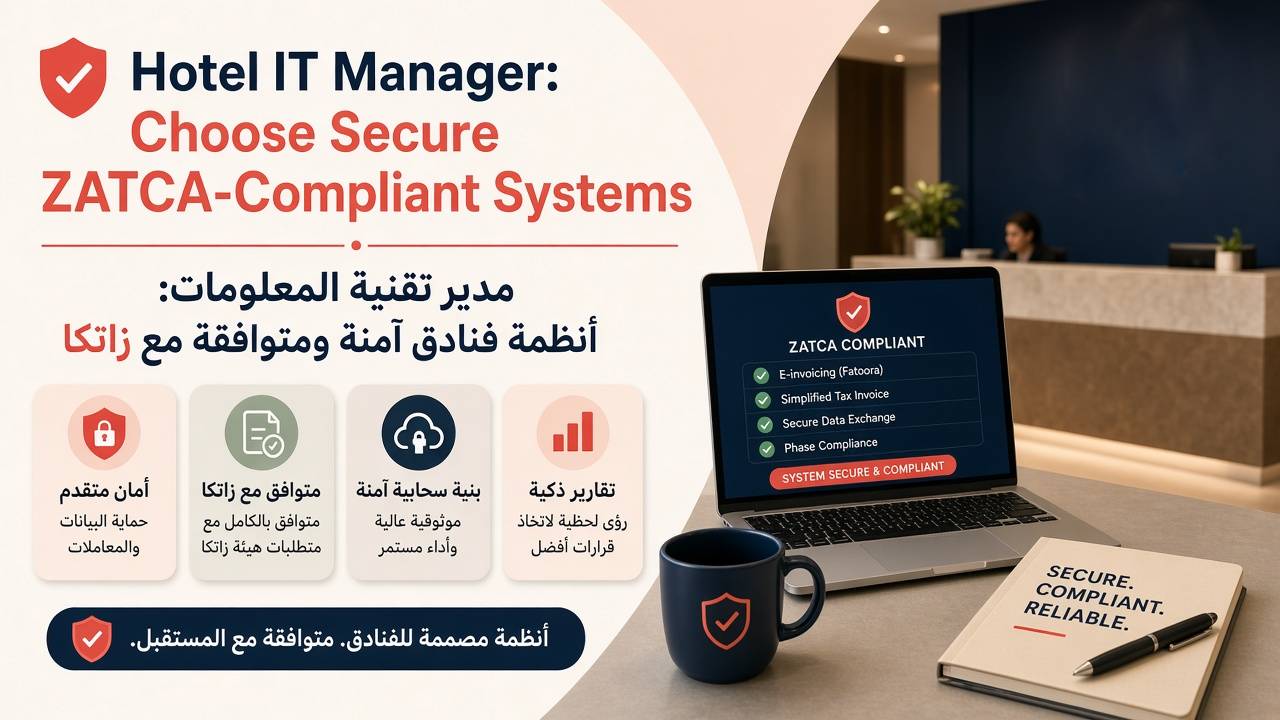
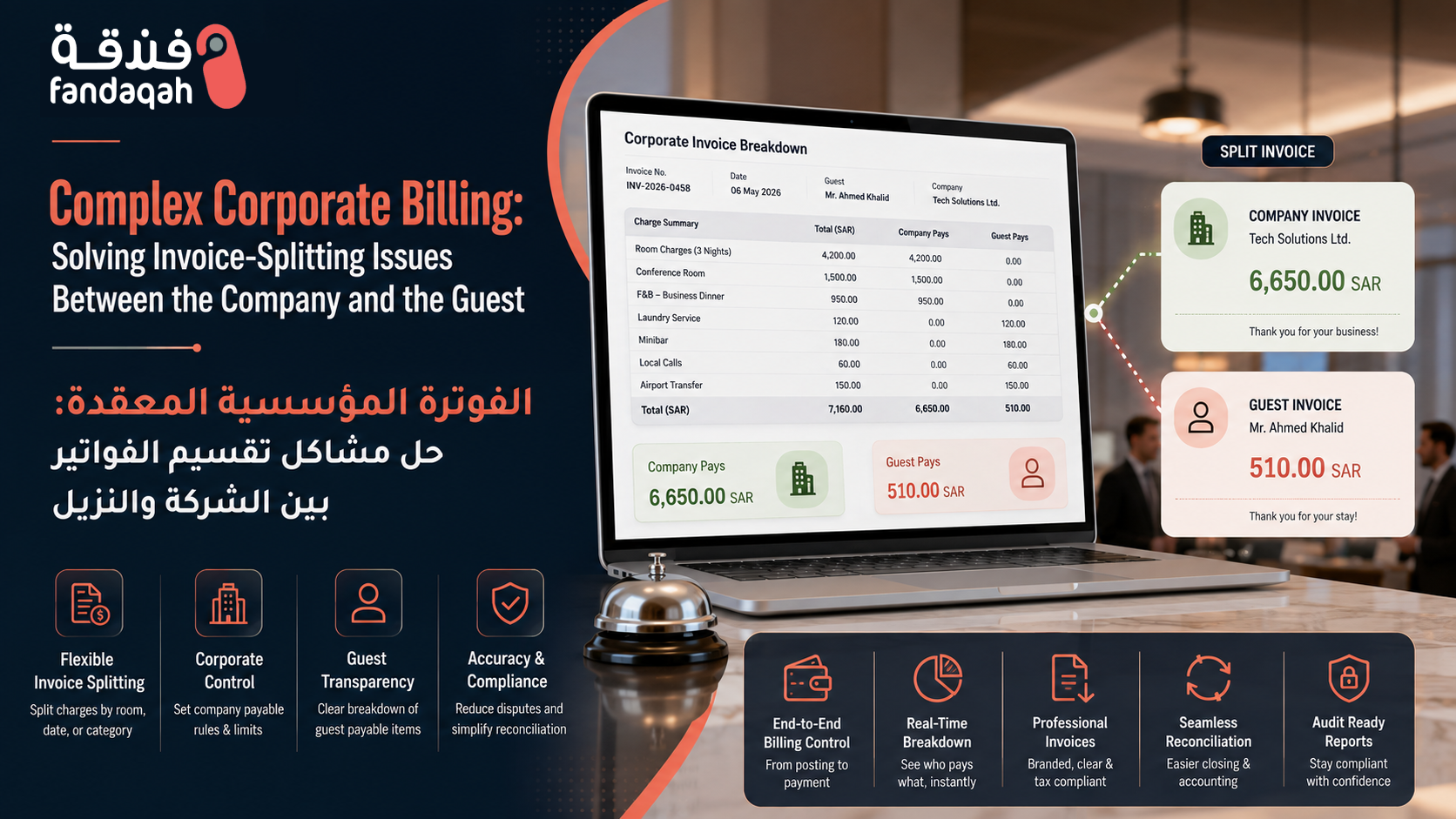
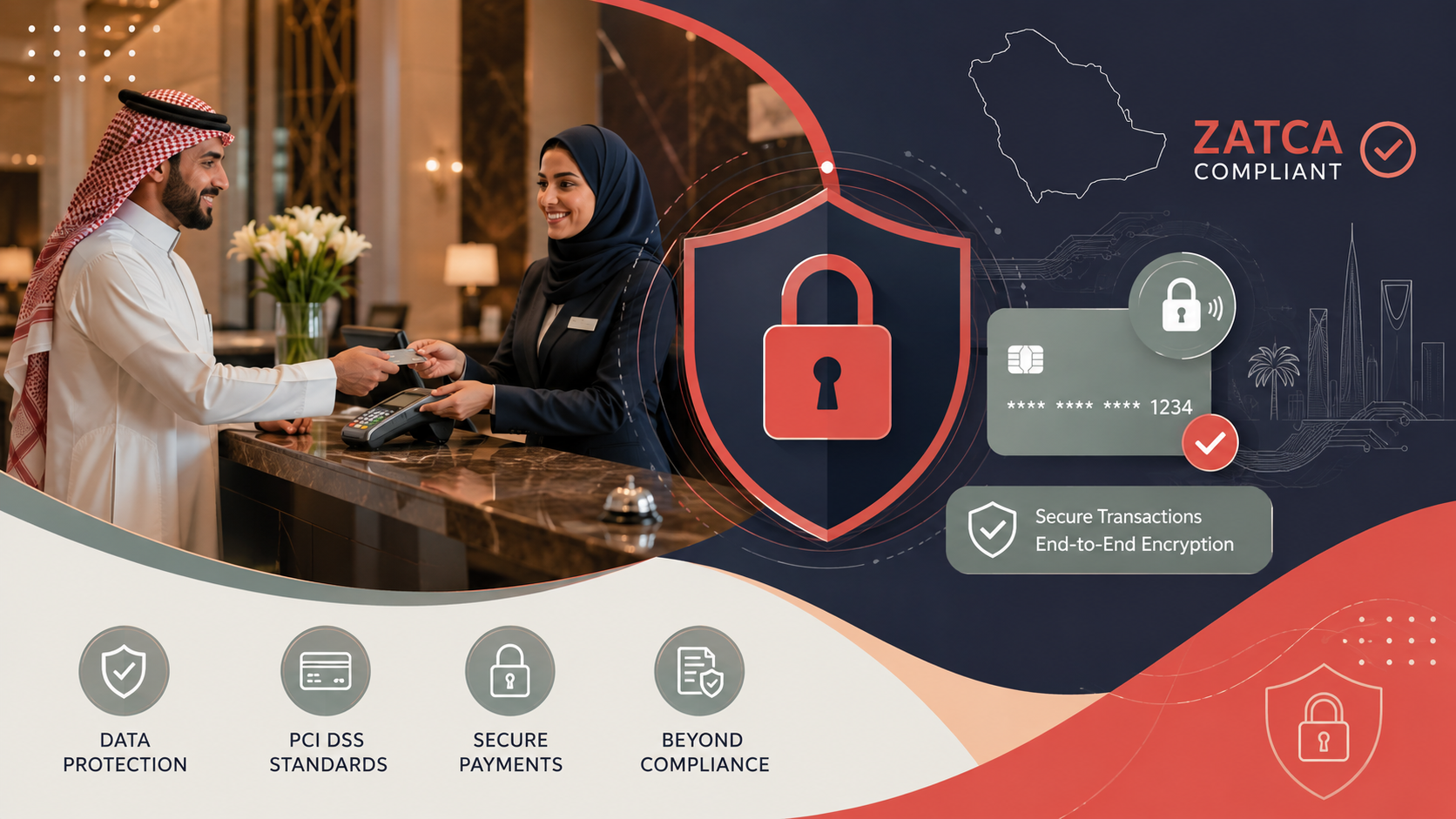
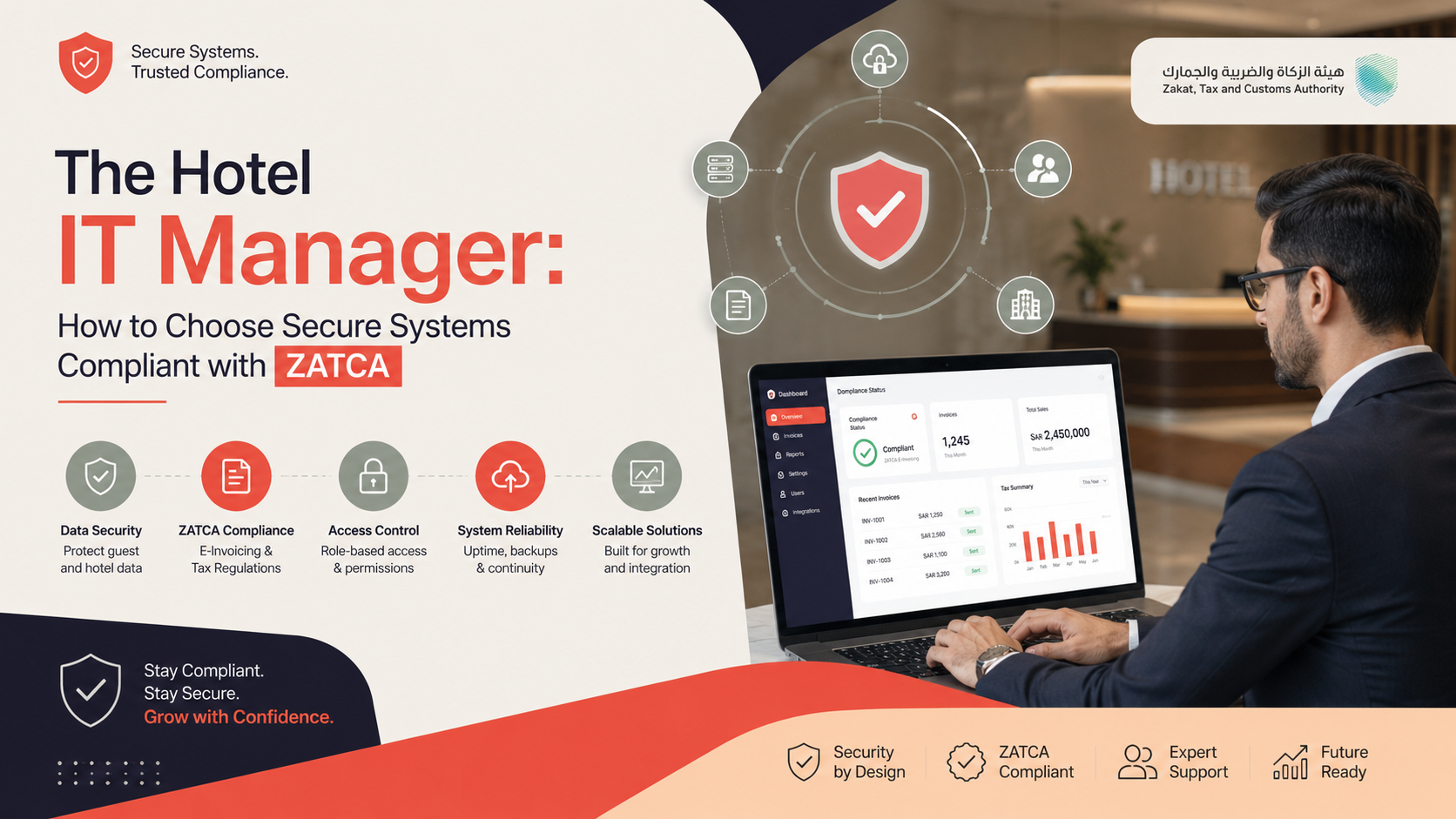
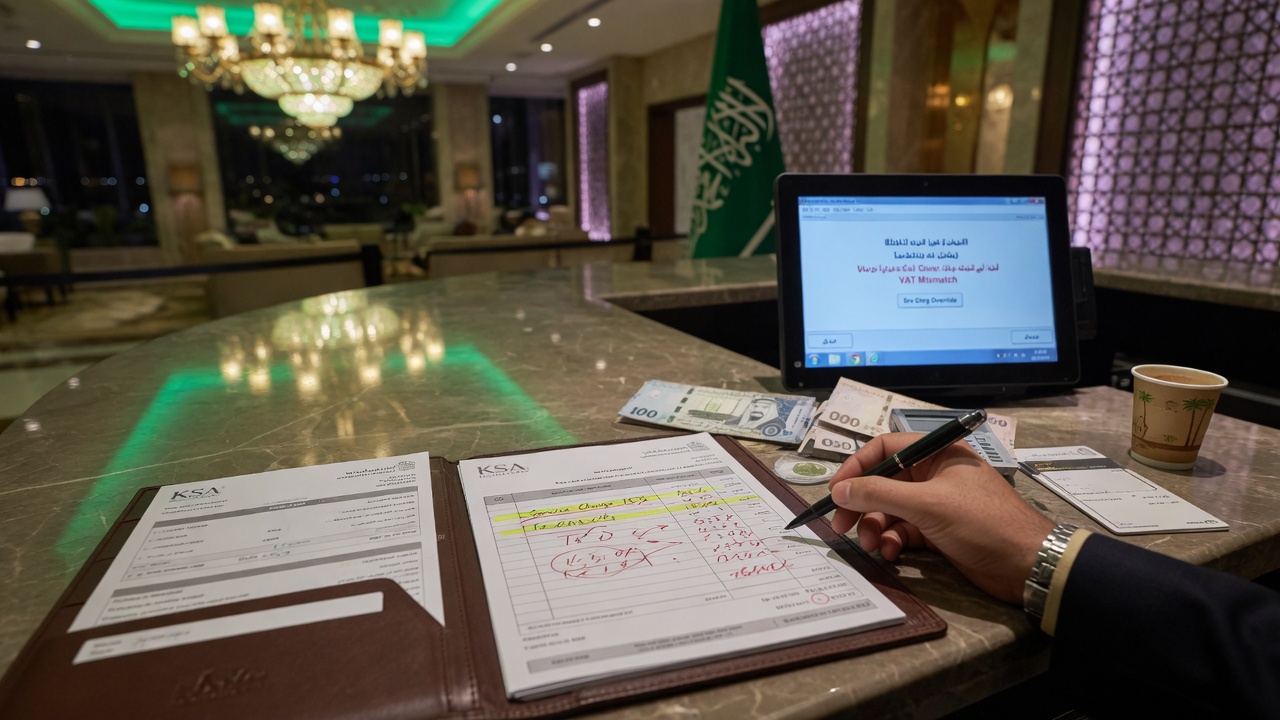
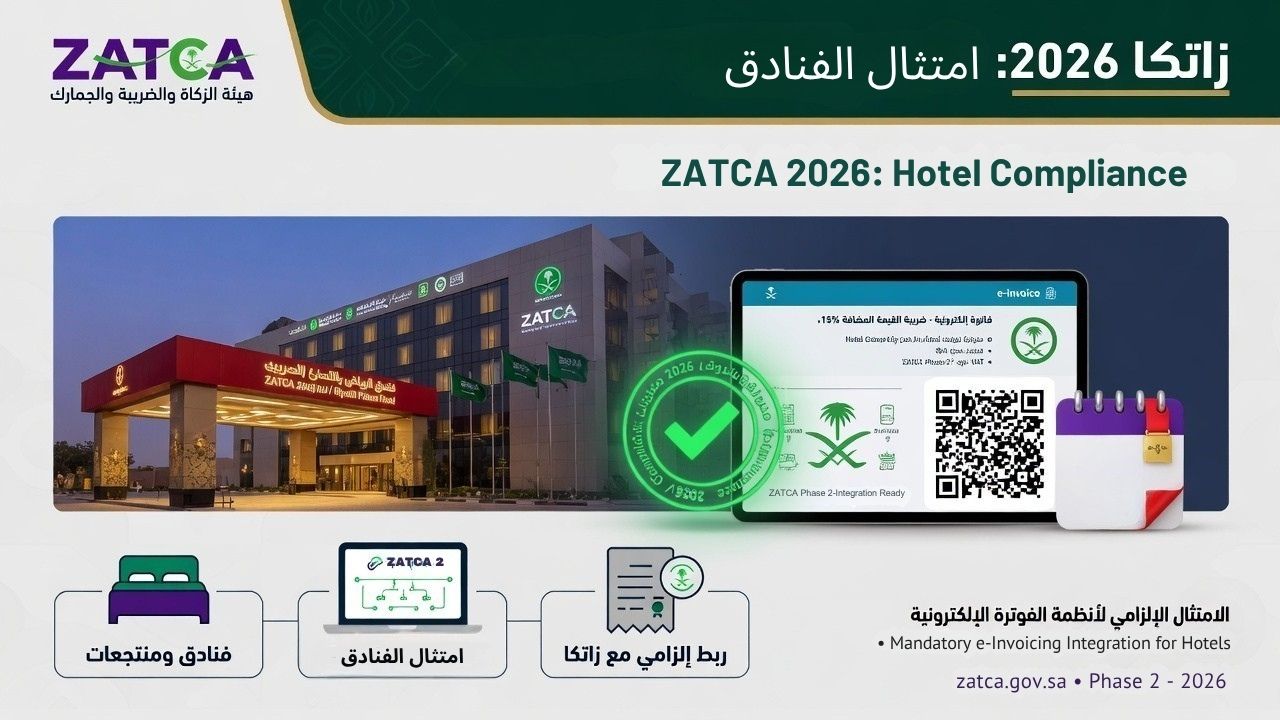
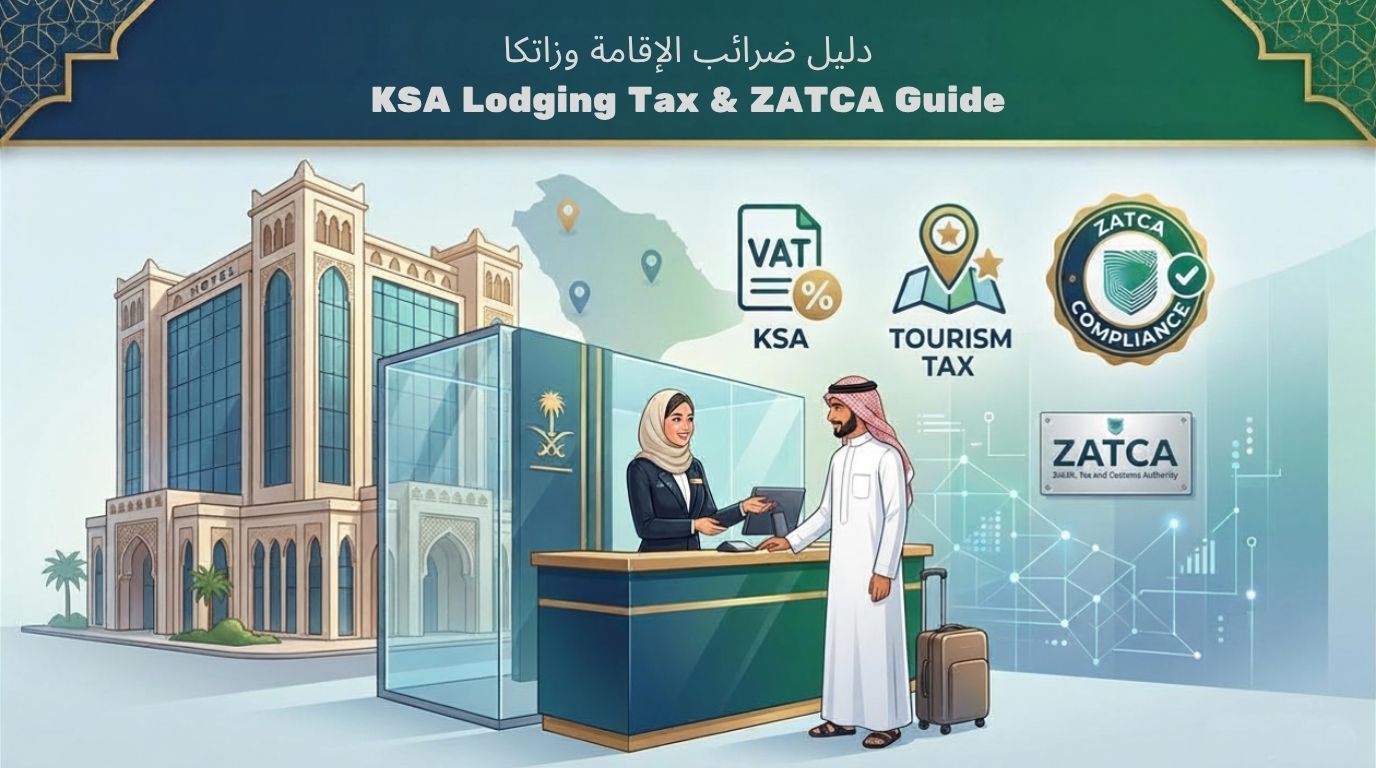
The Zakat, Tax and Customs Authority (ZATCA) has mandated e‑invoicing for all businesses in Saudi Arabia, including hospitality operators. Taxpayers must comply with the "integration phase" of e‑invoicing by June 30, 2026. This deadline makes compliance an urgent priority for all hotel operators.
Shomoos Platform Integration
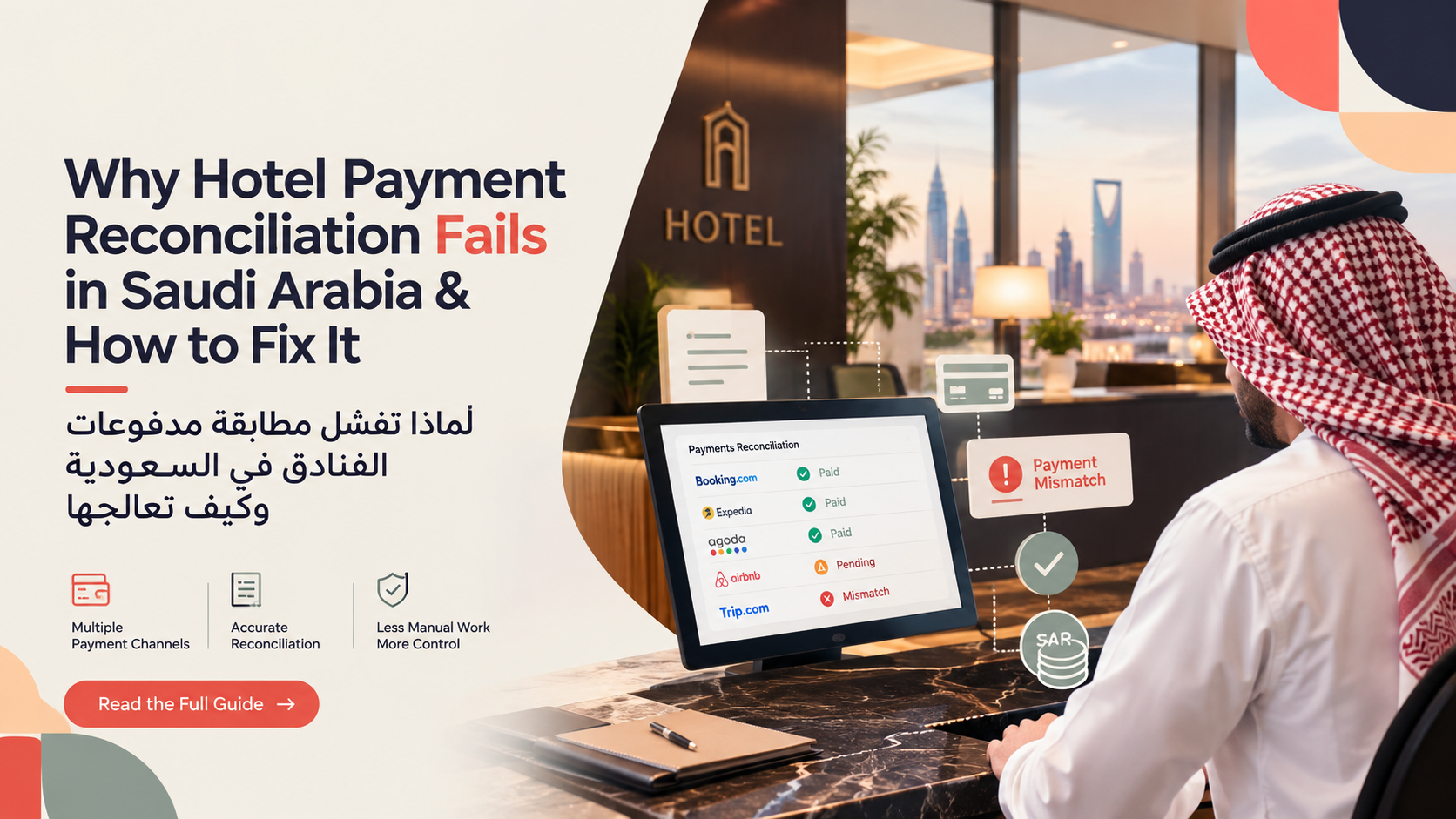
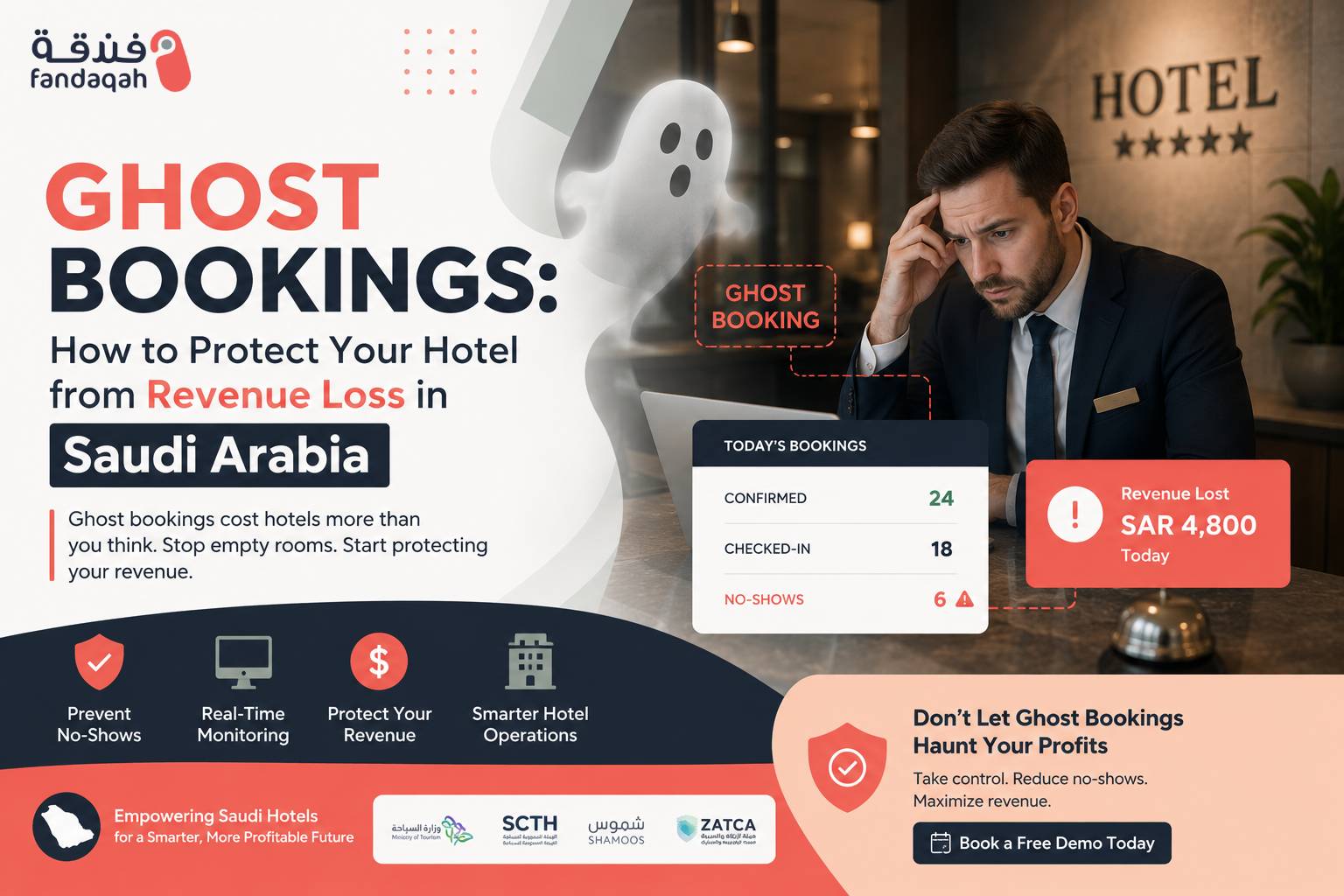
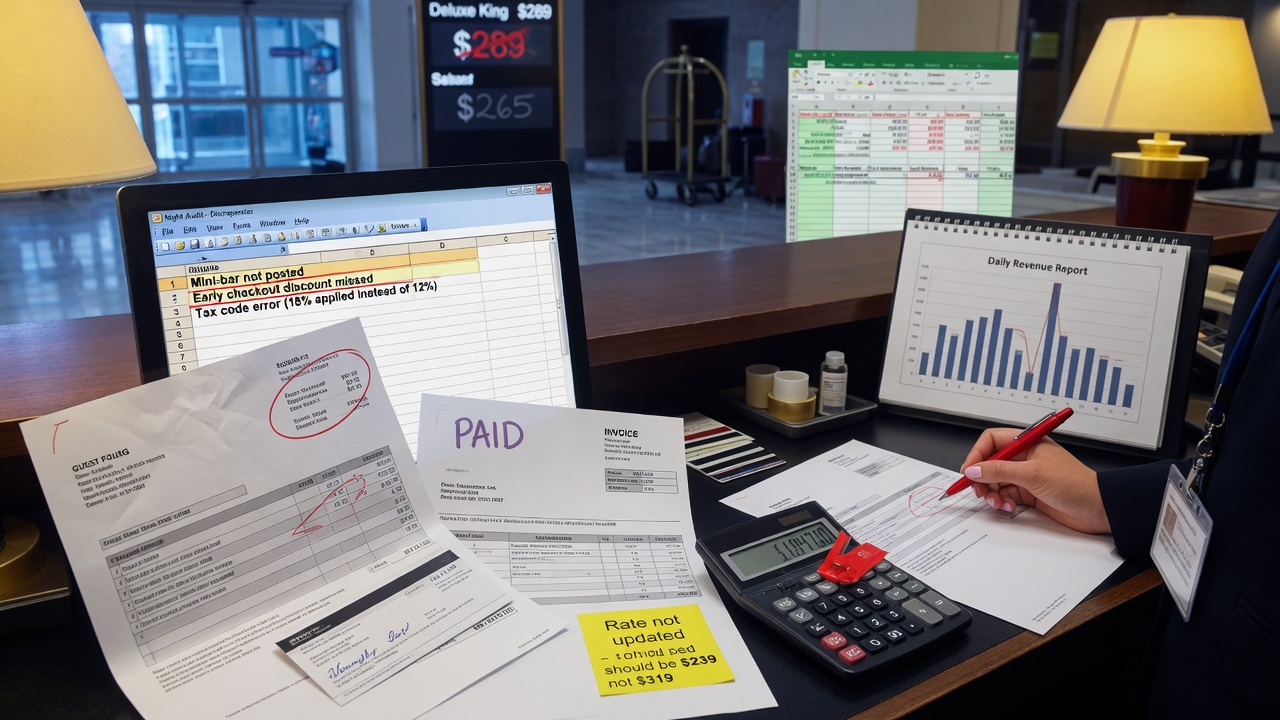
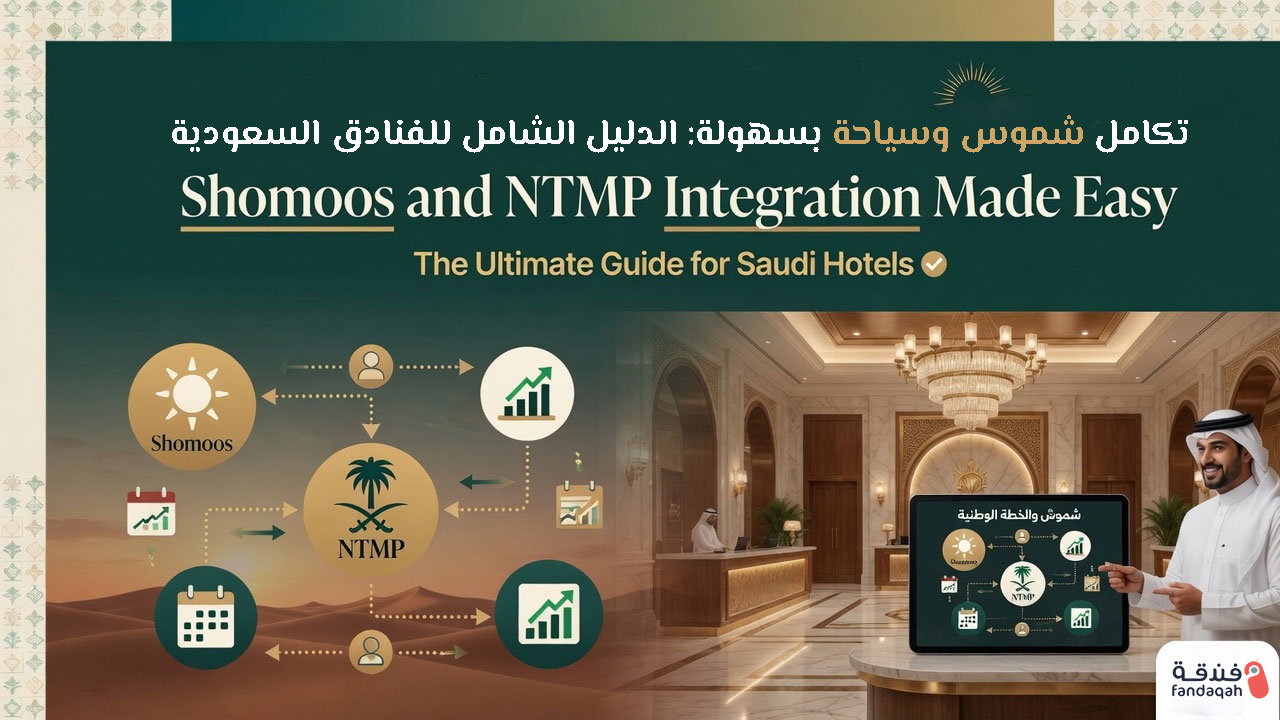
Shomoos, operated by the Ministry of Interior, requires all lodging establishments to register guest data and report stays in real time. Integration is mandatory for all hotels, serviced apartments, and short‑term rental properties operating in the Kingdom. Manual Shomoos reporting is time‑consuming and error‑prone; automated integration via a compliant hotel management system eliminates this burden.
Ministry of Tourism Requirements
The Ministry of Tourism has established comprehensive regulations governing hospitality operations, including classification standards, licensing requirements, and quality criteria. All properties must maintain valid tourism licenses and comply with ongoing requirements including regular inspections and reporting obligations. The National Tourism Monitoring Platform (NTMP) requires regular data submissions on occupancy, rates, and guest demographics. A compliant hotel management system automates these submissions, ensuring properties maintain good standing with the Ministry.
8. Investment Opportunities in Saudi Hospitality
The Future of Hospitality Summit acts as a magnet for international hotel investors seeking to capitalize on the Kingdom’s hospitality boom. Investment opportunities span high‑growth leisure resorts, resilient urban hotels, and emerging sectors such as medical and wellness tourism — all aligned with Vision 2030 objectives.
- Urban Hotel Development: Riyadh, Jeddah, and other major cities offer significant opportunities. Business travel, government events, and growing domestic tourism drive demand for quality urban accommodation.
- Leisure & Resort Properties: The Red Sea Project, NEOM, and other giga‑projects create demand for luxury resorts and leisure properties. Knight Frank reports 252,000 hotel keys planned or under construction in Makkah and Madinah alone for delivery by 2030, with 64% positioned in the luxury segment.
- Branded Residences: Global branded residence boom presents significant opportunities in Saudi Arabia. The summit’s advisory council highlighted the need for more clarity on evolving foreign ownership and FDI laws.
- Health & Wellness Tourism: Emerging sectors like medical tourism and wellness align with Vision 2030 goals. Saudi Arabia’s growing healthcare infrastructure, combined with tourism ambitions, creates strong value for wellness‑focused hospitality projects.
9. Networking & Business Development
The Future of Hospitality Summit is the premier event for Saudi tourism investment. International hotel investors connect with local leaders, discuss, and close deals. The event opens doors to investment opportunities and high‑growth hotel development projects.
Summit networking opportunities include an investor lounge with pre‑scheduled private meetings, a welcome reception, thematic networking breaks, a gala dinner, industry roundtables, one‑on‑one meeting facilitation, a digital networking platform, and site visit groups. The 2025 event facilitated 11 high‑profile hotel signings and strategic announcements, with delegates reporting $1.6 billion in business opportunities.
10. Fandaqah Solutions for Saudi Hoteliers
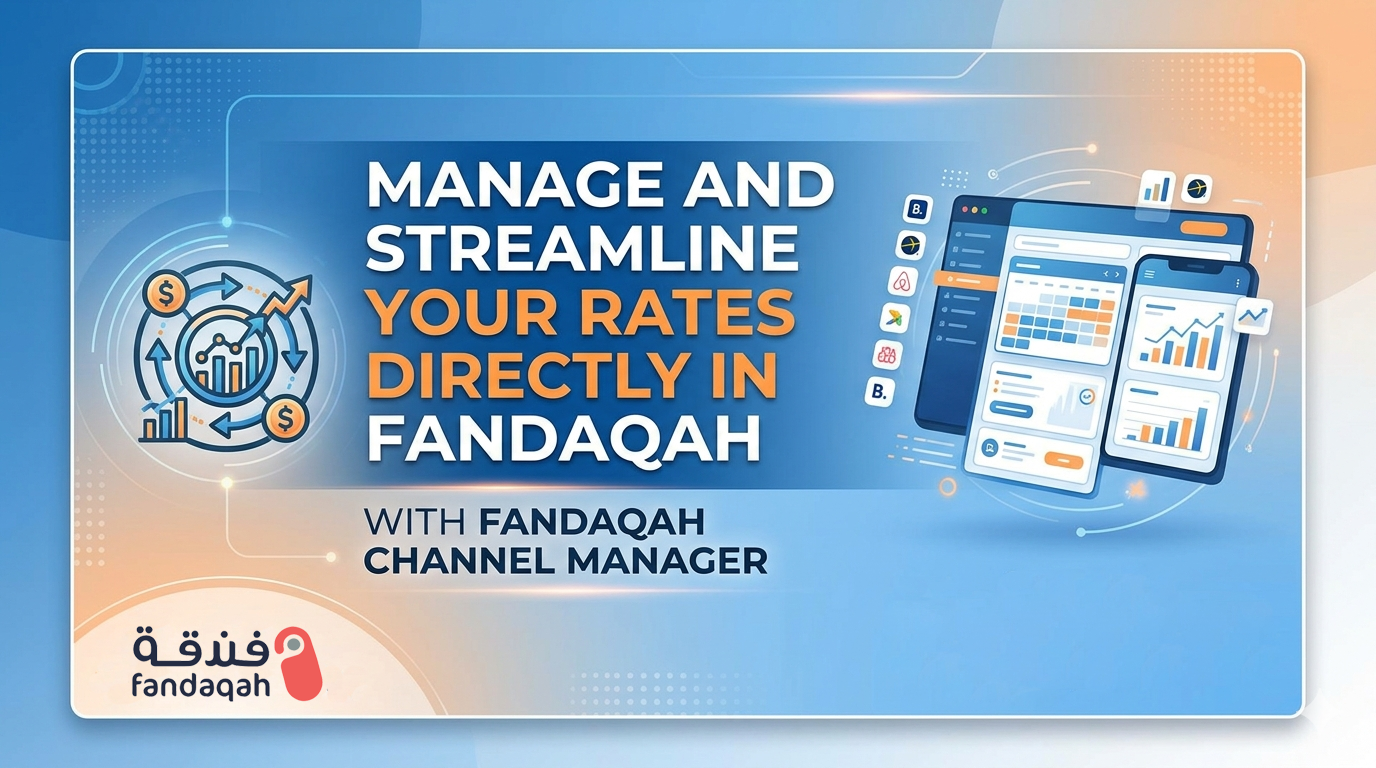
Fandaqah supports Saudi hotel management systems with e‑invoicing, guest data integration, and regulatory reporting. Automated guest check‑in ensures efficiency and accuracy, giving hotel owners peace of mind.
Why Choose Fandaqah
Fandaqah understands the unique requirements of Saudi hospitality operations. Our solutions are purpose‑built for the Kingdom’s regulatory environment, with native integration to ZATCA, Shomoos, and Ministry of Tourism platforms. Compliance happens automatically — no manual work, no risk of errors.
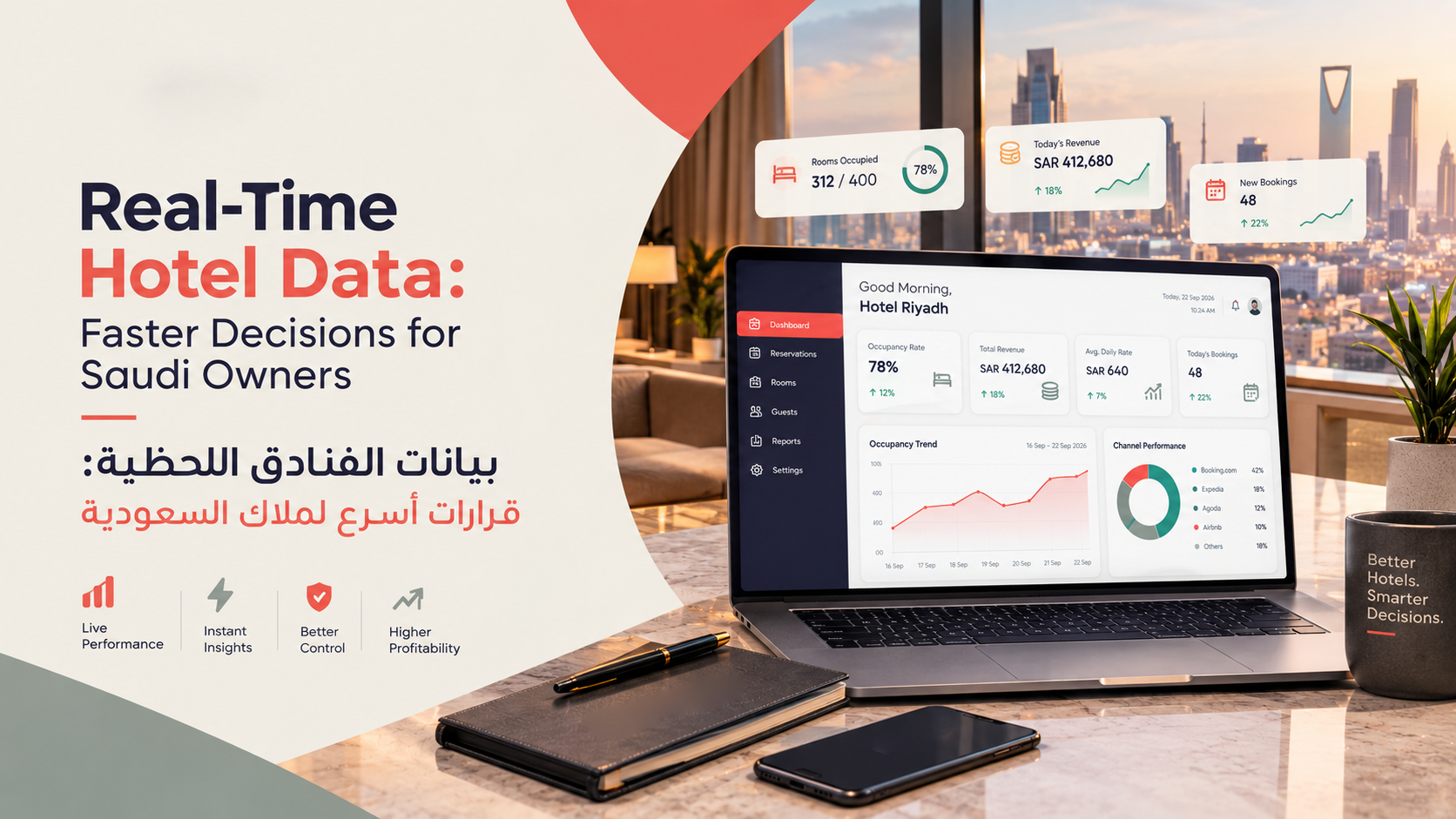
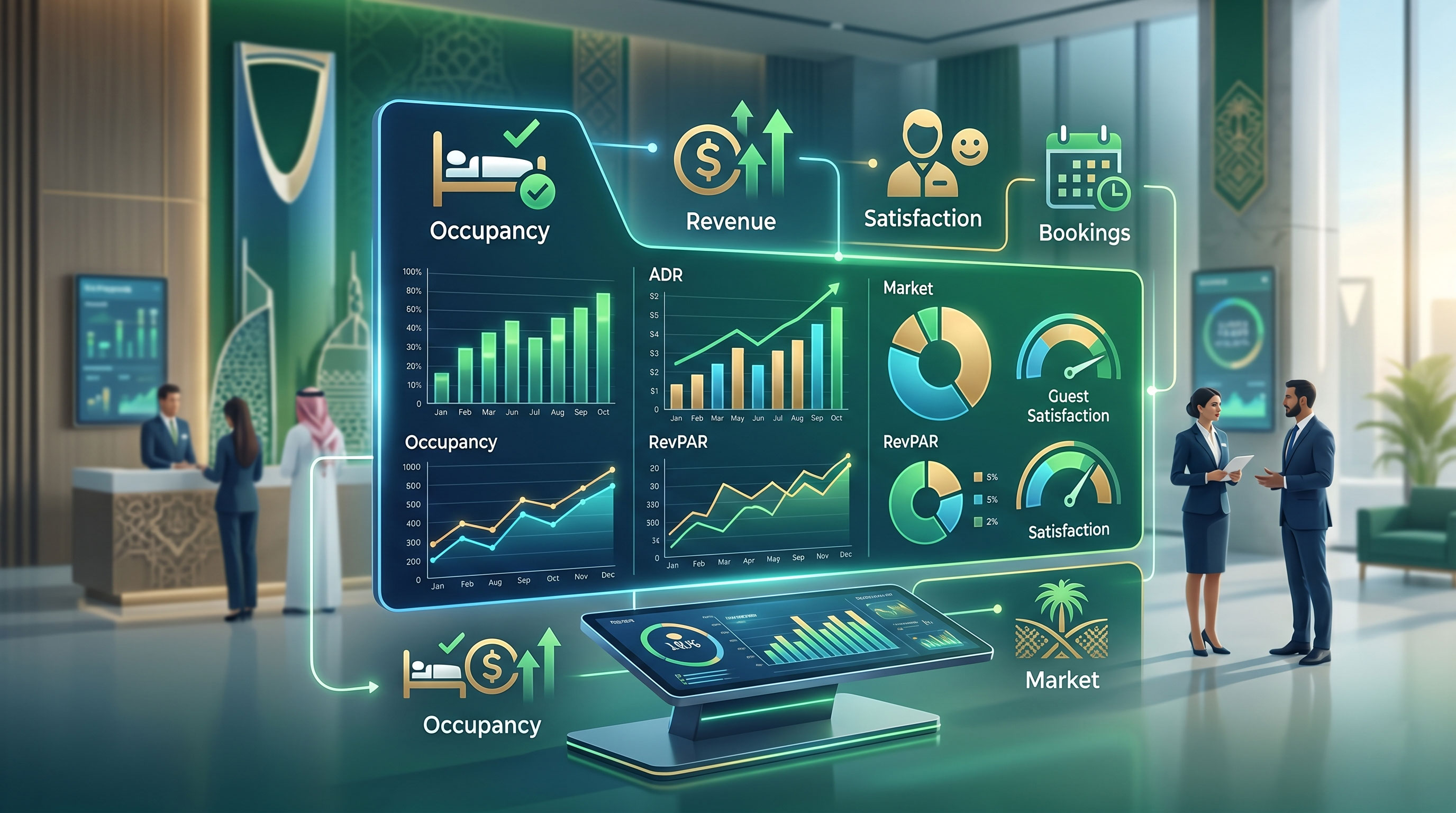
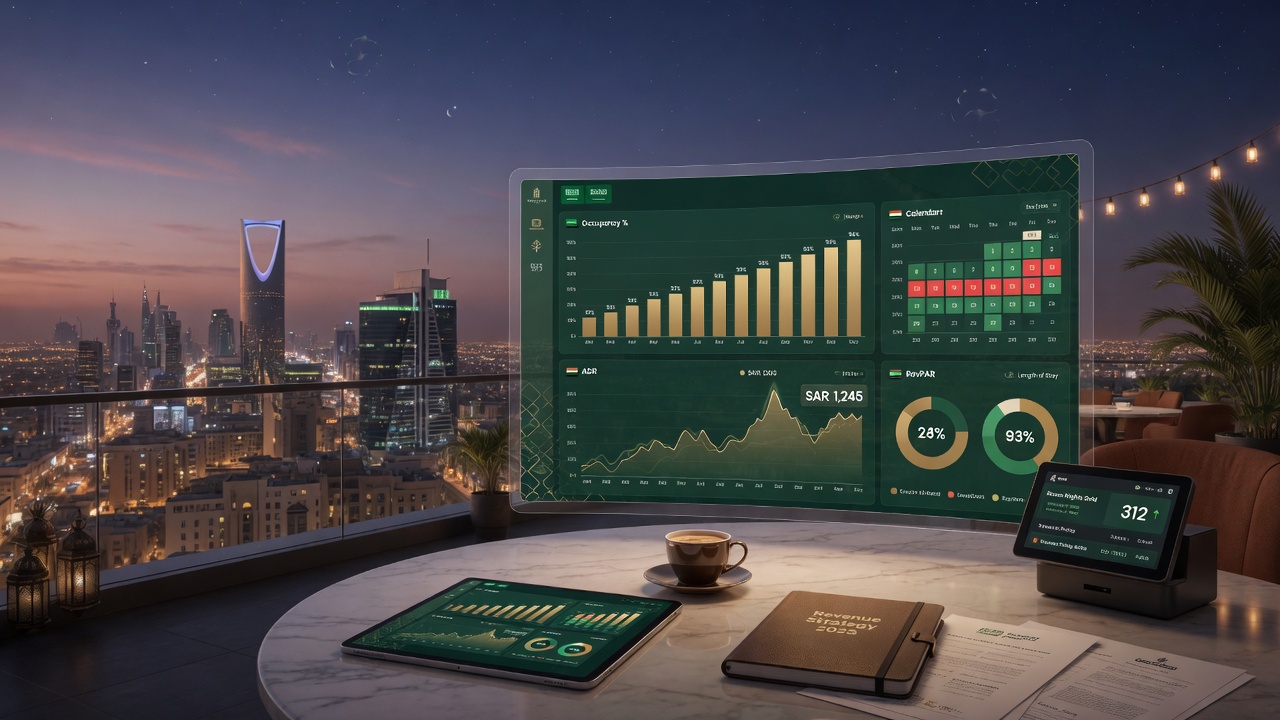
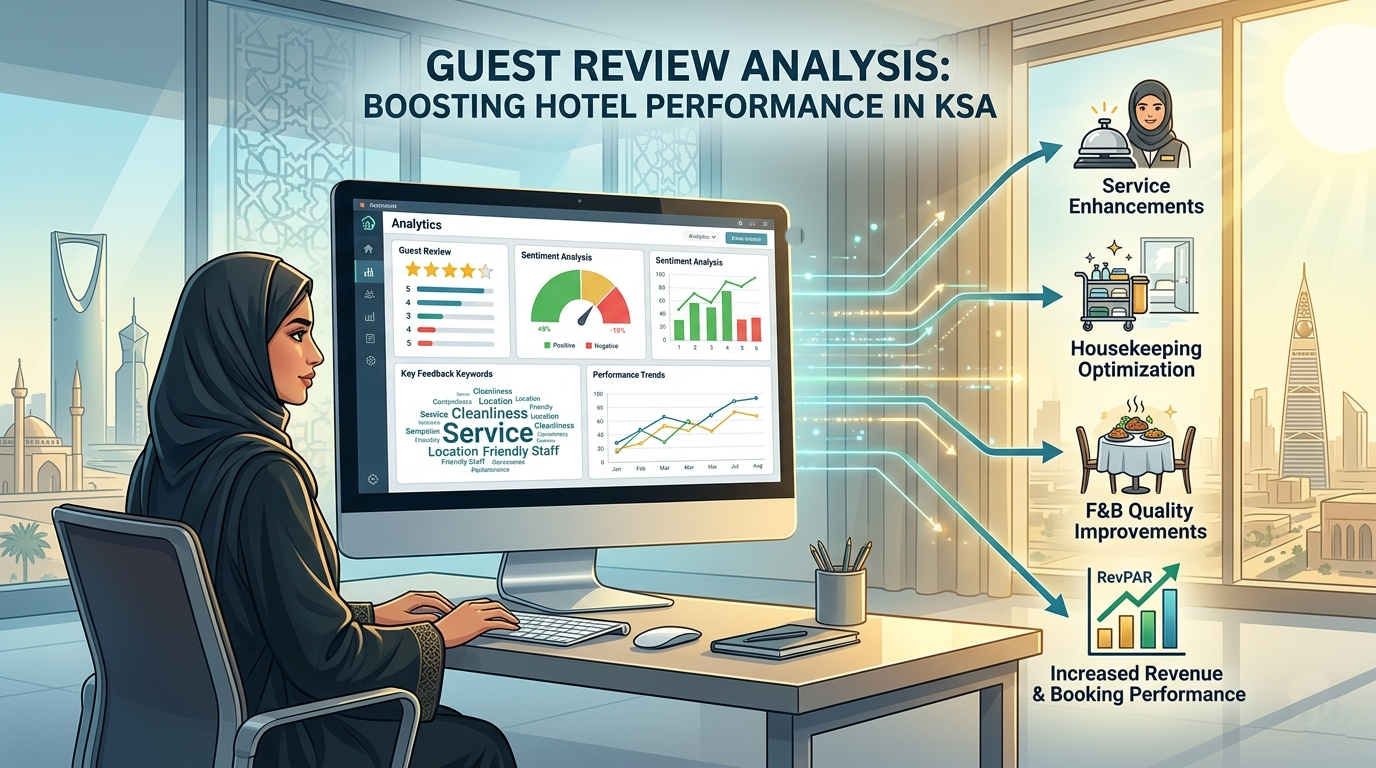
Beyond compliance, Fandaqah delivers the operational efficiency and guest experience capabilities modern hotels demand. Cloud‑based architecture ensures reliability and accessibility. Mobile capabilities enable staff to serve guests anywhere on the property. Analytics provide insights for better decision‑making. And our Saudi‑based support team understands local challenges and responds quickly.
Start Your Digital Transformation Today
Join over 850 hospitality properties across Saudi Arabia that trust Fandaqah for compliance, automation, and guest experience.
Get Your Free Trial & Demo
11. Future Trends & 2030 Market Outlook
- 150 million annual visitors (up from 122 million in 2025)
- 362,000 hotel rooms (up from ~180,000 today)
- $110 billion total hospitality investment
- 20% of GDP from tourism and hospitality
- 1 million tourism‑related jobs created
- 90%+ digital adoption in hospitality operations
- Leading position in Middle East hospitality market
- Ranked among top 20 global tourist destinations
Major projects shaping the future: NEOM, Red Sea Project, Qiddiya, Diriyah Gate, AlUla, Amaala, Six Senses Southern Dunes, St. Regis Red Sea Resort.
12. Conclusion & Next Steps
The Future of Hospitality Summit opens the door to opportunity. Embrace Saudi guest check‑in software, automated check‑in, and hotel management systems designed for Vision 2030. Contact Fandaqah today for a free trial or demo, and lead the next era of Saudi hospitality with confidence and compliance.
Immediate Action Steps
- Register for the Future of Hospitality Summit 2026
- Assess your current technology stack for compliance gaps
- Evaluate ZATCA e‑invoicing readiness ahead of June 2026 deadline
- Review Shomoos integration status
- Schedule a Fandaqah demo to explore compliance‑ready solutions
- Develop investment or expansion strategy aligned with Vision 2030
- Build relationships with potential partners at the summit
- Create a technology roadmap for 2026‑2030
The future of hospitality in the Kingdom is being written today. Those who act now — investing in compliant technology, building strategic relationships, and positioning themselves for growth — will lead the market through 2030 and beyond. The Future of Hospitality Summit is your gateway to that future. Fandaqah is your technology partner for the journey.